
Author: African Women's Development Fund
Shattering Glass Ceilings: Abena Amoah’s record-breaking strides on the Ghana Stock Exchange
Shattering Glass Ceilings: Abena Amoah’s record-breaking strides on the Ghana Stock Exchange
[tp lang=”en” not_in=”fr”]
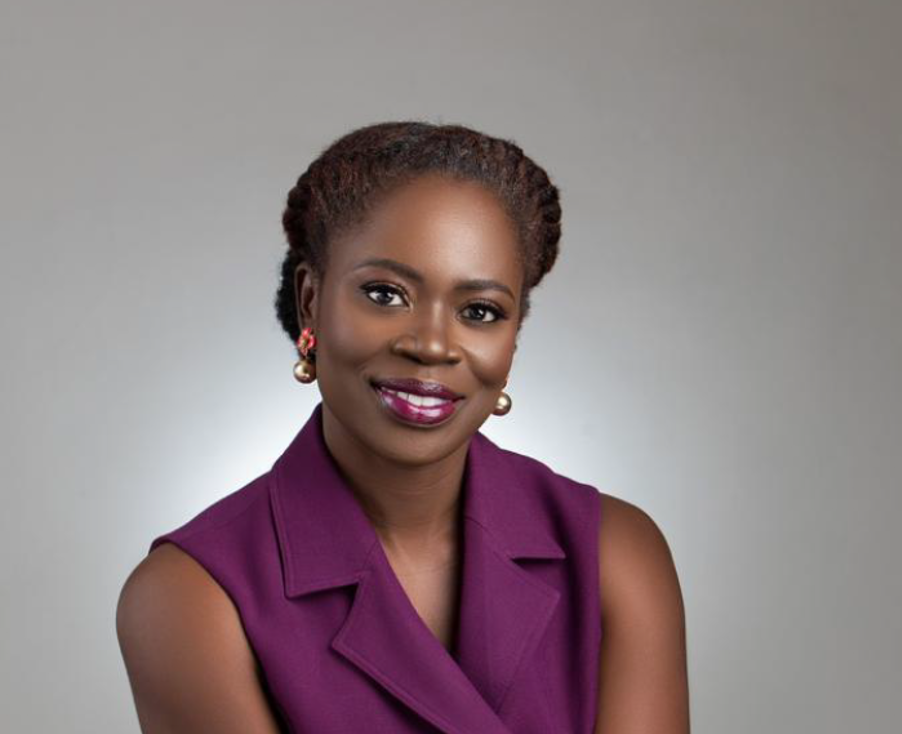
Congratulations to Abena Amoah, former Board member of the African Women’s Development Fund, on her appointment as Deputy Managing Director of the Ghana Stock Exchange.
Abena’s appointment is exciting as this makes her the first female executive director of the Exchange, a hitherto male-dominated industry; but not surprising because she is an accomplished investment banker and capital markets expert who has led on many landmark transactions for over two decades.
She was a stellar member of team while she served on the board of AWDF and brought her wealth of experience to bear. Abena is an inspiration to both staff and partners, blazing the trail, and showing that she is a true African woman: determined, intelligent, dynamic and unstoppable.
We are proud of you Sister, and we cannot wait to see what the future holds for you.
Read the GSE Press Release here:
[/tp]
[tp lang=”fr” not_in=”en”]
Félicitations à Abena Amoah, ancienne membre du conseil d’administration de l’AWDF, pour sa nomination au poste de directeur général adjoint de la Bourse du Ghana.
La nomination d’Abena est particulièrement intéressante, car elle devient la première femme directrice exécutive de la Bourse, un secteur jusqu’alors dominé par les hommes ; mais ce n’est pas surprenant, car elle est une banquière d’affaires et une experte des marchés des capitaux accomplie qui a dirigé de nombreuses transactions marquantes pendant plus de deux décennies.
Elle a été un membre éminent de l’équipe lorsqu’elle siégeait au conseil d’administration de l’AWDF et a mis à profit sa riche expérience. Abena est une source d’inspiration pour le personnel et les partenaires, elle ouvre la voie et montre qu’elle est une véritable femme africaine : déterminée, intelligente, dynamique et inarrêtable.
Nous sommes fiers de toi, sœur, et nous avons hâte de voir ce que l’avenir te réserve.
[/tp]
Call for Consultant: E-Learning for Capacity Building
Call for Consultant: E-Learning for Capacity Building
We’re looking for an African Feminist Consultant to support our virtual training.
The AWDF Capacity Building Unit is seeking an expert consultant to work under the supervision of the Director of Programmes and Capacity Building team to advise on the design, structuring and delivering of online trainings. As part of this we will be taking into account both the need to review training approaches in the online environment, consider implications for participants with disabilities, security and privacy, and also ease of access to virtual platforms given that many participants have difficulties with internet connectivity.
If you have a track record of work supporting activist NGOs to build online learning platforms and approaches and are committed to Feminist values, please contact us today! Click here for the Terms of Reference
Closing Date: 27th July 2020
Call for Applications: Main Grant 2020
Call for Applications: Main Grant 2020
[tp lang=”en” not_in=”fr”]
CALLING ALL AFRICAN WOMEN CHANGE-MAKERS!!
SECOND CALL FOR APPLICATIONS – 2020
Is your organisation an African feminist or women’s rights organisation with cutting edge ideas for advancing women’s rights and creating systemic change? Is your organisation led and largely staffed by women, and registered on the African continent? If yes, then you can apply for this AWDF grant in one or more of the thematic areas listed below:
1. ECONOMIC SECURITY & JUSTICE
2. BODY & HEALTH RIGHTS
3. LEADERSHIP, PARTICIPATION & PEACE
4. POST-COVID 19 RESPONSE & ADVOCACY
AWDF encourages applications for work that is led by and supports the leadership and concerns of women facing multiple discriminations (women with diverse abilities; women living with HIV and AIDS, young women, LBTQ communities, women sex workers, women in the rural areas and marginalised women in urban areas. For more details on the call for proposals, click here
Please click on the links below to download the following documents:
Budget Template Main Grants-2020
Financial Management Assessment Form-2020
[/tp]
[tp lang=”fr” not_in=”en”]
DEUXIÈME APPEL À CANDIDATURES – 2020
Votre organisation est-elle une organisation féministe africaine / de défense des droits des femmes avec des idées de pointe pour faire avancer les droits des femmes et créer un changement systémique? Votre organisation est-elle dirigée par des femmes, composée majoritairement de femmes et enregistrée sur le continent africain? Si oui, vous pouvez répondre à l’appel à candidatures d`AWDF en présentant une demande dans un ou plusieurs des domaines thématiques suivants:
1. DROITS À LA SÉCURITE ET À LA JUSTICE ÉCONOMIQUE
2. DROITS À L’AUTONOMIE CORPORELLE ET A LA SANTÉ
3. LEADERSHIP, PARTICIPATION ET PAIX
4. PLAIDOYER ET RIPOSTE DE L`APRÈS-COVID-19
L’AWDF encourage donc les projets qui sont dirigés par; qui soutiennent le leadership et qui prennent en considération les préoccupations des femmes confrontées à des discriminations multiples ( les femmes ayant différentes aptitudes, les femmes vivant avec VIH/SIDA, les jeunes femmes, les communautés LBTQ, les travailleuses de sexe, les femmes en milieu rural et les femmes marginalisées en milieu urbain). Pour plus de détails cliquer ici.
Veuillez cliquer sur les liens ci-dessous pour télécharger les documents suivants:
Modalités-de-demande-subvention-principale
Modèle de budget pour les subventions principales-2020
Formulaire d`évaluation de la gestion financière-2020
Canevas-de-Demande-de-Subvention-principale (1)
[/tp]
Why is Feminism Still a Hard Pill to Swallow in 2020?
Why is Feminism Still a Hard Pill to Swallow in 2020?
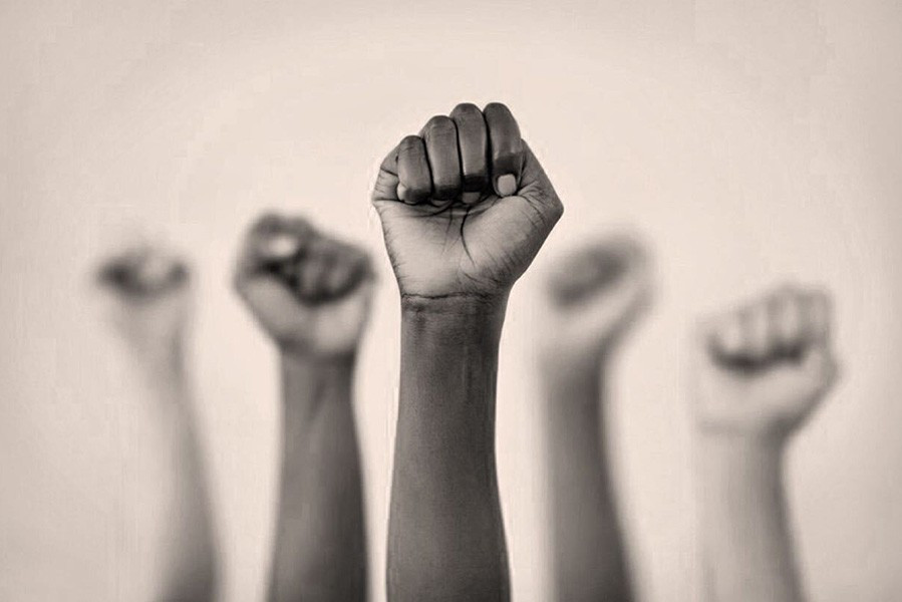 Image ©LaylaBird via Getty
Written by: Jennifer Donkoh, Communications Associate, AWDF
25 years after the Beijing Platform for Action, women still live in constant fear across the African continent. Despite the signing of the peace agreement in 2018, South Sudan has one of the highest rates of sexual violence against women in the world. Female protestors in Egypt often face violent sexual assault; their attackers suffer no punishment. Every three hours a woman is murdered in South Africa. These are the more glaring examples of patriarchy. It is still however very much present in so-called more advanced countries. Female political candidates are berated and discriminated against in most countries by the media and public opinion. Many women are paid much less than their male counterparts. In some parts of the world, feminism is at best tolerated, while in many others, it is faced with stiff opposition.
A glaring reminder that men’s lives are still viewed as more valuable than those of women is the Black Lives Matter (BLM) movement in the United States of America.
On March 13 2020, Breonna Taylor, a 26-year-old Emergency Medical Technician (EMT), was murdered in her home by police officers who barged in while she was asleep, in a case of alleged mistaken identity. In fact, the person the police meant to accost was allegedly already in custody. It has already been 3 months. Her killers still roam free and her death has not sparked policy-changing outrage like that of Ahmaud Aubrey or George Floyd. The media has decidedly dubbed the BLM movement a fight against police brutality perpetuated towards black men. This has excluded women victims like Sandra Bland and Atatiana Jefferson from the conversations around police brutality.
The fight for women’s rights is obviously still an uncomfortable subject for many. This is because patriarchy is the most potent political power in the world. Whether it manifests in subtle ways like the stifling of female executives’ voices at a board meeting or more stomach-turning ways like murder and sexual assault, men have a death-grip on patriarchy because it favours them both economically and socially. Tired of relying on failed to non-existent policies on gender equality, many women have been frustrated into conforming to and even defending patriarchy. Many anti-feminist people have also capitalised on the disunity of the feminist movement to cheapen its credibility.
Yet, we simply cannot give up the fight because even a small act towards the advancement of women goes a long way. Let’s take the case of Yaa Asantewaa, a former queen mother of Ghana who famously suited up to lead the charge against the British colonisers. Though she died in 1921, her sheer heroism remains a shining moment in Ghanaian history. Ghana is still very much a patriarchal country, but her example has been used by many to encourage young women and girls to take a stand against what is not right. Also, after civil war broke out once again in Liberia in 1999, Liberian women put aside the unspeakable horrors they had endured at the hands of rebel and state forces alike to advocate for a peaceful end to the war. Recognising the role of women, the country elected its first female president: Ellen Johnson Sirleaf. These women are among a tall list of incredible women who are leading the charge against patriarchy, empowering young women and girls in their communities to the best of their abilities and encouraging others to do same.
Though the road to gender equality may be a rough one, we should take pride even in the individual lives we are able to change. Individual empowered women have started revolutions, empowered women are changing the world. It may take only one woman to reverse the status quo. As the COVID-19 pandemic lays bare injustices and systemic failures, it is time for feminist movements to target specific causes that are bound to bring lasting and revolutionary results. For instance, Ghanaian feminists can push for the passage of the marital rape bill, siting the fact that COVID-19 lockdown measures may exacerbate the incidences of marital rape in the country. Majority of frontline workers during this pandemic are women. Governments can be pressured to improve required work conditions of women-dominated groups like domestic workers. CSOs such as Abantu For Development have made great strides, currently calling on the Government of Ghana to speed up the processes to get the Affirmative Action Bill into Parliament, but a lot more momentum is needed.
Contrary to what some people believe, the pandemic has not diminished the relevance of feminism, rather, it has shown that the fight for women’s rights is relevant now more than ever. This is no time to be weary, on the contrary, it is time to amplify our voices. Let us continue dismantle patriarchy, one girl at a time.
CALL FOR PROPOSALS: World AIDS Day & 16 Days of Activism Against GBV 2020
CALL FOR PROPOSALS: World AIDS Day & 16 Days of Activism Against GBV 2020
[tp lang=”en” not_in=”fr”]

We are happy to invite applications for the award of grants to African women’s rights organisations and groups to support activities that promote the wellbeing of women. Every year, AWDF supports innovative women’s rights groups and organisations under the small grants initiative, to coordinate activities around World AIDS Day and 16 Days of Activism against Gender-based violence.
This year, under this initiative, AWDF will focus on education and awareness on preventing violence against women and girls (VAWG) as well as promoting women’s access to comprehensive mental health and wellness services.
Download the Application Guidelines and budget templates here
World AIDS Day 2020 Guidelines English
16 DAYS of Activism Guidelines English
Financial Management Assessment Form-2020
[/tp]
[tp lang=”fr” not_in=”en”]
APPEL A PROPOSITIONS!
Nous sommes heureux de lancer un appel à candidatures pour l’attribution de subventions aux organisations et groupes de défense des droits des femmes africaines afin de soutenir des activités qui favorisent le bien-être des femmes.
Chaque année, l’AWDF soutient des groupes et organisations innovants de défense des droits des femmes, dans le cadre de l’initiative des petites subventions pour coordonner les activités liées à la Journée mondiale de la lutte contre le sida et aux 16 jours d’activisme contre les violences basées sur le genre.
Cette année, dans le cadre de cette initiative, l’AWDF se concentrera sur l’éducation et la sensibilisation à la prévention de la violence contre les femmes et les filles (VAWG) ainsi que sur la promotion de l’accès des femmes à des services complets de santé mentale et de bien-être.
Veuillez télécharger les directives de soumission de demande de subvention ici:
Journée mondial de lutte contre le SIDA 2020
Formulaire d` évaluation de la gestion financière-2020
[/tp]
A FLOURISH State of Mind: Healing the Healer
A FLOURISH State of Mind: Healing the Healer
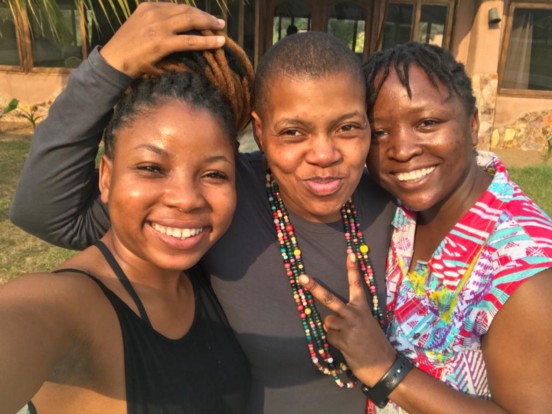
I remember Hope Chigudu warmly embracing me, whispering to me these words, “It is time to let go of everything even if it’s going to hurt others…so you can heal, be free and start thinking of yourself as a person.” These words are still my guiding principles today.
~ Florence Awuor, Flourish Retreat participant.
AWDF’s inaugural Flourish Retreat was launched in February this year in what will turn out to be an incredibly empowering start to what was going to be a very difficult year.
Taking place at the beautiful Sogakope beach resort located in the Volta region of Ghana, the Flourish retreat is one strand of the AWDF Flourish Project aimed at strengthening feminist organising across Africa, a partner project of the NOVO Foundation’s Radical Hope Fund. Built deliberately around African healing philosophy and practices, the Flourish facilitators used a plethora of tools – art, chakras for emotional, spiritual and physical wellbeing, breathing exercises, affirmations, dancing, aromatherapy, meditation, moon rituals, yoga, poetry and creative writing, individual and group reflection sessions, journaling, theatre and counselling sessions.
The NoVo Foundation launched the Radical Hope Fund in July 2017 with a global call for projects grounded in new partnerships, bold experimentation, and a deep commitment to social justice. The vision of Radical Hope is to create spaces for dreaming new possibilities, experimenting with new collaborations and developing new, creative strategies to overcome structural failures. AWDF’s Flourish Project was one of 19 initiatives selected to support this vision on the continent.
Using a transformational, feminist approach, the Flourish retreat created a dynamic healing space for 20 African feminists. These were women working on the frontlines of VAW prevention in the fields of sex work, women living with HIV, running rape crisis centres, healing and feminist movement building.
In an interview, Jessica Horn, Director of Programmes at AWDF, speaks about healing, the AWDF Flourish retreat and her vision for what the retreat could do within the African feminist movement. Jessica is a writer and political commentator, co-founder of AIR. She curates open mics where people explore the concept of Revolutionary Love and also acted as a Flourish Facilitator at the inaugural Flourish Retreat.
Written by Nana Akosua Hanson, Programme Officer, Catalytic Initiatives, AWDF
Click here to read the full interview and also the reflections of the participants – A Flourish State of Mind blog
To see more pictures from the retreat, visit our Instagram page @theawdf
Women’s Labour Rights: Confronting the Barriers
Women’s Labour Rights: Confronting the Barriers
For women in the formal labour force, there is the reality of the glass ceiling and the discriminatory requirements for moving past a certain point on the career ladder which is exacerbated by a lack of access to a broad range of job opportunities. In addition, there is the normalisation of sexual harassment in the workplace due to patriarchal work cultures. Finally, there is greater precarity with contracts when it comes to women (including those tied to immigration e.g. Kafala in Lebanon; and the use of short term contracting to evade worker protections as employees are then not eligible for full time worker benefits e.g. Kenya tea farmers).
Organisations fighting for women’s labour rights face the perpetual challenge of accessing adequate funding which is needed to build and sustain advocacy, community level groups and the national and transnational momentum for change. The presence of supportive, flexible and multi-year funding in particular makes a tremendous difference in the ability to maintain labour right activism.
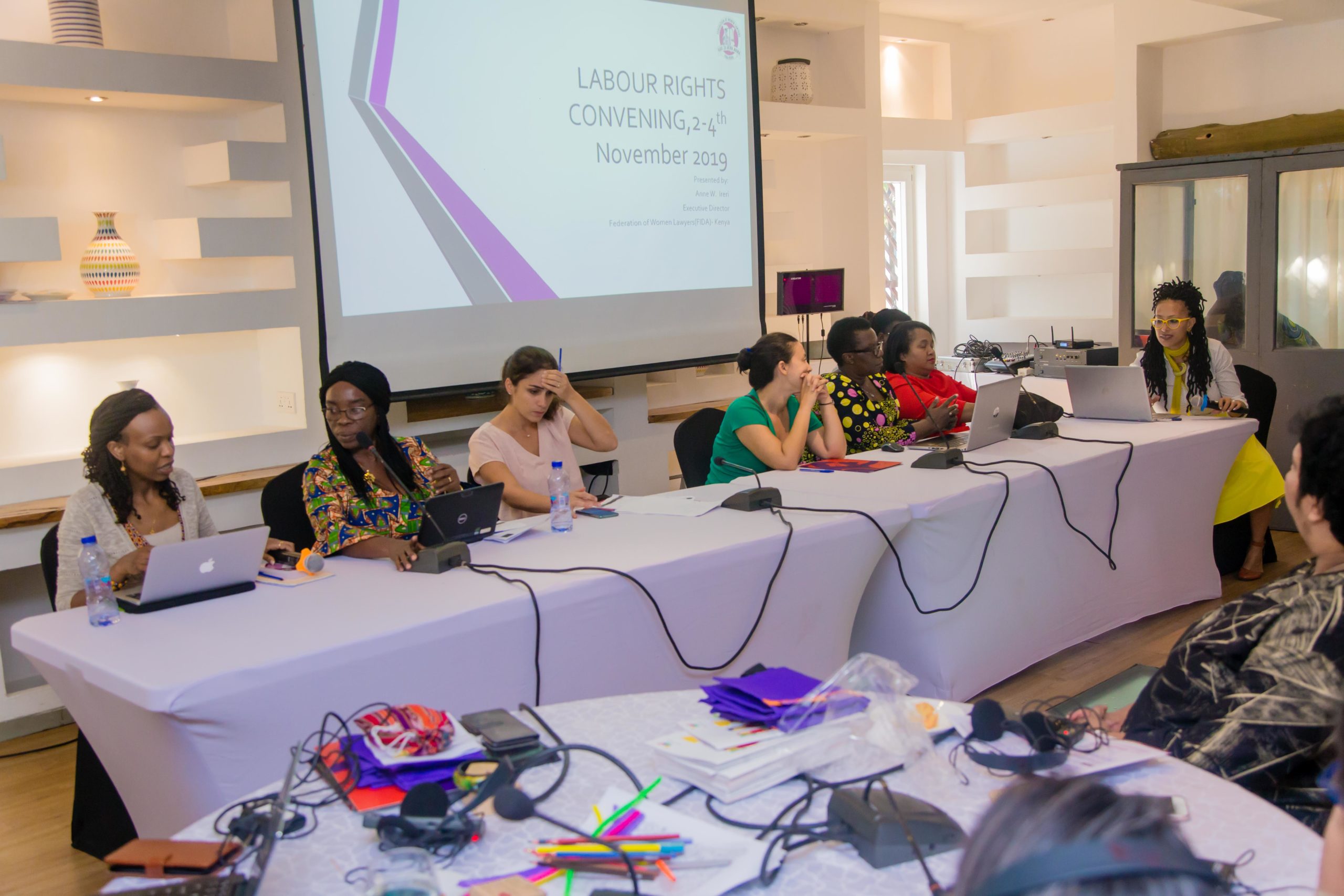
In November 2019, AWDF held a convening in Accra with six grantee organisations of Leading from the South, to discuss the different aspects of women’s labour rights advocacy in Africa and the Middle East and also to explore commonalities in strategies and approaches, challenges and areas for growth.
To read the Report from the Convening, click here: Labour Rights Convening Report
Women and Non-communicable Diseases in Africa
Women and Non-communicable Diseases in Africa
Non-communicable diseases (NCDs)—which include cardiovascular diseases, diabetes, cancers, chronic respiratory diseases, and mental health conditions—are already leading causes of death and disability for women in many countries across Africa with worrying forecasts for the future. National, regional and global attention with regards to women’s health on the continent however remains largely fixated on infectious diseases and maternal and child health
In an effort to address these gaps and explore the opportunities to better support African women’s organisations around engagement with NCD prevention and control, the African Women’s Development Fund, commissioned a research project to look at:
(1) the scale and key gendered concerns around NCDs and women in Africa;
(2) the key actors responding to the rise in NCDs in Africa;
(3) how these actors are responding and whether gender, equity and rights being considered in these responses; and
(4) the opportunities and challenges for African women’s organisations around engagement with NCD prevention and control and ways to support greater engagement on links between NCDs and women’s rights.
To read the Executive Summary of the Report, click here
For the full report on Women and Non-communicable Diseases in Africa, click here
Lana RAZAFIMANANTSOA – Programme Officer, Francophone Africa
Lana RAZAFIMANANTSOA – Programme Officer, Francophone Africa
[tp lang=”en” not_in=”fr”]
Lana is responsible for the AWDF grant management portfolio of French speaking African countries. She liaises with other departments to provide technical assistance, support and expertise to the overall objectives of the organisation.
Lana has more than 15 years work experience in different fields, ranging from administration, project management, advocacy & communication, capacity building, grant-making and MEL. She has also undertaken consultations in the area of humanitarian advocacy and research, ecological & climate justice, SRHR justice, and African feminist movement building. For years, she provided technical support and expertise to various CSO-led, youth-led and women-led justice and activism movements in Africa.
Lana’s educational background is in Human Rights & Gender, Community Development and Communication for Development.
She is a proud feminist, passionate about feminism and its intersectionality. She also promotes values in justice, solidarity and leadership of African women for the full realisation of their rights.
[/tp]
[tp lang=”fr” not_in=”en”]
Lana est responsable du portefeuille de gestion des subventions AWDF des pays africains francophones. Elle travaille en liaison avec d’autres départements pour fournir une assistance technique, un soutien et une expertise aux objectifs généraux de l’organisation.
Lana a plus de 15 ans d’expérience professionnelle dans différents domaines, tels que l’administration, la gestion de projets, la plaidoirie et la communication, le renforcement des capacités, l’octroi de subventions et le suivi et l’évaluation des projets. Elle a également entrepris des consultations dans le domaine de la plaidoirie et de la recherche humanitaire, de la justice écologique et climatique, de la justice SDSR et du renforcement du mouvement féministe africain. Pendant des années, elle a fourni un appui technique et une expertise à divers mouvements de justice et d’activisme dirigés par des OSC, des jeunes et des femmes en Afrique.
Lana a fait des études dans les domaines des droits de l’homme et du genre, du développement communautaire et de la communication pour le développement. Elle est fière d’être féministe et passionnée par le féminisme et son intersectionnalité. Elle défend également les valeurs de justice, de solidarité et de leadership des femmes africaines pour la réalisation complète de leurs droits.
[/tp]
Diaries of African Feminists: Building Emotional Resilience
Diaries of African Feminists: Building Emotional Resilience
In February of this year, AWDF held its inaugural Flourish retreat, a groundbreaking and much needed space for African feminists to rest, rejuvenate and build emotional resilience. After heading home, participants continued the work with their own energies, building ongoing sisterhood to sustain their activism. Read the stories of seven African feminists living and working in Uganda, sharing their survival techniques for coping in these challenging times of the COVID-19 pandemic.
Read the diaries here