
Category: Publications
Grantee Profile: 1-in-9 Campaign – Renewed Focus on the Other Eight
Grantee Profile: 1-in-9 Campaign – Renewed Focus on the Other Eight
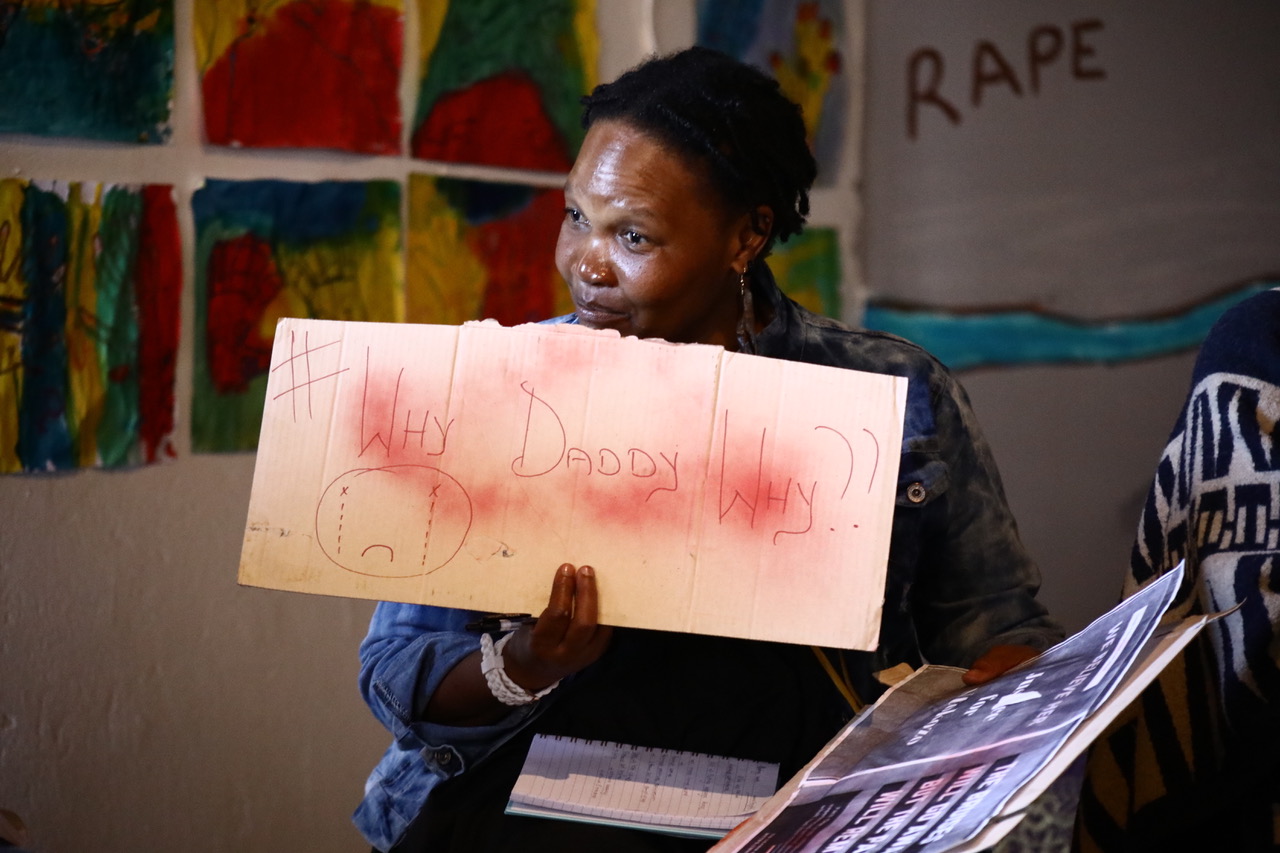
The year was 2006. HIV-activist Fezekile Ntsukela Kuzwayo, known to the public only as Khwezi, faced off against Jacob Zuma, then the deputy-president of South Africa, in court. She had accused him of rape. She stood her ground amidst death threats from Zuma’s supporters, harassment from the ANC Women’s League and widespread torment from the ruling party. She was not alone in her stand. The 1-in-9 Campaign was born during this particularly turbulent, triggering time in South Africa. Zuma, who would go on to become President of South Africa, was acquitted on the charges against him. The organisation, however, continued to support survivors of sexual violence in navigating the social landscape and the criminal justice system. According to popularly cited statistics, one in three women will experience sexual violence in her lifetime. According to the South African Medical Research Council, only one in nine rapes are reported to authorities. It was, initially, the latter group that the organisation supported.
Mpumi Mathabela is the 1-in-9 Campaign coordinator. She says despite the impact they were making through their work within the criminal justice system, there came a day when they realised that that was not enough. “Our name is a statistic from that time period – the time of Zuma and Khwezi – and it was a work that was incredibly impactful. We got to a point where when people did not see us outside court they would call and ask where we were.” More needed to be done.
“Only one in nine women report their rape to the police. So one woman reports. One woman we go to court with. One woman we push for the justice system to do its job. One woman. Just one in nine.”
Sheshakes her head. “But what about the other eight…” The question hangs in the air as the magnitude of the statement sinks in.
“What happens to the other eight? Are they silent?”
The answer, she says, is of course not. “They are simply speaking out in their own ways. We have progressed from working with that one in the criminal justice system to branching out to the other eight too. This is our shift. We are reintroducing and redefining feminist movement building, but we are not just focusing on the one woman who makes it to court anymore.”
To read the rest of this incredible profile and see how 1 in 9 is helping impact the lives of survivors, click here.
Evidence Based Prevention of Violence Against Women Convening Report: Building African Feminist Momentum
Evidence Based Prevention of Violence Against Women Convening Report: Building African Feminist Momentum
The rates of violence against women have reached pandemic levels across the world. It is estimated that 1 in 3 ever-partnered women above the age of 15 have, at some point in their lives, experienced some form of physical or sexual interpersonal violence. In some parts of Africa, the prevalence rate is almost double that of the global average at 65.6%¹. The far-reaching physical, emotional and economic impact of this violence on the lives of African women cannot be overstated. However now, more than ever before, bringing violence against women to an end is a tangible possibility.
At this critical moment, there has been a shift to focus on evidence-based prevention of this violence against
women with programmes producing quantifiable results that reflect the magnitude of their impact in this area.
African feminists – and the political lens with which they approach the issues – have been essential to prevention work, pioneering efforts to bring violence fuelled by gender inequality and patriarchal power to an end. With international interest in this field growing, AWDF saw the need to convene African practitioners and donors to look at ways of galvanising the efforts of African feminists operating at every level to advance the work and even more firmly establish African feminism as the centre.
To read the rest of the report click this link.
Grantee Profile: Gender Links – Don’t Get Angry, Get Smart
Grantee Profile: Gender Links – Don’t Get Angry, Get Smart
Gender Links – for equality and justice
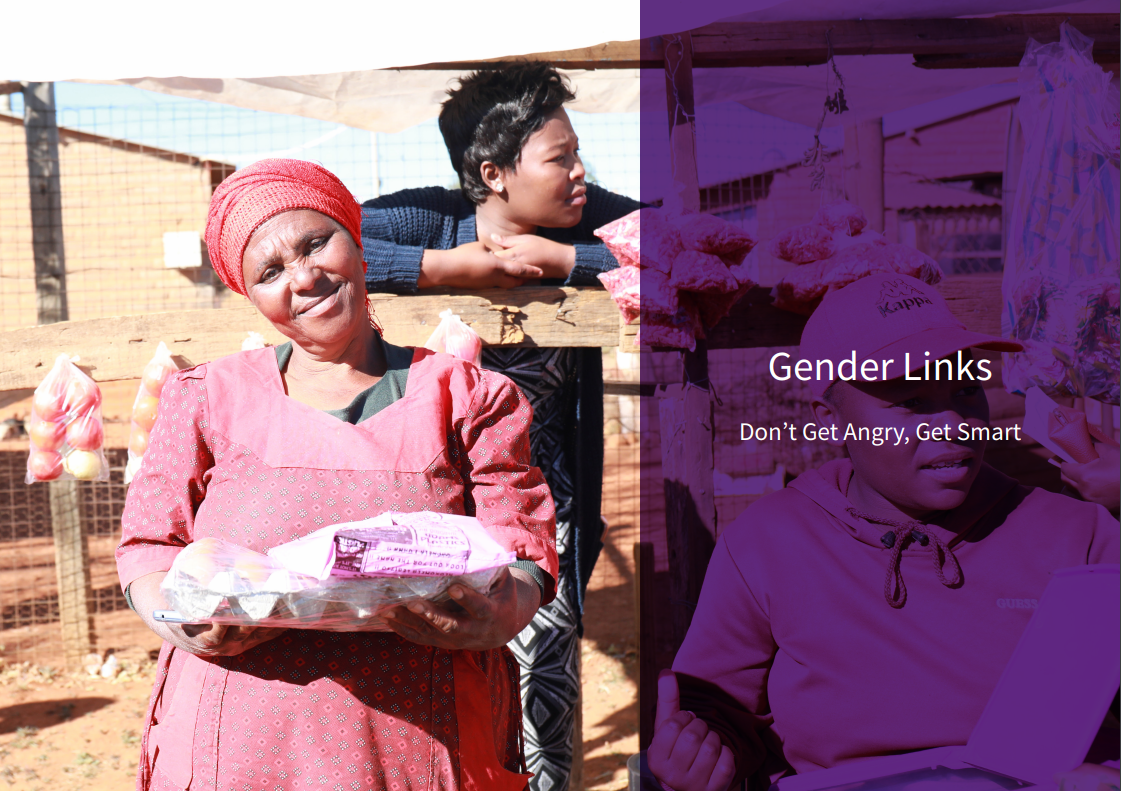
From the outside, the unassuming red-brick house in Johannesburg’s southern suburbs does not look like much. From the street, it would be near impossible to guess that these are the offices of one of Southern Africa’s leading women’s rights organisations. Gender Links is a small organisation with a large footprint, with over 600 partners in ten countries, all working towards the promotion of women’s rights in the region. Gender Links CEO Colleen Lowe Morna is no stranger to advocacy work. She started her career as a journalist specialising in gender and development. After South Africa’s first democratic elections in 1994, she became an advisor on gender and institutional development. “We like to say we work from the grassroots all the way up to the elephant,” she laughs. This approach is necessary, says Morna. “The main challenge working in the gender space is the reality gap. There is a marked difference between constitutions, legislation, policy and the lived realities of women.”
Morna says it is widely accepted that it is difficult to see the results and impact of gender justice work on paper. Gender Links, however, might be an exception to this. From work with grassroot organisations to policy change at state level, the sheer scope and breadth that Gender Links operates on is hard to
comprehend.
“Gender Links acts as a big sister to smaller organisations, who are in turn empowered to mentor others,” she explains. “Our work is to build the capacity of our little sisters.” While the stories of individual stories of women who have benefitted through Gender Links programmes are significant, the organisation’s impact is also evident in its numbers. The Gender and Governance programme, spearheaded by Gender Links, has put gender on the local government agenda. There are now 432 councils in ten countries recognised as Centres of Excellence for Gender in Local Government. These local councils have committed to work towards 50/50 representation at local government level, while furthering gender responsive budgeting and service delivery. These councils cover a population of around 40 million people, approximately 34% of the population in the ten countries they are located in. “We can’t just start talking about representation of women in government at a national level in parliament,”
Morna explains. “But it’s also not enough to talk about representation among local government councillors. We need to look at women’s political participation as a whole. That includes the committees that deal with water and sanitation and housing and all other things.”
To read the rest of this incredible profile, please click here
AWDF Grantee Recognition Survey 2019
AWDF Grantee Recognition Survey 2019
African Women’s Development Fund (AWDF) is a Pan-African grant making organisation that funds local, national and regional autonomous women’s rights organisations in Africa and the Middle East, that are working towards the promotion and realisation African Women’s Rights. Since the beginning of its operation in 2001, AWDF has awarded grants and provided technical support to over 1,340 women’s organisations in 43 out of the 54 countries in Africa and since 2017 in 2 countries in the Middle East. As part of the methods AWDF employs to assess the impact her grantees have made and are still making in the lives of women in their various project areas and on the continent at large, an annual Grantee Recognition Survey is conducted. This forms part of AWDF’s monitoring, evaluation and learning instruments. The survey seeks to identify achievements of past grantees, and highlight those whose partnership with AWDF contributed to said awards or recognitions. It also serves as a way of following up with grantees whose grants have ended.
The AWDF grantees are doing a tremendous job in line with AWDF’s vision of having “A world where all African women live in peace, with dignity and justice and where there is equality and respect for women’s rights”. This is through their tireless efforts of fighting for social justice in their communities,
contributing to the improved living conditions of beneficiaries and also increase recognition and inclusion of women’s rights issues in the development agenda at various levels.These genuine efforts have earned them recognition, awards and influence in their localities / communities, countries, the continent and beyond. The survey showcases the recognition / awards of AWDF’s grantees and also highlights the role AWDF played. These awards / recognitions come in different forms and AWDF seeks to systematically track and document such recognitions / awards annually. For the 2019 Grantee Recognition Survey, questionnaires were sent through Google forms to 61 organisations in 22 countries (48 organisations in 16 Anglophone countries and 13 organisations in 6 Francophone Countries) who were awarded with grants of US$5,000 and above in 2017. The sections below present the findings gathered from the responses received.
Read the full Recognition Survey Here
Preventing Violence against Women: A Primer for African Women’s Organisations
Preventing Violence against Women: A Primer for African Women’s Organisations
Why this primer?
This primer provides an overview of key terms, trends, approaches, and evidence used to frame violence against women (VAW) prevention programming. It is designed to strengthen programming, advocacy, and research for evidence-based violence against women prevention in Africa. We hope that it will both contribute to individual learning and promote collective knowledge on VAW—enabling organisations and groups to engage more meaningfully in VAW prevention programming, advocacy, research, and activism.
Who is this primer for?
This primer is intended for African women’s organisations, African women’s funds, and allied philanthropic actors to broaden their understanding of the trends in the rapidly evolving field of VAW prevention. The primer also serves to increase the participation of African women’s organisations, researchers, activists, and programme developers in advancing evidence-based work on VAW prevention grounded in feminist politics.
Ultimately, it is our hope that this primer supports African women’s organisations to take the lead on VAW prevention programming, innovations, implementation, and advocacy.
HERE TO DOWNLOAD THE PRIMER
Annual Report 2018: Deepening Roots
Annual Report 2018: Deepening Roots
[tp lang=”en” not_in=”fr”]
Deepening Roots is a report on our achievements, learnings and growth in 2018. We strongly believe in the power and potential of African women to shape our own destinies and this report is a testament to all the growth work that continues to guide our cause. The report has been structured across three major themes: growth, reflection, and learning. Each theme captures the ways that AWDF implemented our strategic vision in 2018. We stay committed to
supporting a range of African women’s organisations to live out their visions of justice and freedom for all African women. As we continue to reach upwards and outward in our feminist journeys, we also remember to dig deeper and more intentionally into the values that root us to do this work. We hope
you enjoy reading as much as we enjoyed growing, reflecting and learning in 2018.
CLICK HERE TO READ THE FULL REPORT ENGLISH VERSION
TO READ THE FRENCH VERSION, PLEASE CLICK HERE
[/tp]
[tp lang=”fr” not_in=”en”]
L’enracinement (Deepening Roots) est un rapport sur nos réalisations, nos apprentissages et notre croissance en 2018. Nous croyons fermement au pouvoir et au potentiel des femmes africaines à forger nos propres destins; et ce rapport est un témoignage de toutes les activités qui ont marqué notre croissance et qui continuent de guider notre cause.
Le rapport a été structuré autour de trois principaux thèmes: croissance, réflexion et apprentissage. Chaque thème représente les voies par lesquelles notre vision stratégique a été mise en oeuvre par l’AWDF en 2018. Nous demeurons engagées à notre volonté de soutenir un éventail d’organisations de femmes à accomplir leur vision de justice et de liberté pour toutes les femmes africaines. En poursuivant notre engagement à la cause féministe vers les sommets et l’extérieur, nous nous rappelons également de puiser profondément et de manière plus intentionnelle dans nos valeurs qui nous lient à ce travail qui nous passionne tant.
Nous espérons que vous trouverez du plaisir à lire ce rapport tout comme nous avons été heureuses de croître, de réfléchir et d’apprendre en 2018.
CLIQUEZ ICI POUR LIRE ET TELECHARGER LE RAPPORT
[/tp]
Bread and Butter #2: Advancing Resources for Rural Women Farmers
Bread and Butter #2: Advancing Resources for Rural Women Farmers
From 13-15 September 2018, the African Women’s Development Fund convened activists, scholars, researchers and policymakers to build a thoughtful, progressive and transformative vision for the Future of African Women and the Economy under AWDF’s Economic Justice and Security thematic area. This convening investigated the various ways that African feminists are engaged in critique, analysis and the re-visioning of African economies to provide justice and security for African women. The convening is part of a larger movement-building process and ongoing conversation around resourcing African women’s economic justice and security at AWDF. The Bread and Butter series is a multifaceted knowledge production project that springs out of the convening, reflecting AWDF’s commitment to providing feminist analysis of African women’s organising. The article below is the second Article of the series.
Bread and Butter Article 2: Advancing Resources for Rural Women Farmers by Sylvia Nalubega
Women are the primary food producers globally. Within the continent of Africa, 57% of total female
employment is within agriculture. The continent’s future of food security in the face of climate change will be largely centered on the resources afforded rural women farmers. However, gender inequality perpetuates biases in resources allocated to rural women farmers and their communities. ARUWE understands that the future of food security depends on a holistic, rightsbased approach to addressing gender inequality. Central to expanding the economic opportunities for rural women is access to financial services. In this article, Sylvia Nalubega (ARUWE Uganda) provides a case study analysis of ARUWE’s work, demonstrating how rural women’s access to
finance is a necessary component in securing food on the continent. ARUWE Uganda champions
rural women and supports their movement as they advocate for their rights to financial resources.
For the full Article please click the link below:
Statement from the Participants of AWDF’s 2018 Economic Convening on the Future of African Women and the Economy
Statement from the Participants of AWDF’s 2018 Economic Convening on the Future of African Women and the Economy
At the end of 2018’s AWDF’s Economic Convening the participants composed a statement. This statement from the participants of the convening, outlined their priorities and recommendations for securing African women’s economic futures.
Please click HERE to read the statement
The Bread and Butter Series: Growth for Whom? A Pan African Feminist Reflection on Macro Level Economic Policies
The Bread and Butter Series: Growth for Whom? A Pan African Feminist Reflection on Macro Level Economic Policies
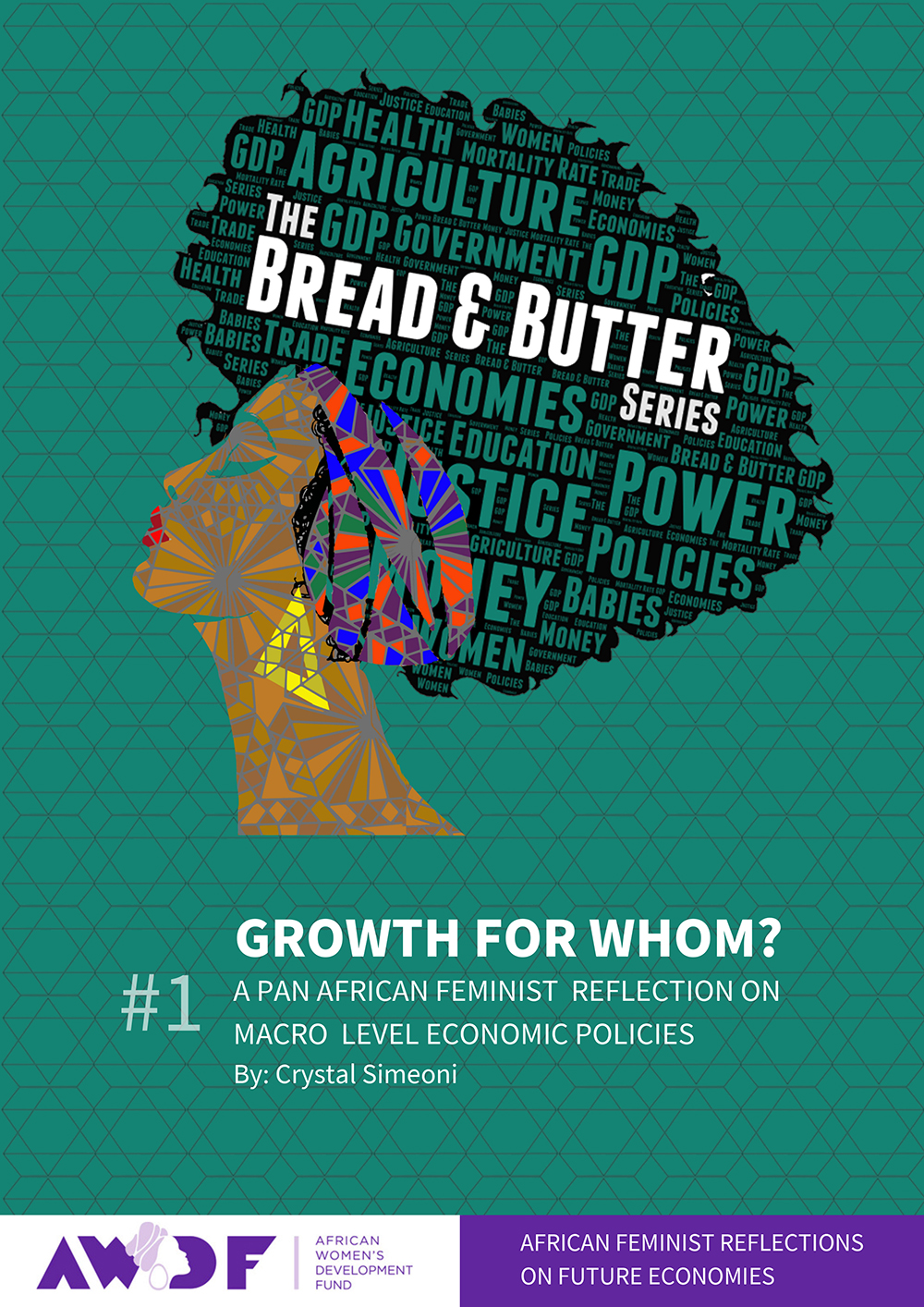
The first article in our Bread and Butter series was written by Crystal Simeoni from the African Women’s Development and Communication Network (FEMNET), convenors of the African Feminist Macroeconomics Academy. The article provides a feminist reflection on current neoliberal macro level economic policies in Africa and how they affect women’s lives. The writer argues that current definitions of women’s economic empowerment are too narrow to offer impactful strategies. This follows from increasing analyses that, in as much as Africa’s economies grow, so does inequality between her people. Simeoni argues that current neoliberal macroeconomic frameworks will continue to exacerbate the problem.
Please click HERE to read the article.
African Women’s Economic Futures Convening : Statement on African Women’s Economic Justice
African Women’s Economic Futures Convening : Statement on African Women’s Economic Justice
On September 13th – 15th, 2018, AWDF convened 27 activists, academics, development workers and knowledge producers to strategise and prioritise African women’s economic futures. This convening culminated from AWDF’s fourth strategic plan Shaping the Future, and the accompanying Futures Trends Analysis Report which highlighted the socio-economic implications of anticipated trends in Africa for women and girls. Over three (3) consecutive days, we had extensive conversations, workshop and group activities that helped us build sound advocacy strategies for African women’s economic futures. As an institution committed to resourcing African women’s movements, AWDF believes that this convening was the first step in a journey to better support future-oriented strategies to engender African women’s economic justice and security.
Bread and Butter is the post-convening knowledge series which aims to document the dynamic, critical and radical perspectives of African women thinking about their economic futures. The expression “bread and butter” refers both to the ways in which individuals come to sustain themselves usually through paid work and individuals’ practical, every day needs and concerns.
We begin our Bread and Butter series with a statement from participants of the convening, outlining our priorities and recommendations for securing African women’s economic futures.
The statement was drafted during the convening and finalized a few weeks after by the Drafting Group. Each participant contributed their own expertise to produce a holistic approach to the issues and concerns presented. While the statement attempts to provide a comprehensive analysis and list of recommendations, we encourage other African feminists to expand and operationalize this statement, with proper citation of the original statement. We hope that you find the statement useful to your own strategies.
Please click HERE to read the statement