
Category: Publications
IWD 2025 : Stories of Resistance & Resilience
IWD 2025 : Stories of Resistance & Resilience
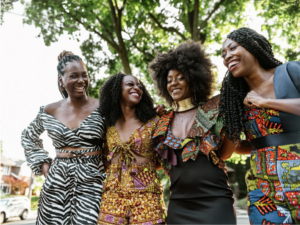
As we commemorate International Women’s Day 2025, African Women’s Development Fund (AWDF) reflects on the remarkable victories, challenges, and unwavering resilience of feminist movements across the African continent. Through in-depth conversations with our partners, we have gathered powerful stories of perseverance, advocacy, and transformative impact.
This year’s theme, “Accelerate Action for Gender Justice” – #AccelerateAction, underscores the urgency of sustaining feminist movements and ensuring that gender justice remains a priority in the face of growing resistance. This article amplifies the voices of AWDF’s KASA, Leading From South, and KOMBOA partners in the Democratic Republic of Congo, Niger, Mozambique, Angola, Zimbabwe, and Nigeria—feminist organizations that continue to break barriers and champion the rights of women and marginalized communities.
REFED-NK, Democratic Republic of Congo: Defending Women’s Rights Amidst Conflict
Operating in North Kivu, Democratic Republic of Congo, Réseau Femmes et Développement Nord-Kivu has been advocating for women’s rights since 2004. The organization tirelessly works to protect and empower women, girls, children, and marginalized groups, despite persistent instability and human rights violations in the region.
“The current state of our city is deeply alarming, characterized by severe human rights violations, including sexual violence against women and young girls. Since January 23, our activities have been suspended due to escalating insecurity. We have been unable to access our office, as ensuring the safety of our staff is paramount. However, we remain hopeful that peace will soon be restored, and we will once again raise our voices for justice and equality.”
— Deborah Mupita, Executive Secretary, REFED-NK
The call for transitional justice for Congolese women victims of war remains central to REFED’s mission. In times of crisis, their advocacy is more crucial than ever.
CNJFL, Niger: Empowering Young Women Amidst Growing Opposition(LFS Partner)
The Cellule Nigérienne des Jeunes Filles Leaders is committed to strengthening girls’ and women’s leadership, fighting gender-based violence, and promoting education and healthcare access in Niger. However, their mission is increasingly challenged by conservative forces that seek to suppress progress.
“Conservative sociocultural norms and opposition from religious and political groups obstruct the implementation of our initiatives. Despite these barriers, we have adopted transformative approaches that allow us to continue our work effectively. This year, we successfully organized mentorship and leadership camps, equipping over 60 young urban and rural girls with the skills to become changemakers.”
— Halimatou Zika, President, CNJFL
CNJFL’s achievements are made possible through the unwavering solidarity of feminist allies, including AWDF.
AMPDC, Mozambique: Strengthening the Fight Against Gender-Based Violence (KOMBOA Partner)
In Mozambique, the Associação das Mulheres para Promoção de Desenvolvimento Comunitário plays a pivotal role in advocating for gender justice. Their work focuses on influencing societal attitudes, combating gender-based violence (GBV), and empowering women economically.
“One of our greatest achievements has been the establishment of the Femicide Watch and the Unified System for the Prevention and Response to Gender-Based Violence (GBV). The support from public institutions and feminist movements in Sofala Province has been instrumental in driving institutional change. “
— Angela Jorge, Executive Director, AMPDC
Mwana Pwo, Angola: A Lifelong Commitment to Sexual and Reproductive Health Rights (LFS Partner )
Despite systemic obstacles, Mwana Pwo in Angola continues to provide critical information on sexual and reproductive health. Their work is fueled by an unwavering sense of duty and passion.
“What keeps me going is my deep commitment, passion, and love for this work. Supporting young women who have survived violence and oppression has been the most powerful and transformative aspect of my journey. Even in our lowest moments, we must lift our heads high and keep moving forward.“
— Aida Gilberto João, Gender Assistant, Mwana Pwo
Tag a Life International, Zimbabwe: Pushing for Legal Reforms and Leadership
Nyaradzo Mashayamombe , Founder and Executive Director of Tag a Life International, remains steadfast in her fight for women’s rights in Zimbabwe and across Africa.
“Despite rising anti-women movements, I draw strength from the women before me. They fought for our rights, and now it is our duty to carry the baton forward. Each time a girl graduates through our Leadership Economic Mentorship (LEMS) program and steps into public life—whether in politics or business—it is a triumph. One of our young women even became a mayor, proving that feminist activism leads to real change.“
A landmark victory for her organization was leading the advocacy for the Education Amendment Act, signed into law by the President of Zimbabwe. This legislation ensures that girls from rural and low-income communities have access to state-funded basic education.
Girl Child Art Foundation, Nigeria: Art as a Tool for Healing and Resistance (KASA Partner)
In Nigeria, Girl Child Art Foundation harnesses the power of art, storytelling, and advocacy to combat gender-based violence.
“We refuse to be silenced. Through murals, community workshops, and creative expression, we create safe spaces where girls reclaim their voices. For us, this was proof that art is not just about painting and drawing—it is a powerful medium for expression, healing, and change. ”
— Blessing Onyejike-Ananaba, Executive Director, GCAF
The Power of Feminist Funding and Solidarity
The testimonies from AWDF partners reinforce the vital role of feminist funding in ensuring the resilience, growth, and sustainability of grassroots feminist movements. In regions where civic space is shrinking and opposition is intensifying, organizations like AWDF provide crucial support that enables activists to continue their work despite mounting challenges.
As we mark #IWD2025, we reaffirm our commitment to #AccelerateAction—ensuring that feminist movements across Africa remain strong, impactful, and enduring. The fight for justice and gender equality continues, propelled by the steadfast solidarity of women dedicated to creating lasting change.
Bintou Mariam Traoré, communications Officer
#WorldAIDSDay 2024 Leading from the south
#WorldAIDSDay 2024 Leading from the south
On this #WorldAIDSDay , we shine a spotlight on the women leading the fight against HIV. In partnership with the Leading from the South (LFS) consortium, we stand in solidarity with African women-led organizations like the Coalition of Women Living with HIV and AIDS (COWLHA), the African Girls Empowerment Network (AGEN), and the AIDS and Rights Alliance for Southern Africa (ARASA), who are at the forefront of tackling the HIV epidemic in Africa. These women—activists, community leaders, and advocates—are driving change and offering transformative solutions to the HIV crisis. They are not only fighting the virus but also challenging the stigma and discrimination that often accompanies it. Their leadership is proof that grassroots, women-led initiatives are essential in the global response to HIV/AIDS.
Leading from the South (LFS) is a feminist, South-South global consortium designed and managed by four prominent women’s funds: the African Women’s Development Fund (AWDF), Fondo de Mujeres del Sur, FIMI – International Indigenous Women’s Forum, and Women’s Fund Asia. Together, these organizations amplify the voices of women from the Global South, ensuring that they are central to global conversations and actions around HIV/AIDS. Their collective efforts are helping to shape policies, raise awareness, and build local capacity to address the HIV epidemic in ways that are sensitive to the realities and needs of women in the Global South.
The leadership and expertise of these women are vital in the fight against HIV, and it is crucial that we continue to support and elevate their work. By amplifying local voices and empowering women to take charge of their health, we can work towards a world free from HIV, discrimination, and inequality.
Let’s unite in this effort, strengthen our solidarity, and continue to take action together.
Bintou Mariam Traoré, communications Officer
Standing Together: A Call for Action to End Violence Against Women in Africa
Standing Together: A Call for Action to End Violence Against Women in Africa
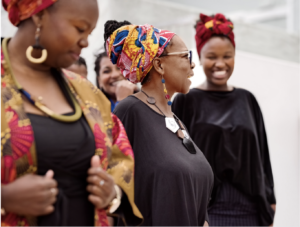
On November 25, the African Women’s Development Fund (AWDF) joins the world in observing the International Day for the Elimination of Violence Against Women commemorated under the theme UNiTE! Invest to Prevent Violence Against Women & Girls! This day which marks the beginning of the Sixteen Days of Activism against Gender Based Violence, highlights the ongoing global crisis of gender-based violence (GBV), which continues to rise despite progress in advocacy and legal protections. AWDF believes that ending GBV requires more than legal reforms and protective measures—it demands a fundamental shift in societal attitudes toward women’s rights. From West Africa to the Horn of Africa, women-led movements are at the forefront of this struggle, but they need more than support—they need sustained, concrete action.
AWDF’s Commitment to Ending Sexual Violence in West Africa
Sexual violence remains a pervasive issue in West Africa. According to a UN Women report (2018), over 60% of women in the region have experienced physical or sexual violence, with many survivors facing barriers to justice due to weak legal frameworks, inadequate support services, and prevailing social norms that condone such violence.
AWDF’s commitment to ending sexual violence focuses on strengthening local responses, bolstering legal protections, and creating safer spaces for survivors. In partnership with the Ford Foundation, OSIWA, and other local organizations, AWDF has launched an initiative to address and prevent sexual violence across West Africa. This initiative strengthens the capacity of women’s rights organizations to provide direct services to survivors, advocate for stronger laws, and shift harmful cultural norms that perpetuate sexual violence.
Through the KASA Initiative, AWDF has supported organizations to train over 300 law enforcement officers and reached 10,000 community members with educational programs on preventing sexual violence. By supporting local actors and leveraging international funding, AWDF is addressing the root causes of sexual violence and ensuring stronger protections for women and girls.
Discover inspiring stories from the AWDF’s KASA program, supporting feminist initiatives across Africa, and a concerning article on the 196 reported cases of rape in Senegal in the first half of 2024, highlighting the urgent need to strengthen efforts against sexual violence.
Learn more about KASA grantee stories
Read an article on sexual violence in Senegal
Strengthening Community Resilience and Feminist Solidarity
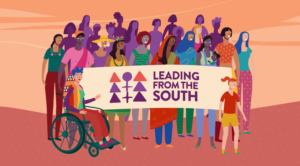
Feminist movements across Africa have shown remarkable resilience in the face of growing attacks from anti-rights groups. Through initiatives, we continue to build stronger, more resilient communities that can withstand patriarchal violence.
One of AWDF’s key pillars is solidarity. As global threats to women’s rights increase, the strength of our collective response becomes more critical. Through alliances like the LFS Fund, we are fostering a culture of mutual support. These networks allow women’s rights organizations, activists, and survivors of violence to come together to heal, strategize, and take collective action.
In Uganda, for example, through the LFS Fund, AWDF has partnered with local women’s organizations to provide legal aid and psychosocial support to survivors of sexual violence. This partnership has enabled over 4,000 survivors to access justice and healing services, and it has helped local communities become more active in combating violence through community dialogues and public education campaigns.
Explore the powerful stories of LFS grantees supporting feminist activism in the Global South, and learn about five more years of funding to sustain and expand these critical movements.
The Growing Threat of Anti-Rights Movements

Across Africa, anti-rights movements are gaining momentum, threatening the rights of women and girls. From Uganda’s Anti-Homosexuality Act to recent rollbacks of sexual and reproductive health rights in Somalia, these regressive movements are a direct challenge to women’s rights. According to the UN Women’s Global Database on ViolenceAgainst Women, one in three women globally experiences physical or sexual violence in their lifetime, with African women facing some of the highest rates of sexual violence.
In Somalia, the repeal of the Sexual Offences Bill exemplifies the dangers posed by these movements. The bill, which sought to criminalize sexual violence, was a significant step forward in women’s rights. Its repeal has not only left women vulnerable to further violence but also highlights the vulnerability of legal protections in the face of regressive political agendas.
The Komboa Consortium, is Inspired by African feminist values of sisterhood, solidarity and mutual aid, the African Women’s Development Fund (AWDF), Initiative Sankofa d’Afrique de l’Ouest (ISDAO), Purposeful, Doria Feminist Fund, and Strategic Initiative for Women in the Horn of Africa (SIHA), have joined forces and resources to create Komboa (“Liberate” in Swahili) a feminist consortium that supports communities threatened by the rise of anti-rights and anti-gender movements.
Inspired by African feminist values of sisterhood, solidarity and mutual aid, the African Women’s Development Fund (AWDF), Initiative Sankofa d’Afrique de l’Ouest (ISDAO), Purposeful, Doria Feminist Fund, and Strategic Initiative for Women in the Horn of Africa (SIHA), have joined forces and resources to create Komboa (“Liberate” in Swahili) a feminist consortium that supports communities threatened by the rise of anti-rights and anti-gender movements.
The Role of International Advocacy and Accountability
AWDF recognizes that international advocacy is crucial in shaping global norms around gender-based violence. By collaborating with regional and international actors, AWDF plays a critical role in resourcing and nurturing organizations that hold governments accountable for their commitments under international human rights frameworks, including the Convention on the Elimination of All Forms of Discrimination Against Women (CEDAW) and the Maputo Protocol. By providing financial support and capacity-building, AWDF empowers grassroots organizations to advocate for the full implementation of these human rights instruments, ensuring that governments are held responsible for advancing gender equality and women’s rights across the continent.
Through policy dialogues and advocacy campaigns, AWDF continues to pressure governments to ensure stronger legal frameworks that prevent and respond to gender-based violence. For example, after a two-year advocacy campaign led by AWDF and local partners, the Kenyan government passed the Sexual Offenses Act, which provides stronger protections for women and girls, including harsher penalties for sexual violence and clearer guidelines for survivor support.
A Call to Action
On this International Day for the Elimination of Violence Against Women, AWDF calls on governments, civil society, and individuals across Africa and beyond to unite in the fight against violence. We urge continued investments in women’s rights organizations, especially those led by women in marginalized communities, and call on each individual to actively participate in ending gender-based violence. Whether through advocacy, education, or direct support for survivors, every action counts.
Let us come together to build a future where women and girls are safe, respected, and able to live free from fear of violence—today, tomorrow, and for generations to come.
Bintou Mariam Traoré, communications Officer
Voice, Power & Soul: An African Feminist Narratives Festival
Voice, Power & Soul: An African Feminist Narratives Festival
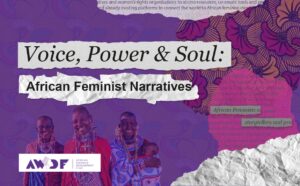
African Feminists have and continue to challenge entrenched systems of power and oppression that have systematically invisibilised African feminist knowledge. This zine captures the narratives that we are hearing and learning from African Feminist Movements on the role of African indigenous knowledge systems and ways of knowing as well as the role of the arts and creative expression as powerful tools for challenging erasure and silencing.
Birthing Leaders: Stories of Change in African Women’s Organisations
Birthing Leaders: Stories of Change in African Women’s Organisations
[tp lang=”en” not_in=”fr”]
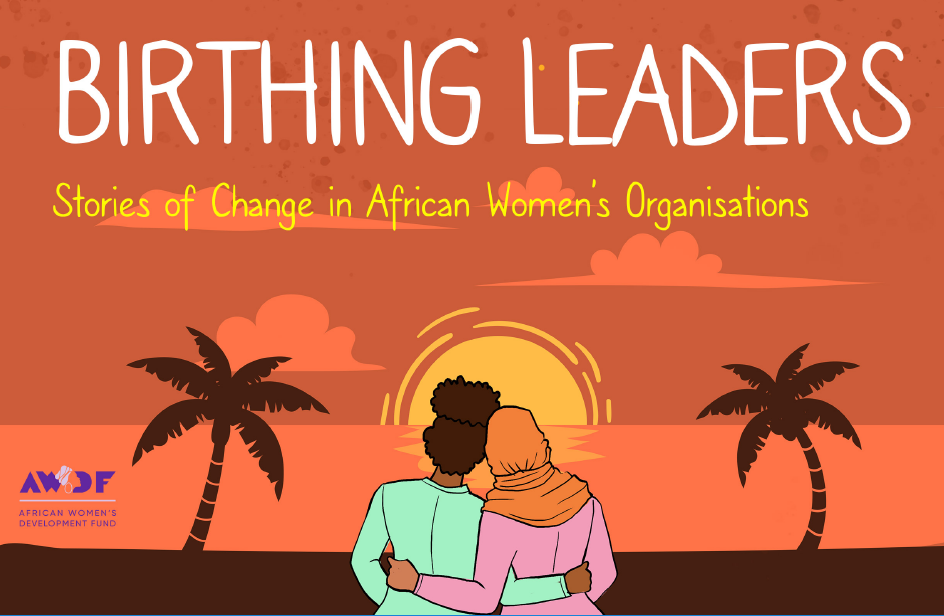
In 2015, the African Women’s Development Fund (AWDF) launched its Leadership and Governance programme to consciously nurture the hearts and souls of women leaders and organisations. And to honour the batons passed by our ancestors.
The programme uses one-on-one and collective coaching to mentor senior, mid-level leaders and governance boards of African women’s organisations. To date, the programme has directly impacted more than 60 women and 30 organisations across the continent.
Read the full Birthing Leaders Stories here
Click here to watch the video
[/tp]
[tp lang=”fr” not_in=”en”]
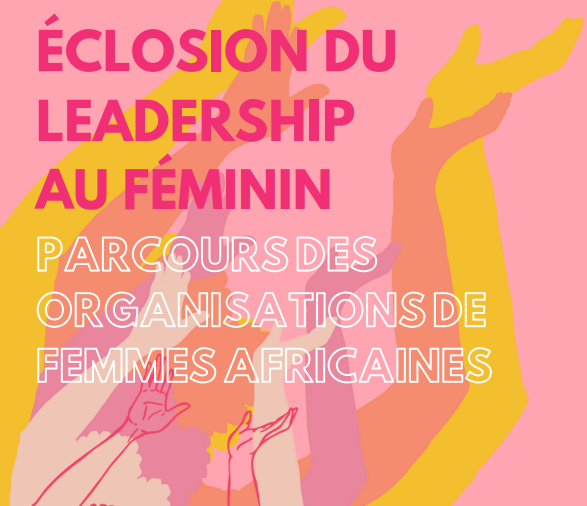
En 2015, l’AWDF lançait son programme de leadership et de gouvernance, une initiative de renforcement des capacités avec pour objectif d’encourager le développement des organisations de femmes africaines par leurs propres moyens — et grâce à un coaching individuel et collectif avec des leaders et des gestionnaires de haut niveau et de niveau intermédiaire. Les fonds devaient principalement servir à développer le leadership et la gouvernance au féminin, et renforcer les capacités de leadership des femmes africaines qui occupent déjà des postes de direction au sein de certaines organisations. Ces fonds devaient également contribuer au renforcement du leadership des femmes. Jessica Horn, directrice des programmes de l’AWDF, s’est entretenue avec Nancy Akanbombire, responsable du renforcement des capacités, pour discuter de la publication du livret Éclosion du leadership au féminin : parcours des organisations des droits des femmes africaines (document rédigé sur la base de l’initiative de 2015).
Éclosion du leadership au féminin: Parcours des Organisations de Femmes Africaines Leaders
C’est ce qu’elles avaient à dire…
Jessica : La plupart des bailleurs de fonds investissent dans les projets et/ou les activités des organisations. Selon vous, pourquoi est-il important d’investir dans des domaines comme le leadership et la gouvernance au sein des organisations de femmes ?
Nancy : À mon avis, la plupart des bailleurs de fonds privilégient plus les résultats des projets qu’ils peuvent partager avec leurs partenaires au détriment du leadership, de la gouvernance ou des capacités des personnes qui organisent ces activités sur le terrain. Dans une certaine mesure, cela se tient, puisque cette stratégie permet aux donateurs de poursuivre leurs activités. D’un autre côté, ce choix peut avoir un impact sur les objectifs à long terme d’une organisation.
La réponse à votre question (pourquoi investir dans des domaines comme le leadership et la gouvernance dans les organisations de femmes), est simple : pour transformer et pérenniser leurs organisations et encourager la justice sociale et le changement. Quand vous regardez les informations à la télévision, écoutez la radio ou lisez les journaux, vous constatez qu’il y a beaucoup plus d’organisations de femmes qu’auparavant. Par ailleurs, les femmes du monde entier semblent avoir plus de pouvoir lors des processus de prise de décision et plus d’influence sur de nombreux aspects de la vie sociale, politique et économique. Pourtant, les voix des femmes restent encore faibles et il n’existe toujours pas de véritable autorité ou d’autonomie du leadership au féminin.
Je pense que le patriarcat se reflète de diverses manières dans toutes les structures, les systèmes et les institutions de notre société. Les ressources des organisations de femmes sont par exemple très limitées, ce qui nuit au travail des femmes et à leurs organisations. En conséquence, les systèmes de gestion de la plupart de ces organisations ne sont pas très formels, car les femmes se lancent d’abord à la recherche de solutions à leurs problèmes sans penser à la structuration formelle de leur organisation.
Pour que les bailleurs de fonds contribuent à tous changements positifs, il est important d’investir dans un processus de transformation de l’organisation et de son personnel, de reconnaître et d’intégrer les forces et les capacités des femmes dans leurs organisations. Il faudrait aussi miser sur un processus et un environnement qui encouragent les femmes, qui permettent à celles-ci et à leurs structures de reconnaître leur potentiel et de s’opposer aux valeurs normatives du monde masculin.
Jessica : Éclosion du leadership au féminin est un recueil d’histoires drôles, inspirantes et surprenantes (j’avoue que c’est un livret très bien rédigé) ! Dites-moi, quelles sont les expériences de développement personnel et les thèmes communs qui sont ressortis chez chaque personne et chaque organisation ?
Ayesha : Wôw ! C’était une expérience vraiment unique, j’ai eu l’impression de faire partie de tout le processus de formation et j’ai commencé à surmonter ma propre peur d’écrire.
Lorsqu’on nous a demandé d’élaborer ce document exceptionnel, je n’étais pas sûre de pouvoir rendre compte des expériences, des émotions et des changements vécus par les femmes et les organisations avec lesquelles nous avons travaillé tout au long de ce projet. Si j’ai toujours le sentiment que leurs histoires ont été pleinement représentées, j’espère aussi avoir réussi à donner vie aux organisations et à leurs leaders, ainsi qu’aux lectrices et lecteurs qui pourront réellement s’identifier à ces femmes et à leurs organisations ; leurs expériences deviendront réelles et ne seront pas simplement des histoires tirées d’un autre roman de fiction. J’espère également que ces expériences offriront l’espoir nécessaire à d’autres femmes africaines leaders qui ont suivi ou entreprennent de suivre des parcours similaires.
Je pense qu’au niveau des organisations, les principaux sujets soulevés concernaient les questions relatives aux systèmes, pratiques et structures de gouvernance et celles relatives au pouvoir et à sa transmission. En ce qui concerne les leaders, des points comme la confiance en soi et le pouvoir ont été débattus.
Il convient également de mentionner que nous avons fait appel à une illustratrice et graphiste féministe africaine, une femme talentueuse et épatante, Dorcas Magbadelo. Elle a magnifiquement conçu et illustré ce document.
Jessica : Quelle histoire vous a le plus touchée ?
Nancy : Disons que toutes les histoires sont très touchantes et inspirantes. Mais si je devais en choisir une, je dirais celle de Zawade. C’est incroyable la façon dont elle a surmonté les discriminations et dirige aujourd’hui son organisation avec tant de confiance, de grâce et de force. Je tiens à rappeler que la lutte pour un monde juste pour TOUTES les femmes est possible !
Dans un monde patriarcal comme le nôtre, les femmes sont discriminées à tous les niveaux : à la maison, à l’école, au travail, dans les hôpitaux, les transports, les hôtels, etc. Absolument partout. Dans le cas de Zawade, en plus d’être née femme, elle vit aussi avec un handicap : c’est « une femme en situation de handicap handicapée ». Cette particularité génère d’autres formes de discrimination, de violence, de stigmatisation, etc. Il est donc extraordinaire qu’elle ait réussi à surmonter tous ces obstacles et se lève aujourd’hui pour défendre les droits des autres femmes et filles comme elle. Zawade possède l’esprit d’une vraie féministe. Son évolution depuis sa participation au programme de leadership et de gouvernance est tout simplement remarquable. Son parcours me rappelle constamment que les femmes peuvent tout faire. Son histoire est belle et très valorisante. Une raison de plus d’investir dans la formation des femmes !
Ayesha : Je dirais l’histoire de Khanyisile – Le sens profond du pouvoir. J’ai été particulièrement frappé par cette tendance que nous avons à aborder certaines situations de manière superficielle, surtout lorsqu’il s’agit des questions de développement et de création d’opportunités. Les histoires habituelles se limitent aux femmes des communautés pauvres et marginalisées. Khanyisile est une jeune femme à qui de nombreuses opportunités n’auraient pas été offertes sur la seule base de son lieu de résidence et de son travail. Il s’avère qu’elle avait encore beaucoup de réalités à découvrir. Par exemple, Khanyisile avait rarement eu l’occasion de rencontrer et d’interagir avec des femmes fortes qui avaient réussi dans leur carrière et qui lui ressemblaient. Elle a revu ses ambitions à la hausse.
C’était tellement émouvant de voir la surprise sur son visage alors qu’elle se trouvait dans la même pièce que d’autres femmes leaders noires tout aussi jeunes qu’elle. Cette expérience a réveillé quelque chose en elle. Désormais, elle voit plus grand.
Rapporter toutes ces histoires constitue une expérience vraiment incroyable.
Jessica : Le développement personnel est une expérience à la fois douloureuse et magnifique. Quelles sont les difficultés les plus courantes que vous avez rencontrées lors de ce projet ?
Ayesha : Hmmm ! Je pense que tout changement (voire toute évolution) passe par des étapes difficiles. On entend des gens dire des phrases du genre : « nous avons toujours procédé ainsi » ou « c’est dans l’ordre naturel des choses ». Vraiment ? Dès que nous cessons de changer, nous commençons à mourir et ceci est valable pour touttous, y compris pour les femmes et leurs organisations.
Mais comme vous l’avez si bien dit, c’était magnifique de voir ses femmes leaders se métamorphoser. En même temps, cette évolution signifie que certaines d’entre elles ont découvert qu’elles étaient devenues trop importantes dans leurs organisations : certaines ont démissionné pendant le programme ou après. Cette situation a été difficile à gérer, car si l’objectif visant à renforcer les compétences de leadership de ces femmes a été atteint, les organisations concernées ont finalement perdu de précieux atouts.
En ce qui concerne les organisations, le renforcement structurel et les changements qui l’accompagnent n’ont pas toujours été bien accueillis, notamment lorsque les fondatrices de ces organisations occupaient aussi le poste de directrice. Quelques organisations ont éprouvé de la gêne à l’idée de redistribuer les pouvoirs ou d’envisager une discussion autour du transfert de pouvoir. Dans certains cas, il existait également un écart intergénérationnel qui empêchait d’aborder certains sujets.
Mais tout s’est bien terminé.
Jessica : L’AWDF est l’un des rares bailleurs de fonds à investir dans la formation des femmes comme méthode de renforcement des organisations de défense des droits des femmes. Est-ce que ces formations fonctionnent ? Quelle est la valeur ajoutée des formations individuelles et collectives ?
Nancy : L’AWDF est effectivement l’un des seuls bailleurs de fonds qui reconnaissent la nature omniprésente du patriarcat dans nos vies et son impact sur chaque système et organisation de notre société, son influence sur l’augmentation des injustices et la marginalisation constante des voix des femmes. L’AWDF est parmi les seuls donateurs à reconnaître la nécessité de créer un espace sûr, libre de l’influence du patriarcat sous toutes ses formes, pour permettre aux femmes d’évoluer et de réaliser pleinement leur potentiel, et aider les organisations des droits des femmes à se développer.
Si vous êtes un bailleur de fonds et êtes sensible à de telles initiatives, alors je vous encourage vivement à investir dans la formation des femmes et d’y ajouter une approche féministe car cela fait toute la différence. Investir dans la formation des femmes, c’est investir non seulement dans leurs organisations, les aider à mieux atteindre leur objectif de changement, mais aussi dans des domaines qui libèrent le potentiel caché des femmes et de leurs organisations. En outre, les femmes et les organisations qui défendent leurs droits peuvent évoluer et créer des espaces sûrs pour toutes les femmes, en général, et celles traumatisées par la violence sous toutes ses formes, en particulier. Ces femmes pourront aisément être elles-mêmes, s’exprimer et laisser sortir la douleur et la peur enfouies en elles depuis longtemps.
Ce type d’investissement est très limité, voire inexistant. Mais, il produit des résultats spectaculaires.
Les histoires contenues dans ce livret en sont la parfaite illustration. La formation des femmes fonctionne ! Nous voyons comment des femmes et leurs organisations ont évolué en peu de temps. Je dirais même plus : les formations renforcent véritablement les organisations des droits des femmes. C’est un outil de transformation si puissant qu’il faudrait absolument l’adopter.
[/tp]
Memories of Water: AWDF Annual Report
Memories of Water: AWDF Annual Report
[tp lang=”en” not_in=”fr”]
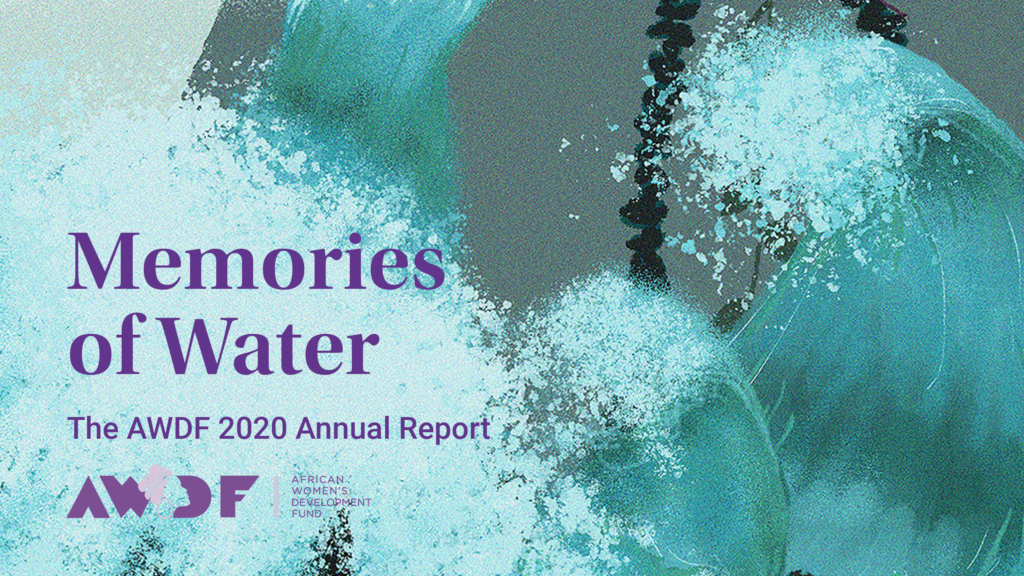
The AWDF 2020 Annual Report is a recollection of a year that, like water, held everything that came before it—the consequences of all it experienced, all the elements it contained. As told by African women, the report is a narrative of water remembering, water finding its way. A recollection of AWDF’s exceptional contribution to women’s rights in Africa, a celebration of the determination of the grantees, staff, the Board and our funders in an incredibly challenging year.
We awarded 136 grants and a total of USD $8,902,980 to organisations in 32 countries which is a 88.9% increase in total grantmaking from 2019. In response to the emergency elements of the year, including COVID-19 and anti-violence campaigns led by women’s rights organisations across the continent, AWDF gave a total of $122,000 in grants.
Against the tide, our grantee partners created visibility and voiced women’s rights issues, pushed and succeeded in putting laws in place that protect women, created understanding around harmful norms and policies, built women’s political, financial, and advocacy skills, increased women’s representation in political offices, improved women’s access to and ownership of property, contributed to increased budget allocations to public services, and responded to the needs of their community in a time of COVID-19 and other crises.
To learn more about our work, the innovations and impact made by AWDF grantees and our aspirations as we continue on this journey please read the full report.
Please click here for the summary of the report
To read the full report, please click here
[/tp]
[tp lang=”fr” not_in=”en”]
Ce rapport évoque le souvenir d’une année qui, comme l’eau, a gardé l’empreinte de tout ce qui l’a précédée — les conséquences de tout ce qu’elle a vécu, tous les événements dont elle était porteuse. Rapporté par des femmes africaines, il décrit le récit d’une eau qui fait mémoire, d’une eau qui se fraie un chemin. Ce rapport englobe les contributions exceptionnelles faites par l’AWDF pour la promotion des droits des femmes en Afrique. C’est une célébration de la détermination des partenaires bénéficiaires de subventions, du personnel, du conseil d’administration et de nos bailleurs de fonds au cours d’une année incroyablement difficile.
L’AWDF a octroyé 136 subventions et un total de 8 902 980 USD à des organisations dans 32 pays représentant ainsi une augmentation de 88,9% du total des subventions par rapport à l’année 2019. Pour répondre aux urgences de l’année, notamment la pandémie de Covid-19 et les campagnes anti-violence menées par les organisations de défense des droits des femmes à travers le continent, AWDF a octroyé des subventions d’une valeur de 122 000 USD.
En dépit du courant actuel que traverse le monde, nos partenaires bénéficiaires de subventions ont pu créer de la visibilité et exprimer les problèmes des droits des femmes ; pousser et réussir à mettre en place des lois qui protègent les femmes ; faire comprendre les normes et les politiques néfastes ; développer les compétences politiques, financières et de plaidoyer des femmes ; augmenter la représentation des femmes dans les instances politiques ; améliorer l’accès des femmes à la propriété ; contribuer à l’augmentation des allocations budgétaires aux services publics ; et répondre aux besoins de leur communauté en période de la pandémie de COVID-19 ainsi que d’autres crises.
Pour en savoir plus sur notre travail, sur les innovations, l’impact de nos bénéficiaires de subventions, et sur nos aspirations, veuillez lire le rapport complet.
Veuillez cliquer ici pour le résumé du rapport
Pour le rapport complet, veuillez cliquer ici
[/tp]
Bread & Butter Series #7: Being, Being with, Becoming & Doing with
Bread & Butter Series #7: Being, Being with, Becoming & Doing with
There has been growing concern across Africa by activists and policymakersalike around the question of land rushes (especially after the 2007-2008 land rush) often framed as “land grabs” (see Oya 2013b, Dieng 2017), and their implications for local communities. This “global land rush”n,emerged in the turbulent context of socioeconomic and political transformations. While the drivers, scale and actors in this renewed interest in land (and labour) are still contested, a body of knowledge interested in its differentiated impact and outcomes, as well as political reactions to these deals, is still growing (Hall et al 2015). It is important for us to consider however that land deals “do not occur in a socio-economic or political vacuum” (Oya 2013b: 1550). They are interventions connecting capital with labour with previous and ongoing dynamics of place-making resulting in uneven, unfinished processes of social change. Not only do land deals re-shape the places in which they
occur, they are also an expression of capitalist expansion across the globe. Feminist, postcolonial and decolonial scholars have contributed to acknowledging that mainstream models with their limited interpretation of ‘the economic’ are grounded in gendered cultural values and norms, though the recognition of this has been late and partial (Barker et al 2003, Pollard et al 2011, Zein-Elabdin 2016).
This article compares two case studies¹: an export horticulture estate and a scheme funded by an international financial institution in communities based in the delta of the river, in Northern Senegal. These communities are experiencing the boom of commercial horticultural farming and rural labour markets after the 2007-2008 land rush whose effects sediment with and build on previous dynamics of social differentiation. In this article, I challenge the tendency to over-focus on either narratives emphasizing dualisms such as ‘insiders vs outsiders’ or prioritising economic (and gendered) outcomes of ‘land grabs’.
“Read the full article here
Bread & Butter Series #6: If Another World is Possible…
Bread & Butter Series #6: If Another World is Possible…
Women’s ways lead us to the solutions the planet and the people need
Peasant and working-class women in Africa bear the brunt of climate-destroying ‘development’ projects which grab, pollute and destroy their natural resources, undermine cultural and historical ties to territories, exploit their labour (paid and unpaid), and violate their bodies and health. And women form the core of struggles to defend the land, lives, livelihoods and future of their families and communities. Their struggle is one that defends a way of life and an existence that cannot be replaced. This is their development alternative. Yet, women have limited voice and authority in decision- making about development at all levels of society. We note the ways in which African peasant and working-class women care for, replenish and reproduce nature and humans.
This article by Margaret Mapondera, Trusha Reddy and Samantha Hargreaves examines the ecological and climate crisis as a critical dimension of the manifold threats facing the planet and most of its peoples today.
Read the article here
Bread and Butter #5: Legal Literacy as Integral to Rural Women’s Land Rights
Bread and Butter #5: Legal Literacy as Integral to Rural Women’s Land Rights

The concept of land is one that has been described as the cornerstone of economic development. According to Odeny (2013), land is one asset that farmers, pastoralists and other communities base their livelihoods. Land is also a significant component of business assets, which play significant role in business investment strategies. Thus, securing land rights can have a profound impact on economic development of any group of people.
This study situates land located in rural areas as both a means of agricultural production, livestock rearing and a place for gathering natural products that play an important role in local economies such as woodcutting, wild harvesting, grazing, fishing and hunting inter alia. In most cases, particularly among indigenous people, land is a source of identity and cultural heritage.
Read the second article in the second series here:
Legal Literacy as Integral to Rural Women’s Land Rights
2020 Grantee Recognition Survey
2020 Grantee Recognition Survey
As a feminist organisation, AWDF continuously strives to support the growth and long-term sustainability of women-led organisations. Since 2013, we have been conducting grantees Recognition surveys annually to identify achievements and recognition of grantees we have supported two years prior to the survey. This is part of our monitoring, evaluation and learning activities.
The 2020 grantee recognition survey covers grantees who received US$ 5000 and over in grants in 2018. Online survey questionnaires were sent via Google forms to 54 organisations in 18 countries in Africa and the Middle East (41 organisations in 11 Anglophone countries, 13 organisations in 6 Francophone Countries and 1 bilingual country).
Click here to read the RECOGNITION SURVEY REPORT