


Category: News
AWDF Co-Founder Launches New Blog Above Whispers
Feb 26, 2016
Media Center /
Blog, News, news blog group
AWDF Co-Founder Launches New Blog Above Whispers
AWDF Co-founder Bisi Adeleye-Fayemi has launched a new blog targeted at mature audiences.
Above Whispers is a space “primarily, (but not exclusively) for middle-aged women, and will provide an opportunity for people to engage in discussions about a range of issues such as politics, social justice, development, financial security, women’s rights, health, entrepreneurship, popular culture, faith, parenting and relationships.”
It hopes to offer a unique platform to engage with other people in an atmosphere of mutual respect.
Click here to read Bisi’s response to Nigerian writer Olatunji Ololade’s article on African Feminists “Beasts Of No Gender, The Nation.”
Bisi Adeleye- Fayemi, a feminist activist, philanthropist, social entrepreneur and writer, is one of AWDF’s co-founders.

Women Lead The Charge In Post-Ebola Guinea
Feb 25, 2016
Media Center /
Blog, grantees, News, press
Women Lead The Charge In Post-Ebola Guinea
CONAKRY, Guinea – A women’s cooperative saw its work almost reduced to ashes after years of work as the Ebola outbreak ravaged the West African country of Guinea, but the women would have the last say.Djakagbe Kaba has spent decades working towards women empowerment. Despite the setbacks during the Ebola outbreak, she is determined to reposition women at the forefront of agricultural development and lead the way to better earning power.
The women cannot be independent if they do not have the means
It is Friday in Conakry and the streets are busy. Vendors are selling their wares as passers-by haggle over prices, afternoon prayers at the mosque have already begun.
Amidst the hustle and bustle, Djakagbe Kaba, head of the women’s organisation AGACFEM (Association Guineenne pour L’Allegement des Charges Feminines), opens the boutique where the organisation sells locally-made products produced by the women they work with.
The shop is modest but Kaba is confident. She has spent the last 30 years working with women’s groups before she co-founded the AGACFEM in 1995. With a focus on training and women’s economic and political empowerment, AGACFEM has supported thousands of women living in the country’s rural areas.
One of the organisation’s early projects was a women’s leadership programme after receiving funds from the Accra-based African Women’s Development Fund (AWDF). Kaba and her team organised trainings for women to participate in local governance. By the end of the project seven women were elected as members of the municipal council.
But AGACFEM did not stop there. The programme extended to illiterate women, who were taught how to read and write and the importance of voting.
In recent times AGACFEM has pooled together a co-operative of 45 women’s groups in the rural areas Kissidougou, Guéckédou and Kankan. The Coopérative des Femmes Rurales pour l’Agriculture, la Souveraineté Alimentaire et le Développement (COFRASAD) spent the last four years training women in 10 villages in organic agricultural production and value-added processing and are currently in the process of completing the finishing touches to two processing centres. But when the Ebola virus hit in 2014 everything changed.
Kaba and her colleagues were forced to re-strategise. AGACFEM received another grant from the AWDF, this time for the fight against Ebola. The organisation decided to team up with three other Guinean NGOs – Coalition des Organisations pour le Rayonnement de L’Economie Sociale Solidaire en Guinee (CORESS), Cooperative Badembere and Association des Jeunes Agriculteurs pour le Developpement Communautaire (AJADEG) – some of whom are members of COFRASAD working in the same region that also received grants from AWDF during the Ebola crisis to put their funds together to tackle the crisis head on.
Kaba decided to leave the capital, Conakry, and base herself in Kissidougou for three months to ensure all the programmes ran efficiently. While she headed the project planning and budget organising, roles were allocated to her partners to ensure that they maximised their efforts and networks as they reached to villages across the region.

“When it came to making orders for hand-washing kits, we placed one order together to keep costs down.” Kaba points out that it was important to her that each organisation used its strengths. “For example,” she says. “Badembere is an organisation that manufactures soap, so we thought let’s put the money we have each been allocated to buy soap into Badembere to strengthen their capacities.”Kaba bought and bargained every item needed for the hand-washing kits, even down to the stickers on the bucket, to make sure the group got the best for their buck. After overseeing the manufacturing process, the kits would then go out to the villages with the women volunteers who were spreading the message about Ebola.
Though Kaba and her colleagues were successful in their efforts in distributing hand-washing kits across communities, raising hygiene awareness and communicating with people, the work they had been doing in agricultural production took a hit. Nothing was produced for a whole year, setting the whole project back.
“We had to stop production,” says Fanta Konneh Condé, the secretary general of COFRASAD and one of Kaba’s colleagues, as she overlooks one of the gardens in just outside Kissidougou. “We missed the harvest season.”
Fast-forward to December 2015 and work has restarted. Condé and her colleague, Mariame Touré of Badembere take a stroll through the garden, stopping to talk to the women, as they remark at how far they all have come. With babies on their backs and farming tools in their hands, some of the women are – for the time being – cultivating carrots, lettuce and chives. Once again working to provide for their families. Under the initiative, they also produce rice, cereals and potatoes.
Back in Conakry at the boutique, Kaba is sure of the direction she wants the co-operative to go.
“We want to increase production,” she declares, as she gestures towards the pots of shea butter and black soap on the shelves. “We would like to export these products.”
COFRASAD is expanding rapidly having grown from a co-operative of four groups after its first year, to 45 groups today, four years later.
“The women cannot be independent if they do not have the means,” Kaba says. “It is better to support a group of women, rather than just one.”
Read the original article on Theafricareport.com : Women lead the charge in post-Ebola Guinea | West Africa
Diane Abbott Meets With Ghanaian Women’s Rights Activists At AWDF House
Feb 23, 2016
Media Center /
event, News, press
Diane Abbott Meets With Ghanaian Women’s Rights Activists At AWDF House
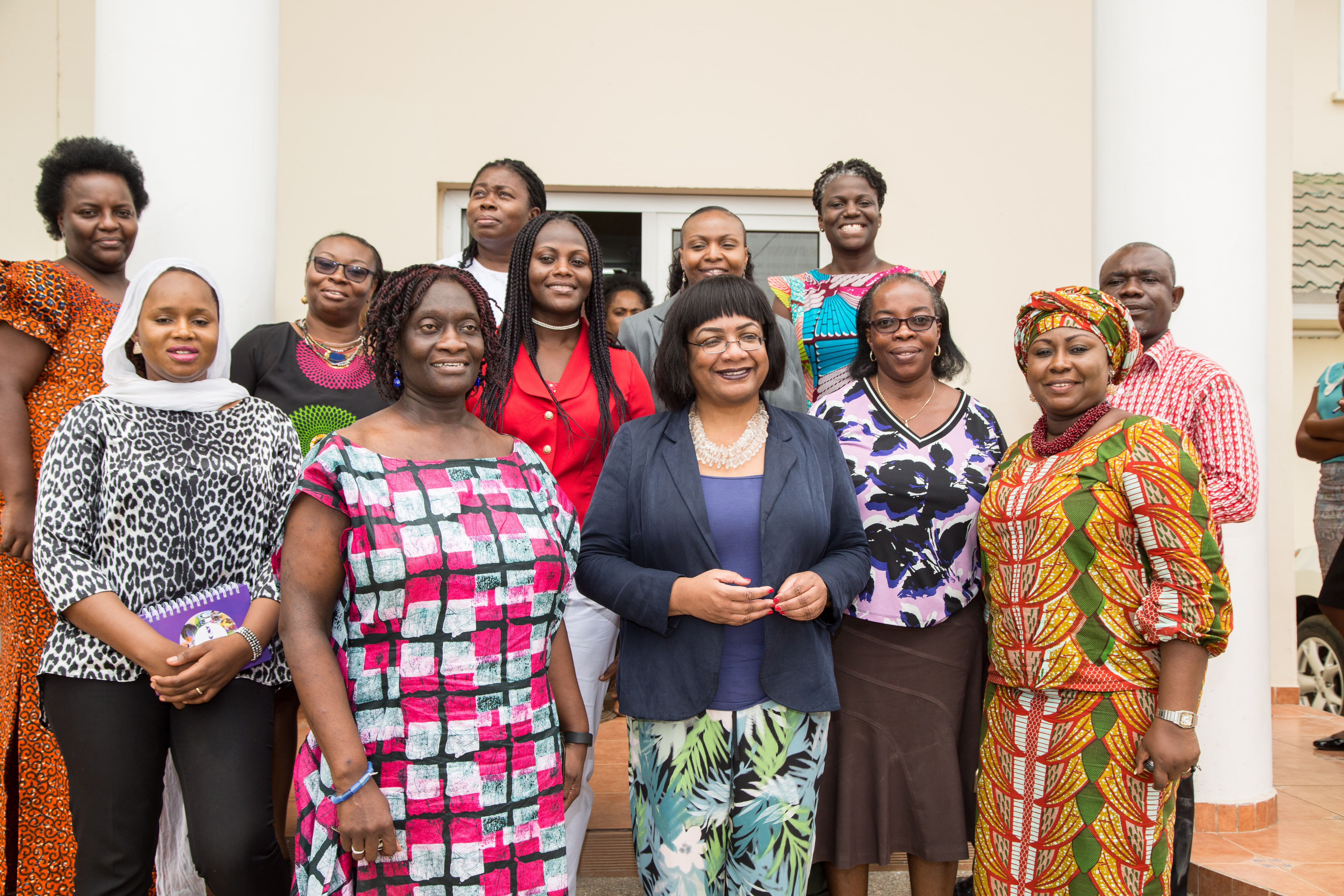
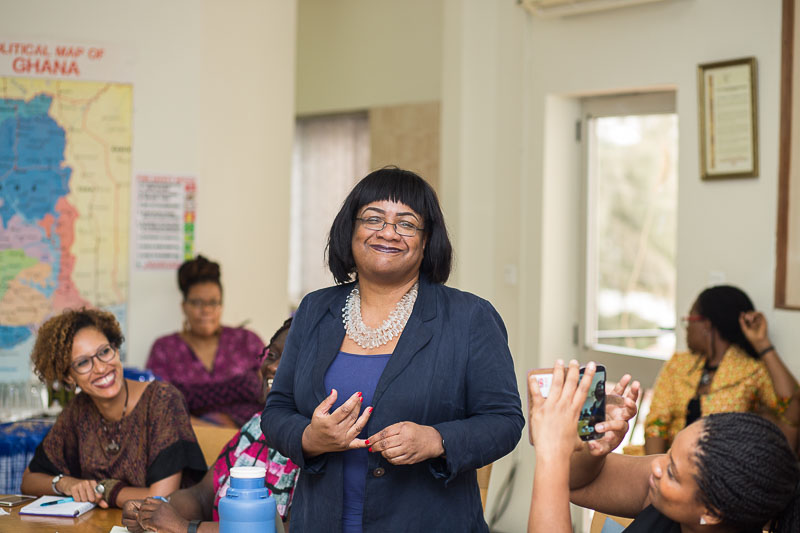 In what she described as her “most important meeting in Ghana,” U.K MP for Hackney North and Stoke Newington Diane Abbott, spent a morning with leading women activists in Ghana in animated discussion hosted by AWDF.
Abbot met AWDF’s grantees and staff to discuss development issues and the representation of women in the country. The conversation provoked insightful exchange of knowledge and helped forge new links between the parliamentarian and the grantees. The meeting took place on Tuesday February 16.
Abbott, a Labour politician who currently serves as Shadow Secretary of State for International Development, listened as the participants shared their experiences. On her part she talked about the struggles she faced on the road to leadership as a minority representative and stressed on the importance of women in the process of development.
” Development programs which are focused on and reaching women are more effective,” she said. ” I see my task to build on traditional strength, energy and focus of African women,” Abbott said.
The discussion raised salient points about the trials and tribulations of Ghanaian as they forge new paths for themselves. Facing stigma from spouses, family and the media when women pursue high government office, was highlighted as one of the key reasons are dissuaded from taking public office. Oftentimes the lack of a support system keeps them from occupying the spaces due them– and when compounded by the sheer difficulty of reaching these positions it becomes clear why there seems to be slow growth in the area of political representation. There is also a large burden on women to be able to balance several
responsibilities at one time.
Despite the daunting picture painted it was noted that there has been progress both within Ghana and the continent as regards women’s rights and representation. There is so much the African woman has to offer and it is clear that she has not stood in silence but rather has often defied the odds to make real change within her community and country. Despite the difficulties that await her, she will continue to take her place at the table in new, exciting and powerful ways.
“Change can happen quicker than you thick. We have to have the courage to seize opportunities,” Abbott said.
Job Vacancy: Grants Administrator
Feb 17, 2016
Media Center /
News
Job Vacancy: Grants Administrator
BACKGROUND
The African Women’s Development Fund (AWDF) is an Africa-wide fundraising and grant making African foundation based in Accra, Ghana. Our mission is to mobilise financial, human and material resources to support African women and the work of the African women’s movement to advance women’s rights and gender equality in Africa. AWDF is currently looking to hire a Grants Administrator (GA).to join the AWDF Grants Department and contribute to our dynamic grantmaking activities.
Applications should be sent with your CV and cover letter by no later than 4th March 2016.
Applications should be sent to: grace@africlub.net/awdf
JOB SUMMARY
Reporting to the Grants Manager, the Grant Administrator plays a critical role in the grant making function of the organisation and works closely with Programme Staff to manage the grant making process. The job holder will be responsible for the pre-grant review stage of the grant making function.
The GA will provide hands on support to applicants as it relates to the grant application and serve as the key point person for applicant queries. The person will be the administrator for the grant management system, with oversight from the Grants Manager. The GA will be responsible for inputting all necessary data into Grants Information Management system.
The GA will also participate in departmental conceptualisation of projects and reporting to relevant stakeholders.
The position requires you to build your knowledge of women’s rights frameworks and issues, AWDF’s thematic areas and strategies for achieving change. This will include a need to demonstrate self-directed learning as well as pursuing learning through support from your line manager and the Director of Programmes.
Responsibilities
The grants administrator will;
- Oversee all incoming grant applications
- Manage the workflow of the grant review process
- Input the necessary data into Grants Information Management System
- Assure the accuracy and integrity of the grants database
- Support the preparation of dockets
- Analyse and interpret grant application trends
- Collate and analyse grant application data
- Develop and prepare statistical reports for internal and external audience
- Produce relevant reports
- Write stories for AWDF websites and other media
- Support stakeholder enquiries and data requests
- Act as a point person for grantee enquiries
- Perform related responsibilities as required
- Any other duties as may be assigned by the Grants Manager
Person specification
The GA must have the following competencies:
- Ability to think and problem solve creatively
- Strong time management skills
- Highly organised and detail oriented, and able to multi-task
- Enjoy working independently and as part of a team
- Ability to analyse and interpret grant application trends
- Self-motivated
- Ability to work in a multi-cultural environment, support tolerance and diversity
- Ability to work flexible working hours, sometimes outside of regular working hours expected
- Ability to travel when necessary
- Ability to manage a heavy work schedule
- Organising and coordinating skills
- Ability to prioritise multiple demanding tasks
- A passion for women’s rights and a commitment to AWDF’s feminist values
Knowledge, Skills and Abilities:
- Proficiency in Microsoft Office required
- Knowledge of using an Information Management System important
- Information research skills
- Strong written and oral communication skills
- Ability to research and provide background information for AWDF grant making themes and focus areas
- Records maintenance and digital database management skills
- Excellent attention to detail
Qualifications
- Bachelor’s degree in gender and development, human rights, or other relevant area
- Minimum of 3 years working experience
- Excellent command of oral and written English essential; proficiency in French desirable
- Commitment to women’s rights essential, experience of working in women’s rights organisations or funds preferred
ACSHR 2016 Accra, Ghana: Pre Conference – Foundations of African Feminism
Feb 16, 2016
Media Center /
Blog, HIV-AIDS, News, women's human rights
ACSHR 2016 Accra, Ghana: Pre Conference – Foundations of African Feminism
AWDF facilitated a women’s only pre-conference session for the 7th Africa Conference on Sexual Health and Rights which took place in Accra, Ghana, from 8-12 February, 2016.
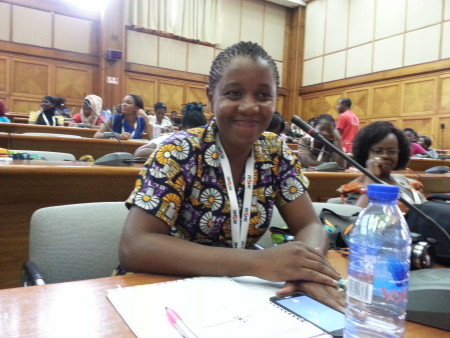
The meeting was jointly held with Curious Minds, Ghana, which acted as secretariat and conference host for this year’s gathering. AWDF wanted to provide a safe platform for an intimate and in-depth discussion of sexual and reproductive health and rights of adolescents and youth. Aimed primarily at 15 – 30-year old women, it ended up being a mixed age group of both genders, which ignited some fiery discussion. But at the end of the day everyone agreed it had been worthwhile.
“We wanted to provide a safe space for young women to discuss the issues relevant to them around issues of SRHR,” said AWDF’s donor liaison specialist Joan Koomson.
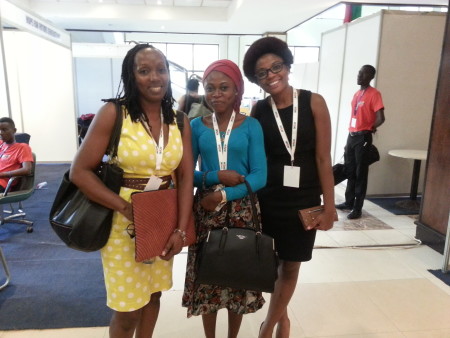
The pre-conference session also looked at helping young women develop common strategies and messages on engaging effectively with issues during the conference, influencing outcomes and how to derive the maximum benefit from being there.
A Position Statement (see below), worked on at the close of the day’s activities, was presented at the opening session of the main conference held Feb. 11. It summed up the major concerns and aspirations of the young women.
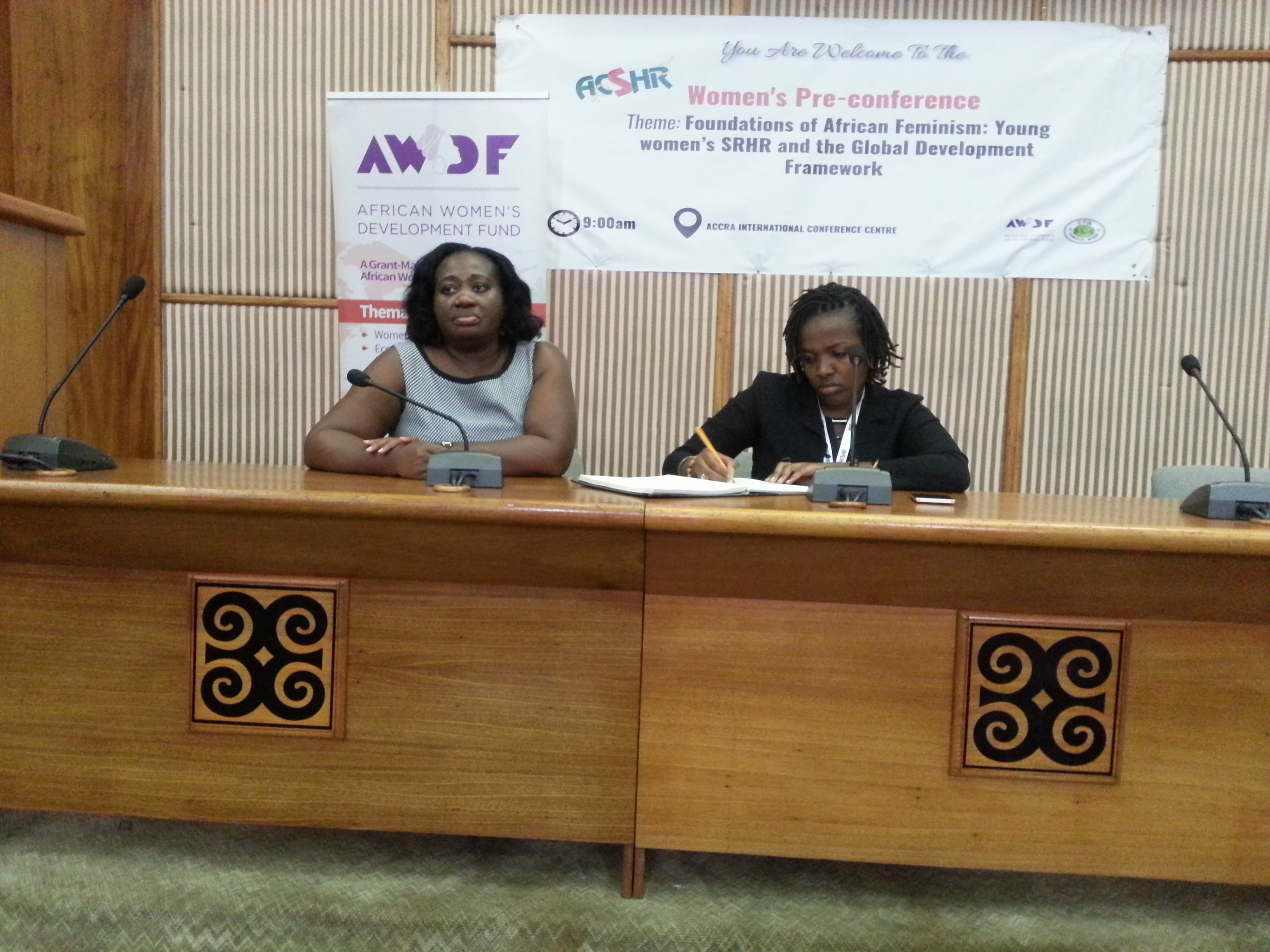
Takeaway:
“Negotiating the space to have young women’s issues represented with government is a priority,” said Catherine Nyambura.
A moment with Joan Koomson
Feb 8, 2016
Media Center /
event, News, press
A moment with Joan Koomson
Joan Koomson, AWDF’s Donor Liaison Specialist spoke with Ghana’s Metro TV about the International Conference for Family planning in Bali Indonesia held 25-28 January. She discussed some of the steps that have been taken in Ghana to move forward policy on Sexual and Reproductive Health and Rights (SRHR). She also touched on some of the shortfalls and the need to strengthen the country’s policy and implementation strategies.
Don’t call me beautiful: An Exhibit by Nana Kofi Acquah
Feb 3, 2016
Media Center /
event, News
Don’t call me beautiful: An Exhibit by Nana Kofi Acquah

Wed 3rd February, 2016
6:00 pm
DON’T CALL ME BEAUTIFUL
Alliance Francaise Accra – Exhibition hall, Accra
“I cannot think of a significant life moment, I have had, that didn’t involve some woman. These photographs are both a song in celebration of the African woman, and a criticism of how our societies deliberately impede their every movement.” This is Nana Kofi Acquah’s artist statement. More than a photo exhibition, this event will also feature poetry and a sound installation by the Nana Kofi Acquah himself.
Until 9th March.
Opening hours : 9am-9pm daily (except during activities)
FREE
Kenyan Women Raise Awareness About HIV With Soccer and Cultural Extravaganza
Feb 1, 2016
Media Center /
Blog, News
Kenyan Women Raise Awareness About HIV With Soccer and Cultural Extravaganza
Youth, parents and even grandmothers came together for a day-long sports and culture fair in Nairobi’s Kibagare district hosted by Young Women Campaigning Against Aids (YWCAA), an NGO which focuses on HIV-AIDS prevention and advocacy.
The event, held January 27, was an opportunity for fun and games showcasing the group’s activities and handiwork, as well as an education day.
The day began with a gripping opening soccer match featuring grandmothers, guardians and parents of the girls, after which YWCAA’s team faced girls from other Nairobi teams, captivating all those present.
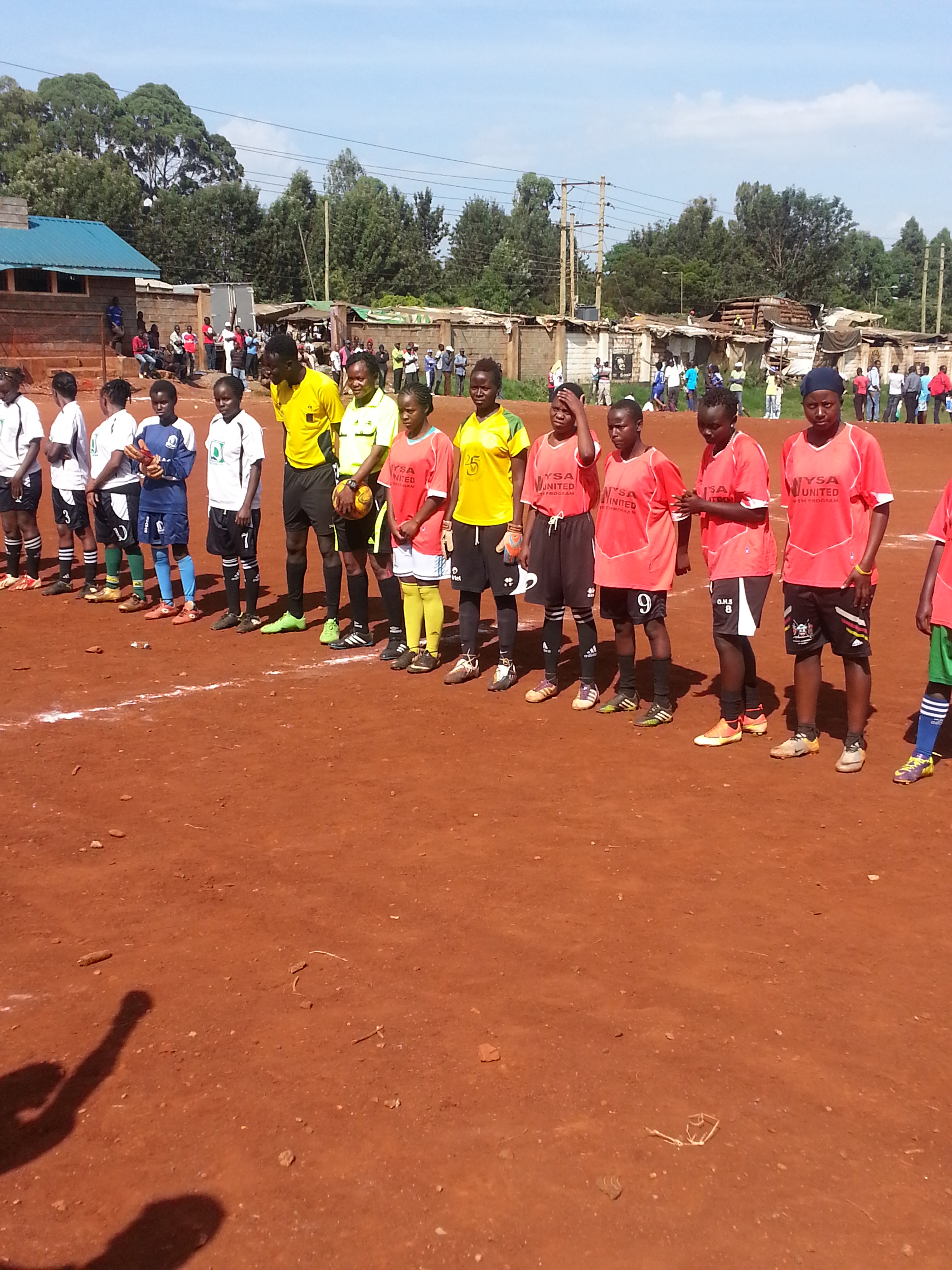
After winning teams were handed trophies, it was time for sensitization on drug abuse, Sexual Health and Reproductive Rights and HIV/AIDS. The active participation in the sessions showed clearly that the community both appreciated the information and wanted more.
“The event was a great success, with a higher turnout than we expected. The general public including the youth and adolescents were enthusiastic and actively participated during the question and answer sessions,” said Ms. Perez Abeka the group’s Executive Director.
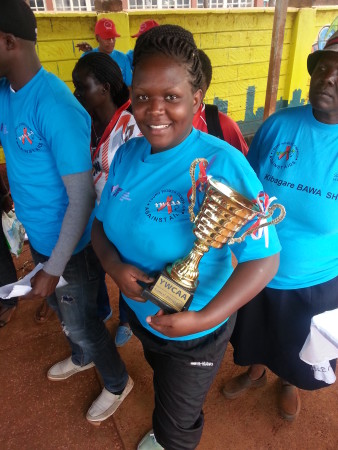
Perez, who noted the personal growth of the girls within the organisation, commended several of them for their hard work, ambition and commitment to better themselves. It was the same commitment that propelled the formation of the organisation.
Working in bars helped shape the mindset of the early members of YWCAA who paid for their university education through part-time work as bar waitresses. This exposure opened their eyes to the socio-economic impact of HIV and the vulnerable nature of their work environment. Although the focus of the organisation was initially on bar waitresses, they’ve expanded their coverage to the youth, orphaned and vulnerable children and grandmothers.
The cultural extravaganza is the climax of a one-year project executed by YWCAA with funding from AWDF. The project seeks to use sports, culture and the creative arts as tools for prevention and advocacy on HIV/AIDS, and to serve as a means of empowerment for young women. The group’s participants benefit from an extensive mentorship program and training in various skills including dress making, bead work, beauty, hair dressing, drama and music.
YWCAA’s work continues to serve as an inspiration to the African Women’s Development Fund (AWDF) and the world at large.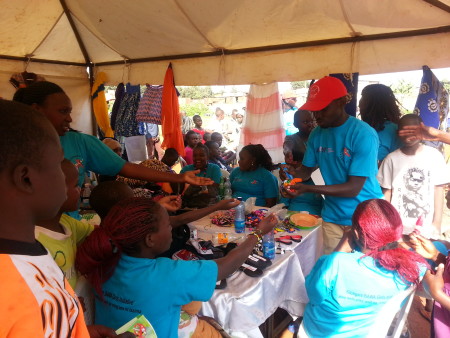
Women’s Rights Activists Protest Sierra Leone Safe Abortion Bill
Jan 28, 2016
Media Center /
News, press
Women’s Rights Activists Protest Sierra Leone Safe Abortion Bill
By Moiyattu Banya
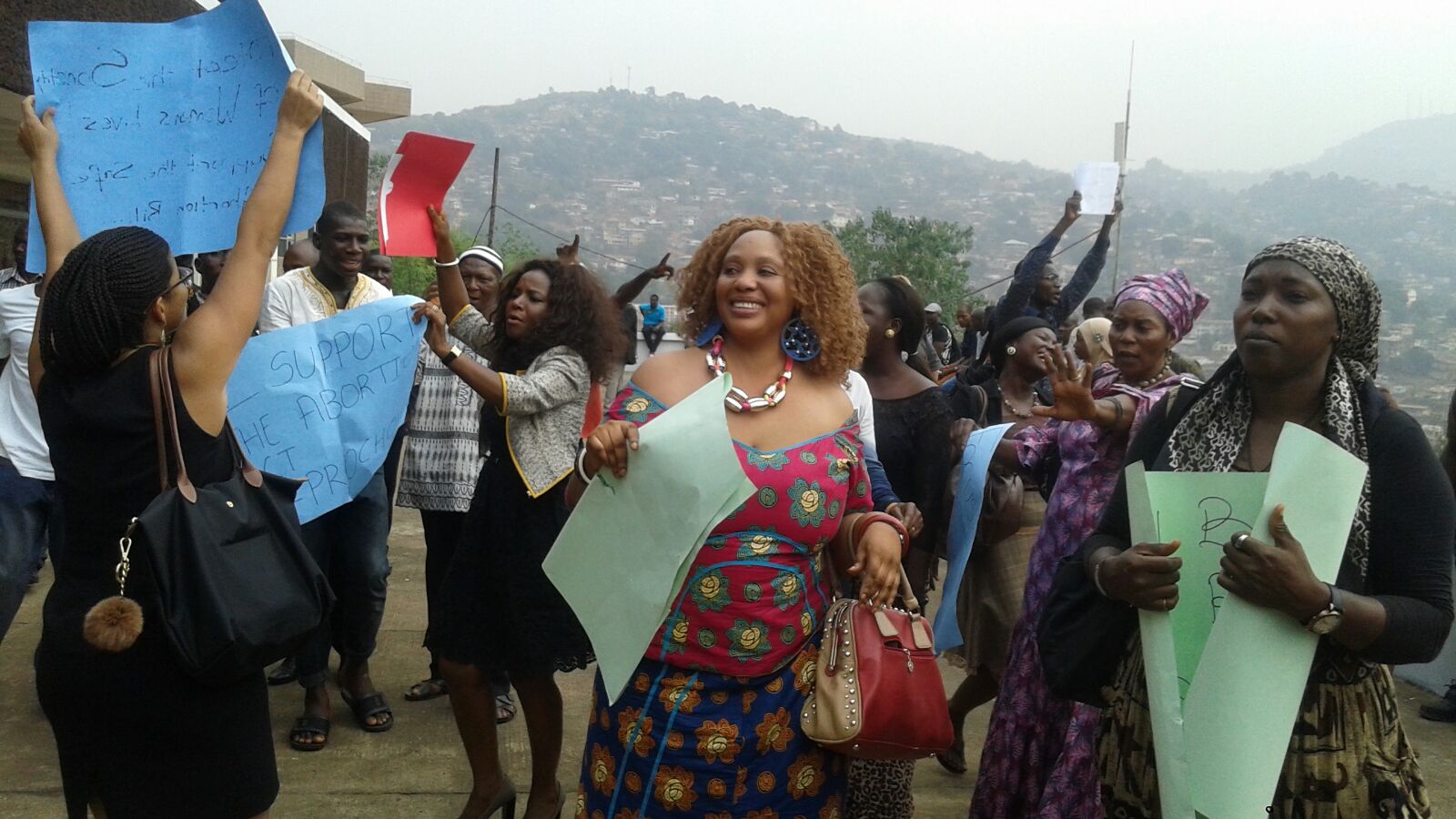
A group of over 50 Sierra Leonean women have marched on the nation’s parliament house to affirm their support for a Safe Abortion Bill passed last year.
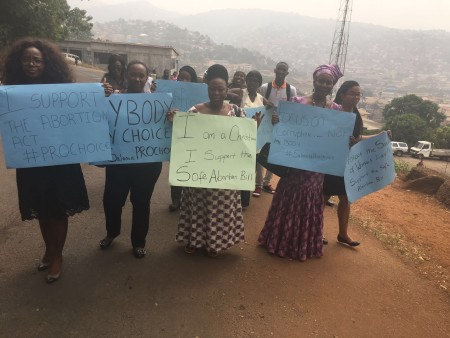
Authorities prevented the women from invading a meeting convened by Christian and Muslim leaders on Wednesday to discuss the bill which was brought before parliament in December 2015, but is yet to be signed into law by the president.
The bill would legalize abortion for women and girls with pregnancies of up to 12 weeks and even after 13 weeks under special circumstances which include sexual assault, rape, incest or medical complications which might put the life of a mother or child at risk. Legislators have worked closely with women’s activist organizations and key stakeholders to debate the benefits of the bill for women as well as the healthcare system in Sierra Leone.
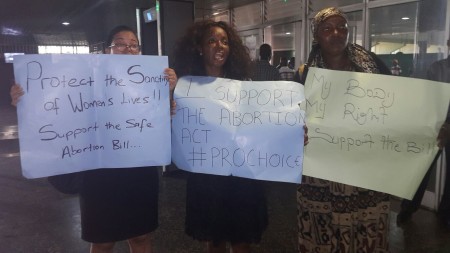
The women, who were from a coalition of different women’s rights groups, have championed the bill as a victory for reproductive rights saying it would reduce illegal and unsafe abortions. Sierra Leone has the world’s highest maternal mortality rates in the world according to the World Health Organization, with a high proportion of deaths resulting from unsafe abortions.
“It is not a fight against morality or religion,” Jayne Flynn-Sankoh, an activist said. “It(the bill) is a pathway to the independence of women …the Bill seeks to protect the sexual and reproductive health rights of women.”
“We are not saying that we don’t want to have babies, we are saying let us make a decision.We need to protect our women and girls who are getting pregnant through rape, incest or have a medical condition that may put her life or the fetus in danger. It is about safety and choice,” Ajara Bomah, another activist, said.
The activists say they will continue to organize more advocacy efforts around the Bill.
 C
C
Click here
to listen to Nassau Fofana, a former gender advisor to the President’s interview on BBC radio about the bill.
5th Chief Executive Officers Forum Report, AUGUST 2015
Jan 26, 2016
Media Center /
new, News, Publications, resources
5th Chief Executive Officers Forum Report, AUGUST 2015
AWDF’s 5th CEO Forum on Leadership and Communications for Women Leaders of Women’s Rights Organisations in Africa took place in Nairobi, Kenya between 10 -12 August 2015. The three-day convening brought together 21 vibrant women executives from 8 organisations across Africa, including Botswana, Zambia, Uganda, Zimbabwe, Cameroon, Kenya, Nigeria and Ghana. The program featured two main facilitators, Hope Chigudu and Paula Fray, who will serve as coaches leading the participants through a 10-month coaching program following the forum. Over the years, the focus of the CEO Forum has deepened and expanded. The forum and coaching program are also growing just as the participants are also developing their leadership and communications portfolio.
With each forum, the experience shared by the organisers and participants pushes the Capacity Building Program to take risks and try new and different processes. So, the forum and coaching program are interactive and responsive, shifting and changing over time like the women leaders who take part. Through this process, the Capacity Building Program is creating a unique framework that promotes African feminist leadership and coaching as a model for implementation for women’s rights organisations throughout Africa and, potentially, around the world. The idea is to mobilise more resources to support African women and organisations to build a compelling leadership practice that infuses the whole organisation. This can provide routes for the democratisation of leadership among staff and board members, so that human resource talents and skills can be adequately tapped and utilised for greater viability of the organisation. This can provide much needed support to the CEO and senior management team. With feminist leadership, leaders are built to carry the vision of the organisation into the future.