
Category: News
The Take Aways from Women Deliver: A brief Interview of Theo Sowa
The Take Aways from Women Deliver: A brief Interview of Theo Sowa
Last Month, AWDF CEO Theo Sowa spoke and moderated a series of panels at Women Deliver in Copenhagen, Denmark. Dignitaries such as H.R.H Crown Princess Mary of Denmark and Danish Minister Kristian Jensen along with other notable international players all gathered to discuss development and what the new Sustainable Development Goals (SDGs) mean for women and girls today. She was interviewed by the Associate Editor of Devex and had some poignant things to say about the future of development and how Women and Girls should be central in discussions, policy development and implementation.
Check out the interview below:
What Refugees Give: New Liberian Women’s Organisation
What Refugees Give: New Liberian Women’s Organisation
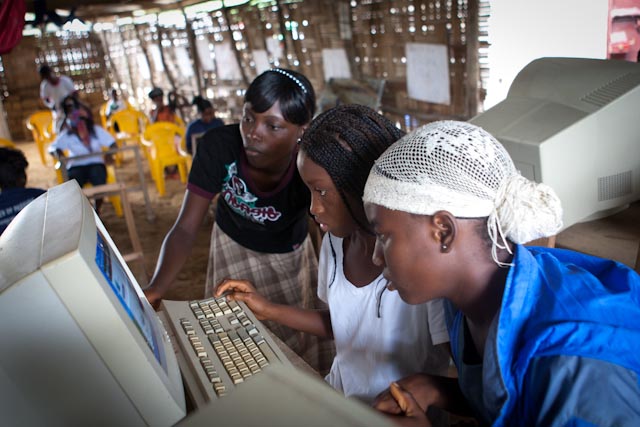
From 1999 to 2003 the Liberian civil war persistently disrupted the lives of Liberian women, forcing many to seek refuge in neighbouring West African countries. Not willing to see their country disintegrate, Liberian women took action to catalyse an end to the war, organising within Liberia, but and also as refugee women in Ghana around the peace talks happening in Accra. Liberian women also organised to address their situation as refugees, and build leadership and resources to sustain their displaced communities.
A group of Liberian women refugees living in Accra, Ghana’s capital city, came together to form the New Liberian Women’s Organisation (NLWO) to help the women to develop new skills, improve their livelihoods and forge new bonds in their host country. The African Women’s Development Fund (AWDF) began to support NLWO in 2005 when the organisation was still based in Accra, and have accompanied the group with funding support totalling over USD 60,000 to date. The initial grants went towards strengthening the institutional capacity and leadership development of young refugee women. Further grants have resulted in the construction of a community center, livelihood and leadership workshops, and the provision of critical emergency supplies, with housands of lives changed for the better. .
Members of the New Liberian Women’s Organisation returned to Liberia in 2007 to continue their work. Over a decade later they remain active in their communities. With continued support from AWDF, NLWO has gone on to impact their communities in powerful ways. They have provided training sessions on gender equality and income generation for women who returned to a Liberia under new rules and had to learn how to survive and prosper once more. They have also created awareness on the spread of STDs and HIV. When the Ebola virus struck in 2014, NLWO women mobilised in the same way that they always had, to deepen education on the virus, in community spaces like schools and marketplaces. They also distributed safety and sanitary items and led an awareness campaign in the country’s rural areas, including the heavily affected Montserrado County. As a follow up to these activities, AWDF has awarded NLWO a grant of USD 15,000 to provide Ebola survivors with income generating opportunities and leadership and mentorship skills training. The project will also carry out educational activities on issues of women’s rights to economic security.
The New Liberian Women’s Organisation is one example of how women activists continually create and support initiatives that have tangible impact on their communities. It is important to recognise the meaningful contributions and valuable impact that women have made, historically, in Liberia and other conflict countries.
We know from experience that refugee women need both protection and respect for their rights as granted by international law. Unfortunately, international communities have been slow and inconsistent at fulfilling necessary human rights mandates to protect their citizens. We have learnt also that refugee women need resources to regain autonomy and to organise around response, recovery and rebuilding their lives, communities and societies. Not just shelter, food and health interventions, but financial support and other resources are necessary to help rebuild communities and lead emergency care responses to long term recovery, development and sustainability. Let’s make sure that the work of refugee women is properly recognised, facilitated, and amplified.
Grantee Highlight: Sowing Seeds of Progress with the Surplus People’s Project
Grantee Highlight: Sowing Seeds of Progress with the Surplus People’s Project
At the Ithemba informal farming area in Eesteriver in the Western Cape of South Africa, small food gardens, livestock projects with chickens, pigs and goats bear testimony to the “Women Organising for Social Justice” project more than a year after its conclusion. Project participants at the Ithemba farm tell stories of how they have steadily grown their food gardens, learned how to take care of their animals and turn their skills into fundraising activities.
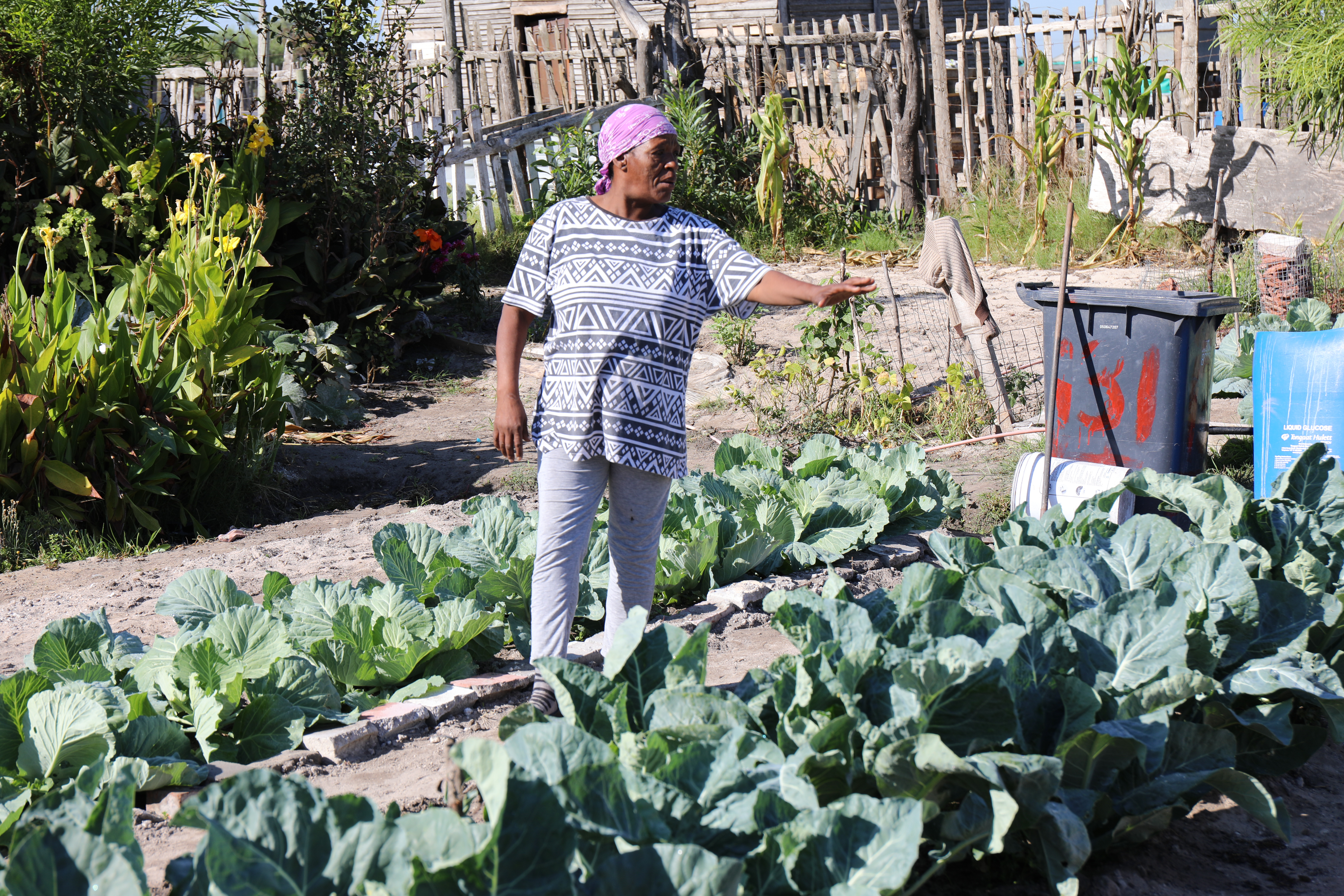
In 2015, the Surplus People Project received USD 30,000 from AWDF to implement a year-long project entitled, “Women Organising for Social Justice”. The project increased women’s knowledge, skills and experience on environmental justice, food sovereignty and economic empowerment.
Watch the stories of the participants above and see the full story by clicking the link below.
Job Vacancy : Administrative Assistant
Job Vacancy : Administrative Assistant
AFRICAN WOMEN’S DEVELOPMENT FUND
JOB VACANCY : ADMINISTRATIVE ASSISTANT
Background
The African Women’s Development Fund (AWDF) is a grant making foundation, which aims to support the work of the African women’s movement for peace, equality, sustainable development and social justice. AWDF, which is based in Accra, Ghana, requires the services of an astute, experienced, innovative, dedicated and dependable Administrative Assistant. Priority shall be given to female applicants.
Scope
Her responsibility shall be to assist the Human Resource Manager in providing administrative and HR services to the organisation to ensuring that AWDF’s operations are executed in an effective, accurate and up to date manner.
Responsibilities:
- Keep the Front desk of the organization
- Ensure effective and efficient receipt of incoming letters and documents distribution (and filling of documents where appropriate) as well outgoing ones;
- Assist in resolving administrative problems by coordinating logistical complaints: receive, record and invite the relevant service provider to fix the problem
- Assist in ensuring operation of equipment by completing preventive maintenance requirements; calling for repairs; maintaining equipment inventories; evaluating new equipment and techniques.
- Assist in maintaining supplies inventory by checking stock to determine inventory level; anticipating needed supplies; placing and expediting orders for supplies; verifying receipt of supplies.
- Assist in procurement processes according to the organisation’s procurement policy
- Assist in maintaining electronic and hard copy filing system
- Assist in maintaining confidential records and files
- Take minutes at meetings and distribute them 7 days after the meeting
- Provide professional administrative support to supervisor during recruitment process – collate soft and hard copies of applications received; communicate interview schedules, etc.
- Assist in coordinating logistical arrangements both in-house and external events according to laid down procedures (flight bookings, accommodation, venue, for board meetings; Organise information / board papers other organisational meetings.
- Assist in ordering and maintaining stationery and equipment supplies (checking quotations, wait for approval before purchases are made)
- Assist in the renewal of permits , NGO recognition certificate and Filling of annual returns
- Any other duties as may be assigned by the line manager
Person Specification
- Bachelor degree in HR/ Administration or its equivalents required
- Minimum of 2 years of hands on administrative support experience
- Proficiency in MS Word, MS Excel and MS Outlook a must
- Knowledge of office administration and reasonable knowledge of Human Resource management
- Knowledge of operating standard office equipment
Competencies required:
- Must have excellent communication (oral and written ) and listening skills
- Ability to speak and interact clearly and professionally
- Ability to prioritise work and strong problem solving skills
- Good research skills and attention to detail
- Ability to work methodically, accurately, timely and neatly
- Must be a team player with excellent inter personal skills
- Experienced working with an international organisation and has cultural awareness (preferred)
- Has good analytical skills
- Extremely organised. Strong multi-tasking and time-management skills.
- Can handle sensitive information with the highest degree of integrity and confidentiality.
- Knowledge in ticketing is a plus.
- Ability to work on one’s own with minimum supervision.
Qualified candidates should send typewritten applications and a CV of not more than 3 pages to the Human Resource Manager, African Women’s Development Fund (AWDF), 78 Ambassadorial Enclave, East Legon, P.M.B.CT 89, and Cantonments Accra Ghana. Copies should be sent by email to grace@africlub.net/awdf, with ‘Administrative Assistant’ as the subject reference. Applications should reach AWDF no later than June 10, 2016.
Only short listed candidates will be contacted for additional information and interviews.
Joining the conversation: Theo Sowa at Women Deliver 2016
Joining the conversation: Theo Sowa at Women Deliver 2016
This week, AWDF CEO Theo Sowa will be speaking and moderating a series of panels at Women Deliver in Copenhagen, Denmark. The annual conference brings together global leaders to move forward the agenda for women’s rights. Women Deliver 2016 focuses on building will and knowledge to impact on women and girls’ lives through the Sustainable Development Goals (SDGs).This global platform provides an opportunity for African Women to be at the forefront of global agenda setting and change.
Bringing through the voice of AWDF grantees, Theo Sowa will be moderating a series of panels on women’s health and education. She kicks off with a session on May 16, “Delivering as One- Global Partnerships for Global Goals” with panelists from government, civil society and the private sector including Tedros Adhanom, Ethiopian Minister of Foreign Affairs; Catherine Russell, U.S. Ambassador-at-Large for Global Women’s Issues; Jan-Willem Scheijgrond, Global Head of Government Affairs B2G at Philips; Susan Myers, Senior Vice President of the UN Foundation and Vagn Berthelsen, CEO of Oxfam IBIS.
Watch Theo Sowa on May 17 at 11 am CET when she will be moderating the official Women Deliver press conference featuring Philanthropist Melinda Gates and Canadian First Lady Sophie Grégoire-Trudeau .
On May 18, Theo Sowa will moderate the press conference on the Amplify Change fund that AWDF co-manages. The press conference includes H.R.H Crown Princess Mary of Denmark and Danish Minister Kristian Jensen speaking to the role of Amplify Change in transforming Sexual and Reproductive Health and Rights advocacy.
Follow Theo Sowa’s updates on Twitter @awdf01. To join in the conversation check the tag #WDlive ., You can also register for the virtual conference and watch an exclusive livestream of the events at http://wd2016.org/media-resources/virtual-conference/.
STANDING ON AFRICAN FEMINIST LAND : A reflection by Nana Darkoa Sekyiamah
STANDING ON AFRICAN FEMINIST LAND : A reflection by Nana Darkoa Sekyiamah
The African Feminist forum was an event full of revolutionary love and heated discussion. It was a time of growth, and a time of healing. It was a time for us as Feminists to just be. Below is a reflection on the experiences of an AFF alum, and renowned blogger and the media co-coordinator for AWID. Find out more about AWID and the original piece here.
____________________________________________________________________________________
STANDING ON AFRICAN FEMINIST LAND
On my first day in Zimbabwe I visited the National Museum of Science. Above the doorway of the anteroom hung a picture of Nehanda Charwe Nyakasikana, with the caption ‘MAPFUPA ANGU ACHAMUKA’. This was translated to me to mean, “my bones will rise”. Nehanda was a spirit medium active in the first Zimbabwe Chimurenga [1]. She inspired her people in the liberation struggle, refused to convert to Christianity and was sentenced to death by the colonisers. The story is told that Nehanda went singing and dancing to the gallows declaring, “my bones will rise” to win freedom.

An image of a poster at the National Museum of Science, Harare. (Photo: Nana Darkoa)
I have always felt strongly that Zimbabwean women embody resistance. Women in Zimbabwe took active part in the liberation struggles for independence as fighters and comrades. In my 2008 interview with Margaret Dongo, a former freedom fighter, she emphasized, “there were no rubber bullets for women”. On the warfront, women and men were trained in a similar manner, women did not get preferential treatment.
A Milestone on the #AfriFem Journey
The resistance, creativity and strength of Zimbabwean women resonated in the fourth African Feminist Forum (AFF) held in Harare from 10-12 April 2016. The presence of over 160 African feminists from 32 African countries and the Diaspora amplified and multiplied the energy of the Zim sisters.
Sisters from South Africa sang, “…this land is women’s land…” and right there, in the hall of Rainbow Towers, it felt as if we were standing on African feminist land.
As someone who has been lucky enough to attend three consecutive AFFs, I felt a different energy at #AFFZim. The space felt more radical, it was clear that the AFF had been on a journey, and suitably on its 10th anniversary had grown into a more formidable space. A space that confidently said, “We are feminist. No ifs. No buts”. A space full of young feminists, queer bodies, academics, differently abled women, sex workers, older women… A space with sisters from all parts of our continent across our various arbitrary colonial divisions – activists from Egypt, Senegal, Kenya, Nigeria, Mali, Botswana, Angola, South Africa, Mauritania, Uganda… emphasizing the need for us to continue to build solidarity across our movements, and to create spaces which welcome us in all our diversities.

Nurturing the Body and Soul
Wellness was weaved into the entire AFF programmeof the AFF with some of us waking up early to shake what our collective Mamas gave us at Zumba classes with Kuda whilst the more zen sisters worked on their downward dog poses. We did not forget about the importance and benefits of sexuality and its links to well being. In an evening session on ‘Sexuality and the Well of Being’ we shared about a variety of sexual experiences and I had the pleasure of passing dildos around the room with Iheoma Obibi and Prudence Mabelele, my collaborateurs in sex positivity.
Highlights & Lowlights
We spoke about the continued need to dismantle patriarchy in all its forms. Sisters from Zimbabwe shared that they had nicknamed patriarchy ‘Patrick’. In speaking on ‘New Faces of Patriarchy’, Bisi Adeleye Fayemi extended the metaphor and reminded us that we needed to work against both ‘Patrick’ and ‘Patricia’.
In a session on ‘Protest Movements’, we heard from Thenjiwe Mswane about the #FeesMustFall movement, its non-hierarchical leadership structure and the recent exclusion of feminist and queer bodies within the movement. Marian Kirollos spoke about the ongoing struggles in Egypt, and the prominent role that women continued to play in the continued uprising. Dorothy Njemanze reminded the audience that the secondary school girls abducted from Chibok, Nigeria represent a tiny fraction of the thousands of girls captured and forced into sexual slavery by terrorists and militias.
In breakout sessions, we discussed the importance of creating feminist cultural spaces, documenting our stories by writing and blogging, and the connections that need to be made amongst our feminist diasporas for Pan-African organizing across the world.
As with every gathering of passionate, strong-minded sisters, we had our moments of tensions and disagreement. I was with the crew that felt, ‘what is this respectability politics?’ when one too many Aunties sighed about how ‘young women are showing all their breasts and vaginas on social media’.
Kampire Bahana from Uganda challenged this eloquently, pointing out that this was part of a purity narrative. Some younger queer sisters spoke up about feeling a level of discomfort and silencing in the space. We were all reminded that we needed to be conscious and attentive to the various forms of privileges that we carry.
As in all previous AFFs that I have attended, I left feeling inspired and reinvigorated to continue in my life of activism, knowing that I have sisters all over the continent and globe who stand with me, and whose work and dynamism continues to blaze a path for those to come.
Ebola: Local efforts were key in Sierra Leone
Ebola: Local efforts were key in Sierra Leone
Chuku Emeka Chikezie is a writer we commissioned to write a piece that focused on the ways in which women were involved in responding to the Ebola Crisis. The piece was originally posted on the Journalist but has been re-posted below.
Ebola: Local efforts were key in Sierra Leone
Lessons can help in battle against Zika virus
Hot on the heels of the Ebola outbreak that gripped Guinea, Liberia and Sierra Leone in 2014 and 2015, experts are now reflecting on the experience of the battle with Ebola to inform the Zika virus fight. The lesson? Keeping it local pays off.
The biggest lesson after the Ebola outbreak, certainly in Sierra Leone, was the centrality of community participation, ownership, mobilisation, and engagement in ending the epidemic; however a recent Harvard Business Review article highlighted four lessons from the Ebola crisis with relevance to the recent spreading of the Zika virus: pinpoint hotspots with widespread testing; implement targeted control measures; prevent widespread transmission; and integrate research with immediate action.
It isn’t that the four conclusions the experts draw in their HBR article are necessarily wrong, the problem is that they tend to overstate technical solutions that rely upon foreign expertise at the expense of locally adapted, people-centred solutions that, when applied early enough, are less costly and disruptive.
I worked for nearly a year on the Sierra Leonean Ebola response and found that there were many lessons at the end of the outbreak. For instance, upon visiting one northern district in Sierra Leone, which was at the epicentre of the outbreak, the research team was intrigued to learn that one Member of Parliament, Isata Kabia, had organised awareness raising activities as early as April 2014, a month before the first confirmed case in the region.
Kabia was an MP in the Port Loko district of Sierra Leone. A cosmetic chemist by profession, Kabia is one authority figure who knew she had a massive role to play in mobilising her constituents. “I told them, I’m a scientist,” Kabia recalled reflecting on those early days, “I’m more scared of Ebola than you are.”

Kabia proved to be an unstoppable force during the first few months of the spread of Ebola. Using $600 of her own money, a matching sum from donors, and six phones donated by a local telecoms company, she set up a communications network linking health authorities with some of the most remote settlements that she had identified when elected in 2012, through a citizens’ parliament she had initiated.
“In 2013, right after elections, we did a citizens’ parliament and this was my way of making sure the people were involved and owned their own development track,” recalled Kabia. “We sat down, we highlighted the issues, agriculture, business opportunities, jobs, the mines, the health and education issues in the constituency. We prioritised. We decided among ourselves, what is a priority? Which area should we focus on?”
This hands-on approach helped in mounting an effective Ebola response in the constituency. “What we wanted to do was to make sure that within the interior where the burials are going on that you don’t know about, where the sick don’t have any hospitals so they’re going to be cared for at home, had a way to reach the CHO [Community Health Officer] in Lunsar,” Kabia explained. “The CHO had the command phone, and then the phones within the interior are to call him in case of any suspected case or any suspected symptoms so somebody could go and verify instead of them trying to move the person.”
Kabia explained that many of the areas were inaccessible by even the motorbikes (known as Okadas) commonly used for transportation, let alone cars. “You can’t imagine somebody sick and trying to get out to a main hospital because there’s no hospital within their own area,”said Kabia.
Significantly, this early engagement with the local community signaled a warning which, had it been heeded, may have averted huge loss of life and economic disruption later. Kabia recalled how young people from the area put on a play “using the first messages we got from the Ministry of Health about not touching sick people, not touching the dead and certain foods. So the message right there on that day in Marampa was zero touch. Zero touch for bat foods, zero touch for sick people, zero touch for dead people,” she said.
At the time, Kabia had alerted health authorities, however, due to the levels of resistance around burials and the touching of dead bodies, which is the prime cause of infection, the warning wasn’t sufficiently heeded. “When we said zero touch for dead bodies, there was such a ruckus around the room, we just knew it was going to be a big issue,” she said.
Prior to the Ebola outbreak, Kabia had championed women’s causes and concerns in her parliamentary work. “Most of my focus is on women, they need the most assistance and assisting them has greater impact for the whole society,” she said; further noting that ‘women’s concerns are everybody’s concerns’.
The distribution of power in a patriarchal society such as Sierra Leone’s typically disempowers women and Kabia notes that this is an important social point in the fight against any infection. “With Ebola and what happened we reaffirmed, with any disease, it’s the women who are the caregivers at home,” Kabia argued. “Usually, when the women themselves are sick at home, they don’t even have the power of choice. As a woman, you can’t decide when/if you go to a hospital. Somebody has to allow you, by giving you money to go to a hospital. That extends all the way through to maternal care. Somebody’s deciding for you when you go to a hospital when you’re sick. When sick at home, you are the doctor, you are the nurse. Women have the potential to be much much more affected by this disease just because of that culture,” she said.
For these reasons, Kabia had a hunch that women would play a key role in the response as informers and first responders. In the end, she worked with older women as well as young men and women. Kabia believes this mobilisation effort paid dividends: “I think, because immediately they felt included. Immediately, they felt maybe saving lives could be their responsibility. You give people that kind of power, they respond,” she said.
And respond they did. The former MP recalls how her constituents approached her and said “Honourable, how can we help?” Young people became the de facto surveillance officers, the contact tracers, the first responders. “I think that community ownership helped tremendously in my constituency and I’m sure in other areas as well. I couldn’t be everywhere so the natural thing was to set up teams where we’d have people in the local areas. We didn’t import anybody to say you go and manage that particular area,” Kabia said.
Her approach paid off. Local leadership in other districts, such as Koinadugu in the North and Pujehun in the Southeast, helped to either stave off the worst effects of the Ebola outbreak or to end it. And a lot of this happened before the massive international mobilisation joined government efforts to tackle what eventually became its peak in November 2014, with an outbreak producing a staggering 500 cases a week.
Yet we hear so little of the efforts by the MP Kabia and other local leaders whose tireless efforts undoubtedly made a decisive difference at significant points in the 18-month outbreak. It is partly understandable that the international media pays disproportionate attention to foreign medical workers who risk their lives (as frontline Ebola response workers undeniably did) to help out in a faraway land. But unless we pay greater attention to local agency, we may inevitably arrive at flawed conclusions that poor countries like Sierra Leone are totally dependent on overseas assistance; lack resilience to handle crises (even if they need additional support); and that their entire leadership is inept, ineffectual, or corrupt.
Worse, if citizens of Sierra Leone and other developing countries internalise such faulty insights, they will miss vital opportunities to build on all the positive things they achieved under extremely challenging conditions. There’s something there for Brazilians and Latin Americans to take away too.
Unlocking the Doors. Feminist Insights for Inclusion in Governance, Peace and Security
Unlocking the Doors. Feminist Insights for Inclusion in Governance, Peace and Security
By: Dr. Awino Okech
This is the third in a series of three African Women’s Development Fund (AWDF) primers entitled Feminist Perspectives on Governance, Peace and Security. The primers are intended to:
1. Offer a review of the major debates on women, governance, peace and security in Africa.
2. Review and analyse women’s movements’ interventions in governance, peace and security.
3. Offer a set of policy and advocacy priorities based on political and practical realities.
4. Benefit women’s rights activists, organisations and people in government at the frontline of local and national mobilization initiatives seeking to enhance women’s leadership.
5. Assist in building alliances and structuring support across various institutions working towards enhancing women’s political participation.
This is the third primer in the series. It analyses the successes and gaps in women’s movements’ approaches to the intersections between governance and the security complex. These insights are based on AWDF’s analysis of some of the major challenges confronting movement building in the areas of governance, peace and security. With these primers, our objective is to re position feminist politics as a fundamental expression of accountability to our cause and constituencies, and to provide an opportunity for advancing individual and collective learning.
Gender and Security in Africa
Gender and Security in Africa
By: Dr. Awino Okech
This is the second in a series of three African Women’s Development Fund primers entitled Feminist Perspectives on Governance, Peace and Security. The primers are intended to:
1. Offer a review of the major debates on women, governance, peace and security in Africa.
2. Review and analyse women’s movements’ interventions in governance, peace and security.
3. Offer a set of policy and advocacy priorities based on political and practical realities.
4. Benefit women’s rights activists, organisations and people in government at the front line of local and national mobilisation initiatives seeking to enhance women’s leadership.
5. Assist in building alliances and structuring support across various institutions working towards enhancing women’s political participation.
This primer reflects on women’s peace activism and gendered security in Africa. It explores the following interlinked questions: What factors drive women’s peace activism? Who are the major actors that women peace activists target? What are the key lessons that can be drawn from these interactions? This primer begins by tracing the evolution of debates and activism on gender and violence.
Secondly, it highlights national, regional and international policy frameworks that have emerged out of this activism. Finally, the primer draws on a few peace building initiatives led by women’s rights actors across the continent. We hope the lessons highlighted here offer a basis for building alliances and structuring support across various institutions working to enhance women’s peace activism.
Statecraft and Pursuing Women’s Rights in Africa
Statecraft and Pursuing Women’s Rights in Africa
By: Dr. Awino Okech
This is the first in a series of three African Women’s Development Fund (AWDF) primers entitled Feminist Perspectives on Governance, Peace and Security. The primers are intended to:
1. Offer a review of the major debates on women, governance, peace and security in Africa.
2. Review and analyse women’s movements’ interventions in governance, peace and security.
3. Offer a set of policy and advocacy priorities based on political and practical realities.
4. Benefit women’s rights activists, organisations and people in government at the front line of local and national mobilisation initiatives seeking to enhance women’s leadership.
5. Assist in building alliances and structuring support across various institutions working towards enhancing women’s political participation.
This particular primer maps key areas of feminist analysis and intervention in governance. Based on existing research on the major factors that hinder women’s political participation, emphasis is placed on electoral systems, political parties, quotas and national constitutional mechanisms. These are also areas where the impact of the women’s rights movement has been felt. This primer therefore assesses the ways in which women’s participation in governance has been assured, the challenges arising from these approaches, and lessons therein. This primer is intended to benefit women’s rights activists and organisations at the frontline of local and national mobilisation initiatives that seek to enhance women’s leadership. We hope the primer is useful for building alliances and structuring support across various institutions working towards enhancing women’s political participation.