
Category: News
Tributes to Joana Foster: A Life Remembered.
Tributes to Joana Foster: A Life Remembered.
Remembering Joana Foster: A friend and sister in her unwavering commitment to Feminism.
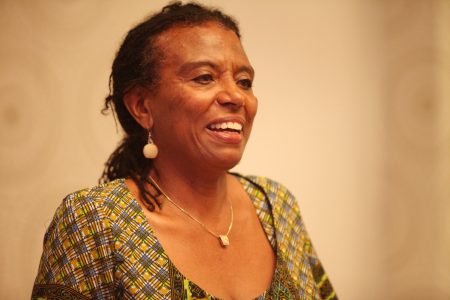
By Hilda Tadria
I had an opportunity to talk to Joana in August 2016 and she was in high spirits, attending a farewell party organised for her by friends in London. She told me she was enjoying herself, dancing; and indeed she had her laughter. I was amazed and told her my conversation with her had taught something about living positive. In our October AWDF Board meeting we were told there are some promising developments. I felt somehow hopeful. Then Saturday 6 November 2016, I receive a call from Theo Sowa without warning (Theo always warns me when she is planning to call). I was sure she had bad news when she asked me if I was at home and told her to come out with it; she wanted to know whether I was alone. I have to be frank, am glad I was alone that night so that I did not have to restrain myself in mourning for my friend.
Since then, I have been mulling over what to say about Joanna. Let me talk about her as I have known and experienced her. She and I met in what could be described as an unlikely place. We met in Dakar, Senegal by sheer destiny. In 1994 African women merged in Dakar to prepare for the famous Beijing Conference. That meeting is etched in my memory for two reasons. The fist reason is the total lack of order in a meeting where 2000 women turned up; most of them unexpected. AS I sought an explanation for the chaos, I was told it was the lack of resource.
I found myself looking for answers as to where African women could access resource for future organising. So when I saw a flyer from Global Fund for Women advertising a training on resource mobilisation; I decided that is the place I would spend my time. I found the allocated room and took my place in a circle of other women and prepared to pay attention. A few minutes after settling in, I looked around the room, and there across was this pretty woman with the most engaging smile. It was surely meant for me; I smiled back. Each time an important point was made, this woman and I would look at each other across the room , nod and smile at each other. When the session was over, we zoomed across the room and introduced ourselves. I remember we held hands as we walked out and as soon as we were out of other people’s hearing, looked at each other and in Unison said “we can do this”.
Joana and I were inseparable during the rest of our time in Dakar, planning how to start a Fund for African Women. By the time we left Dakar we had managed to get a commitment from Global Fund to give us the seed grant we needed to develop the proposal and launch the organisation. Not long after, we met with Bisi Adeleye –Fayemi who had been working on a similar plan to start a Fund. The three of us are pragmatists; we soon became a trio; and we had never separated. Our togetherness, no matter what has remained firm in spite of the challenges we have encountered; Three women, Three countries bound by a common vision and driven by feminist passion.
Now Joana has been plucked from us but I will always remember that first meeting and the engaging smile that told me ‘you are the one I want to work with’. I will remember her for her positive outlook on life; she was not willing to be brought down by events that could be managed by dialogue. Joana was elegant ; a small woman with a big heart always ready to share knowledge and gifts. I and the African women will remember her for the light she shone on women’s rights.
Joana Silochina Foster (1946-2016)
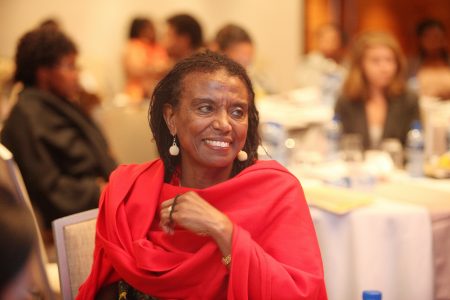
By Bisi Adeleye Fayemi
I first met Joana Foster at an international conference on Violence Against Women, which took place in Brighton, England in November 1996. I took my son with me to the conference, and he fell ill. As I fretted over my son, Joana fussed over me. After Brighton, Joana and I became firm friends. She was a mother-figure, auntie and friend. At the time we met, she had just become the Regional Coordinator for Women in Law and Development in Africa (WILDAF), one of the leading women’s rights networks in Africa. She was based in Harare, Zimbabwe. Anytime she was in London, which was often, because her daughter Helen lived there, Joana would get in touch and we would meet up.
In March 1998, Joana stopped over in London on her way to attend the annual United Nations Commission on the Status of Women in New York, the meeting known in the international women’s movement as CSW. I was going to attend the CSW that year as well, and we were booked on the same flight out of London. The day before, we met up for lunch at a restaurant near AMwA’s office in Holborn. As we walked down the street, we were comparing notes and sharing our frustrations dealing with our respective donor agencies. I was telling her about my experiences with a funder who had sat on our proposal for eighteen months only to turn around and give a ridiculous excuse for rejecting the funding request. I ended my rant with, ‘It is about time we started our own fund as African women’. Joana stopped in her tracks. ‘What fund’? she asked. ‘An African women’s fund’ I said. She laughed and said, ‘Welcome on board. We already have a fund’. Prior to that conversation, AMwA had been planning to start a fund for African women, as a logical step from the work we were already doing, running capacity building programs for African women and facilitating advocacy opportunities. Joana Foster and Dr Hilda Tadria had started working on the idea of an African women’s fund as far back as 1994, based on inspiration Joana had drawn from attending a workshop organized by the US based Global Fund for Women. ‘African women can do this’, Joana said to herself, and she managed to convince Dr Tadria to join her. Both of them did some planning and consultations, but the timing was not quite right. Dr Tadria was working with the United Nations Economc Commission for Africa (UNECA) in Addis, and did not have much time for additional endeavors. Joana was Ghana Country Director for CUSO, a Canadian NGO at the time, then she left to become Regional Coordinator of WILDAF in Zimbabwe. The idea of the fund for women in Africa was put on hold. After our March 1998 discussion, Joana, Hilda and I decided to join forces and the two separate ideas for a women’s fund in Africa became the African Women’s Development Fund. I left London in 2001 to move to Accra where we had decided to locate the fund, and Joana finished her term at WILDAF and returned to Ghana. I became the Executive Director of AWDF and Joana was the Chair of the Board.
AWDF could have been based anywhere in Africa, since it was an Africa-wide foundation. Several countries met our objective criteria – an enabling political environment, a vibrant women’s movement, a favorable banking system that would allow the flow of money in and out of the country and so on. For me, what clinched the deal for Ghana was the fact that not only was it close to Nigeria, since I did not want to live too far away after being out of Africa for so long, it was Joana’s home. Auntie Joana was my mother and my friend, so it was a no brainer. Ghana it was.
I learnt a lot from Auntie Joana. We spent a lot of time together travelling, attending meetings and planning for AWDF. She was always full of enthusiasm, joy and energy. She loved to cook, garden and dance, and she enjoyed good wine and tea. She was also a very elegant woman who took a great deal of pride in her appearance. She was also a very healthy eater.
When I arrived in Accra, April 2001 to start work at AWDF, I stayed with Joana for the first month. We had so much fun together, setting up AWDF, recruiting staff, looking for a place for me to live, and planning for the future. After all the various journeys the idea had taken, AWDF was formally launched in June 2000 in New York at the Beijing plus 5 Review Conference, with an Africa launch in December 2001. Five years after the Beijing conference, African women were proud to celebrate a concrete achievement, and Joana Foster was key to that. Sixteen years later, AWDF is globally acknowledged as a key player in the international philanthropic movement, having funded over 1,200 women’s organisations in 42 African countries. In spite of the many difficulties involved in raising significant funding for grant making and operations, AWDF continues to grow and its influence in the field of feminist philanthropy is undeniable. Joana’s dream of a well-respected foundation for African women came true.
Joana had a very cosmopolitan upbringing and outlook. Born of a Ghanaian mother and Indian father, Joana understood what it was like to manage diversity from a very young age. She had a wide family network which included Ghanaian, Indian, Lebanese and English relatives. When I was out with her in Accra, she would always make stops to see one family member or the other. She was a very generous person and was always giving something to someone. Once, on a visit to Harare, I had admired a porcelain dinner set made by local potters. Joana made arrangements to have a dinner set shipped to Accra for me. Her training as a Lawyer provided the backdrop for a life-long devotion to social justice and women’s rights issues, which took her to many countries around the world as a policy advocate, organizer and administrator.
Joana and I did not always get on. This is to be expected when strong women from different generations work together. In spite of the occasional wrinkles in our relationship, our love for each other was never in doubt. When Joana moved from Ghana to Liberia to work for the UN, I missed her a great deal. I missed her comforting presence in Accra, and I missed her as a travelling companion. I stayed with her in Monrovia when I went for the inauguration of President Ellen Johnson Sirleaf in January 2006. I asked Joana if she needed anything from Ghana, and she said I should bring her some tomatoes! I have a policy of not travelling with food items because I do not want to subject myself to the scrutiny of customs officers anywhere in the world. However, I could not think of saying no to Joana, so I hauled a large carton of tomatoes to Monrovia. Fortunately, the customs officers were too busy receiving the free CDs of the famous Liberian singer Miatta Fahnbulleh’s special recoding we had sponsored for the inauguration, that they ignored Joana’s tomatoes.
Joana told me she was ill with cancer in 2014. Over the past two years I have followed the progress and setbacks of her treatment through visits to her in London, emails and phone conversations. The last time I saw her was in August 2016 in Accra. She had come home to put her affairs in order. She was very frail, but still had a sparkle in her eyes and her sharp wit. She told us that she was going to attend her own wake in London before she passed away. ‘ I am going to be there for my own wake. No one is going to have more fun than me’ she declared. That was vintage Joana. Warm, funny, smart, loving, generous, optimistic. She passed away quietly in London the afternoon of Saturday November 5th2016.
One of Joana’s favourite saying was, ‘We have to do something’. That is what Joana spent her life doing. Something, and a whole lot more. I will miss my mother, sister and friend. I will miss one of the greatest feminist activists I have had the pleasure of working with and learning from. Rest in peace Auntie Joana. We will continue to ‘do something’.
Bisi Adeleye-Fayemi is a Gender Specialist, Social Entrepreneur and Writer. She is the Founder of Abovewhispers.com, an online community for women. She can be reached at BAF@abovewhispers.com
An unforgettable friend and mentor.
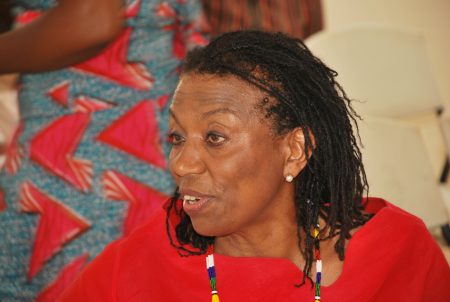
by: Comfort Lamptey
I still vividly remember the first day l met Auntie J, some 21 or so years ago. I was in Accra to attend a workshop being organized by Cuso, the organization she was heading at the time. I remember the classy, beautiful cloth she wore that day, her stylishness, and her captivating smile, as she walked into the conference room. We became friends instantly. She took me under her wings and nurtured and mentored me to the very last day I saw her on 23 September 2016 in London. I will forever cherish that short walk we took together from her flat to Willesden Green station, where we said goodbye.
Auntie Joana taught me so many enduring life lessons. She taught me not to take myself too seriously; she taught me that the fight for social justice and gender equality requires stubbornness, a sense of humor and a very thick skin; she taught me the importance of always maintaining a spirit of youthfulness. Over the years, she introduced me to so many people and places in Ghana, as l sought to re-establish a life there after many years abroad. We had lots of fun together. But by far, the greatest lesson Auntie J taught me was that even when confronted with the most daunting and devastating news, as she received in the final few months of her life, it is possible to face this with grace and dignity and to uphold a positive spirit to the end.
A standard-setting peacekeeper
Auntie J was a pioneer and trail blazer. I has a close-up view of this during the period we worked together as gender advisers in the field of UN peacekeeping. Whilst working as a senior gender adviser to the UN peacekeeping mission in Liberia, Auntie J broke new ground in a number of important areas which had far-reaching effects on global peacekeeping practice, and which also helped to advance the push for women’s rights in Liberia. As an example, she advocated strongly and successfully with the mission leadership to ensure that thousands of girls who played support roles with the fighting forces in the war were not ignored, but got support as part of the disarmament, demobilization and reintegration process (DDR). The formal recognition of the category of Women Associated with Fighting Forces (WAFFs) in UN DDR parlance, took root in Liberia as a result of the formidable work done by Auntie J and her colleagues.
She also educated the mission on the value of using sex disaggregated data to enhance operational success. This was clearly illustrated during the first voter registration process which took place in post-war Liberia in 2005. Through a gender analysis she undertook with the team on the number of registered voters, it became apparent that less than a third of eligible women had registered to vote. She subsequently mobilized the mission to devote resources to support the Ministry of Gender and women’s constituencies across the country to launch an all-out ‘register to vote’ campaign, targeting women. The results were impressive, as the final count of women who registered to vote , exceeded 50 percent, a factor which helped to propel the first woman President into office in Africa.
As a strong supporter of civil society activism, Auntie J understood the importance of strengthening the women’s civil society movement in post-war Liberia, to enable them to be better-positioned to engage as partners with government in the reconstruction of the country. To this end, she provided strategic technical guidance and resources to support the establishment of the Women’s NGO Secretariat of Liberia (WONGOSOL) as an umbrella entity to support effective planning, resource mobilization and coordination of the work of women’s NGOs in Liberia.
Through these and other efforts, Auntie J left an indelible mark on UN peacekeeping practice, by showing how the use of a gender lens can enhance both operational effectiveness and women’s empowerment in a fragile post-conflict context.
I thank God for Auntie J’s life, for all she taught me and the countless other younger women she mentored, and for the privilege of counting her as a friend and as family.
Thank you, Auntie J. I hope to be able to honor your legacy everyday by championing the causes you believed in and worked for throughout your life. Wɔ ojogban (Rest in Peace)!
Farewell to Joana Foster.
Farewell to Joana Foster.
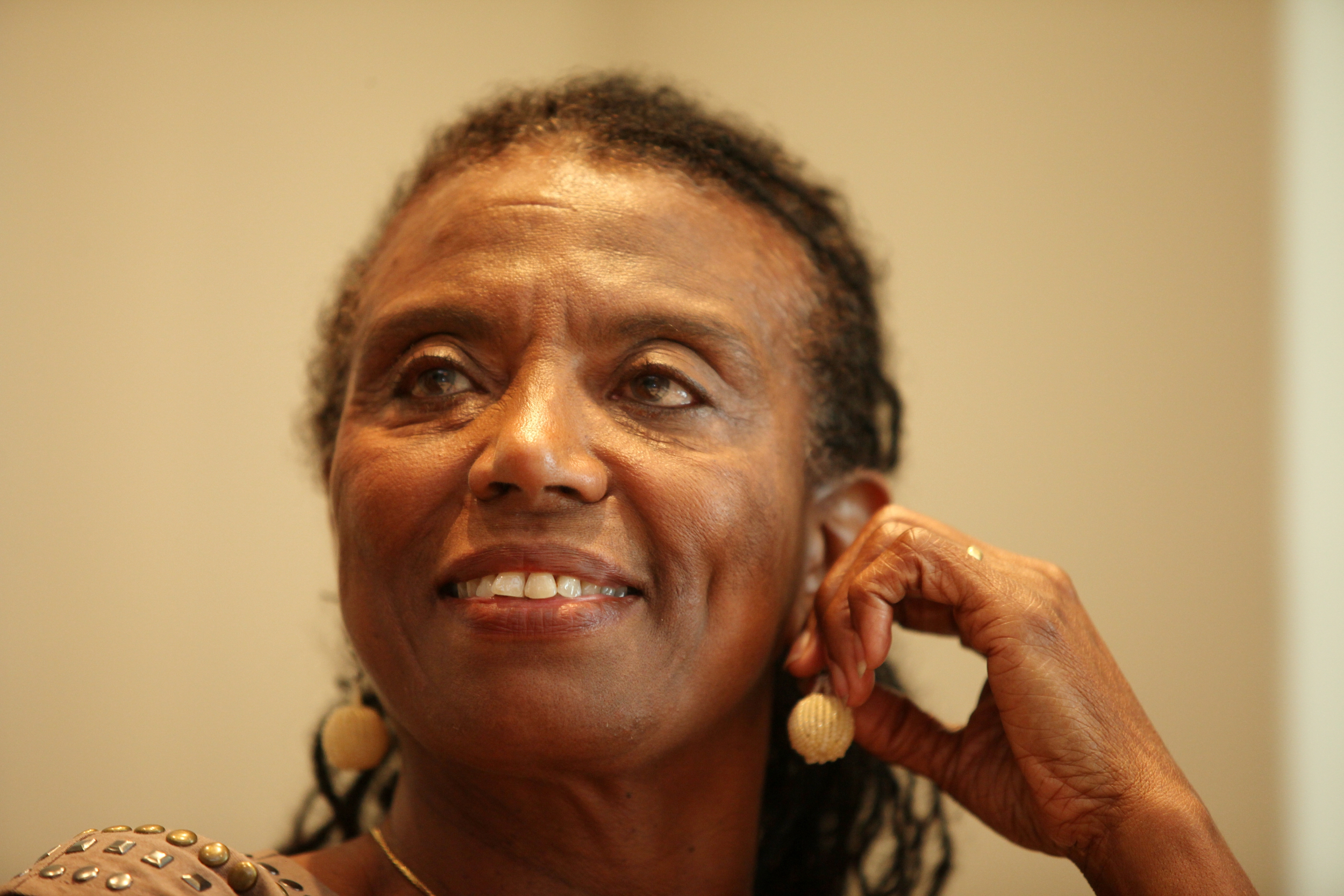
It is with great sorrow that the Board and Staff of the African Women’s Development Fund (AWDF) informs our friends and stakeholders of the death of Joana Silochina Foster, a co-founder of AWDF. She passed away peacefully on Saturday, 5 November 2016, after a long battle with cancer.
A long time African feminist and social justice activist, Joana was a lawyer specializing in Women’s Civil and Political Rights and Immigration. One of the many African activists who used the Fourth World Conference on Women (Beijing, 1995) as a springboard to accelerate the ongoing work of women’s rights in Africa, Joana was also one of the founders of the Gender and Human Rights Documentation Centre (Gender Centre) in Ghana. During her career, she worked in various parts of Africa as well as Europe, most notably as the Regional Coordinator of Women in Law and Development in Africa (WILDAF), Ghana Country Director of CUSO (a Canadian not for profit organisation) and later as the Senior Gender Advisor to the United Nations Mission in Liberia. She served on a number of organisational Boards, including the Child Poverty Action Group in the UK.
Joana will be missed for her passion, commitment, vivacity and joyous spirit. She will be remembered for the impact of her activism and the variety of social justice initiatives she inspired, developed and made happen. She leaves behind a legacy that will be remembered for as long as AWDF and the Gender Centre remain hubs of feminist activism.
Our deepest condolences go to Joana’s family and friends as they mourn the passing of a great spirit.
Dearest Joana, rest in peace.
Solidarity in word and deed: Translating the African Feminist Charter
Solidarity in word and deed: Translating the African Feminist Charter
Author: Jessica Horn, AWDF Director of Programmes
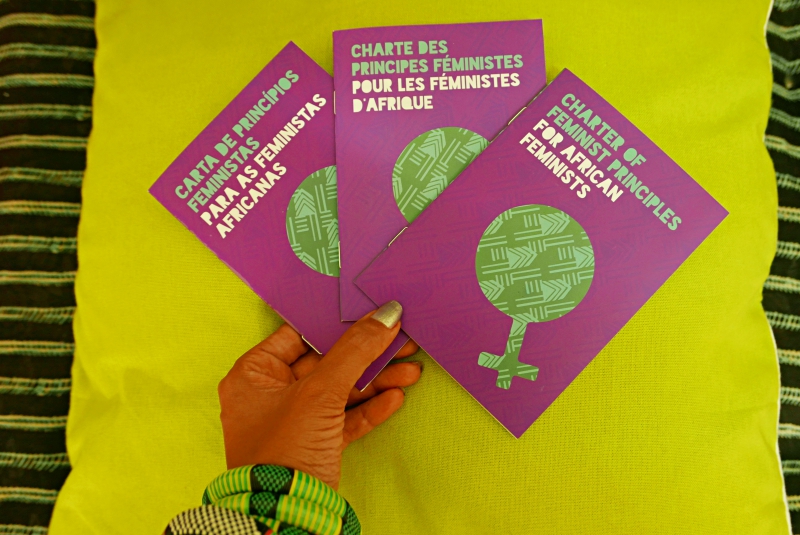
It may seem odd to be excited about a publication. However the story of the translation of the Charter of Feminist Principles for African Feminists begs recounting as a tale of inspired collective action.
The Charter itself was developed by the African Feminist Forum Working Group in 2006 and adopted in by over 100 African feminists at the first African Feminist Forum (AFF) hosted by AWDF in Accra that year. The goal was political clarity. Every movement needs to articulate its visions of ethics and collective power-and its political bottom lines. The Charter provided this, and has been used since as a means of bringing feminist activists across generations together to build feminist consciousness, create new feminist spaces and even to help unite women mobilising against religious fundamentalism.
As beautiful as it is, the Charter was written in English- a language spoken by some but not all of Africa’s people. Translating the Charter was imperative. However as is typical in the world of women’s organising, the AFF faced the challenge of funding. What we had not anticipated was the spontaneous action and love that we would receive in the form of voluntary translation by African activists so moved by the Charter that they saw it necessary to make sure the people they organised alongside could read it too.
In its first incarnation, Beninoise feminist and AWDF staff member Rissi Asani-Alabi translated the Charter into French for use in the bilingual AFF regional forums and to aid the creation of national Feminist Forums in Francophone African countries. Using this, Senegalese feminists Fatim Faye and Kura Saar went on to translate the Charter into Wolof, a language spoken widely in Senegal and Gambia. In the revised version additional translation support was offered by Pathé Diagne, one of Africa’s leading linguists and political scientists (who has, notably, also translated the Quran into Wolof).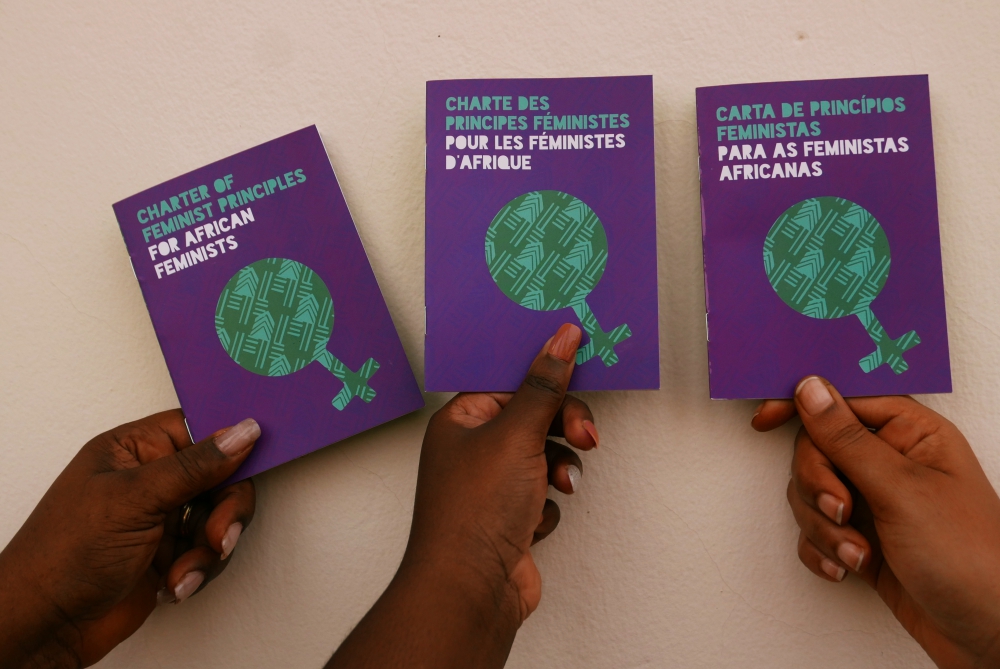
In Tanzania, staff of the country’s leading women’s rights organisation Tanzania Gender Networking Programme translated the Charter into Kiswahili, opening up readership in Central and East Africa and offering feminist discourse in Kiswahili including the term feminism itself and a translation of the concept of ‘patriarchy’ (mfumo dume).
And the feminist love has continued to flow.
On reading the Charter for the first time, Egyptian women’s human rights defender Yara Salaam offered, in typical generous style, to translate the text into Arabic. Her father, poet and translator Refaat Sallam provided proofreading support, making the Charter accessible now to Arabic-speaking feminists across north and northeast Africa and to African feminists in Arabic speaking diasporas.
After returning from the 4th African Feminist Forum in Zimbabwe in early 2016, Angolan feminists Sizaltina Cutaia and Âurea Mouzinho were inspired to revive feminist organising by creating the Ondjango Feminista in their home country. Their first step, working with Florita Telo, was to translate the Charter into Portuguese to allow women in Angola to read and rekindle feminist activism. Through this solidarity, Portuguese translations of the Charters are already in the hands of feminist activists in Angola, Mozambique and Brazil- including with two of Brazil’s ground-breaking women capoeira masters.
This year we have worked with East African feminist graphic designer Lulu Kitololo to create a stunning new redesign of the Charter, producing versions in all of the languages available thus far. For Latin script we used title fonts created by The League of Moveable Type, a self-named leader in the open source font revolution, offering highly designed free fonts. In Arabic, Yara Salaam suggested use of the Amiri font- an open source font project design to revive and digitise an older Arabic typeface.
We often think of solidarity as large public displays. However there is solidarity in these quieter acts of resourcing a movement through knowledge, skills and time. Feminism is not just in the saying, it is in the doing. The process of redesigning and translating the Charter of Feminist Principles has proved that.
Our heartfelt thank you goes to everyone who has participated in making the Charter relevant and accessible to the widest possible audience. We hope you find the new materials useful. And as always, do let us know how you are using them
Download the charter for free:
English
Français
Português
Wolof
Kiswahili
Arabic
http://africlub.net/awdf/wp-content/uploads/Charter_of_Feminist_Principles_for_African_Feminists.pdf
‘And Then The Women Came’ A Tribute To The African Women’s Development Fund
‘And Then The Women Came’ A Tribute To The African Women’s Development Fund
by Bisi Adeleye-Fayemi
At the panel discussion, the first question we were asked was about our earliest recollections of acts of philanthropy. For me, it was my parents. I believe that most Africans get immersed in cultures of giving from an early age. I grew up observing my parents helping family and friends with contributions towards school fees, vocational training, medical expenses and personal milestones such as weddings and funerals. They gave financial support, material assistance and provided accommodation. I therefore understood, like many others who had a similar upbringing, that no matter how much or little I had, there was an obligation to assist others.
My mother was always giving something to someone. I watched her give away money, clothing, foodstuff and her exquisite collection of dishes. I saw her give advice and support to women in the neighborhood. She would take in women in distress and offer them a shoulder to cry on and give them sound counsel till they could get back to the rigours of life. From my mother, I learnt the value of solidarity with other women, and the importance of being your sister’s keeper.
My entry point into institutional philanthropy was through my involvement as the Executive Director of Akina Mama wa Afrika in London (AMwA) (1991-2001) as well as Comic Relief, UK. AMwA was a development organisation that supported African women in the UK and Europe, as well as women’s movements in Africa. In 1996, I started raising funding for an African Women’s Leadership Institute, an AMwA program which was to be a regional networking and training forum for young African women – I was still young then! I was very alarmed when I got a letter from a European funding agency (after eighteen months of waiting) declining to fund the leadership institute. What upset me was not the No but why they said No.
According to them, African women’s priorities were food, shelter, livelihoods, etc., and not leadership development. I could not understand how a group of people in Europe, no matter how well meaning they were, could decide what African women needed. I went on to raise significant funding for the leadership institute from other sources and today, the AWLI has trained over 6,000 women leaders across Africa. It is interesting to note that a version of the very project that was deemed unworthy of funding showed up as a project of one of the funding agencies who had received the proposal from us a year later! The lesson I learnt from this, after being awakened from my innocence, was that other people had a better idea of how African women’s leadership could be encouraged, anyone other than African women themselves.
This is the motivation that fueled the establishment of AWDF, as a space that would mobilise and disburse resources to women’s organisations across Africa. We wanted to provide African women’s movements an opportunity to engage in initiatives that would raise the status of women, with needs and priorities determined by them. We wanted to fund initiatives that would transform women’s lives and not simply uphold the status quo. The experience of co-founding AWDF and serving as its Executive Director for the first ten years has been one of the most fulfilling of my life. In the early days of AWDF, as I embarked on the journey to establish AWDF as a reputable philanthropic organisation, I discovered that it was not feasible to make the case for funding to one entity in Africa without taking into consideration the context within which people were making decisions and the politics of international donor funding. I found myself in spaces where, in the early days, I would be either the only African in the room or the only vocal one. I would hear things like ‘ We would like to fund in xyz country but we don’t know who to support’ or ‘We have a lot of money to give away for xyz thematic issue but we can’t find the right partners’. Of course I found a lot of these assertions patronizing and insincere, masking an ambivalence about African capacity to manage and deliver on programs, and to be trusted with resources, but I decided that the best way forward was dialogue, advocacy and setting an example.
Today, AWDF has grown from a handful of institutional donors in 2000 to a large network of institutional, corporate and individual donors, with over $25 million in grants made over the years to at least 1,200 women’s organisations in 42 African countries. AWDF also has an endowment fund invested in real estate, fixed deposits and the money market. From a staff of four in 2001 when we made our first grants, the organisation now has a staff of up to twenty-five. Our grants have been used to enhance women’s livelihoods and raise them from poverty, to empower girls, pass legislation, train and empower women in decision making to mention just a few. We have also played a key role in the strengthening of key women’s networks on the continent. The fact that AWDF is acknowledged as a credible organisation with a track record of integrity, success and achievement is an accomplishment to be deeply appreciated. AWDF’s story is a gift to African civil society. It is possible to have an Africa based and Africa led grant making institution that walks its talk, and aspires to the best foundation practices anywhere in the world. In the universe of Women’s Funds and southern-based philanthropic institutions globally, AWDF stands tall as a well-respected role model.
People have often asked me what is so special about philanthropy for women. It is not different from other kinds of philanthropy, because the key issue here is giving. However, what makes philanthropy for women special, is that it comes from a belief system that understands the critical importance in investing in women for sustainable growth and transformative change in our communities. We can do this in different ways, for example through initiatives to provide women with livelihoods, through making them safe from all forms of violence, giving them facilities to enjoy good health for themselves and their children, and giving them a voice in decision making at all levels. These are the ways in which AWDF has supported thousands of women over the past fifteen years. It is work that requires long-term support and involvement, but it also yields results that are unquantifiable in many cases. An empowered girl or woman will go on to have an empowered family, will be self-sufficient, will be able to support her husband better and the community will be better off for it.
It is a very welcome development to see wealthy African philanthropists, male and female, stepping up to add value to the field. What I would like to see more of, is a willingness of these wealthy philanthropists, some of whom have large foundations, to do more social change philanthropy. This way, we can have some impact on the political and socio- systems that keep hindering Africa’s development. Most African philanthropists also do not have a strategy for funding work to promote women’s empowerment and gender equality, beyond social welfare issues. I would like this to change.
During her remarks on the panel in Accra, Leymah Gbowe spoke about a trip she made to the Democratic Republic of Congo (DRC) with a delegation from the Nobel Women’s Initiative in 2014. DRC has acquired a reputation for being the ‘rape capital of the world’, due to the violent conflict that has raged in that country for many years now. At the forum in DRC, woman after woman told stories of what they had endured. Leymah said the narratives of the women would go something like this, ‘When I was attacked and raped by a gang of militia, I wanted to commit suicide. I thought my life had ended. And then the women came. They brought me food, cared for my children and encouraged me’. Or the narrative would be, ‘They killed my husband, took away my son, and raped me and my two daughters. I lost my mind and did not know where I was. Then the women came and they took care of me, prayed for me and gave me the little they had’. Testimony after testimony went on like this, and they all included, ‘Then the women came’. The delegation from the US was made up of donors, journalists, researchers and activists. When it was time to ask questions, they were all about, ‘ So how many times where you raped?’, or ‘Do you still think about the rape?’. Leymah was furious. When it was time for her to sum up the meeting as head of the delegation, she pointed out that they should not miss the true story they had just heard. The story was not about the rape of women in DRC. It was about the solidarity of women, stepping out, stepping up and being there. And then the women came. According to Leymah, this is what AWDF means to her and other African women. We are there to listen, encourage, support and strengthen women’s initiatives. We might not be able to respond to the avalanche of requests we receive, but we try our best within the limits of the resources we have.
The future of African women and philanthropy is very bright. We now need to encourage women to be at the forefront of philanthropic giving for social justice. We give already, to our families, friends, community associations and religious institutions. Women should now be more deliberate, bold and ambitious in their giving. I would like women to work together through professional associations, corporative, networks of women in leadership and so on, to pool resources for transformative change. It is important to raise money to assist with the building of schools, clinics, retirement homes and a wide array of social inclusion programs. We however need to start looking at some of the root causes of these social disparities especially where it concerns women’s well-being. Women should fund awareness and prevention of all forms of violence, women in political leadership, and changing attitudes and behaviours which underpin a culture of oppression.
Congratulations to AWDF. It has not been easy, the journey has been a long, hard, often lonely one, and it still continues. A big thank you to my successor as CEO, the formidable Theo Sowa. Thank you for running with the baton. As we celebrate 15 years of hard work and dreams, we are encouraged by our success and eager for the next chapter. If you love Africa, and you love African women, put your money where your heart is.
Bisi Adeleye-Fayemi is one of the founders of the African Women’s Development Fund, a Gender Specialist, Social Entrepreneur and Writer. She is the Founder of Abovewhispers.com, an online community for women. She can be reached at BAF@abovewhispers.com
This Piece was originally posted on her website, Abovewhispers.com.
Resource Centre Day: March 16, 2017. Sign up here!
Resource Centre Day: March 16, 2017. Sign up here!
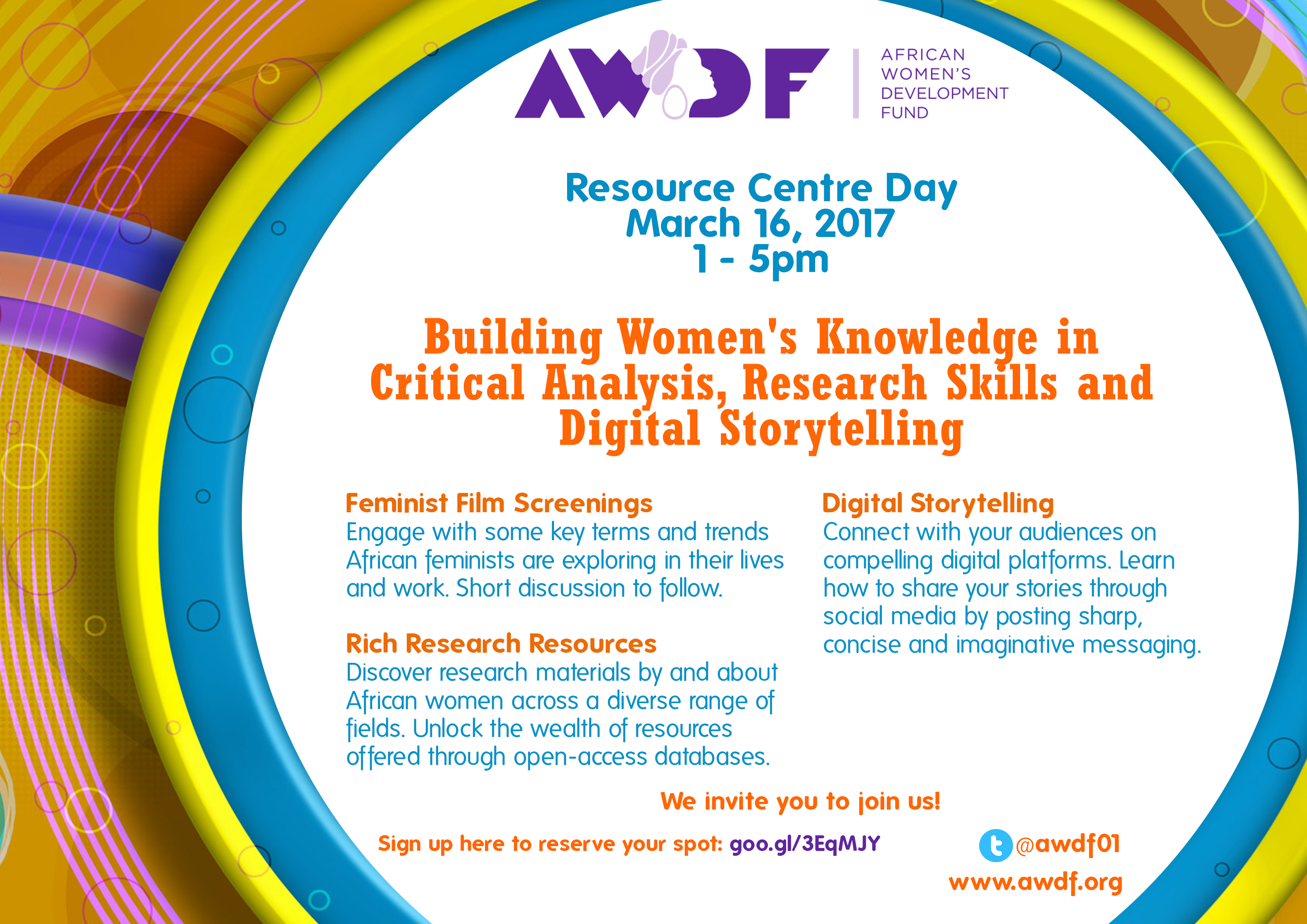
Feminist Film Screenings
Rich Research Resources
Discover research materials by and about African women across a diverse range of fields. Unlock the wealth of resources offered through open-access databases.
Digital Storytelling
We invite you to join us! Sign up HERE
The News
The News
AWID Forum – Bahia, Brazil
The African Women’s Development fund participated in this year’s AWID Forum. Members of our organisation were present on several panels, and helped carry the voices of African Women to the discussions in Bahia, Brazil. The conference took place from the 8—11 September, with the Black Feminisms Pre-Forum taking place from the 5-6 September. The theme was “Imagining Feminist Futures”, and over the course of four days participants were made to imagine a feminist future and strategize around making that happen. It was an important, fruitful conference and we were glad to be a part of it.
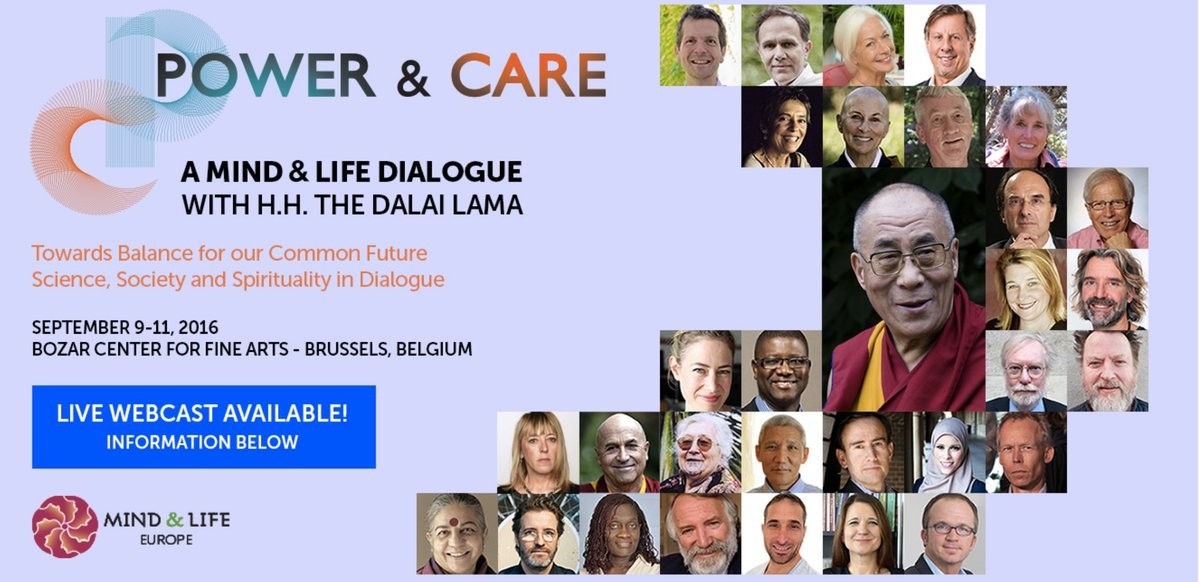
Power and Care : A mind and Life Dialogue with the Dalai Lama
AWDF CEO Theo Sowa was a moderator at the Power and Care Dialogue, held in Brussels from September 9-11. It was a two and a half day Mind and Life Dialogue of leading experts with His Holiness the Dalai Lama. The aim of the conference was to see how forces of power and care could be conscientiously and fruitfully allied, and engender projects and actions to promote the welfare of living beings and of our environment.
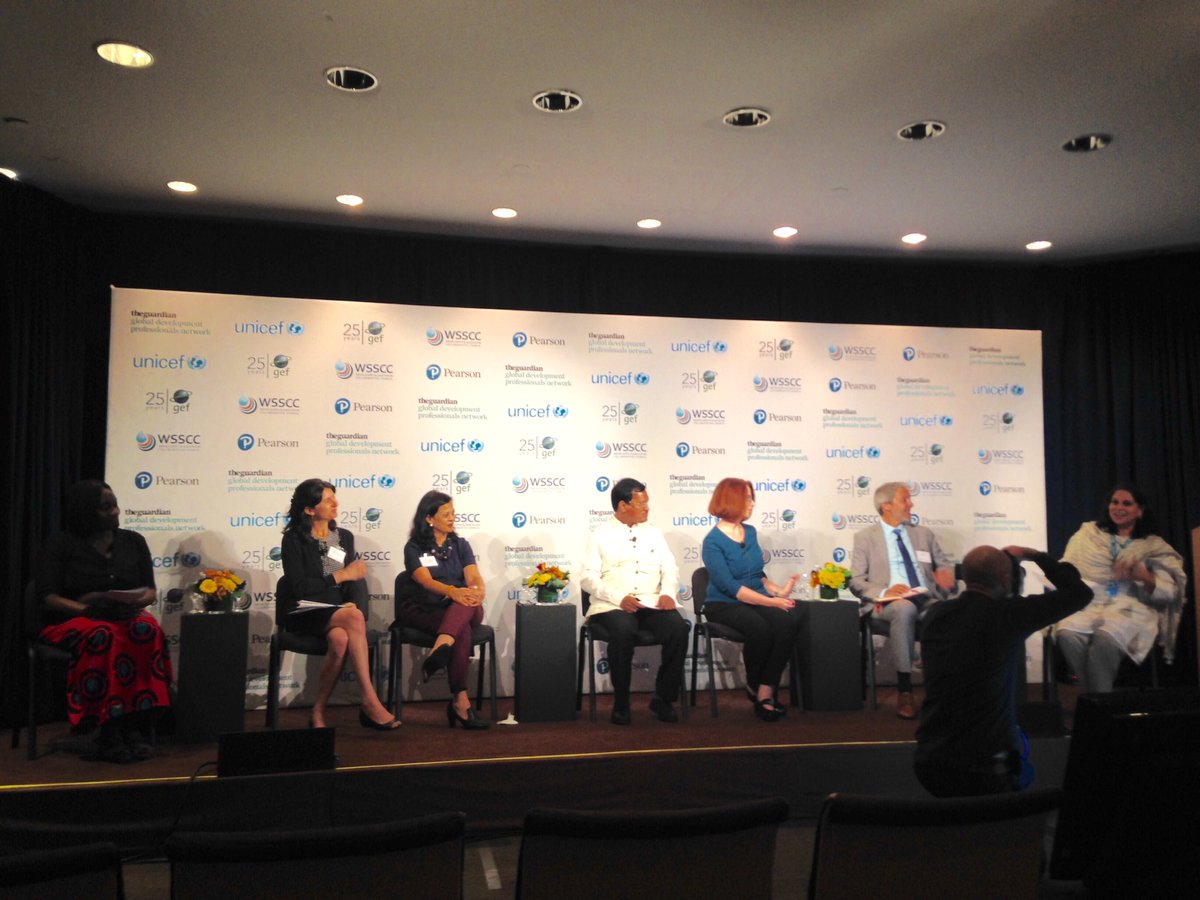
Launch of Education Commission Report to the United Nations Secretary General at the UN General Assembly
In September 2016, AWDF CEO Theo Sowa and other commissioners of the Global Commission for Education launched their report and agenda for action. They also presented the report to the United Nations Secretary General at the UN General Assembly.
Over the last year, the Education Commission has sought to persuade global leaders to take urgent action by bringing together the best evidence on what works in expanding access to quality education and learning for all. If leaders do not take action now to increase investment and reform global education, more than 124 million young people will continue to be denied access to schools and more than 250 million will not gain the skills they need to lead healthy and successful lives.
Supporting Arts, Culture and Sports for the promotion of Women’s Human Rights
Supporting Arts, Culture and Sports for the promotion of Women’s Human Rights
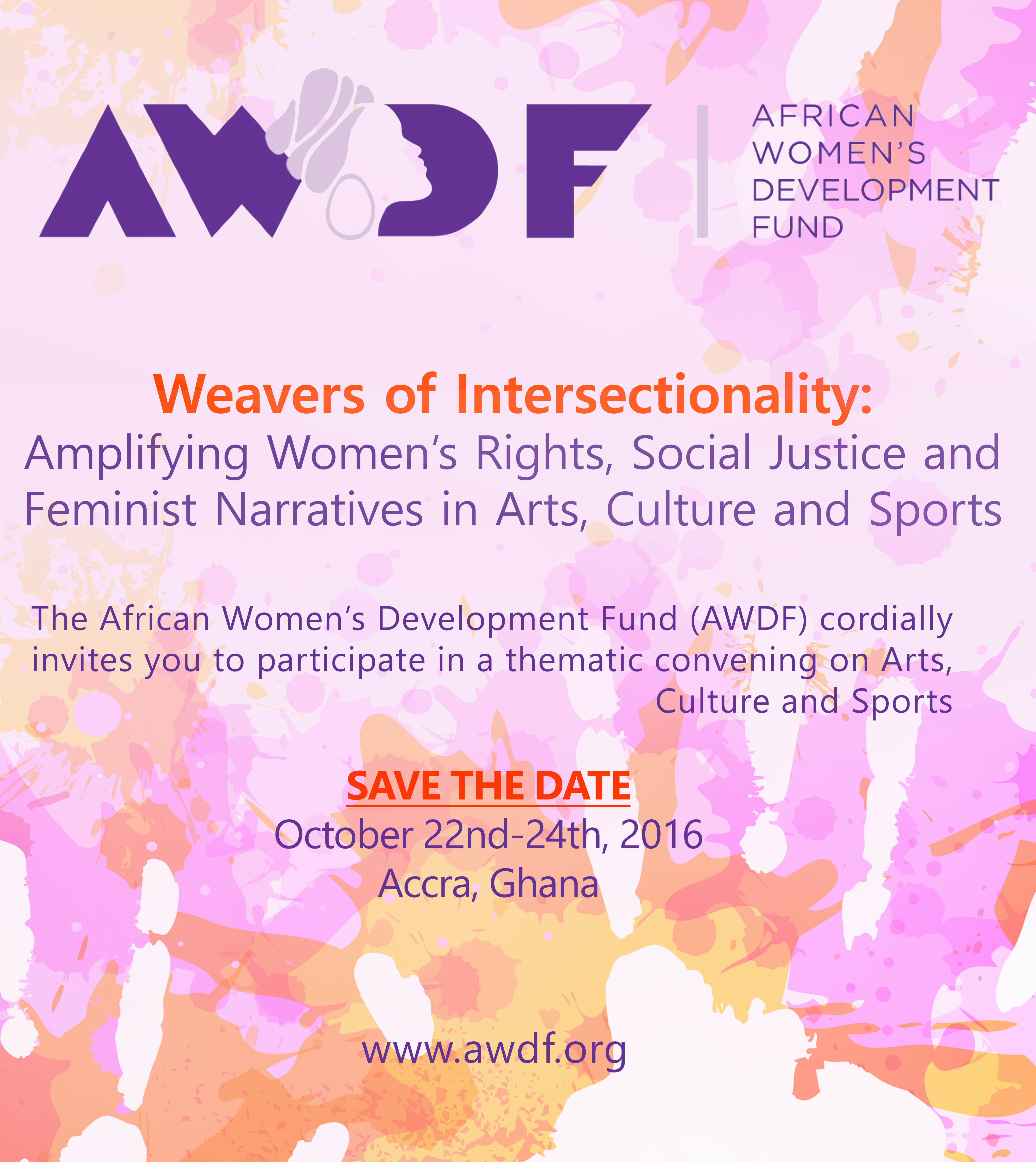
The African Women’s Development Fund will be hosting a thematic convening on arts, culture and sports from October 22-24th under the theme “Weavers of Intersectionality: Amplifying Women’s Rights, Social Justice and Feminist Narratives in Arts, Culture and Sport.”
The first of its kind, this convening will bring together key women creatives from multidisciplinary fields of art, cultural production and sports to talk about their experiences, connect with one another and devise new strategies to strengthen the voices of women within their industry and on the continent as a whole.
It is no secret that the multidisciplinary fields of arts, cultural production, and sports have a huge impact on how people across the world engage with one another and the African continent is no exception. Over the years, African traditions rich with oral history, visual imagery, poetry, proverbs, dance, theatre, and sports have used these tools for education, entertainment, conflict resolution and community building. However, these cultural industries have historically been dominated by men which limit women’s participation in these spaces.
Women’s engagement in arts and in sports has led to the birth of radical ideas, beliefs and attitudes about the immense value and contributions of women. It has also invigorated connections and possibilities for communities across the continent and the world at large. Through both the arts and sports, women have challenged and broken stereotypes, amplified the demands of women and feminist movements, raised resources, and spread messages of social change.
In spite of this work, women practitioners in arts, cultural production and sports face persistent restraints from intimidation, harassment, and theft of work to isolation, immobility, burnout and limited access to networks of care, support, and resources of sustainability. By working through a lens of intersectionality, African women are in a key position to speak out against multiple oppressions – gender, sexuality, disability, race, class, ethnicity, geography, etc. – within their fields of work. This convening will help connect women whose work has been instrumental in telling the stories of african women’s lives and who have used their various mediums to amplify women’s rights, social justice and feminist narratives. The multidimensional nature of the convening will promote cross learning and solidarity. It will be a creative, engaging space that will help spark new momentum for change within various creative industries on the continent.
THIRD FINANCIAL MANAGEMENT TRAINING ANNOUNCEMENT
THIRD FINANCIAL MANAGEMENT TRAINING ANNOUNCEMENT
THIRD FINANCIAL MANAGEMENT TRAINING FOR AWDF GRANTEES IN
LAGOS, NIGERIA
16 – 18 AUGUST, 2016
“I am once more excited that The African Women’s Development Fund (AWDF) is able to organise this important training with support from Comic Relief. Since 2014, thirty-six (36) organisations have benefited from our Finance Management Skills Trainings. Of these, 22 have already reported steps put in place toward sound financial systems. As feminist grant makers we understand the need for accountability and results and therefore work towards building robust organisations by investing in human resource development of our grantees. This skills enhancement training on finance management for finance officers and managers in Nigeria is one of the ways by which we do this.” Nafi Chinery, Capacity Building Programme Specialist, AWDF
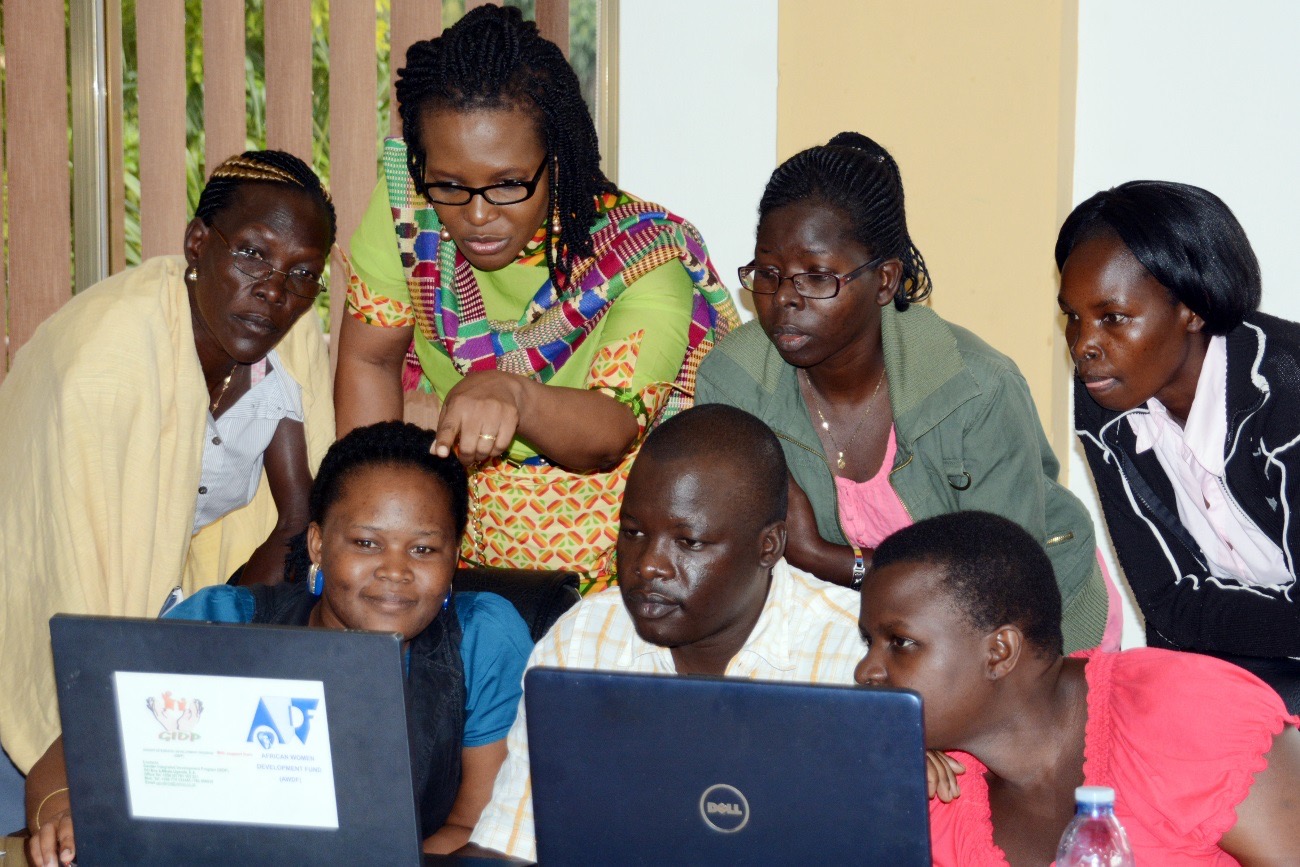
Second Financial Management Training held in 2015 in Uganda.
The Capacity Building Unit of AWDF is organising its third Finance Management Training programme for finance officers and managers of grantee organisations. This skills enhancement training will be held from 16 – 18th August 2016 in Lagos, Nigeria.
This training forms part of AWDF’s mandate to provide technical skills to grantees in order to ensure sound and prudent financial management of resources for results in their organisations.
The three-day (3) training will bring together nineteen (19) finance managers and officers from twelve (12) grantee organisations from seven (7) states in Nigeria including Lagos, Akwa Ibom and Gombe states. The training will cover budgets and cash flow projections, grant management, internal controls and checks, compliance with statutory requirements, and financial reporting among others.
It is our hope that participants will gain insights and skills into developing sound financial systems that meet minimum international standards for any financial management including donor reporting. Below are some expectations expressed by some participants ahead of the Lagos training.
“My main expectation from the training is to gain additional best practice procedures to include in our Financial and Accounting Manual which is currently being developed. I expect to strengthen my knowledge on NGO regular financial recording and management.” Ms. Joy Ngwakwe, Executive Director at Centre for Advancement of Development Right (CEADER) in Lagos.
“Knowing the logic in allowable and unallowable expenditures and developing the ability to analyse financial reports as well as develop skills in prudent financial resource management” Lucy Auwalu, Executive Director, Women and Children of Hope Foundation, Lagos.
To learn financial management best practices that will promote HELIN in her dealing with donors and how to harmonise the management of finances from diverse donors.” Doris Brendan, Executive Director, Heal the Land Initiative Nigeria (HELIN), Uyo
Grantee Highlight: SAYWHAT Shares New Documentary on the SRHR Defenders Program in Zimbabwe
Grantee Highlight: SAYWHAT Shares New Documentary on the SRHR Defenders Program in Zimbabwe
As dialogues surrounding sexual and reproductive health take a more visible place on university campuses, young people around the world, particularly young women, have worked towards inciting meaningful discussions and solutions to the challenges they face. In the African context, this conversation manifests in the organisation of innovative programs such as the “Reproductive Health Rights Defenders Program in Zimbabwe”. The Students and Youth Working on Reproductive Health Action Team (SAYWHAT), a Zimbabwean organisation supported by the African Women’s Development Fund, has worked tirelessly to create this program.
During May of this year, SAYWHAT debuted a short documentary film highlighting the achievements of Defenders program, how young women students are actively trained to participate in SRHR advocacy and address key challenges. Through a series of interviews, the viewer is introduced to the faces behind the great success of this youth driven organisation.
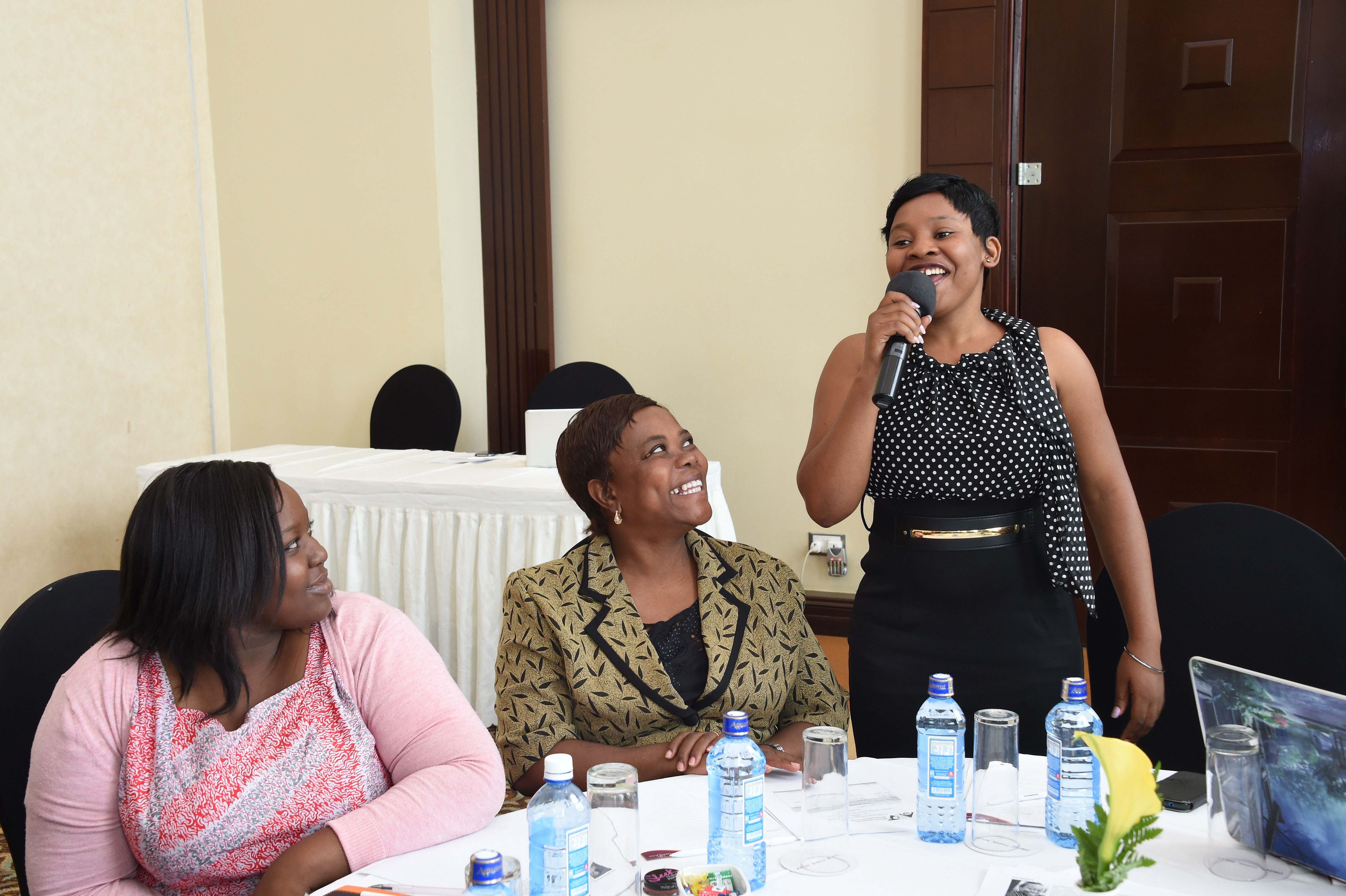
Tadiwanahse Bunikai, one of the members of SAYWHAT shares about the organisation: “It has groomed strong, confident, powerful women who are able to go beyond the issues of reproductive rights to discuss issues of national policy, politics, social and economic development, and entrepreneurship”.
As young women in Zimbabwe are faced with a number of sexual and reproductive health issues (which include but are not limited to child marriage, poverty, gender based violence and government accountability), SAYWHAT emphasises the capacity building needs of young women in order to better promote advocacy for institutional change within a number of tertiary institutions in Zimbabwe.
On this, SAYWHAT’s Programs Manager, Vimbai Mlambo states, “I have gained more confidence in myself and in my ability to relate with governance issues within my institution. I feel even more empowered to lead an organisation as a young woman. Mentorship has changed my perception about leadership. For me, leadership has become about discipline and self-leadership”.
SAYWHAT’s emphasis on leadership skills and knowledge building has not only increased the confidence of members, but has also produced agents of change. Some of the success stories achieved by the SRHR Defenders Program include projects such as the “Condomise Campaign”, a globally recognised initiative that promotes safe sex options to young women and men. The program has become quite popilar with women students, so much so that the Ministry of Health and Child Care in collaboration with the National AIDS council in Zimbabwe have accepted the proposal by SAYWHAT members to conduct the campaign at a national level.
Individual projects by SAYWHAT members have also developed more accessible and hygienic sanitary disposal methods for girls and women as well as marketing campaigns to increase the appeal for and effective use of the female condom. In this way, the Reproductive Health Rights Defenders Program ensures the social welfare of young women.
In addition to their work with young women, the Reproductive Health Rights Defenders Program challenges policies that miss the mark on SRHR and pushes for institutional changes that ensure respect, support and protection of young women. The Defenders Team has created persistent awareness about a number of sexual harassment cases on several Zimbabwean university campuses and are working towards the implementation of more expansive policies for women students. Partly due to this effort, one of the defenders has been invited to work as a women’s rights advisee to the presiding judge at the High Court of Zimbabwe.
Ultimately, SAYWHAT’s Reproductive Health Rights Defenders Team has a compelling focus on skills interventions and policy implementation on SRHR issues. SAYWHAT continues to empower young women into diverse, influential roles that, in turn, help to to create just futures for other girls and women around the country.
We are proud of the incredible work that our grantee partner, SAYWHAT, is able to accomplish each day in Zimbabwe.
Watch the full documentary on the Reproductive Health Rights Defenders Program below:
By: Mama Biamah
Grantee Highlight: Public Health Uganda tackles HIV/AIDS, on all fronts.
Grantee Highlight: Public Health Uganda tackles HIV/AIDS, on all fronts.
Today, a diagnosis of HIV/AIDS no longer means a death sentence. For many women, however, the situation can quickly turn into one. While many constraints to accessing affordable medication exist, there are other complex factors at hand. Even with the right medication, the stigma, discrimination and injustice surrounding the illness can easily erase promise and opportunity from the futures of many, flipping lives that were once vibrant into mere shadows of what they once were. Public Health Network Uganda (PHAU) is an organisation that helps to correct this imbalance.
Since 2011, PHAU has focused on tackling stigma and discrimination surrounding HIV/AIDS and providing vital education to numerous communities in Uganda. In 2013, the prevalence of HIV for young men was 2.4 % and for young women, it was 4.2%. (UNAIDS, The Gap Report 2014) The spread of the illness affected women nearly twice as much as men within the same age range (15-24). This data only reinforced the international trend of girls and young women being particularly vulnerable to contracting HIV, and therefore, accelerating multi-layered risks within their livelihoods. Young women who do contract HIV are met with quite hostile and isolating social relations, complicated by the lack of education on how to prevent or manage the illness.
The most effective way of tackling this lack of information is by creating innovative programs and implementing sound policies that bridge the gap in young women’s education. This drive for comprehensive education is one of the many ways PHAU is helping lead the fight to end HIV/AIDS transmission, discrimination and stigma in Uganda. Their activities focus on providing a safe space for girls and young women to understand their condition and how to increase wellness in their lives and relationships with family, friends and within their communities. PHAU explores ways to create positive futures for the young women through hope, dignity and empowerment by also developing community initiatives targeting stigma and misinformation about HIV/AIDS.
AWDF is currently supporting PHAU with USD 15,000 to implement a compelling and unconventional outreach program to help tackle stigma within Uganda. The project was implemented in June 2015 and will be completed in November 2016.“Stamp Out Stigma” is a musical outreach campaign that reached several thousand people using flash mobs and street theatre in Kisenyi, a resource-strapped province in Kinshasa. The program’s popularity led to a sharp increase in attendance that provided an opportunity for 2,400 persons to receive HIV testing and/or counseling. Additionally, PHAU has trained and sensitised peer educators and community leaders on HIV stigma and discrimination as well as reproductive health and life skills development. The project’s reach continues to grow with PHAU reaching a total of 23,000 people.
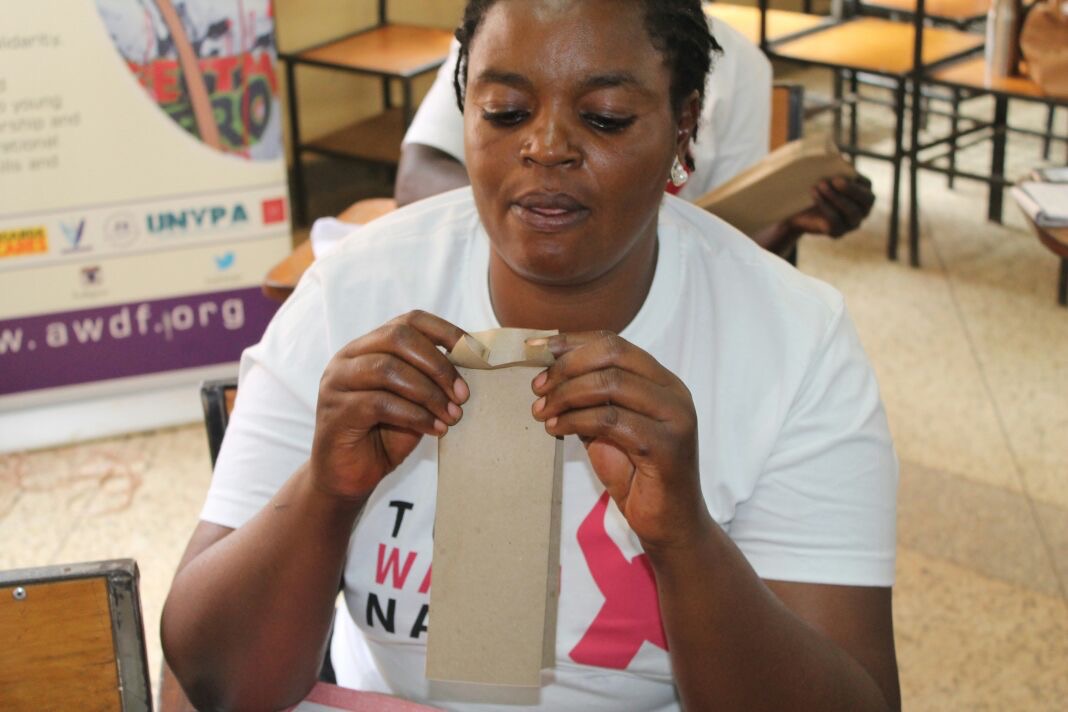
One of PHAU’s current anti-stigma campaigns – “Tuli Wamu Nawe” – provides entrepreneurial training for HIV+ girls and young women to enable them to set up and manage small businesses. A participant, Nakisozi Mastulah – Kyabando Kisalonsalo, shares: “I have learned how to evaluated my business internally and externally using the SWOT Analysis”. The workshop also trained young women in financial systems and recordkeeping as an honest and responsible means to sustain their business practices. Such interventions also help the participants to sustain themselves and to focus on keeping a forward-thinking mindset. The training also helps the participants foster a sense of community that is integral to supporting their physical and mental wellbeing.
PHAU’s programs are widespread, impactful and inventive.The organisation’s response to the needs of positive girls and women is immense because PHAU recognises the complexity of the situation and how best to ensure accessibility, efficiency and effectiveness to those who need it the most. By using music, dance and theatre, PHAU entreats community members to confront those ostracised because of their illness as well as practices of stigma and discrimination against positive people. Through this work, it is clear that the Ugandan organisation is making holistic impact in the lives of girls and women and stimulating communities into open, active and inclusive ways of communication and participation with people living with HIV/AIDS.
For more check out their World Aids Day Flashmob below:
By: Maame Akua Kyerewaa Marfo