
Category: News
Twenty Years of the African Feminist Forum: Our Herstory, Our Future!
Twenty Years of the African Feminist Forum: Our Herstory, Our Future!
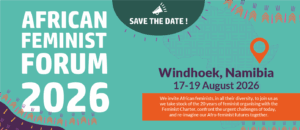
In 2006, African feminists gathered in Accra, Ghana, to articulate a collective vision for liberation and movement-building across the continent. From that convening, the African Feminist Forum (AFF) was born as a space for reflection, strategy, and connection guided by the Charter of Feminist Principles for African Feminist and the organisational development tool. Over the past 20 years, it has nurtured generations of activists and organisations, shaping the language, values, and practice of African feminism.
The world is on fire. In Africa and around the world, girls, women and womxn of all identities and experiences are bearing the brunt of political and economic crises, the erosion of democracy, and a vicious anti-gender backlash. African feminist activists, organisations and movements are stepping up despite drastic funding cuts. We are hearing this again and again: to be an African feminist in these times is exhausting and isolating but also powerful and connective. Whether on the continent or in the diaspora, African feminists need alignment, connection and solidarity.
For us, this means one thing: it is time to bring back the AFF. It must remain a vital anchor for our collective resistance and hope.
Since its inception, the AFF has provided feminists from across the continent with three invaluable gifts: the African Feminist Charter and its accompanying organisational development tool as a groundbreaking values alignment tool; Four continent-wide in-person convenings (Ghana in 2006, Uganda in 2008, Senegal in 2010 and Zimbabwe in 2016); and opportunities to organise in National Feminist Forums (NFF) and strengthen national mobilisation in countries like Liberia in and Uganda.
Twenty years later, the volatile times we are in call us to build on this legacy. As the Steering Committee of the AFF, jointly with the African Women’s Development Fund (acting as the AFF secretariat), we are delighted to share these two announcements:
Save the date for the 5th in-person African Feminist Forum convening in Windhoek, Namibia, from 17-19 August 2026.
This is a response to the shared need for spaces where African feminists from across Africa and the diaspora can connect, re-energise, heal, and strategise to chart a collective path towards the feminist futures we dream of and deserve. Deciding to host a convening during a funding crisis is not a decision we took lightly. We look forward to a gathering that is focused, inclusive and generative – and count on your participation and solidarity. The Forum will provide a range of funding options, including limited travel and participation support as well as self-funded tiers, to make space for diverse forms of participation.More details will follow in the coming months. For now, mark your calendars!
Be part of the African Feminist Charter refresher process.
The Charter of Feminist Principles for African Feminists and the organisational development tool are our shared political compass. It emerged at a moment when few common agreements or languages named what African feminisms offer or how to popularise and practise them, which made the Charter and the organisational development tool both groundbreaking and unifying for our organising. Over the years the Charter has anchored forums, revived networks and deepened conversation across movements and ecosystems by providing clear principles that many have used as a touchstone for strategy, solidarity and practice. At the same time, our context and movements have evolved, and relational ruptures and exclusions remind us to widen leadership and repair community with intention. This has necessitated the need to reflect on how the Charter remains relevant in proactively anchoring feminists and movements twenty years after its formulation in 2006.
We will commission a participatory process to refresh the Charter. This will be by convening diverse African feminists to reflect, re-articulate and validate principles through facilitated safe spaces, creative methods and peer review, culminating in accessible tools and a public launch that sustains collective accountability. Please expect to hear more about the consultative processes which will be used to review the Charter and the organisational development tool and more details on the AFF 2O26.
Watch out for further information on the AFF website and social media platforms, as well as AWDF’s website. Please send your questions, ideas, offers to support and contribute to aff@awdf.org
The AFF Steering Committee:
- Awa Fall Diop
- Iheoma Obibi
- Eunice Musiime
- Korto Williams
- Françoise Moudouthe
- Nataka Gmakagni
- Mutyaba Gloria
- Shamillah Wilson
- Alya El Marakby
- Florence F /Khaxas
LFS at the Walking the Talk Conference: The Madrid Paradox and the Power of Radical Trust
LFS at the Walking the Talk Conference: The Madrid Paradox and the Power of Radical Trust
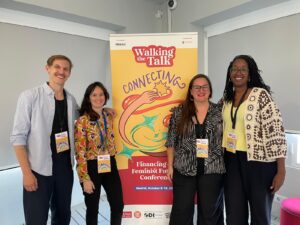
The Financing for Feminist Futures Conference recently drew to a close in Madrid, Spain and the urgent core message was: Why does the feminist movement, which holds the wisdom, also hold the biggest resource deficit? This is the #MadridParadox.
The conference which took place from 8-10 October 2025, brought together bold feminist voices, perspectives and expertise from across the world to discuss and shape financing for gender justice and feminist movement.
To join in influencing and shaping discussions on financing for feminist futures, the Leading From the South (LFS) Consortium was proudly represented by our team—Anisha Chugh (CEO, Women’s Fund of Asia), Laura Leonelli (Co-Director, Fondo de Mujeres del Sur), and Ramatoulaye Mballo (LFS Coordinator, AWDF).
Our LFS Mandate:
Since 2017, LFS has moved over €88 Million to 1,014 Southern Women’s Rights Organizations. Our ground-breaking approach centers the agency and leadership of the Global South.
In the face of dramatic aid cuts and polycrisis, we affirmed three key takeaways for resilience:
- From Grants to Fiscal Justice: We must move beyond dependency and interrogate the global systems. The challenge is not just about funding, but about re-imagining how progressive taxation and domestic wealth can serve our movements.
- Un-learn the Binary: Reform (working within the current system) and regeneration (building something new) are complementary, not exclusive. We must scale up our work while finding seats in unusual spaces where the money is.
- Capitalising on Radical Trust: The next political moment requires us to make radical trust our primary form of capital, institutionalizing accountability that is led by and for the movements. We must honor and invest in our existing wisdom: mutual aid and gifting circles.
We are not just holding the line; we are building a new political moment rooted in the autonomy and knowledge of the Global South.
Find out more about the work and impact of LFS in funding Global south feminist movements HERE
The Journey of AGE Network Girls in Nigeria
The Journey of AGE Network Girls in Nigeria
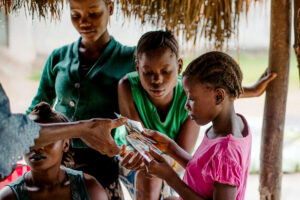
11 October 2025 marks International Day of the Girl. From classrooms to community halls, AGE Network Nigeria shows that when a girl lifts her voice, a nation begins to listen.
In Nigeria, AGE Network is dismantling barriers that hold girls back from child marriage and gender-based violence to economic exclusion and lack of access to education.
Education at the Core and economic Empowerment
Through scholarships, mentorship, and school retention programmes, AGE Network ensures girls not only enter school but also thrive and complete their studies. By training girls in digital literacy, entrepreneurship, and vocational skills, AGEN equips them with independence and pathways to leadership.education alone is not enough in a context where economic exclusion continues to silence girls’ ambitions.
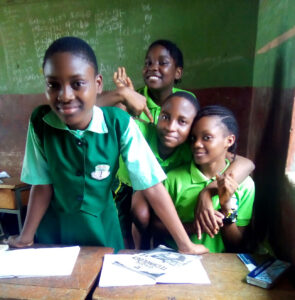
That is why AGE Network invests in economic empowerment as a companion to education. By equipping girls with digital literacy, entrepreneurship, and vocational skills, AGEN enables them to build independence and resilience. These skills become stepping stones toward leadership, giving girls the tools to not only survive crises but to lead change in their families, communities, and nation.
Advocacy & Voices of Change
AGE Network creates platforms for girls to speak for themselves — from producing advocacy videos to engaging policymakers.
“When I speak about child marriage, I know I am speaking for thousands of girls who cannot.”
— AGE Network beneficiary
Girls across Nigeria are stepping forward as advocates for change:
- “The girl I am is focused. The change I lead is helping girls avoid teenage pregnancy and achieve their dreams.”
— Alex Hannah, girl’s advocate at AGE Network - “The girl I am is bold. The change I lead is ending sexual exploitation so every girl is safe in school.”
— Joseph Destuny, girl’s advocate at AGE Network - “As a climate leader, the change I lead is keeping my community clean and safe for tomorrow.”
— Mfonlso Kingsley, girl’s advocate at AGE Network
Watch all the testimonies for Happy International Day of the Girl 2025 here
Bintou Mariam Traoré
From the Ring to the Page, from Silence to Voice: Boxgirls’ Storytelling Mission
From the Ring to the Page, from Silence to Voice: Boxgirls’ Storytelling Mission
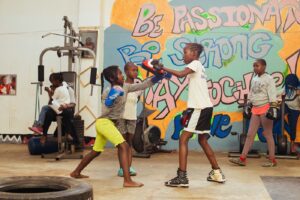
On 11 October 2025, International Day of the Girl, Boxgirls Kenya reminds us that a punch can break silence, a pen can rewrite history, and a girl’s voice can spark a movement.
Boxgirls Kenya has shown that boxing is not just about sport ,it is a powerful entry point for girls to claim voice, visibility, and leadership. Their work has evolved from the ring to national advocacy, and each output reflects the bigger mission: enabling girls to tell their own stories and transform limiting narratives.
Lulu Magazine (2024)
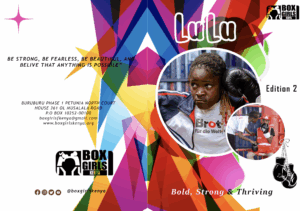
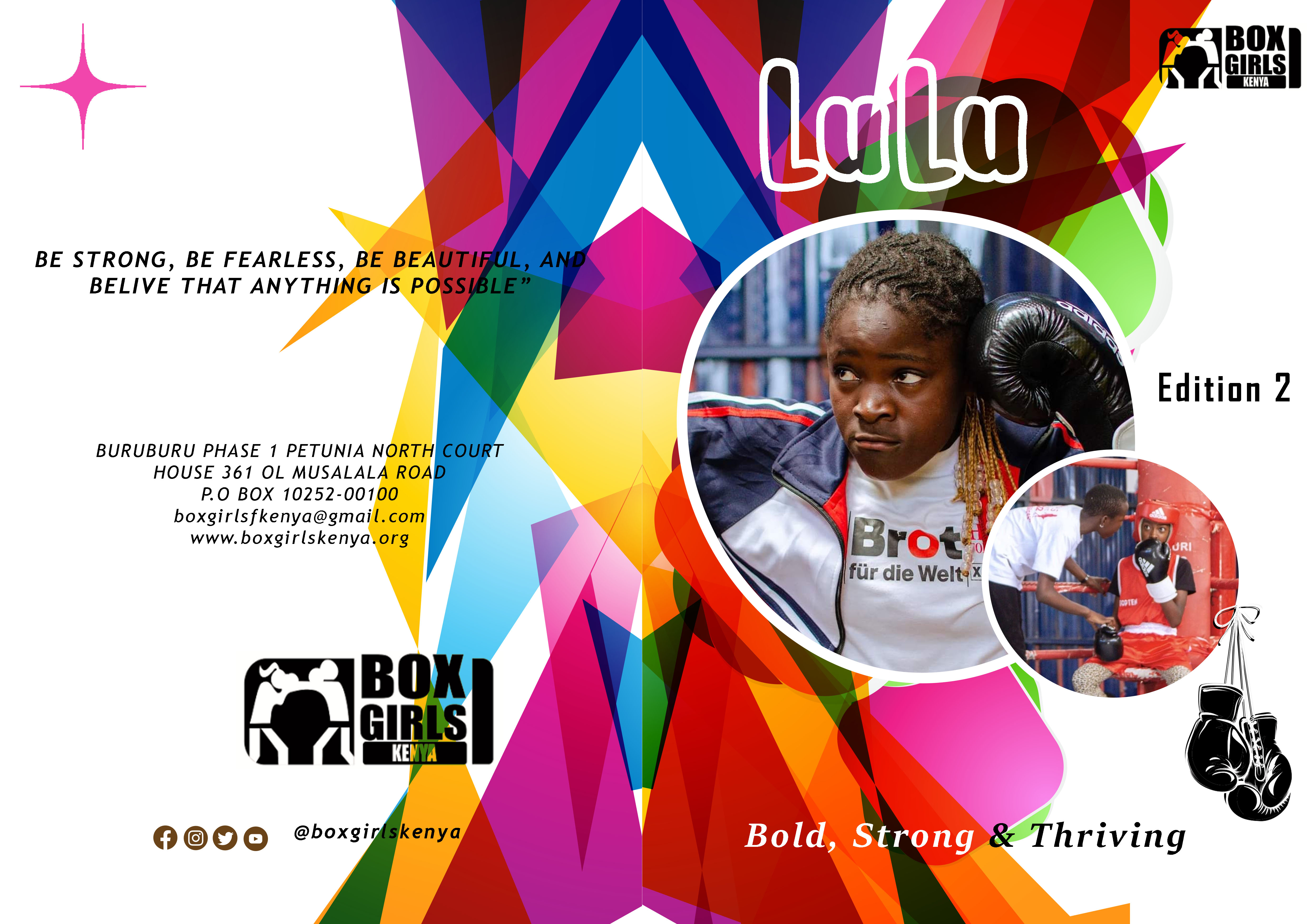
Written entirely by girls, Lulu Magazine is more than a publication—it is a declaration of authorship.
“When I write, I feel like my voice matters. I know another girl somewhere will read this and dream bigger,”
— Young contributor, Lulu Magazine
What began in Nairobi has now reached schools across Kenya and is traveling globally, proving that girls are not only subjects of stories, but authors shaping narratives beyond borders.
🔗 Read Lulu Magazine | Instagram
The Bloody Truth (Documentary & Campaign)
As the documentary highlights:
“According to the 2019 population and housing census, the population of Kenya is 47,564,296, and females represent 24,014,716 (50.5%). This means that a significant number of women and girls menstruate every month and therefore face challenges related to unsafe and inappropriate sanitation and hygiene.”
This groundbreaking documentary exposed the harsh realities of period poverty. Girls revealed how the lack of sanitary products forced some into unsafe practices or even transactional sex.
“We just want to learn without shame,”
— Girl featured in The Bloody Truth
The outrage sparked the Uzuri Project, a nationwide advocacy campaign that pushed menstrual justice onto the national agenda and demanded free sanitary products in schools.
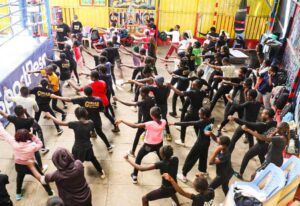
Coach Sophia’s Journey (Video Story)
Sophia’s story embodies Boxgirls’ spirit of resilience. Once constrained by cultural and religious restrictions, she broke barriers to become a boxing coach.
“My father gave me reasons why I could not do boxing—because I’m a Muslim and because boxing is a male-dominated sport. Still, under his nose I kept training. At the end of the year, I told him Boxgirls Kenya had paid my scholarship. He asked me, ‘What did you say Boxgirls do again?’”
— Coach Sophia, Boxgirls Kenya
Her journey inspires a new generation to see beyond imposed limits and claim leadership in their communities.
Perita, a young “mini-coach” and beneficiary, explains:
“Because of boxing, the coach has taught me proper hygiene as a girl. We’ve even been given pads by our coaches. We’ve been told how to take care of ourselves so we don’t engage in things like early pregnancy that can cause us to drop out of school. I can control myself and not engage in bad company.”
Bintou Mariam Traoré
International Day of the Girl Child 2025 :Girls Writing Feminist Futures in Benin
International Day of the Girl Child 2025 :Girls Writing Feminist Futures in Benin
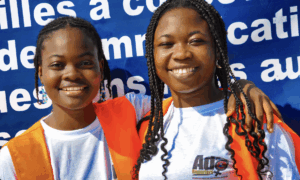
11 October 2025, International Day of the Girl: ADO REPORTERS shows that every article, every video, every testimony is not just a story told but power reclaimed. In Benin, young feminist reporters are reshaping the media landscape, proving that to be young and female is to be powerful and unstoppable.
Civic Engagement & Accountability
ADO REPORTERS use media to challenge decision-makers, demanding transparency and better conditions for girls’ education and participation. Their online campaign on civic engagement drew wide attention, inspiring youth across Benin to recognize their role as change-makers.
🔗 See the campaign on Facebook
Testimonies of Courage
On YouTube, ADO REPORTERS shares personal stories of girls who have faced discrimination yet found courage through journalism to speak out. Each testimony is an act of resistance, reminding communities that girls’ lived realities are political and must shape policy.
🔗 Watch testimonies on YouTube
Mobilizing Against Anti-Rights Movements
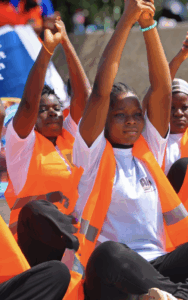
At a time when anti-rights groups are gaining momentum across Africa, ADO REPORTERS mobilizes young feminists to defend hard-won gains and resist regression. Their campaigns confront backlash head-on, amplifying voices that refuse silence.
🔗 See campaign on Facebook
“Before, I thought my voice did not matter. Today, I know my story can change my community.”
— ADO REPORTERS participant
Why It Matters
Through ADO REPORTERS , girls are no longer invisible subjects of development reports; they are active reporters of their realities and narrators of feminist futures. On this International Day of the Girl 2025, their voices remind us that storytelling is not just about visibility, it is about transformation.
Bintou Mariam Traoré
If you want a story of agency, invest in the agency – Francoise Moudouthe
If you want a story of agency, invest in the agency – Francoise Moudouthe
When we talk about African women, girls and gender diverse people, too often, the world hears stories about us and not by us. We need to think differently about who tells the story and how.
The African Women’s Development Fund (AWDF) CEO, Francoise Moudouthe, recently featured in a Podcast conversation together with other feminist leaders from Africa including, Graca Machel, a global advocate for women and girls rights and a member of the Elders and Satta Sheriff, a climate justice and child rights advocate representing the next generation of African change makers to talk about investing in funding and building movements that centre women’s voices in telling women stories .
Hosted by Adelle Onyango, Kenyan media personality and young change maker, on the Global Dispatches Podcast a special series on Future of Africa, the conversation was a deep dive into investing in women’s agency and centering our own voices in the telling of our stories..
Moudouthe challenges donors and policymakers to back feminist movements with flexible and sustained funding. She notes that investment is not always financial. It is about creating access and opening platforms. Looking into the future she calls for three things:
Coordination – Building on the solidarity we have
Sustainability- securing resources and
Movement building through strengthening collective power
Listen to this intriguing conversation as Moudouthe tackles the issue of building movements across the African continent and reimagining women’s stories.
Podcast source: Global Dispatches Podcast
Shape the Future of Resourcing – Join us as Programme Manager, Resourcing Movements, apply by 23 September
Shape the Future of Resourcing – Join us as Programme Manager, Resourcing Movements, apply by 23 September
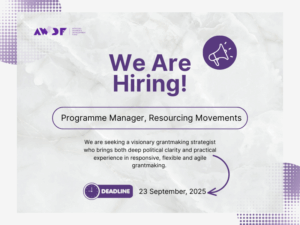
Are you interested in shaping how women’s rights, feminist and gender justice movements are resourced? This opportunity may be for you. Apply by 23 September 2025.
Background
As a Pan-African feminist fund, the African Women’s Development Fund (AWDF) resources, strengthens and upholds women’s rights and feminist organisations and movements across Africa to make gender justice a reality for all on our continent and worldwide. Over the past 24 years, AWDF has awarded approximately USD 100 million to women’s rights and feminist organisations throughout Africa (and in selected Middle Eastern countries through one of our initiatives). Through its grantmaking, programmatic, and advocacy work, AWDF has supported work that has led to changes in law and policy, social norms, narrative, and movement-building for gender justice.
To champion our work on resourcing, we are looking for a Programme Manager, Resourcing Movements who understands this work with deep political clarity and practical experience in responsive, flexible and agile grant making.
Role Purpose
In this role you will :
- Lead the strategic direction and daily functions of the Resourcing Unit, playing a key role in conceptualising and implementing AWDF’s grantmaking strategies, initiatives and processes.
- Provide thought leadership on grant management, and cultivates meaningful relationships with grantee partners and feminist movement actors, while also contributing to regional advocacy, fundraising efforts, and learning agendas grounded in African feminist knowledge and practice.
- Supervise the Resourcing team and collaborates with Programme Managers for Nurturing Movements and Impact and Learning to ensure alignment and coherence in programme strategy and delivery.
- As a member of the Senior Management Team (SMT), the Programme Manager participate in organisation-wide decision-making processes and helps to uphold AWDF as a healthy, accountable, efficient and values-aligned organisation.
Application process
Qualified and interested persons should send the following documents:
- A cover letter of not more than 2 pages to the Human Resources Manager explaining their interest and excitement in applying for the position to work for AWDF, highlighting their experience and competencies demonstrating the alignment to the role.
- A CV of not more than 3 pages outlining their educational qualifications and employment records with key achievements in relevant positions held.
- Applications for the vacancy should reach AWDF no later than Tuesday, 23rd September 2025. Due to our limited capacity, only short-listed candidates will be contacted for additional information and interviews.
To read more and apply for this position CLICK HERE
APPLICATION DEADLINE IS 23 SEPTEMBER 2025
Spotlight: National Young Feminist Forum: Powering Feminist Leaders in Ghana
Spotlight: National Young Feminist Forum: Powering Feminist Leaders in Ghana
Our partners continue to create inspiring spaces for feminist organising and leadership development across the continent. The Network for Women’s Rights in Ghana (NETRIGHT), with funding from AWDF through Leading from the South, brought together 50 young feminist activists for their National Young Feminists Conference under the theme “Claiming Space, Shaping Futures.” Participants explored digital feminism, economic justice, climate change, and political leadership through workshops, poetry, music, and storytelling. The conference reinforced that Ghana’s feminist future must centre on inclusion, care, and collective power.
Read reflections from participants:
Read more about NETRIGHT here
Unpacking the AU Convention on Ending Violence Against Women & Girls, Aug 27, 2025 12:00 pm WAT/ 1:00 pm SAST/ 2:00 PM EAT
Unpacking the AU Convention on Ending Violence Against Women & Girls, Aug 27, 2025 12:00 pm WAT/ 1:00 pm SAST/ 2:00 PM EAT
Have you heard of the African Union Convention on Ending Violence Against Women and Girls?
The Convention was adopted in February 2025 during the 38th Ordinary Session of the African Union Assembly of Heads of State and Government. The Convention aims to provide a comprehensive framework for addressing and eliminating violence against women and girls in Africa.
Join Akina Mama wa Afrika, Fos Feminista, and The Initiative for Strategic Litigation in Africa as we unpack the convention and reflect on what this convention means for African women, girls, and gender-expansive persons in all their diversity.
When: Aug 27, 2025 12:00 pm WAT/ 1:00 pm SAST/ 2:00 PM EAT
Register here: https://shorturl.at/ctsWD
Spotlight: #PushForward4Equality campaign
Spotlight: #PushForward4Equality campaign
In the face of rising backlash against gender equality and women’s rights, Gender Links (GL) has launched the #PushForward4Equality campaign – an urgent and collective call to action across Southern Africa and beyond.
The campaign which kickstarted at the beginning of South Africa’s Women’s Month and ahead of the SADC Heads of State Summit in August – comes at a critical moment to demand regional leadership on gender justice. The campaign will also build momentum toward the G20 and W20 summits later this year, where global commitments to women’s rights face mounting pressure.
This year marks 30 years since the landmark Beijing Platform for Action, the global blueprint for advancing the rights of women and girls in all their diversities. While the past three decades saw significant advances – legal reforms, policy advances and changing social norms – this progress is increasingly under threat.
Across the world, including in Southern Africa, conservative forces are mounting regressive legislative efforts, promoting discriminatory narratives and coordinating attacks on feminist movements and civil society. Backlash doesn’t just slow progress – it puts women’s freedom, safety and autonomy at risk. Recognising and countering it is one of the most urgent challenges facing gender justice movements today.
The #PushForward4Equality aims to counter these regressive trends by spotlighting powerful stories of resistance, amplifying voices and galvanising collective movement-building. It is a call for united action – to push forward, together.
“We are living in a time where hard-won rights are under threat,” said GL Special Advisor Colleen Lowe Morna. “The #PushForward4Equality campaign is our rallying cry – to resist, to rise, and to reclaim space through solidarity, storytelling and sustained advocacy.”
The campaign is powered by collaboration with Gender Links’ extensive network of regional partners, including the SADC Gender Protocol Alliance, Women of the South Speak Out (WOSSO), the Marang Fund, African Women in Dialogue (AfWID), media organisations and others. The African Women’s Development Fund (AWDF) through Leading from the South supports the campaign’s focus on deepening advocacy, advancing digital strategies and strengthening feminist movement-building across the region.
Read more about the #PushForward4Equality here.
Article courtesy of Gender Links