
Category: News
African Women’s Development Fund, Urgent Africa Fund- Africa and Fonds pour les Femmes Congolaises launch #NoToBacklash campaign supporting the collective resistance of women’s rights and feminist movements in Africa
African Women’s Development Fund, Urgent Africa Fund- Africa and Fonds pour les Femmes Congolaises launch #NoToBacklash campaign supporting the collective resistance of women’s rights and feminist movements in Africa
Across Africa, feminist and women’s rights movements are facing a threat that is organised, funded, and deliberate. It is not simply isolated pushback, it is a deliberate coordinated effort to roll back decades of progress on gender equality and African feminist resistance. This backlash is a daily reality for women’s rights and feminist movements.
Even with this sustained backlash, every day, feminist movements are choosing not to go silent.
They are organising under pressure. They are standing with survivors when institutions fail them. They are demonstrating courageous leadership even in the most restricted spaces.
They are not retreating. They are resisting.
African Women’s Development Fund (AWDF), Urgent Action Fund Africa, and Fonds pour les Femmes Congolaises have launched the #NoToBacklash campaign. A bold, collective response to the rising wave of anti-rights movements across Africa.
We are backing feminist organising across ten countries. We are investing in the leaders who already know what their communities need. And we are making the case that feminist funding is not a nice-to-have, it is how lasting change is built. Feminist organising is not a trend. It is how communities survive. We will not go back.
We stand at a crossroads. Down one path lies regression, silence, and the systematic erasure of decades of progress.
Down the other lies a future where gender justice isn’t just an aspiration, it’s a lived reality for every person across Africa.
Join the campaign
Whether you’re a funder, activist, ally, or organisation, join us in saying No to Backlash. Let’s build a continent where feminist resistance is unstoppable and gender justice is non-negotiable.
Add your voice, join the #NoToBacklash campaign
Share your solidarity using #NoToBacklash.
Follow us on social media
Facebook: African Women’s Development Fund
LinkedIn: African Women’s Development Fund
X: @Awdf_01
Instagram: @the_awdf
As we call for #NoToBacklash, visit the campaign webpage : HERE
International Day of Zero Tolerance Against FGM: The Gambia is at the Brink of Another Anti-FGM Repeal Threat
International Day of Zero Tolerance Against FGM: The Gambia is at the Brink of Another Anti-FGM Repeal Threat
Today, 6th February, the world over pauses to commemorate International Day of Zero Tolerance for Female Genital Mutilation (FGM) and affirm one absolute principle: FGM is a harmful cultural practice unacceptable everywhere.
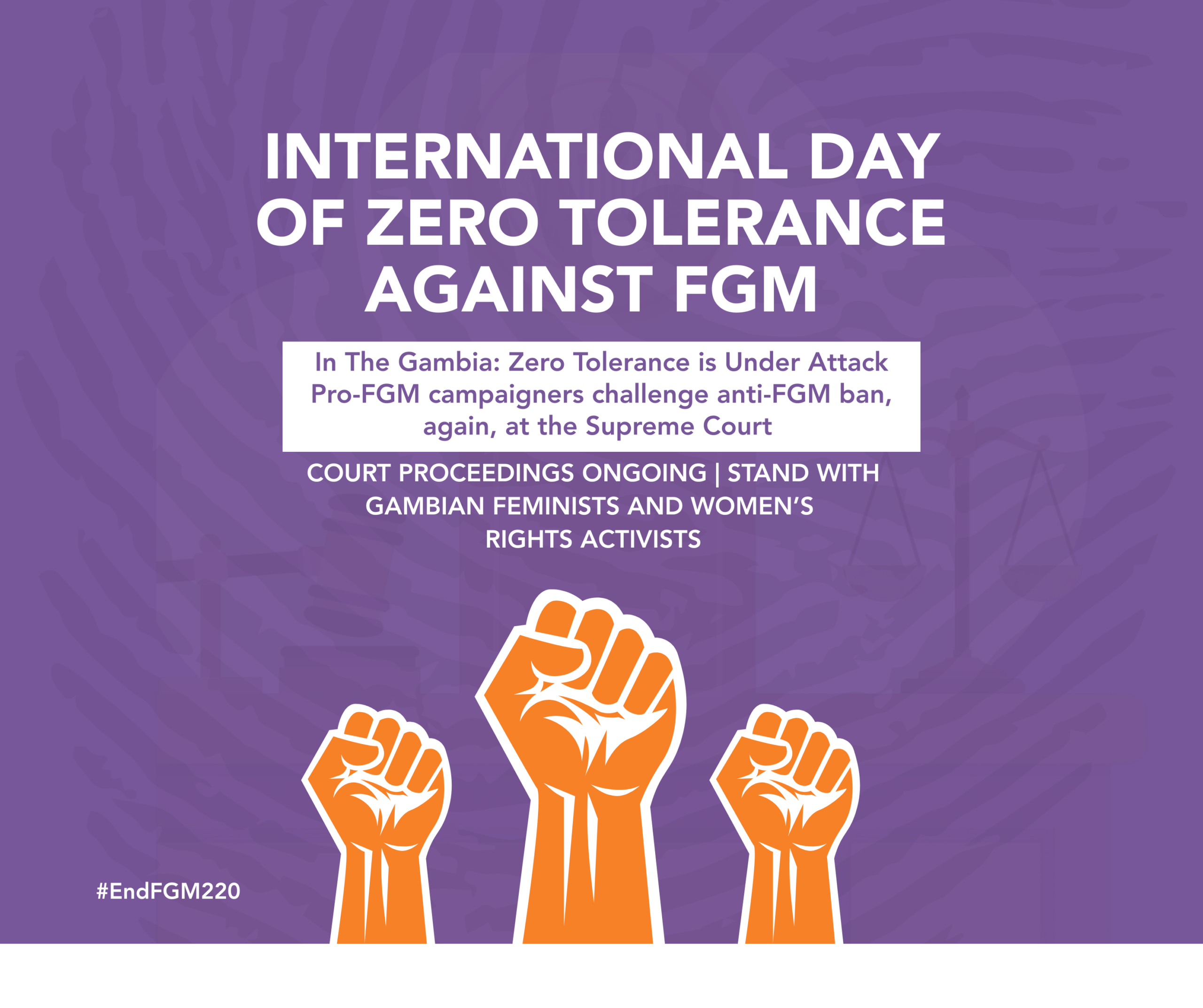 Yet, as global attention turns to ending the practice, apivotal battle is unfolding in The Gambia, where the Supreme Court is hearing arguments that could reverse the country’s 2015 ban on FGM and strip women and girls of their legal protection from FGM.The urgency of this moment is underscored by recent reports of the death of two babies after undergoing FGM in Banjul and Basse after undergoing FGM. These deaths reveal the stark and immediate cost of FGM’s continuance, particularly on girls.
Understanding the origins of this backlash in The Gambia is crucial. FGM has been a historic practice in The Gambia and most countries in Africa. It reportedly continued even after the ban in 2015, its persistence contested by feminists, women’s rights activists and survivors. However, its persistence has been contested by feminists, women’s rights activists and survivors. In August 2023, The Gambia made progress, three women were convicted for subjecting eight infant girls to FGM, the first prosecution since criminalisation in 2015. For feminists, survivors, and women’s rights defenders, this moment confirmed that decades of advocacy had translated into real accountability.
Almost immediately, an organised backlash emerged. Pro-FGM religious leaders paid the fines imposed on those convicted and launched public campaigns framing the ban as foreign-imposed, uncultural, and unislamic. The Supreme Islamic Council issued a fatwa claiming FGM is religiously required.
In 2024, a National Assembly Member introduced legislation to repeal the ban entirely, framing it as defending “religious norms” and threatening other protective laws, including child marriage prohibitions. Although Parliament upheld the ban following intensive advocacy, pro-FGM campaigners have advanced their challenge to the judiciary, arguing that criminalising FGM violates constitutional rights to religious and cultural freedom in The Gambia.
The scale and severity of FGM is stark. According to the 2019-2020 Gambia Demographic and Health Survey, approximately 73% of women aged 15-49 have undergone FGM, the overwhelming majority before the age of five. Crucially:
- 73% of affected women underwent procedures involving cutting and removal of flesh (WHO Type II).
- 17% were subjected to more severe forms involving stitching or narrowing of the vaginal opening (Type III).
- Nearly all women and girls affected live with the most invasive and harmful forms of FGM.
FGM in The Gambia is not only a social norm, it is actively defended and rationalised, making the legal protection of girls all the more essential.
What is at Stake in the Supreme Court
If The Gambia’s Supreme Court reverses the ban, the consequences will be immediate and far-reaching:
For girls: Legal protection vanishes. FGM becomes legitimised as a “religious and cultural right” rather than recognised as the harmful practice it is. Girls lose the one safeguard that could prevent them from being subjected to the practice.
For the state: Prosecutorial power disappears, law enforcement loses the ability to prevent, investigate, and prosecute FGM.
For other protections: Child marriage laws and other safeguards become vulnerable to similar “religious and cultural freedom” challenges. If patriarchal control can successfully cloak itself in religious language to override bodily autonomy here, it will be attempted everywhere.
For the region: This sets a dangerous precedent across Africa, undermines international standards, and emboldens anti-rights movements continent-wide. This could call to task similar contentions and challenges across national and regional protective treaties and laws.
An Observed Pattern We Cannot Ignore
Whilst The Gambia’s FGM crisis is urgent and specific, it reflects a broader, coordinated anti-rights backlash unfolding across the continent. We are witnessing systematic rollbacks: abortion access restricted and challenged LGBTQI+ rights criminalised, domestic violence protections undermined, women’s political participation resisted.
The playbook is consistent, frame women’s rights as “foreign imposed ideals”, mobilise religious authority, claim that protecting girls violates freedoms, then litigate whilst harm continues.
On this International Day of Zero Tolerance for Female Genital Mutilation, Gambian feminists and women’s rights advocates are on the frontlines of this fight, and they need sustained solidarity:
- Flexible, long-term funding for legal defence, survivor services, and sustained organising
- Amplification with Gambian feminist experiences and expertise centred
- Accountability from governments and international bodies to uphold regional standards
- Long-term commitment that recognises this as ongoing resistance
When feminists in The Gambia fight for bodily autonomy, they fight for all of us. AWDF stands with Gambian feminists and women’s rights advocates defending the law. We call for sustained, resource-backed international solidarity, not just today, but in the long-term commitment that movement work requires.
Re- advertised: Exciting opportunity for African feminists to lead Monitoring, Evaluation and Learning. Apply by 20 February.
Re- advertised: Exciting opportunity for African feminists to lead Monitoring, Evaluation and Learning. Apply by 20 February.
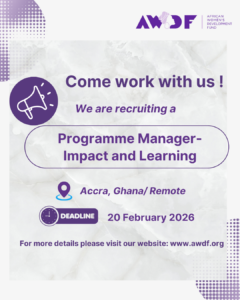
Are you experienced in leading the design and implementation of a monitoring, evaluation and learning strategy, ensuring that the evidence learning and reflection strengthen feminist grant making; accountability to movements doors and stakeholders and strategic decision-making?
Are you experienced in working to drive internal and external learning, impact documentation and contribute to thought leadership grounded in rigorous evidence and grant making experience?
Are you ready to lead a dynamic team providing technical MEL expertise, programme leadership, strategic operational leadership and people and relationship management?
Then the African Women’s Development Fund has an exciting opportunity for you. Learn more about the Programme Manger – Impact and Learning role HERE.
Job Summary
The Programme Manager- Impact and Learning leads organisational learning, evidence generation and feminist impact leadership. The Manager will work to champion a culture of reflection and accountability that stregthens internal practice and amplifies AWDF’s influence across the philanthropic ecosystem . The Manager will work to drive internal and external learning, impact documentation and contribute to thought leadership grounded in rigorous evidence and grant making experience.
Reporting to the Director of Programmes, the Programme Manager – Impact & Learning leads the design and implementation of AWDF’s Monitoring, Evaluation and Learning (MEL) Strategy, ensuring that evidence, learning and reflections strengthen feminist grantmaking ; accountability to movements, donors and stakeholders; and strategic decision-making. The role combines technical MEL expertise, programme leadership and relationship management. The role also plays a management role providing strategic operational leadership to the impact and learning functional area.
Please follow this link to apply for the position
Applications must reach AWDF no later than 20 February 2026.
In line with AWDF’s Mission, qualified African women and gender-diverse persons are encouraged to apply.
Join our team as Impact and Learning Specialist. Deadline extended to 23 January.
Join our team as Impact and Learning Specialist. Deadline extended to 23 January.
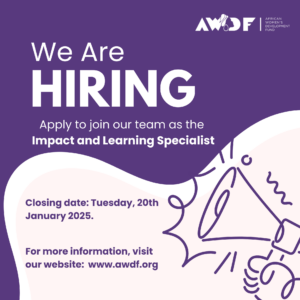
Are you interested in leading and contributing to Impact and Learning work in a pan-African feminist fund. This opportunity may just be right one for you. Application submissions have been extended to 23 January 2026. Read more about the position HERE.
As a Pan-African feminist fund, the African Women’s Development Fund (AWDF) resources, strengthens and upholds women’s rights and feminist organisations and movements across Africa to make gender justice a reality for all on our continent and worldwide. Through its grantmaking, programatic and advocacy work, , AWDF has supported work that has led to changes in law and policy, social norms, narrative, and movement-building for gender justice.
Role overview
We seek an Impact and Learning (I&L) Specialist on a consultancy basis to support the management of external end of project evaluations and impact documentation processes including data, story collection and dissemination. The Specialist will work alongside two I & L Officers and work collaboratively in support to the programs team and wider AWDF team. The role will report to the Director of Programmes.
Scope of Work
The successful candidate will;
- Lead and manage baseline, midline and enplane evaluations including drafting terms of reference, overseeing consultants and ensuring methodological rigor.
- Coordinate evaluation logistics, sampling, data collection, quality checks and analysis and ensure that evaluations generate clear and actionable insights for programing.
- Facilitate collaborative interpretation of evaluation findings with stakeholder including grantees.
- Support the documentation of impact stories, case studies, lessons learned and best practices.
- Lead the production of learning briefs, synthesis papers and presentations for dissemination to partners, donors, internal teams and the board.
- Lead the development and updating of monitoring, evaluation and learning (MEL) frameworks including theories of change, results frameworks, indicators and MEL plans.
- Lead the design and refining of data collection tools, and methodologies and protocols to ensure high quality and consistent data.
- Coordinate the development of MEL guidelines and instruments for internal and external stakeholders
- Support the development of the AWDF MEL framework to track the implementation of the strategic plan, Lemlem.
- Support project close out and documentation processes including data repository.
- Contribute MEL expertise for the development of project proposals and internal and external reporting requirements (board, donor, project reports, etc.)
Application Process
Interested applicants can find out more details about the job and submit their cover letter and application not later than Friday 23 January 2026 HERE.
In line with AWDF’s Mission, qualified gender diverse persons are encouraged to apply.
Please note that only shortlisted applicants will be contacted
Feminist Perspectives on ending Technology Facilitated Sexual Violence, Feminist Perspectives and Approaches
Feminist Perspectives on ending Technology Facilitated Sexual Violence, Feminist Perspectives and Approaches
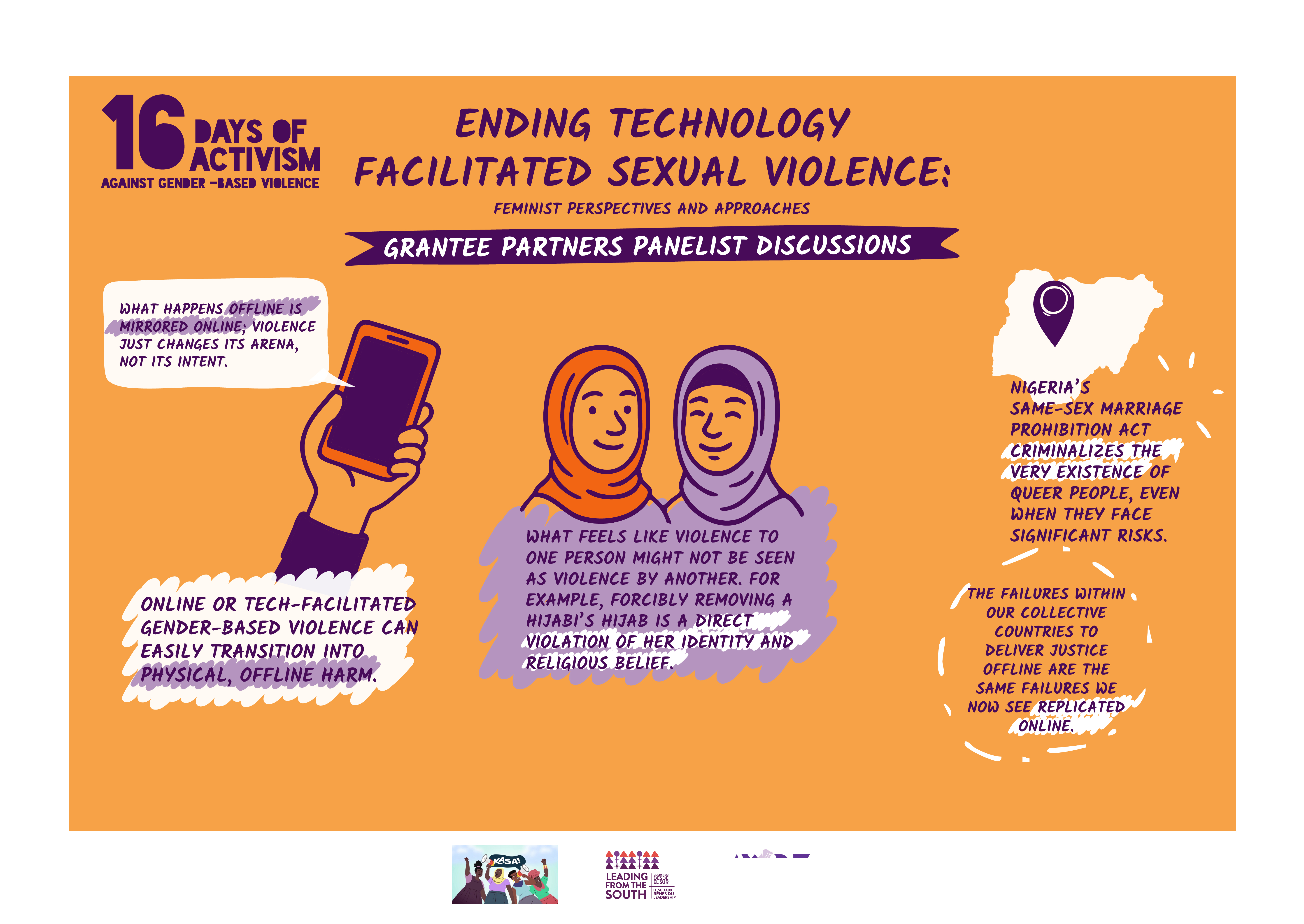
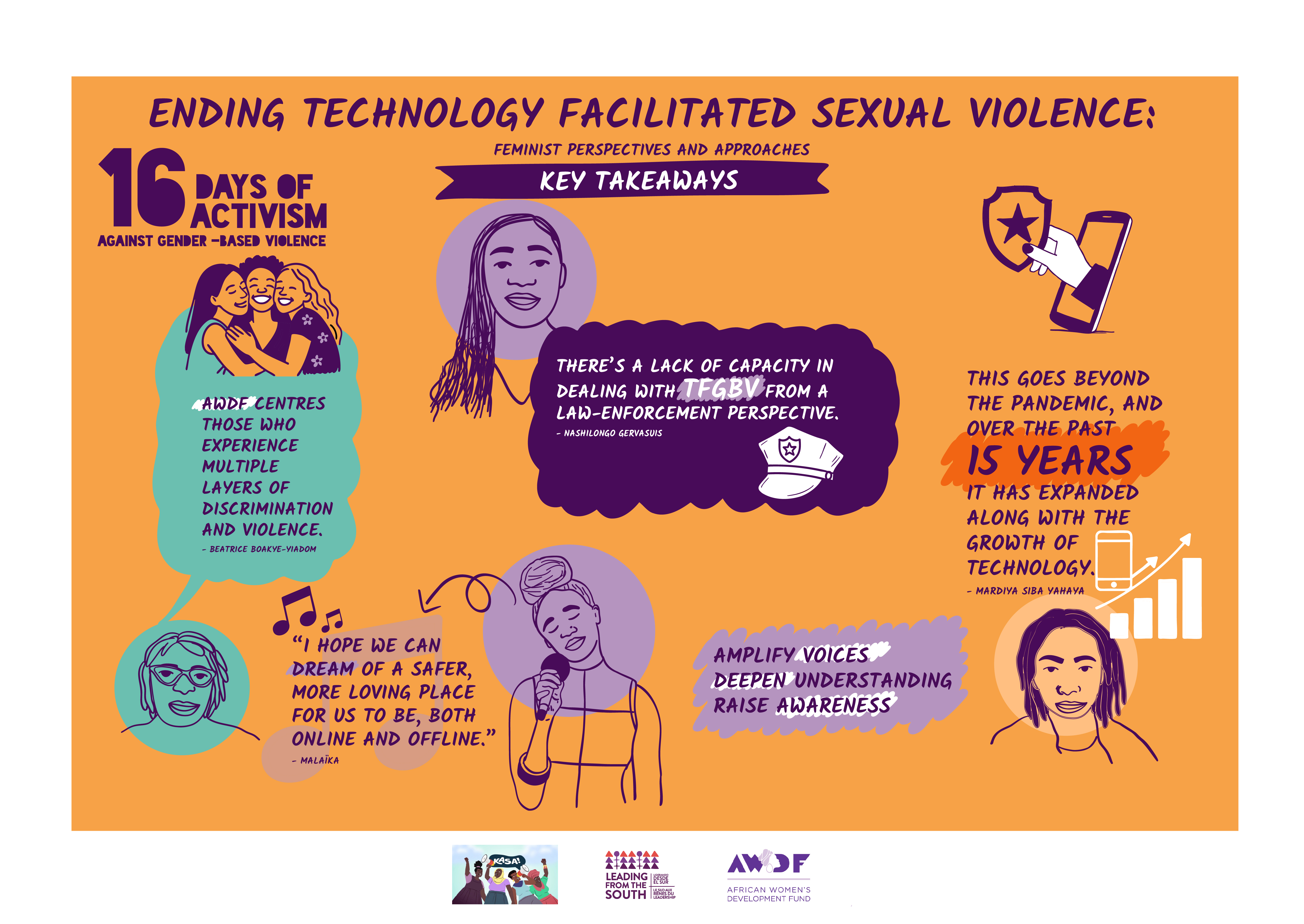
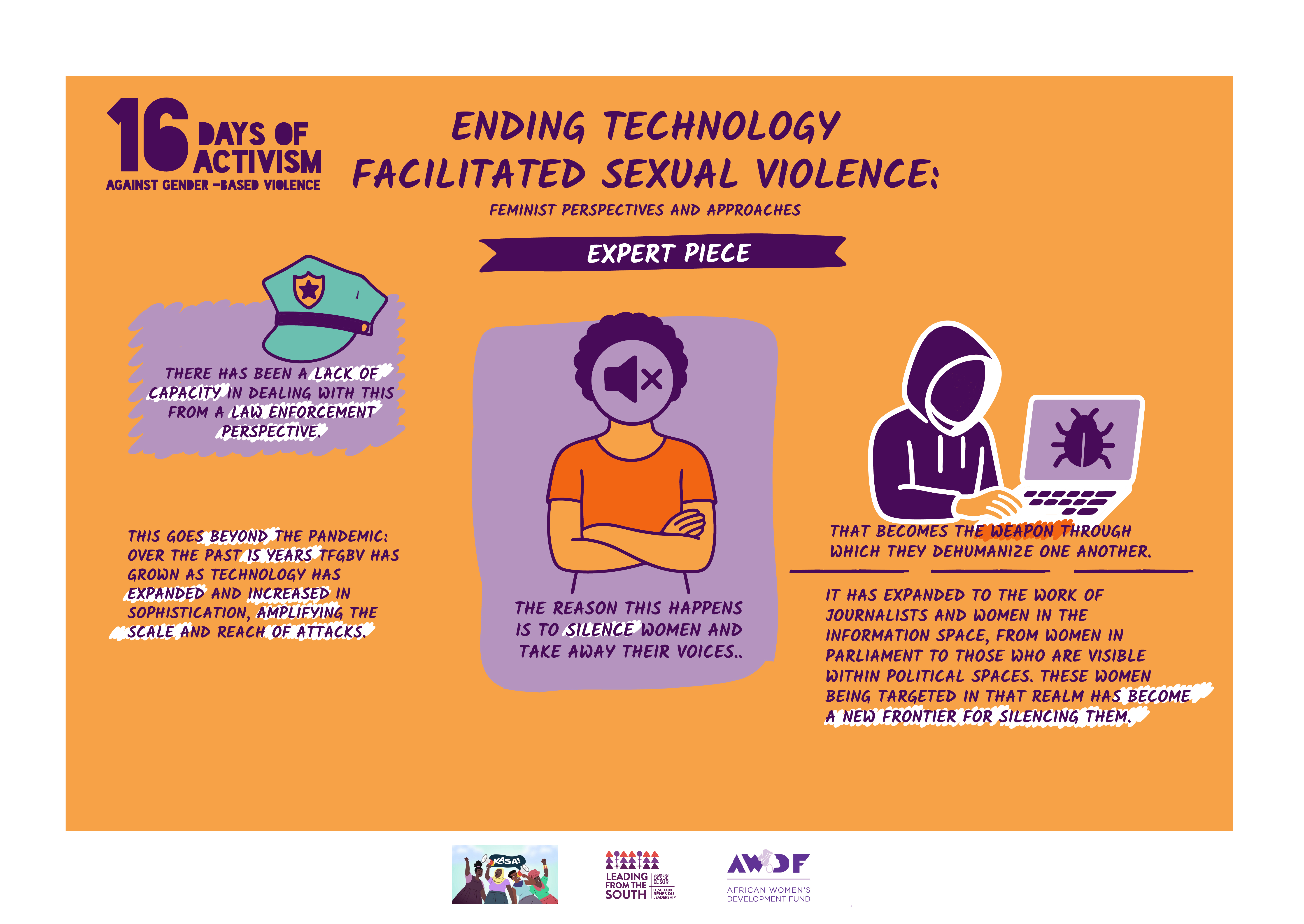
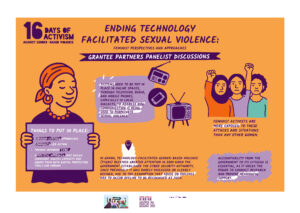
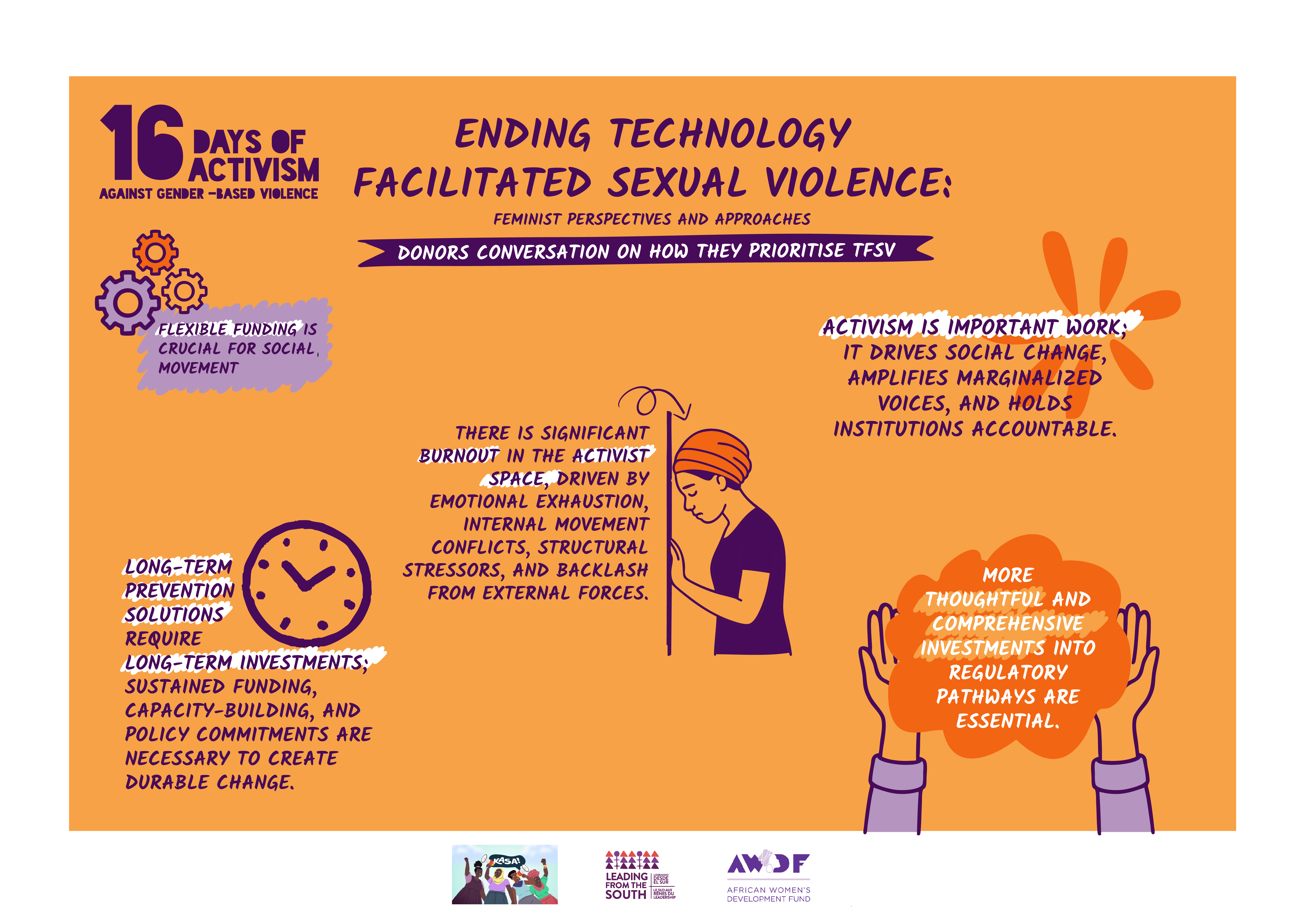
In line with the global 16 Days of Activism Campaign, AWDF co-created and hosted a virtual event on 3rd December 2025 on Technology-Facilitated Sexual Violence (TFSV). AWDF leveraged of the 16 Days OF aCTIVISM Campaign to raise awareness on TFSV and amplify the voices of the most affected: women, girls, gender-diverse persons, survivors and actors working to address TFSV.
AWDF sough to amplify voices of partners and increase visibility for our work on TFSV and advocate for a feminist approach to ending it. The event Brough together women’s rights and feminist organisations and activists, donors, and other actors working to address TFSV.
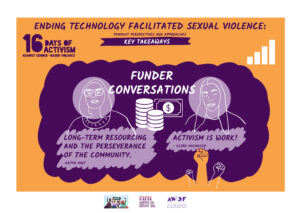
Missed the event here are some key insights shared during the convening
Feminist Resilience in the Wake of a New Vision: AWDF Annual Report 2024
Feminist Resilience in the Wake of a New Vision: AWDF Annual Report 2024
In 2024 women girls and gender diverse people bore the brunt of the often mentioned polycrisis. In Africa armed conflict instability , climate change and economic hardships intensified and anti-gender and anti-rights ideologies ad movements grew bolder- all while the world reeled from live images of genocide and incessant tales of curtailed rights around the world. African women, girls, and gender diverse people were affected in tangible ways as were the feminist movements that work to champion their rights . The world felt as it were only inches away from falling apart…
At AWDF we kept going and continued to implement our ten year strategic framework Lemlem.
We are thrilled to share with you our annual report for 2024 which highlights significant milestones over the year
We invite you to read the stories, data and highlights that showcase our work. Download the report HERE.
#Spotlight :Mettre fin aux violences sexuelles à Fatick, Sénégal
#Spotlight :Mettre fin aux violences sexuelles à Fatick, Sénégal
The “Elles Aussi” project, led by J-GEN Senegal under the auspices of KASA, has been combating violence against girls since 2022. With a prevalence of 13.4% among women aged 15 to 49, community engagement is essential. Through three monitoring committees bringing together women, priests, and imams, communities are organizing to break the silence, report violence, and protect girls. Watch more on Fatick’s work in Senegal
Ending Technology Facilitated Sexual Violence, Feminist Perspectives and Approaches, 3 December
Ending Technology Facilitated Sexual Violence, Feminist Perspectives and Approaches, 3 December
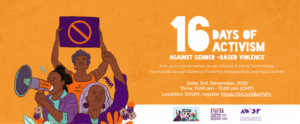
The Sixteen Days of Activism Against Gender-Based Violence, observed annually from 25 November to 10 December, is a global campaign dedicated to raising awareness and mobilising action to end violence against women and girls. This year’s commemoration is held under the theme: Unite to End Digital Violence Against Women and Girls.
As part of the campaign, the African Women’s Development Fund convened an online conversation titled Ending Technology-Facilitated Sexual Violence: Feminist Perspectives and Approaches. The event brought together feminist activists, women’s rights organisations, donors, researchers, and other key stakeholders working to address the growing realities of technology-facilitated sexual violence across Africa and beyond.
The discussion explored feminist approaches to digital safety, accountability, survivor-centred responses, and collective strategies for resisting online violence targeting women and girls.
Missed the convening explore discussion from the event below:
Read the expert piece produced to ground the discussion HERE
Learn more about the KASA! initiative HERE
Call for Expressions of Interest: Event and Logistics support for the African Feminist Forum 2026
Call for Expressions of Interest: Event and Logistics support for the African Feminist Forum 2026
The African Women’s Development Fund seeks the services of a Namibia based events and logistics company to support the 5th African Feminist Forum to be held in Windhoek, Namibia, in August 2026.
Background
AFF 2026 will bring together approximately 250 African feminists and women rights activists from across the continent and diaspora. The Forum will commemorate 20 years since the first AFF was held in Accra in 2026 and will provide space to reflect, celebrate and re-imagine the future of African feminist movement-building. To ensure a seamless convening experience for participants and partners, AWDF seeks the services of a Namibia based events and logistics company with demonstrable experience in organising large-scale, high-profile conference, especially those rooted in social justice or feminist movements. The selected company will work closely with the AFF Secretariat at AWDF and the AFF 2026 Steering Committee to plan and manage all logistical and event- related aspects for a smooth delivery of the Forum.
Scope of Work
The events and logistics company will be responsible for supporting the full cycle of event planning and coordination, including (but not limited to):
– Pre-event planning and advise;
– Event coordination and onsite management;
– Post- event.
Duration of the assignment
This assignment is expected to run from December 2025 – September 2026, covering the preparatory phase, implementation, and post-event close-cut period. The company/team should demonstrate:
– Proven experience in managing large scale conference or convening (200+participants), preferably with the feminist, development or non-profile sector .
– Strong logistical networks and vendor relationships within Namibia.
– Demonstrated capacity to coordinate international participants’ logistics (visas, transport, accommodation, etc.).
– Experience providing audio visual, translation, interpretation and event design service, or managing third-party providers.
– Commitment to feminist values of respect, accountability diversity, inclusion and solidarity.
– Excellent organisational communications and problem-solving skills.
– Commitment to fair labour practices, including fair compensation, non exploitation of casual or temporary workers, and maintaining a safe working environment free from harassment and discrimination.
– Demonstrated adherence to feminist and ethical standards in vendor management, including policies on harassment, discrimination, conflict of interest and risk management.
– Evidence of environmentally responsible practices and approaches to sustainability within event planning.
Application Methodology
Interested event and logistics companies are invited to submit an Expression of Interest (EOI) that includes:
– A company profile – outlining experiences in organising large-scale events, past clients (especially feminist or social justice organisations), and key personnel who would lead this assignment.
– Proposed approach – a short narrative (no more than two pages) describing how the company envisions supporting the planning coordination and execution of the AFF 2026 Forum, including suggested timelines and management structure.
– Preliminary budget estimate – an indicative cost breakdown for delivering the full scope of work described in this TOR, including coordination, logistics management, staffing and vendor oversight. (Final costs will be confirmed after detailed scoping with AWDF).
– At least three reference or samples from comparable events managed within the past five years.
EOIs should be submitted electronically to consultants@awdf.org with the subject line: “EOI: Event and Logistics Support – AFF2026, Namibia.”
Deadline for submission: 19 December at 23:59 (GMT).
AWDF strongly encourages applications from companies led by women, queer and gender diverse people, and people living disabilities. In keeping with AWDF’s values and commitment to inclusive practice, companies with demonstrated approaches to equity, diversity and inclusion are especially encouraged to apply.
Read full Terms of Reference HERE
Six priorities shaping feminist movements in Portuguese speaking Africa
Six priorities shaping feminist movements in Portuguese speaking Africa
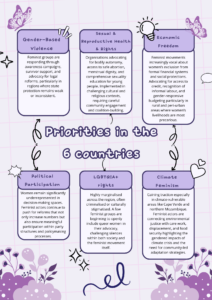
Despite the vibrancy of feminist organising in Portuguese speaking African countries, they have historically operated on the periphery of global and regional feminist discourse constrained by linguistic isolation post colonial authoritarianism and systemic funding inequities. To better understand the landscape and inform future support, the African Women’s Development Fund (AWDF) recently commissioned a mapping study to understand the state of feminist and women’s rights movements across Portuguese- speaking African countries including
Angola
Cape Verde
Equitorial Guinea
Guinea Bissau
Mozambique
São Tomé and Principe
The report offers rich analysis of how feminist actors, formal and informal, young and intergenerational rural and urban organism under conditions of restrictions, linguistic marginalisation and economic fragility. Despite these constraints feminist organising in Portuguese- speaking Africa is dynamic and deeply rooted in community resilience creativity and care.
To push forward the agenda on gender justice, feminist and women’s rights activists in the region are focusing on fighting GenderBased Violence (GBV), organising and advocating for bodily autonomy access to safe abortion menstrual dignity comprehensive sexuality education
They are also focusing on economic freedom as they increasingly raise their voices about women’s exclusion from formal financial systems and social protection . They are pushing for reforms on women’s leadership and political participation as they remain significantly underrepresented in key decision making spaces
With gender diverse people highly marginalised across the region and often criminalised or culturally stigmatised, feminist groups are beginning to openly include gender diverse people in their advocacy.
Finally climate feminism is on the rise especially in climate vulnerable areas like Cape Verde and Northern Mozambique . Feminist actors are connecting environmental justice with creating work , displacement and food security highlighting the gender impact of the climate crisIs and need for community led adaptation strategies .
This mapping is not an endpoint but a foundation to what we are hearing and seeing in the region. It provides critical evidence for understanding the realities, of movements in the region, This will guide our efforts to strengthen feminist movement ecosystems, and support transformative feminist change.
Read the report HERE
Read the infographic HERE
Written by Tarisai Nyamweda, is the Communications Specialist at AWDF.