
Category: News
Call for Applications for Communications Consultancy
Call for Applications for Communications Consultancy
[tp lang=”en” not_in=”fr”]
We are looking for a future-oriented communications training consultant to develop a new curriculum for AWDF’s Capacity Building Unit, with a focus on communications for African women’s rights organisations.
To download the TOR, kindly click this link: TOR for Communications training curriculum
Applications are due 11 December 2017, and must be mailed to the AWDF Capacity Building Specialist, Amina, at this address: aminasalih@africlub.net/awdf[/tp]
7TH CEO FORUM ON Leadership and Governance for Women Leaders of Women’s Rights Organisations in Africa
7TH CEO FORUM ON Leadership and Governance for Women Leaders of Women’s Rights Organisations in Africa
[tp lang=”en” not_in=”fr”]
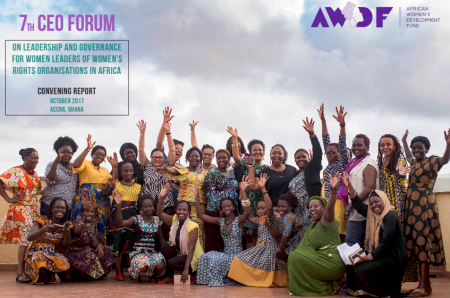
Our Capacity Building Programme looks at developing and strengthening grantees work to ensure their sustainability.
Read about the just-ended CEO Forum which was held in Accra recently, and which forms part of this ground-breaking programme by clicking: AWDF 7th CEO Forum Report[/tp]
Call for consultants: Mapping advocacy for women’s rights in North Africa and the Middle East
Call for consultants: Mapping advocacy for women’s rights in North Africa and the Middle East
[tp lang=”en” not_in=”fr”]

Mapping advocacy for women’s rights in North Africa and the Middle East
INTRODUCTION
The African Women’s Development Fund was established in June 2000, as an Africa-wide philanthropic, grant making initiative to support the realisation and fulfilment of African women’s rights through funding of autonomous women’s organisations on the continent. AWDF believes that if women and women’s organisations are empowered with skills, information, sustainable livelihoods, opportunities to fulfil their potential, plus the capacity and space to make transformatory choices, then we will have vibrant, healthy and inclusive communities. To achieve this, AWDF mobilises financial, human and material resources to support local, national, and regional initiatives for transformation led by African women. AWDF is mandated to fund in all 54 African countries. In 2017 AWDF began to implement the Leading from the South funding initiative- providing grants and capacity building to support advocacy and lobbying for women’s rights in Africa and selected countries in the Middle East. The initiative is being implemented with three other women’s funds; South Asian Women’s Fund, Fondo Mujeres del Sur and the Indigenous Women’s Fund.
PURPOSE OF THE CONSULTANCY
The aim of this consultancy is to produce a report mapping women’s rights advocacy organisations, networks and coalitions in North Africa and in the Middle East, the issues that they advocate on, targets of advocacy and approaches. In the Middle East the focus is on: Jordan, Iran, Lebanon, Syria, Yemen, Iraq and Palestine. In North Africa the initiative covers : Tunisia, Algeria, Libya, Morocco and Egypt. The mapping should also include key big picture opportunities and gaps, as well as an indication of key donors funding in the field. The report will be used to internally within AWDF to inform our programming, and may also be shared with other women’s funds supporting work in this area. Advocacy includes campaigns, lobbying, policy advocacy, strategic litigation, shadow reporting, and monitoring of policy commitments.
METHODOLOGY
• Discussion with AWDF team to clarify terms and overall scope of the consultancy
• Submission of outline of methodology and list of people to interview
• Desk review of relevant documents • Interviews with up to 10 relevant actors (women’s rights activists, funders, staff of policy institutions). AWDF will make introductions as needed.
• Production of first draft for review and feedback by AWDF staff
• Production of second draft incorporating feedback
• Production of final version with sign off from
For full terms of reference please click on the link below:
TOR Mapping advocacy for Women’s Rights
[/tp]
[tp lang=”fr” not_in=”en”]
OFFRE D’EMPLOI: CONSULTANT(E)
Consolidation des activités du plaidoyer pour les droits de la femme en Afrique du Nord et au Moyen-Orient : Acteurs et problèmes
INTRODUCTION
Le Fonds Africain pour le Développement de la Femme (AWDF) est une initiative africaine philanthropique créée en juin 2000 avec pour objectif de faciliter le respect des droits de la femme africaine en octroyant des subventions aux organisations de femmes autonomes sur le continent. AWDF est certain d’avoir des communautés vibrantes et égalitaires si nous responsabilisons la femme et équipons les organisations de femmes à travers la sensibilisation, le renforcement des compétences et la sécurisation des moyens d’existence et si nous leur donnons l’opportunité de réaliser leurs potentialités. A cet effet, AWDF mobilise des ressources financières, humaines et matérielles afin de soutenir les organisations locales, nationales et régionales pour supporter les travaux dirigés par la femme africaine. AWDF est mandaté pour financer les 54 pays d’Afrique.
En 2017, AWDF a entamé la mise en œuvre du projet LE SUD AUX RÊNES DU LEADERSHIP, un projet de subvention et de renforcement des capacités du plaidoyer et du lobbying pour les droits de la femme en Afrique et dans certains pays du Moyen Orient. Le projet est mis en œuvre par AWDF et trois fonds pour les femmes à savoir : South Asian Women’s Fund, Fondo Mujeres del Sur et Indigenous Women’s Fund
OBJET DU CONTRAT
Le consultant(e) devra rédiger un rapport schématisant les organisations, réseaux et coalitions qui plaident pour la promotion des droits de la femme en Afrique du Nord et au Moyen-Orient, les problèmes qu’elles adressent, les objectifs du plaidoyer et les approches. Au Moyen-Orient, les pays prioritaires sont la Jordanie, l’Iran, le Liban, la Syrie, le Yémen, l’Irak et la Palestine. En Afrique du Nord, l’initiative couvre la Tunisie, l’Algérie, la Libye, le Maroc et l’Egypte.
Le rapport doit inclure aussi les opportunités clés et défis ainsi que des indications de financement par les principaux bailleurs de fonds dans le domaine. Le rapport contribuera aux prises de décisions au sein de l’AWDF et sera peut-être partagé avec d’autres fonds pour les femmes soutenant des travaux dans ce même domaine.
Le plaidoyer comprend des campagnes, le lobbying, le plaidoyer de la politique, des litiges stratégiques, le reportage et suivi des engagements politiques.
METHODOLOGIE
- Discussion avec l’équipe de l’AWDF pour clarifier les termes et conditions générales de la consultance
- Soumission de l’aperçu de la méthodologie et la liste des personnes à interviewer
- Analyse des documents pertinents
- Entrevues avec les acteurs concernés (maximum 10 activistes des droits de la femme, les bailleurs de fonds, le personnel des institutions politiques)
- L’AWDF fera des présentations si nécessaire
- Soumission de la première version pour revue et commentaires par le personnel de l’AWDF
- Soumission de la deuxième version incorporant tous les commentaires
Soumission de la version finale devant être signée par l’AWDF
TDR plaidoyer pr les droits de la femme
[/tp]
Bisi Adeleye-Fayemi appointed Visiting Senior Research Fellow at the African Leadership Centre in the School of Global Affairs, King’s College London
Bisi Adeleye-Fayemi appointed Visiting Senior Research Fellow at the African Leadership Centre in the School of Global Affairs, King’s College London
Bisi Adeleye-Fayemi, co founder of the African Women’s Development Fund, has been appointed as a Visiting Senior Research Fellow at the African Leadership Centre in the School of Global Affairs, King’s College London in 2017. She is one of the three Co-Founders of the African Women’s Development Fund (AWDF) and served as the first Executive Director from 2001-2010. Her leadership established AWDF as a leading institution in the area of social change philanthropy in Africa, and as one of the most effective feminist philanthropic institutions globally. She is also one of the founders of the African Feminist Forum and served on the AFF Working Group from 2006-2016.
Find out more about her position, and read the rest of the article HERE
CEO FORUM: Setting the Foundation for an Exciting two years!
CEO FORUM: Setting the Foundation for an Exciting two years!
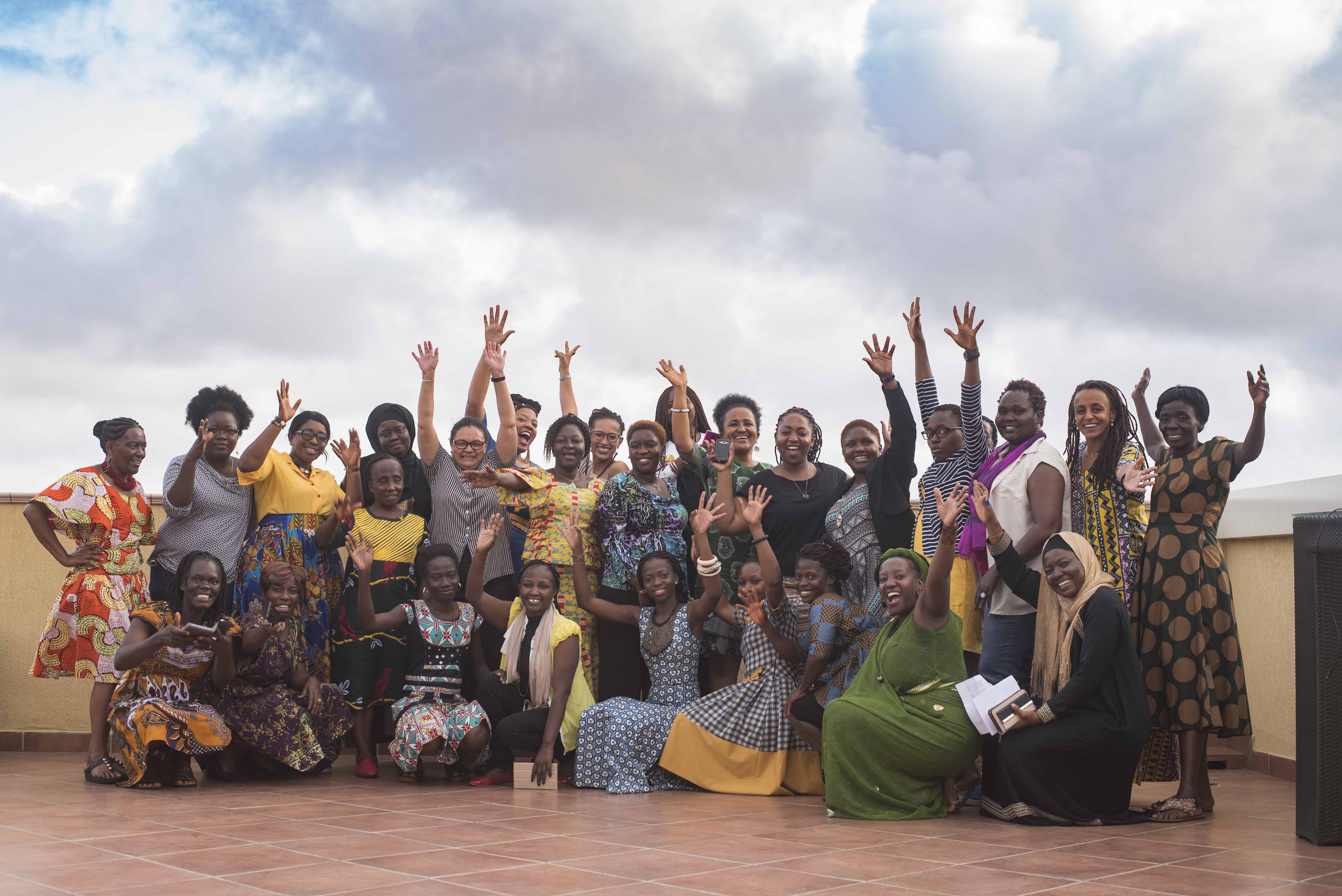 The Manda coaching program is an opportunity for young women in second level leadership to come together and learn from and with each other. On 11th October, the 4th CEO Forum was held in Accra, Ghana and brought together young leaders from across the continent whose organisations are making positive changes within their communities. The leaders themselves proved to be dedicated and innovative and they brought all of this energy with them to the meeting.
The 4 day event was spent discussing various areas of organisational and personal development within women’s rights spaces. The focus was on transformational feminist leadership within their organisations and each of the participants had a rich history and knowledge to share. The CEO forum allows for AWDF to invest in the sort of leadership which will help move our continent forward by investing in leaders whose work we believe in, by helping to strengthen their organisations and communities. This is an innovative way to look at women’s leadership and helps foster both individual and organisational leadership.
The women who were present at the 4 day event brought their zeal, their questions and their curiosity and this in turn helped make the forum lively and responsive to their direct needs. Participants spoke to the importance of coaching and mentoring, and how each individual mentor exhibited great skills at this. Deborah Ahenkorah, Founder of Golden Baobab remarked that “Hope Chigudu( One of the Mentors) is someone who is committed to nurturing the potential she sees in other women.”
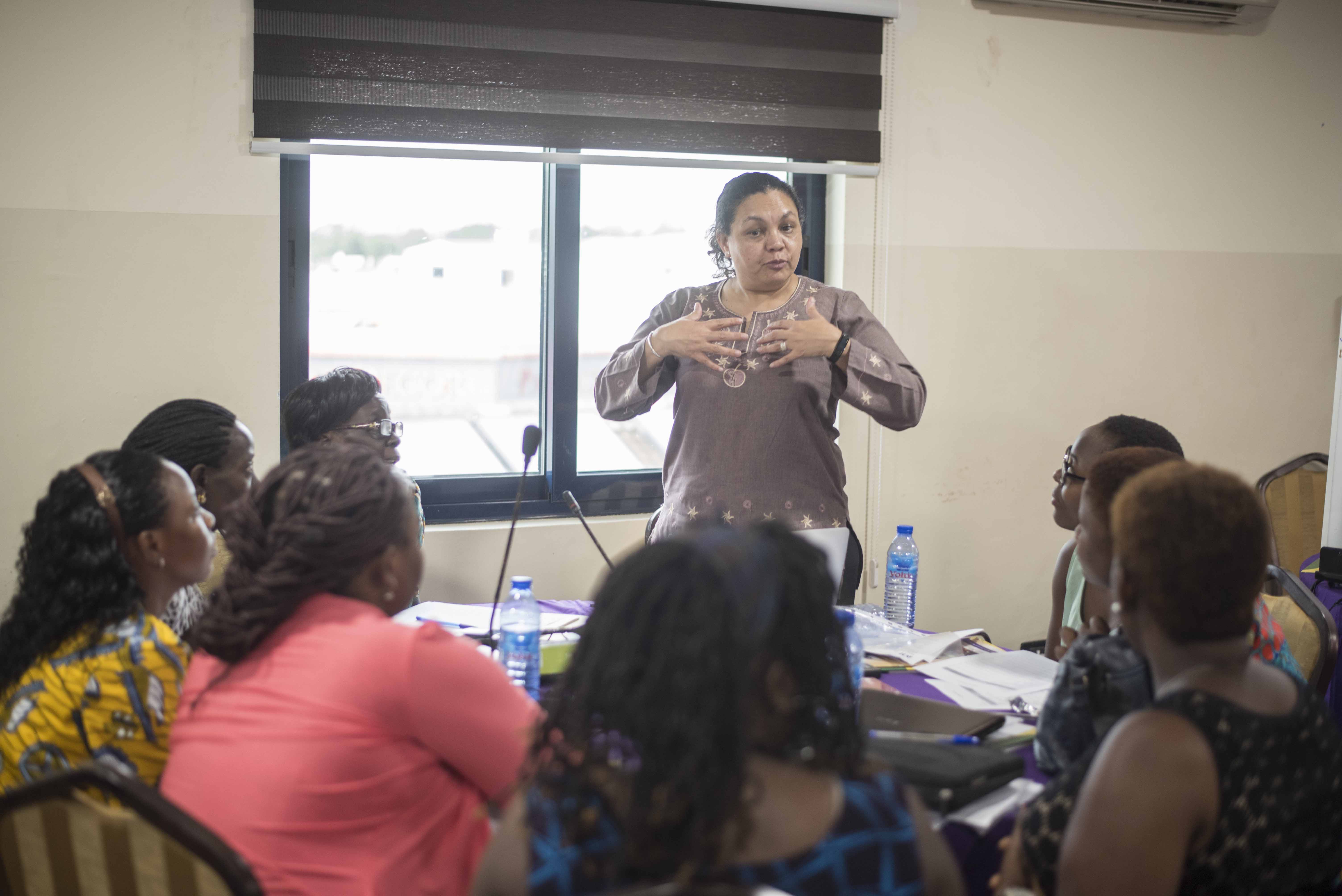
Another key aspect of the discussions was how to truly embody feminist egalitarian leadership within their organisations and how to communicate about the work that their organisations did. There was an extensive day’s training in communications, led by Paula Fray of Fray Intermedia, and also on linking coaching to feminism, led by Yene Assegid. Hope Chigudu moderated and led the open discussions with her trademark energy and passion, while AWDF CEO Theo Sowa gave a very insightful and reflective presentation on governance.
The 4 day event helped encourage, reaffirm and strengthen the mentees, and the two-year coaching programme will continue to build on the foundation that was set during the CEO forum.
ECOWAS Court makes first pronouncement on Maputo Protocol: Rules in favour of plaintiffs in case of Dorothy Njemanze & 3 Ors V Federal Republic of Nigeria
ECOWAS Court makes first pronouncement on Maputo Protocol: Rules in favour of plaintiffs in case of Dorothy Njemanze & 3 Ors V Federal Republic of Nigeria
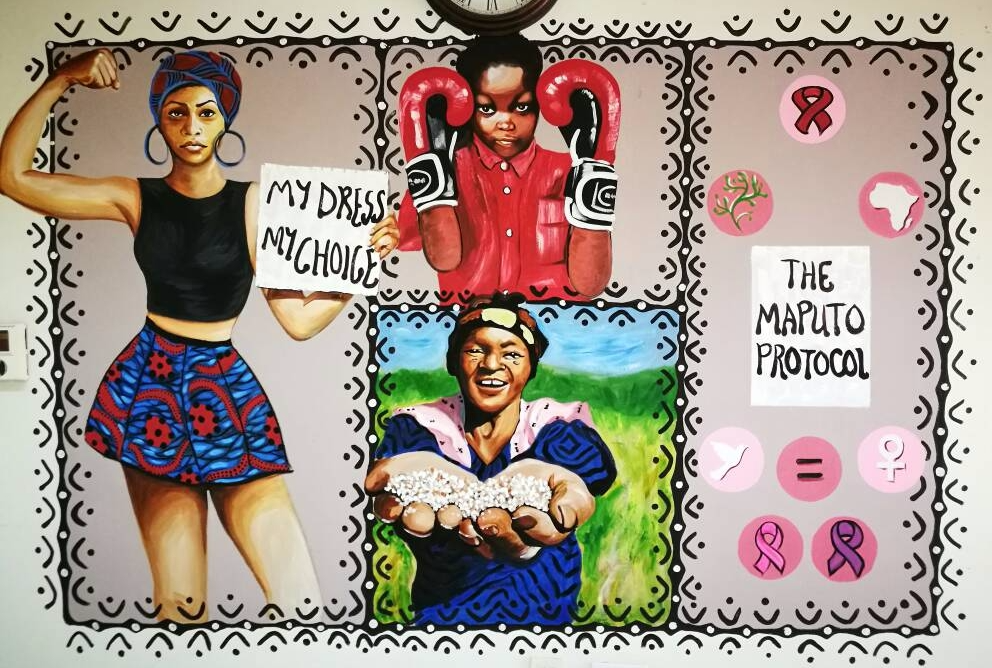
The ECOWAS Court today, 12 October 2017, delivered its judgment in the case between Dorothy Njemanze and 3 others v The Federal Republic of Nigeria. The case centered on the violent, cruel, inhuman, degrading and discriminatory treatment the Plaintiffs suffered at the hands of law enforcement agents in Abuja Nigeria.
The women by name, Dorothy Njemanze, Edu Ene Okoro, Justina Etim and Amarachi Jessyforth were abducted and assaulted sexually, physicaly, verbally and unlawfully detained at different times between Janaury 2011 and March 2013 in the hands of the Abuja Environmental Protection Board (AEPB) and other government agencies, such as the police and the military. They were arrested and accused of being prostitutes simply on the grounds that they were found on the streets at night.
In its judgment, the Court held that the arrest of the Plaintiffs was unlawful and violated the right to freedom of liberty, as the Defendant State had submitted no proof that these women were indeed prostitutes. The Court also found that branding the women prostitutes constituted verbal abuse, which violated the right of these women to dignity. Further, the Court held that the arrest violated the right of these women to be free from cruel, inhuman or degrading treatment; and also constituted gender-based discrimination.
The Court found that there were multiple violations of articles 1, 2, 3 and 18 (3) of the African Charter on Human and Peoples’ Rights; articles 2, 3, 4, 5, 8 and 25 of the Protocol to the African Charter on the Rights of Women in Africa (Maputo Protocol); articles 2, 3, 5 (a) and 15(1) of the Convention on the Elimination of all forms of Discrimination against Women (CEDAW); articles 2(1), 3, 7 and 26 of the International Covenant on Civil and Political Rights (ICCPR); articles 10, 12, 13 and 16 of the Convention against Torture (CAT); and articles 1, 2, 5, 7 and 8 of the Universal Declaration of Human Rights (UDHR).
The 1st, 3rd and 4th Plaintiffs were each awarded damages in the sum of Six Million Naira. However, the claim of the 2nd Plaintiff was dismissed for being statute barred under the Protocol creating the Court.
It must be noted that this is the first time an international court has pronounced on violations of the Maputo Protocol.
The case was filed 17 September 2014 and was a joint action between Institute for Human Rights and Development in Africa (IHRDA), Alliances for Africa, Nigerian Women Trust Fund and the law firm of SPA Ajibade, with support from Open Society Initiative for West Africa (OSIWA).
ARTICLE REPRINTED FROM : HERE
Rita Nketiah
Rita Nketiah
[tp lang=”en” not_in=”fr”]Rita Nketiah is a second-generation Ghanaian-Canadian currently completing her PhD research in Critical Human Geography at York University, with a focus on second-generation immigrant transnationalism among young adults of Ghanaian origin. She completed two previous degrees (Honours Bachelors and Masters) in Women and Gender Studies from Western University and the University of Toronto, respectively.
Rita is currently an advisory board member for the Sankofa Initiative (ISDAO), a new LGBT fund supporting activists in West Africa. She also has over ten (10) years of experience of feminist activism and scholarship with a focus on Black/African women’s empowerment, anti-racism and Pan-Africanist movement-building. Rita has had the opportunity to work for several international development agencies including the United Nations Children’s Fund (UNICEF HQNY) and the World University Service of Canada (WUSC) as a Gender Research consultant. She is also a creative writer, publishing in online spaces, such as This Is Africa (TIA) and Pambazuka. Rita has joined the African Women’s Development Fund as the Knowledge Management Specialist.[/tp]
Dahmata Yabre
Dahmata Yabre
[tp lang=”en” not_in=”fr”]
Dahmata Yabre is a development practitioner and a professional translator, with a strong interest in gender initiatives and women empowerment issues. Prior to joining AWDF, she worked with the International Research and Exchanges Board (IREX) and the West Africa Civil Society Institute (WACSI) on the Mandela Washington Fellowship Programme under YALI, the Young African Leaders Initiative.
She earned a Bachelor of Arts Degree in Translation from the School of Translators in Ghana. She also holds an interdisciplinary Master of Public Policy (M.P.P.) Degree with a specialisation in Conflict Studies and Management from the Willy Brandt School of Public Policy at the University of Erfurt in Germany.
[/tp]
[tp lang=”fr” not_in=”en”]Dahmata Yabre est une traductrice professionnelle, active dans le secteur du développement et ayant un grand intérêt pour les initiatives du genre et l’autonomisation de la femme. Avant de rejoindre AWDF, elle a travaillé avec le Conseil International pour la Recherche et les Échanges (IREX) et l’Institut de la Société Civile Ouest-Africaine (WACSI) sur le programme Mandela Washington Fellowship sous YALI, une initiative pour les jeunes leaders africains.
Elle a une Maîtrise en traduction, obtenue à l’École des traducteurs au Ghana. Elle est également titulaire d’un Master II interdisciplinaire en politique publique (M.P.P.) avec une spécialisation en études et gestion des conflits de Willy Brandt School of Public Policy à l’Université d’Erfurt en Allemagne.[/tp]
AWDF mourns Marren Akatsa Bukachi: a feminist, a sister and a friend.
AWDF mourns Marren Akatsa Bukachi: a feminist, a sister and a friend.
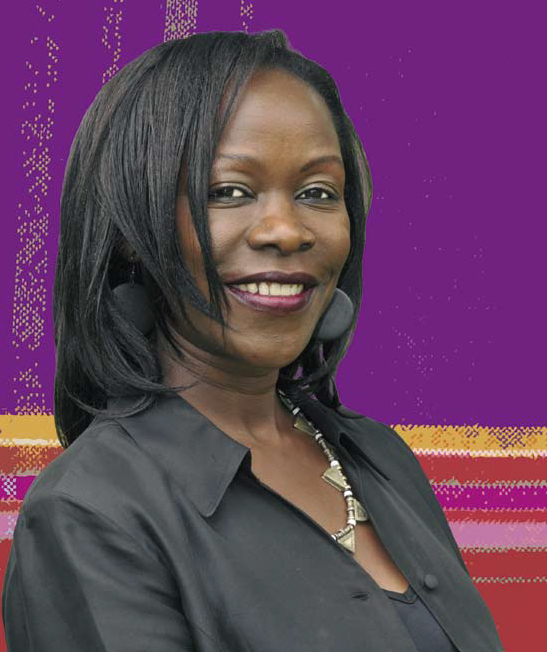
Her active role in the African Feminist Forum and Ugandan feminist forum helped shape both of these spaces. She was a constant voice for progression, and knew that the future of the feminist movement relied on inclusion.
Marren was the Executive Director of the Eastern African Sub-regional Support Initiative for the Advancement of Women (EASSI), a feminist organisation that was founded in 1996 to monitor how governments in the region implemented the 12 critical areas of concern of the Beijing Platform for Action. She helped sustain feminist spaces on the continent with an immense passion and commitment to her feminist Ideals and it was easy for those who met her to see the feminist spirit within her.
Her voice, her energy and her passion will be greatly missed.
Rest Well, Marren, you have made an indelible mark
Resource Centre Day: African Feminists Doing Research
Resource Centre Day: African Feminists Doing Research
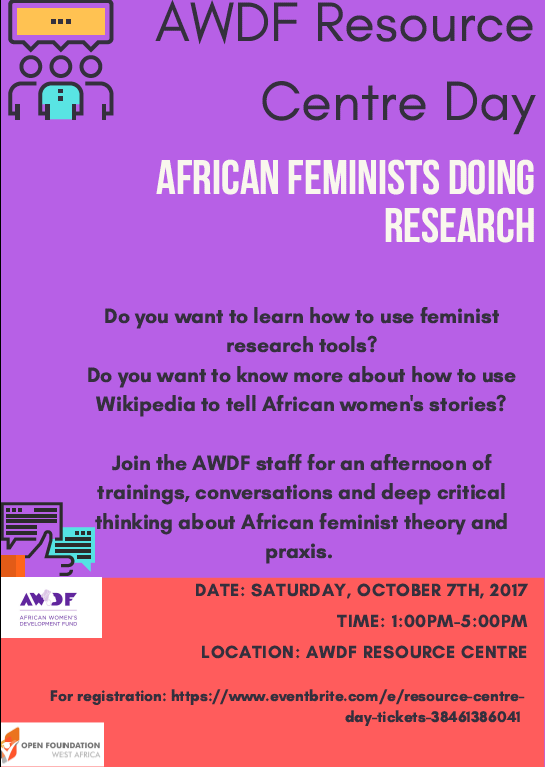
Are you interested in learning more about African feminist theories?
Do you want to learn how to be a feminist researcher?
Do you want to know more about how to use Wikipedia to tell African women’s stories?
Join the AWDF staff for an afternoon of trainings, conversations and deep critical thinking about African feminist theory and praxis.
This session will be open to AWDF staff and (feminist) public interested in deepening their knowledge of African feminist research practices and learning more about Wikipedia usage.
Register for the event HERE