
Category: News
Reflections on Generations of Sisterhood: International Women’s Day 2018
Reflections on Generations of Sisterhood: International Women’s Day 2018

“Women are not homogenous. We can be different but still find common ground to work together strategically. We cannot, must not, allow age, generation, class, ethnicity, education and professional lives, marital and motherhood statuses, diverse abilities and disabilities to divide us”. Prof Akosua Adomako Ampofo
Feminism is sisterhood and sisterhood requires conversation and interrogation to grow. It is not always the beautiful, flowing moments of synergy, but sometimes the recognition of our differences that require an examination of the cracks in order to find healing.
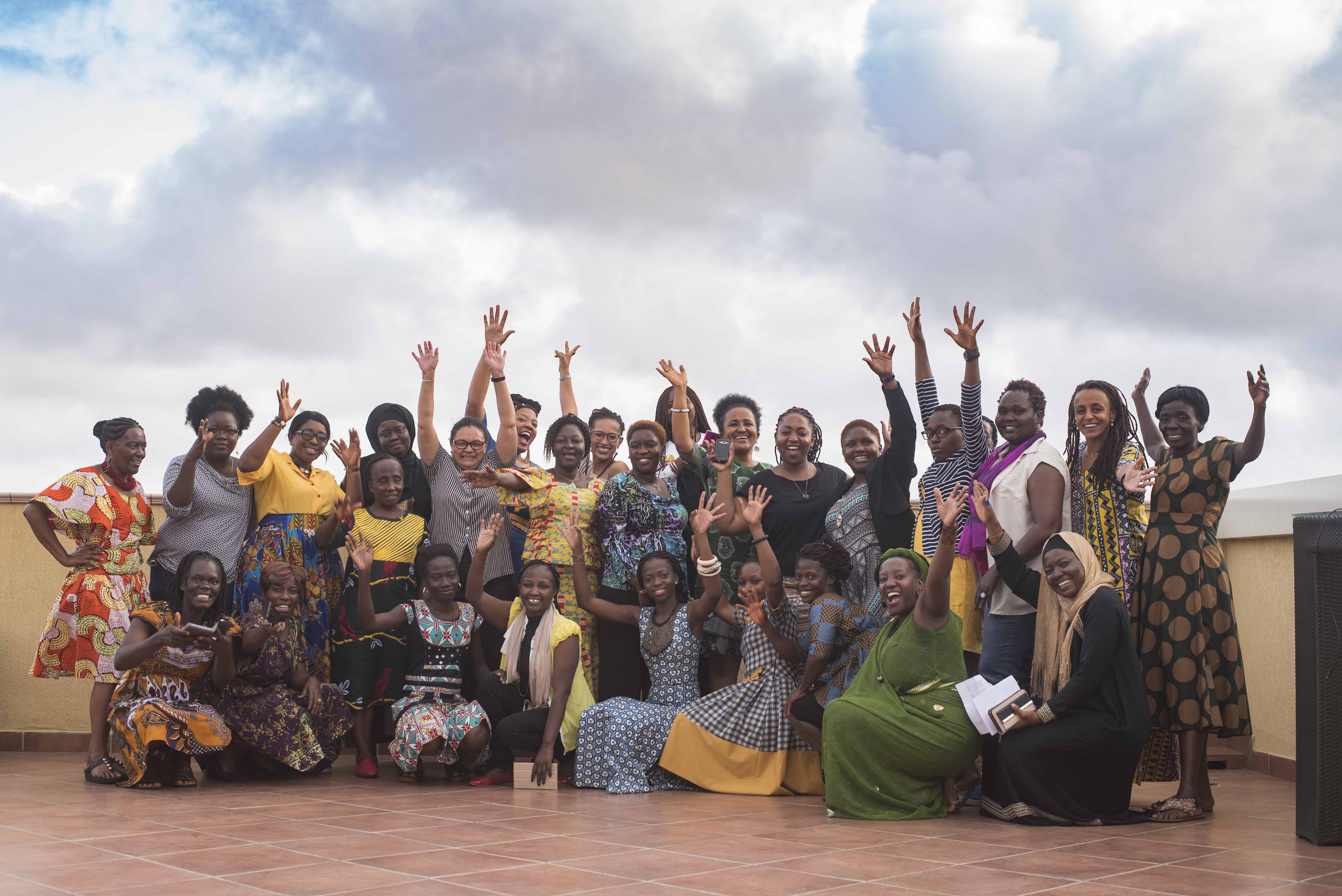
To mark International Women’s Day this year, The African Women’s Development Fund partnered with Pepper Dem Ministries, a vibrant online activist movement to engage in a conversation about Intergenerational feminism in Ghana. We examined mind sets, structures and the lack of conversation between various generations that could eventually lead to an erasure of our collective gains and histories. We looked at the good, the bad and the complex and emerged better for it.
The conversation was divided into three separate panels. The first panel, labelled the Pacesetters, comprised some of the women whose activism had paved the way for women’s rights in Ghana today. The panel, moderated by Gifty Anti included Nana Oye Lithur, Professor Akosua Adomako Ampofo, Professor Takyiwah Manuh and Professor Akua Opokua Britwum. These women recounted all the times they had challenged power in their long careers, and reminded the audience of the importance of building on foundations. They also spoke to worrying new trends, a resurgence of “traditional” values, that Professor Ampofo aptly referred to as the cult of domesticity.
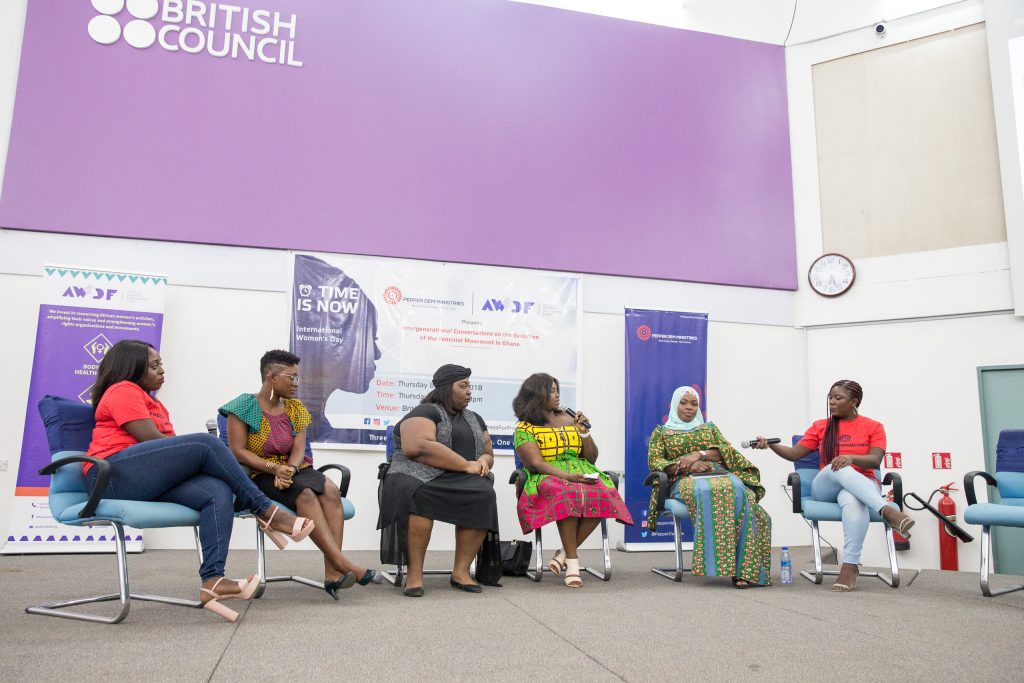
The Second panel, captioned the NewGen, included feminists that had come into the fold through the development of their individual belief systems that were doing interesting work and sparking new conversations in their various fields. This panel, moderated by Afia Kwakyewaa Owusu-Nyantakyi was made up of Francisca Kakra Forson, Shamima Muslim, Felicity Nelson, Efe Plange and Maame Adwoa Amoa Marfo. This panel discussed the new conversations that Ghanaian feminists were having to tackle, as well as the necessity in fighting for and understanding differences within the movement. From their discussion, it was clear that a self-serving movement was unsustainable and would ultimately fizzle out.
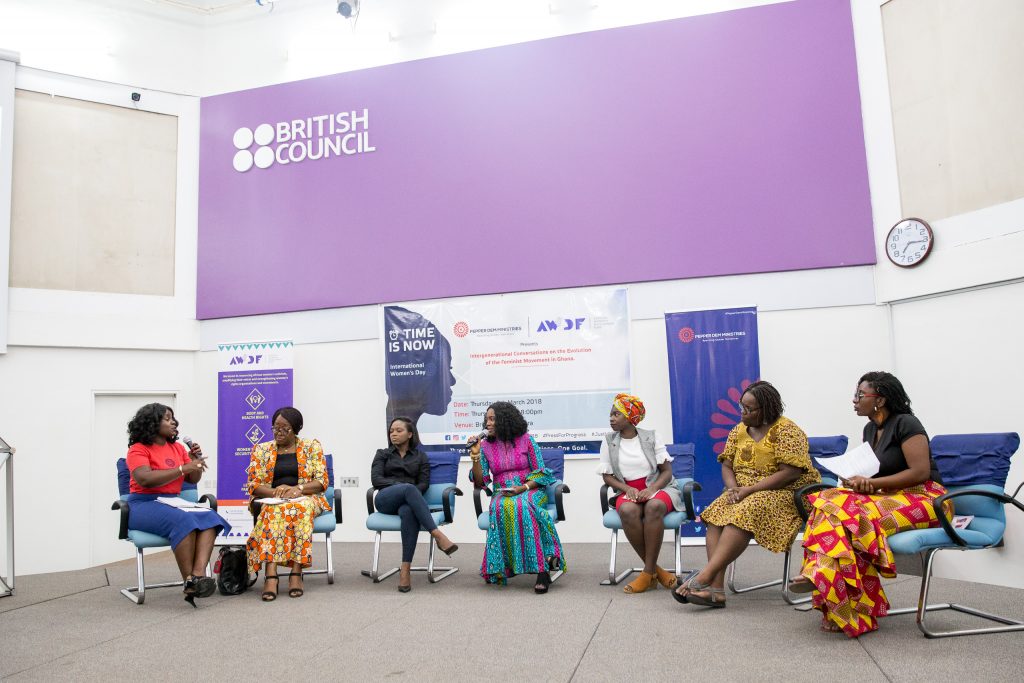
The Third Panel, was an intergenerational panel that focused on the learnings that the feminist movement would need to address and grow from. They spoke to the changing dynamics within the feminist movements, the importance of harnessing social media space and momentum as well as the need for better communication of our feminist histories within the movement. This panel comprised Kinna Likimani, Louise Carol Donkor, Dinah Adiko, Rita Nketiah, Sheila Minka-Premo and was moderated by Akosua Hanson.
The conversation was lively, raising issues that are often glossed over and charting a history that isn’t always spoken of. Participants left the event with renewed vigour and a thirst to learn more about our shared movement and discover better ways to work together. This will enable us to truly consolidate our gains.
Beyond Tie Dye: Rethinking African Women’s Economies and the role of Funders.
Beyond Tie Dye: Rethinking African Women’s Economies and the role of Funders.
Jessica Horn, AWDF’s Director of programs was interviewed by News Deeply! See an excerpt below-and follow the read the entire interview.
Don’t talk to Jessica Horn about tie dye. The director of programs for the African Women’s Development Fund doesn’t have time for women’s advancement projects that lean on an age-old standby: artisanal crafts.
“One of the most common post-conflict reconstruction initiatives in economic empowerment is teaching women to make soda soap and to do tie dye,” she says. “Now you’re flooding the market with sub-standard tie-dyed cloth. Who’s going to buy it?”
To become real economic players, equal to men, Horn says, women need a say in the decisions that affect them. Which is why every project the African Women’s Development Fund supports has to meet at least two goals: increased income generation and greater political participation.
At the Bond conference in London, News Deeply spoke to Horn about the relationship between economics and politics, and the trouble with “women’s work.”
For the entire interview click here: http://bit.ly/2oQb5ai
#She Decides 2018
#She Decides 2018
Every girl and every woman has the right to health and the right to do what she chooses with her body. These rights affect her personal development, her participation in society, her livelihood and whether her family and community thrives.
#SheDecides is a global movement to promote, provide, protect and enhance the fundamental rights of every girl and woman and ensure that every girl and every woman can safely exercise her right to decide for herself what she does with her body, who she shares her body with and whether she wants to have children.
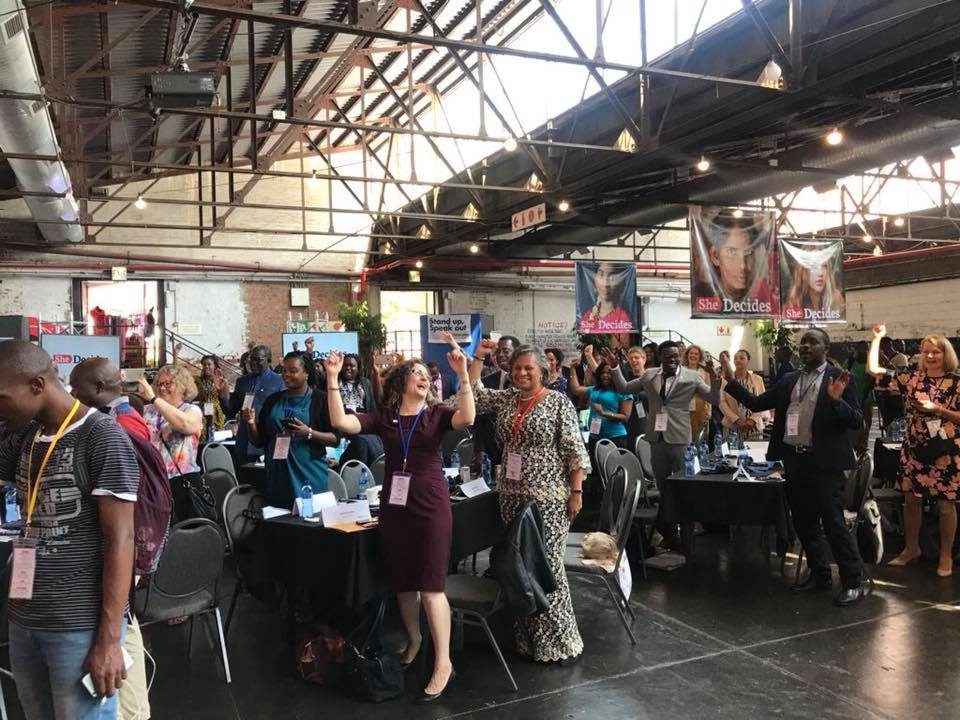
In a #SheDecides conference held in South Africa on 2nd March 2018, our Grants Manager, Beatrice Boakye-Yiadom spoke on Unlocking the Resources to ensure that girls and women everywhere have access to the right information and a full range of services, so that they really can decide. This means finding and spending the money from governments, foundations, donors, individuals so that all women and girls have the services, information and education they need to decide.
For more information on how to support the movement click here
CALL FOR APPLICATIONS: Consultancy for developing a joint Communications Strategy for Leading from the South
CALL FOR APPLICATIONS: Consultancy for developing a joint Communications Strategy for Leading from the South

CALL FOR APPLICATIONS
The African Women’s Development Fund (AWDF) is inviting applications from feminist oriented Communications Practitioners to develop a Communications Strategy with work plan for Leading From the South, a funding initiative supporting women’s rights advocacy in the global South.
For Terms of Reference, kindly click here.
Closing date for receiving applications is Friday 9th March 2018.
Feminist Africa Issue 22: Feminists Organising- Strategy, Voice, Power.
Feminist Africa Issue 22: Feminists Organising- Strategy, Voice, Power.
We are excited to announce the publication of Feminist Africa Issue 22, a collection of essays, opinion pieces and artistic reflections on feminist organising across the African continent. This special edition was produced through a collaboration between Feminist Africa and the African Women’s Development Fund. The content germinated out of conversations at the 4th African Feminist Forum, organised by AWDF in Zimbabwe in 2017. This collection aims to articulate the priorities, concerns and collective aspirations of contemporary feminist activists and organisers from various parts of the continent. The special edition, titled Feminists Organising: Strategy, Voice, Power was produced with editorial direction from Guest Editor Charmaine Pereira, Feminist Africa editors Jane Bennett and Amina Mama, and AWDF staff Sionne Neely and Jessica Horn. As you read, we invite you to consider some of the crucial questions offered in the journal’s editorial introduction by Charmaine Pereira: How has contemporary feminist organising in Africa addressed the nexus of strategy, voice and power? How have feminists in Africa organised and what are the ends to which feminist organising is directed? What strategies are used to pursue which goals and what trajectories of change are envisaged? How do we effect change within ourselves, even as we strive to change relations and conditions at local, national, regional, and/or global levels?
We hope this edition engenders deep critical reflection for readers, as we move towards our collective feminist futures!
Click here for the New Edition: Here
1 year of Change: 2017 AmplifyChange Annual Report.
1 year of Change: 2017 AmplifyChange Annual Report.
We are delighted to present our work for the past reporting period (November 2016 – November 2017). AmplifyChange is meaningfully contributing to our vision of improved sexual and reproductive health and rights (SRHR) for young people, men and women – including the most vulnerable. In this Annual Report, we headline our scale of reach, the results our grantees are collectively achieving, our approach to fund management and how we strive to continuously learn and improve. AmplifyChange has consolidated its strong position as a multi-donor Fund within the SRHR landscape. We currently support a diverse and vibrant array of civil society organisations (CSOs) who advocate eagerly for SRHR.
To see the Entirety of the Report click HERE
Capacity Building Resource Mobilisation Bootcamp Report
Capacity Building Resource Mobilisation Bootcamp Report
The Capacity Building Resource Mobilisation Boot Camp is a taylor made mix of contemporary training and intensive hands on practical work where representatives of AWDF Grantees come together, usually for four to five days during which they are facilitated to develop Resource Mobilisation Strategies for their organisations.
Find the report for the last capacity building bootcamp below:
The Main Grants Application Process
The Main Grants Application Process
[tp lang=”en” not_in=”fr”]
Through out the year, AWDF invites applications from eligible African women’s organisations under its main grants programme. The areas that we fund (our thematic areas) are listed below. These frame AWDF’s current funding strategy Shaping Africa’s Future;
- Body & Health Rights
- Economic Security & Justice
- Leadership, Participation & Peace
AWDF is particularly interested in projects working with young women, women facing multiple discrimination, and approaches that include engaging the arts, culture, sports and technology.
AWDF is looking for innovative and effective projects that address the needs of and involve the women and communities most affected by inequality and injustice in the leadership and implementation of projects.
Eligibility Criteria
The basic qualifying criteria for applying organisations are as follows:
- Must be led by a woman and have majority of its staff and board being women
- Must be duly registered in an African country
- Must have been in existence for at least 3 years
- Must have the needed organisational structures for effective implementation of the project
- Must have an appreciable financial management system to properly account for funds received
- Must be capable of reporting back on the outcomes of the project
- Must complete the necessary application forms
Please note that AWDF does NOT fund men-led organisations; political parties or campaigning; government agencies; individuals; scholarships; for-profit initiatives and projects aimed at religious conversion or proselytizing.
[/tp]
[tp lang=”fr” not_in=”en”]
Tout au long de l’année, L’AWDF lance un appel à projets aux organisations de femmes africaines dans le cadre de son programme de subvention principale. Les domaines que nous finançons (nos domaines thématiques) sont énumérés ci-dessous. Ces domaines d’intervention cadrent avec la stratégie de financement actuelle de l’AWDF : Façonner l’Avenir de l’Afrique.
- Droits relatifs au corps et à la santé
- Sécurité Economique et Justice
- Leadership, Participation et Paix
L’AWDF est particulièrement intéressé par des projets qui travaillent avec des jeunes femmes, confrontées à diverses formes de discrimination, et par des approches qui utilisent l’art, la culture, le sport et la technologie.
L’AWDF cherche à recevoir des projets novateurs et efficaces qui répondent aux besoins et incluent les femmes et les communautés les plus touchées par l’inégalité et l’injustice dans leur leadership et la mise en œuvre des projets.
Critères d’éligibilité
Les critères de base sont les suivants :
- Être dirigée par des femmes, avec un personnel et un conseil d’administration dont la majorité sont des femmes
- être dûment enregistrée dans un pays africain
- Doit exister depuis au moins 3 ans
- avoir des structures adéquates de gestions du projet
- avoir un système de gestion financière
- pouvoir produire un rapport sur les résultats du projet
- remplir les formulaires de demandes
AWDF ne finance pas les organisations dirigées par des hommes ; les partis politiques ou les campagnes ; les organismes gouvernementaux, les particuliers; les bourses d’études; les organisations à but lucratif ; et des projets visant à la conversion religieuse ou le prosélytisme.
[/tp]
AWDF Grantee partner 50/50 Group commissions Gender and Women’s Leadership Training Centre in Sierra Leone
AWDF Grantee partner 50/50 Group commissions Gender and Women’s Leadership Training Centre in Sierra Leone
-By Beatrice Boakye Yiadom, Grants Manager, AWDF
The African Women’s Development Fund (AWDF) congratulates the 50/50 Group on the commissioning of the Women’s Leadership Training Centre which will serve as a hub for learning and for equipping African women with the capacity to shape the future of Africa. We are proud to be associated with this bold venture because we strongly believe that when women are supported to access and influence decision-making, there are proven long-term benefits in advancing gender justice and promoting women’s rights.
We are equally proud of the 50/50 Group and all the women of Sierra Leone for their tenacity, determination and persistence, a trait that is a personification of women across Africa. Indeed, your resolve, hard work and optimism are as remarkable as they are commendable.
As a result-oriented funder and supporter, AWDF is always proud to work with women’s rights organisations such as 50/50 who always beat the odds to create the right environment to promote the rights of women. AWDF works with diverse women’s rights organisations and has worked with 35 different women’s rights organization in Serra Leone including small women’s groups in very remote communities. These very resilient women tackle diverse issues ranging from women’s bodily health and rights issues, economic justice issue and leadership and participation issues.
AWDF supported this building project as part of its milestone projects for its 10th anniversary as a memorial to the struggles and determination of African women and to provide them with a safe space to learn, share and deliberate on the myriad of developmental issues confronting them in their communities. This facility gives the 50/50 Group a great platform and opportunity to train and mentor some of Sierra Leone and Africa’s burgeoning women leaders including and especially young women
We hope that this women’s centre will adopt transformative and innovative training models that will propel not only Sierra Leonean women but women within the sub region on to leading bold transformative responses to challenges confronting our communities.
AWDF believes that the 50/50 Group has surmounted all challenges to get here today because of your determination, but even more so because you believe in the abilities of African women and what the woman can achieve, given the right environment. We are also confident that you have laid out a very solid plan that will ensure that this building does not become a white elephant but rather a very vibrant and safe space where women can gather, learn from each other and strategise towards a more just world for women. A gentle reminder that putting up such a beautiful building comes with high expectations and we know that the 50/50 group will live up to that expectation.
Having worked with 50/50 over the past 10 years, we are immensely proud to see how far the organisation has come. In total AWDF has invested an amount of $125,000 into this Leadership Training Institute and we are happy to see the actualisation of the project. Over the past 15 years, AWDF has provided funding and capacity building support and solidarity to women’s organisations in Sierra Leone to support your tremendous leadership in tackling deep crises- from the civil war, to Ebola to the daily rights violations that emerge from gender inequality.
Once again well done to the 50/50 Group for their vision and tenacity to dream and see such a project come to fruition. It takes a lot of passion to go where you have gone. Many dream, few dare and very few actually succeed. You have dared to start this project and you have seen it through. Wishing you more power, courage and passion to overcome obstacles that may come your way even as you continue this journey. Congratulations! AWDF’s unstinting support will always be with the 50/50 Group and with the women of Africa
Capacity Building in Practice: Updated manuals and handbooks
Capacity Building in Practice: Updated manuals and handbooks
In line with our objective of sharing knowledge, AWDF regularly makes available resources and material aimed at building the capacity of our grantees and of our partners in general.
The African Women’s Development Fund believes that resourcing the work of transformative women on the continent means more than disbursing grants. It means actively responding to the needs of African women’s rights organisations in a way that looks both at the organisations themselves and the context of their work.
There are varying issues and regional contexts in women’s rights work, and while funding is an integral way of supporting these organisations, more is needed. As an organisation we are fully invested in the way in which our grantees grow and develop their own capacities and strengths. Our Capacity building unit was established in order to provide more holistic support for our grantee organisations. The programme allows us to make targeted investments in African women’s organisations that allow them to grow and maximise their potential. This puts them in the best position to transform the world around them by equipping their organisations with the skills they need to continue to push the boundaries of their work.
The following documents are our updated handbooks and guides that serve as educational material for our various Capacity building programs.
The ‘Techniques for Resource Mobilisation’ handbook is part of a rejuvenated series that AWDF developed for the women’s rights organisations we fund to strengthen their capacities around resources and finances. These tools are aimed at small and community based women’s organisations working to build their systems and structures and equip them with the tools to sustain their critical work. The handbook outlines ways of thinking about resources beyond money, along with encouraging bold and practical approaches to developing a resourcing strategy.
Download here: AWDF Capacity Building – A Practical Handbook on Techniques for Resource Mobilisation
The Proposal and Report Writing Manual was first developed based on the curriculum and discussions at an AWDF skills-building workshop held in Nairobi, Kenya in March 2011. The workshop was organised for smaller women’s organisations and aimed at supporting their skills in proposal writing, reporting and documentation. The original version was co-produced by the 22 Kenyan grantees who participated in the workshop, the Facilitator Jane Kiragu, Rapporteur Kathambi Kinoti, and AWDF staff with lead editing from Nafi Chinery. It has since been revised in 2017 with updated resources and guidance in line with the changing conventions around proposals and reports.
Download here: AWDF Capacity Building – A Practical Handbook on Proposal and Report Writing
A Practical Handbook for Financial management was originally developed by AWDF staff and then updated by AWDF Finance Manager Gertrude Bibi Annoh Quarshie based on the emerging needs of grantees. This third update includes further information and research on financial risk management and procurement.
Download here: AWDF Capacity Building – A Practical Handbook on Financial Management