
Category: News
World Environment Day: African women champion eco-friendly agro-processing models
World Environment Day: African women champion eco-friendly agro-processing models
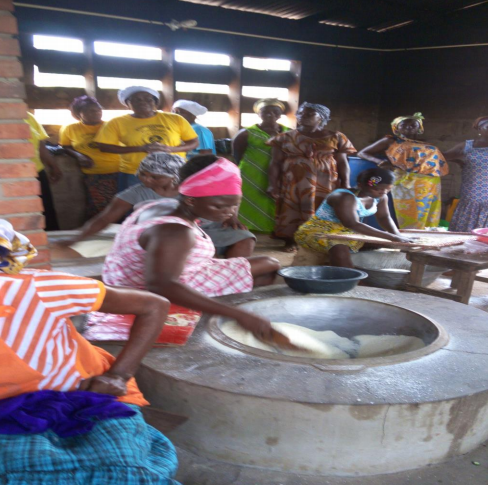
Manchie Women gari processors working in a smoke-free environment using Improved LPG Stoves provided by AWDF/20/05/11
By Rose Buabeng, AWDF
05/06/2019
Since inception, the African Women’s Development Fund (AWDF) has invested in and supported several women agro-processing groups to improve their production processes into more energy efficient systems.
With a global focus on air pollution for this year’s World Environment Day, this article seeks to highlight the activities of rural women agro-processors and how these activities impact the environment and their health.
A large number of rural women in Africa are engaged in agro processing cottage industries, and most of them use solid fuels in their production processes, creating environmental risks which could have significant impact on their health and wellbeing. The burden from solid fuels disease remains most prominent in areas with limited access to clean fuels, mostly poor households in developing countries. Globally, 2.6% of all ill-health is attributable to indoor smoke from solid fuels, nearly all of this in poorer regions.
With this in mind, AWDF has partnered the women’s groups to boost their incomes and to move into more eco-friendly models that will protect not only their health but the environment in general.
Some of these groups are involved in gari processing, groundnut paste and oil processing, shea butter processing, brewing of local beer, etc. AWDF has supported such women groups with modern processing equipment, processing structures as well as clean and more efficient energy source (LPG). The groups have also received capacity building support in health, hygiene and safety with some being able to certify their production activities with quality and standards regulatory bodies within their countries.
A typical example is the Manchie Women Food Processing and Marketing Group in Ghana. Since 2008, AWDF has provided support to the tune of $100,000 to provide modernised cassava processing equipment, clean and efficient energy sources, health and hygiene capacity support, marketing and financial management support. This has enabled the women processors to produce in a pollution-free environment; expand marketing channels and increase income levels. The support has also given them credibility in the district; they are contacted or invited to participate in all development and leadership activities in the Amasaman District in the Greater Accra Region of Ghana.
Solid fuels will continue to remain the main source of household fuel in developing countries for the foreseeable future but collective effort must be made to scale down on its use and move into sustainable and environmentally friendly energy sources.
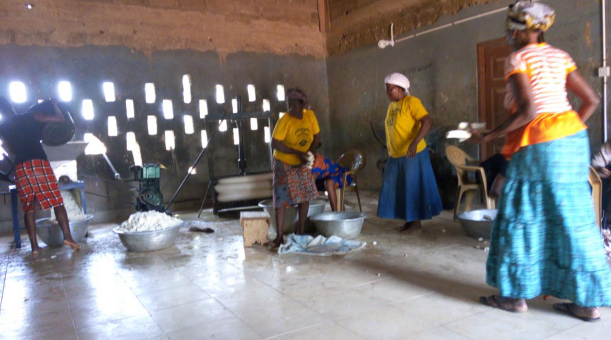
Manchie Women gari processors using Improved processing equipment provided by AWDF/20/05/11
Job Vacancy: Knowledge Management Assistant (PART-TIME)
Job Vacancy: Knowledge Management Assistant (PART-TIME)
Job Summary
The Knowledge Management Assistant (KMA) plays an exciting role in the Knowledge Management Unit supporting with the implementation of AWDF’s Feminist Knowledge Hub. Reporting to and working in close collaboration with the Knowledge Management Specialist, to produce analysis, generate new knowledge around women’s rights in Africa, and collaborate to communicate the impact of AWDF’s work and the work of its grantees, advocacy and movement building partners. The KMA also assists with the documentation of organisational learning and knowledge generation within AWDF. The work of the KM function is conducted in English, with selected initiatives in French.
Essential Knowledge and Experience
- Entry-level experience in knowledge production and archiving around women’s organising
- Strong analytical, writing and editing skills are essential. Some experience of working with African women’s organisations, and some knowledge of African women’s rights issues and concerns is advantageous.
- Some experience of developing or managing information systems (for example, virtual or physical libraries or archives) and in using multiple communication and knowledge production formats (film, audio, visual/graphics) desirable.
- Excellent communication skills (both written and oral)
- High level of proficiency in MS Office required. Experience of working with WordPress, and managing social media accounts desirable.
- Ability to work independently and part of a team
- Ability to work democratically with diverse groups and people.
- Ability to travel within Africa/ internationally essential
- Willingness to work flexible working hours, occasionally outside of regular working hours are expected
CLICK HERE FOR FULL CALL FOR APPLICATION
An exciting new partnership: The Equality Fund
An exciting new partnership: The Equality Fund
[tp lang=”en” not_in=”fr”]
A ground-breaking funding initiative for the promotion of women’s rights.
An exciting new fund has just been launched by the African Women’s Development Fund in collaboration with ten other partners in an alliance that is aimed at breaking down barriers to investment and supporting gender equality.
THE EQUALITY FUND, expected to reach $300000000, is funded by the Government of Canada and reflects the Canadian vision to support women around the world. It is the first of its kind in a bold initiative to harness the collective power of the members of the alliance to mobilise resources in novel ways to promote women’s rights.
The eleven members of the alliance bring on board varying expertise and strengths and comprise the following: The MATCH International Women’s Fund (The MATCH Fund), the African Women’s Development Fund (AWDF), Calvert Impact Capital, the Canadian Women’s Foundation (CWF), Community Foundations of Canada (CFC), Philanthropy for Advancing Women’s Human Rights (PAWHR), Royal Bank of Canada (RBC), Toronto Foundation, World University Service of Canada WUSC), Oxfam Canada and Yaletown Partners.
Read the Press Release here: Equality Fund Press Release
For more information, visit the Equality Fund Website at https://equalityfund.ca/
[/tp]
[tp lang=”fr” not_in=”en”]
Le Fonds Africain pour le Développement de la femme vient de lancer un nouveau fonds novateur en collaboration avec dix autres partenaires d’une alliance pour éliminer les obstacles à l’investissement et soutenir l’égalité des sexes.
EQUALITY FUND (FONDS POUR L’ÉGALITÉ), d’un montant de 300000000 $, est financé par le gouvernement du Canada et confirme la vision du canada dans sa poursuite pour aider les femmes du monde entier. Cette première initiative de son genre vise à exploiter le pouvoir collectif des membres de l’alliance pour mobiliser des ressources de manière novatrice afin de promouvoir les droits des femmes.
Les onze membres de l’alliance apportent une expertise et des atouts divers. Ils sont les suivants: The MATCH International Women’s Fund (The MATCH Fund), the African Women’s Development Fund (AWDF), Calvert Impact Capital, the Canadian Women’s Foundation (CWF), Community Foundations of Canada (CFC), Philanthropy for Advancing Women’s Human Rights (PAWHR), Royal Bank of Canada (RBC), Toronto Foundation, World University Service of Canada WUSC), Oxfam Canada and Yaletown Partners.
Cliquez ici pour lire le communiqué de presse de EQUALITY FUND (FONDS POUR L’EGALITE)
Pour plus d’informations, visitez le site Web du Fonds pour l’égalité : https://equalityfund.ca/
[/tp]
Honoring Dr Musimbi Kanyoro
Honoring Dr Musimbi Kanyoro
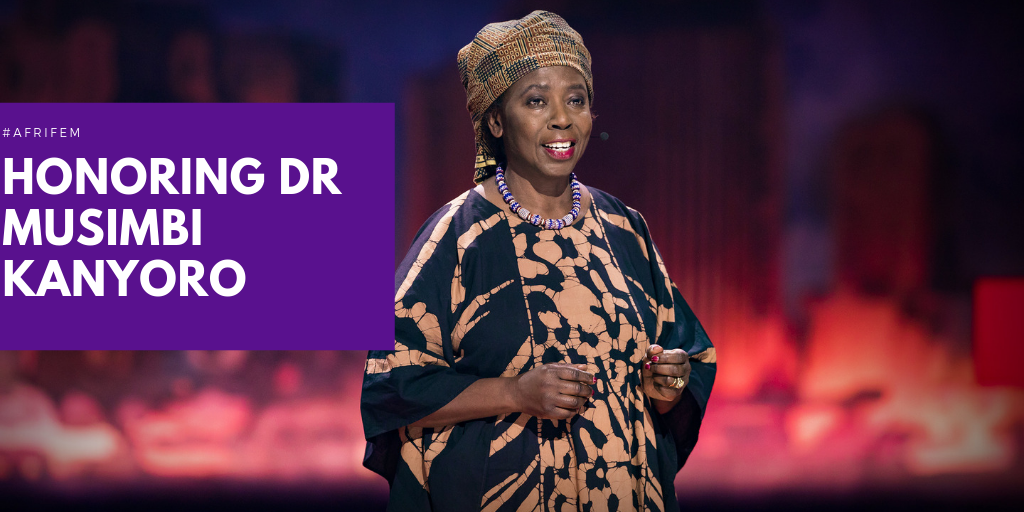
All across the world, African women continue to drive change as they strive to make the world a better place for all. On Africa day this year, our partner and feminist sister, Dr. Musimbi Kanyoro, CEO of Global Fund for Women was honored by the African Diasporan Network for her incredible work in advancing Women’s rights on the African continent.
Here is an excerpt from the piece written on her:
To Musimbi Kanyoro, we thank you for contributing to ADN as a bold visionary and driver of change and unity. Together, we will continue to develop a global community in which we engage partners and community members to change the lives of youth, women, educators, farmers, entrepreneurs, and all the people of Africa and the communities in which we live.
To read the entirety of the piece please click HERE
Theo Sowa named one of Apolitical’s 100 Most Influential People in Gender Policy
Theo Sowa named one of Apolitical’s 100 Most Influential People in Gender Policy
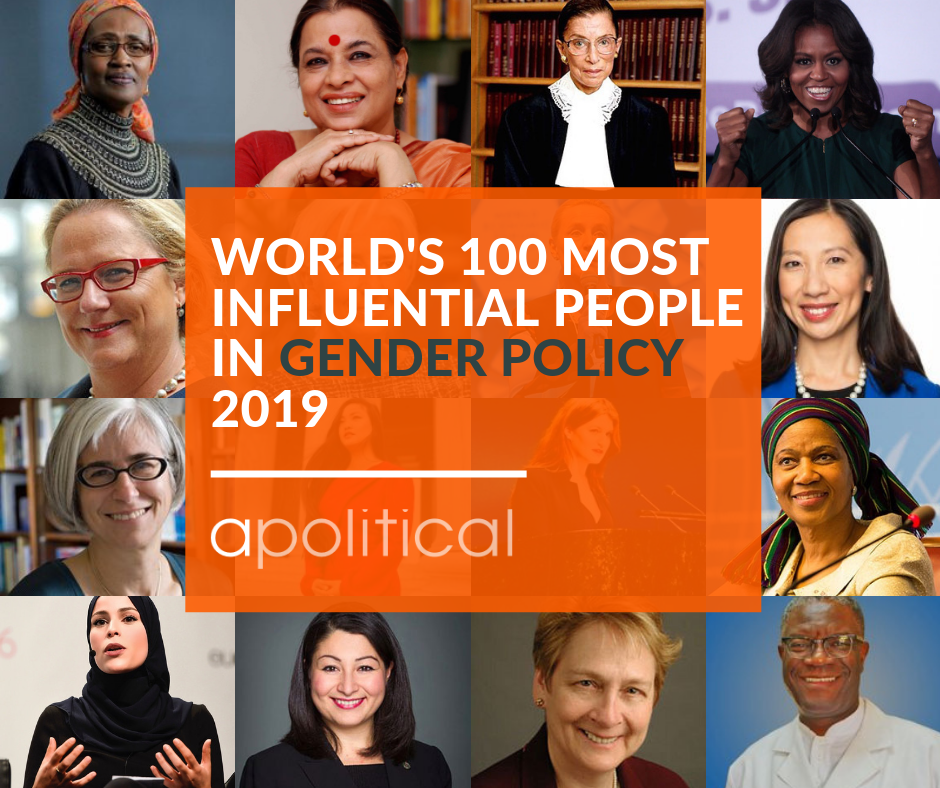
We’re excited to announce that Theo Sowa, AWDF’s CEO has been included on Apolitical’s second annual list of the 100 Most Influential People in Gender Policy for 2019. 2019’s list includes other incredible activists, such as Phumzile Mlambo-Ngcuka, Ruth Bader-Ginsburg, Caren Grown and Michelle Obama. The list was created from over 9000 nominations from governments, international organisations and academia, including UN Women, Women Deliver, Women in Global Health, the G7 Gender Equality Advisory Council, Harvard, and the Gates Foundation.
Apolitical is a global platform for public servants and policymakers to stay informed about policy and the public service, announced its compilation of the 100 most influential people in gender policy around the world on Wednesday 29th May, citing Theo for her work in Philanthropy. This accolade recognises her incredible efforts, both at AWDF and in her own personal capacity, to make the world a better, kinder, and freer place for women.
Please follow this link for the full list:
http://apolitical.co/lists/gender-equality-100/
Call for consultants: Mapping advocacy for women’s rights in the Sahel Region May 2019
Call for consultants: Mapping advocacy for women’s rights in the Sahel Region May 2019
The aim of this consultancy is to produce a report mapping women’s rights advocacy organisations, networks and coalitions in the Sahel region of Africa, the issues that they advocate on, targets of advocacy and approaches. The countries of focus are: Senegal, Mauritania, Mali, Burkina Faso, Niger, Northern Nigeria and Chad.
The consultant should have:
1. Expert knowledge of women’s rights advocacy, organisations and movements across the Sahel region
2. Experience in conducting mappings/action research
3. Excellent writing skills and proficiency in English essential.
4. Excellent command of French essential (for interviews and literature review as needed)
5. Excellent interpersonal skills and flexible attitude
6. Commitment to feminist and human rights principles of equality and diversity.
The assignment shall be for 12 working days including submission of final document.
Submissions must be received no later than June 6, 2019
CLICK HERE FOR TERMS OF REFERENCE
Calling all African Women Writers: African Women Writers Workshop 2019!
Calling all African Women Writers: African Women Writers Workshop 2019!
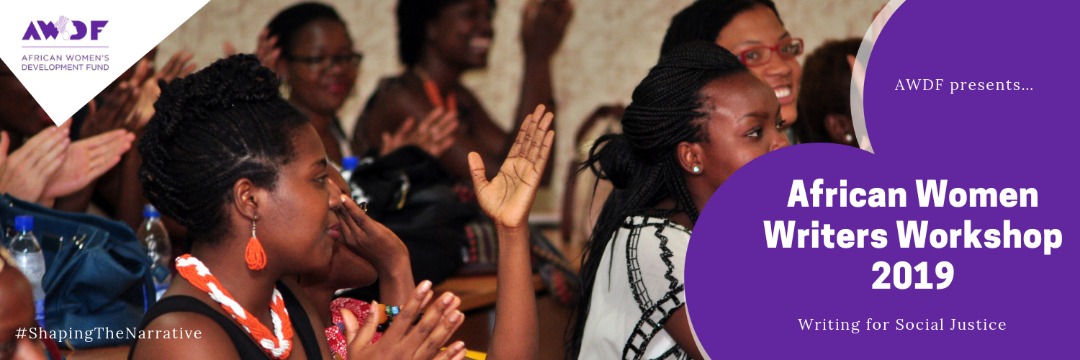
THE AFRICAN WOMEN’S DEVELOPMENT FUND (AWDF)INVITES AFRICAN WOMEN WRITERS AND JOURNALISTS TO APPLY FOR THE AFRICAN WOMEN’S WRITERS WORKSHOP 2019. THIS 10-DAY WRITING WORKSHOP TAKES PLACE IN GHANA, FROM 21ST OCTOBER 2019 TO 30TH OCTOBER 2019.
The workshop will be facilitated by award-winning writer Yewande Omotoso, and internationally acclaimed journalist, Sylvia Vollenhoven.
This workshop is targeted at women writers, journalists and activists who wish to step-up their involvement in highlighting issues around women’s rights and social justice and who wish to improve and practice their personal writing skills. Participants will be expected to read widely from assigned selected texts, and to complete daily writing exercises. After the workshop, the participants are expected to use the knowledge acquired to write widely about social justice issues in and beyond their communities. Participants will also be required to produce at
least two articles, blogs or longer pieces for use by AWDF.
To apply, send an e-mail to communications@africlub.net/awdf with the following:
· Contact details including name, email address, telephone
number
· A short bio (maximum 200 words)
· A sample article written by the applicant, about women’s rights or social justice -between 500 and 1000 words. The
sample maybe unpublished or published on any media. AWDF will not be responsible for any cases of alleged plagiarism
PLEASE CLICK HERE TO READ THE FULL CALL/APPLICATION GUIDELINES
Change of Staff
Change of Staff
[tp lang=”en” not_in=”fr”]
Dear AWDF Grantees and Partners,
This is to inform you that Ms Rissi Assani-Alabi, Grants Programme Officer – Francophone, no longer works with AWDF and therefore would no longer be engaging with you in the capacity of an AWDF staff member.
For any communication with regards to your grant or the work AWDF does please direct all your questions and or comments to Beatrice Boakye-Yiadom, Grants Manager at beatrice@africlub.net/awdf.
[/tp]
[tp lang=”fr” not_in=”en”]
Chères bénéficiaires et partenaires de l’AWDF,
Nous vous informons que Mlle Rissi Assani-Alabi, Administratrice de Programmes pour l’Afrique Francophone ne travaille plus avec l’AWDF et ne sera donc plus en contact avec vous en capacité de personnel de l’AWDF.
Pour toute communication concernant votre subvention et/ou le travail effectué par l’AWDF, veuillez adresser un mail à Beatrice Boakye-Yiadom, Chef de Département-Subventions sur beatrice@africlub.net/awdf
Merci[/tp]
Bread and Butter #2: Advancing Resources for Rural Women Farmers
Bread and Butter #2: Advancing Resources for Rural Women Farmers
From 13-15 September 2018, the African Women’s Development Fund convened activists, scholars, researchers and policymakers to build a thoughtful, progressive and transformative vision for the Future of African Women and the Economy under AWDF’s Economic Justice and Security thematic area. This convening investigated the various ways that African feminists are engaged in critique, analysis and the re-visioning of African economies to provide justice and security for African women. The convening is part of a larger movement-building process and ongoing conversation around resourcing African women’s economic justice and security at AWDF. The Bread and Butter series is a multifaceted knowledge production project that springs out of the convening, reflecting AWDF’s commitment to providing feminist analysis of African women’s organising. The article below is the second Article of the series.
Bread and Butter Article 2: Advancing Resources for Rural Women Farmers by Sylvia Nalubega
Women are the primary food producers globally. Within the continent of Africa, 57% of total female
employment is within agriculture. The continent’s future of food security in the face of climate change will be largely centered on the resources afforded rural women farmers. However, gender inequality perpetuates biases in resources allocated to rural women farmers and their communities. ARUWE understands that the future of food security depends on a holistic, rightsbased approach to addressing gender inequality. Central to expanding the economic opportunities for rural women is access to financial services. In this article, Sylvia Nalubega (ARUWE Uganda) provides a case study analysis of ARUWE’s work, demonstrating how rural women’s access to
finance is a necessary component in securing food on the continent. ARUWE Uganda champions
rural women and supports their movement as they advocate for their rights to financial resources.
For the full Article please click the link below:
The Journey towards gender equality continues
The Journey towards gender equality continues
[tp lang=”en” not_in=”fr”]
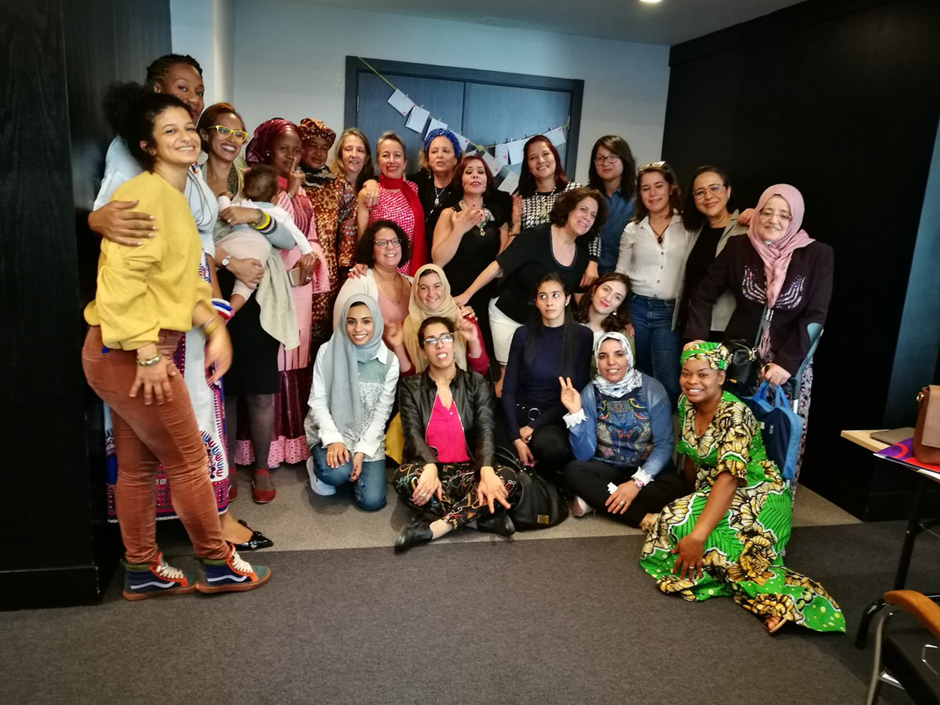
Figure 1- Participants at the North Africa Convening of women’s rights organisations and feminists movements
By Ablodegbo Ameyo Savi Dekoleadenu
29/04/2019
Since the Beijing Declaration in September 1995, Women’s rights issues in Africa have registered significant progress. For example, in the area of women’s political participation in Africa, the report on “Women’s Rights in Africa” highlights a major improvement, showing Rwanda (61.3%), South Africa (42.7%) and Senegal (41.8%) in the top 11 of the world ranking of women’s representation in national parliaments.
In countries like Mauritius, Liberia, Malawi, and the Central African Republic, women have been elected into office as President and Vice-President of their republics. Also, for the first time in its history, Ethiopia is currently headed by a woman. Togo, Senegal, Mozambique and several African countries have ratified several conventions that guarantee respect for women’s rights.
Despite all this progress however, women are still deprived of some of their rights in various aspects of their lives. The exclusion of women (especially rural women) in decision-making processes and in the process of social development; female genital mutilation; child marriage, illiteracy, social constraints, religious extremism, Sexual harassment, domestic violence, the exploitation of women by men and many others constitute obstacles to the full enjoyment of women’s rights.
In North Africa, feminist movements and women’s organisations hold up the torch of hope and continue to be active in the struggle for women’s rights. In Morocco, Association Démocratique des Femmes du Maroc (ADFM), a grantee organisation of the African Women’s Development Fund (AWDF) and the Fondation YTTO pour l’hébergement et la Réhabilitation des Femmes Victimes de Violences, actively contribute to the promotion of women’s rights through their work to support women, (especially rural women) in their region.
ADFM is more involved in reform projects with the main objective of promoting women’s strategic rights and interests. ADFM is a co-founder of the “coalition printemps de la dignité pour la réforme du code penal” and has supported the soulaliyates women in obtaining equal treatment in land rights.
Every year, YTTO Foundation organises a social caravan. The overall objective is to increase awareness on women’s rights issues and integrate women’s movements through village associations. The caravan consists of a multi-activity action in which there are free medical and legal consultations and workshops for women entitled “Madam you have rights – Express yourself”
To help North African countries fight for the rights of African women, the African Women’s Development Fund (AWDF) organised a convening of feminist and women’s organisations on 17 and 18 April 2019 at the Odyssée Center Hotel, Casablanca, Morocco. The main objective of this convening is to share not only the successes achieved by feminists’ activists, but also the challenges they face and discuss ways of collaborations and opportunities.
The African Women’s Development Fund was established in June 2000, as an Africa-wide philanthropic, grant making initiative to support the realisation and fulfilment of African women’s rights through funding of autonomous women’s organisations on the continent. AWDF supports change-makers; African women’s activist organisations and individuals who have held and advanced the line on women’s rights.
[/tp]
[tp lang=”fr” not_in=”en”]
Figure 1 Participantes à la rencontre des mouvements et organisations féministes de l’Afrique du Nord
Ecrit par Ablodegbo Ameyo Savi Dekoleadenu
29/04/2019
Depuis la déclaration de Beijing en Septembre 1995, Les droits des femmes en Afrique ont enregistré de nombreux progrès. Par exemple, en matière de participation politique des femmes en Afrique, le rapport “ Droits des femmes en Afrique” souligne une grande avancée. Le Rwanda (61.3%), l’Afrique du Sud (42.7%) et le Sénégal (41.8%) se trouvent dans le top 11 du classement mondial de la représentation des femmes dans les parlements nationaux.
Dans les pays comme l’Ile Maurice, le Liberia, le Malawi, et la République Centrafricaine, les femmes ont été élues en tant que Présidente et Vice-Présidente de leurs républiques. Aussi, pour la première fois dans son histoire, l’Ethiopie est actuellement dirigé par une femme. Le Togo, le Sénégal, le Mozambique ainsi que plusieurs pays d’Afrique ont ratifié plusieurs Conventions qui garantissent le respect des droits de la femme.
Cependant, mêmes si des avancées ont été notées, les femmes sont encore privées de certains de leurs droits. L’exclusion des femmes (surtout les femmes rurales) dans les instances de prises de décisions et dans le processus du développement social ; les mutilations génitales féminines ; le mariage des mineures ; l’analphabétisme ; les pesanteurs sociales ; l’extrémisme religieux ; le harcèlement sexuel ; les violences conjugales ; l’exploitation des femmes par les hommes et bien d’autres constituent des freins à la pleine jouissance des droits des femmes.
En Afrique du Nord, les mouvements féministes et organisations de femmes continuent d’être dans la lutte pour la défense des droits des femmes. Au Maroc, l’Association Démocratique des Femmes du Maroc (ADFM) organisation bénéficiaire du Fonds Africain pour le Développement de la Femme (AWDF) et la fondation YTTO pour l’hébergement et la Réhabilitation des Femmes Victimes de Violences contribuent activement à la promotion des droits des femmes.
L’ADFM intervient plus dans les projets de réformes avec comme objectif principal la promotion des droits et intérêts stratégiques des femmes. L’ADFM est co-fondatrice de la coalition printemps de la dignité pour la réforme du code pénal et a soutenu les femmes soulaliyates dans l’obtention d’un traitement égalitaire en matière de droits fonciers.
La fondation YTTO quant à elle, organise chaque année, une caravane sociale qui a pour objectif global développer la prise de conscience des femmes, et intégrer les mouvements des femmes à travers les associations villageoises. La caravane est composée d’une action multi-activité dans laquelle il y a les consultations médicales et juridiques gratuites et des ateliers de prises de parole des femmes ; intitulé « Madame vous avez des droits – Exprimez-vous »
Pour aider les pays de l’Afrique du Nord dans leur lutte pour la défense des droits de la femme africaine, le Fonds Africain pour le Développement de la femme (AWDF) a organisé une rencontre des mouvements féministes et organisations de femmes le 17 et 18 avril 2019 à l’hôtel Odyssée Center, Casablanca au Maroc. L’objectif principal de cette rencontre est de connaitre non seulement les succès réalisés par ses activistes, mais aussi les défis auxquels elles sont confrontées et discuter des moyens de collaborations et d’opportunités.
Le Fonds Africain pour le Développement de la Femme (AWDF) est une initiative philanthropique d’octroi de subventions qui vise à soutenir et promouvoir les droits des femmes africaines en finançant les organisations de femmes sur le continent. AWDF soutient les acteurs du changement; Les organisations féministes africaines et les particuliers(es) qui font progresser les droits des femmes.
[/tp]