
Category: News
Connect. Construct. Commit. AWDF at the ACSHR Conference
Connect. Construct. Commit. AWDF at the ACSHR Conference
AWDF is excited to announce our participation at the 10th Africa conference on Sexual Health and Rights (ACSHR), which will take place from 27th June -1st July 2022 in Sierra Leone. The conference seeks to contribute to policy shifts, funding and solidarity around ending sexual and gender-based violence, promoting abortion rights and advancing the narratives of gender non-conforming people.
The ACSHR is a critical moment for human rights and gender justice activists, collectives and organisations to convene and recommit to shared goals, principles and promising practices toward promoting SRHR on the African continent. The conference is hosted by Purposeful and convened by the African Federation for Sexual Health and Rights in partnership with the Government of Sierra Leone, the United Nations Spotlight Initiative, partners across the Continent and co-programmed with the WOW Foundation.
AWDF will co-host a two-layered session, Policy and Financing Dialogue on Prioritising African Women SRHR that anchors the experiences of African women’s rights organisations, activists and influencers to steer policy and financing discussions on prioritising critical SRHR issues on the continent. The two-sequel panel session will start with movement voices amplifying the gaps, innovations and opportunities from front-lining SRHR initiatives and cascade into a high-level policy, financing and partnerships call to action that features policy and funding representatives.
The ACSHR aims to build a critical mass of feminist activists that are key for inspiring change towards scaling up the prevention of sexual and gender-based violence in Africa. It is also an opportunity to showcase AWDF’s work as an ally and resourcing partner for critical SRHR work and women’s rights organising on the continent.
Click here to book your tickets
We have an exciting line-up of speakers, performers, renowned African feminists including AWDF CEO Françoise Moudouthe.
Stay tuned for more details!
Holding Space for Consent Among the Youth in Ghana: A Drama Queens Story
Holding Space for Consent Among the Youth in Ghana: A Drama Queens Story
A yellow stranger creeps through the bars of my window
Reaching corners yet unknown to this poet
The refrigerator hums a dirge somewhere
But this one’s back is to me, and I am reminded
Of the weight of old souls in old skins or his breath
on a stretched skin like mine
The global discourse on consent continues to deepen the understandings of other violations of personal space and forms of sexual violence previously ignored by legal statutes and sociocultural constructs that underpin rape and domestic violence.
Beyond its importance as a key conceptual learning tool for teaching sexual reproductive rights, consent affirms the dignity of all human beings especially to young people who continue to be affected by the lack of safe spaces to ask key life questions about their bodies and to learn ways of enhancing the quality of their “current and future” sex lives.
In Ghana, the discourse on comprehensive sexual (or sexuality) education has been met with overt reproach reverberated throughout the media from political and religious groups that moralise the initiative as ‘unsafe’ for adolescents and youth. They have claimed that such an education in self-awareness of their reproductive rights will gravely corrupt. However, this claim is disproved as Ms Hilda Mensah, a child protection specialist, shares in a 2021 interview that from the beginning of the year, one in five girls between 15 and 19 had reported experiencing at least one act of sexual violence in Ghana.
It is in this same thought tradition that teenage mothers are often blamed for their predicament for being “too fast”, more often than not ignoring the adult male perpetrator whose abuse of power in family or other relations with the victim has directly caused said predicament. The world reality of the youth is that issues about consent, bodily autonomy and sex are discussed by young people aged 13 – 18 both locally and globally through social media. Beyond such paternalistic assumptions by some adults, young people have some things to say about this and if their voices are centred in more policy approaches on sexual reproductive rights provisioning, some more effective training and learning can be achieved for transformational generational change.
Let’s Talk Consent is the brainchild of Drama Queens Ghana and was the main focal point for the trained volunteers and staff of the collective in 2017. Upon the request of various universities and high schools, the Let’s Talk Consent team offered a structured program on consent tailored to various groups of young people to hold space to discuss their concerns with some openness. What has been most enriching for our team, is learning what the general discourse is among some young people. Understanding the narratives that already persist among them, not only gave us a glimpse into the need for such conversation spaces to be held but also allowed us to tailor the workshops more specifically to address these areas.
For the young people who normally attended our sessions, we often got feedback about how they appreciated the space to talk freely and debunk the various myths they grew up hearing from their peers and society.
One noteworthy example, is a word exercise facilitated by our team that attempts to get young people to share some of the vocabulary with which they discuss sex and consent. Among some classes of teenage boys this referent language tended to be either blatantly violent or implied that one party was lessened by the experience and that was usually the girls involved. A male student once said “women who expose their body call for sexual attention” during the session in a bid to try and wrap his mind around what we were teaching and what he had learned from society.
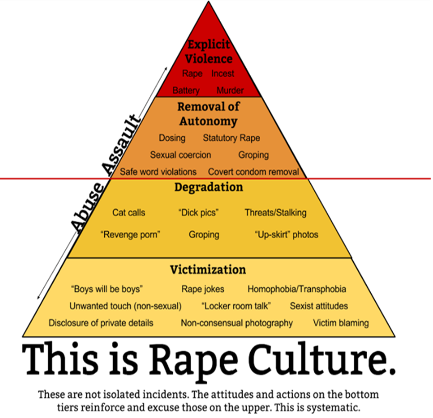
The very aesthetes of consent when understood only through the lens of cis-hetero-patriarchal rape culture by young people especially those in high school, directly produces other instances of abuse and sexual violence. The normalised use of violent references for sex among young boys defies consent in circumstances especially where some activities are consented to and others are not, as we try to teach is the right of each party involved. By inviting young people to consider these are axioms, we attempt to demonstrate with the pyramid of sexual violence how micro-aggressions as subtle as benevolent sexism and harassment to overt actions such as obscene locker room talk, gradually builds a culture of acceptance and social approval which exposes mostly young girls and women to increased risk of violence and harm. Young people are constantly transforming into their fullest potential as adults, while being defined by and belonging to various communities with shared identities through whom they self-identify. These aspects of being, becoming and belonging are part of a childish-approach to children and youth policy studies. This considers the connections between key learnings in youth that affect later behaviour focusing on the perspectives of young people in discourse on their representations in policy frameworks.
Drama Queens’ work, at the very heart of it, attempts to address and combat societal ills; in this case, sexual violence, through varying approaches. These approaches can be through preventative activism, unlearning forums, or healing spaces. The Let’s Talk Consent branch of our work seeks to focus on preventative activism by encouraging people, most often the youth, to properly process human dignity, space and rights. In our sessions, we invite the participants to consider all the applications of consent in day-to-day life. The long-term goal, besides drastically reducing and possibly ending instances of sexual violence, is to make consent and its acknowledgement and acceptance, a default state of being for everybody.
One frequent comment we get during sessions is “But most girls (or people) mean yes when they say no to some advances?” (It is important to note that this question refers to instances where young girls and women, even though genuinely interested, are encouraged to appear coy and demure in a bid to not seem too eager by society). When this question is posed, we usually get a resounding affirmative feedback from the audience. This shows us that the issue of consent, just like almost all other societal structures, is very tightly-wound around sexism. Our response to this query is a firm, “Take a yes as a yes. And a no as a no.” We go on to explain that through no fault of their own, women (and “Assigned Female At Birth” AFAB folk) are taught to mirror a certain image in order to appeal to the male gaze. These instructions were received in various aspects of women’s lives; from their homes, religious involvement, romantic and platonic partnerships, to academic participation and self-image. In our work, we have come to realise that this may account for instances where women try to cover their interest with disinterest. All to project a sense of rareness and self-value. The very idea that women are made to tie their self-worth to such responses and behaviours is the very bedrock of objectification and we at Drama Queens are determined to let women (and AFAB) people know that they are worthy, they have the right to be their authentic selves and they are highly valued. By setting and creating a firm “yes is yes and no is no” culture, people, especially young people will take the first steps in thoroughly instilling a sense of candidness to self that helps to shed the toxic institutions women (and AFAB people) are brought up with.
Creating a safe space is at times underestimated, even by institutions who seek to have “modes of redress” integrated into their current systems and ways of operating. Unclear paths to proper justice for victims and “strict and unyielding” persons in redress systems, create an innate distrust for the systems” ability to properly address instances of abuse. In high schools for instance, in a bid to cut costs, institutions such as schools, place disciplinary-centred and hyper-critical teachers and staff in positions to hear student complaints and to act as guidance counsellors. The reasoning for this, aside from the aforementioned, could be that they trust such individuals to maintain the schools’ interest while basing their ability to adequately perform the tasks on their high “disciplinary rate” often obtained through harsh and insensitive means. This leads to students feeling distrustful and unsure of their institutions’ redress systems in the face of sexual assault / harassment. At Drama Queens, we understand the need for creating a safe space and we show this by asking our participants to put down rules that they would like implemented in their session to facilitate a safe space for them. In a safe space, participants may feel more inclined to share and have less fear of judgment for their thoughts, opinions and unlearning journeys (if they have their opinions on a certain topic, change during the session). This leads to altogether more productive sessions where participants feel more inclined to share and learn. Some of the rules participants come up with may include;
- No talking over others
- Do not make fun of peoples’ opinions
- No authority figures in the room
- Constructive criticism only
The vocalisation of these rules helps to shift uneasy dynamics in a session and could lead to students feeling safe with sharing their opinions and experiences, as well as being more conducive to take feedback and relearn ideas and concepts.
Our work spans various formats and we are dedicated to facilitating our activism through the various avenues we are granted. For the purpose of reaching larger audiences of different age groups and demographics in Ghana on the issue of sexual consent and everyday manifestations of patriarchal gendered norms, the stage play adaptations “For Coloured Girls: Who Have Considered Suicide When The Rainbow Is Enuf” and “Until Someone Wakes Up”, both attempt to stimulate thinking around these still taboo topics. In the former, funded by the African Women’s Development Fund and staged in the AWDF Sauti Centre, a select audience were thrilled to view a riveting show by our performers through monologues and live music on healing from the trauma of sexual violence. In the latter, staged on the occasion of International Women’s Day 2019 at the request of the Alliance Française and French Embassy as part of their fleet of activities for that period, our performers once again used thrilling scenes and dialogues to illustrate our stance on consent and sexual assault.
In breathing, existing, learning, being, people have been taught from very formative points in time to suit the norm. Our culture, as it stands now, is rife with rape culture. Existing within this current norm means to be complicit. Existing within this current norm is to choose easy. Doing the work to unlearn is hard. Unlearning and helping others to unlearn is also hard. However, what is activism if not passion in the face of difficulty? Drama Queens is committed to ensuring that we change the narrative. We are dedicated to the goal of progress, joy and mutual respect. Consent colours aspects of our existence beyond the sexual element and to understand consent is to understand respect. With constant thought analyses and constant unlearning, we can collectively ensure a better world that works for people especially for the most marginalised folks who have for so long been the victims of its continued existence.
We have unwound our wounds to become choruses- a vast sea swallowing the spaces between
where our stories sit in memory
Rainbow sheep who gnaw the thighs of the shepherd- our eyes hold ember
rechristened our fists into seedlings
Is this extracted from somewhere?
Written by: James S. Quarshie (Stage & Production Manager, Drama Queens) & Doris Odoi (Speakeasy Director, Drama Queens).
Poems by: K. Boat
Sexual Harassment in Digital Spaces: Sharing Experiences and Resources
Sexual Harassment in Digital Spaces: Sharing Experiences and Resources
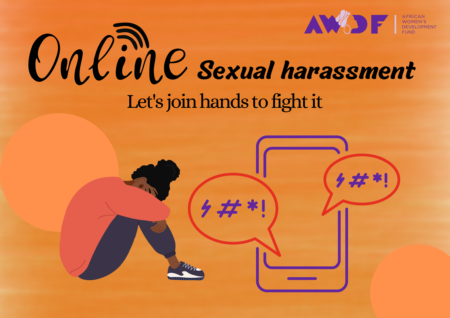
Written by Emitomo Tobi Nimisire
I was thrilled to join social media the first time I did, eager to meet people – strangers who could become friends – and share my writing with them. I was fifteen. Social media exposed me to life-changing opportunities and gave me a few sustained platonic relationships (friendships?), but it also brought me an abundance of unsolicited photos of men’s privates, as well as name-calling and slut shaming. In my twenties now, I find myself reflecting on assault and harassment, and on how it has affected me. I think of all the times I have witnessed other women suffer this, and driven to properly understand this struggle, I created a survey. Here is what I found:
What counts as Online Harassment?
Online harassment includes any form of virtual interaction, action, or reaction that makes a person feel unsafe or discriminated against (Nimisire, 2021). According to Pew Research Center in a January 2021 survey, online harassment is measured by the following behaviours: offensive name-calling, purposeful embarrassment, stalking, physical threats, harassment over a sustained period of time, and sexual harassment. However, it is important to note that online harassment can be a subjective and personal experience.
Yasmin, an 18 year-old, says online harassment is “Everything pushy and forceful, done with the intent to harm. From stalking to persistent texting, sharing nudes, making up lies, blackmail, sending graphic pictures without consent, screen grabbing pictures and saving them (especially nude pictures).” Yasmin experiences some of these often because of her sexuality. She prefers to ignore harassers. For 19-year-old Mariam, online harassment is “Sending unsolicited dick pictures, someone constantly in my DMs trying to get me to sleep with them even after I’d already said No.” Mariam blocks and reports harassers’ accounts. “Trolling, body shaming, and doxxing.” These are what Cassandra, 22, considers online harassment. She mutes and blocks her harassers, or logs off the internet when she’s being harassed.
How is Online Sexual Harassment Violence?
Sexual harassment online can make a person feel threatened, exploited, coerced, humiliated, upset, sexualised or discriminated against. On many occasions, women and girls are harassed because of their gender and for having opinions. In another research in 2017, Pew Research Centre found that women are about twice as likely as men to say they have been targeted as a result of their gender (11% vs. 5%). Moreso, marginalised women are more at risk of online violence, especially LGBTQ+ people, sex workers, and women who are activists. 6 out of the 10 women and girls who filled my survey said they are harassed because of their sexuality. These indicate only a small portion of the targeted violence and insecurity that women are often at risk of in their daily lives.
Online sexual harassment encompasses a wide range of behaviours that use digital content (images, videos, posts, messages, pages) on a variety of different platforms (private or public) to harass or assault a person, ranging from unsolicited nude photos to rape and murder threats. A survey conducted by German advisory organisation, HateAid, shows that around 52% of women between the ages of 18 and 35 have suffered digital violence at least once.
There are largely four (three?) categories of online sexual harassment. These include: unsolicited sharing of intimate photos and videos; up-skirting — a situation in which a woman or girl is recorded without their consent; and revenge porn— where a video or photo is taken with the consent of the women but shared without consent. Other types of sexual harassment online include exploitation, unwanted sexualisation and sexualised bullying.
How has covid exacerbated online sexual harassment?
Use of social media increased following the COVID-19 pandemic, especially through the lockdown period. Movement ground to a halt, causing social interactions, workspaces, events, and engagements to move online. According to one survey, this directly resulted in an increase in reports of online harassment.
Impact of Online Harassment on Women and Girls
Silence: Survivors of online harassment are often scared into silence, especially in cases where non-consensual intimate images (NCII) are used to blackmail women and shared online, which may result in reputation damage. In less severe cases, to protect their privacy when harassed, women and girls change their privacy settings or deactivate their accounts.
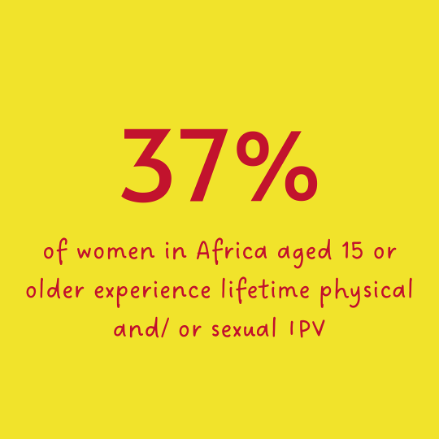
Physical Insecurity: Survivors of online harassment may have a heightened fear of physical violence, especially if the harassers have access to private information such as their contact number, email address, or location. Research by Plan International conducted in 2020 across 31 countries with over 14,000 girls and young women about their experiences online discovered that more than half (58%) of those surveyed have been harassed and abused online, and 24% (that is, 1in 4 girls) are left feeling physically unsafe.
Psychosocial Stress: In the aforementioned report by Plan International, 42% of the girls and women who participated in the survey lose self-esteem or self-confidence, 42% feel mentally or emotionally stressed, and 18% have problems at school.
Loss of access to digital resources: In a society rife with rape culture and characterised by victim-blaming, when parents or guardians of girls who are being harassed online catch wind of the situation, they may limit the their access to the internet by seizing their mobile devices and computers. This in turn affects the girls’ education, professional and social lives.
How to handle Online Harassment
Report harassers’ content and account: Many social media platforms such as Facebook, Twitter, and Instagram have functions with which one can report abusive content and get support. You may also proceed to block the harasser’s account to prevent seeing their future updates.
Report to a local police station: According to the Nigerian Cybercrime Act 2015, child pornography and related offences – cyberstalking, racist offences, conspiracy, etc – are crimes that can be reported to the police and are punishable by law.
Be an active digital bystander: When a person is being harassed online, do not engage the content in any way, but instead report it and the harasser’s account. You may also check on the survivor to see how they are doing, offer support, or share helpful resources or tools with them.
Resources for combating Online Harassment
Feminist Internet is an organisation that intervenes in digital inequalities women and girls experience, and supports those who are discriminated against by providing tools such as Maru, an anti-harassment chatbot that helps with tackling online abuse.
EndTAB specialises in training people and organisations on how to navigate the digital abuse landscape via its online and live courses.
Web Foundation, with its Tech Policy Design Lab, is collaborating with tech companies and civil society organisations to create solutions for online gender-based violence.
As of 2020, 24 percent of Africa’s female population had online access, which means that about 161 million female Africans were at risk of online sexual harassment. This number has not remained static; more women and girls keep gaining access to the internet and will continue to do so. Creators of digital services and platforms must treat having effective policies that safeguard their users from online harassment as essential as the functionality of their products and platforms. We can no longer feign ignorance or turn a blind eye to the reality that our world now includes the digital world. Individuals must acknowledge that a person’s rights do not become non-existent the moment they get on the internet. The respect of the dignity of women and girls in the digital world is as important as their rights in the non-digital world.
About the Author:
Emitomo Tobi Nimisire is a Feminist Writer, Researcher, Sexual Reproductive Health and Rights (SRHR) Advocate, and Communications Strategist. She blogs at www.nimisire.wordpress.com.
Announcing the Ongea Mama Series
Announcing the Ongea Mama Series
[tp lang=”en” not_in=”fr”]
A COLLABORATION BETWEEN THE AFRICAN WOMEN’S DEVELOPMENT FUND AND BLACK WOMEN RADICALS

About The Ongea Mama Series
A collaboration between Black Women Radicals (BWR) and the African Women’s Development Fund (AWDF), “Ongea Mama” is an online series dedicated to curating discourses that uplift the unique perspectives, experiences, and activism of African feminists, from continental and diasporic approaches.
“Ongea Mama” translated as “Speak Mama” in Swahili. With this, the series is anchored around exploring major questions:
- What does it mean for African, Black, and Afro-descendant feminists to be in dialogue with one another?
- How can we learn from each other not only politically but personally, culturally, and even spiritually?
- How do we address and forge past historical and contemporary differences and tensions that impact our understandings of each other in efforts to create solidarity, sisterhood, and siblinghood across borders and boundaries?
- How can this series serve as a political education tool to learn more about feminist strategies, initiatives, and knowledge productions globally?
The “Ongea Mama” series is an extension of a previous event collaboration between the African Women’s Development Fund and Black Women Radicals which focused on “Health Equity and Power: Building Transnational Feminist Solidarity.”
As objectives, the Ongea Mama Series seek to
- Provide a dialogue and discourse among and between Africa, Black, and Afro-descendant feminists.
- Provide political education about historical and contemporary African feminist leaders and their leadership.
- Interrogate the work, activism, and productions of African feminists on the African continent and in the Diaspora.
- Create and build solidarity with and among Black women and gender expansive activists from around the world.
About The African Women’s Development Fund: The African Women’s Development Fund is a pan-African, women-led, grant-making agency that resources African women’s organisations to deliver sustainable development initiatives targeting women on the continent.
About Black Women Radicals: Black Women Radicals is a Black feminist advocacy organisation dedicated to uplifting and centering Black women and gender expansive people’s radical activism in Africa and in the African Diaspora.
[/tp]
[tp lang=”fr” not_in=”en”]
Une collaboration entre le Fonds Africain pour le Développement de la Femme et Black Women Radicals
A propos de la série Ongea Mama
Née d’une collaboration entre Black Women Radicals (BWR) et le Fonds Africain pour le Développement de la Femme (Rapport Annuel), Ongea Mama est une série en ligne consacrée aux discours qui mettent en valeur les perspectives, les expériences et l’activisme des féministes africaines, selon des approches continentales et diasporiques.
Ainsi, la série “Ongea Mama” traduit par “Parle Mama” en swahili s’articule autour de l’exploration de questions majeures telles que:
– Qu’est-ce que cela signifie pour les féministes africaines, noires et afro-descendantes d’être en dialogue les unes avec les autres?
– Comment pouvons-nous apprendre les unes des autres, non seulement sur le plan politique, mais aussi sur le plan personnel, culturel et même spirituel?
– Comment pouvons nous aborder et surmonter les différences et tensions historiques et contemporaines qui ont un impact sur notre compréhension de l’autre dans le but de créer une solidarité, une sororité et une fraternité au-delà des frontières et des limites?
– Comment cette série peut-elle servir d’outil d’éducation politique pour en savoir plus sur les stratégies, initiatives et productions de connaissances féministes dans le monde?
– La série “Ongea Mama” est le prolongement d’une collaboration précédente entre le Fonds Africain pour le Développement des femmes et Black Women Radicals, qui portait sur le thème “Équité sanitaire et pouvoir: construire une solidarité féministe transnationale”.
Les objectifs de la série Ongea Mama sont les suivants:
– Fournir un dialogue et un discours parmi et entre les féministes africaines, noires et afro-descendantes.
– Fournir une éducation politique sur les leaders féministes africaines historiques et contemporaines et leur leadership.
– Interroger le travail, le militantisme et les productions des féministes africaines sur le continent africain et dans la diaspora.
– Créer et construire une solidarité avec et entre les femmes noires et les activistes de l’expansion du genre du monde entier.
À propos de l’AWDF: Le Fonds Africain pour le Développement de la Femme est une agence panafricaine, dirigée par des femmes, qui octroie des subventions aux organisations de femmes africaines afin de leur permettre de mettre en oeuvre des initiatives de développement durable ciblant les femmes du continent.
À propos de Black Women Radicals: Black Women Radicals est une organisation de défense des intérêts des féministes noires qui se consacre à la promotion et à la centralisation de l’activisme radical des femmes noires et des personnes sans distinction de sexe en Afrique et dans la diaspora africaine.
[/tp]
A huge boost for transformative feminist funding
A huge boost for transformative feminist funding
[tp lang=”en” not_in=”fr”]
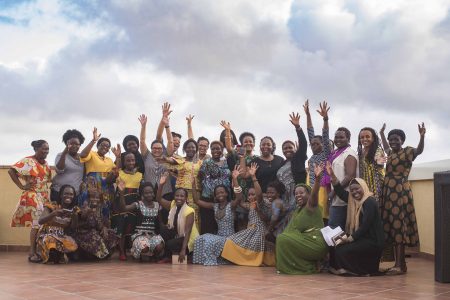
AWDF welcomes a generous, transformative gift from MacKenzie Scott
24 March 2022
The African Women’s Development Fund Board and Team are thrilled to receive a generous gift from American philanthropist MacKenzie Scott.
As Africa’s first women’s fund, AWDF has awarded over USD 50 million in grants across Africa and beyond in the two decades since we started operating, all while providing critical capacity-strengthening, movement-building, and narrative change support to African feminist groups. We are humbled by the recognition of the impact of our grantee partners and the wider African feminist movements towards disrupting the patriarchal status quo on the continent, and by the trust in AWDF’s critical role in supporting that change.
When it comes to philanthropy, direct funding to feminist organisations is notoriously low and usually comes with directions or restrictions on when, where, how and with whom funding can be used, leaving little room to do and support transformative work in a way that is innovative and inclusive. We therefore deeply appreciate that MacKenzie Scott’s donation to AWDF is both a sizeable and unrestricted donation.
Françoise Moudouthe, CEO of AWDF, says: “I am amazed by how much AWDF has been able to do since its inception, with the support from a generous community of donors. Yet, we are still only able to fund less than 15% of the eligible applications we receive, and the fact that only about 10% of our resources are unrestricted has kept me up at night more than once, not least because I know we fare much better than other African women’s rights groups in that respect. So, for AWDF to receive an unrestricted gift that is about the size of our current annual budget is a huge, exciting opportunity.”
With our excitement comes a great responsibility to our partners and the constituencies we serve. Listening to the priorities they have identified while consulted as part of our ongoing strategy development process, we look forward to leveraging these new resources to go further and deeper than we have been able to so far.
We will prioritise reaching more diverse and marginalised women and gender-non-conforming people across Africa. We will develop even more agile, inclusive and responsive ways to support feminist innovation and transformation. And we will invest in the long-term sustainability of movements as well as our own organisational resilience, so we can sustain and bring to scale the change we will have seeded beyond the coming few years.
There is comfort in knowing that MacKenzie Scott’s gift will enable AWDF to put these ideas into concrete action without delay. We can’t wait to work with our partners and demonstrate the power of collective African feminist imagination!
[/tp]
[tp lang=”fr” not_in=”en”]
AWDF reçoit un don généreux et révolutionnaire de MacKenzie Scott
24 mars 2022
L’équipe de l’AWDF ainsi que son conseil d’administration sont ravis de recevoir un don généreux de la philanthrope américaine MacKenzie Scott.
En tant que premier fonds féminin d’Afrique, le Fonds Africain pour le Développement des Femmes (AWDF) a accordé plus de 50 millions de dollars de subventions à travers l’Afrique et au-delà au cours des deux décennies qui ont suivies le début de ses activités, tout en fournissant un soutien essentiel au renforcement des capacités des groupes féministes africains, à la construction de nouveaux groupes ainsi qu’au changement du discours narratifs de ceux-ci. Nous sommes honorés par la reconnaissance de l’impact de nos partenaires bénéficiaires et des mouvements féministes africains en général pour changer le statu quo du patriarcat sur le continent et par la confiance au rôle essentiel de l’AWDF pour soutenir ce changement.
En matière de philanthropie, le financement direct des organisations féministes est très faible et s’accompagne généralement de directives ou de restrictions sur le moment, le lieu, la manière et les personnes avec lesquelles le financement peut être utilisé; ce qui laisse peu de choix pour réaliser et soutenir un travail transformateur de manière innovante et inclusive. C’est pourquoi nous apprécions profondément que le don de MacKenzie Scott à l’AWDF soit à la fois un don important et sans restriction.
Françoise Moudouthe, directrice de l’AWDF a déclaré à cet effet : « Je suis stupéfaite de tout ce que l’AWDF a pu faire depuis sa création grâce au soutien d’une communauté de généreux donateurs. Pourtant nous ne sommes encore en mesure de financer que moins de 15% des demandes admissibles que nous recevons, et le fait que seulement 10% de nos ressources soient sans restrictions m’a empêché de dormir plus d’une fois, notamment parce que je sais que nous nous en sortons beaucoup mieux que d’autres groupes de défense des droits des femmes à cet égard. Ainsi, le fait que l’AWDF reçoive un don non restrictif qui représente à peu près la taille de notre budget annuel actuel est une opportunité énorme et excitante.»
Notre enthousiasme s’accompagne d’une grande responsabilité envers nos partenaires et les groupes que nous servons. En écoutant les priorités qu’ils ont identifiées lors des consultations menées dans le cadre de notre processus continu de développement de la stratégie, nous sommes impatients d’utiliser ces nouvelles ressources pour aller plus loin que nous n’avons pu le faire jusqu’à présent.
Nous nous efforcerons d’atteindre prioritairement les femmes les plus diverses et les plus marginalisées, ainsi que les personnes non conformes au genre dans toute l’Afrique. Nous développerons des méthodes encore plus dynamiques, inclusives et réactives pour soutenir l’innovation et la transformation féministes. Et nous investirons dans la durabilité à long terme des mouvements ainsi que dans la résilience de notre propre organisation, afin de soutenir et de mettre à niveau le changement que nous aurons initié au-delà des quelques années à venir.
Il est réconfortant de savoir que le don de MacKenzie Scott permettra à l’AWDF de concrétiser ces idées sans délai. Nous avons hâte de travailler avec nos partenaires et de démontrer le pouvoir de l’imagination collective féministe africaine!
[/tp]
Funding frontline women-led organisations to redefine community impact
Funding frontline women-led organisations to redefine community impact
THE CASE OF IMPROVING WOMEN’S HEALTH OUTCOMES IN KENYA
Written by: Dinnah Nabwire, Knowledge Management Specialist, AWDF
In 2020, over 300 million African women were directly affected by Noncommunicable Diseases (NCDs) and 2.4million of these had suffered from at least one form of cancer.
Across most African countries, addressing the burden for cancers and other forms of NCDs remains undermined by low national health care budgets and intervention packages that do not intricately include the needs of most affected populations.
In our work, the African Women’s Development Fund (AWDF) has found that women-led organisations, the majority of which are situated in and across hard-to-reach, under-served and marginalised parts of communities continent-wide, are well-positioned to address the growing burden of NCDs. However, they lack adequate resources to build alliances, co-create innovative approaches built on their years of community work experience and lessons, champion advocacy and implement the service delivery needed to achieve inclusive health outcomes for women.
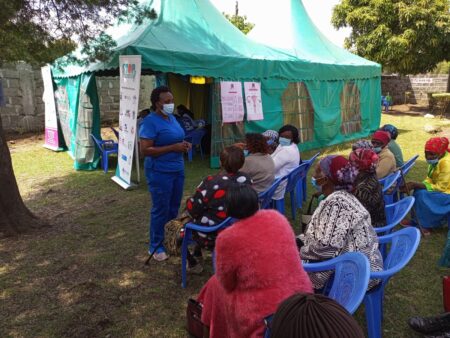 In 2021, AWDF extended funding to one of such powerful frontline organisations, Women4Cancer Early Detection and Treatment, a community-based women-led organisation that addresses cervical cancer across sixteen counties in Kenya. In the following sections, we present four levels of unique value addition from resourcing community-level women-led organisations using examples from our work with Women4Cancer Early Detection and Treatment.
Designing sustainable models that address underlying drivers of health inequities
In Kenya, cervical cancer kills nine women a day and is almost entirely caused by infection from the Human Papilloma Virus (HPV). While early detection and treatment is a clear path to elimination, HPV vaccines for young girls and boys can prevent infection by the virus in the first place. However, women and girls do not equitably access and utilise this opportunity due to a range of barriers.
According to Elizabeth Mbuthia, the Head of Programmes at Women 4 Cancer Early Detection and Treatment, most women targeted in the awareness sessions often lacked resources (transport and hospital fees) to access screening services at various health centres. Other critical barriers were significant numbers of women lacking information about screening opportunities, not seeing the importance of screening since they presented no signs or symptoms, while others cited lack of cervical cancer screening services at community level health centres when they visited.
With funding from AWDF, Women4Cancer Early Detection and Treatment sought to address these barriers. The team was able to provide free screening that resulted in increased numbers of women who know their status – a crucial step in maximising prevention and treatment for cervical cancer.
The organisation uses a community-driven intervention model that targets girls aged 10-14 and women. Over the past ten years, they have built reciprocal relations with the Ministry of Health, County Departments of Health, Sub- County Health Management teams, community health workers, opinion leaders, caregiver groups and schools with whom they collaboratively design and deliver interventions.
Champions who mainly consist of community health workers, particularly women, are trained and equipped with skills and tools to educate communities on the prevalence of cervical cancer, assess barriers to effective screening and popularise the opportunity for early treatment. During health camps, the project teams and volunteer nurses are attached to healthcare workers in the target health facilities to monitor the quality of services and support documentation and learning.
From the pre- and post-assessments, a significant increase in the numbers of women getting screened across health centres targeted by the project was recorded during the intervention period. At Bahati Sub-County Hospital in Nakuru North, screening rates grew from 13 in June 2021 to 241 in July 2021 following the community education activities coupled with free screening, on-site treatment and referral health camps. Similar trends were registered in the Nakuru North Sub-County Engashura, Kabatini and Dundori Health centres.
Tapping into the unique opportunity to integrate intervention lessons
At the project’s inception, the Women4Cancer Early Detection and Treatment team learnt that Nakuru County had adopted the school-based strategy for delivering the HPV vaccine for girls aged 10-14 years. Low vaccine uptake was registered when learners returned home for holidays or during short breaks and an increase in the uptake when schools resumed.
Based on these observations, the project team guided activity planning and scheduling to maximise holidays and breaks. Specific messaging was integrated to target community influencers and men as parents or guardians to support the participation of women and girls in project activities. The result was the sub-county recording a significant increase in the numbers of eligible girls taking up the HPV vaccine at the end of the intervention.
A partnership was initiated between schools and Engashura Health facility to co-host vaccination outreaches in neighbouring schools which further increased screening and HPV vaccination uptake outcomes. It also enabled the health facility to replicate similar initiatives in the sub-county. Integrating lessons during implementation ensured that the intervention model adjusts to address emerging needs, reaches excluded populations and maximises screening, testing and referrals for the navigation treatment program among women and girls manifest positive results.
Linking community needs to influence policy and programming at the county, national, and global levels.
As host of the STOP Cervical Cancer Technical Working Group secretariat, the Women4Cancer Early Detection and Treatment convenes over thirty partners, including the Ministry of Health’s National Cancer Control Programme, and nonprofits committed to addressing cervical cancer. The organisation is also an HPV vaccine technical support partner in the Advocacy, Communications and Social Mobilisation Technical Working Group (ACSM-TWG) at the National Vaccines and Immunisations Programme, Ministry of Health in Kenya.
The project team continually utilises these platforms to highlight health system challenges from the communities where they work and actively lobby government and key actors to prioritise emerging issues and barriers. During the 2019 launch of the integration of the HPV vaccination to the routine immunisation schedule, Women4Cancer Early Detection and Treatment facilitated the participation of one of the project champions to share the story of her survivorship. She also called upon policymakers who included the President of the Republic of Kenya to subsidise screening costs for more women to know their status and access navigation programs early. The project team uses their membership on these national and regional platforms to follow up these asks.
Impacting key populations and often excluded women and girls
The project team collaboratively works with the Sub-County Health Management Teams (SCHMT) in the different counties to report into the cancer registry databases like the Kenya Health Information System (KHIS). This ensures that national databases capture necessary details about women’s health and their multiple vulnerabilities crucial for health interventions that leave no one behind.
Moreover, in Kenya, it is estimated that female sex workers are almost ten times more likely to contract HIV than non-sex workers – yet, women living with HIV have a substantially increased risk for cervical cancer compared with women without HIV infection.
Before receiving funds from AWDF, Women4Cancer Early Detection and Treatment had worked with female sex workers without deliberate disaggregation. However, with the funds, they scaled up this work through deliberately targeting and training their leadership who subsequently mobilised their colleagues to participate in screening activities. The majority of the champions engaged by the project team had been trained in other health issues, particularly HIV and AIDS, which made it easy to highlight the integration between HIV and Cervical Cancer.
Like Women4Cancer Early Detection and Treatment, hundreds of African women-led community-level organisations are front lining initiatives that promote holistic outcomes for women’s health. Placing funds in the hands of community-level women-led organisations means generating community-driven strategies that reach most marginalised populations and build on resident resources to deliver sustainable high impact interventions.
Call for Proposals: Main Grants and KASA!
Call for Proposals: Main Grants and KASA!
[tp lang=”en” not_in=”fr”]
From January 25th 2022, AWDF will be accepting proposals from interested women led organisations registered and working in Africa. AWDF defines a woman led organisation as an organisation whose board chair and executive director are both women. Also at least 70% of the board and staff members of the organisation are women. The call ends on 22nd February 2022.
For this round of grant making we will prioritise the following:
- Organisations working in French speaking African countries
- Organisations working in two or more African countries
- Young women led organisations
- LBTQI led organisations
- Women living with disabilities led organisations
We have two funding streams you can apply to:
- Main Grants for women led organisations registered and working in Africa and
- Kasa! for women led organisations registered and operating in Ghana, Nigeria and Senegal and working on sexual violence issues
Applicant Guidance Note – Main Grants
- The Main grants support work around all of AWDF’s three thematic areas
- Organisations located in Ghana, Nigeria and Senegal, working on sexual violence can apply for both the Main grant and the Kasa fund
- Organisations working in two or more countries are encouraged to apply
- For the main grant, an organisation working in two or more countries can apply for a maximum of USD100,000 for one year. With this you can apply for only a one-year grant
- For the main grant, an organisation working in one country can apply for up to a maximum of USD50,000 per year for two years
- Please note that AWDF can provide funding to a maximum of 50% of an applicant organisation’s confirmed income for 2021. For example, if your confirmed income for 2021 was USD50,000, you can apply for a maximum of up to USD25,000 per year
Applicant Guidance Note – Kasa!
- The Kasa! grant is specifically for work around sexual violence. The Sexual Violence Research Initiative defines sexual violence here https://www.svri.org/research-methods/definitions .
Sexual violence/abuse refers to any sexual act or attempt to obtain a sexual act, or unwanted sexual comments or acts to traffic, that are directed against a person’s sexuality using coercion by anyone, regardless of their relationship to the victim, in any setting, including at home and at work.
- Please DO NOT apply for the Kasa! grant if your organisation is not based in nor working in Ghana, Nigeria or Senegal
- Organisations located in Ghana, Nigeria and Senegal, working on sexual violence can apply for both the Main grant and the Kasa! fund to work on different aspect of sexual violence or sexual violence and another theme.
- For organisations in Ghana, Nigeria and Senegal who intend to apply for the Kasa! grant, please note that the Kasa! grant is specifically for work around sexual violence issues in Ghana, Nigeria and Senegal
- For the Kasa! grant, you can apply for a grant of up to USD30,000 per year if your 2021 confirmed income can support that
- For the Kasa! grant you can apply for grant up to a maximum of 3 years.
- Please note that AWDF can provide funding to a maximum of 50% of an applicant organisation’s confirmed income for 2021 per year. For example, if your confirmed income for 2021 was USD20,000, you can apply for a maximum of up to USD10,000 per year
Please note that we expect to receive over 1000 applications and therefore are only able to contact successful applicants once the review process is completed – successful applicants will hear from us in June 2022.
If you are interested in applying, please read the Applicant Guidance Document as it contains essential information to help you through the process. If, after reading the applicant guidance document, you are interested in hearing more about the AWDF application process and would like to join one of our Applicant Webinars, please REGISTER HERE . The French applicants’ webinar will be held on Tuesday February 1st 2022 at 10.00am GMT and the English applicants’ webinar will be held on Wednesday the 2nd of February 2022 at 10.00am GMT.
To apply for a grant from AWDF please complete the application process by clicking the link below
AWDF GRANTS APPLICATION PORTAL
Guidance for the online platform can be accessed here
Click here to read our Frequently-Asked-Questions (FAQs)
[/tp]
[tp lang=”fr” not_in=”en”]
À partir du 25 janvier 2022, l’AWDF acceptera les propositions de projet d’organisations dirigées par des femmes africaines enregistrées et travaillant en Afrique. L’AWDF définit une organisation dirigée par des femmes, une organisation ayant une femme comme directrice exécutive et comme présidente du conseil d’administration et dont la majorité (au moins 70%) de l’ensemble des membres du conseil d’administration et du personnel sont des femmes. L’appel est ouvert jusqu’au 22 février 2022.
Pour ce cycle de subvention, nous prioriserons les demandes provenant :
- des organisations travaillant dans les pays africains francophones
- des organisations travaillant dans deux ou plusieurs pays africains
- des organisations dirigées par les jeunes femmes
- des organisations dirigées par les LBTQI
- des organisations dirigées par les femmes vivant avec le handicap
Nous avons deux volets de financement auxquels vous pouvez présenter une demande :
- La subvention principale est destinée aux organisations dirigées par des femmes africaines enregistrées et opérant en Afrique.
- La subvention Kasa! est pour les organisations dirigées par des femmes africaines enregistrées et opérant au Ghana, au Nigeria et au Sénégal et travaillant dans la lutte contre la violence sexuelle.
Informations pour les organisations demandeurs de la subvention principale
- La subvention principale soutient les projets répondant aux trois domaines thématiques de l’AWDF
- Les organisations basées et opérant au Ghana, au Nigeria et au Sénégal, qui travaillent dans la lutte contre la violence sexuelle peuvent demander à la fois la subvention principale et la subvention Kasa!
- Les organisations travaillant dans deux ou plusieurs pays africains sont encouragées à présenter une demande.
- Pour la subvention principale, une organisation travaillant dans deux ou plusieurs pays africains peut demander un montant maximum de 100.000 USD pour un an. Avec cela, vous pouvez demander une subvention d’un an seulement
- Pour la subvention principale, une organisation travaillant dans un pays africain peut demander une subvention d’un montant maximum de 50 000 USD par an pour deux ans
- Veuillez noter que l’AWDF peut fournir un financement jusqu’à 50 % du revenu annuel confirmé pour 2021 d’une organisation. Par exemple, si votre revenu annuel confirmé pour 2021 était de 50 000 USD, vous pouvez demander un montant maximum de 25 000 USD pour un an.
Informations pour les organisations demandeurs de la subvention – Kasa!
- La subvention Kasa! est spécifiquement destinée aux interventions sur la violence sexuelle. L’Initiative de recherche sur la violence sexuelle définit la violence sexuelle comme suit https://www.svri.org/research-methods/definitions .
La violence sexuelle/l’abus sexuel désigne tout acte sexuel ou tentative d’obtenir un acte sexuel, ou les commentaires ou les actes sexuels non désirés ou la traite, qui sont dirigés contre la sexualité d’une personne en utilisant la coercition par quiconque, quelle que soit sa relation avec la victime, dans n’importe quel contexte, y compris à la maison et au travail.
- Veuillez NE PAS soumettre une demande pour la subvention Kasa! si votre organisation n’est pas basée au Ghana, au Nigeria ou au Sénégal.
- Les organisations basées et opérant au Ghana, au Nigeria et au Sénégal, qui travaillent dans la lutte contre la violence sexuelle peuvent demander à la fois la subvention principale et la subvention Kasa! pour travailler sur différents aspects de la violence sexuelle et un autre thème
- Pour les organisations au Ghana, au Nigeria et au Sénégal qui ont l’intention de présenter une demande pour la subvention Kasa! veuillez noter que Kasa! est une subvention spécifiquement destinée aux interventions sur la violence sexuelle au Ghana, au Nigeria et au Sénégal.
- Pour la subvention Kasa! vous pouvez demander une subvention pour un montant maximum de USD30,000 par an si votre revenu annuel de 2021 confirmé peut soutenir la demande de ce montant maximum.
- Pour la subvention Kasa! vous pouvez demander une subvention pour une durée maximum de 3 ans.
- Veuillez noter que l’AWDF peut fournir un financement jusqu’à 50 % du revenu annuel confirmé pour 2021 d’une organisation par an. Par exemple, si votre revenu confirmé pour 2021 était de 20 000 USD, vous pouvez demander un montant maximum de 10 000 USD par an.
Pour ce cycle de subvention, nous prévoyons de recevoir plus de 1 000 demandes et que, par conséquent, nous ne pourrons contacter les organisations retenues qu’une fois le processus d’évaluation terminé. Les organisations retenues seront contactées en juin 2022.
Si vous souhaitez soumettre une demande, nous vous invitions à lire attentivement le guide de soumission de subvention, qui contient les informations essentielles pour vous aider dans votre démarche
Pour en savoir plus sur le processus de demande de subvention de l’AWDF, nous vous invitons à participer à l’un de nos webinaires sur cet appel à propositions. Le webinaire en français se tiendra le 01 février 2022 à 10h00 GMT et le webinaire en anglais se tiendra le mercredi 02 février 2022 à 10h00 GMT. Pour rejoindre le webinaire, veuillez-vous INSCRIRE ICI.
Pour soumettre une demande de subvention à l’AWDF, veuillez remplir le formulaire de demande en ligne en cliquant sur le lien ci-dessous.
PORTAIL DE DEMANDE DE SUBVENTIONS DE L’AWDF
Cliquez ici pour lire notre Foire-aux-questions-cycle-49
Pour accéder au guide d’utilisation du portail en ligne de demande de subventions de l’AWDF, veuillez cliquer ici
Cliquez ici pour vous inscrire au webinaire
[/tp]
Consultancy Opportunity: Communications Accelerator
Consultancy Opportunity: Communications Accelerator
The African Women’s Development Fund was established in June 2000 as an Africa-wide philanthropic, grant-making initiative to support the realisation and fulfilment of African women’s rights through the funding of autonomous women’s organisations. To achieve this, AWDF supports African women’s organisations leading the charge for women’s rights and gender equality in Africa by: mobilising and advocating for increased and improved financial resources to support gender equality initiatives led by African women (through resource mobilisation and philanthropic advocacy); funding organisations that work towards the promotion of women’s rights and gender equality (through grantmaking); strengthening African women’s rights and feminist organisations and leaders (through capacity building and technical support); supporting African feminists as they learn from each other’s work and build solidarity (through knowledge- and movement-building); and amplifying the voices of, and changing the narrative around African women and feminists (through communications). AWDF is currently in the process of developing a new strategic framework to guide its work in the next decade.
We are committed to improving and deepening our work to change the narrative around African women’s agency, to expand public understanding of what gender justice means for Africa, to amplify the voices of African feminists, and to provide the best possible representation of the work and impact of AWDF’s team and grantee partners. Building on the recommendations of a Communications Audit undertaken in 2018, AWDF is now recruiting a consultant (or teams of consultants) to act as a Communications Accelerator – a communications strategist and expert who can assist the team in ensuring our communications strategy, brand and voice, contents, practices and competencies are aligned with our new strategic vision.
The Communications Accelerator’s work will run concurrently with, and feed into AWDF’s overall strategic planning process. The Communications Accelerator will help keep momentum and move from talk to action on ideas that have been raised in the past, bring in fresh ideas, help identify and fill key competency gaps, and review progress. The role is about supporting the Communications team to transform, not tweak, their approach and work for improved impact. The approach will be participatory with activities that encourage ownership.
This assignment will last 6 months, and will ideally start around mid-February 2022. We envisage that 60 to 75 working days will be necessary to complete the assignment.
The deadline for submission of proposals is 15 February 2022.
For more details about the consultancy, the preferred profile of the consultants, and how to apply,
please download the full Terms of Reference here.
In line with AWDF’s mission, qualified and interested women from Africa or from African descent are encouraged to apply.
Celebrating two Phenomenal African women: President Ellen Johnson Sirleaf and Leymah Gbowee
Celebrating two Phenomenal African women: President Ellen Johnson Sirleaf and Leymah Gbowee
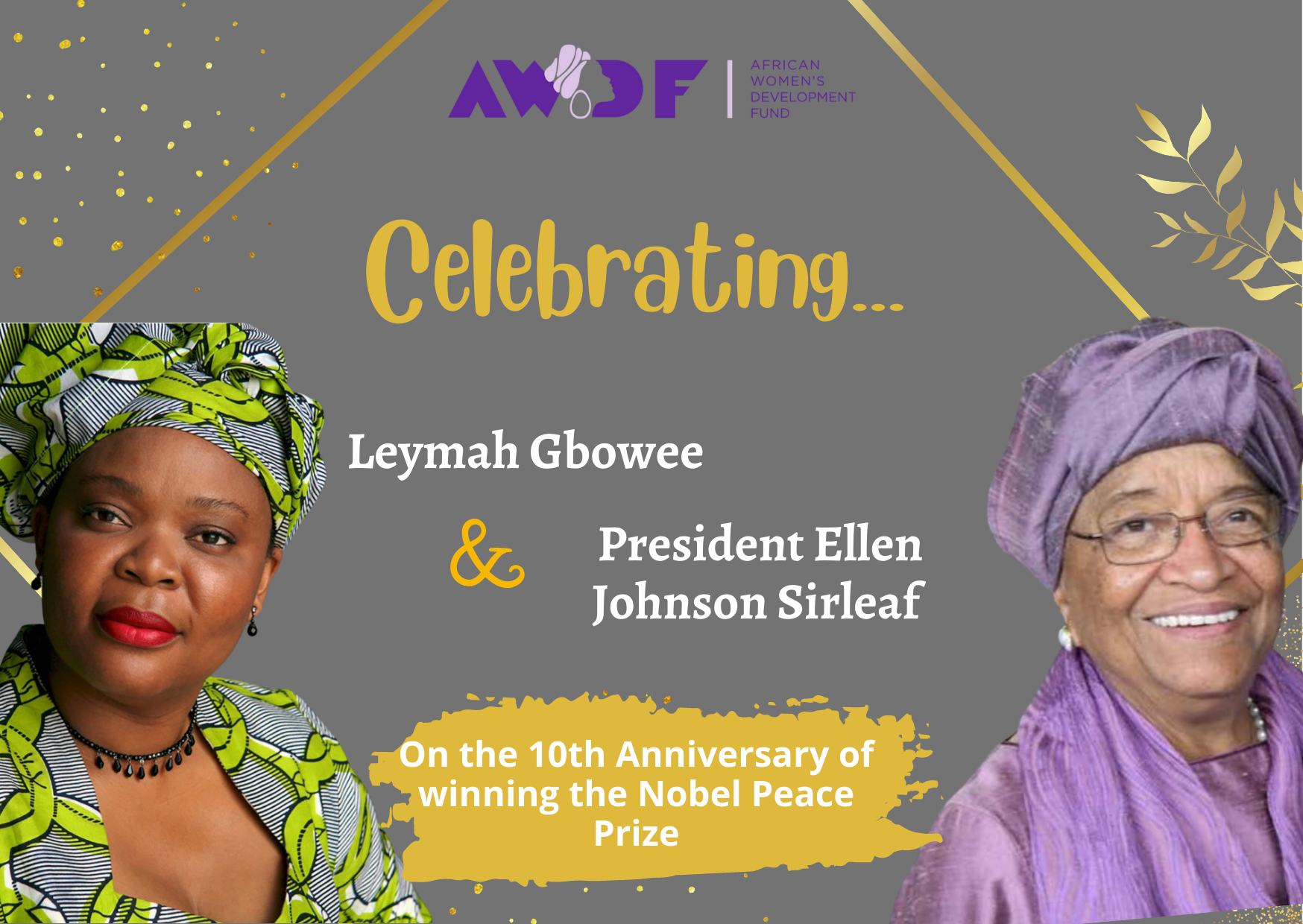
The African Women’s Development Fund is honouring two trailblazing feminist activists, President Ellen Johnson Sirleaf and Leymah Gbowee, with the AWDF Milestone Award Grants, on the 10th anniversary of jointly winning the Nobel Peace Prize. The grants, amounting to US$100,000 each, will go to their respective organisations to support the work they are doing to advance African women and girls’ participation in conflict resolution, public service leadership and governance.
President Johnson Sirleaf and Leymah Gbowee were jointly awarded the Nobel peace prize together with Yemenite pro-democracy activist Tawakkol Karman in 2011 “for their non-violent struggle for the safety of women and for women’s rights to full participation in peace-building work.” The two African women both played a critical role in securing sustainable peace in their country Liberia which was emerging from a brutal civil war, and they continue to work towards protecting human rights and promoting peace.
The AWDF Milestone Grant is a recognition of their remarkable achievement of being the only other African women to win the Nobel Peace Prize, after Wangari Maathai, who won the prize in 2004. Wangari Maathai passed away in 2011, making President Johnson Sirleaf and Leymah Gbowee the only living African women Nobel Peace Laureates.
Women’s leadership and participation in governance is central in contributing to equality and to positive transformation, and the two recipients of the Milestone Grants have shown leadership for decades in the instrumental roles they played in their country’s quest for peace. The AWDF Milestone Grant is a way to honour and document the experiences and contributions of African women who have committed their lives to the women’s movement and to democratic values and struggles in their countries. It also serves to uplift African women through philanthropy rooted in sisterhood.
By awarding these grants, AWDF is sending a signal not only to these phenomenal women, but to all African women of our commitment to changing the narrative around African women, and highlighting African women’s agency, expertise, leadership and ability to transform societies towards justice.
CEO of AWDF Françoise Moudouthe said she is “inspired by these two outstanding and fierce activists, and AWDF is excited and privileged to support their work ”.
Ellen Johnson Sirleaf is an economist and was president of Liberia between 2006 and 2018, the first woman to be elected head of state of an African country. She is also the founder of the Ellen Johnson Sirleaf Presidential Centre for Women and Development, an organisation that aims to amplify the voices of women and girls in all spheres of life by increasing their representation in public service leadership roles in Africa. The centre works to champion women’s ascension to the highest levels of leadership and challenge systemic barriers to girls’ and women’s advancement.
Leymah Gbowee is a peace activist responsible for leading a women’s nonviolent peace movement, Women of Liberia Mass Action for Peace that helped bring an end to the Second Liberian Civil War in 2003. Leymah is founder of the Gbowee Peace Foundation Africa, established to improve access to quality education for women and youth in Liberia.
On accepting the offer of the grant, President Johnson Sirleaf had this to say “AWDF has shown true leadership in advancing women’s rights in Africa and this grant is a further demonstration of their commitment to the cause”.
Leymah Gbowee expressed her appreciation to AWDF, and said that “this grant will ensure that girls and women will continue to benefit from education and leadership empowerment opportunities”.
Established in 2000, the African Women’s Development Fund (AWDF) is a feminist grantmaking foundation that supports local, national and Africa regional women’s organisations working towards the promotion and realisation of women’s rights and recognition of African women’s leadership in all spheres of life. As Africa’s first women’s fund, AWDF plays a pioneering role in of both feminist movement-building and philanthropy on the continent.
Listen to Leymah Gbowee in this video as she accepts the award
Follow us on social media:
Twitter: @awdf01
Facebook: African Women’s Development Fund
Instagram @the_awdf
LinkedIn: African Women’s Development Fund
Experiences of women survivors of violence in the mainstream media – Part 2
Experiences of women survivors of violence in the mainstream media – Part 2
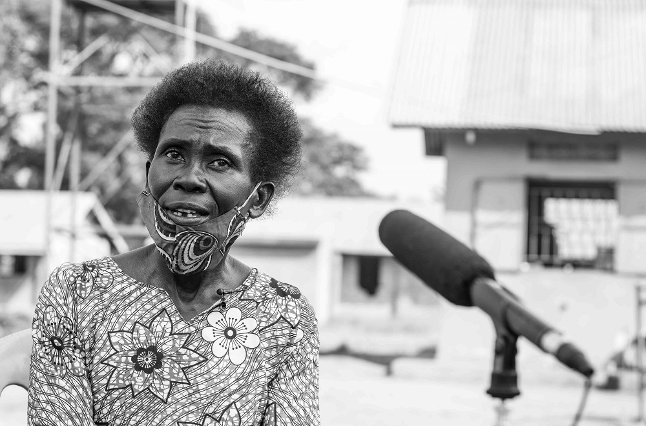
[Image by Sylvia Nalubega, UGA, Oct/2021, via AWDF/AfriRep]
Who broke-the-story-first?
Violence is a form of expressing power — whether it is exercised by individuals who wield power or those seeking to reclaim it. Thus, in unpacking all forms of violence, we cannot divorce the two – violence and power.
Journalism is able to perpetuate violence against women because it is a socio-political construct through which information, experiences, beliefs, values and thought processes of individuals, communities and societies are reproduced, relayed to a vast audience which in turn often relies on the medium as readers, listeners or viewers. This, in itself, makes journalism and its channels of engagement powerful. Media practitioners assert this power through tools like language, often revising it to fit an intended narrative that mostly aligns with a socially acceptable discourse around critical issues affecting targeted communities and populations.
As we saw in part one of this blog, violence against women does not happen in a vacuum. At its root is a patriarchal system that reinforces unequal power relations between sexes, providing a conducive environment for the reproduction of different forms of violence. In this second part of the blog, I argue that journalism operates within this system, and media practitioners are not exempt from that patriarchal conditioning. And, because of the power journalism holds as it administers its core responsibility of passing knowledge to the public, it has an ability to impact virally, shaping perspectives, and by extension, attitudes among consumers. It is therefore critical that women’s rights organisations and activists insist on journalism practice that aids prevention of violence against women, rather than one that reproduces, approves and normalises it.
Re-traumatisation of survivors, and language as a tool of violence in the media
As seen in part one, many a time, media practitioners have utilised journalism fluidly based on the politics of the day and of the issue being disseminated. In the next paragraphs, I use reflections from feminist journalists to engage on re-traumatisation of survivors, and language as a media tool to narrate the stories of violence experienced by women on the continent.
Feminist journalist and scholar, Wunpini F. Mohammed notes that the problems with media coverage and representation on violence against women are structural. She adds that newsrooms in Ghana parade survivors of rape, and domestic abuse for news consumers with little thought to how these representations will affect them (survivors).
“Ghana’s National Media Commission has a lot of work to do in monitoring insensitive reportage and sanctioning media organisations accordingly. Media organisations also need to do the work of providing more training in gender sensitive reporting to ensure that survivors of violence are not re-traumatised through harmful media narratives.”
Mohammed raises urgent issues for capacity strengthening that target raising consciousness among media practitioners and regulation by overseeing media practice as an institution for accountability to ethics such as ‘do no harm’. These are a great starting point for advocacy and engagement by women’s rights organisations and activists.
On language, Ugandan feminist journalist Jacky Kemigisa says: “language can be weaponised in reporting, as well as in accountability.” Referencing a harassment case in Uganda in which a publication adamantly refers to harassment texts as “love messages”, Kemigisa explains this in contrast with how corruption is reported. “If someone stole money, they would never refer to it as donations to accord the offender the benefit of the doubt. But here, it did not matter that the court charge sheet read harassment. The language switches to perpetuate violence, as a reflection of reporters’ held patriarchal biases against women.”
For a recommendation, Kemigisa notes that the way to counter that structural problem is if media houses have frameworks in place that counter the misogyny that seeps in [to reporting].”
Scaling what we have
It is worth noting here that feminist activists, women’s rights organisations and media houses alike have provided alternative language and methods of reporting. Moreover, they continue to invest in capacity strengthening activities that target media practitioners to raise their consciousness around sociocultural belief systems, patriarchy and implications for disseminating knowledge on violence against women.
Premising on the findings of a report on gender-based violence data in South Sudan which highlights the gap in media coverage of violence against women around protection of survivors, Ayen Achol Deng, a journalist in South Sudan, underscores the impact of journalist training programmes. Deng refers to trainings conducted by internews to highlight the difference made within the sector arguing that “education is paramount in bridging the gap that patriarchal stereotypes and illiteracy have left.”
Activists and women’s rights organisations seeking to undertake the internews approach can consider combining media practitioners and activists to harness intersections from both fields with a focus on gender-based violence. The approach uses mock sessions for media tools like press conferences to allow activists or women’s rights organisations and media practitioners to exchange questions and reflections on critical issues like the ethics of narration.
In South Africa, Gender Links, a women’s rights organisation carries out research and supports media training; providing cross-learning opportunities and small grants for journalists. In addition to advocating the mainstreaming of gender in media studies, their approach offers an adaptable training module that activists and women’s rights organisations can use to engage media practitioners.
Similarly, the GBV Prevention Network which works in 18 African countries has created a 10-page training module for organisations that advocate for better media coverage of violence against women to guide synergies with media practitioners on the continent.
These efforts are one way to address the gap of inadequacy of training tools highlighted in Part one of this story. Yet, perhaps in addition to many more other efforts needed, training modules need to expand beyond a homogenised look at violence against women. Violence leaves devastating effects on most marginalised groups like gender non-conforming persons, and women living with disabilities.
Without inclusive tools and resources that deliberately address the unique challenges faced by women across the board, the conditioned homophobic violence in mainstream media rages on and hinders the shared quest to liberate all women from all forms of violence.
Edna Ninsiima is a Uganda-based young feminist writer and Communications Consultant. This blog is part of a series following the joint launch of the Evidence Generation Guide and in [French] on prevention of violence against women in September 2021 by AWDF, Raising Voices and the Sexual Violence Research Initiative. Read the first blog in this series and access all launch resources here.