
Author: Tarisai Nyamweda
Connect with AWDF @ Women Deliver
Connect with AWDF @ Women Deliver
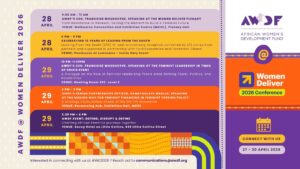
As women’s rights and feminist activists gather in Naarm (Melbourne), for the Women Deliver Conference, we do so in a moment shaped by urgency and possibility. Across the world, feminist movements are experiencing intensifying backlash and a roll back of hard won feminist gains, yet even in this context they continue to organise, resist and reimagine feminist futures often with limited funding.
As we gather, we arrive in this space with clarity of purpose and solidarity. We show up fierce, united, and unequivocal for the African feminist movement on the global stage. Our voices are critical, our presence is necessary, and we remain steadfast in ensuring that African feminists are both heard and sustainedWe are excited to share AWDF’s plans for the Women Deliver conference taking place 27–30 April: a space to strategise, resist, and build a future rooted in solidarity, justice, and joy.On the sidelines of Women Deliver, we are creating a space to listen, reflect, and speak honestly about where we are and where we are headed. We will share AWDF’s direction of travel, a bold three-pronged commitment to Defend, Disrupt, and Define resourcing resistance, disrupting harmful systems and narratives, and investing in the feminist futures we are building together and anchored in our strategic framework Lemlem.
Additionally, join us across the following spaces, where we will be speaking, engaging, listening, and connecting, all in service of building stronger African feminist futures.
If you would like to connect with us at Women Deliver, we would love to meet you. Reach out to us at communications@awdf.org. And if you are hosting a space and would like us to participate, share the details, and we will be glad to join.
Reflections from the KASA! close out forum
Reflections from the KASA! close out forum
In 2021 The African Women’s Development Fund (AWDF) in partnership with the Ford Foundation and Open Society West Africa (OSIWA) came together around a shared conviction; that addressing sexual violence in West Africa required more than emergency response mechanisms. It demanded a coordinated, feminist, long-term effort to uproot the conditions that make such violence possible. From this conviction emerged the Kasa! Initiative, a five-year collaborative programme designed to support women’s rights and feminist organisations working on the frontlines of this effort to end sexual violence across Nigeria, Ghana, and Senegal.
At its core, the Kasa! initiative was grounded on the understanding that sexual violence is both a cause and a consequence of gender inequality. The initiative therefore adopted a multiple layered approach simultaneously working across legal and policy systems, community awareness, emergency infrastructure, and the cultural narratives that normalise and enable abuse. Rather than operating through a single implementing partner, Kasa! chose to invest directly in the ecosystem: funding, accompanying, and strengthening 54 women’s rights and feminist organisations working closest to the communities most affected.
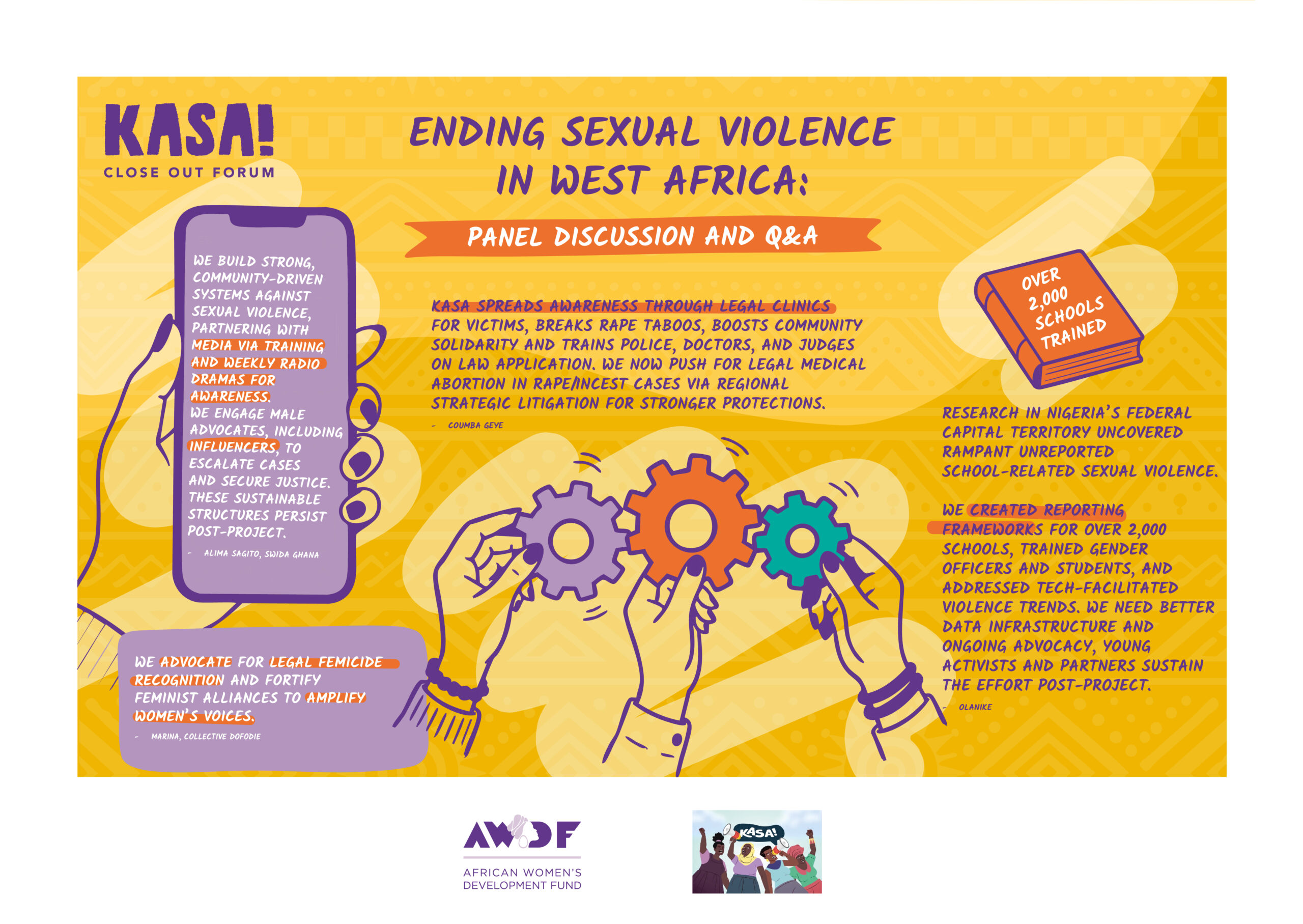
As the Kasa! Initiative drew to a close, AWDF convened a close-out forum which was a reflective space to gather partners to share what was learnt, honour the work of the organisations and communities who shaped the Kasa! initiative over the past five years.
The forum presented findings from the Kasa! Evaluation, while also creating space for partner reflections on the strategies and approaches they used, challenges they encountered, lessons learnt and political contexts that informed the initiative’s implementation and impact.
Here are some reflections captured from the Forum discussions and the collective vision, feminist solidarity and shared commitment by women’s rights and feminist organisations in the space.
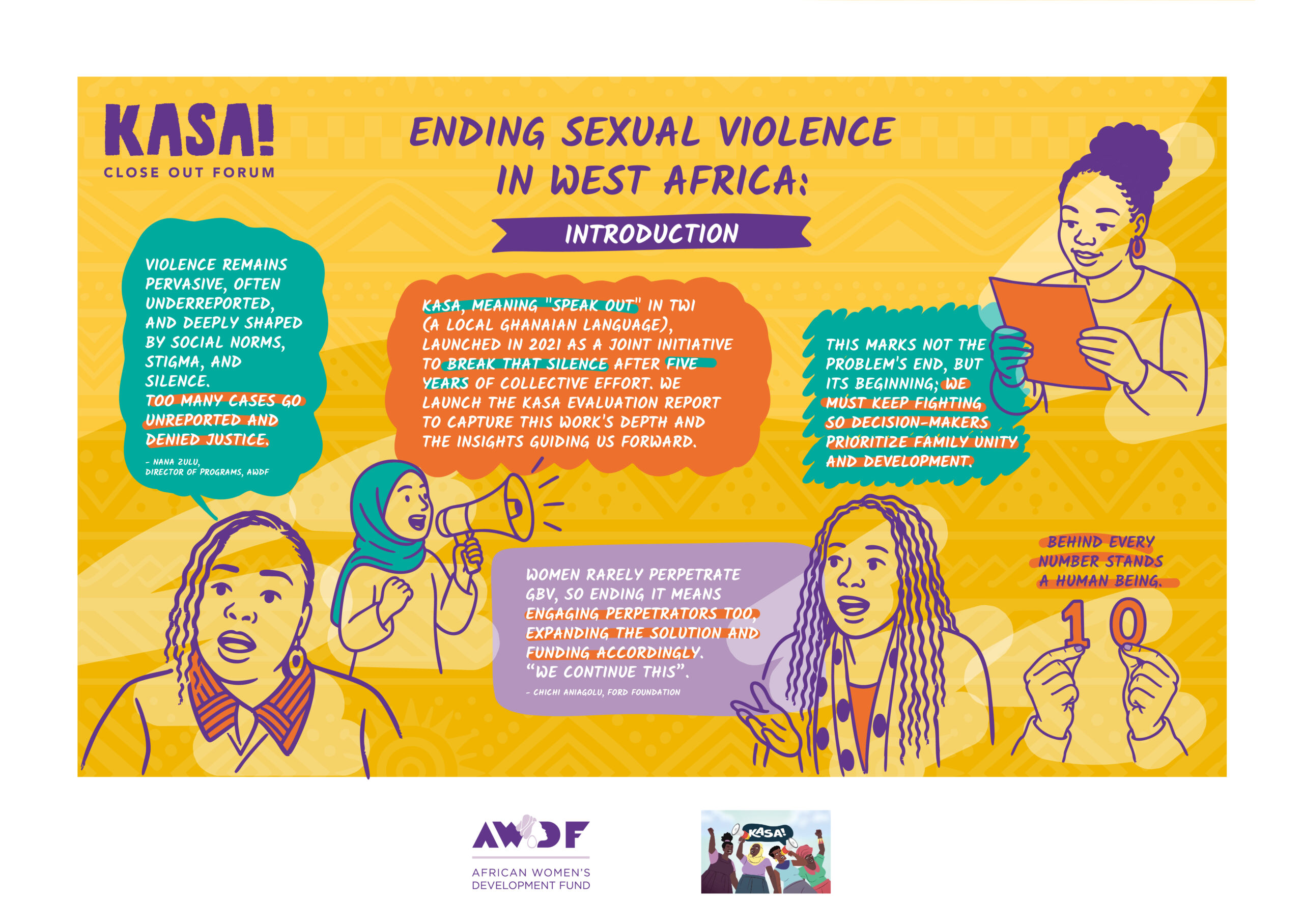
Introduction
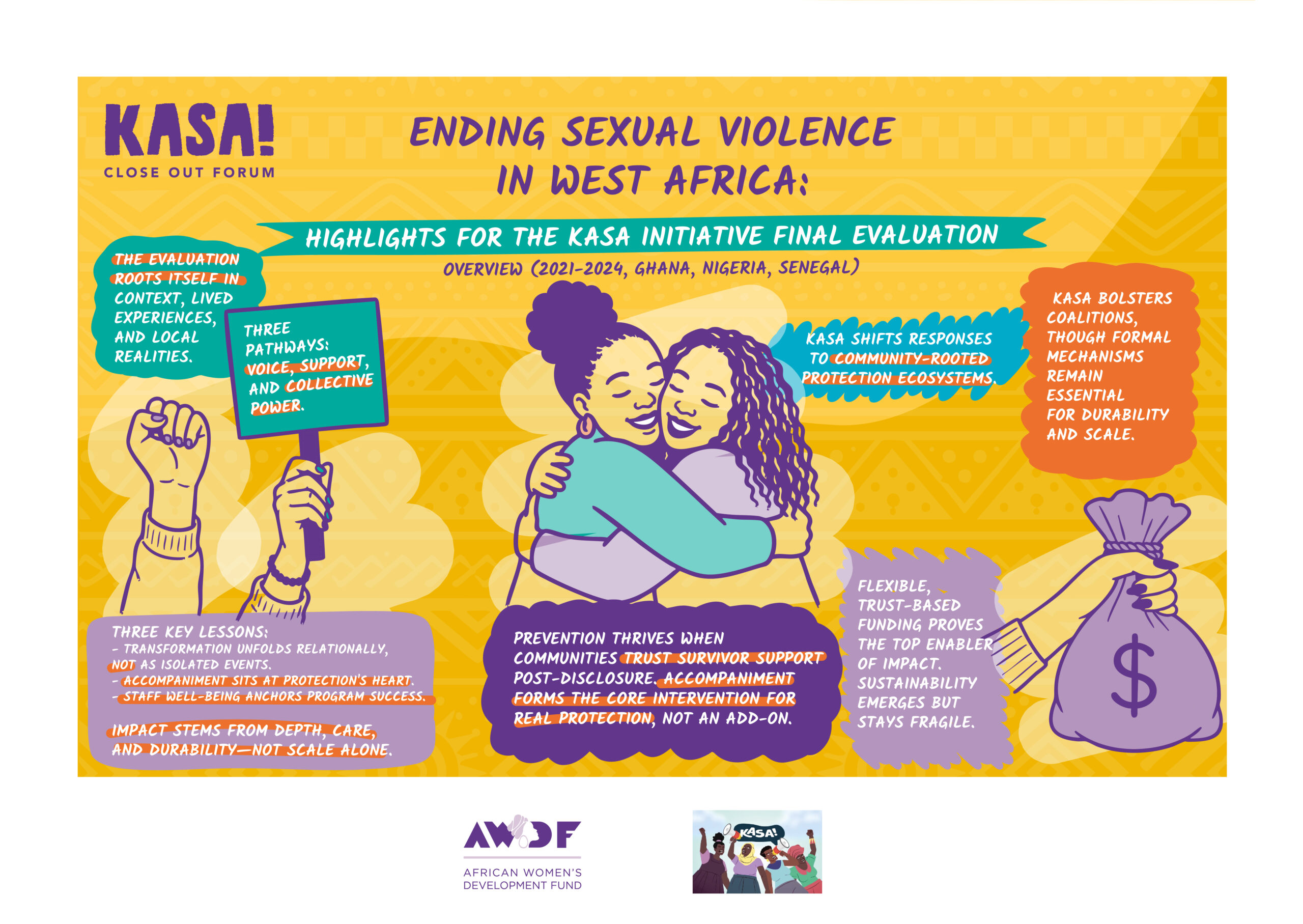
Highlights from the Final Evaluation
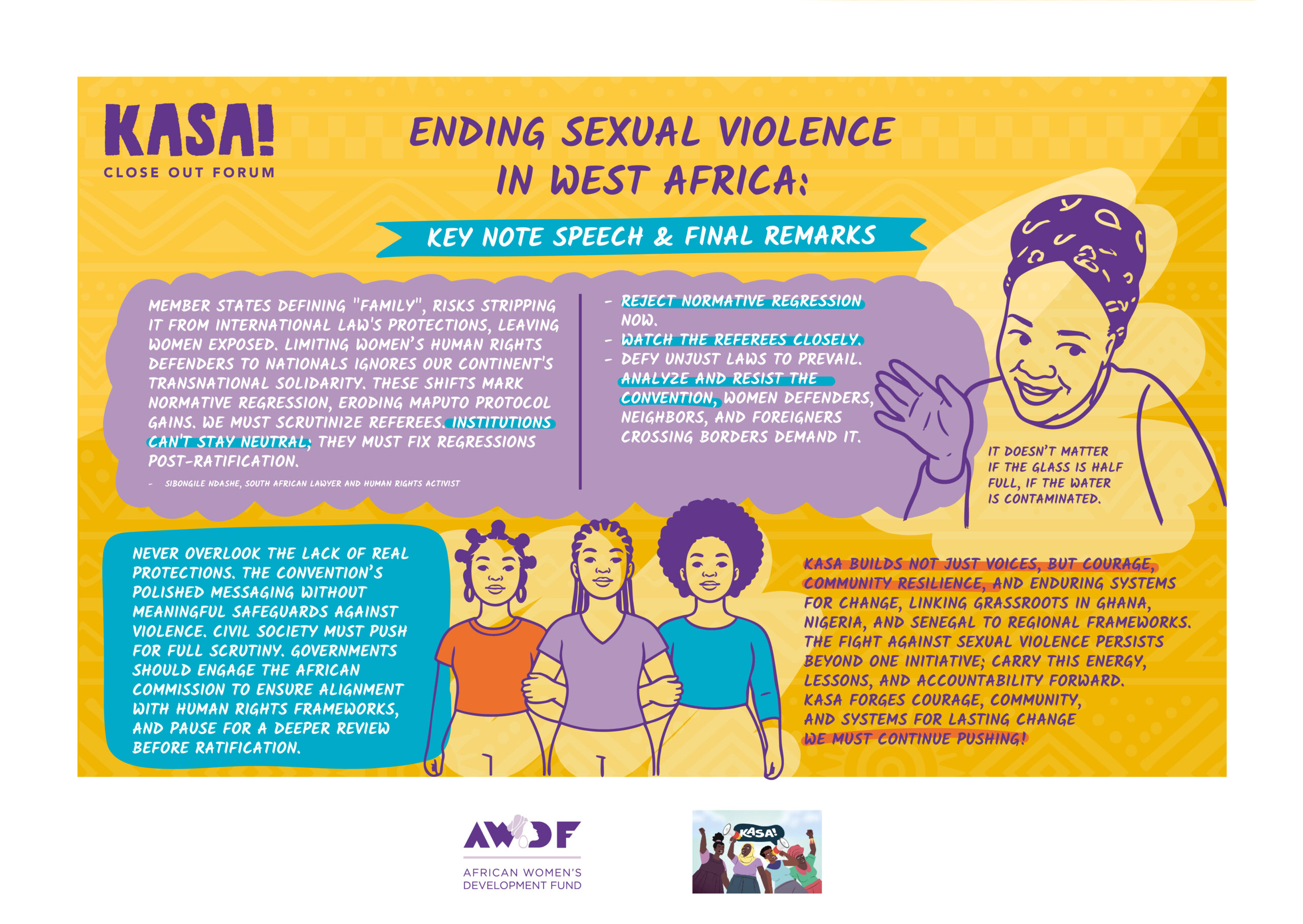
Key Note Speech & Final Remarks
Panel Discussion & Q&A
Previous
Next
Why feminists must not give up on the UN Commission on the Status of Women
Why feminists must not give up on the UN Commission on the Status of Women
As far right works to roll back women’s rights from inside the UN, our participation is more important than ever
When the United Nations’ 70th annual Commission on the Status of Women, the key global body dedicated to promoting gender equality, rights and the empowerment of women, met earlier this month, many of its usual audiences were absent.
This was for a few reasons. First, many feminist activists and organisations feel increasingly disenchanted with the UN. It is disheartening to watch this multilateral institution seemingly unable to preserve peace and stop the genocide and wars ongoing in Palestine, Sudan, Yemen, Ukraine and Iran, to name a few.
The location of the meeting – New York – was also a problem for many. The United States was already inaccessible to many due to its stringent visa restrictions, and it has become even more so with concerns around ICE detainment or illegal deportations, as well as flight disruptions as a result of the US-Israel war on Iran. Many activists rightly question the value of critical meetings being held in a country where the people most impacted by the issues being discussed are unable to bring their concerns to the policymakers and government representatives making life-changing decisions.
And then there is the increasing ‘takeover’ of the UN by far-right actors, an alarm that feminist activists have been sounding for over a decade now.
Far-right civil society actors have steadily ramped up their strategic engagement at the Commission on the Status of Women – not to advance rights for women, but to undo existing protections while claiming to be “empowering women and families”.
Such actors can be highly influential; the US government included The Heritage Foundation, the far-right civil society organisation that authored the Trumpian Project 2025 agenda to roll back reproductive health rights and gender-affirming policies in the US and internationally, in its official delegation to the CSW.
Having previously not been active in negotiating the Agreed Conclusions – a document that describes the commission’s priorities on girls, women, and gender – the US delegation obstructed the process at the final stage, presenting a list of over 90 amendments, comments, and red lines.
Its goal was clearly to disrupt, with a key red line being that so-called “controversial social policies” should not be debated at the UN. While the majority of delegates fortunately did not agree with this stance, the result was that for the first time in its 80-year history, the Agreed Conclusions were adopted by vote, not consensus. In the end, 37 countries voted in favour, six abstained – Côte d’Ivoire, Democratic Republic of the Congo, Egypt, Mali, Mauritania and Saudi Arabia – while only the US voted against.
The far right was present in other ways, too. Just as it has done in previous years, Spanish ultra-conservative advocacy group Citizen Go drove trucks around New York during the commission, emblazoned with messages such as “Stop UN push for abortion worldwide” and “Stop UN push for gener ideology worldwide”. At the same time, its representatives were meeting government delegations at the commission and attempting to influence them to push back on progressive language in the Agreed Conclusions.
Lopa Banerjee, director of the Civil Society Section for UN Women, believes the commission has become “contested” and “polarising”. She warned: “Feminist civil society engagement must be politically astute and strategic in order to navigate this new terrain of geopolitical interests that are playing out as member states negotiate from their positions of national geopolitics.”
As activists, we understand why people feel disenchanted with the UN. We feel the same. But the UN is too important for us to cede ground to the far right, which has already found ways to embed itself in such structures to undo them from the inside.
As Leyla Hussein, a psychotherapist who specialises in supporting survivors of sexual abuse, said: “Attendance at the Commission on the Status of Women is vital, as it remains one of the few global spaces where we can collectively reflect on and shape the status of women.” Beyond preventing anti-rights capture of multilateral spaces, participation at the commission allows feminist activists from all over the world to meet and discuss a wide range of topics relevant to the lives of girls and women.
Hussein, who is the global advocacy director for The Girl Generation, attended this year’s commission to champion the need to dismantle racism in movements working to end Female Genital Mutilation/Cutting. Our own organisations also chose to hold key discussions on the fringes of the meeting. Purposeful, a girl-led activism hub co-founded by Rosa Bransk, a co-author of this article, brought together partners from UNICEF, government representatives and donors to discuss how to meaningfully support and resource adolescent girls as leaders, while The Institute of Journalism and Social Change, co-founded by Nana Darkoa (this article’s other co-author), alongside Noor, a feminist ‘think and do’ tank, held a dialogue with donors and activists to explore how feminist movements can stop progressive funding from flowing to anti-rights actors who work against human rights.
Spaces like the UN have been critical in advancing an international understanding of universal human rights and setting global norms around gender equality and empowerment, which citizens around the world can use as a basis for advocacy with national governments. For this promise to be fulfilled, civil society actors must actively participate in UN processes like the commission, so they can hold their own governments to the commitments they make to gender equality. This also requires governments to sign up to international instruments that set high standards for the protection of rights, the preservation of peace, and human dignity.
As this year’s commission was in session, The Heritage Foundation and other far-right organisations, such as C-Fam (the Center for Family and Human Rights), held a parallel event known as the Conference on the State of Women and Family. This, they said, was “the place to come and find a unique approach to meeting the needs of women and the families they love”.
This is what we are up against. The battle to prevent the rollback of hard-won rights for girls and women around the world is here. The revolution may never take place at the UN, but it must remain an important space for feminists to engage in, as part of our ongoing work to strengthen gender equality around the world.
by NANA DARKOA SEKYIAMAH AND ROSA BRANSKY
Rosa Bransky is a feminist strategist and co-founder of Purposeful, a global hub for girls’ activism rooted in Africa. With a commitment to advocating for girls’ political power, Rosa currently leads initiatives that empower young feminists to access resources and platforms necessary for activism. Previously, they served as an Organizational Development Advisor at Population Service Training Centre, a Project Worker and Trainer at Nacro, and held various roles in research and development at multiple organizations, including Flamingo and Saul Good. Rosa holds a First Class Master of Arts in Anthropology with Development from Edinburgh University, where they continue their studies.
Nana Darkoa Sekyiamah is the author of Seeking Sexual Freedom: African Rites, Rituals, and Sankofa in the Bedroom. Her debut, The Sex Lives of African Women, was an instant classic, lauded by Publishers Weekly as “an astonishing report on the quest for sexual liberation” and named a Best Book of the Year by The Economist. Nana Darkoa is also an award winning podcaster, a festival curator, and the Co-Founder of the Institute of Journalism and Social Change. Her transformative work has earned her international recognition, including a spot on the BBC’s 100 inspirational and influential women list and New Africa magazine’s list of 100 inspirational Africans.
Article from and first published by Open Democracy
Join us on Instagram Live – The Enduring Power of African Feminisms: Celebrating 20 years of the African Feminist Forum
Join us on Instagram Live – The Enduring Power of African Feminisms: Celebrating 20 years of the African Feminist Forum
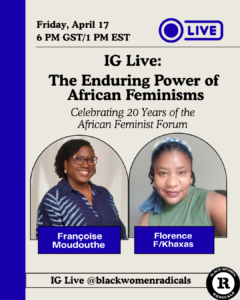
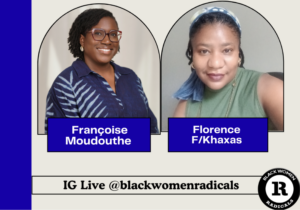 Join the conversation, Watch Live on Instagram , The Enduring Power of African Feminisms: Celebrating 20 Years of the African Feminist Forum hosted by Black Women Radicals featuring Florence F/Khaxas Founder and Executive director of Y-Fem Namibia Trust and Françoise Moudouthe CEO of African Women’s Development Fund.
The IG Live will take place on Friday, April 17 at 6 PM GST/1 PM EST on Black Women Radicals’ Instagram @blackwomenradicals.
About the event: This IG Live dFlorence F/Khaxas and Françoise Moudouthe, steering committee members of AFF 2026, who will discuss what to expect at the forum; why AFF is needed in this contemporary political moment for African and African Diasporic feminists; and the enduring power and imagination of African feminisms.
The African Feminist Forum (AFF) is a regional gathering that brings together African feminist activists to discuss strategy, refine approaches, and develop stronger networks to advance women’s rights in Africa. Created to affirm and uplift the progressive visions and strategies of African feminists, AFF held its inaugural convening in Ghana in 2006, where over 100 African feminists from the continent and across the diaspora gathered to strengthen feminist mobilization. During AFF 2006, the Charter of Feminist Principles for African Feminists was created, which established the collective values of AFF. Since then, AFF has hosted other convenings in Uganda (2008) and Senegal (2010).
Twenty years since the inaugural forum, AFF will convene this year in Windhoek, Namibia from August 10-12, 2026.
Original blog content courtesy of Black Women Radicals
Join the AWDF team as Director of Partnerships and Voice. Apply by 28 April 2026
Join the AWDF team as Director of Partnerships and Voice. Apply by 28 April 2026
The African Women‘s Development Fund is seeking an exceptional feminist leader to join the AWDF team as Director of Partnerships and Voice. This is an exciting leadership opportunity to work at the intersection of resource mobilisation, strategic partnerships, thought leadership, voice and influence.
About AWDF
As a pan-African feminist fund, the African Women’s Development Fund (AWDF) resources, strengthens and upholds women’s rights and feminist organisations and movements across Africa to make gender justice a reality for all on our continent and worldwide. Over the past 24 years, AWDF has awarded approximately USD 100 million to women’s rights and feminist organisations throughout Africa (and in selected Middle Eastern countries through one of our initiatives). Through its grantmaking, programmatic, and advocacy work, AWDF has supported work that has led to changes in law and policy, social norms, narrative, and movement-building for gender justice.
In 2023, building on its strong track record, AWDF launched Lemlem. This strategic framework guides AWDF’s efforts to advance gender justice for girls, women and gender-diverse people across Africa until 2033. At its core, the strategy focuses on resourcing, nurturing and strengthening those best placed to achieve transformative change: African women’s and feminist groups, organisations and movements.
About the role
Reporting to the CEO, the Director of Partnerships and Voice plays a critical role in developing and implementing the vision and direction for AWDF’s strategies and initiatives related to donor partnerships and resource mobilisation, strategic alliances, and external stakeholder engagement, in full alignment with AWDF’s strategic framework.
In close collaboration with the CEO and the Director of Programmes, she/they will represent AWDF on selected platforms, shape AWDF’s thought leadership and institutional voice, and promote AWDF’s visibility.
The Director of Partnerships and Voice will manage a small team whose members work effectively together and with the rest of the organisation on fundraising, donor stewardship, partnerships and advocacy, and communications. As part of the Executive Leadership Team, the Director will contribute to strategic direction and management decisions regarding maintaining a healthy, accountable, and efficient organisation.
How to Apply
All applications for this role are managed by Mission Talent. For more detailed information on this vacancy and to apply please visit https://www.missiontalent.com/openings/awdf-dpv/
Defending Gains, Disrupting Power, Defining Feminist Futures
Defending Gains, Disrupting Power, Defining Feminist Futures
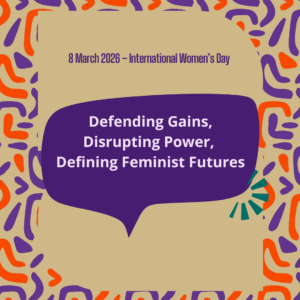
On International Women’s Day we reflect on the current moment facing feminist movements across the continent and outline three key approaches shaping our work with partners across the continent.
In This Article
We are living through a moment of profound global upheaval. Across continents, societies are grappling with intersecting crises: genocides and violent conflicts and humanitarian catastrophes, deepening economic inequality, climate shocks, democratic backsliding, and the increasingly coordinated efforts of anti-rights actors to roll back hard-won gains for gender justice. Recent escalation in the SWANA region further exacerbates suffering and inequality amid polarised geopolitics.
In Africa, these global dynamics intersect with complex regional realities. Conflicts in Sudan, the Democratic Republic of the Congo, and northern Mozambique are displacing millions. From Algeria to Tanzania, increased authoritarianism leads to shrinking civic space and increased restrictions on civil society. From Uganda to Ghana, anti-rights actors are weaponising the legal system to make homophobia institutional. Severe droughts in East Africa and repeated cyclones and floods in Southern Africa are having a devastating humanitarian impact. Everywhere, these crises expose girls, women and gender-diverse people to systemic sexual violence and economic precarity and expose social and gender justice activists to increased surveillance and repression.
For us at the African Women’s Development Fund (AWDF), marking International Women’s Day in such a context is not a vain ritual. It is an act of recognition, remembrance, and profound respect. Today, we honour the women, girls and gender-diverse people who bear the brunt of the polycrisis. We pay tribute to the feminist pioneers who paved the way through decades of resistance. We celebrate the organisers who put their lives and freedoms at risk to shape gender-just futures for generations to come.
25 years of service to the movement
We feel honoured to have journeyed alongside these changemakers for over 25 years. Since 2000, we have awarded over USD 100 million in grants to more than 1,500 organisations and movements advancing gender justice across Africa. Beyond funding, we have contributed to strengthening feminist knowledge, convening spaces for movement dialogue and solidarity, and amplifying African feminist voices in global debates on development, philanthropy and social justice.
In 2025 alone, we awarded over USD 12 million in grants to partners who challenged discriminatory laws, defended bodily autonomy, fostered women’s leadership and political participation, created new spaces for collective power and political participation, and forged cross-border solidarity that redefines power itself. In Zimbabwe, for example, feminist activists are pushing for stronger legal protections and expanding leadership opportunities for women and girls through advocacy and mentorship. In Chad, feminists are mobilising communities to promote women’s leadership, combat gender-based violence, and create new spaces for feminist dialogue. In the Gambia, we continue to support movements fighting against repeated efforts to decriminalise female genital mutilation. These few examples represent a glimpse of a vibrant and determined feminist ecosystem across Africa.
Harsh realities are forcing impossible choices
This year, we particularly commend African feminist activists, organisations and movements for the extraordinary ways they are responding to multiplying disruptions in a rapidly shifting funding landscape. Across the globe, Official Development Assistance is declining or being redirected (ODA to Africa faced 16-28% cuts in 2025 according to the OECD). Meanwhile, philanthropic funding for gender justice remains a small fraction of overall giving. AWID’s ‘Where is the Money?’ report (2025) revealed stark precarity: 28% of feminist organisations had no budget secured for 2025, 46% had none beyond 2026, and 64% could operate for less than 6 months without external funding. Most grants they received remained short-term, project-tied, and restrictive. Such funding models cannot match the scale or urgency of the work feminist movements are undertaking.
Yet even under these pressures, feminist movements continue to organise with remarkable creativity and determination. Many are holding the line, ensuring protection, resilience and survival in the face of repression and crisis. Others are making strategic shifts, moving from reactive programmatic responses to collective and proactive approaches that tackle the root causes of inequality. Across movements, we are also witnessing the recognition of care as infrastructure: organisations are centering wellbeing, collective healing and sustainable organising as essential components of long-term feminist power. African feminist movements are not merely weathering the storm of crisis. In many ways, they are a storm in their own right: a powerful force for change reshaping the political, social and economic futures of their communities.
Yet harsh realities force impossible choices. With limited resources, AWDF partners are having to choose between delivering essential services and advocating for laws and policies, between health and education programmes, or between office rent and staff insurance. Sometimes, funding cuts take away the choice altogether, with the closing of programmes targeting sexual and reproductive health and rights and LBTQI rights, and other issues perceived as contentious.
Defend, Disrupt, Define: How AWDF is meeting the moment
AWDF itself has had to make some difficult decisions in anticipation of funding cuts. We decided to prioritise funding to community-based and marginalised groups, over larger-scale and regional groups. We decided to prioritise grantmaking over some of our other flagship knowledge-building or solidarity-building programmes, and to channel our non-grantmaking programming through the work of the African Feminist Forum. Most critically, we choose depth over scale: resourcing fewer movements more impactfully, because true power builds from strong roots.
We are deepening, not contracting, our work through the bold 3D framework which will guide how AWDF will implement its Lemlem strategy in the next few years. Through our grantmaking, movement-strengthening and thought leadership work, we plan to resource and accompany our partners to:
- Defend hard-won gains, by resourcing and nurturing feminist movements to sustain their impact, to protect and secure human rights, to oppose the backsliding of feminist wins, and sustain the core infrastructure of African feminist movements. This includes expanding resources for feminist groups in underfunded linguistic and geographic contexts, including Portuguese-speaking countries, and strengthening support for feminist responses in crisis and conflict settings.
- Disrupt oppressive ecosystems, by challenging and transforming the narratives, behaviours and practices that hinder feminist movement’s impact, safety and sustainability, thus creating a healthier and more supportive environment for gender justice in Africa. Because disruption cannot happen in isolation, AWDF is working alongside other feminist funds including through the Leading From the South consortium, the pan-African Komboa alliance to counter the anti-backlash, and the First Response Fund, and renewing its partnership with the Equality Fund. At a time when competition for shrinking resources is intensifying, choosing collaboration and solidarity is itself a powerful act of disruption.
- Define visionary futures, by catalysing and supporting innovative, long-term initiatives and providing spaces and opportunities for movements to think beyond resistance and lay the grounds for the feminist realities we want to see in the future. The African Feminist Forum is one of the key spaces for co-creating these futures through strategy sessions and knowledge archives, and we look forward to collectively articulating the feminist futures we want to build when we meet in Namibia in August 2026.
As AWDF Chief Executive Officer, Françoise Moudouthe affirms, “With this 3D framework, AWDF turns crisis into an opportunity to resource African feminists not just to survive, but to lead the long-term transformation we all need. This strategic evolution, shaped by movement wisdom, makes us more impactful, even as we are made to operate at a smaller scale.”
In this moment of adversity, we extend deep gratitude to funding partners who have stepped forward with top-up funding, additional flexibility and decreased restrictions. We call on all funders who care about gender justice to fund more and ease the bureaucratic restrictions and risk-averse approaches that hamstring our collective impact. Gender justice can only be achieved if the movements that champion it are provided the space to thrive and innovate, not asked to survive on fragmented, short-term and risk-averse funding models.
As Nana Zulu, AWDF’s Director of Programmes, reminds us, “feminist organising thrives when funding prioritises people, care, safety and collective resilience, and when philanthropy stands firmly with feminist movements even when it appears risky or unpopular. As a feminist fund rooted in African feminist movements, AWDF is committed to deepening long-term support, centering trust over control and adapting to the evolving realities of feminist movements across the continent.”
Especially when funding through women’s and feminist funds, donors should provide multi-year and flexible funding that allows us to resource our partners strategically, not pass on excessive requirements and restrictions. This moment requires supporting programmes, but also to invest in movements’ safety, resilience, healing and infrastructure. It requires philanthropy to stand firmly against anti-rights forces, not shy away from funding politically inconvenient issues.
This is not a call to charity. It is a reminder of our collective responsibility.
On this International Women’s Day 2026, we call on governments, philanthropy and the international development community society to match the courage, urgency and imagination that African feminist movements demonstrate every day. The future of gender justice will be shaped not only by those who resist injustice, but by those who choose to resource that resistance.
Call for African feminist consultants to support movement accompaniment and strengthening. Apply by 20 March 2026
Call for African feminist consultants to support movement accompaniment and strengthening. Apply by 20 March 2026
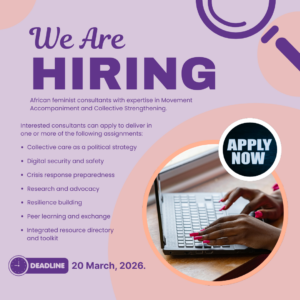
In alignment with the African Women’s Development Fund commitment to flourishing, we have identified key pathways for movement accompaniment and invite African feminist consultants to support us.
We are calling on you to apply for one or more of the following assignments. Each requires a distinct thematic expertise, facilitation modality and level of engagement.
1. Collective care as Political Strategy: A two day workshop shifting care from individual burden to radical, systemic organizational practice, framing wellbeing as a primary defense against backlash.
2. Digital security and Collective Safety: A four- day in-person training building practical digital security and data protection skills; developing organizational Digital Security Protocols and Cyber Harassment Response Plans.
3. Crisis Response and Preparedness training: A four-day Feminist crisis response and communication preparedness for organisation facing political, digital or reputational threats.
4. The Research and Advocacy Teach-In: A five-day in person retreat designed as a strategic forge where feminist research meets political action. Here, we will equip partners to transform their lived evidence into the narratives and power required to shape to collective futures. Feminists operating in French and Portuguese speaking contexts.
5. Peer Learning Exchange Programme: Six-month online journey monthly facilitated peer learning circles feminist governance, resource mobilisation, digital security collective care and advocacy.
6. Resilience building Accompaniment: Six -month online programme. A cyclical journey of learning covering advocacy in hostile spaces collective care and developing organisational Resilience Action Plans.
7. Integrated resource directory and Toolkit: a living and accessible ecosystem of practical tools, contextual knowledge and peer connections designed to strengthen the operational resilience and strategic response capacity of French and Portuguese speaking women’s rights movements.
Application Process
Interested practitioners should submit
1. Technical Expression of Interest ( detailing methodology and pathway(s) for movement accompaniment).
2. Financial Proposal
Send you applications to Consultants@awdf.org by 20th March, 2026.
For more details, find out more in the Terms of Reference.
African Women’s Development Fund, Urgent Africa Fund- Africa and Fonds pour les Femmes Congolaises launch #NoToBacklash campaign supporting the collective resistance of women’s rights and feminist movements in Africa
African Women’s Development Fund, Urgent Africa Fund- Africa and Fonds pour les Femmes Congolaises launch #NoToBacklash campaign supporting the collective resistance of women’s rights and feminist movements in Africa
Across Africa, feminist and women’s rights movements are facing a threat that is organised, funded, and deliberate. It is not simply isolated pushback, it is a deliberate coordinated effort to roll back decades of progress on gender equality and African feminist resistance. This backlash is a daily reality for women’s rights and feminist movements.
Even with this sustained backlash, every day, feminist movements are choosing not to go silent.
They are organising under pressure. They are standing with survivors when institutions fail them. They are demonstrating courageous leadership even in the most restricted spaces.
They are not retreating. They are resisting.
African Women’s Development Fund (AWDF), Urgent Action Fund Africa, and Fonds pour les Femmes Congolaises have launched the #NoToBacklash campaign. A bold, collective response to the rising wave of anti-rights movements across Africa.
We are backing feminist organising across ten countries. We are investing in the leaders who already know what their communities need. And we are making the case that feminist funding is not a nice-to-have, it is how lasting change is built. Feminist organising is not a trend. It is how communities survive. We will not go back.
We stand at a crossroads. Down one path lies regression, silence, and the systematic erasure of decades of progress.
Down the other lies a future where gender justice isn’t just an aspiration, it’s a lived reality for every person across Africa.
Join the campaign
Whether you’re a funder, activist, ally, or organisation, join us in saying No to Backlash. Let’s build a continent where feminist resistance is unstoppable and gender justice is non-negotiable.
Add your voice, join the #NoToBacklash campaign
Share your solidarity using #NoToBacklash.
Follow us on social media
Facebook: African Women’s Development Fund
LinkedIn: African Women’s Development Fund
X: @Awdf_01
Instagram: @the_awdf
As we call for #NoToBacklash, visit the campaign webpage : HERE
Re- advertised: Exciting opportunity for African feminists to lead Monitoring, Evaluation and Learning. Apply by 20 February.
Re- advertised: Exciting opportunity for African feminists to lead Monitoring, Evaluation and Learning. Apply by 20 February.
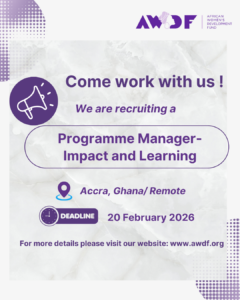
Are you experienced in leading the design and implementation of a monitoring, evaluation and learning strategy, ensuring that the evidence learning and reflection strengthen feminist grant making; accountability to movements doors and stakeholders and strategic decision-making?
Are you experienced in working to drive internal and external learning, impact documentation and contribute to thought leadership grounded in rigorous evidence and grant making experience?
Are you ready to lead a dynamic team providing technical MEL expertise, programme leadership, strategic operational leadership and people and relationship management?
Then the African Women’s Development Fund has an exciting opportunity for you. Learn more about the Programme Manger – Impact and Learning role HERE.
Job Summary
The Programme Manager- Impact and Learning leads organisational learning, evidence generation and feminist impact leadership. The Manager will work to champion a culture of reflection and accountability that stregthens internal practice and amplifies AWDF’s influence across the philanthropic ecosystem . The Manager will work to drive internal and external learning, impact documentation and contribute to thought leadership grounded in rigorous evidence and grant making experience.
Reporting to the Director of Programmes, the Programme Manager – Impact & Learning leads the design and implementation of AWDF’s Monitoring, Evaluation and Learning (MEL) Strategy, ensuring that evidence, learning and reflections strengthen feminist grantmaking ; accountability to movements, donors and stakeholders; and strategic decision-making. The role combines technical MEL expertise, programme leadership and relationship management. The role also plays a management role providing strategic operational leadership to the impact and learning functional area.
Please follow this link to apply for the position
Applications must reach AWDF no later than 20 February 2026.
In line with AWDF’s Mission, qualified African women and gender-diverse persons are encouraged to apply.
Join our team as Impact and Learning Specialist. Deadline extended to 23 January.
Join our team as Impact and Learning Specialist. Deadline extended to 23 January.
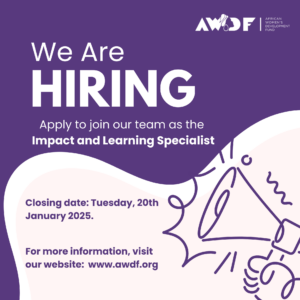
Are you interested in leading and contributing to Impact and Learning work in a pan-African feminist fund. This opportunity may just be right one for you. Application submissions have been extended to 23 January 2026. Read more about the position HERE.
As a Pan-African feminist fund, the African Women’s Development Fund (AWDF) resources, strengthens and upholds women’s rights and feminist organisations and movements across Africa to make gender justice a reality for all on our continent and worldwide. Through its grantmaking, programatic and advocacy work, , AWDF has supported work that has led to changes in law and policy, social norms, narrative, and movement-building for gender justice.
Role overview
We seek an Impact and Learning (I&L) Specialist on a consultancy basis to support the management of external end of project evaluations and impact documentation processes including data, story collection and dissemination. The Specialist will work alongside two I & L Officers and work collaboratively in support to the programs team and wider AWDF team. The role will report to the Director of Programmes.
Scope of Work
The successful candidate will;
- Lead and manage baseline, midline and enplane evaluations including drafting terms of reference, overseeing consultants and ensuring methodological rigor.
- Coordinate evaluation logistics, sampling, data collection, quality checks and analysis and ensure that evaluations generate clear and actionable insights for programing.
- Facilitate collaborative interpretation of evaluation findings with stakeholder including grantees.
- Support the documentation of impact stories, case studies, lessons learned and best practices.
- Lead the production of learning briefs, synthesis papers and presentations for dissemination to partners, donors, internal teams and the board.
- Lead the development and updating of monitoring, evaluation and learning (MEL) frameworks including theories of change, results frameworks, indicators and MEL plans.
- Lead the design and refining of data collection tools, and methodologies and protocols to ensure high quality and consistent data.
- Coordinate the development of MEL guidelines and instruments for internal and external stakeholders
- Support the development of the AWDF MEL framework to track the implementation of the strategic plan, Lemlem.
- Support project close out and documentation processes including data repository.
- Contribute MEL expertise for the development of project proposals and internal and external reporting requirements (board, donor, project reports, etc.)
Application Process
Interested applicants can find out more details about the job and submit their cover letter and application not later than Friday 23 January 2026 HERE.
In line with AWDF’s Mission, qualified gender diverse persons are encouraged to apply.
Please note that only shortlisted applicants will be contacted