
Author: Isatou
Breaking the Silence: Restoring Hope for Survivors of Sexual Violence in Northern Ghana
Breaking the Silence: Restoring Hope for Survivors of Sexual Violence in Northern Ghana
In the quiet corners of northern Ghana, where cultural silence often shrouds the suffering of sexual violence survivors, 23-year-old Rahina AbdulRahaman found the courage to speak out. Her story represents the transformative impact of organisations like Savannah Integrated Women’s Development Agency (SWIDA-GH), dedicated to healing the wounds that society often prefers to ignore.
Rahina AbdulRahaman was 8 years old when she was sexually abused by a family friend. The perpetrator used gifts and threats to maintain secrecy. “I was always left under his care because my parents trusted him,” AbdulRahaman recalls. “I was in pain all the time, but I could not tell anyone.”
She did not disclose the abuse to her parents or friends. Years later, at 23, she enrolled in the Female Leadership and Mentorship Academy cohort 4 program by SWIDA-GH, where she met Hajia Alima Sagito.
SWIDA-GH is a dynamic women-led organisation dedicated to advancing gender equality, economic empowerment, justice for women, and social justice in society. The organisation is established to bridge the gap between the government and underserved communities. SWIDA-GH works within rural, peri-urban, and urban communities, focusing on empowering women, youth, and persons with disabilities. One of its key areas of work is combating sexual and gender-based violence (SGBV) through advocacy, education, and support services.
“We do a lot of sexual and gender-based violence work to ensure that young people, women, and persons with disabilities live to their fullest,” says Hajia Alima Sagito Saeed, Executive Director of SWIDA-GH.
Through conversations, AbdulRahaman was informed about the KASA! initiative by the African Women Development Fund (AWDF), a funding partner of SWIDA-GH.
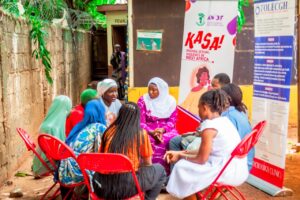
KASA, which means “speak out,” has supported organisations in Ghana, Senegal and Nigeria, implementing various interventions to combat sexual violence. It was launched by AWDF with the Ford Foundation and Open Society West Africa.
To combat sexual and gender-based violence, SWIDA-GH conducts workshops and campaigns in rural communities to raise awareness about sexual violence, consent, and women’s rights. The organization engages traditional leaders, religious figures, and men as allies in preventing SGBV. They use radio programs to educate communities on gender-based violence (GBV) laws and reporting mechanisms.
For legal support and advocacy, SWIDA-GH collaborates and partners with Ghana Police’s Domestic Violence and Victim Support Unit (DOVVSU) to improve survivor protection. The organization organizes youth and school-based programs to educate schoolgirls on sexual rights and how to report abuse. They also train teachers to identify and respond to signs of sexual violence among students.
The project lead of SWIDA-GH, Madam Juliet Wepaare Ako, who is excited about SWIDA’s progress in combating sexual and gender-based violence, added that the organisation has five safe spaces where survivors can comfortably come to share their stories.
“We have five safe spaces that have been provided, and this is a huge thing for us because we are gradually changing people’s perception on speaking up and getting support. Having vantage points in the communities where people can comfortably walk in and get support is significant for us. Aside from that, Total Life Enhancement Centre Ghana (TOLECGH) is also on the ground. When we get people who need support, we refer them to TOLECGH.”
During a group session, AbdulRahaman shared her truth for the first time and was later referred to SWIDA’s counseling partners, TOLECGH, who helped her understand what she was going through and that it was never her fault.
In 2021, with strategic funding from AWDF, SWIDA-GH, led by Hajia Alima Sagito Saeed, formed a groundbreaking collaboration with TOLECGH, a Tamale-based mental health organisation specialising in psychosocial and trauma-informed services.
Peter Mintir Amadu, Clinical Health Psychologist and Executive Director of TOLECGH, explains the synergy: “SWIDA provides safe space and community trust. We bring evidence-based therapeutic interventions. Together, we’re creating a model for holistic survivor care.”
Empowered, Rahina began sharing her story to break the culture of silence. Though healing is a process and not easy, she found strength in her voice. Thanks to the innovative partnership between SWIDA Ghana and Total Life Enhancement Centre (TOLECGH), survivors like AbdulRahaman are finding pathways to psychological healing.
The partnership between SWIDA-GH and AWDF has been transformative for survivors like AbdulRahaman. “Before the funding, we were just mainstreaming activities, but when we got the funding, we became intentional and picked it up as a whole project, reaching out to more people,” Hajia Alima Sagito explains.
The story of SWIDA-GH is still being written, and it needs more hands on deck to help support and empower more survivors. Funds from AWDF go into ensuring that survivors receive immediate medical attention and long-term counseling, provide free legal representation to help survivors navigate court processes, offer skills training and grants to break the cycle of poverty, and conduct GBV workshops in schools and villages, challenging harmful norms and encouraging reporting.
***
This is a commissioned feature story by Agnes A. Attoh (Ewurama), a Journalist based in Ghana.
End the impunity: Standing together against conflict related sexual violence in Africa
End the impunity: Standing together against conflict related sexual violence in Africa
International day for the elimination of sexual violence in conflict
Across Africa, from Sudan, South Sudan, Liberia, Rwanda, Sierra Leone to the Democratic Republic of Congo, armed conflicts are marked by gross forms of sexual violence including mass rapes, sexual slavery, abduction for sex, and child and forced marriages. These atrocities disproportionately affect women, girls and gender-diverse people, with devastating impacts that go far beyond the duration of the conflict.
Join Us for A Critical Conversation
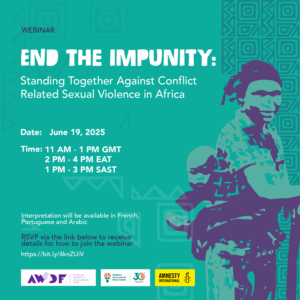
In commemoration of the International Day Against Sexual Violence in Conflict, AWDF is partnering with women’s rights defenders, frontline activists and organisations to draw the attention of funders, the global community, researchers and policy makers. This webinar will shine a light on the need for survivor protection and sustained advocacy, reparations for survivors and solidarity in the quest to end sexual violence in Africa’s conflict zones.
Date: June 19, 2025
Time: 11 am GMT| 1pm SAST| 2pm EAT
The webinar is aligned with the African Union’s 2025 theme, “Justice for Africans and People of African Descent through Reparations,” which addresses the continent’s ongoing conflicts rooted in colonial legacies; and the 25th anniversary of UN Security Council Resolution 1325 on Women, Peace, and Security, particularly relevant as Africa continues to face conflict-related sexual violence, where violence is used as a weapon of war.
Interpretation will be available in French, Portuguese and Arabic.
Let us break the silence. Stand in solidarity with women, girls and gender-diverse persons in conflict.
Join our Funding Application Webinars
Join our Funding Application Webinars
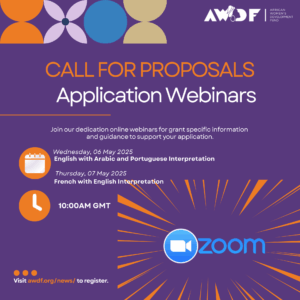
Join our dedicated webinars to receive comprehensive information and guidance on the application process, eligibility criteria, and expert tips to inform your applications.
Scheduled sessions:
6 May, 2025 | 10:00 am GMT: English webinar with Arabic and Portuguese interpretations.
Register – https://bit.ly/3GFmqo4
7 May, 2025 | 10:00 am GMT: French webinar with English interpretation
Register – https://bit.ly/3YEddD1
More on our current funding cycle here.
Collective Action Against Sexual Violence: KASA! Initiative Partners’ Covening in Northern Ghana
Collective Action Against Sexual Violence: KASA! Initiative Partners’ Covening in Northern Ghana
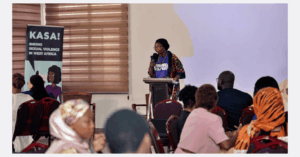
Tamale,: In Ghana, like many other countries, sexual violence remains a particularly prevailing and complex issue often shrouded in silence. Nearly one in four women in Ghana between the ages of 15 and 49 experience some form of violence during their lifetime.
To support the ongoing efforts to address sexual violence, the African Women’s Development Fund (AWDF) under its KASA! Initiative and in partnership with Savannah Women Integrated Development Agency (SWIDA) under the powerful theme “Dreaming, Speaking Out, and Acting Collectively Towards a World Free of Sexual Violence” gathered grantees, partners, and advocates for a transformative convening at the Modern City Hotel. The event, held on Wednesday, March 26, 2025, brought together voices from civil society, government, traditional leadership, and digital activism to strategise on ending sexual violence in communities across Ghana and beyond.
The convening emphasised three critical priorities: the need for collective action, amplifying survivor voices, and strengthening institutional responses to sexual violence.
Setting the tone of the convening, Hajia Alima Sagito-Saeed, the Executive Director of SWIDA emphasised the need for unified efforts to dismantle systems that perpetuate sexual violence.
“This convening is not just about dialogue; it is about action. We must dream boldly, speak unapologetically, and act decisively to protect women’s rights,” she stated.
She highlighted SWIDA’s grassroots initiatives, including community education programs and survivor support networks, which empower women to break the silence around sexual violence.
In her opening remarks, Gifty Ayebea Adem, AWDF Programme Officer highlighted the initiative’s work in empowering survivors and strengthening community-led responses to sexual violence.
“Sexual Violence continues to rob lives, dreams and dignity across societies and we cannot continue to watch on. We recognize that sexual violence is shrouded in silence often due to social, cultural and religious norm practices. This impedes prevention and response,” stated Gifty Ayebea Adem.
Stressing the importance of grassroots mobilisation, Gifty highlighted: “When women and girls are safe, our communities thrive. KASA is committed to ensuring that no survivor stands alone. We also hope to foster stronger partnership among us and to see inspiring post-convening interventions.”
KASA, which means “speak out,” was launched by AWDF with the Ford Foundation and Open Society West Africa with a seed fund of $3,750,000.00 to support sexual violence interventions in Africa. The KASA initiative has supported 45 organisations in Ghana, Senegal and Nigeria, implementing various interventions to combat sexual violence.
Hajia Alhassan Bushira, representing the Ministry of Gender, Children, and Social Protection, commended the organizers and reinforced the government’s role in policy implementation and legal frameworks. She underscored the importance of engaging men and boys in prevention efforts: “We have to engage the male groups, because sometimes they feel they have the right to abuse women, and they say this out of ignorance so when you engage them at the community level, I think we will be making a headway.”
Traditional leaders, particularly in Northern Ghana, play a vital role in challenging harmful cultural practices. Queen Mother Bridgetwurche Barichisu Mankir reiterated the critical role of traditional leaders in addressing sexual violence. “Culture should not be an excuse for abuse,” she asserted. She shared how queen mothers in Northern Ghana are working to end harmful practices such as child marriage and advocate for survivor-centered justice.
Beyond the physical spaces, the digital landscape offers both opportunities and challenges in combating sexual violence. Social media influencer Addy Kehinde Hussanat explained how online platforms can amplify survivor voices while calling for stronger protections against online gender-based violence. She noted: “By sharing stories, we challenge victim-blaming narratives and hold perpetrators accountable.”
Hussanat also acknowledged the risks of online harassment and called for stronger protections for women who speak out. “We need tech companies and policymakers to take online gender-based violence as seriously as physical violence.”
The highlight of the program was during the two-part panel discussions where panelists demanded policy reforms and traditional leader engagement to combat impunity for perpetrators.
The panelists agreed that ending sexual violence requires a multi-stakeholder approach. Key recommendations included:
- Ensuring laws against sexual violence are enforced with accessible justice for survivors
- Engaging men, boys, religious and traditional leaders as allies in prevention
- Promoting women’s financial independence to reduce vulnerability to abuse
- Leveraging digital platforms for awareness while combating online harassment
- Expanding psychological support services for survivors
AWDF reaffirmed the organisation’s commitment to funding women-led and feminist movements across the continent and prioritising their leadership as they drive the most impactful change.
This is a commissioned article by Agnes A. Attoh (Ewurama), a Journalist based in Ghana.
Consultancy Opportunity: Programme Evaluation of the KASA! Initiative
Consultancy Opportunity: Programme Evaluation of the KASA! Initiative
The African Women’s Development Fund (AWDF) and its project partners seek independent evaluation consultants to evaluate the implementation of the KASA! Initiative which supports sexual violence prevention and advocacy interventions in Ghana, Nigeria and Senegal and at regional levels. The evaluation will be used to inform the necessary adjustments or changes for the remainder of the initiative as well as to inform and improve the development of future programming, including grant-making support to our partners, advocacy strategy and stakeholder engagement. The evaluation is expected to be carried out in 3 months, from June to August 2025.
Scope of Work
In line with AWDF’s strategic priorities, AWDF is commissioning a mid-term review of the KASA! Initiative, which is just past halfway through the initial five-year contract. The programme evaluation will cover the implementation period from June 2021 to December 2024. KASA! The initiative has supported 45 women’s rights and feminist organisations (24 in Nigeria, 12 in Ghana and 9 in Senegal) since June 2021. The duration of the evaluation is 3 months. The deliverables include an inception report, data collection, analysis and reporting, two validation workshops and final delivery of the evaluation report including a slide set and infographic.
Qualifications and Experience Required
The call is open to individuals or teams of consultants led by women or gender-diverse persons in Africa, preferably Ghana, Nigeria and/or Senegal, with the following required skills and experience:
- Hold a graduate degree in Social Sciences or related studies
- Have at least 8 to 10 years of work in the Global South towards promoting and protecting human rights and gender/social justice
- Demonstrated experience working in the area of sexual violence in Senegal, Ghana and Nigeria and/or across Africa
- Demonstrated experience in designing and carrying out evaluations for large multi-actor programmes, using Feminist MEL and related evaluation approaches
- Experience in evaluating similar programmes in the three focus countries and/or regions in the Global South
- Proficiency in written and spoken English and French
- English and French writing skills and report-writing experience.
- Commitment to AWDF’s values of feminist leadership, accountability, diversity, respect and solidarity
- Demonstrate excellent interpersonal skills and a flexible attitude
- We will prioritise applicants based in Ghana, Nigeria or Senegal.
How to Apply
Please submit the following as part of your application:
- Profile, capability statement and CVs of the consultant(s) presented to carry out the MTR
- Proposed evaluation plan, including a work plan and budget. This budget should include the estimated consultancy fee for the entire assignment in United States Dollars, supported by an appropriate breakdown analysis of fees plus a detailed estimated travel budget.
- Overview of similar work and assignments undertaken
- 3 references
to consultants@awdf.org by 17 April 2025. Email subject header: Consultancy, MTR Kasa! Initiative
Download the terms of reference for more information.
From artivism to government lobbying: Shifting the needle in ending FGM
From artivism to government lobbying: Shifting the needle in ending FGM
“Back then, I was a small girl and they took us to older girls who had undergone FGM. They used tricks on me. I was told I would grow a tail if the clitoris was not removed. I believed them… It turned out to be a very painful ordeal,” Khaltuma, Anti Female Genital Mutilation (FGM) champion in Kenya says recalling the fear, the pain, the sense of violation.
According to the 2022 Kenya Demographic and Health Survey (KDHS), the prevalence of FGM in Kenya is 15% among women aged 15-49 years. Horn of Africa institute (HAI) an organisation working in Kenya on Sexual reproductive Health and Rights, Gender and Social Inclusion, Climate Change amongst others has been working with girls and women like Khaltuma through concerted efforts to end FGM.
To contribute to the eliminate of FGM HAI is using mutiple strategies to drive change in the community. According to Pascalina Nthamba, Program Manager at HAI the organisation is actively lobbying the Isiolo County government and other stakeholders to develop an Anti-FGM policy and establish a safe house for survivors of FGM and other forms of gender-based violence (GBV). “Our formal commitment, to be read on Zero Tolerance Day for Ending FGM 2025, will hold both national and county governments accountable for their efforts in combating FGM,” she said.
Through the POWER project, the organisation is also training women leaders on protecting girls from FGM/C and providing psychosocial support to survivors in schools to aid in their trauma healing process.
As efforts to end FGM continue to evolve a crucial aspect of the work at HAI has been the involvement of men and boys. Through this action HAI has trained and commissioned ten community male champions as anti-FGM change agents to support prevention, response, and reporting efforts.
Although work on legal frameworks and lobbying remains central in this fight, HAI has also fused art with activism offering an innovative approach which deeply resonates with community engagement. “We utilise “Artivism”—employing arts and culture, including dance, skits, and traditional songs to convey sensitive messages to the community and educate them about the negative effects of FGM.”
On this International Day of Zero Tolerance FGM, HAI is sending a message of of urgent action and unwavering hope. FGM is a grave violation of human rights, a brutal practice that inflicts lifelong physical and psychological harm on girls and women. It’s a practice rooted in harmful traditions, but tradition is not an excuse for abuse. We must collectively shatter the silence surrounding FGM and amplify the voices of survivors. My hope lies in the growing global movement of activists, communities, and governments working tirelessly to end this practice. But hope is not enough. We need concrete action: stronger laws, effective enforcement, community-led initiatives, and accessible support services for survivors. Let us move beyond tolerance and embrace a world where every girl is safe, valued, and empowered to reach her full potential. Let’s make FGM a practice of the past, not the future,’’ Nthamba says.
Some of the key lessons learnt from implementing work on FGM in Kenya include
- FGM is deeply embedded in cultural practices and beliefs. Efforts to address it must be approached with sensitivity and respect for cultural contexts. Understanding the specific reasons behind the practice in each community is crucial for developing effective strategies. Condemnation and judgment are counterproductive; dialogue and collaboration are key.
- Sharing the stories of survivors can be incredibly powerful in changing hearts and minds. When people hear firsthand accounts of the pain and suffering caused by FGM, it can create empathy and motivate action. However, it’s vital to ensure that survivors share their stories on their own terms and with their full consent, and that they receive adequate support.
- While FGM is primarily a practice that affects girls and women, men play a critical role in perpetuating it. Engaging men as allies and advocates in the fight against FGM is essential for achieving lasting change.
- Ending FGM requires a multi-sectoral approach. Collaboration between governments, NGOs, community-based organizations, healthcare providers, law enforcement, and other stakeholders is essential for creating a comprehensive and effective response.
- While the fight against FGM is a long and challenging one, it’s important to celebrate the progress that has been made. Recognizing and celebrating successes can help to maintain momentum and inspire further action.
In order to put an end to the persistence of FGM in the country more support is still needed to accelerate efforts to end FGM. HAI recommends the following:
- More robust data on FGM prevalence, trends, and the effectiveness of different interventions is needed to inform evidence-based strategies.
- Working with communities to establish reporting mechanisms and support and localized referral systems for survivors can help improve law enforcement effectiveness.
- Supporting community-led dialogues and sensitization through chief ‘Barazas’(public meetings) campaigns that address the root causes of FGM and promote positive social norms.
- Supporting advocacy efforts to strengthen policies, advocating for investment in the development and implementation of culturally appropriate alternative rites of passage that celebrate girls’ transition to womanhood without resorting to FGM.
- Providing economic opportunities and education for women and girls can empower them to make their own choices and resist pressure to undergo FGM.
- Sharing best practices and lessons learned between different communities and countries can help accelerate progress to end FGM.
- Implementation, enforcement, strengthen and harmonization of National anti-FGM laws and advocating for county-level laws.
- Capacity Building for Law Enforcement, training police officers, prosecutors, paralegals and judges on FGM-related laws and procedures is essential for effective prosecution of perpetrators.
***
The contents of this article are from Horn of Africa institute (HAI), an AWDF grantee partner working in Kenya supported under the Leading from South.
Influencing communities to end FGM in Ebonyi and Cross River Nigeria
Influencing communities to end FGM in Ebonyi and Cross River Nigeria
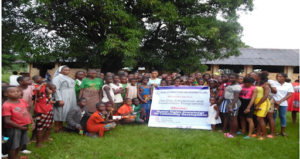
Despite progress, FGM remains prevalent in Nigeria, violating the rights of women and girls. A 2023 report by the Spotlight Initiative to End Violence Against Women and Girls states that FGM affects 8% of girls aged 0–14 in Nigeria, highlighting the need for continued action.
FGM persists in southeastern and south-south states like Imo, Ebonyi, Ogun, and Osun. In Cross River, it continues in secrecy. Northern regions, including Fulani, Hausa, Kanuri, and Tiv communities, report lower cases. However, Nigeria remains burdened by FGM due to deep-rooted traditions.
Ongoing Efforts to Combat FGM
The Community Welfare and Social Initiative (CWSI) has led efforts to eliminate FGM in Nigeria. Over the past three years, CWSI has implemented projects funded by the African Women’s Development Fund (AWDF), such as “Ending FGM/Cutting and Early Marriage,” which successfully influenced communities in Ebonyi and Cross River to abandon the practice. The Ekajuk Kingdom in Ogoja even enacted customary laws banning FGM.
While CWSI no longer runs an exclusive FGM project, it integrates anti-FGM campaigns into broader programs addressing gender-based violence, human trafficking, and human rights. The inclusion of FGM bans in the customary laws of Obanliku is a testament to this effort. CWSI is also training community advocates to sustain change.
Key Lessons Learned
Through years of engagement and advocacy CWSI has gained valuable insights into the fight against FGM. Their experiences working in and through communities has shown them that:
- Engaging communities fosters acceptance and abandonment of FGM.
- Customary laws help regulate behavior and sustain change.
- Empowering women and girls strengthens advocacy efforts.
- Successful interventions must be scaled and replicated.
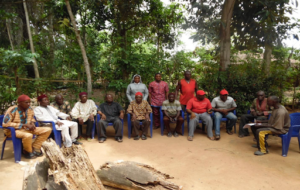
Accelerating Efforts to End FGM
To accelerate progress, CWSI emphasizes:
- Community education on FGM’s harmful effects
- Policy reforms with support from older generations
- Grassroots funding for women-led organizations
- Alternative rites of passage to replace FGM
The fight against FGM continues, but progress made by organizations like CWSI offers hope. By amplifying survivors’ voices, empowering communities, and advocating policy changes, we can work toward a future free from FGM. Let’s renew our commitment to ending this practice.
Sources:
- UNICEF: https://www.unicef.org
- Spotlight Initiative: https://www.spotlightinitiative.org
***
The contents of this article are from Community Welfare and Social Initiative (CWSI) , an AWDF grantee partner in Nigeria supported under the Leading from South initiative.
From creating safe spaces to challenging traditional norms on FGM in Uganda: A Focus on Kitabu Integrated Development Association
From creating safe spaces to challenging traditional norms on FGM in Uganda: A Focus on Kitabu Integrated Development Association
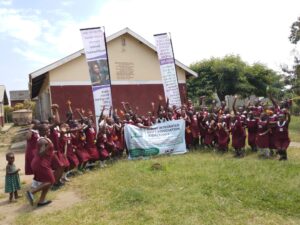
Female Genital Mutilation (FGM) is gradually declining in Uganda, credit to coordinated efforts across multiple sectors. The country has been particularly focusing on addressing Labia Minora Elongation (LME), a harmful practice targeting girls aged 8-14 that is deeply rooted in cultural misconceptions.
These practices persist due to harmful myths suggesting that labia elongation provides benefits such as reduced birth pain, protection from HIV, prevention of rape, and increased marriageability. State Minister of Gender and Culture, Peace Regis Mutuuzo, has been instrumental in challenging these beliefs, emphasizing that girls are sent to schools to be empowered, not prepared for early marriage.
Recognising the complex nature of FGM, Kitabu Integrated Development Association (KIDA) has developed a multifaceted approach to combat these harmful practices. Their strategy centers on comprehensive education, empowerment, and advocacy. They conduct mobile health camps in schools and villages, explaining the health impacts of Labia Minora Elongation (LME) and other forms of female genital modification.
The organization creates safe spaces for young girls, training peer educators and survivor movements to share their stories. By reducing the shame associated with rejecting LME, they help girls understand their human rights and the physical, sexual, and psychosocial problems associated with these practices. Their work extends to sensitization workshops targeting religious and traditional leaders, challenging the cultural sensitivity surrounding LME.
Critically, the organisation involves men and boys in their campaigns, addressing the misconception that such practices enhance sexual pleasure. Through radio and television talk shows, they increase public awareness about FGM and its consequences. They also educate healthcare workers about the physical and psychosocial impacts, helping to reduce discrimination and marginalization of affected girls.
Key Learnings and Insights
The most profound lesson learnt by KIDA is thathat FGM affects entire communities, not just individual girls. Young women often practice these harmful traditions due to cultural norms, peer pressure, and expectations from parents and schools. The solution requires a collective approach involving girls, boys, men, women, survivors, stakeholders, communities, and organizations working together to dismantle harmful norms.
Support Needed to Accelerate Change
With only six years remaining to meet the 2030 target of eliminating FGM, urgent support is crucial. KIDA calls for increased investment in grassroots organisations working directly with communities that practice FGM. Collaboration between government, non-governmental organizations, and community members is essential.
On International Day of Zero Tolerance against FGM, KIDA shares “to every young girl, your body is yours alone. You have the right to make choices, to be beautiful and valuable just as you are, and to seek help and support when needed.”
The path to ending FGM is through education, empowerment, and collective action.
***
The contents of this article are from KIDA, an AWDF grantee partner in Uganda.
Fueling a growing movement against FGM in Sierra Leone
Fueling a growing movement against FGM in Sierra Leone
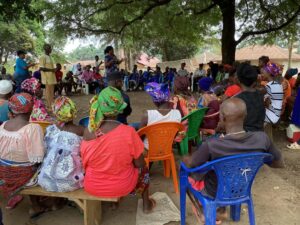
Female Genital Mutilation (FGM) remains a grave issue affecting millions of women and girls worldwide, particularly in Sierra Leone, where the practice is deeply rooted in cultural traditions. Despite its severe physical and psychological consequences, FGM/C persists due to societal pressures and a lack of legal protection. On this International Day of Zero Tolerance for FGM, Women’s Action for Human Dignity – Sierra Leone (WAHD-SL) reaffirms their commitment to eliminating this harmful practice through advocacy, education, and community-driven initiatives.
The Reality of FGM in Sierra Leone
Sierra Leone lacks a specific law criminalizing FGM, leaving countless women and girls exposed to the risk of this practice. A temporary ban was imposed in 2014 due to the Ebola crisis but was later lifted. The practice remains widespread, especially in the northern regions, where it is upheld by social norms. According to the Demographic and Health Survey (DHS), 95.5% of affected women undergo FGM at the hands of traditional practitioners. The absence of legal frameworks and government intervention has created a critical gap in protection (UNICEF, 2023).
WAHD-SL Strategy to End FGM
WAHD-SL is actively working to combat FGM through its flagship project, In Her Shoes, funded by the African Women’s Development Fund (AWDF). This initiative aims to shift social norms and empower communities to abandon harmful practices. The projects core activities include:
- Educational Workshops and Advocacy Forums: Partnering with women-led organizations, civil society groups, and community leaders to amplify awareness and enhance advocacy efforts.
- Engagement with Traditional Practitioners (Soweis): Forming Soweis’ Associations to help practitioners transition to alternative means of livelihood.
- Community-Led Dialogue Sessions: Hosting discussions with ‘positive deviants’—individuals who have rejected harmful traditions—to share experiences and propose solutions.
- Training and Capacity Building Initiatives: Providing healthcare workers, traditional birth attendants, and youth advocates with knowledge and skills to promote alternative rites of passage and safeguard girls’ rights.
- Collaboration with Religious and Traditional Leaders: Empowering influential figures to champion women’s rights and advocate for legal reforms.
Transforming Communities: Key Achievements and Challenges
WAHD-SL’s initiatives have significantly increased public awareness, strengthened community engagement, and fueled a growing movement against FGM. Key lessons from this work include:
- The active involvement of community and religious leaders is crucial for dismantling long-standing traditions.
- Offering alternative economic opportunities to traditional practitioners helps reduce their reliance on FGM as a source of income.
- Youth participation is essential for ensuring generational change and sustaining advocacy efforts.
- Continuous legal advocacy is necessary to push for national legislation banning FGM.
Despite these successes, challenges persist. Cultural resistance and a lack of political will continue to slow progress. However, through sustained education, advocacy, and policy reforms, the structures that perpetuate FGM can be dismantled.
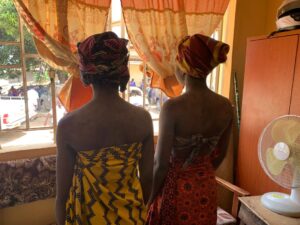
A United Call for Action
On this International Day of Zero Tolerance for FGM, WAHD-SL calls on governments, civil society, and international organizations to strengthen efforts against this human rights violation. To accelerate progress, we advocate for:
- Legislative Action and Policy Reforms: Governments must enact and enforce laws that criminalize FGM.
- Sustained Funding for Grassroots Initiatives: Increased financial support is needed to sustain awareness campaigns and community-based interventions.
- Strategic Partnerships with Traditional and Religious Leaders: Engaging influential figures can help transform societal attitudes towards FGM.
- Comprehensive Awareness and Advocacy Programs: Providing resources and training for women, girls, and communities is vital to fostering long-term change.
Together, we can create a world where women and girls are free from the dangers of FGM.
***
References and Further Reading:
The contents of this article are from Women’s Action for Human Dignity – Sierra Leone (WAHD-SL), an AWDF grantee partner Sierra Leone supported under the Leading from South initiative.
The Cost of Inaction: Fund African Feminists and Women Rights Organisations to End FGM
The Cost of Inaction: Fund African Feminists and Women Rights Organisations to End FGM
In October 2024, the death of 18 year old Napala Nangiro in Uganda, was reported by UNFPA. She tragically lost her life during childbirth due to complications related of Female Genital Mutilation (FGM). Not long before then, in August 2024, the death of another teenage girl following a circumcision operation in a private hospital in Egypt had also been reported in the news. Again, earlier in the year a DW report had revealed the death of three young girls in Sierra Leone – aged 12, 13, and 17, allegedly due to FGM complications. These are more than just isolated news reports and occurrences, these deaths are not just a tragedy; they are a stark reminder of what happens when we fail to adequately support and resource the fight against this harmful practice. Through our work and research, we know these documented cases represent only a fraction of the true toll, which is countless other deaths and complications that go undocumented.
Today, as we mark the International day of Zero Tolerance against FGM, the stakes could not be higher. According to the UNICEF 2024 data, over 230 million girls and women have undergone FGM, with Africa accounting for 144 million – almost half of the total number. Without accelerated action, 68 million more girls worldwide face this risk of FGM by 2030 making this more African girls at risk. Behind these statistics are daughters, sisters and humans whose bodies, futures and lives hang in the balance.
Across Africa, the legal landscape for protecting girls from FGM reveals a troubling pattern of gaps between legislation and implementation. Guided by the Maputo Protoccol on the rights of women in Africa, majority of African countries have passed legislations to criminalise FGM, however, implementation and progress remain slow. The landscape is increasingly complex, especially with the emergence and rise of anti-rights movements in Africa. The Gambia, for example witnessed a troubling development in 2024 when members of parliament proposed legislation to reverse the country’s 2015 ban on FGM. This attempt, though ultimately unsuccessful, revealed the fragility of progress and the persistent influence of those who seek to maintain this harmful practice under the guise of cultural and religious preservation.
In Mali, despite a prevalence rate of approximately 89% among women aged 15 to 49, efforts to enact anti-FGM laws have stalled due to resistance from religious and traditional leaders. While Chad has incorporated FGM prohibition into its Penal Code, the law’s effectiveness is undermined by vague definitions and unclear enforcement mechanisms. This pattern repeats across the continent: some countries have strong laws that go unenforced, others have ambiguous legislation that proves difficult to implement, and still others have no legal protections at all. The result is devastating, leaving millions of girls vulnerable to FGM despite decades of advocacy for their protection. When anti-FGM laws exist merely on paper, or are non existent, perpetrators act with impunity while girls pay the price with their bodies and lives.
Despite severe constraints, African feminist and women led organisations are spearheading a revolutionary approach to ending FGM, achieving remarkable success despite severe resource constraints. The evidence is compelling, when African women lead anti-FGM initiatives, they consistently deliver transformative results. In The Gambia, feminists and women’s rights organisations demonstrated their power when they successfully countered attempts to repeal anti-FGM legislation through strategic community mobilisation and effective engagement with lawmakers, protecting countless girls from harm. Kenya’s journey showcases the impact of persistent advocacy, culminating in the landmark 2011 Prohibition of Female Genital Mutilation Act. This achievement was further strengthened by the pioneering 2016 East African Community Prohibition of Female Genital Mutilation Bill, marking the first regional approach to addressing cross-border FGM.
Across countries and communities, AWDF grantee partners exemplify these results through their informed interventions. The Kitabu Integrated Development Association in Uganda is breaking new ground by empowering young girls to resist labia minora elongation practices while promoting positive body image and self-esteem, ensuring a future where girls are free from harmful traditional practices. In Benin, the Réseau des Femmes Leaders pour le Développement (RFLD) implements comprehensive anti-FGM programs that combine survivor support, legal advocacy, healthcare worker training, and community education, with a current focus on incorporating FGM awareness into school curricula. Similarly, REPSFECO’s innovative “Touche pas mon sexe” project addresses vaginal lip stretching through community dialogues and leadership training for girls across six districts.
In Nigeria, the advocacy efforts of Centre for Women Studies and Interventions in Ebonyi and Cross River States led to positive behavioural change and the establishment of a customary law against FGM in Ekajuk Kingdom of the Ogoja Local Government Area. In Sierra Leone, despite the lack of specific law criminising FGM, Women Action for Gender Equality and Women’s Action for Human Diginity continue intervention in rural communities through advocacy, trainings and community initiatives to inspire positive change. African feminists and women-led organisations across the continent are employing a multi-faceted approach encompassing grassroots organizing, educational workshops, legislative advocacy, and strategic funding initiatives.
These successes, among the many wins and progresses led by African feminists and women are even more remarkable given a devastating reality. According to the 2023 Where is the Money for Black Feminist Movements report by the Black feminist Fund 5% of human rights funding and about 0.1% – 0.35% of global foundation giving went to Black women, girls and trans people.
Over the past 25 years, AWDF has witnessed the transformative impact of supporting feminist and women led organisations and movements fighting FGM across the continent. We stand in solidarity with them and the women and girls who have survived FGM in Africa and across the world. The value and power of feminist and women led funding and interventions cannot be overemphasised. So we reaffirm our commitment to resourcing and supporting movements, women’s rights organisations,, feminist organisations, collectives and activists to accelerate progress in ending FGM. The price of inaction is heavy, the time to fully resource African feminists and women to eliminate FGM and all other forms of violence is now.
The solution is clear. We must:
- Scale up flexible, multi-year funding for African women and feminist led anti-FGM initiatives.
- Fund comprehensive approaches that address FGM within broader gender justice work.
- Support African research and knowledge creation on prevention and social change strategies.
- Resource survivor and community led advocacy practices.
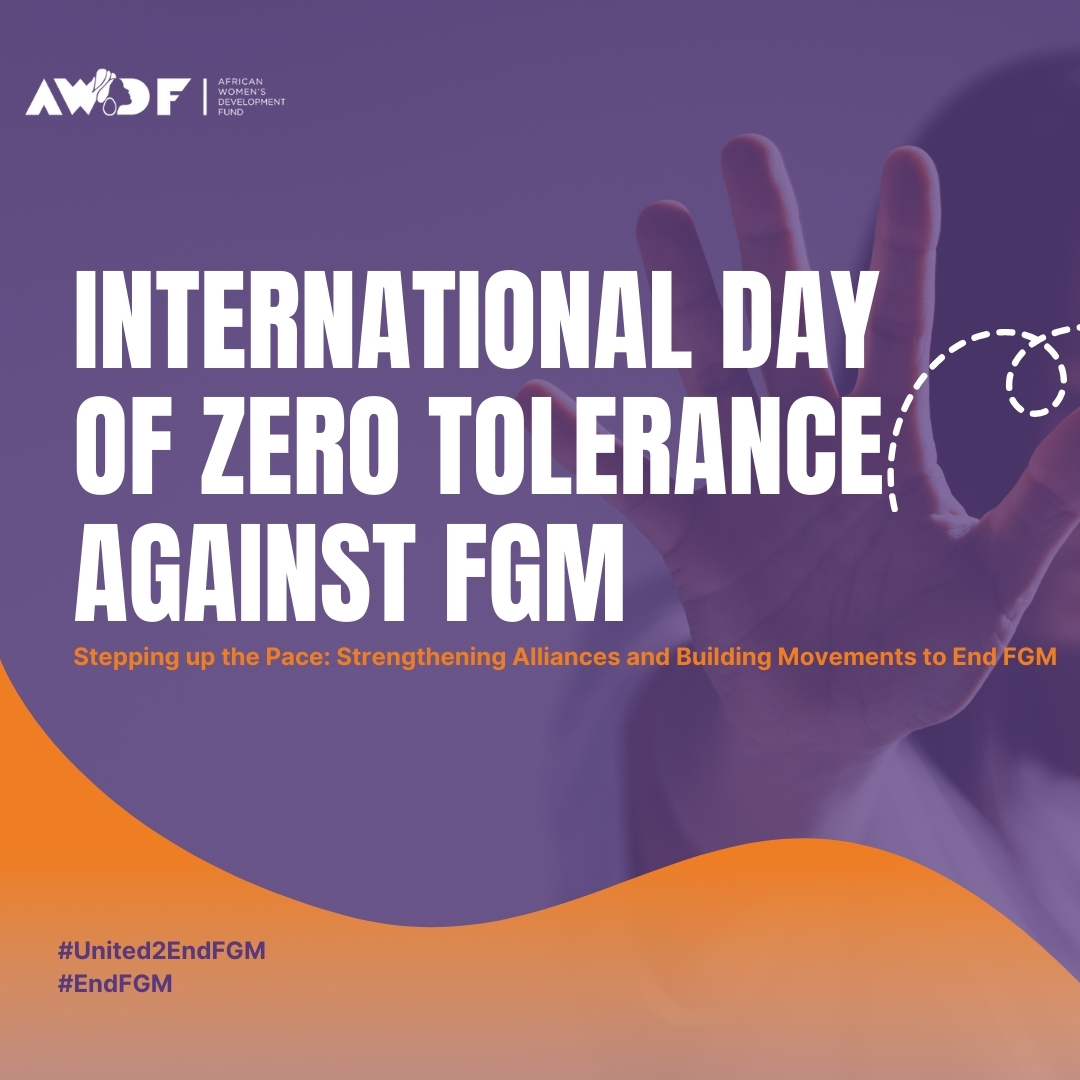
As we move forward, we must understand and accept that stopping FGM requires more than a commemoration day. This year’s theme Stepping up the Pace: Strengthening Alliances and Building Movements to End FGM emphasises the need to double efforts and push for more long term strategic funding of feminist movements and women’s rights organisations. The way to zero tolerance for FGM is through the heart of African communities led by African women, girls and feminists.
To our donors and funding partners, the time for token support must end with all of us. African feminists and women’s organisations have proven their effectiveness with minimal resources. Just imagine what they could do with adequate and sustained funding.
To African governments, match strong legislation with robust implementation and community engagement. The success stories in your own countries show what is possible when political will meets grassroots action. Your support for feminists and women’s organisations must go beyond policy to include substantial and sustained action and resourcing.
Girls do not have to die from the persistence of this harmful practice. Their futures should not be stolen by FGM and our collective failure to adequately resource those fighting to end this practice. Let this International Day of Zero Tolerance and days to follow mark the moment when rhetoric finally matches resourcing, commitment and action.