
Tag: women’s rights
Why focus on Women’s Land Rights?
Why focus on Women’s Land Rights?
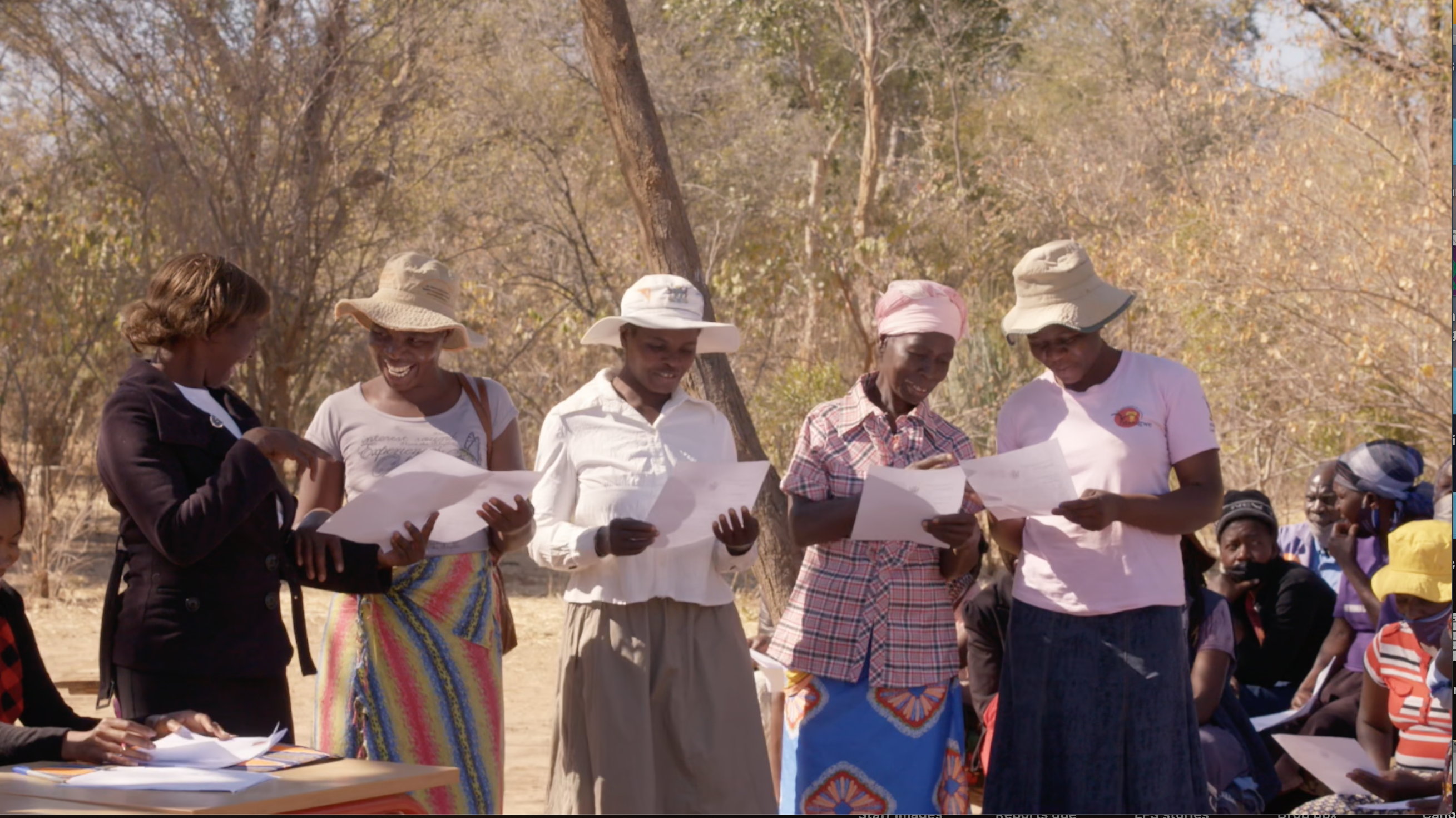
Ntengwe for Community Development leads the way
Land is considered a major source of wealth, social status and power. In African countries where women are the major work force on agricultural land, the security of their rights over this key resource is often denied them.
This is what drove AWDF grantee partner, Ntengwe for Community Development to undertake this incredible initiative to improve access to land rights for women in four African countries: Kenya, Uganda, Zimbabwe and Nigeria.
The results have been phenomenal with life-changing impacts for some of the women in these countries. Click here to read the inspiring report on the Results and impacts of the “Pathways to Economic Justice on Women’s Land Rights”
FEMNET FOI and Women’s Rights- Advocacy, Actions and Other Interventions
FEMNET FOI and Women’s Rights- Advocacy, Actions and Other Interventions
Advocacy Actions & Other Interventions on FOI
For women’s rights organizations, the right of access to information would capacitate women and girls to effectively influence financing for health, service delivery, compete favorably in the economic market, promote and protect their human rights including access to land and ownership, make decisions concerning their sexual and reproductive health, among others.
Since 2009, FEMNET has been championing collective participation of women’s rights organizations in lobbying for the enactment and implementation of FOI laws in their countries. This year, we are keen to highlight the latest updates/news and keep the momentum especially in supporting the enactment and implementation of FOI laws as well as increasing awareness amongst women’s rights organizations in linking women’s rights issues to FOI laws.
Your Responses to the following 5 questions will shape our advocacy actions and other interventions.
Kindly submit responses by end of day 20th October 2015.
Thank you.
AFRICAN WOMEN’S DEVELOPMENT FUND CALL FOR PROPOSALS
AFRICAN WOMEN’S DEVELOPMENT FUND CALL FOR PROPOSALS
The African Women’s Development Fund (AWDF) is a grant making foundation that supports local, national and regional organizations working towards the empowerment of African women and the achievement of gender equality on the continent. The vision of AWDF is for women to live in a world where there is social justice, equality and respect for women’s human rights. To this end, our mission is to mobilize and disburse financial, human and material resources to support positive transformation in Africa. We believe that If women are empowered with skills, information, sustainable livelihoods, opportunities to fulfil their potential, plus the capacity and space to make transformatory choices, then we will have vibrant, healthy and inclusive communities.
To achieve its vision and mission, the African Women’s Development Fund provides grant and technical support to women’s groups and organizations in Africa working on issues in line with the following themes:
- Women’s Human Rights (WHR)
- Economic Empowerment and Livelihoods (EEL)
- Health and Reproductive Rights (HRR)
- Governance Peace and Security (GPS)
- Arts Culture and Sports (ACS) and
- HIV/AIDS
The AWDF is inviting applicants working on specified areas to put in applications for support. The current call is opened from 10th August to 11th September 2015. Applicants are to send in proposals with innovative but effective strategies to address issues relating to the specified focus areas under the various listed themes: The areas of focus are as follows:
Women’s Human Rights (WHR)
In the area of promoting Women’s Human Rights, priority will be given to projects that enhance:
- Women and girls access to justice especially around land and property rights
- Policy engagements on women’s rights
- Addressing violence against women specifically around early & child marriage; FGM; sexual violence
Governance, Peace & Security (GPS)
To enhance women’s participation in decision making and peace building, projects that will be prioritised would focus on:
- Enabling women’s voices to be heard and their interest represented at all levels of decision making
- Involving women in peace building activities
- Facilitating women’s participation in leadership and governance processes
Economic Empowerment & Livelihood (EE&L)
To increase income earning opportunities for women, projects to be supported should seek to:
- Work with smallholder women farmers
- Work on climate change and food security issues
Arts, Sports & Culture (AS&C)
Projects to be supported under this theme will use arts, sports and culture to help address the negative images of women, by building women’s talents and skills as well as to build their capacities to lead the advocacy for the promotion of the rights of women. The support will cover:
- The use of sports, arts and popular culture to disseminate information on women’s rights and other key issues affecting women, to new and hard to reach audiences
- Raise the voices and profiles of women in all sectors of leadership on the continent using media such as music, films, documentaries, TV and radio productions, and national and regional film festivals.
- Support women and girls in sports, culture and sports
HIV/AIDS
Projects that will be prioritised under this theme will be centred on:
- Fighting stigma and discrimination against women and girls living with HIV&AIDS
- Promoting the rights of women living with HIV&AIDS
- Innovative HIV prevention activities and programmes
Eligibility Criteria
- Applicant Organisation must have been in existence for at least 3 years
- The organisation must be duly registered, at least with its local government structure
- The organisation must be led by a woman and have a focus on Women’s Rights
- The organisation must have the needed organizational structures
- The organisation must have an appreciable financial management system
- The organisation must be capable of reporting back on the outcomes of the project
- The organisation must be highly recommended by a donor agency, a grantee or partner of AWDF or the local government office
- The applying organisation must complete the necessary application forms
Grant Size
Grants disbursed will be in the range of $5,000 to $30.000.
Geographical Scope
Applications from the following countries are specifically encouraged to apply;
Burkina Faso, Cameroon, Ethiopia, Nigeria, Malawi, South Africa, Zambia & Zimbabwe
Grant Period
The grant period will be for one year from the date of award.
Expectation
The grantee is expected to send in 2 reports. An interim report and a final comprehensive report detailing the various activities, lessons learnt and clearly defined achievements at the end of the project. The organisation must be capable of measuring the results of the project and must be able to document stories and lessons learnt for sharing with AWDF and other partners.
How to apply
Interested organisations should send in their proposals to the AWDF secretariat in Accra, Ghana, using the required grant applications guidelines which include a financial management assessment form and an outcome form:
Application guidelines- Main grants
Financial-Management-Assessment-Guidelines-AWDF-Grant-Applications-20121
Framework for Measuring Outcomes
The African Women’s Development Fund
Office: Plot 78 Ambassadorial Enclave, East Legon
Post: P.M.B CT 89 Cantonments, Accra, Ghana
Email: awdf@africlub.net/awdf; grants@africlub.net/awdf
Website: www.africlub.net/awdf
Tel : + 233 289669666
NOTE: Please note that this is a very competitive process and it is only organizations with innovative but effective strategies who will be supported.
****
Le Fonds Africain de Développement de la Femme (AWDF) est une fondation d’octroi de subventions qui soutient des organisations locales, nationales et régionales qui travaillent à l’autonomisation des femmes africaines et à la réalisation de l’égalité des sexes sur le continent. La vision d’AWDF est que les femmes vivent dans un monde où il y a de la justice sociale, l’égalité et le respect des droits humains des femmes. À cette fin, notre mission est de mobiliser et de distribuer des ressources humaines, matérielles et financières pour soutenir la transformation positive en Afrique. Nous croyons que si les femmes sont habilitées avec des compétences, de l’information, des moyens de subsistance durable, des possibilités de réaliser leur potentiel, ainsi que la capacité et d’espace pour faire des choix transformateurs, alors nous aurons des collectivités dynamiques, saines et inclusives.
Pour réaliser sa vision et sa mission, le Fonds Africain de Développement de la Femme fournit des subvention et du soutien technique aux groupes et organisations en Afrique travaillant sur les questions en lien avec les thèmes suivants surla femme:
- Les droits des femmes (WHR)
- Autonomisation économique et les moyens de subsistance (EEL)
- Santé et droits reproductifs (FCR)
- Gouvernance de la paix et de la sécurité (GPS)
- Arts Culture et des Sports (ACS) et
- VIH / SIDA
L’AWDF invite les candidats qui travaillent sur l’un des domaines figurant ci-dessus à faire une demandes de soutien. L’appel en cours est ouvert du 10 Août au 11 Septembre 2015. Les candidats ont à envoyer des propositions avec des stratégies novatrices et efficaces pour traiter les questions relatives aux domaines d’intérêt spécifiques, sous les différents thèmes énumérés: les domaines de la mise au point sont comme suit:
Les droits des femmes (WHR)
Dans le domaine de la promotion des droits humains de la femme, la priorité sera accordée aux projets qui améliorent:
- L’accès à la justice des femmes et les filles en particulier autour des droits fonciers et immobiliers
- L’engagement politique sur les droits des femmes
- Remédier à la violence contre les femmes en particulier dès le plus jeun aâge et le mariage des enfants; MGF; la violence sexuelle
Gouvernance, paix et sécurité (GPS)
Pour renforcer la participation des femmes dans la prise de décision et le renforcement de la paix, les projets qui seront priorisés mettraient l’accent sur:
- L’Activation de la voix des femmes pour qu’elle soit entendue et leurs intérêts représentés à tous les niveaux de prise de décision
- Impliquer les femmes dans les activités de consolidation de la paix
- Faciliter la participation des femmes dans les processus de leadership et de gouvernance
Émancipation économique & moyens de subsistance (EE & L)
Pour accroître les possibilités de génération de revenus pour les femmes, les projets qui seront soutenus devraient viser à:
- Travailler avec petites agricultrices
- Les travaux sur le changement climatique et les questions de sécurité alimentaire
Arts, Sports et Culture (AS & C)
Les projets qui seront soutenus dans ce thème utiliseront les arts, les sports et la culture pour aider à résoudre les images négatives des femmes, en construisant les talents et les compétences des femmes ainsi que de renforcer leurs capacités à diriger le plaidoyer en faveur de la promotion des droits des femmes. Le soutien portera:
- L’utilisation du sports, des arts et de la culture populaire pour diffuser des informations sur les droits des femmes et d’autres questions clés qui touchent les femmes, à nouveau et difficile à rejoindre les auditoires
- Faire entendre les voix et les profils des femmes dans tous les secteurs de leadership sur le continent en utilisant les médias comme la musique, des films, des documentaires, la télévision et des productions radiophoniques et festivals nationaux et régionaux de films.
- Soutenir les femmes et les filles dans le sport, la culture et les sports
VIH / SIDA
Les projets qui seront prioritaires dans le cadre de ce thème seront centrées sur:
- Lutter contre la stigmatisation et la discrimination contre les femmes et les filles vivant avec le VIH et le SIDA
- Promouvoir les droits des femmes vivant avec le VIH et le SIDA
- Les activités novatrices de prévention du VIH et des programmes
Critère d’éligibilité
- L’Organisation demandeur doit exister depuis au moins 3 ans
- L’organisation doit être dûment enregistré, au moins avec sa structure de gouvernement local
- L’organisation doit être dirigé par une femme et un accent mis sur les droits des femmes
- L’organisation doit avoir les structures organisationnelles nécessaires
- L’organisation doit avoir un système de gestion financière appréciable
- L’organisation doit être capable de faire rapport sur les résultats du projet
- L’organisation doit être fortement recommandé par un organisme donateur, un bénéficiaire ou un partenaire de AWDF ou le bureau du gouvernement local
- L’organisme candidat doit remplir les formulaires de demande nécessaires
Taille des subventions
Les subventions versées seront de l’ordre de 5000 $ à $ 30,000.
Portée géographique
Les pays suivants sont particulièrement encouragés à postuler;
Burkina Faso, Cameroun, Ethiopie, le Nigeria, le Malawi, l’Afrique du Sud, la Zambie et le Zimbabwe
Période de subvention
La période de subvention sera d’un an à compter de la date d’attribution.
Attente
Le bénéficiaire est tenu d’envoyer 2 rapports. Un rapport intérimaire et un rapport final complet détaillant les différentes activités, les leçons apprises et les réalisations clairement définies à la fin du projet. L’organisation doit être capable de mesurer les résultats du projet et doit être en mesure de documenter les histoires et les leçons apprises pour les partager avec AWDF et d’autres partenaires.
Comment postuler
Les organisations intéressées doivent envoyer leurs propositions au secrétariat AWDF à Accra, au Ghana, en utilisant les demandes de subventions directives nécessaires qui comprennent un formulaire d’évaluation de la gestion financière et une forme de résultats:
Candidature principale subventions lignes directrices:
CANEVAS DE DEMANDE DE SUBVENTION (1)
Evaluation-Gestion-Financière-Directives-FRANCAIS
The African Women’s Development Fund
Adresse: Plot 78 Ambassadorial Enclave, East Legon
Adresse Postale: P.M.B CT 89 Cantonments, Accra, Ghana
Email: awdf@africlub.net/awdf; grants@africlub.net/awdf
Website: www.africlub.net/awdf
Tel : + 233 289669666
NOTE: Veuillez noter que ceci est un processus très compétitif et il est réservé seulement aux organisations aux stratégies innovantes et efficaces qui seront appuyées.
Reflections on AWDF’s 3rd CEO Forum by Zukisiwa Wanner
Reflections on AWDF’s 3rd CEO Forum by Zukisiwa Wanner
I spent the first three days of this week attending the African Women’s Development Fund’s (AWDF) third Chief Executive Officer’s Forum at the Crowne Plaza Hotel here in Nairobi. The CEO Forum brings together leaders in women’s organizations that work with AWDF.
I admit it, I had no idea what to expect. Yes I had received the program in advance. Yes, I’ve heard of many of the women previously. Maybe even worked with one or two of their organisations. And yes, like me all of these women are African feminists. But but but…there was also a key difference. I am self-employed and in a very practical way, whatever actions I take regarding my advocacy on women’s issues is my own decision and often affects only me. These women, leaders in their own organizations, take actions that impact other women in ways I could never even begin to do.
I knew that I would meet a woman who is pushing to get more African stories by African writers for African children on the continent – my younger sister Deborah Ahenkorah of Golden Baobab.
I had Googled the women training women in politics and those looking out for the rights of young women too often under threat from patriarchy through forced marriages and payment of fines to parents (mostly fathers) where girls have been raped instead of prosecution – Mawusi Awity, Amy Oyekunle, Yvette Kathurima.
I would meet the amazing food microbiologist and retired Dean of Science from the University of Botswana who I planned to ambush to become my son’s newly adopted grandmother, Professor Sesae Mpuchane who is also the Chair of the AWDF Board.
And the legends in Afro feminist circles – Mary Rusimbi, Sarah Mukasa and Hope Chigudu (I knew these three as being part of the team that gave us the Charter of Feminist Principles for African Feminists but had never met them) and the Ugandan Woman Achiever 2013,the incorrigible and lovable Dr. Hilda Tadria.
Then too, I would meet the women behind my meeting these other fantastic women, the AWDF team consisting of the soft-spoken but uncompromising (on feminist issues) Theo Sowa, convenor of all these amazing women Nafi Chinery, well-known Afro-sexuality blogger Nana Darkoa, and of course the aforementioned Sarah Mukasa.
My leadership, if I can be said to have any, is different from any of the women above and consists of much navel-gazing and compliment seeking on whether a word or phrase sounds right and yet, in the three days I never had a single moment of being an outsider looking in. It was amazing listening, learning, laughing, crying, comforting, sharing with all of them. Through being with them, I learnt some very important things that I should have known but did not know. I learnt that whatever successes one makes of whatever they are doing is not very useful if it isn’t communicated to the people who should know about it. As an example, we can set up mentorship programs for young women or set up a centre for abused women, a workshop for women writers but if we do not communicate the message to the people who it’s set out for; to the public among whom may be a sympathetic audience that may help out when needed then there is a degree of failure. And yes, too often while self-identifying as a feminist and talking of a feminist cause on this continent often leads to a hostile media within, there are ways to counter the hostility through proper messaging.
Equally important, I learnt that being a ‘strong African woman’ at the expense of my well-being is counter-revolutionary to the feminist movement. I learnt that it is okay to admit being tired. To ask for help and admit that I cannot do it all and most importantly, I am under no obligation to do it all. To quote Hope Chigudu, “after all, what are human rights if we are fragmented, have no support and are unhappy?”
On Monday 2nd June 2014, I went into a room full of strangers, and left having met some people I know will be lifelong friends. And for those whose paths may not cross with mine again (why ever not?), I leave having learnt valuable lessons from each and every one. A major reason for this was that the group was small enough that in the course of the three days I got to chat with each of the women and found echoes of myself in many of them. As I reflect on the three days spent with the women I met at the CEO Forum, I happily admit that whatever it is I expected, what I experienced was beyond my expectation. If the coaching that many of these women will undertake in the next ten months is as successful as the three days I spent with them, the future of African women leadership and the African feminist movement is in good hands. Best wishes to the CEOs and Executive Directors taking part in the 10 month coaching program as a follow up to this forum on leadership, governance and communications.
By: Zukisiwa Wanner
Zukisiwa Wanner is a writer who was most recently recognised “…as one of the top 39 sub-Saharan African novelists under 40 writing in English, French, Portuguese or an African language.” Check out her blog

AWDF’s CEO, Theo Sowa at the 2013 Women Deliver conference in Malaysia
AWDF’s CEO, Theo Sowa at the 2013 Women Deliver conference in Malaysia
Theo Sowa, AWDF’s Chief Executive Officer participated in the 2013 Women Deliver conference held in Kuala Lampur, Malaysia between the 28th-30th of May 2013.
On Tuesday the 28th, she delivered ‘The Last Word’ for proceedings on the day which can be viewed below:
On Wednesday 29th May Theo Sowa facilitated a panel on ‘Developing Countries’ Strategies Towards Reaching the FP2020 Goals’ with Dr. Kesetebirhan Admasu, Minister of Health, Ethiopia; Matia Kasaija, Minister of State for Finance, Planning and Economic Development, Uganda; and Dr. Mojisola Odeku, Director, Nigerian Reproductive Health Initiative.
On Thursday 30th May, Theo Sowa was a resource person on a panel discussion focused on ‘The Development Agenda Through a Woman’s Lens’
Grantee Highlight: ‘Creative Centre for Communication and Development’ in Zimbabwe
Grantee Highlight: ‘Creative Centre for Communication and Development’ in Zimbabwe
The ‘Creative Centre for Communication and Development‘ (CCCD) based in Zimbabwe is a grantee partner of the African Women’s Development Fund (AWDF). CCCD specialises in utilising information and communication technologies (ICT) to advance women’s human rights. In 2010, CCCD received a small grant of US$1,000 to use mobile phone advocacy to educate the public on Gender Based Violence (GBV) in Zimbabwe. In a 2011 narrative report to AWDF, CCCD stated that they chose this method of advocacy because “1 in 3 people in Zimbabwe have a cell phone” and that “subscribers can send 20 SMS messages locally for the cost of US$1”. As part of the ‘Mobile Fone Campaign’, CCCD utilised the ‘Freedom Fone application software’ (free open source software) to provide round the clock information on GBV. This included developing 5 audio interactive voice menus which also provided information on types of GBV, advice on leaving violent relationships and details of who to contact when you need help. CCCD recieved information via the ‘Freedom Fone’ about a case in which a man had raped his daughter who had consequently become pregnant. Participants in the programme met and decided to create a drama piece to highlight this issue, and in turn raise awareness about this form of Violence against Women (VAW). This performance was enacted in churches within the Bulawayo community and led to more women providing testimonies of their own experiences of GBV. This campaign coincided with a case that received prominent international attention – the story of a father from Argentina who raped his daughter for 30 years and had 10 children with her – and for this reason spurred the interest of local Zimbabwean media in CCCD’s drama performance and campaign.
In 2011, CCCD trained 25 women and girls on digital story telling. This method was chosen because it enables women through their own voices to share their experiences with the world. Below is a story by Sayamika:
Capacity Building is an integral part of the support AWDF gives grantee partners and CCCD has benefited from a number of opportunities designed to help the leadership and staff strengthen the work they do. In October 2011, Gertrude Pswarayi , the Executive Director of CCCD participated in AWDF’s ‘2nd CEO Forum’ held in Nairobi, Kenya where she delivered a presentation on ‘How CCCD is using social media to advance women’s rights’. Please see presentation below:
Creative Centre for Communication and Development
In November 2012, AWDF provided support for a member of CCCD staff to attend the ‘International Workshop on Resource Mobilisation’ held in Uganda. The learning acquired from participating in this programme is proving beneficial in the development of CCCD’s fundraising strategy.
CCCD’s most recent grant from AWDF was for US$20,000 to support institutional development over the next 3 years. This includes development of a strategic plan, financial management and corporate governance training for board and staff as well as a contribution towards the recruitment of staff. The grant also enabled CCCD to strengthen its communications work, and in March 2013, CCCD launched its new quarterly newsletter, ‘Stories of Change’.
CCCD Newsletter_January _ March 2013

Grantee Highlight: Committee d’ Assistance a la Femme Necessiteuse du Cameroon (CAFENEC)
Grantee Highlight: Committee d’ Assistance a la Femme Necessiteuse du Cameroon (CAFENEC)
“AWDF’s support towards CAFENEC has been immense and immeasurable. AWDF’s support has opened more promising avenues to CAFENEC. The impact made by the AWDF funded widowhood rites project, has attracted partners such as GTZ/GIZ and Partnership Transparency Fund to also support CAFENEC’s activities in diverse ways. As a result of AWDF’s support, CAFENEC is now known all over the international circles.” Lyddienne Nkaleu, National President, Committee d’ Assistance a la Femme Necessiteuse du Cameroon (CAFENEC)
For many of AWDF’s grantee partners across the continent, AWDF has been their first funder. AWDF’s support to community-based organisations strengthens existing groups which grantees are able to leverage to generate additional resources and support as exemplified by the quote above.
In 2010, AWDF provided CAFENEC with a grant of US$15,000 to support women farmers and traders, many of whom are women are living positively. Out of the grant received, CAFENEC purchased 2 grain grinding mills, 2 vegetable grinding mills, 2 mills for grinding groundnuts and melon seeds, 1 grater for grinding gari, (a derivative of cassava) and 8 spraying machines. Four subsidiary women’s groups (representing 42 women in total) benefited from micro credit loans of CFA 500,000 (approx. US$1000) to CFA 800,000 (approx. US$1600). The credit received has enabled women traders to engage in small-scale businesses, which include catering services and animal husbandry.
Members of CAFENEC report that starting small businesses have also given their self-confidence a boost. Many members who had previously not travelled outside their own villages now visit larger towns to trade. Women farmers are now able to provide themselves and their families with at least one nutritious meal a day. As a result the health of women living positively within the group has improved, members fall sick less often and as a result have seen a reduction in the stigma they faced from family and other members of the community.

AWDF to hold a 3 day skills building workshop on ‘Rights and Results Based Programming’ for grantee partners in Southern Africa
AWDF to hold a 3 day skills building workshop on ‘Rights and Results Based Programming’ for grantee partners in Southern Africa
From the 19 – 21st November 2012, AWDF will hold a 3 day skills building workshop on ‘Rights and Results Based Programming’ (RBP) in Johannesburg, South Africa, for 30 grantee partners from the Southern Africa region (Malawi, Zambia, Zimbabwe, South Africa, Botswana and Swaziland). This training will seek to adapt the framework of the RBP to the needs of women’s rights organisations. Participants will be trained on how to use the RBP framework within the context of women’s rights activities and to understand the core questions around the implementation of RBP.
Key objectives for the skills building workshop are:
• To identify some of the common challenges within women’s organizations in their ability to track and report change in their programme to different stakeholders.
• To provide skills that will enable grantees to systematically align their work to anticipated results, track changes and report them in more coherent and compelling ways to the different stakeholders.
This training will be co-facilitated by Hope Chigudu, a women’s rights consultant; Zeytuna Abdellah Azasso, Monitoring & Evaluation Officer, AWDF and Nafi Chinery, Capacity Building Officer, AWDF.

Celebrate International Women’s Day with the African Women’s Development Fund and Alliance Francaise (Ghana)
Celebrate International Women’s Day with the African Women’s Development Fund and Alliance Francaise (Ghana)
PRESS RELEASE
For Immediate Release
Accra, 28th February 2012
Celebrate International Women’s Day with the African Women’s Development Fund and Alliance Francaise (Ghana)
Every year on 8th March the world celebrates International Women’s Day. This year, celebrate International Women’s Day with the African Women’s Development Fund (AWDF) and our partner, Alliance Francaise (Ghana).
On Thursday, 8th March 2012 at 6.30 pm attend an art exhibition and reception themed, “Young African Women, Inspiring Futures”, featuring Adowa Amoah, Co-Director of the Foundation for Contemporary Art (FCA) and Fatric Bewong, a painter. Although Adwoa’s medium is primarily painting, she experiments with installations and photography, which extends her language of expression to reflect contemporary situations. Fatric is a contemporary artist whose work incorporates a multifaceted approach to the vibrant colours, textures and rhythms of Ghana’s social landscape.
This exhibition is followed at 8.00pm with a concert featuring Sia Tolno, an award winning musician from Guinea and RFI Discovery Award winner of 2011, as well as Lady Jay Wah of Ghana who will perform a medley of inspiring music, including ‘African woman’, a song specially commissioned by AWDF. Ticket sales for this event are GHC10, with sales and a portion of any art pieces sold supporting AWDF’s ‘Arts, Culture and Sports’ thematic area.
ENDS
About the African Women’s Development Fund
Over the past ten years, the African Women’s Development Fund (AWDF) has blazed a trail for women’s rights and philanthropy across the African continent. AWDF is an African, not for profit, grantmaking organisation. Since the start of operations in 2001, AWDF has provided US$19 million in grants to 800 women’s organisations in 42 African countries. AWDF’s grant making processes are uniquely designed to meet the needs of African women and activities include the provision of small and larger grants to African women’s organisations, capacity building support and a strong focus on advocacy and movement building.
Press Enquiries
Nana Darkoa Sekyiamah (AWDF Programme Officer for Communications)
Tel: +233 302 521 257 (Ghana)
Email: nana@africlub.net/awdf, Website: www.africlub.net/awdf

African Capacity Building Foundation signs second phase grant with the African Women’s Development Fund to upscale women’s participation in policy development and implementation on the continent
African Capacity Building Foundation signs second phase grant with the African Women’s Development Fund to upscale women’s participation in policy development and implementation on the continent
Press Release
Immediate
Website: http://www.acbf-pact.org
African Capacity Building Foundation signs second phase grant with the African Women’s Development Fund to upscale women’s participation in policy development and implementation on the continent
Accra, 23 February 2012 (ACBF) – The African Capacity Building Foundation (ACBF) today signed a US$ 2.73 million grant with the African Women’s Development Fund (AWDF) in Accra. The second phase funding will promote the economic empowerment and political participation of women in Africa, by strengthening AWDF’s institutional and human capacity and increasing the institutional capacity of African Women Organizations to engage effectively on issues of women’s human rights and development in Africa. This follows a successful first phase of US$1 million, which ended in December 2011.
Women and girls constitute over 51% of Africa’s 850 million people. In Sub-Saharan Africa over 70% of the poor are women currently living below the World Bank’s poverty headcount ratio of US$2 per day. According to the 2010 UN progress report on the achievement of the MDGs, although, gender parity has been achieved or is close to being achieved at primary school level in over two-thirds of African countries, Africa has the lowest female literacy rate in the world. Much remains to be done at secondary and tertiary levels. Maternal mortality also remains higher in sub-Saharan Africa than in any other region, and the HIV/AIDS pandemic continues to affect more women than men in most African countries, with women accounting for 60% of new infections. Women also have a harder time finding jobs in environments where there are few opportunities due to job rationing with preference going to men.
Against this challenging background some progress has been made regarding the development of women’s organizations working to promote gender equality and women’s rights in various parts of Africa. These organizations are considered as key drivers in efforts to attain gender equality and end discriminatory and exclusionary practices against women.
Capacity for women’s organisations to deliver on all fronts remains thin and further investment is needed in order to realize women’s human rights and development. Several constraints remain for these organisations, including poor ability to build their own dynamic capacity and ensure they are sustainable in the long term. Other challenges include unstable financing, the constant need to build strategic movement, and the need for conceptual clarity, as well as addressing ideological differences and poor employment opportunities.
Speaking at the Grant signing ceremony, ACBF Executive Secretary, Dr. Frannie Léautier highlighted that ACBF recognizes the importance of equal participation of both women and men in the development and implementation of policies, and the continuous need for capacity development in this area. She said: “It has become evident over time that where women have access to education, economic assets or live free of conflict there is a reduction in poverty levels. At ACBF, we have embarked on our third strategic medium term plan. The strength of this plan lies in the Foundation’s ability to strengthen partnerships with institutions such as the AWDF, where work on gender and women is continentally focussed. This allows the Foundation to have a wider reach, and to also make a larger contribution to the capacity strengthening of women’s organizations”.
She added that through such partnerships there is a shared responsibility to achieve results and develop a critical mass of skilled women to deal with gender issues at national levels, while also focussing on policy and implementation at regional and global levels.
This second phase funding will enable AWDF to innovate through their various platforms and fora to engage fully in the development discourse of women on the continent.”
In her address, AWDF’s Interim Chief Executive Officer, Ms. Theo Sowa said: “We welcome the grant from ACBF to AWDF of 2.7 million dollars over a four-year period but what we appreciate more is the way in which that grant is framed. ACBF is giving AWDF the opportunity to both strengthen our core capacity and to reach out to the various women’s organisations we partner with to strengthen their capacities. This is a wonderful opportunity and one for which ACBF should be praised. Only too often, donors focus on projects, wanting organisations to deliver results on the ground without taking into consideration the need for organisations to be strong and sustainable themselves, if they are to deliver on results. ACBF recognises this and makes its funding available in such a way as to strengthen organisational capacity, sustainability and therefore strengthen the impact of programmes on the ground.”
The implementation of the second phase of this project, which runs from 2011-2015 holds significance, as this period coincides with international and sub-regional benchmarks, such as the African Union Decade for Women, the 15 year review of the attainment of the Millennium Development Goals, including those covering gender, and the review of progress under the SADC Gender and Development Protocol by 2015.
Ends: //
About the African Capacity Building Foundation
ACBF was established in February 1991. It is the outcome of collaboration between African governments and the international donor community. Its mission is to build sustainable human and institutional capacity for sustainable growth and poverty reduction in Africa. ACBF’s vision is for Africa to be recognized for its socio-political and economic capabilities and endowments – a continent with effective institutions and policies acquired through sustained investment in people and institutions. The Foundation is a leader, major partner and centre of excellence for capacity building in Africa.
The African Union currently serves as an Observer on the ACBF Board of Governors.
For further information on ACBF, please contact:
c.noumon@acbf-pact.org
African Capacity Building Foundation (ACBF)
PO Box 1562, Harare
ZIMBABWE
Tel: + 263 4 700208/210
About the African Women’s Development Fund
Since the start of operations in 2001, the African Women’s Development Fund (AWDF) has blazed a trail for women’s rights and philanthropy across the African continent. AWDF has provided US$19 million in grants to 800 women’s organizations in 42 African countries. AWDF’s grant making processes are uniquely designed to meet the needs of African women and include the provision of small grants ($1000-$5000) to community-based organizations, main grants (up to $50,000), capacity building support and a strong focus on movement building.
For further information on AWDF, please contact:
Nana Darkoa Sekyiamah (Programme Officer for Communications)
Tel: +233 302 521 257
Email: nana@africlub.net/awdf
Website: www.africlub.net/awdf
