
Category: News
Transcending Sexual Violence: Providing Support for Survivors through the Nairobi Women’s Hospital Gender Violence Recovery Centre
Transcending Sexual Violence: Providing Support for Survivors through the Nairobi Women’s Hospital Gender Violence Recovery Centre
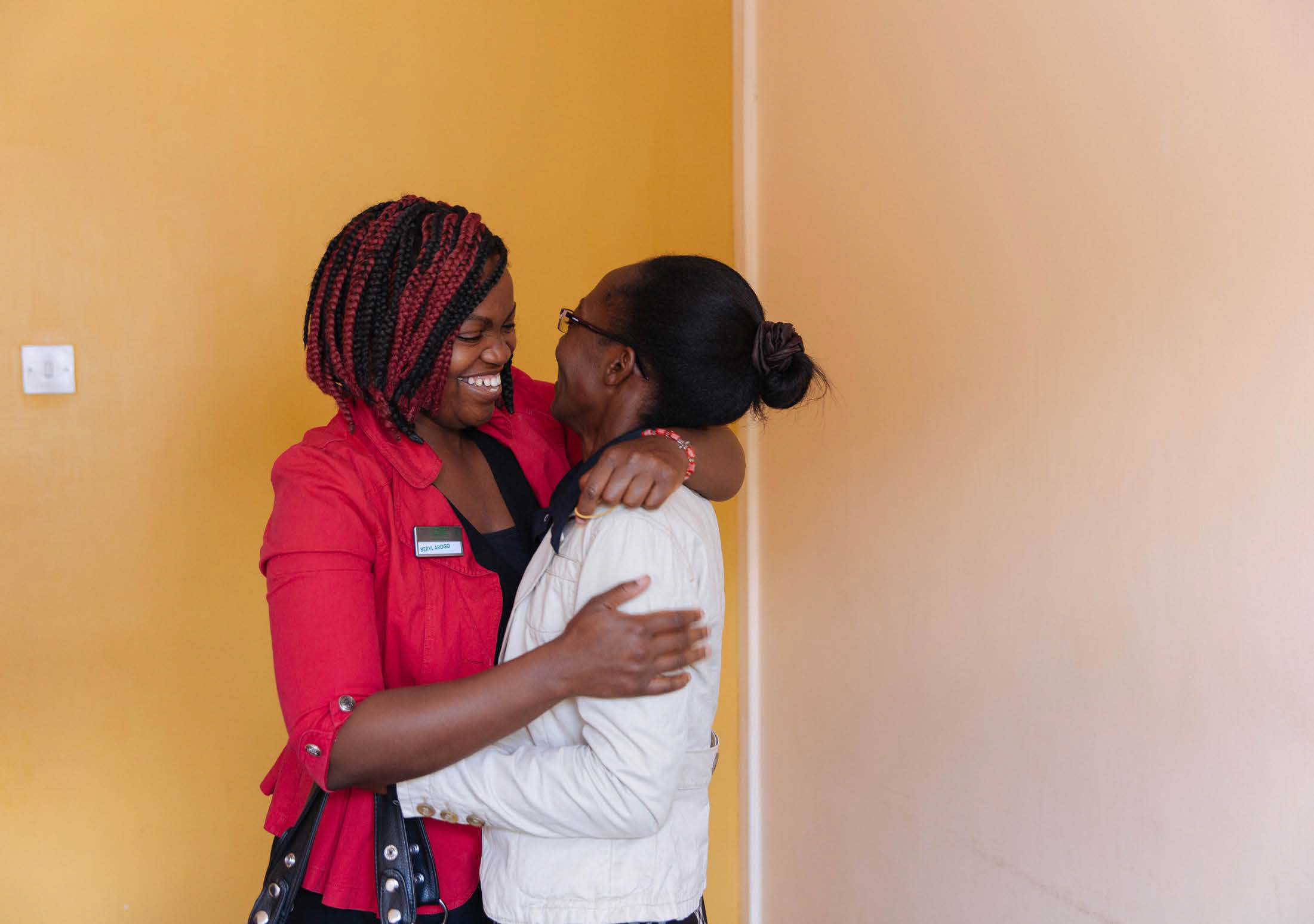
Nelly*is a survivor of sexual violence who has persistently resolved to overcome stigma, rejection, fear and suicidal thoughts that threatened to immobilise her after she was raped in 2014. GVRC Project Participant Transcending Sexual Violence: Providing Support for Survivors through the Nairobi Women’s Hospital Gender Violence Recovery Centre .It has not been an easy journey. With the assistance of counselling staff and members of a sexual violence support group at the Gender Violence Recovery Centre (GVRC) in Nairobi, she has made tremendous strides in her recovery. Currently, Nelly is positively channeling her energy to transform the lives of survivors of sexual violence by supporting children who have undergone abuse in the school where she works.
To read the entirety of Nelly’s Story click HERE : GVRC: Nelly’s Story
Women’s Funds call for inclusion of women-led organizations in Canada’s reproductive health projects
Women’s Funds call for inclusion of women-led organizations in Canada’s reproductive health projects
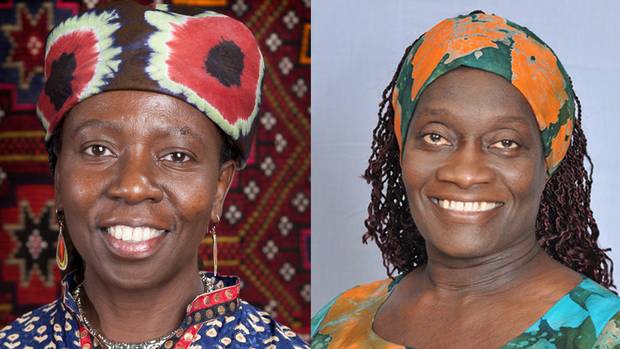
The announcement of Canada’s new $241.5 Million fund for family programs is a direct push against the streak of conservative aid policy implementation in North America. Canada’s fund is a step in the a progressive direction. Theo Sowa and Musimbi Kanyoro discuss the implications of the fund and the opprotunities it presents for Women’s Rights work on the continent. To read the full article click HERE
Leading From the South: Grants Announcement
Leading From the South: Grants Announcement
[tp lang=”en” not_in=”fr”]
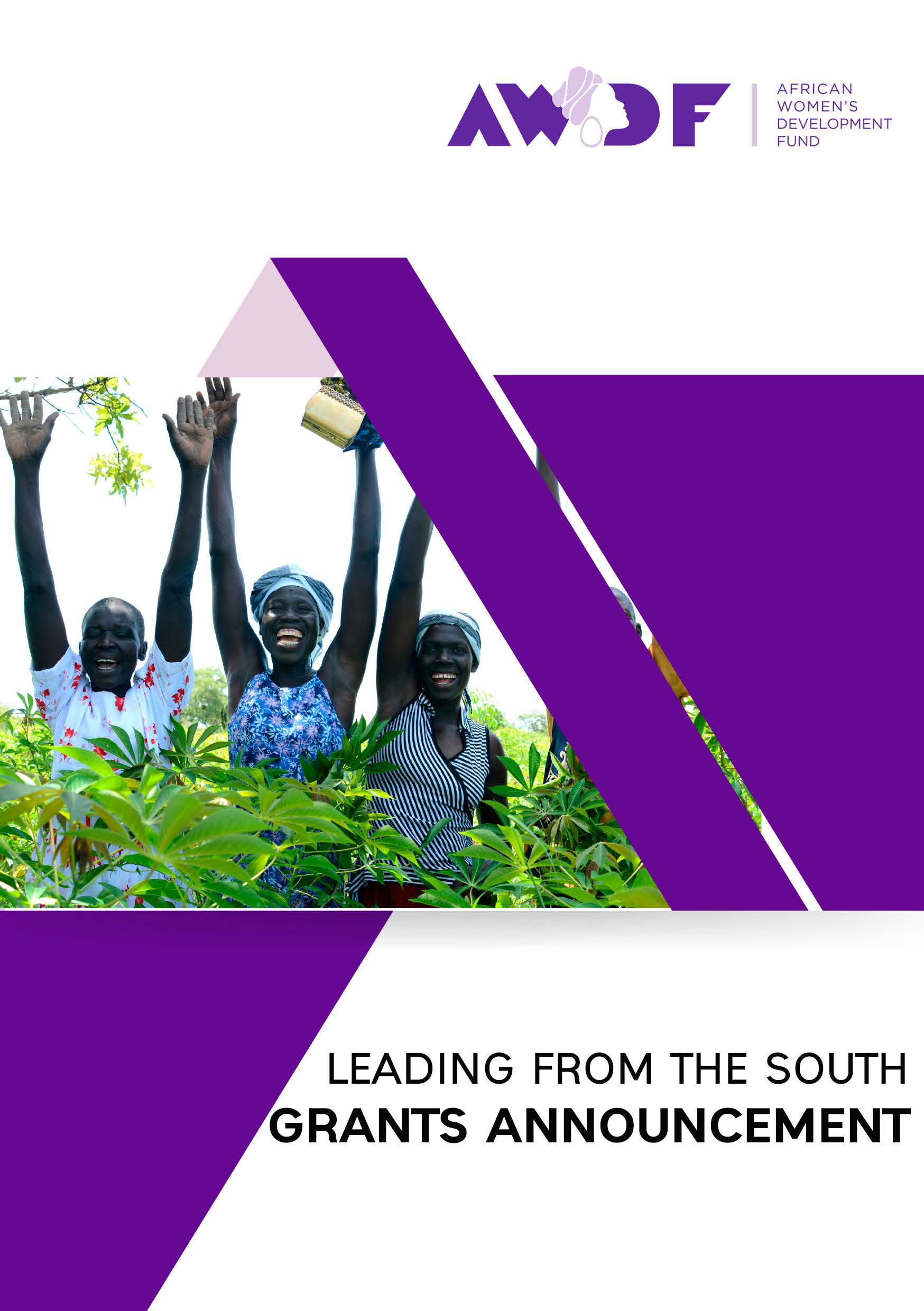 AWDF is happy to announce the award of grants for Leading from the South: a fund aimed at supporting activism by women’s rights organisations in the global South to influence policy and decision-making at local, national, regional and global levels towards the full achievement of women’s rights.
In the first of several rounds of grant awards, the following organisations were selected to receive funding to carry out women’s rights advocacy activities in Africa and the Middle East. A total of 23 grants were made to organisations to implement projects in 27 countries. Most grants are for a two-year period but a few were one year grants. Additional information on the criteria for the first round of grants can be found here
For the full list of grants please click HERE
[/tp]
[tp lang=”fr” not_in=”en”]
AWDF a le plaisir de vous annoncer les accords de subvention pour le projet « Leading From the South ». Le fond est destiné à soutenir financièrement les organisations de femmes qui œuvrent pour les droits de la femme dans les pays du Sud afin de leur permettre d’influer les politiques et la prise de décision au niveau local, national, régional et international pour une acceptation globale des droits de la femme.
Après des analyses approfondies des demandes reçues de plusieurs organisations de femmes, les organisations suivantes ont été sélectionnées pour être subventionnées. Le tra- vail de ces dernières se concentrera sur les activités de plaidoyer sur les droits de la femme en Afrique et au Moyen Orient. Au total, 23 subventions ont été données aux organisations de femmes dans 15 pays pour réaliser des projets dans 27 pays. La plupart des subventions sont pour une période de deux ans ; cependant certaines sont pour une période d’un an. Des informations supplémentaires sur les critères de la première étape de subvention peuvent être trouvées en cliquant ici.
Pour avoir la liste complete CLIQUANT ICI.
[/tp]
A New Strategic Direction: AWDF’s 4th Strategic Plan
A New Strategic Direction: AWDF’s 4th Strategic Plan
Shaping the Future was developed out of research and exploration around how AWDF and the African women’s rights organisations and activists that we resource can contribute to building a future for Africa that reflects the equality and justice that lie at the heart of our continent’s progress. We invested in a process to gather data on future trends for African women, compiled in the report Futures Africa: Trends for Women by 2030. We then used this empirical base to craft an imaginative process of generating scenarios- four stories of what the future could look like for African women and women’s rights if different political power dynamics and social, economic, technological and environmental trends play out.
This is the first foresight initiative focusing indepth on gender dynamics, women’s rights, and questions around the roles African women play in actively creating just futures for Africa. By designing a strategic framework based on this forward-thinking analysis, AWDF seeks to create a plan that allows for greater innovation and ways to maximise the impact of our work and that of the brave African women’s organisations and movements that we support. Our commitment is to work together to build the best possible futures for the African continent.
A GREAT SHERO DANCES AWAY: Prudence Nobantu Mabele (1971-2017)
A GREAT SHERO DANCES AWAY: Prudence Nobantu Mabele (1971-2017)
A tribute by Bisi Adeleye-Fayemi
‘Life is very short and what we have to do must be done in the now’– Audre Lourde
It was March 2006. I was in Johannesburg, South Africa with Vera Doku, a colleague of mine from the African Women’s Development Fund (AWDF), as part of a tour of countries in Southern Africa to visit our grantee partners. We were waiting for the Executive Director of the first organisation we had scheduled to visit that morning. She was almost an hour late. Vera started to complain about the tardiness of our partner. I smiled and said to Vera, ‘She will show up, she always has a thousand things to do’. When Prudence Mabele eventually arrived, she was full of apologies for keeping us waiting and told us that she had been busy making preparations for our visit.
With time, the staff at AWDF got to understand the way Prudence functioned. She was not the most organized of people when it came to sending her reports in on time. It would often take several requests for her to send in her paperwork and even when she did it would still require more information to be provided. And yet, Prudence was one of our most reliable partners in the women’s movement. She was not running her network as a ‘career’. We have many actors in civil society across the continent who set up initiatives that appear to be clinically functional, with all their reports on time and their accounts in order, but their impact on the communities they claim to serve is negligible. What I learnt from Prudence Mabele as a feminist donor was that we needed to listen more to those who are working from the heart and serving their communities with everything they have. I also learnt the importance of being patient with them and understanding their context. When people like Prudence have to make a choice between spending a day writing a donor report and attending to the needs of their communities, the latter wins every time. I am not saying donor accountability is not important, I am making a distinction between people who genuinely work to support their communities and those who are mostly in the ‘donor hustle’ business.
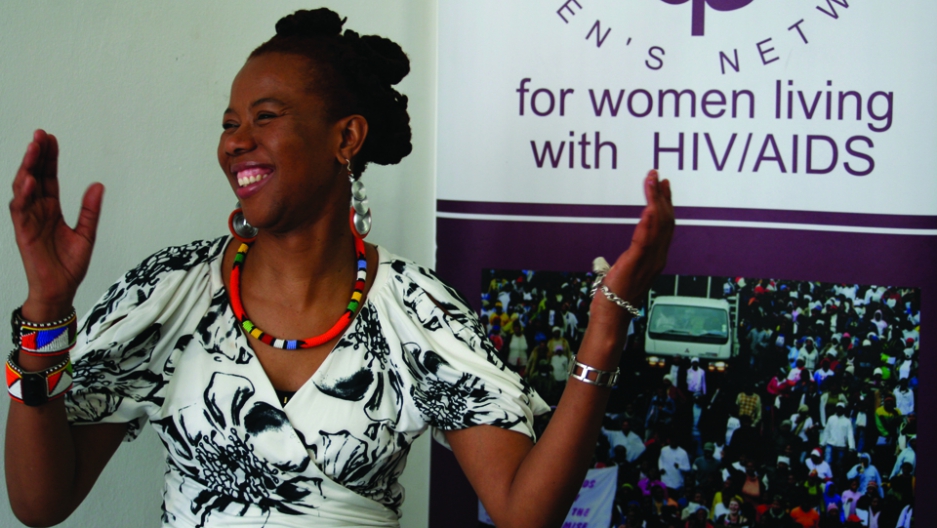
Prudence was diagnosed with HIV when she was 18. In 1992, she was one of the first black women in South Africa to publicly disclose her HIV status. In 1996, together with a number of other women, she founded Positive Women’s Network, which grew from a handful of women to at least two thousand members across South Africa. A force of nature, Prudence was tireless and was one of those people who worked round the clock. She came of age at a time when South Africa was in transition from generations of apartheid to majority black rule. It was a time when most black South Africans were cautiously optimistic about their future, particularly under the leadership of their beloved President Nelson Mandela. It was however also a period when the historically marginalized black population knew that their deliverance from poverty and its attendant evils would not happen at any rapid pace. One trend that constituted a major crisis for South Africa as a country and for black South Africans in particular, was the HIV/AIDS pandemic. Prudence decided that her own fate was closely connected to the fates of thousands of in her community. Her HIV status was not something she was going to keep to herself, in order to avoid stigma, reproach and judgement. Prudence found and used her voice to become one of the most powerful and effective HIV/AIDS campaigners in South Africa. She was one of the founding members of the Treatment Action Campaign of South Africa which helped secure South Africa’s Universal Access HIV treatment Program, co-founder of the National Association of People Living with HIV/AIDS, Deputy Chair of the South African AIDS Council and President of the Society of Women and AIDS in Africa. When AWDF in collaboration with the International Planned Parenthood Federation set up a regional advocacy forum, the African Women Leaders Network for Reproductive Health and Family Planning (AWLN) in 2010, Prudence was one of the first women leaders we reached out to.
Unlike many HIV/AIDS activists who can only engage at one end of the spectrum, Prudence ran the gamut from grassroots mobilization and provision of frontline services to local and international policy advocacy. I have been with Prudence in poor communities in several parts of Johannesburg. We also spent time together at international policy meetings at the United Nations or the biennial international AIDS conferences. In June 2006 at the International HIV/AIDS conference that took place in Toronto, Canada, AWDF launched a 13 Campaign as part of our commitment to funding African women’s organisations working on HIV/AIDS. It had been a great evening with speeches from Mary Robinson, former President of Ireland and Stephen Lewis, who was the UN Special Envoy on HIV/AIDS in Africa.
After the formalities were over, there was music, and one of the first on the dance floor was Prudence. We all danced enthusiastically, community leaders, policy makers and donors alike. I have never forgotten that night. The dancing was an expression of the solidarity, agency and sisterhood of African women. Prudence was the embodiment of that spirit, and as she led the dancing, she was also teaching us never to forget why we were all doing this work of social justice organizing in the first place. We do this work to inspire ourselves and others. We do this to affirm our humanity and the personhood of women in particular. We also do this work to celebrate our achievements, and when we experience loss, to conserve our energies to fight another day. Later, one of my colleagues observed that it is only African women who can turn a ‘very respectable event’ into a dance party. I pointed out that people need to understand that celebration is a way of life for African people. We celebrate even when we are sad, because that is the way we find the courage to go on. In October 2007, as part of another AWDF visit to South Africa, Prudence organized a meeting in Soweto. One of the agenda items of the forum was to mourn the passing of one of the young women in the group who had been murdered by local thugs. Again, Prudence led the singing and dancing. Prudence was absolutely fearless. If she ever had any doubts or fears, it was very hard to tell. She was one of the leaders of the ‘Khwezi’ movement, which provided solidarity for the young South African woman who was allegedly raped by then Vice-President Jacob Zuma. The rape survivor was known as ‘Khwezi’ and the quest for justice to be done was a rallying point for thousands of South African women of all races who were determined to shine a light on the link between the very high levels of rape in South Africa and the spread of HIV/AIDS.
As I reflect on the life of this great daughter of Africa, I am also saddened by the fact that in many African countries, HIV/AIDS is still not taken seriously enough. Billions of dollars have been pumped into awareness raising, treatment, and sustaining coordination machineries from national to local level. Allegations of ineptitude and corruption still trail the management of the vast HIV/AIDS architecture that is supposed to bring succor to the thousands of people living with HIV/AIDS, their carers (mostly women) and those who are most vulnerable to infection, again mostly women and girls. Patriarchal norms and practices, poverty, ignorance, indifference and a lack of political will continue to work together to keep HIV infection rates high. Prudence spent her life working on all these issues, and has now gone to rest. HIV/AIDS is not resting, it is still on the move. Our leaders need to take note and lead by example. HIV/AIDS awareness is not something that should concern only healthcare professionals and the scores of NGOs who slug away doing whatever they can. It is not something we only think about every December 1st on World AIDS Day. Everyone needs to know their HIV status, seek counselling and treatment where applicable, and reduce their risk factors. There also needs to be zero tolerance for violence against women and the sexual exploitation of girls. Prudence joined her ancestors on July 10th. She fought a good fight and in death, she reminds us of the enormity of the task that lies ahead. You have earned your rest dear sister. You will forever remain in the hearts of those of us who knew you and danced with you. Please keep on dancing wherever you are.
Bisi Adeleye-Fayemi is a Gender Specialist, Social Entrepreneur and Writer. She is the Founder of Abovewhispers.com, an online community for women. She can be reached at BAF@abovewhispers.com
FUTURES AFRICA: Trends for Women by 2030.
FUTURES AFRICA: Trends for Women by 2030.
How do we plan and build the future we want in a measured and deliberate manner, using current trends and projecting into the future?
FUTURES AFRICA: Trends for Women by 2030. This is a collation of available data, trends and facts that help us better understand and imagine the future of the African woman and the African Women’s rights movement. The report is a result of our Strategic thinking process and an intentional decision to focus on the future when strategising around the future of AWDF. The process involved talking and thinking through large amounts of research, resulting in Futures Africa, the first document of its kind from a process that was as novel as its product. It allowed us to better understand the growing issues within women’s rights– and how those issues may snowball into larger more complex problems in the future.
Futures Africa is a baseline document and contains a wide selection of available and relevant data pertaining to the African Women’s rights movement and African women in general. There were certainly some limitations and gaps within the data collected but the questions in each section encouraged discussion that required more research and underscored the need for more data that pertains directly to African women. The existing data highlights key trends for African Women and this study focused on key areas where positive change can be undertaken in order to help shift the future in a more desirable direction. Social trends like Demography, Urbanization, Mental health and Education as well as Economic trends including Female Labor force participation, food sovereignty and poverty reduction were all captured and analysed. Other trends that were critically examined included Governance and Trends in Internet use especially the growing use of mobile technology on the continent, and its implication on how African Women will interact in virtual spaces in the future.
To see the report in its entirety please click the link below:
Although some trends were troubling, it was important to see the impact of women’s rights work over the years and the necessity for new thinking and new strategies. For example, although great strides have been made in the criminalisation of child marriage, data shows that we would need to cover 8 times as much ground in order to end child marriage by 2030. This highlights the need for more advocacy and strategies to bring an end to this flagrant violation of women’s rights . Some data also highlighted the growing importance of young women’s movements and how they have managed to connect and organise over social media.
This study is the beginning of a new and radical thinking about the direction of women’s rights movements and it offers both a daunting and exciting foray into the future. To explore other aspects of our futures research and also see animated versions please visit our futures page (africlub.net/awdf/futures)
Comment planifier et construire facilement l’avenir que nous souhaitions avoir à l’aide des tendances actuelles et des projections dans le futur ?
Perspectives d’Avenir pour l’Afrique: Tendances pour les Femmes à l’Horizon 2030 est un document de base qui rassemble des données disponibles, des tendances et des faits qui nous permettent de mieux comprendre et d’imaginer l’avenir de la femme africaine et du mouvement qui œuvre pour les droits de la femme africaine. Ce rapport constitue le résultat de notre réflexion stratégique et d’une décision délibérée de se miser sur l’avenir. L’analyse de plusieurs rapports a donné lieu à ce document « Perspectives d’Avenir pour l’Afrique » qui est le premier document issu d’un processus aussi nouveau. Il nous permet de mieux comprendre les questions croissantes sur les droits de la femme et comment ces derniers pourraient engendrer d’autres problèmes plus complexes dans l’avenir.
Perspectives d’Avenir pour l’Afrique contient plusieurs données déjà disponibles, pertinentes au mouvement qui œuvre pour les droits de la femme africaine et à la femme africaine en général. La préparation de ce rapport a été confrontée à certaines difficultés comme par exemple la non-concordance des données recueillies. Cependant, les questions posées dans chaque section ont encouragé une discussion qui exigeait davantage de recherches et donc exige plus de données sur la femme africaine. Les données existantes mettent en exergue les tendances clés des femmes africaines. Elle porte sur les domaines spécifiques où des changements positifs pourraient être entrepris afin de redéfinir l’avenir souhaité. Les tendances sociales telles que la démographie, l’urbanisation, la santé mentale, l’éducation et les tendances économiques comme par exemple la participation de la main-d’œuvre féminine, la réduction de la pauvreté ont été recueillies et analysées. Les autres tendances qui ont subi une analyse approfondie incluent la gouvernance, l’utilisation de l’internet, en particulier l’utilisation croissante de la technologie mobile et son implication sur la manière dont les femmes africaines pourront interagir dans des espaces virtuels dans l’avenir.
Bien que certaines tendances soient inquiétantes, il s’avère nécessaire de reconnaitre l’impact de l’effort fait concernant les droits des femmes au cours des années et la nécessité de reconstruire de nouvelles idées et de nouvelles stratégies. Par exemple, bien que des progrès considérables aient été réalisés dans la criminalisation du mariage des enfants, les données montrent que nous devions redoubler d’efforts pour mettre fin aux mariages des enfants d’ici à 2030. Cela nécessite plus de plaidoyer et la mise en place des stratégies pour mettre fin cette violation. Certaines données ont également souligné l’importance croissante des mouvements de jeunes femmes et leur façon de se connecter et de s’organiser sur les réseaux sociaux.
Cette étude constitue la base d’une nouvelle réflexion radicale sur l’avenir des mouvements qui œuvrent pour les droits de la femme. Elle offre à la fois un domaine intimidant et passionnant dans l’avenir. Visitez notre page africlub.net/awdf/futures pour explorer ce rapport ainsi que les images animées.
Cliquez sur le lien ci-dessous pour avoir accès au rapport
Remembering a Warrior: Prudence Mabele
Remembering a Warrior: Prudence Mabele
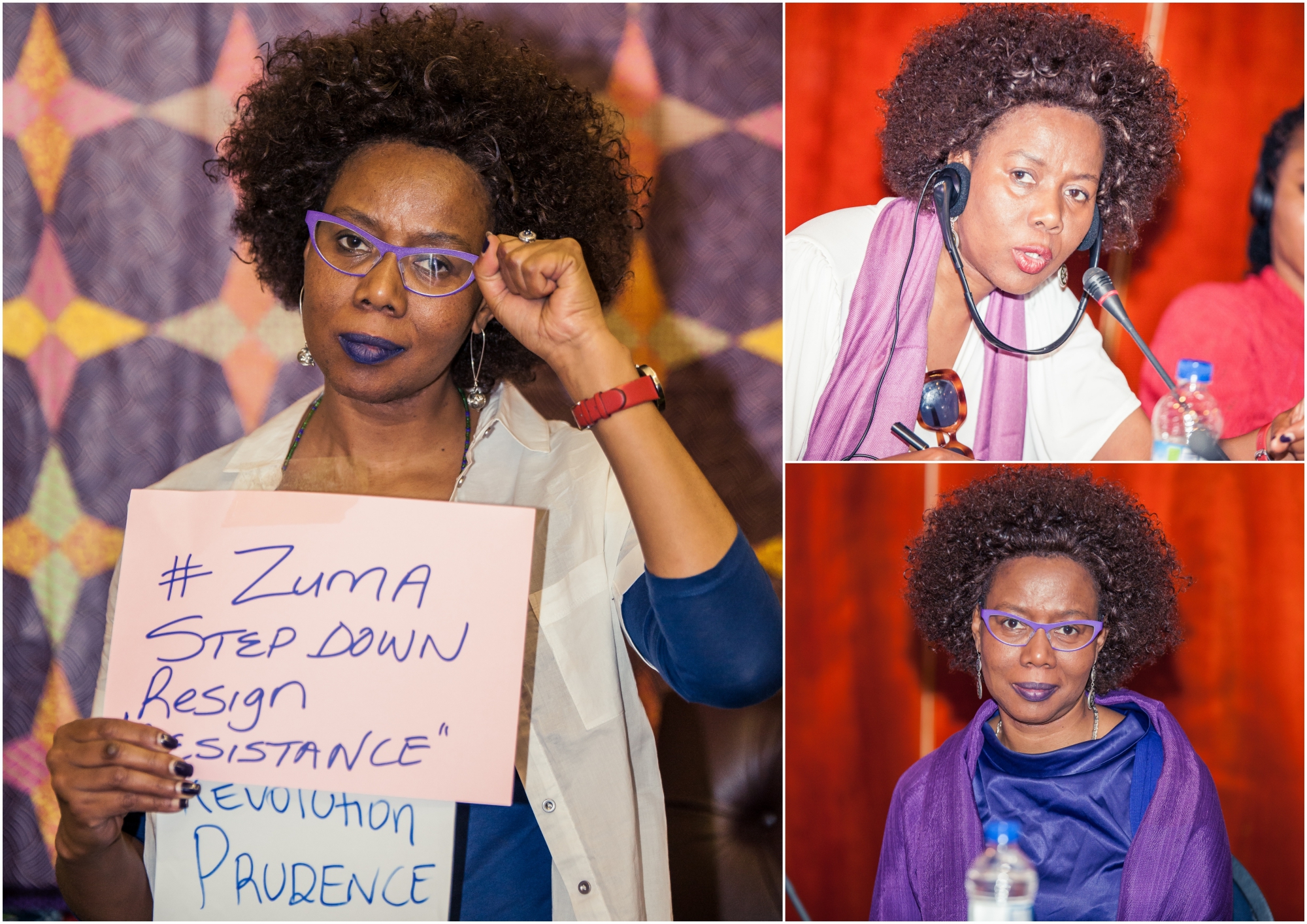
Some people are made of change, of strength, of will and of resilience. You have been an inspiration to us all, with an unrelenting sense of fearlessness that serves as our only comfort in this time of mourning. Your life was a celebration of sisterhood and of solidarity. You stood with those who others would have ignored.
Your historic work in the fight for the rights of South African women living with HIV to secure affordable accessible treatment and your solidarity as you stood with Fezeka aka ‘Khwezi’ during the rape trial of Jacob Zuma are testament to your strength of character and willingness to stand up for the rights of those who could not always stand up for themselves.
We are honored to have known you and worked with you in your tireless efforts in the Treatment Action Campaign and the 1 in 9 Campaign. You were never afraid to carve out new and necessary paths and as a strong advocate for the marginalized, you stood with communities and people living with and affected by HIV. Your work on LGBTI rights was both inspirational and moving to those who had the privilege to know and walk with you. Your identity informed so much of your politics – and your vision was of change not only on a global scale but also of change on a community level. It was this deep and personal passion that many of us came to associate with you. Though you are gone, memories of your fire, and strength remain.
Rest in Peace and Power Prudence.
You are missed. You are loved. You are remembered.
Community Media Trust: Amplifying Young Women’s Voices; Supporting Media for Community Health
Community Media Trust: Amplifying Young Women’s Voices; Supporting Media for Community Health
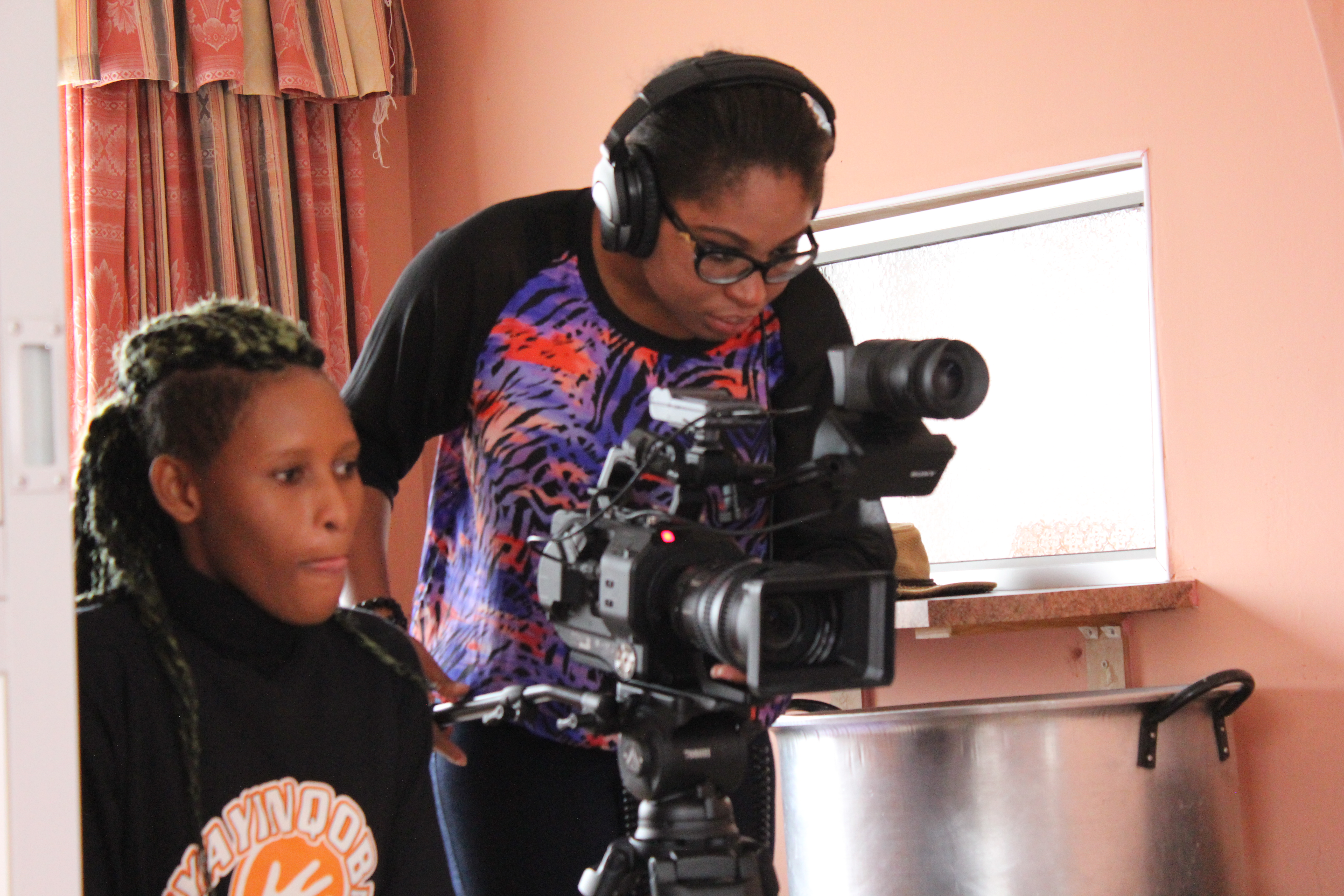
In short 12-minute inserts, Siyayinqoba, a television documentary series, helps young women claim their spaces by telling their own stories to other young women. Using popular media such as television and social media outreach, the programme makes substantial gains in the fight to give South Africa’s youth enough information to make informed decisions about their health rights. South Africa has one of the highest HIV rates in the world and the KwaZulu-Natal (KZN) province has the highest concentration of HIV in the country. It continues to record consistently high prevalence of the HIV in the age cohort of 15-49 years. Rising HIV rates are attributed to declining knowledge as well as an increase in risky sexual behaviour.
Research shows that young women have a disproportionate risk compared to their male peers with adolescent girls ages 15-19 eight times more likely to be infected with HIV. Young women ages 20-24 are more than three times likely to be infected with HIV than their male peers. Young women’s risk for HIV is further exacerbated by high rates of violence against women as well as rape, income and gender inequalities and other harmful cultural practices that target women. Siyayinqoba is a media product of the Community Media Trust (CMT) which promotes knowledge, transparency, accountability and democracy through the production of multiple forms of media, training and communication “in order to capacitate communities to improve their quality of life in South Africa”.
Watch their amazing story below:
Read the entire Grantee highlight here: CMT Grantee Highlight
A Model for Saving- New Faces New Voices: Graca Machel Trust
A Model for Saving- New Faces New Voices: Graca Machel Trust
New Faces New Voices is a pan African advocacy group that focuses on expanding the role and influence of women in the financial sector. “For us to have inclusive growth,” said NFVF Executive Director Nomsa Daniels, “we can’t afford to leave 50% of the population behind.” This belief that women have the potential to deliver a significant contribution to economic growth in Africa drives the organisation’s mandate. In 2015, the organisation identified the need to bring women into the formal banking sector to enable them to have access to financial services. NFNV Uganda Chapter director Theopista Ntale had been a banker for over 20 years, and therefore, understood the sector. “She also saw how the banking sector does not really serve women who are not able to access the full range of services,” explained Daniels. In Uganda, as in many African countries, there are clear gender inequalities in the finance sector with the majority of women lacking access to financial services and remaining unbanked and financially excluded.
The 2013, FinScope Uganda’s national survey on demand, usage, and access to financial services noted that the low usage of the formal banking products and services impacts heavily on the level of savings mobilised domestically through the financial system, which in turn affects access to credit and investment by the private sector. That survey also identified that the level of financial literacy among the adult population also remained low. “Lack of knowledge about existing financial products and services was rife among a large proportion of the adult population,” said the Finscope Report. Limited access to financial services is one of the biggest obstacles to development — especially in rural areas. Often the gap is bridged through the use of savings groups — most of whom are led by women.
Read the rest of their riveting story below, and watch the interview above for more insight into the work of the advocacy group.
6th CEO Forum Report
6th CEO Forum Report
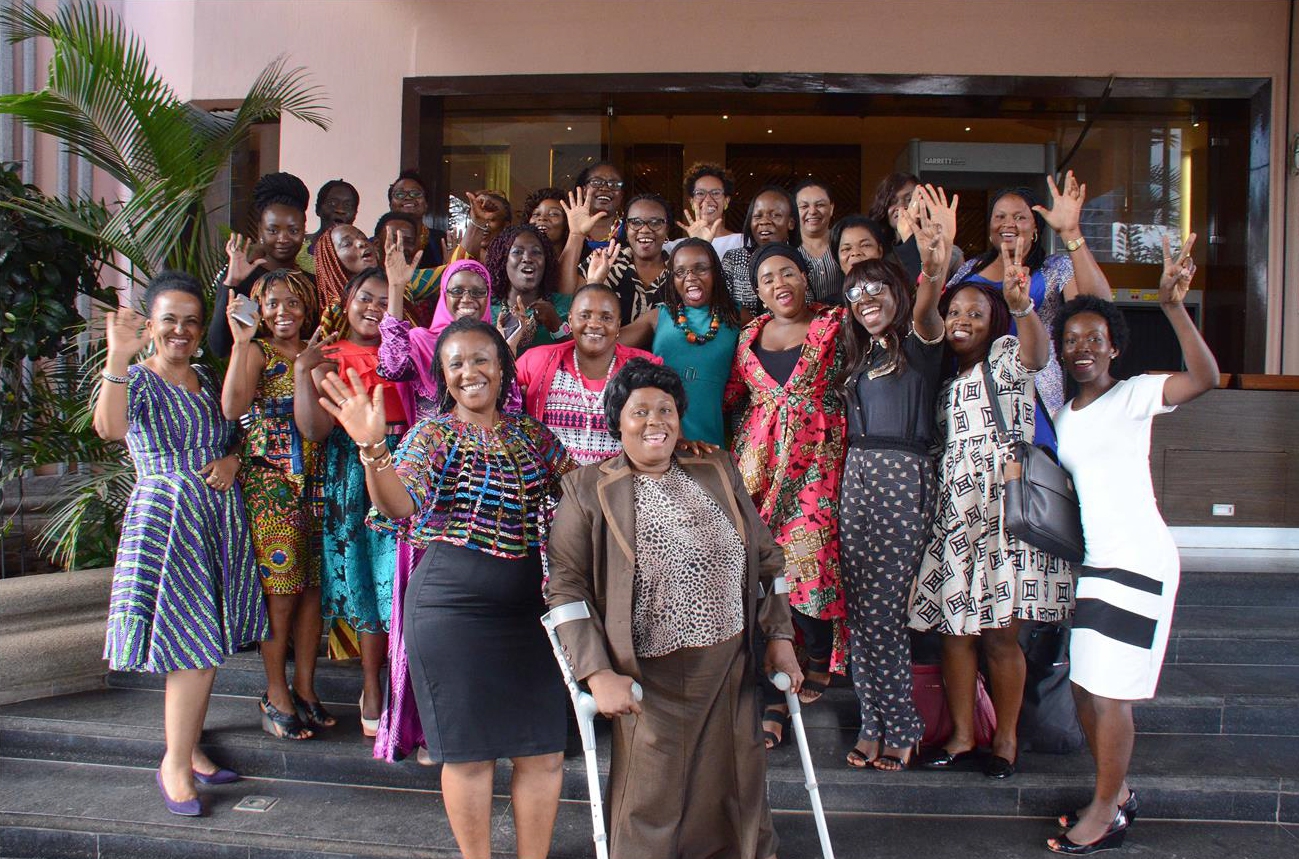
AWDF’s leadership development and coaching programme is aimed at building a cadre of African women leaders with feminist consciousness to promote women and girls’ rights in Africa. This programme targets young African women leaders because they represent our future, and deserve our investment in their human capacity development to enable them engage effectively as our leaders on women’s rights issues.
This 6th CEO forum, like previous years, is the first event of the intensive nine-month leadership coaching project. The forum is a unique space to inspire and encourage leaders to focus their minds on the coaching process and activities and embrace the new changes that will come from this experience for the benefit of their organisations and communities. The forum is also a space where leaders for the first time meet and interact with coaches assigned to them, engage and network with stakeholders on the project, question and agree on strategies on the way forward. As leaders embark on this important journey, we encourage them to be bold, courageous, conscious, and to take care of self and community and stand in solidarity with fellow women and girls.