
Category: News
Women’s Funds continue to fund change: 101 grants awarded for First Round of LFS
Women’s Funds continue to fund change: 101 grants awarded for First Round of LFS
[tp lang=”en” not_in=”fr”]
In early 2017, four women’s funds joined forces to launch the first calls for proposals for Leading from the South- a new funding stream dedicated to funding advocacy and lobbying by women’s rights organisations in Africa, Asia, Latin America and the Caribbean, and the Middle East. The fund was initiated with support from the Netherlands Ministry of Foreign Affairs as part of their commitment to the implementation of the Sustainable Development Goals, in particular SDG 5 oriented to achieve gender equality and empower all women and girls. The LFS fund is being implemented by four women’s funds; three regional funds: African Women’s Development Fund (Africa and the Middle East Region), Fondo Mujeres del Sur (Latin America and the Caribbean) and South Asia Women Fund (Asia); and one global fund: AYNI – the Indigenous Women’s Fund.
The first calls for proposals was met with tremendous response from women’s rights organisations across the global South. After a rigorous assessment process, the four funds are pleased to announce a total of 101 grants, representing 7.9 million Euro awarded to southern women’s organisations working to transform society towards equality and full exercise of rights for all women. Funded organisations are based in a total of 50 countries and will be implementing initiatives in 67 countries.
To read the press release in full click the links below
PRESS RELEASE_LFS 1st round 2017_ENGLISH
Press Release Aug 2017 FRANCAIS Final logo
[/tp]
[tp lang=”fr” not_in=”en”]
Au début de l’année 2017, quatre fonds d’appui aux femmes ont conjugué leurs efforts pour lancer les premiers appels à propositions dans le cadre du projet « LE SUD AUX RÊNES DU LEADERSHIP », un nouvelle initiative de financement destinée à financer les activités de plaidoyer et de lobbying des organisations qui oeuvrent pour la défense des droits des femmes en Afrique, en Asie, en Amérique latine, dans les Caraïbes et au Moyen-Orient. L’initiative a été lancé avec l’appui du Ministère Néerlandais des Affaires Etrangères dans le cadre de leur engagement pour la réalisation des objectifs du développement durable, en particulier le ODD 5 qui vise à soutenir l’égalité des sexes et l’autonomisation des femmes et des filles. Le projet« LE SUD AUX RÊNES DU LEADERSHIP » est exécuté par quatre fonds d’appui aux femmes dont 3 fonds régionaux à savoir Le Fonds Africain pour le Développement de la Femme qui couvre l’Afrique et le Moyen-Orient, Fondo Mujeres del Sur qui couvre l’Amérique Latine et les Caraïbes et South Asia Women Fund qui prend en compte l’Asie. International Indigenous Women’s Fund – AYNI quant à elle, est une organisation internationale.
Plusieurs organisations de femmes dans les pays du Sud ont postulé dès le lancement des premiers appels à propositions. Après un processus rigoureux d’évaluation des dossiers reçus, les quatre organisations ont le plaisir de vous annoncer un total de 101 subventions d’une valeur totale de 7,9 millions d’Euros. Ces subventions ont été octroyées aux organisations de femmes dans les pays du Sud qui oeuvrent en vue de construire une société où règne l’égalité et où les femmes jouiront pleinement de leurs droits. Les organisations bénéficiaires sont sises dans 50 pays mais réaliseront leurs projets dans 67 pays.
Cliquez sur le lien ci-dessous pour la version complète du Communiqué de Presse.
LE SUD AUX RÊNES DU LEADERSHIP: Communiqué de Presse
[/tp]
The Journey of Building Positive Networks, a Profile of Herschelle Milford, CEO of Surplus People’s Project
The Journey of Building Positive Networks, a Profile of Herschelle Milford, CEO of Surplus People’s Project
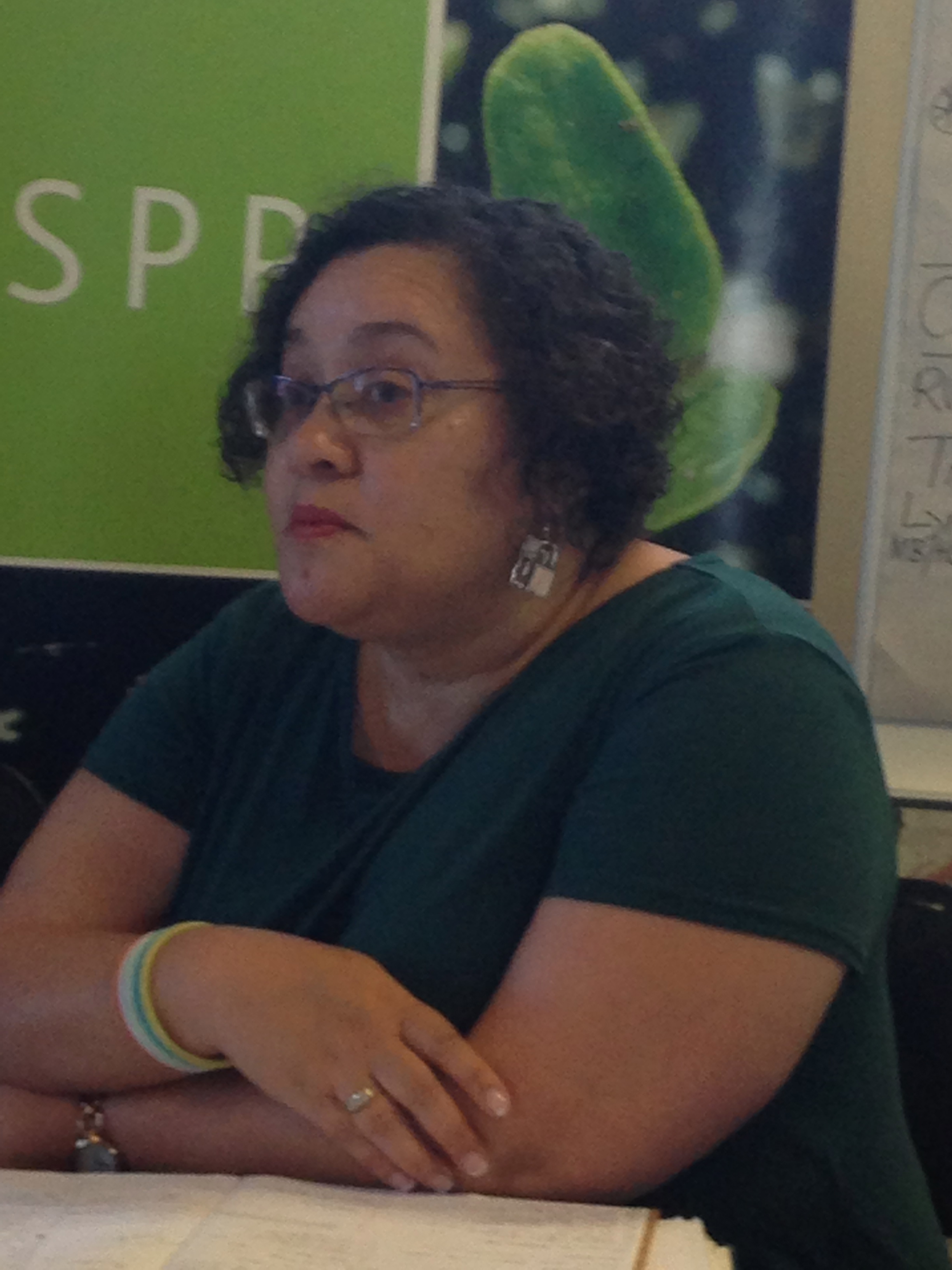
When Surplus People’s Project’s CEO, Herschelle Milford, was invited to participate in the African Women’s Development Fund’s CEO Forum on Leadership and Governance in 2015, it would be the start of a journey of growth that would build networks with feminist leaders across the African continent. At the time, Milford said her “biggest drawback has always been my struggle with self-confidence and public speaking”. Milford represents an organisation that envisages a transformed and just society and stands in “solidarity with radical social movements in struggles for pro-poor agrarian transformation for food sovereignty”.
SPP research conducted in 2009 indicated that land reform and food security strategies were not well integrated in South Africa and these policies have not paid sufficient attention to the patriarchal structures which limits women’s access to productive land. South Africa is one of the most unequal countries in the world with a Gini coefficient of about 0.65 and there are constant struggles to ensure that the poor have access to land and resources. SPP’s discussions with women across the Western and Northern Cape – where the organisation operates — have identified inequality in food, violence against women, women’s access to land, unemployment, alcohol and drug abuse as critical issues. SPP recognises that while there is a general challenge to have more South Africans gain access to the land, that challenge is greater for women.
To this end, the SPP works with social movements and communities helping them to amplify their agrarian struggles. “Generally, I am a selfdriven person and set high expectations for myself,” noted Milford. “A positive attribute has always been my leadership style that emphasised inclusivity, transparency and shared accountability.” The Nairobi intervention, however, focused on individual skills — starting early with yoga before moving on to three full day sessions that included board governance, media training, personal care, resource mobilisation and feminist engagement.
AWDF 4th Resource Mobilisation Bootcamp 2017
AWDF 4th Resource Mobilisation Bootcamp 2017
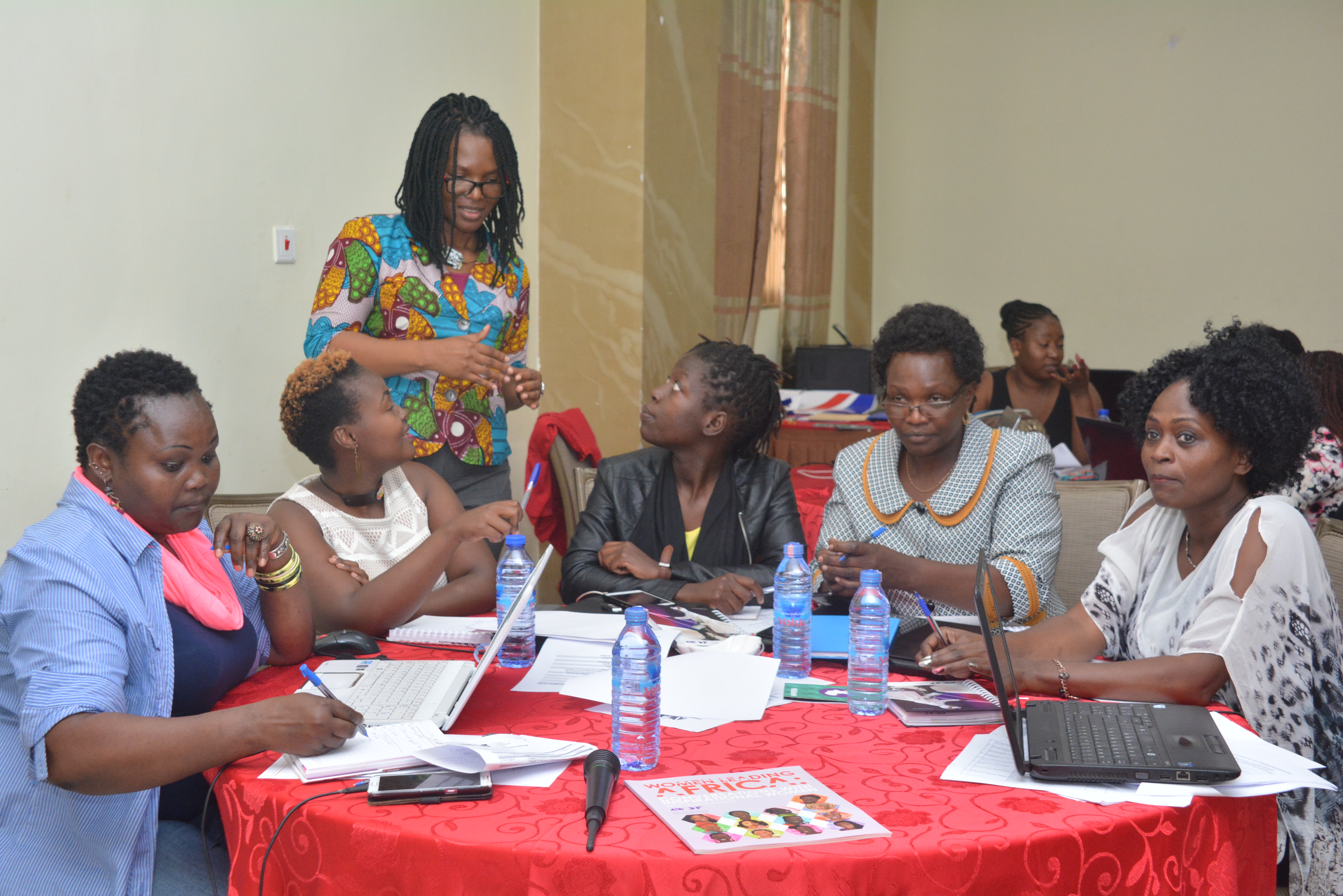
The African Women’s Development Fund is organising the 4th Resource Mobilisation bootcamp in Accra, Ghana from the 28th to the 31st of August 2017. The Resource Mobilisation Bootcamp is one of the capacity building programmes organised by AWDF to support grantees to develop their resource mobilisation strategy. AWDF has been providing capacity building support to its grantees to enhance their ability to effectively and efficiently achieve their set mandate.
AWDF recognises that a resource mobilisation strategy is critical to ensuring the sustainability of women’s rights organisation and to this end has organised this bootcamp for selected grantee partners since 02013. As at the end of 2015, a total of over 77 organisations had benefited from the first 3 resource mobilisation boot camps.
This year’s bootcamp has 19 participants from Cameroon, Kenya, Ghana, Liberia, Malawi, Nigeria Zambia and Zimbabwe. By the end of the 4 day boot camp, participants would have drafted their resource mobilisation strategy document. They will then be supported over a 4 months period through virtual coaching to finalise the draft Resource mobilisation strategy.
Planting a seed, a profile of Lorato Moalusi Sakufiwa
Planting a seed, a profile of Lorato Moalusi Sakufiwa
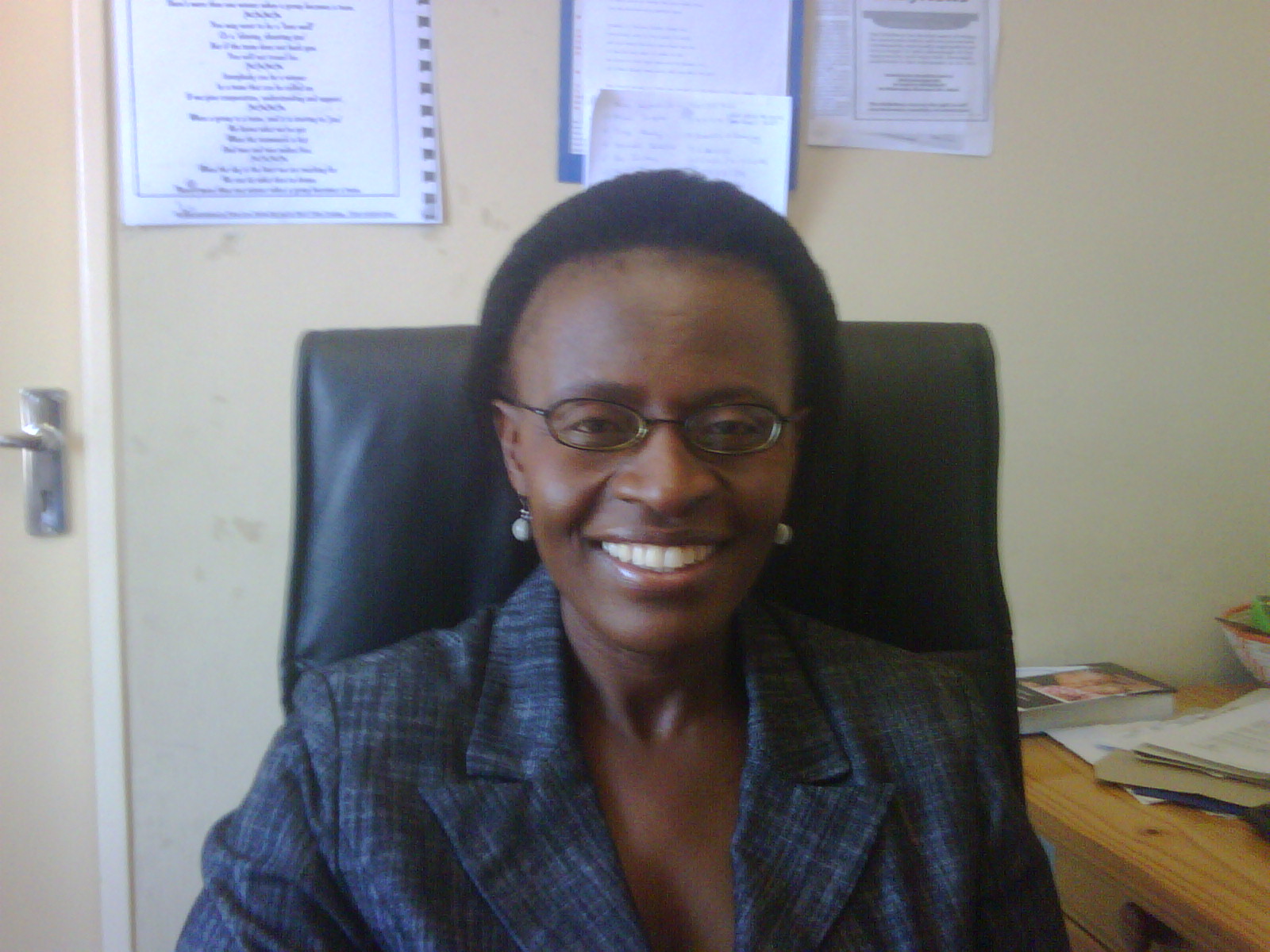
When the African Women’s Development Fund invited Lorato Moalusi-Sakufiwa to the CEO Forum’s Leadership and Governance programme, a Capacity Building initiative, it would plant a small seed that would bear fruit over a broad reach of the organisation’s programmes. “For me gaining leadership skills and then leading this organisation so that, in turn, it can start building the capacity of other organisations, was a big impact,” said MoalusiSakufiwa. “There was value in being in a partnership with the leadership programme because we were able to support the leadership of other organisations.”
Moalusi-Sakufiwa is the director of the Kagisano Society Women’s Shelter in Botswana and, in 2013, the organisation received USD 20,000 from the AWDF, under their Women’s Human Rights thematic area, in order to keep the organisation’s shelter running through the provision of adequate bedding, cooking utensils and improved safety measures. The Kagisano Society Women’s Shelter was established in1998 in response to violence against women (VAW) in Botswana. Their vision is to be a leading organisation for ending violence against women in the country. The shelter does so by providing temporary shelter, counselling, community education and outreach, and completing advocacy on critical issues connected to the security of women.
Read the rest of her story below:
Building Organisational Resilience. Profile of Wangechi Wachira, Executive Director of Centre for Rights Education and Awareness
Building Organisational Resilience. Profile of Wangechi Wachira, Executive Director of Centre for Rights Education and Awareness
![12803175_1277771738906432_4799005210517885961_n[2]](https://awdf.org/wp-content/uploads/2017/09/12803175_1277771738906432_4799005210517885961_n2.jpg)
In 2013, the Centre for Rights, Education and Awareness (CREAW) in Kenya was facing closure. Nearly 5,000 cases affecting women that CREAW was overseeing were still within the legal system but the organisation — like many in the country — was in the midst of a funding crisis. CREAW is a national, women’s human rights nongovernmental organisation based in Nairobi, whose vision is “a transformed and just society”. Its mission is to champion, expand and make real women’s human rights with programmes grounded in core values of integrity, professionalism, passion, innovation, and synergy. It is headed by leading woman’s activist, Wangechi Wachira. CREAW’s relationship with the African Women’s Development Fund (AWDF) started in 2007 when another leading women’s organisation and grantee partner, FEMNET, suggested the organisation apply for funding for their women’s programmes.
“By the time we started the relationship around 2007, Kenya was going into a general election. AWDF funded a programme that worked to support women to be able to participate in decision-making processes,” recalled Wachira. “Before the election, things were fine but after the elections, things went south. We were able to play a role in peace building during that process. We went back to AWDF and said that women had come out in big numbers to vote but in the aftermath, women had been abused and violated. We wanted to go back to the communities and document the stories of the women we had worked with,” she explained.
“The country has made a lot of strides since 2007. In 2010, Kenya passed a Constitution and women were able to push for their issues at a constitutional level. Since then a lot of laws have been passed that deal with the issues of women. What remains, however, is to make sure that they are finalised, implemented and that the relevant government institutions take responsibility for them to be enacted,” said Wachira.
Sierra Leone Landslide: AWDF Condolences and Solidarity
Sierra Leone Landslide: AWDF Condolences and Solidarity

The African Women’s Development Fund (AWDF) extends condolences to the people of Sierra Leone for the devastating landslide in Freetown on 14 August 2017. This has affected thousands of people, including several grantee partners.
Experiences from across Africa and from different types of natural or human made disasters has shown us that women’s community responses and leadership are central to effective responses to disasters. The courageous actions of multiple Sierra Leonean women’s organisations during the recent Ebola crisis is just one example of this. The strength and resilience displayed by the people of Sierra Leone in the wake of disasters has been amazing and will be a key factor in the current recovery process.
As we hear the updates of this humanitarian crisis, we are concerned in particular about the condition of women and of girls who are now in precarious housing and economic situations. In that light, we affirm the need for a humanitarian response that takes into account the specific needs of women and of girls.
Our hearts and our thoughts are with the people of Sierra Leone and with women’s groups responding in this period of recovery and rebuilding.
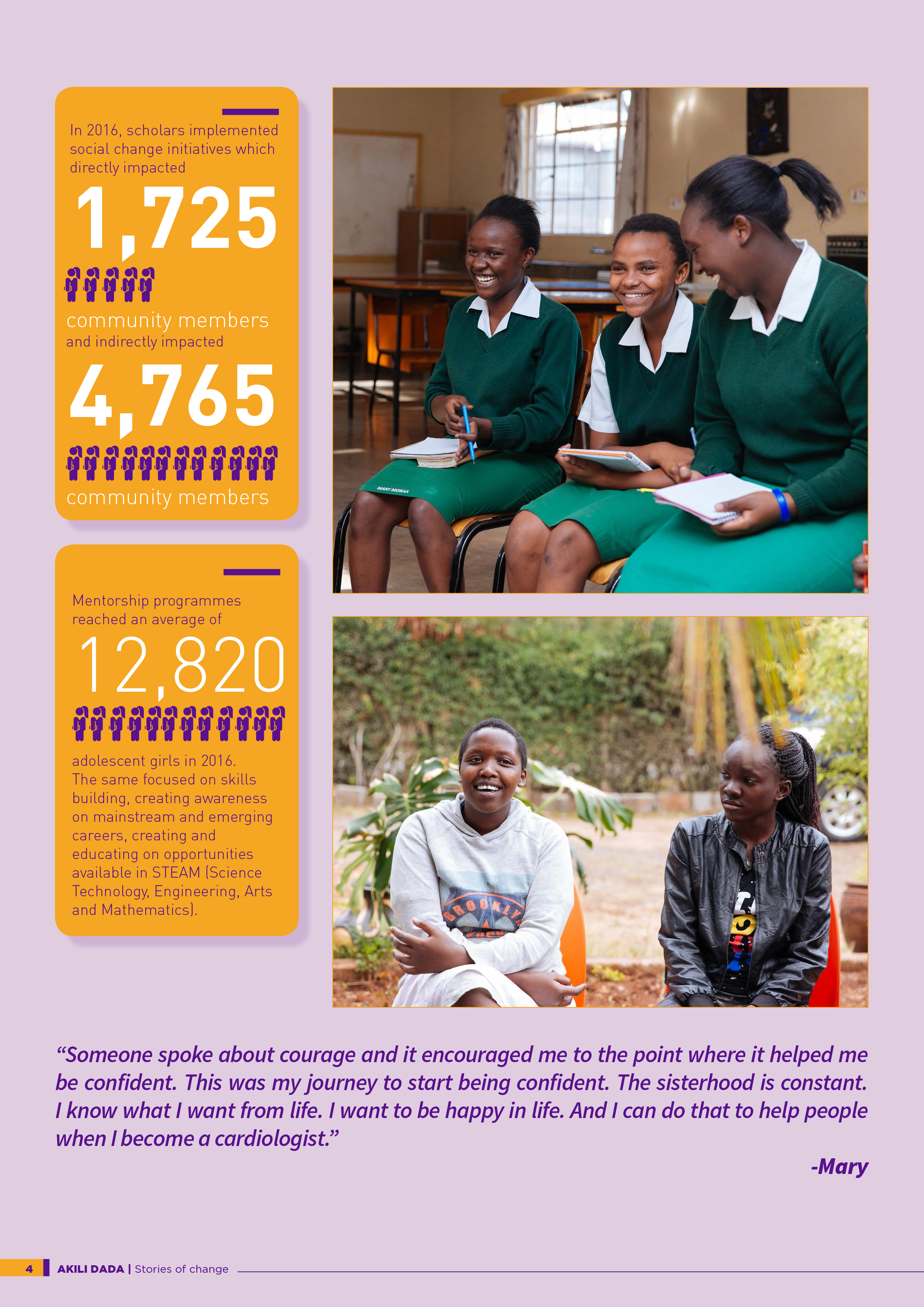
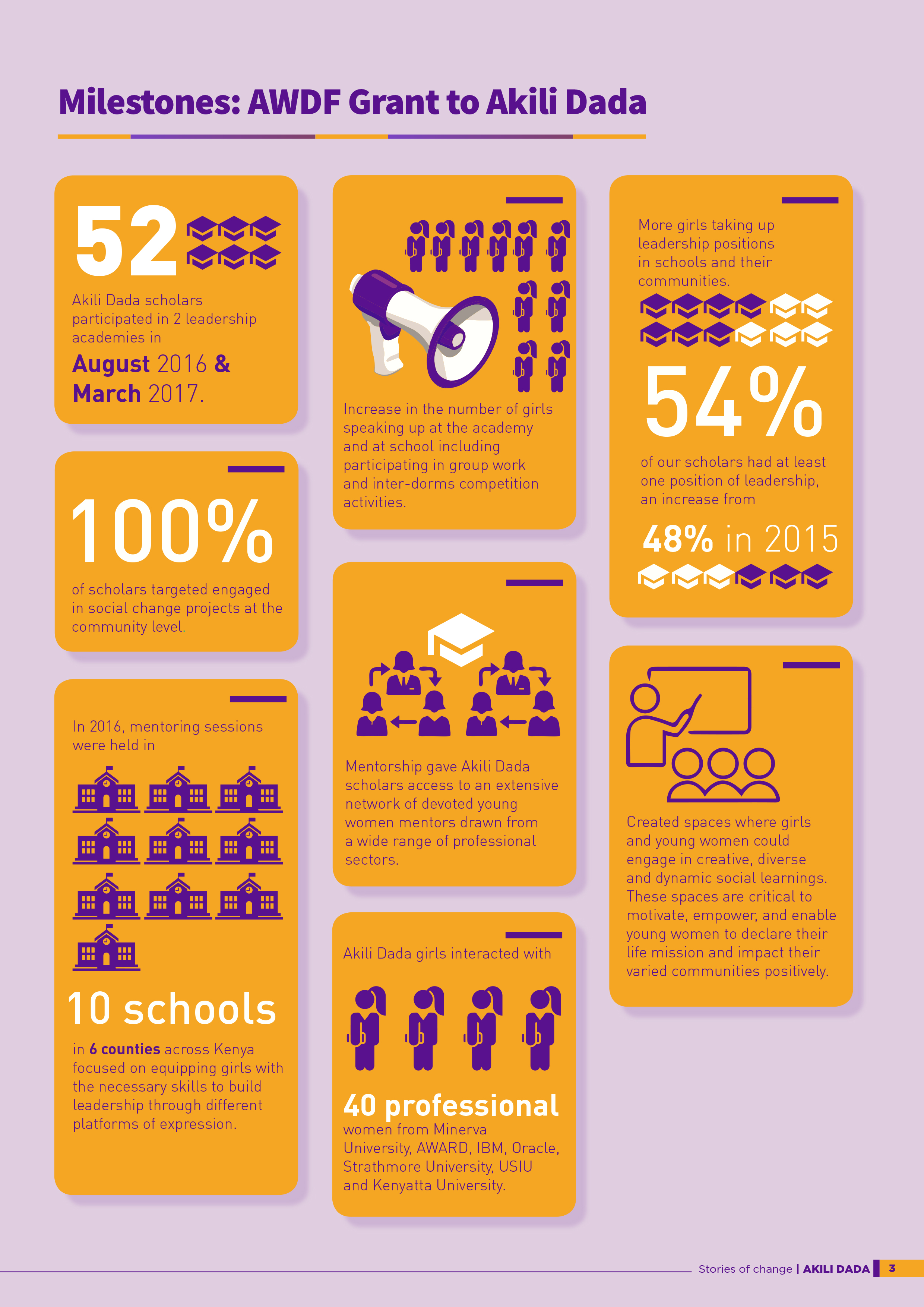
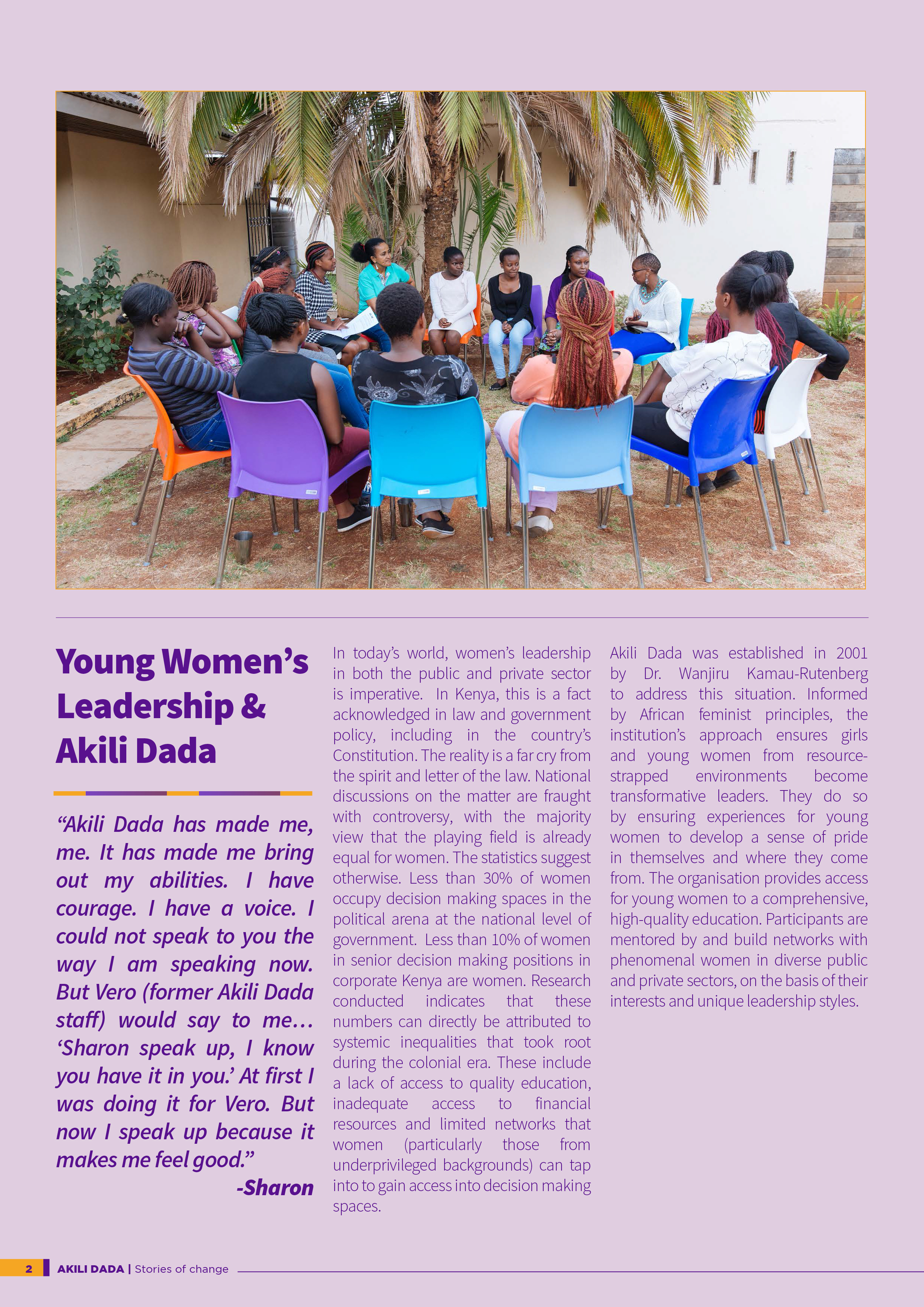
Exercising Women’s Leadership That Transforms Communities: Young Women’s Leadership & Akili Dada
Exercising Women’s Leadership That Transforms Communities: Young Women’s Leadership & Akili Dada
JOB VACANCY: PROSPERA – THE INTERNATIONAL NETWORK OF WOMEN´S FUNDS, CAPACITY BUILDING PROGRAM OFFICER POSITION
JOB VACANCY: PROSPERA – THE INTERNATIONAL NETWORK OF WOMEN´S FUNDS, CAPACITY BUILDING PROGRAM OFFICER POSITION
Immediate supervisor: Deputy Director
Position summary: To develop and manage Prospera’s capacity building program (on learning, monitoring and evaluation; finance and administration; local
fundraising; advocacy, among others) as well as to be the liaison between member funds from Africa and the network.
Principal tasks and responsibilities:
• Work collaboratively with other team members to develop and define Prospera’s program strategies.
• Lead the development of grant proposals for funding related to the capacity building program or of work with funds in the African region.
• Manage and supervise capacity building program activities, designing work plans and following up on the implementation of the program´s strategy and budget, on a global level.
• Identify, build and manage relationships and networks with member funds, stakeholders and civil society actors and government bodies in Africa, in
coordination with the Director of Programs.
• Facilitate information sharing and coordination among all member funds, including those related to grant making and any other program processes
and activities.
• Provide technical assistance and coaching to member funds, on an ad hoc basis.
• Develop criteria, indicators and benchmarks to monitor and evaluate progress in meeting the capacity building program´s goals and advancing Prospera´s strategy.
• Contribute to producing a range of documents related to the program as well as in the region.
• Continually scan the fields related to women´s human rights, philanthropy,organizational development and capacity building, follow key developments and debates, keep abreast of the academic and popular literature, share key findings and lessons among colleagues in the field.
• Represent Prospera in public meetings and conferences.
• Represent Prospera in Africa and develop a relationship to support the Women’s Funds based in the African region.
• Other related tasks as assigned.
Internal relationships: The Program Officer will be the point person for all work on the capacity building program, as well as the liaison between the network and the funds from Africa, and will therefore interact with all members of the team on issues relating to the program and the region.
External relationships: The Program Officer will have ongoing direct interactions with staff and women´s funds from Africa. The Program Officer will also interact with all consultants and external partners contributing to the capacity building program.
QUALIFICATIONS
Educational level: Masters degree in the social sciences or humanities is preferred.
Languages: English required, French and/or Portuguese strongly preferred
Previous experience: 5-7 Years program management experience; management of learning, Monitoring and Evaluation methodologies; grant writing experience; developing programs for capacity building of women’s or civil society organizations; management of relations with donors; writing narrative reports.
At least seven years of professional experience leading or collaborating on civil society strategies related to women´s human rights and/or philanthropy for women´s rightsin Africa.
Specific knowledge, skills and abilities:
• Previous knowledge regarding gender issues and/or global philanthropy preferred.
• Understanding of the needs of women´s rights organizations and funds, particularly in the key areas related to organizational strengthening and capacity building.
• Demonstrable success in planning and implementing programs related to organizational development or capacity building or in designing grantmaking programs.
• Very good verbal and written communication skills.
• Effective interpersonal, communication and team-working skills.
• Conscientious and detail oriented.
• Ability to work independently, while still part of a team, and adapt to quick changing circumstances.
• Personal qualities of humility, capacity for self-reflection and a sense of humor.
Travel:
40% travel within Africa and to other international destinations required
To Apply, please send a Cover Letter and updated Resume to Alexandra Garita at
agarita@prospera-inwf.org
To download Application in it’s entirety please click HERE
Transcending Sexual Violence: Providing Support for Survivors through the Nairobi Women’s Hospital Gender Violence Recovery Centre
Transcending Sexual Violence: Providing Support for Survivors through the Nairobi Women’s Hospital Gender Violence Recovery Centre
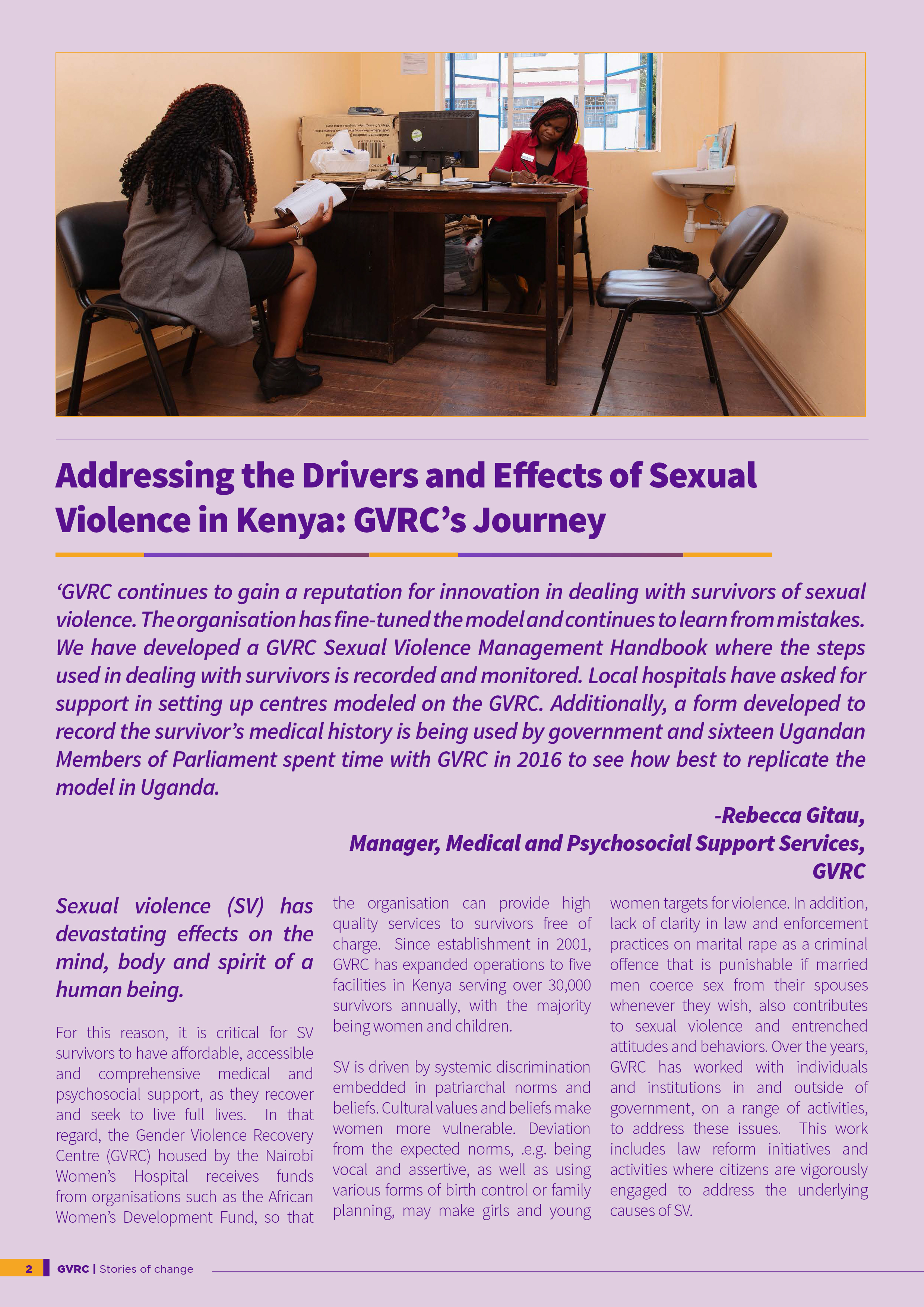
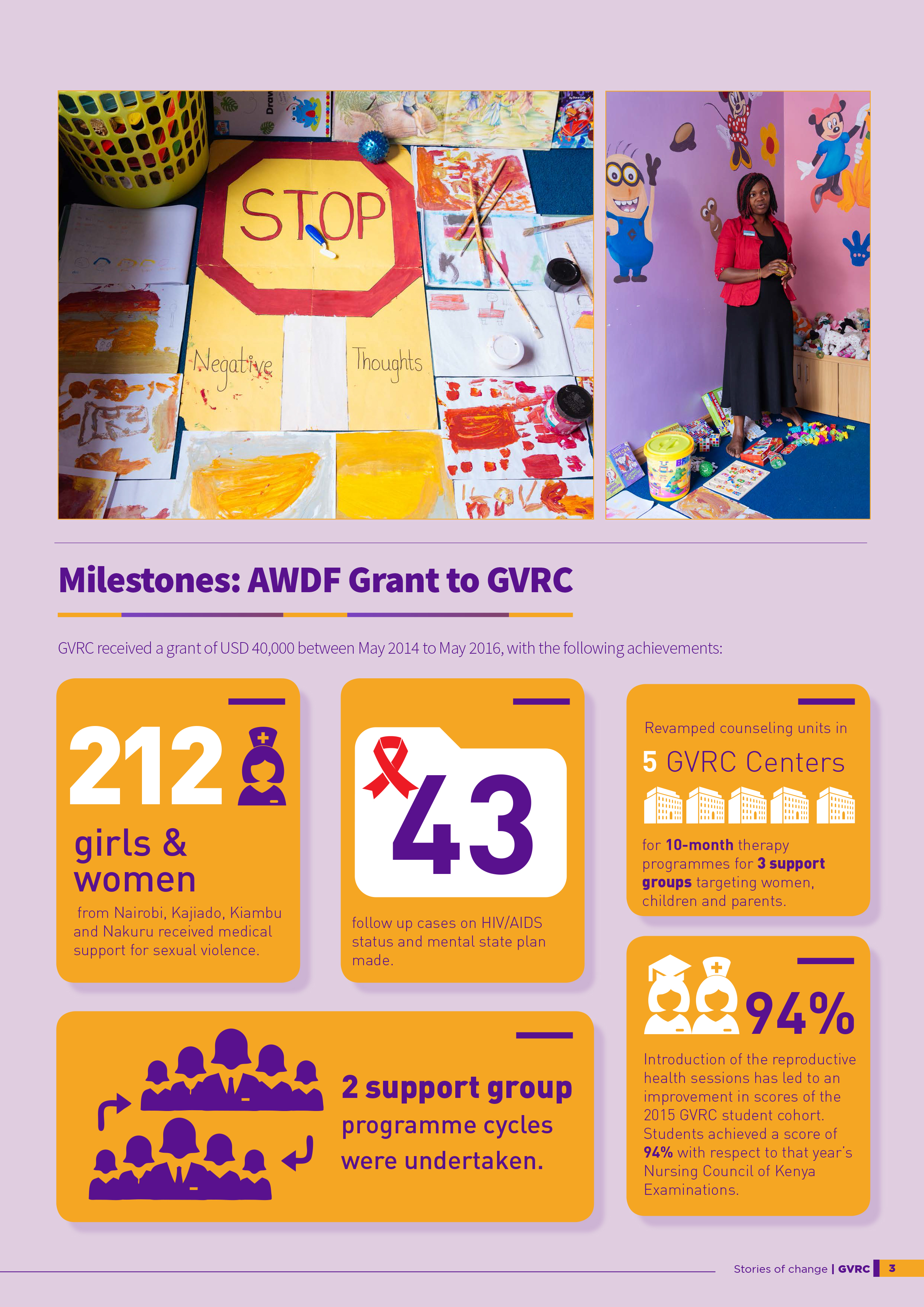
To read the full story: Click Here
Exercising Women’s Leadership that Transforms Communities: Claris
Exercising Women’s Leadership that Transforms Communities: Claris
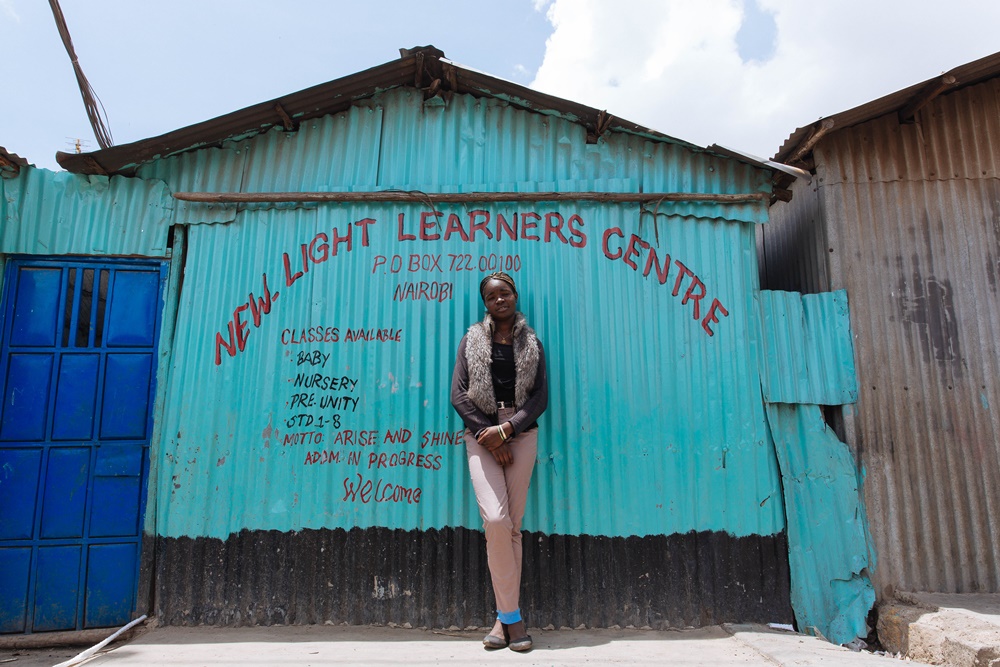
Go-getter. These are some of the words that can be usedto describe Claris. She is 19 years old and part of Paza, Akili Dada’s gap year programme in Kenya. Claris joined Akili Dada in her first year of high school, at Precious Blood-Riruta. Coming from MukuruKwa Reuben, a resource-strapped community
in Nairobi, she knew her chances of making it through high school were slim. She, therefore, sought
scholarships for higher learning from multiple organisations through the principal’s office. In addition to receiving a scholarship, she has been a project participant of the leadership academies supported by the African Women’s Development Fund (AWDF). The academies are spaces for reflection where Akili Dada scholars are equipped with life skills. This includes helping the girls understand themselves and their capacities comprehensively so that they identify how to best negotiate life in society. This in turn enables the project participants to excel in whatever they aspire to be and do, and to be the change leaders our world needs. At the leadership academies, young women also brainstorm new ways to
exercise leadership to transform their communities. In that regard, Akili Dada introduced Claris to the service learning concept. In turn, she decided to start a library in her community.
To read the rest of her story click below: