
Category: News
A message of Solidarity for Lebanon
A message of Solidarity for Lebanon
[tp lang=”en” not_in=”fr”]
SOLIDARITY MESSAGE
The African Women’s Development Fund extends condolences to the residents of Beirut following the massive explosion that rocked the city on Tuesday.
We are deeply saddened by the news and our thoughts are with our sisters and their families who live and work in the city. As devastating as this is, we know you will continue to show strength, resilience and leadership in your response, just as you have shown in the incredible work you are doing in the region around migrant domestic workers and refugees as well as pushing for the rights of LBTQ women.
Stay Strong, and Stay Safe. Our thoughts and prayers are with you.
[/tp]
[tp lang=”fr” not_in=”en”]
Message de Solidarité
L’AWDF présente ses condoléances aux habitants de Beyrouth à la suite de l’explosion massive qui a secoué la ville ce mardi.
Nous sommes profondément attristés par cette nouvelle et nos pensées vont à nos sœurs et à leurs familles qui vivent et travaillent dans la ville. Aussi dévastateur que cela soit, nous savons que vous continuerez à faire preuve de force, de résilience et de leadership dans votre réponse. Nous le savons grâce au travail incroyable que vous faites dans la région en faveur des travailleurs domestiques migrants et des réfugiés, ainsi qu’en faveur des femmes LBTQ.
Restez forts, et restez en sécurité. Nos pensées et nos prières sont avec vous.
[/tp]
Return of our Knowledge Product: Bread and Butter Series
Return of our Knowledge Product: Bread and Butter Series
We look to continue envisioning a future Africa that ensures women’s and girls’ sustainable livelihoods, meaningful labour, and full socio-economic autonomy.
Launched by AWDF in October 2018, the Bread and Butter Series is a knowledge product that culminated from the African women’s economic futures convening held in Accra in the same year. Twenty-seven (27) activists, academics, development workers and knowledge producers extensively discussed and engaged in workshop and group activities to build sound advocacy strategies aimed at shaping sustainable economic futures for African women. The convening was informed by AWDF’s fourth strategic plan Shaping the Future, and its accompanying Futures Trends Analysis Report which highlight evidence-based socio-economic trend implications projected for women and girls on the continent.
Read the first article in the second series here:
African Feminist Futures – Macro-economic Pathways
The expression “bread and butter” refers both to the ways in which individuals come to sustain themselves usually through paid work and individuals’ practical, every day needs and concerns. The economic futures convening was a first step in a journey to better support future-oriented strategies that engender African women’s economic justice and security. Since then, we have continued to work with dynamic African feminist writers to conceptualise, research, document and publish critical and radical perspectives about theirs and the experiences, contributions, needs and opportunities of African women and girls at micro and macro-economic levels.
Covering a range of topics from macro-economic policy pathways to the actual implication of distribution of economic resources at household level, this knowledge series affirms that African women’s economic issues are both internalised and challenged in everyday acts of resistance and solution-building. Moreover, that like never before, it is critical to, among other things, demystify economics as a white, male and Western concept that is out of reach for African women.
The Bread and Butter knowledge series uphold that all African women understand the consequences and solutions for oppressive neoliberal capitalist economic models and seek to encourage their voices as economic actors, thinkers and shapeshifters.
We invite your readership and engagement with the real “bread and butter” issues that women and girls face in Africa through the opinion pieces, research essays and narratives compiled in this series. And as you do, we look to continue envisioning a future Africa that ensures women’s and girls’ sustainable livelihoods, meaningful labour, and full socio-economic autonomy.
We hope that this series will engender new conversations about how we support African women to pursue economic justice and security. We also hope to contribute to a larger conversation about how philanthropic institutions regionally and globally can better support African women’s economic interests, as described by African women, themselves.
Do you have feedback on any of the Bread and Butter articles? Please email our Knowledge Management Specialist, dinnah@awdf.org
Shattering Glass Ceilings: Abena Amoah’s record-breaking strides on the Ghana Stock Exchange
Shattering Glass Ceilings: Abena Amoah’s record-breaking strides on the Ghana Stock Exchange
[tp lang=”en” not_in=”fr”]
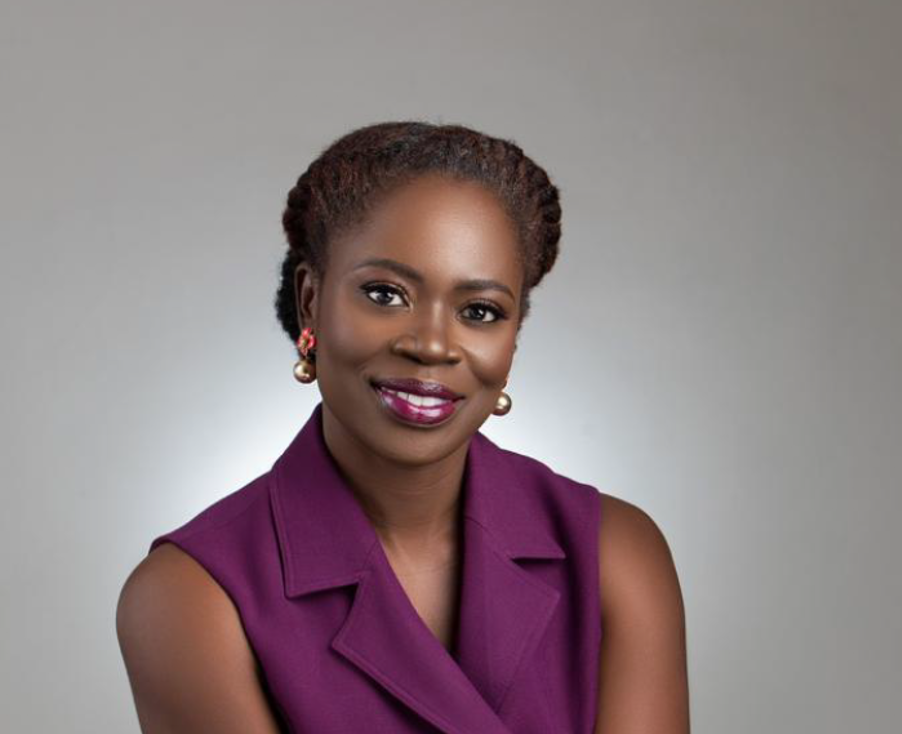
Congratulations to Abena Amoah, former Board member of the African Women’s Development Fund, on her appointment as Deputy Managing Director of the Ghana Stock Exchange.
Abena’s appointment is exciting as this makes her the first female executive director of the Exchange, a hitherto male-dominated industry; but not surprising because she is an accomplished investment banker and capital markets expert who has led on many landmark transactions for over two decades.
She was a stellar member of team while she served on the board of AWDF and brought her wealth of experience to bear. Abena is an inspiration to both staff and partners, blazing the trail, and showing that she is a true African woman: determined, intelligent, dynamic and unstoppable.
We are proud of you Sister, and we cannot wait to see what the future holds for you.
Read the GSE Press Release here:
[/tp]
[tp lang=”fr” not_in=”en”]
Félicitations à Abena Amoah, ancienne membre du conseil d’administration de l’AWDF, pour sa nomination au poste de directeur général adjoint de la Bourse du Ghana.
La nomination d’Abena est particulièrement intéressante, car elle devient la première femme directrice exécutive de la Bourse, un secteur jusqu’alors dominé par les hommes ; mais ce n’est pas surprenant, car elle est une banquière d’affaires et une experte des marchés des capitaux accomplie qui a dirigé de nombreuses transactions marquantes pendant plus de deux décennies.
Elle a été un membre éminent de l’équipe lorsqu’elle siégeait au conseil d’administration de l’AWDF et a mis à profit sa riche expérience. Abena est une source d’inspiration pour le personnel et les partenaires, elle ouvre la voie et montre qu’elle est une véritable femme africaine : déterminée, intelligente, dynamique et inarrêtable.
Nous sommes fiers de toi, sœur, et nous avons hâte de voir ce que l’avenir te réserve.
[/tp]
Call for Consultant: E-Learning for Capacity Building
Call for Consultant: E-Learning for Capacity Building
We’re looking for an African Feminist Consultant to support our virtual training.
The AWDF Capacity Building Unit is seeking an expert consultant to work under the supervision of the Director of Programmes and Capacity Building team to advise on the design, structuring and delivering of online trainings. As part of this we will be taking into account both the need to review training approaches in the online environment, consider implications for participants with disabilities, security and privacy, and also ease of access to virtual platforms given that many participants have difficulties with internet connectivity.
If you have a track record of work supporting activist NGOs to build online learning platforms and approaches and are committed to Feminist values, please contact us today! Click here for the Terms of Reference
Closing Date: 27th July 2020
A FLOURISH State of Mind: Healing the Healer
A FLOURISH State of Mind: Healing the Healer
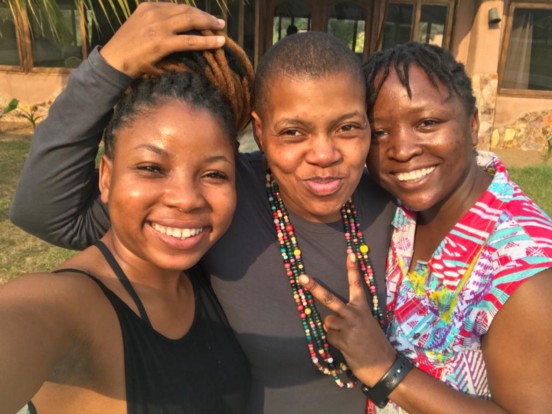
I remember Hope Chigudu warmly embracing me, whispering to me these words, “It is time to let go of everything even if it’s going to hurt others…so you can heal, be free and start thinking of yourself as a person.” These words are still my guiding principles today.
~ Florence Awuor, Flourish Retreat participant.
AWDF’s inaugural Flourish Retreat was launched in February this year in what will turn out to be an incredibly empowering start to what was going to be a very difficult year.
Taking place at the beautiful Sogakope beach resort located in the Volta region of Ghana, the Flourish retreat is one strand of the AWDF Flourish Project aimed at strengthening feminist organising across Africa, a partner project of the NOVO Foundation’s Radical Hope Fund. Built deliberately around African healing philosophy and practices, the Flourish facilitators used a plethora of tools – art, chakras for emotional, spiritual and physical wellbeing, breathing exercises, affirmations, dancing, aromatherapy, meditation, moon rituals, yoga, poetry and creative writing, individual and group reflection sessions, journaling, theatre and counselling sessions.
The NoVo Foundation launched the Radical Hope Fund in July 2017 with a global call for projects grounded in new partnerships, bold experimentation, and a deep commitment to social justice. The vision of Radical Hope is to create spaces for dreaming new possibilities, experimenting with new collaborations and developing new, creative strategies to overcome structural failures. AWDF’s Flourish Project was one of 19 initiatives selected to support this vision on the continent.
Using a transformational, feminist approach, the Flourish retreat created a dynamic healing space for 20 African feminists. These were women working on the frontlines of VAW prevention in the fields of sex work, women living with HIV, running rape crisis centres, healing and feminist movement building.
In an interview, Jessica Horn, Director of Programmes at AWDF, speaks about healing, the AWDF Flourish retreat and her vision for what the retreat could do within the African feminist movement. Jessica is a writer and political commentator, co-founder of AIR. She curates open mics where people explore the concept of Revolutionary Love and also acted as a Flourish Facilitator at the inaugural Flourish Retreat.
Written by Nana Akosua Hanson, Programme Officer, Catalytic Initiatives, AWDF
Click here to read the full interview and also the reflections of the participants – A Flourish State of Mind blog
To see more pictures from the retreat, visit our Instagram page @theawdf
Women’s Labour Rights: Confronting the Barriers
Women’s Labour Rights: Confronting the Barriers
For women in the formal labour force, there is the reality of the glass ceiling and the discriminatory requirements for moving past a certain point on the career ladder which is exacerbated by a lack of access to a broad range of job opportunities. In addition, there is the normalisation of sexual harassment in the workplace due to patriarchal work cultures. Finally, there is greater precarity with contracts when it comes to women (including those tied to immigration e.g. Kafala in Lebanon; and the use of short term contracting to evade worker protections as employees are then not eligible for full time worker benefits e.g. Kenya tea farmers).
Organisations fighting for women’s labour rights face the perpetual challenge of accessing adequate funding which is needed to build and sustain advocacy, community level groups and the national and transnational momentum for change. The presence of supportive, flexible and multi-year funding in particular makes a tremendous difference in the ability to maintain labour right activism.
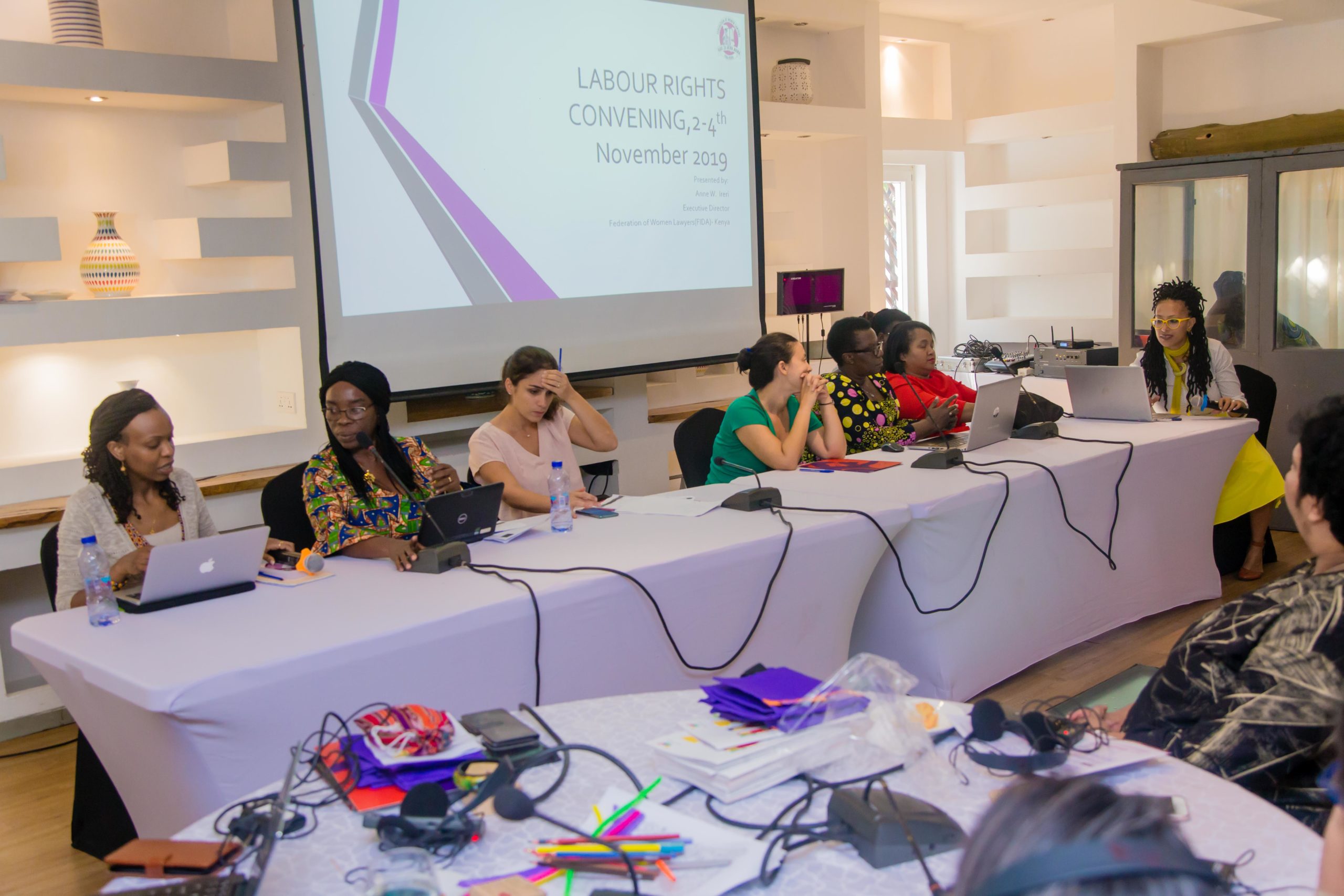
In November 2019, AWDF held a convening in Accra with six grantee organisations of Leading from the South, to discuss the different aspects of women’s labour rights advocacy in Africa and the Middle East and also to explore commonalities in strategies and approaches, challenges and areas for growth.
To read the Report from the Convening, click here: Labour Rights Convening Report
Women and Non-communicable Diseases in Africa
Women and Non-communicable Diseases in Africa
Non-communicable diseases (NCDs)—which include cardiovascular diseases, diabetes, cancers, chronic respiratory diseases, and mental health conditions—are already leading causes of death and disability for women in many countries across Africa with worrying forecasts for the future. National, regional and global attention with regards to women’s health on the continent however remains largely fixated on infectious diseases and maternal and child health
In an effort to address these gaps and explore the opportunities to better support African women’s organisations around engagement with NCD prevention and control, the African Women’s Development Fund, commissioned a research project to look at:
(1) the scale and key gendered concerns around NCDs and women in Africa;
(2) the key actors responding to the rise in NCDs in Africa;
(3) how these actors are responding and whether gender, equity and rights being considered in these responses; and
(4) the opportunities and challenges for African women’s organisations around engagement with NCD prevention and control and ways to support greater engagement on links between NCDs and women’s rights.
To read the Executive Summary of the Report, click here
For the full report on Women and Non-communicable Diseases in Africa, click here
Diaries of African Feminists: Building Emotional Resilience
Diaries of African Feminists: Building Emotional Resilience
In February of this year, AWDF held its inaugural Flourish retreat, a groundbreaking and much needed space for African feminists to rest, rejuvenate and build emotional resilience. After heading home, participants continued the work with their own energies, building ongoing sisterhood to sustain their activism. Read the stories of seven African feminists living and working in Uganda, sharing their survival techniques for coping in these challenging times of the COVID-19 pandemic.
Read the diaries here
Solidarity in Word and Deed: Translating the African Feminist Charter
Solidarity in Word and Deed: Translating the African Feminist Charter
Author: Jessica Horn, AWDF Director of Programmes
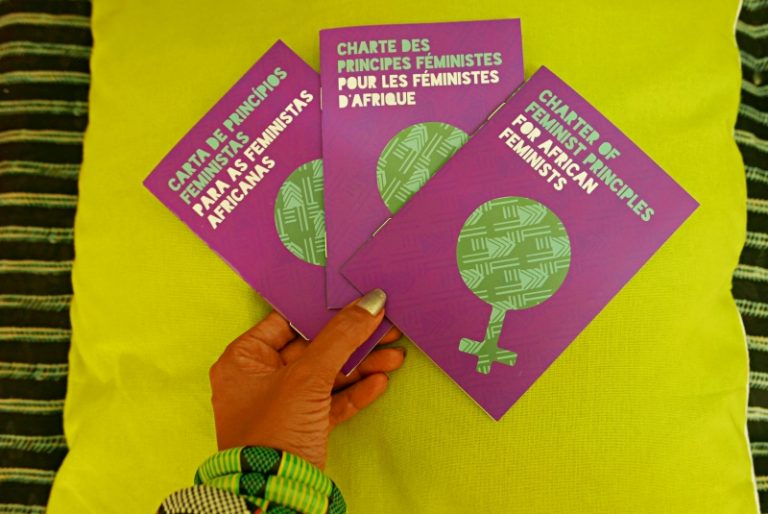
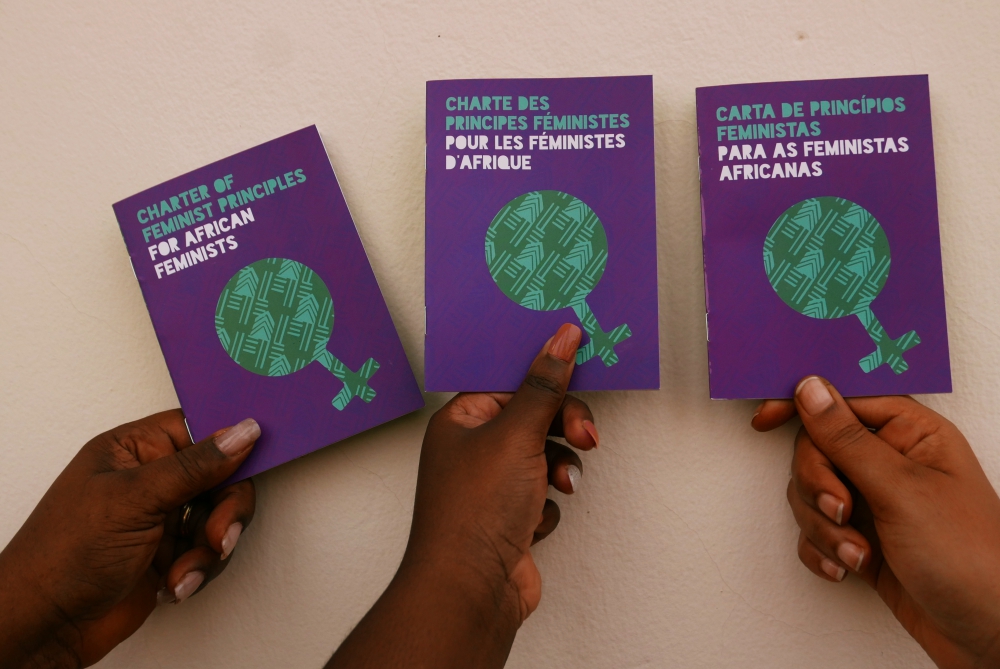
It may seem odd to be excited about a publication. However the story of the translation of the Charter of Feminist Principles for African Feminists begs recounting as a tale of inspired collective action.
The Charter itself was developed by the African Feminist Forum Working Group in 2006 and adopted in by over 100 African feminists at the first African Feminist Forum (AFF) hosted by AWDF in Accra that year. The goal was political clarity. Every movement needs to articulate its visions of ethics and collective power-and its political bottom lines. The Charter provided this, and has been used since as a means of bringing feminist activists across generations together to build feminist consciousness, create new feminist spaces and even to help unite women mobilising against religious fundamentalism.
As beautiful as it is, the Charter was written in English- a language spoken by some but not all of Africa’s people. Translating the Charter was imperative. However as is typical in the world of women’s organising, the AFF faced the challenge of funding. What we had not anticipated was the spontaneous action and love that we would receive in the form of voluntary translation by African activists so moved by the Charter that they saw it necessary to make sure the people they organised alongside could read it too.
In its first incarnation, Beninoise feminist and AWDF staff member Rissi Asani-Alabi translated the Charter into French for use in the bilingual AFF regional forums and to aid the creation of national Feminist Forums in Francophone African countries. Using this, Senegalese feminists Fatim Faye and Kura Saar went on to translate the Charter into Wolof, a language spoken widely in Senegal and Gambia. In the revised version additional translation support was offered by Pathé Diagne, one of Africa’s leading linguists and political scientists (who has, notably, also translated the Quran into Wolof).
In Tanzania, staff of the country’s leading women’s rights organisation Tanzania Gender Networking Programme translated the Charter into Kiswahili, opening up readership in Central and East Africa and offering feminist discourse in Kiswahili including the term feminism itself and a translation of the concept of ‘patriarchy’ (mfumo dume).
And the feminist love has continued to flow.
On reading the Charter for the first time, Egyptian women’s human rights defender Yara Salaam offered, in typical generous style, to translate the text into Arabic. Her father, poet and translator Refaat Sallam provided proofreading support, making the Charter accessible now to Arabic-speaking feminists across north and northeast Africa and to African feminists in Arabic speaking diasporas.
After returning from the 4th African Feminist Forum in Zimbabwe in early 2016, Angolan feminists Sizaltina Cutaia and Âurea Mouzinho were inspired to revive feminist organising by creating the Ondjango Feminista in their home country. Their first step, working with Florita Telo, was to translate the Charter into Portuguese to allow women in Angola to read and rekindle feminist activism. Through this solidarity, Portuguese translations of the Charters are already in the hands of feminist activists in Angola, Mozambique and Brazil- including with two of Brazil’s ground-breaking women capoeira masters.
This year we have worked with East African feminist graphic designer Lulu Kitololo to create a stunning new redesign of the Charter, producing versions in all of the languages available thus far. For Latin script we used title fonts created by The League of Moveable Type, a self-named leader in the open source font revolution, offering highly designed free fonts. In Arabic, Yara Salaam suggested use of the Amiri font- an open source font project design to revive and digitise an older Arabic typeface.
We often think of solidarity as large public displays. However there is solidarity in these quieter acts of resourcing a movement through knowledge, skills and time. Feminism is not just in the saying, it is in the doing. The process of redesigning and translating the Charter of Feminist Principles has proved that.
Our heartfelt thank you goes to everyone who has participated in making the Charter relevant and accessible to the widest possible audience. We hope you find the new materials useful. And as always, do let us know how you are using them
Download the charter for free:
Envisioning a Feminist Earth: African women lead the way
Envisioning a Feminist Earth: African women lead the way
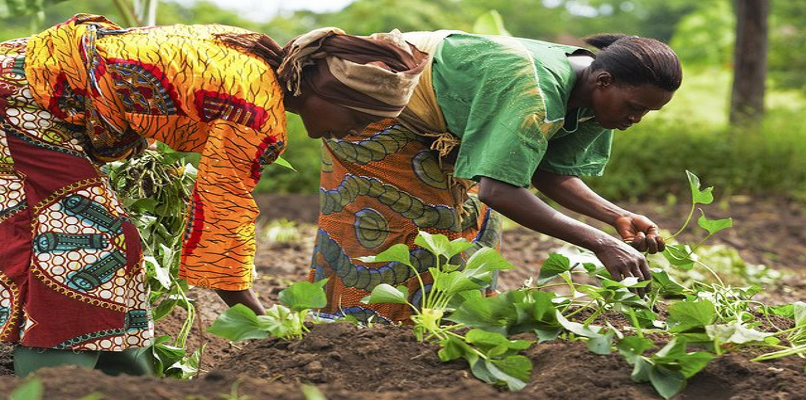
A feminist just earth, as expressed by Bridget Burns of WEDO, ‘is a world centred on recognition and care for ourselves, for others and for mother earth’.
As COVID-19 continues to impact our communities, it is imperative that we actively and consciously devise ways of protecting the health of our planet. The environmental challenges before us today are prompting us to view our development through an environmental health lens. They also highlight the fact that we need to change the way we live, work, relate to one another and interact with the outside world. It is clear that our current development model is unsustainable, and is taking a heavy toll on the earth and her lifeforms. If we continue to take our natural environment for granted and continue to produce, consume and power our lives the way we do now, forests, oceans and weather systems soon will be overwhelmed and rendered incapable of supporting life as we know it.
The lives of the majority of African women, especially rural poor women are closely connected to the environment as a result of their livelihoods being largely dependent on natural resources. In cognisance of this, feminists and women’s rights organisations in Africa have undertaken various innovative and community driven interventions to forestall unsustainable agriculture, fisheries, infrastructure projects, mining and energy. All of these have resulted in unprecedented biodiversity loss, habitat degradation, over-exploitation, pollution and climate change which have negatively affected the livelihoods of rural women.
AWDF is a strong advocate of sustainable livelihoods through women’s innovation and local response and has supported several women-driven local initiatives to address environmental degradation.
CAEPA Cameroon, with support from AWDF, galvanised over 1000 rural women within 6 communities in Bamenda to re-vegetate marginal lands through agro-forestry systems with fast growing tree species. The wood lots serve to enrich soil cover, ameliorate local climate, provide fodder for livestock and energy for cooking. CAEPA Cameroon has also mobilised about 1500 young environmental feminists in 6 schools within Bamenda to join in the re-vegetation drive. As a result, the schools have incorporated re-afforestation in extra curriculum activities and have re-vegetated about 200 hectares of marginal land within their respective communities.
Another partner, Iseguri Initiative in the Oti Region of Ghana has supported rural women smallholder farmers in organic agriculture and agroforestry practices. Over 2000 rural women smallholder farmers have adopted such practices to improve their farming activities, boost their income and rejuvenate marginal land for farming.
African Gender and Extractives Alliance (WoMin) worked tirelessly to strengthen the voices of marginalised women in resource rich communities to advocate against extractives and large-scale infrastructure projects.
African women have always played a critical role in managing natural resources, and are also the most affected by environmental degradation. As a feminist organisation, AWDF believes in the power of solidarity to radically transform our world into a feminist earth. Environmental issues are feminist issues and must be prioritised by all.
Happy Earth Week!
By Rose Buabeng, Programme Officer, AWDF
22/04/2020