
Category: event
International Women’s Day 2016: AWDF In Conversation
International Women’s Day 2016: AWDF In Conversation
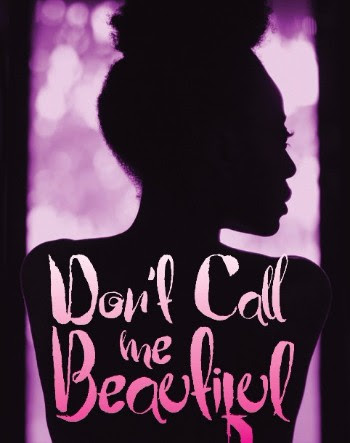
To mark International Women’s Day this year, AWDF will host two special public events examining the status, role and contribution of African women. Join us as we explore “Don’t Call Me Beautiful,” a photo exhibition by Nana Kofi Acquah and tackle sex and relationships at the University Of Ghana campus.
Panel Discussion: Don’t Call Me Beautiful
Date: Tuesday 8th March, 2016 Time: 6pm Venue: Exhibition Hall, Alliance Francaise Rate: FreeRenowned Ghanaian Photographer Nana Kofi Acquah’s photo exhibition “Don’t Call Me Beautiful,” celebrates the resilience of African women. In partnership with Alliance Francaise, this informal and interactive discussion will use the photo exhibit as a springboard for conversation about stereotypical depictions of women in current social media trends, women’s rights, gender, arts and culture and feminism. There will also be readings by participants of the 2016 Writivism workshop which is to be held in Accra. Moderator: Kinna Likimani, Mbaasem Foundation
Catch Nana Kofi Acquah’s thoughts on his exhibition here:
Panel Conversation About Date Rape, Sex and Relationships On Campus

Date: Friday 11 March 2016 Time: Film Screening: 4-5h30 pm, Panel Discussion: 6 PM. Venue: Institute Of African Studies Auditorium, UG, Legon Rate: FREE
In partnership with the Center for Gender Studies and Advocacy (CEGENSA) and the African Studies Department of the University Of Ghana Legon, AWDF will host an interactive panel discussion on Campus date rape, sex and relationships. The event will be preceded by the screening of a film: The Hunting Ground, a ground-breaking documentary on rape on campuses in the US. Again, there will be also be readings by participants of the 2016 Writivism workshop which is to be held in Accra. Moderator: Prof. Audrey Gadzekpo, University of Ghana, Legon
We invite you to be a part of these special events. Don’t miss.
Passionate Legacies: AWDF @15
Passionate Legacies: AWDF @15
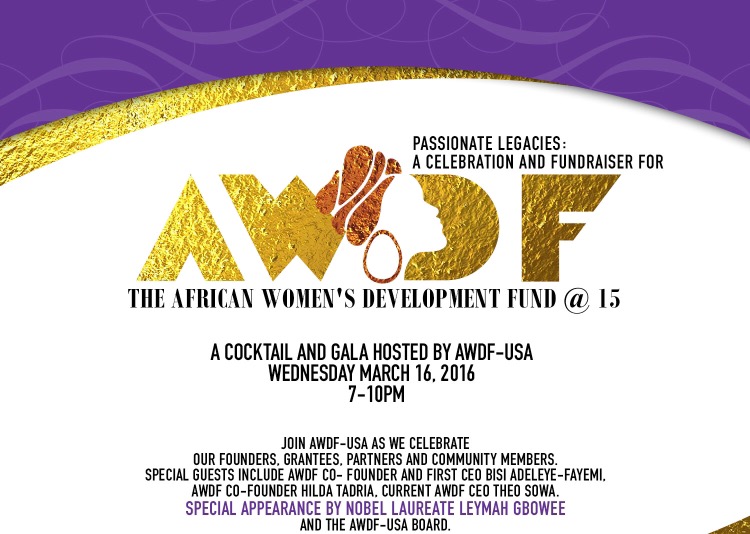
Passionate Legacies: A Celebration and Fundraiser For The African Women’s Development Fund At 15
“When you invest in women and girls, the return on your investment is not about the life of the one woman or the one girl who has been affected, but it’s about healthier families, healthier communities, healthier countries and revitalized communities all round.”– Bisi Adeleye-Fayemi
New York, NY—March 1, 2016— The African Women’s Development Fund-USA (AWDF-USA) today announced a cocktail gala event for the 15-year anniversary celebration of the African Women’s Development Fund. The event is scheduled to be held on Wednesday, March 16, from 7 p.m. until 10 p.m. at the Millennium Plaza Hotel located at 1 United Nations Plaza in Manhattan.
Entitled “Passionate Legacies: A Celebration and Fundraiser for the African Women’s Development Fund @ 15” the event will host founders, grantees, partners, community members as well as the passionate legacies, work and history of AWDF. It is a great time to recognize the achievements and history of AWDF during the 60th session of the UN Commission on the Status of Women (CSW) at the UN headquarters in New York.
The invite-only affair will include a cocktail hour and two live performances from recording artist and prominent leader in the Pan African movement, Maame Afon Yelbert-Obeng. The event will also commemorate African women through the dual launch of “Voice, Power and Soul II,” a book that illustrates the success stories of African women feminists, and “Sheroes,” an AWDF Compilation CD that includes
- music from artists such as Angelique Kidjoe, Nneka, Somi, Maame Afon- Yelbert Obeng, Yvonne Chaka Chaka and many other African women
- select videos and short films
- original poetry authored by African women
Hosts of the event include AWDF Co- Founder and First CEO Bisi Adeleye-Fayemi, AWDF CEO Theo Sowa, Nobel Peace Laureate Leymah Gbowee, and The AWDF-USA Board.
AWDF USA provides a vehicle for effective American philanthropy to Africa that builds the capacity of the continent’s women for social change and sustainable development. This event is an important platform to elevate the visibility of our work with the US Diaspora, empowering and engaging African women currently living in the United States.
For further inquiries please email info@womenchangeafrica.com. Additional information is also available online via social media via facebook.com/awdfusa or twitter.com @AWDFUSA
A Fire to Transform This World: A Perspective on Sexual Health and Rights
A Fire to Transform This World: A Perspective on Sexual Health and Rights
By Belinda Amankwah
“I remember when I was growing up, my mom told me I like to play too much and that I shouldn’t play with my brothers. She said I was to help her in the kitchen. So she would wake me up early in the morning whilst my brothers were still in bed to sweep the compound and do some other house chores. So I asked my mother why my brothers won’t join me to do the house chores and she said it is because I am a woman and that’s my job. This was when I realized that I was different and society had different expectations from what they had for men.” – ACSHR Participant
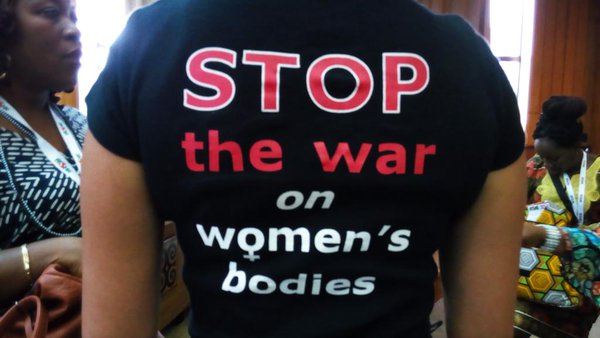
The 7th Africa Conference on Sexual Health and Rights (ACSHR) was held at the Accra International Conference Center this month. AWDF and Curious Minds hosted a Young Women’s Pre-Conference on 9th February, 2016 to provide a safe space for feminist engagement and knowledge sharing on the topic of Sexual and Reproductive Health and Rights (SRHR).
According to the organizers, ACSHR’s vision is “part of a long-term process of building and fostering regional dialogue on sexual health and rights that leads to concrete actions and enhance stakeholders’ ability to influence policy and programming in favour of a sexually- healthy continent.”
The conference saw the gathering of many young women from different countries around the continent, mostly between the ages of 15- 30. The venue was almost filled to capacity by the time the conference started. The young women looked happy to be together, enthusiastic about the day and the atmosphere was very blissful. Many were striking an acquaintance with other young women and getting to understand the environment.
As a young women’s rights activist, it was a great experience attending this meeting. I met many intelligent and passionate young feminists, women’s rights activists and a few veterans in the African Feminist movement. The sessions were well delivered as the facilitators did not only present information but also made the experience very interactive. This gave young women the opportunity to share their thoughts and experiences freely – more so than they would have had the chance to in other spaces.
The first session focused on the foundations of African Feminism. The facilitator, Jessica Horn, Director of Programmes at AWDF and a feminist activist, spoke on the principles, theories and practice of feminism. She started by throwing this question to the audience: “When did you first know you were a woman and that you were different?” This exercise was done in small groups, giving us the opportunity to listen to some interesting stories and lessons. For me, what I heard most was that being a woman comes with a lot of expectations that sometimes do not allow women to develop themselves to their full desired potential, especially outside the home. However, being a woman surely has positive results, too.
Here is another story shared in my group:
“When it was time for me to go to college, my father paid my fees and provided me with everything I needed but when it was my brother’s turn to go to college, things got financially difficult and my brother had to work to pay his fees. My dad still continued to pay my fees. He said, a man is supposed to provide for himself and a woman is to be taken care of.”
I have a memory from my childhood. My brother and I are very close in age and we would fight over any and everything. Every time we fought, my mom would tell me I am too tough. She said women should be emotionally and physically soft and should not fight. So I kept on asking myself, “Why should I intentionally allow my brother to beat me when I am capable of fighting back?” I understood at an early age that this showed the world that I was a woman.
A highlight during the workshop for me was when Juliana Lunguzi, a woman MP from Malawi, was invited to share some motivating words. She told us about her struggles as a member of Parliament but also reminded us of the need to support girls throughout their education. She said, “UNICEF, Action Aid and other organisations are building schools but no one is paying the fees of these young girls to attend school, and for me, that is the most important thing. In our fight for the rights of women and equal opportunities, we should remember that it is through education that young women can occupy and share the spaces we are fighting to create for them.”
I enjoyed the session by Cecilia Senoo (Executive Director for Hope for Future Generations) on how Feminism intersects with SRHR. I particularly loved the interactive aspect as it led to some passionate discussion on issues such as virginity, violence against women, and harmful cultural practices, among other issues. From that conversation, here are some profound statements I would like to echo:
- Why is a woman’s virginity so important to men when many men sexually abuse girls and women? Does a woman check if a man is a virgin before she marries him? “IT’S MY BODY, I OWN IT, IT’S MINE” – our bodies do not belong to men for them to decide what to do with it.
- African peoples have some harmful cultural and community practices that directly affect women and can destroy us, physically and emotionally. What is a culture when it destroys its own people? A true culture protects its people and does not expose them, especially marginalised populations, to harm.
- How do we break the cycle of violence against women? We need to put systems in place and ensure that they work. We will fight for our rights as women because no one will fight for us if we don’t. We should remember that power is not given; it must be expressed from within.
A fiery passion to transform this world and demand respect for women’s rights was borne in me this day, attending the conference and meeting so many young and courageous Feminists. It is important for us to sustain the dialogue on women’s rights and build support networks between young women so that we don’t feel isolated. It is good to have sisters around who will encourage and keep you.
Belinda Amankwah works at AWDF as a Knowledge Management intern.
Diane Abbott Meets With Ghanaian Women’s Rights Activists At AWDF House
Diane Abbott Meets With Ghanaian Women’s Rights Activists At AWDF House
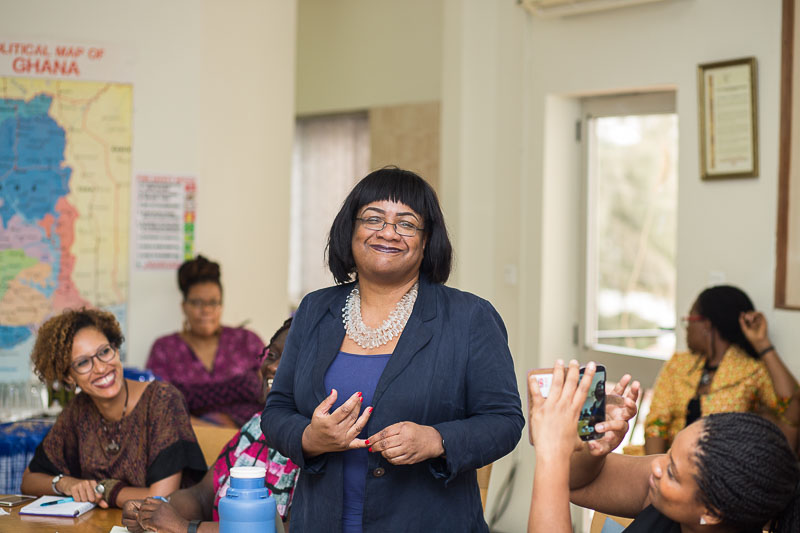 In what she described as her “most important meeting in Ghana,” U.K MP for Hackney North and Stoke Newington Diane Abbott, spent a morning with leading women activists in Ghana in animated discussion hosted by AWDF.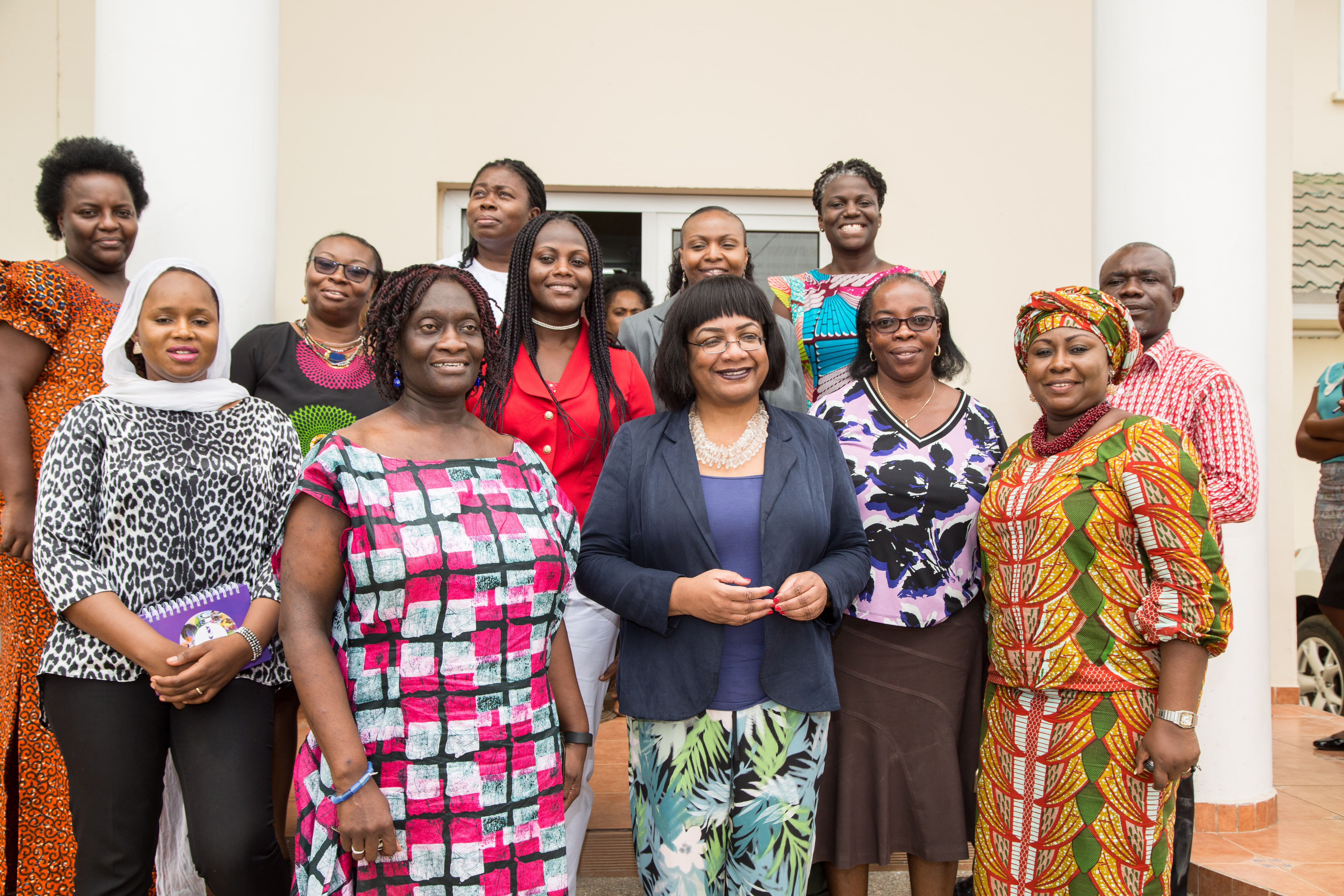
“Change can happen quicker than you thick. We have to have the courage to seize opportunities,” Abbott said.
A moment with Joan Koomson
A moment with Joan Koomson
Joan Koomson, AWDF’s Donor Liaison Specialist spoke with Ghana’s Metro TV about the International Conference for Family planning in Bali Indonesia held 25-28 January. She discussed some of the steps that have been taken in Ghana to move forward policy on Sexual and Reproductive Health and Rights (SRHR). She also touched on some of the shortfalls and the need to strengthen the country’s policy and implementation strategies.
Don’t call me beautiful: An Exhibit by Nana Kofi Acquah
Don’t call me beautiful: An Exhibit by Nana Kofi Acquah
Wed 3rd February, 2016
6:00 pm
DON’T CALL ME BEAUTIFUL
Alliance Francaise Accra – Exhibition hall, Accra
“I cannot think of a significant life moment, I have had, that didn’t involve some woman. These photographs are both a song in celebration of the African woman, and a criticism of how our societies deliberately impede their every movement.” This is Nana Kofi Acquah’s artist statement. More than a photo exhibition, this event will also feature poetry and a sound installation by the Nana Kofi Acquah himself.
Until 9th March.
Opening hours : 9am-9pm daily (except during activities)
FREE
16 Days Of Activism: November 25 – December 10, 2015
16 Days Of Activism: November 25 – December 10, 2015
The United Nations defines violence against women as “Any act of gender-based violence that results in, or is likely to result in, physical, sexual or mental harm or suffering to women, including threats of such acts, coercion or arbitrary deprivation of liberty, whether occurring in public or in private life.”
“Hannah was raped. It does not end there. Hannah was disembodied; skull fractured, glue found in her eyes, broken bones in multiple areas of her body, her spinal cord – shattered. When Hannah was found, only a pink brassiere covered the top part of her body. Her legs were sprawled apart, the only cover came from the beach’s sand and seaweed. Hanna was raped and her murder, an inhumane act of violence.” – Fatou Wurie – CEO Conceptor, Innovator of The Survivor Dream Project, Sierra Leone
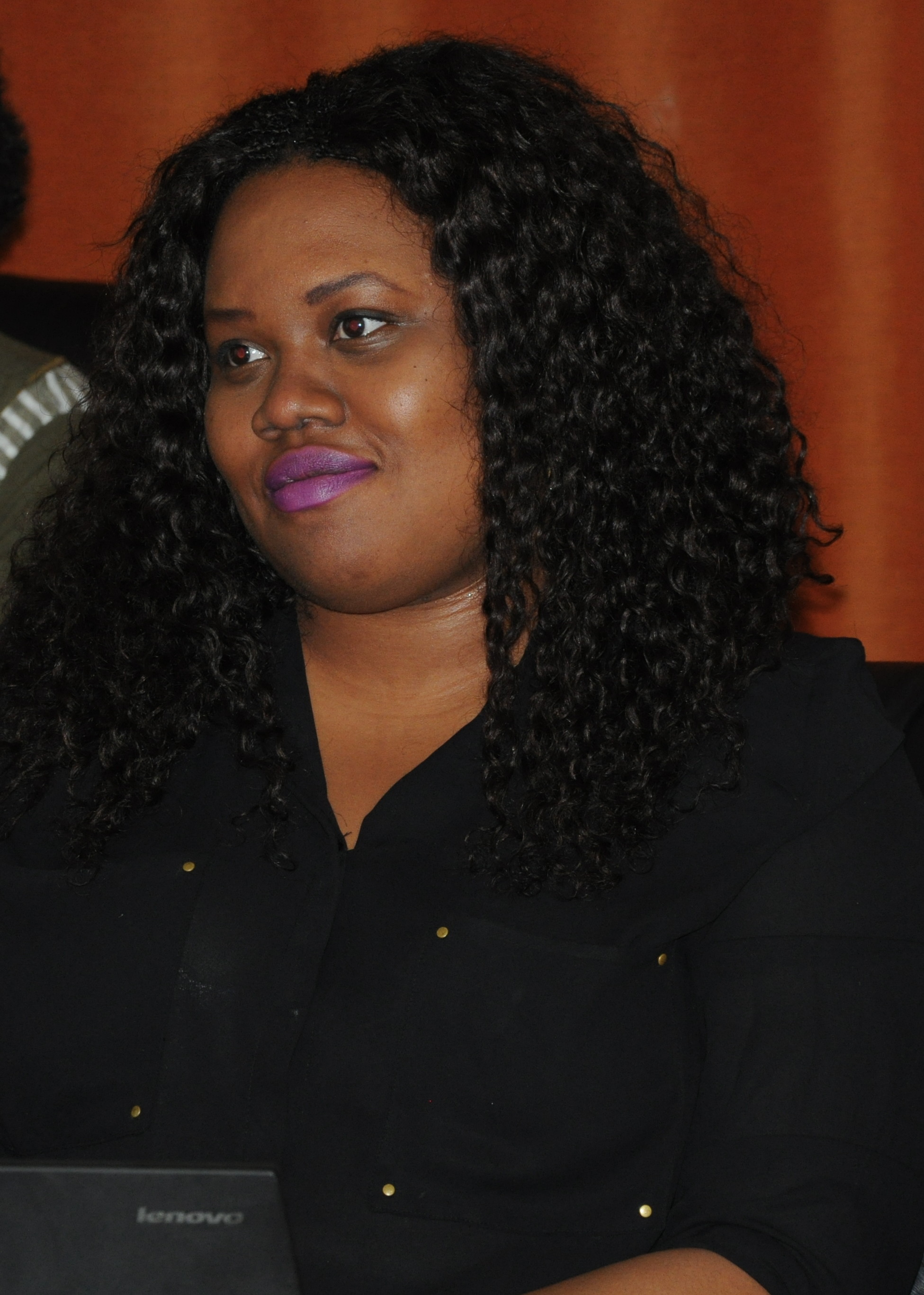
Fatou’s chilling account of a brutally murdered teenager found on a beach in the Sierra Leone capital this August was particularly disturbing because it appeared to highlight an alarming rise in the number of unsolved assaults on women and young girls in the west African nation. The incident led to a massive street protest by activists and civil society groups calling on the government to take a stand and to halt the violence.
“Hannah’s death reminds us all that women’s bodies in Sierra Leone are under heavy siege. That Sierra Leone’s highly patriarchal society still subjugates with structural discrimination in practice, custom, and law, with a plethora of women still facing suppression in education, employment and politics. Sexual violence has always been rampant in Sierra Leone – the rhetoric that Ebola has induced a spike in sexual violence undermines the reality that little has been done to improve social and economic options for women.” – Fatou Wurie
In Ghana, women make up just over half of the population, yet they still play a subservient role to men despite the constitution guaranteeing equal roles. According to the Gender Studies and Human Rights Documentation Centre, under our customary systems women are expected to give precedence to men in all things creating a position where Ghanaian women are equated to children…this has meant that many women have accepted the situation which allows men to “punish” them for their alleged disobedience.
Daily reports of murder, abduction and rape or defilement of women and minors, a member of Parliament’s remarks about punishing adulterous women and two high-profile alleged rape cases involving media celebrities, are a painful reminder of the distance we still have to cover in order to push against the denigration of women, persistent disregard for women’s sexual and personal rights and the prejudices and injustices suffered by women corageous enough to charge men with rape.
Last December Daboya Mankarigu Nelson Abudu Baani, a member of parliament in northern Ghana spoke against a new intestate succession bill saying that it could cause “customary anarchy” and recommended that women who cheat on their spouses be stoned or hanged. The bill was aimed at giving more rights to women with regards to the property of their deceased husbands.
His remarks were condemned by women’s rights activists and members of the public who called for his resignation but he refused to do so, clinging to his seat until he lost a re-election bid this past weekend.
Nineteen year old Ewuraffe Orleans Thompson accused Ghanaian television celebrity Kwesi Kyei Darkwa of raping her in a hotel bathroom in March, but withdrew her case against him a few weeks later, citing pressure from the media frenzy the story generated.
A few weeks later, a radio presenter’s report of her abduction and gang rape, while pictures of her nude body allegedly taken during the rape were circulated widely on the internet, caused a similar furor. The abduction story was condemned by the government and caused public outcry, but a police investigation into the case of Miss Ada, a popular host of YFM radio station in the western, ran into problems when she was unable to provide evidence for her abduction.
What all three incidents had in common were the profusion of hateful, sexist and misogynistic reactions they generated among the Ghanaian public.
Elsewhere on the continent, comments by Grace Mugabe, wife of Zimbabwean leader Robert Mugabe last week, sparked off a twitter stream of protest.
“If you walk around wearing mini skirts displaying your thighs and inviting men to drool over you, then you want to complain when you have been raped? It’s unfortunate because it will be your fault,’ Grace Mugabe said during a political rally this month.
As we join in the UN’s 16 Days of Activism against Gender-Based Violence Campaign this year, we invite you to tell your stories, highlight atrocities in your countries and tweet your comments, opinions and thoughts to our website, facebook page or twitter feed @awdf01 using the hashtags: #orangetheworld #16days
Sincerely,
Amba Mpoke-Bigg AWDF, Communications and Fundraising Specialist
Key Dates during the 16 days campaign:
- November 25: The International Day For the Elimination of Violence Against Women
- December 1: World AIDS Day
- December 3: International Day for Persons with Disabilities
- December 10: International Human Rights Day
Every year AWDF supports women’s groups over the continent to highlight the 16 Days campaign with a small grant. This ensures that we are are constantly keeping the fire burning and fulfilling one of our main missions of advocacy and the promotion of women’s rights.
AWDF will also support initiatives by women’s groups to address the stigma and discrimination against women living with HIV-AIDS. This year we are proud to support 40 organizations in their campaigns to mark 16 Days and World AIDS Day
Aspen New Voices Fellowship Announces Call for 2016 Nominations
Aspen New Voices Fellowship Announces Call for 2016 Nominations
Aspen New Voices Fellowship Announces Call for 2016 Nominations
The Aspen Institute seeks nominations for one-year non-resident media skills and coaching program for next generation of global development leaders from the developing world
WASHINGTON, DC September 1, 2015– The Aspen Institute’s New Voices Fellowship today announced a call for nominations for the 2016 Fellowship class. The Fellowship initiative, supported by the Bill & Melinda Gates Foundation, offers development experts from Africa and other parts of the developing world a year-long program of media support, training, research and writing under the guidance of experienced mentors and trainers.
Candidates for the 20 Fellowships awarded next year must be experts in fields relating to global development. The Fellowship welcomes specialists from all development fields, and this year is particularly interested in professionals with backgrounds in food security, polio and/or infectious diseases and development finance.
Fellows must be from a developing country, and ideally work and live in their country of origin or another developing country.
Over the course of a year, the Fellowship works to prepare and support Fellows to become recognized thought leaders, helping amplify their insights and ideas rooted in experience on the ground. They will be given training and support to speak at major events; write conversation-starting op-eds and think pieces for major outlets; and build their social media platforms. The Fellowship is non-resident, but includes travel to training workshops as well as opportunities for travel to select international conferences.
Current Fellows have had their work featured in media sites ranging from the New York Times, Washington Post, CNN and Al Jazeera to the Huffington Post, Africa Report, and AllAfrica.com. Fellows have been interviewed by news organizations including the BBC, CNBC, and National Public Radio (NPR) and been invited to speak at events including TED and the Aspen Ideas Festival
Application to the Fellowship is by nomination only through the program website at http://www.aspennewvoices.org/Nominations. The nomination period will close on November 1, 2015 and the incoming class will be announced in January 2016.
The New Voices Fellowship
The New Voices Fellowship at the Aspen Institute is a groundbreaking initiative designed to bring more expert voices from the developing world into the global development discussion. Launched in 2013 with support from the Bill & Melinda Gates Foundation, the New Voices Fellowship is part of Aspen Global Health and Development. For more information, visit www.aspennewvoices.org.
The Aspen Institute
The Aspen Institute is an educational and policy studies organization based in Washington, DC. Its mission is to foster leadership based on enduring values and to provide a nonpartisan venue for dealing with critical issues. The Institute is based in Washington, DC; Aspen, CO; and on the Wye River on Maryland’s Eastern Shore. It also has offices in New York City and an international network of partners. For more information, visit www.aspeninstitute.org.
Contact: Andrew Quinn
Director, New Voices Fellowship
The Aspen Institute
202-736-2291
Andrew.Quinn@aspeninstitute.org
AWDF APPOINTS JESSICA HORN AS NEW DIRECTOR OF PROGRAMMES
AWDF APPOINTS JESSICA HORN AS NEW DIRECTOR OF PROGRAMMES
[tp lang=”en” not_in=”fr”] AWD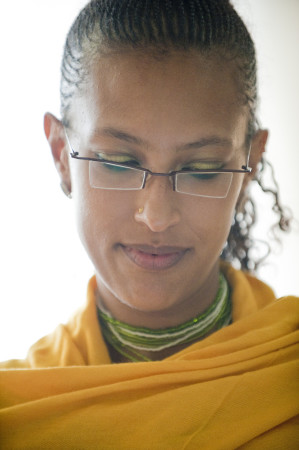 F is Delighted to announce the appointment of Jessica Horn as icts new Director of Programs Beginning October 1, 2015. Ms Horn’s ground breaking work, commitment to feminist philanthropy, and vividly innovative communications strategies-have-been integral to social change and social justice leadership on the African continent.
Jessica is a founding member of the African Feminist Forum Working Group, a board member of Urgent Action Fund-Africa, and sits on the International Grants Committee of Comic Relief. In 2012 She Was named an African woman changemaker by ARISE Magazine and as one of Applause Africa’s 40 Africans Changemakers under 40. Her research and analysis has-been published in professional journals The Lancet and Feminist Africa, and media platforms Al Jazeera, openDemocracy and The Feminist Wire.
“AWDF is Delighted That She Will Be joining our team and look forward to her leadership AWDF Taking forward into yet Reviews another phase of our journey Promoting and Achieving African women’s rights and global social justice” AWDF’s CEO Theo Sowa said.
Jessica’s work under her consultancy, Akiiki Consulting, HAS led to ground-breaking initiatives, Including in social justice philanthropy, with the establishment of UHAI -EASHRI- the first African-led fund Supporting the rights of sexual minorities. She Was a leader in early thinking around funding models for FRIDA – The Young Feminist Fund and aussi managed funding for Women’s Rights and Minority Rights at the Sigrid Rausing Trust, one of the Largest private human rights funders in Europe, overseeing substantial businesses growth in Both funding portfolios.
“Jessica Horn HAS Worked for over 15 years Supporting activist organizations, funders and the UN, to Deepen analysis, shape policy and funding, and refine interventions to defend women’s rights to health, bodily autonomy and freedom from violence. This includes 10 years in women’s rights and social change philanthropy as a donor Grantmaker and in advisory and governance roles. “
Ms Horn join AWDF from the Stephen Lewis Foundation Where She Has served as Senior Advisor to AIR (The African Institute for Integrated Responses to Violence Against Women & Girls and HIV / AIDS). Ms Horn replaces Sarah Mukasa, Who served in the position for nine years. [/tp]
[tp lang=”fr” not_in=”en”] AWDF is pleased to announce the appointment of Jessica Horn its new Director of Programmes at 1 October 2015. The innovative work of Ms. Horn in engaging in feminist philanthropy communication strategies were an integral part of social change and leadership for social justice in Africa.
Jessica is a founding member of the African Working Group of Feminist Forum, a member of the Board of Urgent Action Fund-Africa, and serves on the International Comic Relief Grants Committee. In 2012 she was named African woman ‘changemaker’ by ARISE Magazine and as one of the 40 Africans among 40 Changemakers by Applause Africa’s. Its research and analysis was published in professional journals The Lancet and Feminist Africa, the Al Jazeera media platforms, and openDemocracy The Feminist Wire.
“AWDF is thrilled that she is joining our team and we are delighted that its leadership leads AWDF forward into a new phase of our journey to the promotion and realization of the rights of African women and global social justice,” said the Theo Sowa CEO of AWDF.
The work of Jessica as his counsel Akiiki Consulting, has led to pioneering initiatives, including philanthropy for social justice, with the creation of UHAI -EASHRI- the first African funds directed to support the rights of sexual minorities. She was a leader in the early days of reflection on the funding models for FRIDA – The Fund young feminists and also managed funding for women’s rights and minority rights in the Sigrid Rausing Trust, one of the largest private funders of human rights in Europe, overseeing substantial growth in two portfolio funds.
“Jessica Horn worked for over 15 years in supporting militant organizations, donors and the UN in order to deepen the analysis, shape policy and funding, and refine interventions to defend the rights of women to health, bodily autonomy and freedom from violence. This includes 10 years on the rights of women and the change of social philanthropy as a funder and governance donor and advisory roles. “
Ms. Horn joined AWDF after the Stephen Lewis Foundation, where she served as Senior Advisor AIR (The African Institute for integrated responses to violence against women and girls and HIV / AIDS). Ms. Horn replaces Sarah Mukasa, who operated at this position for nine years. [/tp]
AWDF SELECTS 22 WOMEN WRITERS FOR 2015 WRITING FOR SOCIAL CHANGE WORKSHOP
AWDF SELECTS 22 WOMEN WRITERS FOR 2015 WRITING FOR SOCIAL CHANGE WORKSHOP

[tp lang=”en” not_in=”fr”]AWDF selects 22 African Women For Its African Women Writers Workshop In Kampala, Uganda, July 27-August 5, 2015
The African Women’s Development Fund (AWDF) is pleased to announce the selection of 22 African female writers for its second creative non-fiction writers workshop on social justice to be held in Kampala, Uganda, from July 27-August 5, 2015.
The candidates were chosen by a competitive process from over 200 applications that poured in after the call was announced in April this year.
The workshop is being organized in collaboration with the Uganda Women Writers Association (FEMRITE), an NGO which promotes the development of creative writing in Africa through workshops and courses.
Lead facilitators this year are veteran BBC journalist Elizabeth Ohene from Ghana and award winning writer Yewande Omotoso (Nigeria, Barbados South Africa)**.
A novel feature of this year’s program will be a Moth Workshop, conducted by experienced story telling instructors. Moth workshops seek to aid participants learn to shape selected life experiences into well crafted stories, which are then presented to peers and members of the local community.
The AWDF Women Writers Workshop sets out to give African women writers the space, time and enhanced skills to enable them write in compelling ways about a range of social, economic and political issues of concern to African women.
The successful women writers for 2015 are:
Tamika Kampini– Malawi
Merna Thomas Soryal- Egypt
Fatou Wurie – Sierra- Leone
Billie McTernan- UK/Ghana
Amarachi Orji- Nigeria
Zanele Mabaso- South Africa
Salma Takky- Morocco
Zemdena Abebe Areru- Ethiopia
Simamkele Dlakavu- South Africa
Oluwaseun Ayodeji Osowobi- Nigeria
Zeyana Abdullah- Kenya
Ny Anjara Nofy Ary Tiavina Andrianarisaina – Madagascar
Aisha Ali Haji- Kenya
Monica Cheru-Mpambawashe- Zimbabawe
Annette Denise Mkandawire- Malawi
Reham Elgebaly- Egypt
Ngwentah Berlyne Ngwalem- Cameroon
Ruth Olando Adong- Uganda
Jama Jack – The Gambia
Sibusiso T Mtshede- Zimbabwe
Stellamaris Kembabazi- Uganda
Josephine Opar- Kenya
Both this and the previous women writers workshop held in 2014 were made possible through the support of the Bill and Melinda Gates Foundation.
**AWDF would like to announce that since this article was published, there was a change in the lead facilitators for the workshop. The workshop will now be lead by Sylvia Vollenhoven from South Africa and Yewande Omotoso from Nigeria/Barbados/South Africa. Please see Sylvia’s profile below, taken from International Center for Journalists:
Sylvia Vollenhoven

Knight International Journalism Fellow
Sylvia Vollenhoven is a Knight Development Journalism Fellow who is leading a project to improve coverage of poverty and development issues in Ghana.
An award-winning journalist and media trainer from South Africa, she is the founder of the VIA – Vision in Africa media organization, which has spearheaded innovative international training initiatives. As the Africa representative for the Thomson Foundation, Vollenhoven also was the lead trainer for the Foundation’s first-ever documentary filmmaking course at Cardiff University in 2008.
More recently, she brokered a collaboration between the Foundation and key African partners to launch the Africa Means Business (AMB) project, a long-term, pan-African training initiative for business journalists. Vollenhoven served as the facilitator for the AMB pilot training seminar in Nairobi in June 2009.
In the early 1990s, Vollenhoven was the Southern African Correspondent for the Swedish newspaper,Expressen, and was awarded Sweden’s top journalism prize, one of many awards she received for her work. She later went into broadcasting, joining the South African Broadcasting Corporation, where she held a variety of positions over the years, including reporter, producer, trainer and manager. Subsequently, she has been a consultant for the SABC and for the Kaiser Family Foundation, training broadcast media professionals across Africa.
For 10 years, Vollenhoven served as the Southern Africa Coordinator for the International Public Television (INPUT) organization, raising the profile of public broadcasting in the region.
More about Sylvia:
http://whoswho.co.za/sylvia-
http://www.thejournalist.org.
/tp]
[tp lang=”fr” not_in=”en”]AWDF sélectionne 22 auteures africaines pour son African Women Writers Workshop à Kampala, en Ouganda, du 27 Juillet au 5 Août 2015.
Le Fonds Africain de développement de la Femme (AWDF) est heureux d’annoncer la sélection de 22 écrivaines africaines pour son deuxième atelier de création sur la justice sociale pour les écrivains non-fictionnels qui se tiendra à Kampala, en Ouganda, du 27 juillet au 5 août 2015.
Les candidates ont été choisies grâce à un processus rigoureux parmi plus de 200 candidatures déposées après que l’appel d’offre ait été lancé en Avril de cette année.
L’atelier est organisé en collaboration avec l’Association des femmes écrivains ougandaises (FEMRITE), une ONG qui promeut le développement de l’écriture créative en Afrique à travers des ateliers et des cours.
Les animateurs principaux cette année sont la journaliste Elizabeth Ohene du Ghana, vétérante de la BBC et l’écrivaine primée Yewande Omotoso (Nigeria, Afrique du Sud, Barbade).
Une nouvelle caractéristique du programme de cette année sera l’atelier Moth, mené par des instructeurs expérimentés pour raconter des histoires. Les ateliers Moth cherchent à aider les participantes à apprendre à sélectionner et façonner des expériences de vie dans des histoires bien conçues, qui sont ensuite présentées à leurs pairs et les membres de la communauté locale.
L’African Women Writers Workshop d’AWDF vise à donner aux femmes écrivains africaines de l’espace, du temps et un renforcement des compétences pour leur permettre d’écrire de manière convaincante au sujet d’un éventail de questions sociales, économiques et politiques qui préoccupent les femmes africaines.
Les lauréates de l’édition 2015 sont:
Tamika Kampini- Malawi
Merna Thomas Soryal- Egypte
Fatou Wurie – Sierra-Leone
Billie McTernan- UK / Ghana
Amarachi Orji- Nigeria
Zanele Mabaso- Afrique du Sud
Salma Takky- Maroc
Zemdena Abebe Areru- Ethiopie
Simamkele Dlakavu- Afrique du Sud
Oluwaseun Ayodeji Osowobi- Nigeria
Zeyana Abdullah- Kenya
Ny Anjara Nofy Ary Tiavina Andrianarisaina – Madagascar
Aisha Ali Haji- Kenya
Monica Cheru-Mpambawashe- Zimbabawe
Annette Denise Mkandawire- Malawi
Reham Elgebaly- Egypte
Ngwentah Berlyne Ngwalem- Cameroun
Ruth Olando Adong- Ouganda
Jama Jack – Gambie
Sibusiso T Mtshede- Zimbabwe
Stellamaris Kembabazi- Ouganda
Josephine Opar- Kenya
Cette édition des atelier des écrivains africaines comme la précédente tenue en 2014 ont été rendues possibles grâce à l’appui de la Fondation Bill et Melinda Gates.[/tp]