
Author: African Women's Development Fund
The Feminist Organisational Development Tool (English)
The Feminist Organisational Development Tool (English)
The Feminist Organisational Development Tool (English)
The Feminist Organisational Development Tool (OD Tool) has been developed in response to the identified need for a mechanism to operationalise The Feminist Charter.
It is designed to be used as a tool for organisational development and learning, training, staff and board development, monitoring and evaluation, peer review and exchange, as well as a tool for self improvement and reflection. Whilst developed primarily for women’s rights organisations,the OD Tool is a useful resource for all activists and those interested in extending their knowledge and understanding of feminist theory and practice in Africa.
EQUALITY NOW Job Vacancy: Program Officer Anti-Harmful Practices/Agent de Programme les Pratiques Nuisibles
EQUALITY NOW Job Vacancy: Program Officer Anti-Harmful Practices/Agent de Programme les Pratiques Nuisibles
Position: Program Officer, Anti-Harmful Practices
Deadline: October 15th, 2015
Background (About Equality Now)
Equality Now, an international human rights organization dedicated to ending violence and discrimination against women and girls globally, is seeking an experienced Program Officer to manage the ‘Enhancing Collaboration and Legal Action to End Female Genital Mutilation (FGM) and Child, Early and Forced Marriage (CEFM)’ project.
Responsibilities:
Based in Nairobi the Program Officer’s prime responsibility will be for work under the Enhancing Collaboration and Legal Action to End Female Genital Mutilation (FGM) and Child, Early and Forced Marriage (CEFM)’ project. S/he will report to the FGM Program Manager.
The successful candidate will manage project activities in Kenya, Uganda and Tanzania in East Africa and Benin, Burkina Faso and Mali in West Africa with a focus on:
- Partnership support and capacity building;
- National, regional and international legal advocacy;
- Project Implementation, Monitoring, Evaluation and Reporting; and
- Media and communications.
Partnership support;
The Program Officer will support the Program Manager and the partners in the:
- Identification of potential cases of violations of girls’ rights through CEFM and FGM for strategic impact litigation with the goal of setting legal precedents in collaboration with partners;
- Provision of legal advice and support to partners in the selected strategic litigation cases on CEFM and FGM either through domestic courts or using regional or international mechanisms;
Legal Advocacy;
The Program Officer will, under the guidance of the Program Manager:
- Support partners in the development and implementation of regional and international advocacy strategies using regional and international human rights law and protocols;
- Organize training for lawyers on the use of international and regional human rights mechanisms in litigation relating to HTPs;
- Establish and maintain contacts with organisations campaigning against CEFM and FGM and;
- Generate and update Equality Now actions and alerts.
Project Implementation, monitoring and evaluation;
In line with donor requirements and Equality Now commitments and systems:
- Prepare a work plan with partners and Equality Now team;
- Ensure the timely and effective implementation of project activities according to the project proposal;
- Work with partners to ensure that activities are monitored and evaluated and also identify specific challenges or successes that would interest the donor or partners;
- Provide timely, accurate reports on activities to donors including learning to inform future activities to achieve project objective;
- In close collaboration with Equality Now’s media and communications team represent Equality Now to the media to raise public awareness of CEFM and FGM, and
- Support partners to increase visibility of CEFM and FGM in the media as a human rights violation
Qualifications, skills and competencies:
- Master’s degree in law/ international law/human rights law preferred;
- Knowledge of international and regional human rights framework and relevant UN and African human rights mechanisms/instruments;
- Strong understanding of and experience in working on international human rights law with regional and international treaty monitoring bodies on issues of women’s and girls’ rights;
- Experience in training and facilitation;
- Skill and experience to effectively communicate and advocate for justice;
- Fluency in French and English required;
- Experience working in and networking with civil society organizations;
- Experience in promoting mutual learning and development of civil society organizations;
- Experience in project management and strong organization to work effectively;
- Ability to work effectively within a multi-cultural team;
- Ability to work independently;
- Excellent communications and interpersonal skills;
- Experience in monitoring and evaluation, particularly of legal/social change processes
- Excellent analytical, conceptual, writing and editing skills and use of computer software; and;
- Basic budgeting and accounting
- Experience in public speaking and media engagement;
- Willingness to travel relatively frequently.
Salary:
Competitive salary commensurate with qualifications and experience will be offered.
To Apply:
Please send resume and cover letter, in either French or English, detailing how your qualifications, skills and experience are relevant to the scope of work to:
Applications Program Officer- Anti-Harmful Practices
Equality Now Africa Regional Office
P.O Box 2018-00202
Nairobi, Kenya
Fax: +254-20-2719913
Email: equalitynownairobi@equalitynow.org
Applications must reach Equality Now by October 15, 2015. Equality Now will unfortunately only be able to respond to short-listed candidates.
***
Agent de Programme-Lutte Contre les Pratiques Nuisibles
Egalité Maintenant, une organisation internationale de droits humains consacrée à l’éradication de la violence et de la discrimination à l’égard des femmes et des filles dans le monde, voudrait recruter un agent de programme expérimenté pour gérer le projet ‘Renforcer la collaboration et l’action en justice pour mettre fin aux MGF et au mariage d’enfants, précoce et forcé (MEFC).
Responsabilités :
Basé à Nairobi, la responsabilité première de l’Agent du Programme sera de travailler sous le projet Amélioration de la collaboration et des poursuites judiciaires pour mettre fin aux MGF et au mariage d’enfants, précoce et forcé (MEFC). Il/elle rendra compte à la Gestionnaire du Programme MGF.
La/le candidat(e) va gérer les activités de projet au Kenya, en Ouganda et en Tanzanie enAfrique de l’est et puis au Bénin, au Burkina Faso et au Mali en Afrique de l’ouest en mettant l’accent sur:
- L’appui au partenariat et renforcement des capacités;
- Le plaidoyer juridique nationaux, régionaux et internationaux;
- La mise en œuvre du projet, le suivi, l’évaluation et la présentation des rapports et
- Les médias et communications.
Appui au partenariat;
L’Agent de Programme travaillera conjointement avec la Gestionnaire de Programme et les partenaires dans:
- L’identification des potentielles cas de violations des droits des filles par CEFM et MGF en vue d’engager des litiges avec impact stratégique permettant d’avoir des précédents juridiques en collaboration avec les partenaires;
- La fourniture d’avis juridiques et d’appui aux partenaires dans les cas de litiges stratégiques sélectionnés sur MEFC et MGF par les tribunaux nationaux ou à travers les mécanismes régionaux ou internationaux;
Plaidoyer juridique;
- Sous les orientations de la Gestionnaire de Programmes, l’Agent de Programme:
- Appuiera les partenaires dans l’élaboration et la mise en œuvre des stratégies régionales et international de plaidoyer en utilisant les lois et protocoles internationaux de droits humains;
- Organisera la formation des juristes sur l’utilisation des mécanismes internationaux et régionaux de droits humains dans les litiges relatifs aux pratiques traditionnelles nuisibles;
- Etablira et entretiendra des contacts avec les organisations qui font campagne contre MEFC et la MGF et;
- Produira et mettra à jour les actions et alertes d’Egalité Maintenant.
Mise en œuvre, suivi et évaluation;
Conformément aux exigences des bailleurs et aux engagements et systèmes d’Egalité Maintenant:
- Préparer un plan de travail annuel avec les partenaires et l’équipe d’Egalité Maintenant ;
- Assurer la mise en œuvre rapide et efficace des activités du projet selon la proposition de projet;
- Collaborer avec les partenaires pour s’assurer que les activités sont suivies et évaluées et puis identifier des défis précis ou les réussites qui intéresseraient les bailleurs ou partenaires;
- Fournir des rapports dans les délais prescrits et précis sur les activités des bailleurs y compris les leçons apprise afin d’éclairer les activités futures pour atteindre l’objectif du projet;
- En collaboration étroite avec l’équipe Médias et Communications d’Egalité Maintenant, représenter Egalité Maintenant auprès des médias pour sensibiliser le public sur les MGF et MEFC, et;
- Appuyer les partenaires pour accroître la visibilité des MGF et MEFC dans les médias en tant qu’une violation des droits humains.
Qualifications, aptitudes et compétences:
- Maîtrise en droit / droit international/droits humains de préférence;
- Connaissance du cadre international et régional de droits humains et des mécanismes/instruments des Nations Unies et de l’Afrique en matière de droits humains pertinents;
- Forte compréhension et bonne expérience dans le travail sur le droit international relatif aux droits humains avec les instances de suivi des traités régionales et internationales sur les questions des droits des femmes et des filles
- Expérience dans la formation et la facilitation;
- Compétences et expérience de communiquer efficacement et plaider pour la justice;
- Bonne maîtrise du français et de l’anglais requise;
- Expérience de travail et de réseautage avec les organisations de la société civile;
- Expérience dans la promotion de l’apprentissage mutuel et le développement d’organisations de la société civile;
- Expérience en gestion de projet et une organisation efficace du travail;
- Capacité de travailler efficacement au sein d’une équipe multiculturelle;
- Capacité de travailler de façon autonome;
- Excellente communication et relations interpersonnelles;
- Expérience en suivi et évaluation, en particulier de, juridiques et sociales les processus de changement;
- Excellentes compétences analytique, conceptuel, rédaction et édition et utilisation de logiciels;
- Notions de base en budgétisation et en comptabilité;
- Expérience dans l’art oratoire et la collaboration avec les médias;
- Disposition à voyager assez fréquemment.
Salaire:
Un salaire concurrentiel sera offert en fonction des qualifications et de l’expérience de la personne retenue.
Pour postuler:
Prière d’envoyer votre CV et une lettre de motivation soit en français ou en anglais en détaillant comment vos qualifications, aptitudes et expérience rentrent bien dans les exigences de ce poste à:
Candidatures au poste d’Agent de Programme de Lutte contre les Pratiques nuisibles
Egalité Maintenant, Bureau Régional Afrique
B.P. 2018-00202
Nairobi, Kenya
Fax: +254-20-2719913
Courriel: equalitynownairobi@equalitynow.org
Les demandes doivent parvenir à Egalité Maintenant au plus tard le 15 Octobre 2015.
Malheureusement, Egalité Maintenant ne pourra répondre qu’aux candidats présélectionnés.
Sierra Leone: Frontline Nurses In Aftermath of Ebola Outbreak Battle Depression, Stigma and Lack of Recognition
Sierra Leone: Frontline Nurses In Aftermath of Ebola Outbreak Battle Depression, Stigma and Lack of Recognition
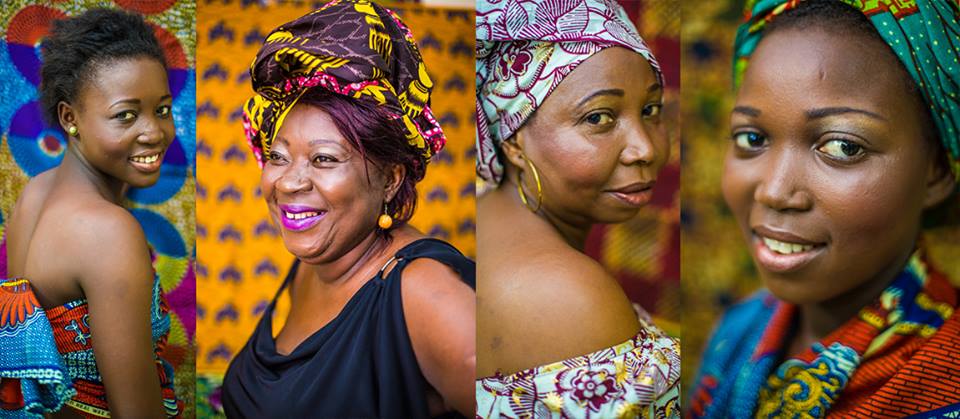
PhotoCredit: Michael Duff | Women in The Survivor Dream Project
By Fatou Wurie
Magdalene is confident as she introduces herself to the group of nineteen survivors.
“My name is Magdalene and I am a nurse, I survived Ebola. I caught it from work”. She stops there, smiles and names her gratitude for the day, “I am happy to be sitting here with all of you, alive. I am thankful to Adiatu, my darling sister for inviting me to this group. I am just thankful“.
Magdalene is brave. Her request is simple; acknowledgement from the government for the sacrifices she and hundreds of, dead or alive today, nurses made to save lives. She wants her near death experience validated in a tangible way. At the very least a discussion that her sacrifice meant something – and assurance about the future. As a survivor, she feels like an uncared for statistic; a blip in the system, numbers that get quoted repeatedly. She wants her humanity to be recognized. And the stigma to stop.
Despite an entourage of community supporters, stigma still overshadows the grace of being alive. Recent stories about Survivor’s re-infecting through sexual intercourse continue to create an environment of distrust of survivors. For the public, the message is not clear; to accept survivors or to be cautious around survivors. Without clear scientific guiding evidence, the onus lies disproportionately on survivors to get it right at being safe and that is a heavy burden which WHO alludes to as the ’emergency within the emergency’. Limited record keeping and scientific evidence about the physical and psychological effects of Ebola on survivors makes the journey of surviving incredibly difficult and complicated.
This is session five and Magdalene’s second time attending our Build Up program, a monthly gathering that offers safe space for check in and support. In this session, we divide everyone into the following groups: students, petty traders and health workers. In the group of twenty, the health workers are the most educated, with a veneer of slight privilege. They are also the least likely to emotionally breakdown.
Magdalene joins the three other health workers to engage in group-work. Forty-five minutes later the women arrange their cream chairs in a semi-circle, ready to present their group work to the rest of us – their community of cheer-leaders. Magdalene opts to go first and speak on behalf of her group.
I stare at Magdalene, observing her body language, trying to place her in the larger Ebola survivor narrative. Her eyes give nothing away. I don’t know what exactly I’m looking for, but her posture is comfortable so I check myself. Magdalene says she is grateful to be alive and that is enough.
“This is how I caught Ebola“, she begins.
“I am an out-patient nurse at Connaught Hospital, and we out-patient nurses were at the front line of the battle from the very beginning. We were the first to go, we died one by one. We were the first line of fire during Ebola. But how could we not be? We had to be, it wasn’t possible to see a patient walk into the hospital half dead and not rush to them and hold them when they were about to fall. We had little knowledge about Ebola no, forget that, even if we knew a whole lot, we didn’t have the equipment to protect ourselves.”
Salamtu, our youngest survivor, begins to squirm on her chair, which is propped against a mustard colored wall. Unease sits on her face. It is clear she is going to get uncomfortable. She lost her mother, father and brother to the disease. Magdalene at this point sees no one; her body facing us, her eyes distant as she continues to tell her story. We are transfixed on her small frame.
“I fell sick. You know, at first I thought I was just exhausted from over-working, or perhaps it was because I wasn’t taking my blood tonic. Still, I was careful. I checked myself for fever, red eyes, sweating or any of the signs we were told to look out for. I didn’t really have any, but I felt weak. I even checked to see the color of my stool, if it was different or something. It wasn’t. I still didn’t feel right so I made sure I didn’t scare my family, I stayed away from them. One morning though, I woke up and my eyes were blood-shot red. I quickly dressed, called my matron at the hospital and told her I was coming in, that I am very ill. By the time I got to the hospital that afternoon, I started “diarreahing on myself and my eyes were so red. It was scary. I had fever and it was then I knew even without the test, I was Ebola Positive.”
After a short pause, where we watch her silently, Magdalene continued.
“All my nurse friends started crying and were very sad about my situation. Some even said that I would probably die. I told them not to worry, that I wouldn’t die, that this wasn’t my time to die. I would be back. I was taken to ETU, and the next eight days are days I don’t want to ever re-live again. I wouldn’t even wish it on my worst enemy. I have never diarrheaed and vomited as much as I did during that time. I just kept being told to eat, that in order to not die I needed to eat. I didn’t eat, instead I had lots of fruits and water. I just knew I didn’t want to die. Eight days later I came out alive. No one knew I was even coming back home, I just asked someone to tell my husband that I would be home sometime that day. Everything I had come with to the hospital had been burned or thrown away including my phone. You know, to prevent re-contamination“.
Magdalene stops to look at us. Salmatu has her hands on her face at this point, not moving. Her silence speaks of everything she had been through.
“I went home and my entire compound, all my neighbors, came out to greet me. It was such a happy moment to see so much love, to see my husband and my son again. That was the first time I cried, that was the first time I really really cried. I had survived, I didn’t die and I was back home again“. Magdalene smiles as she says this, pacing back and forth now, more animated than when she started telling her story. Her smile glowing.
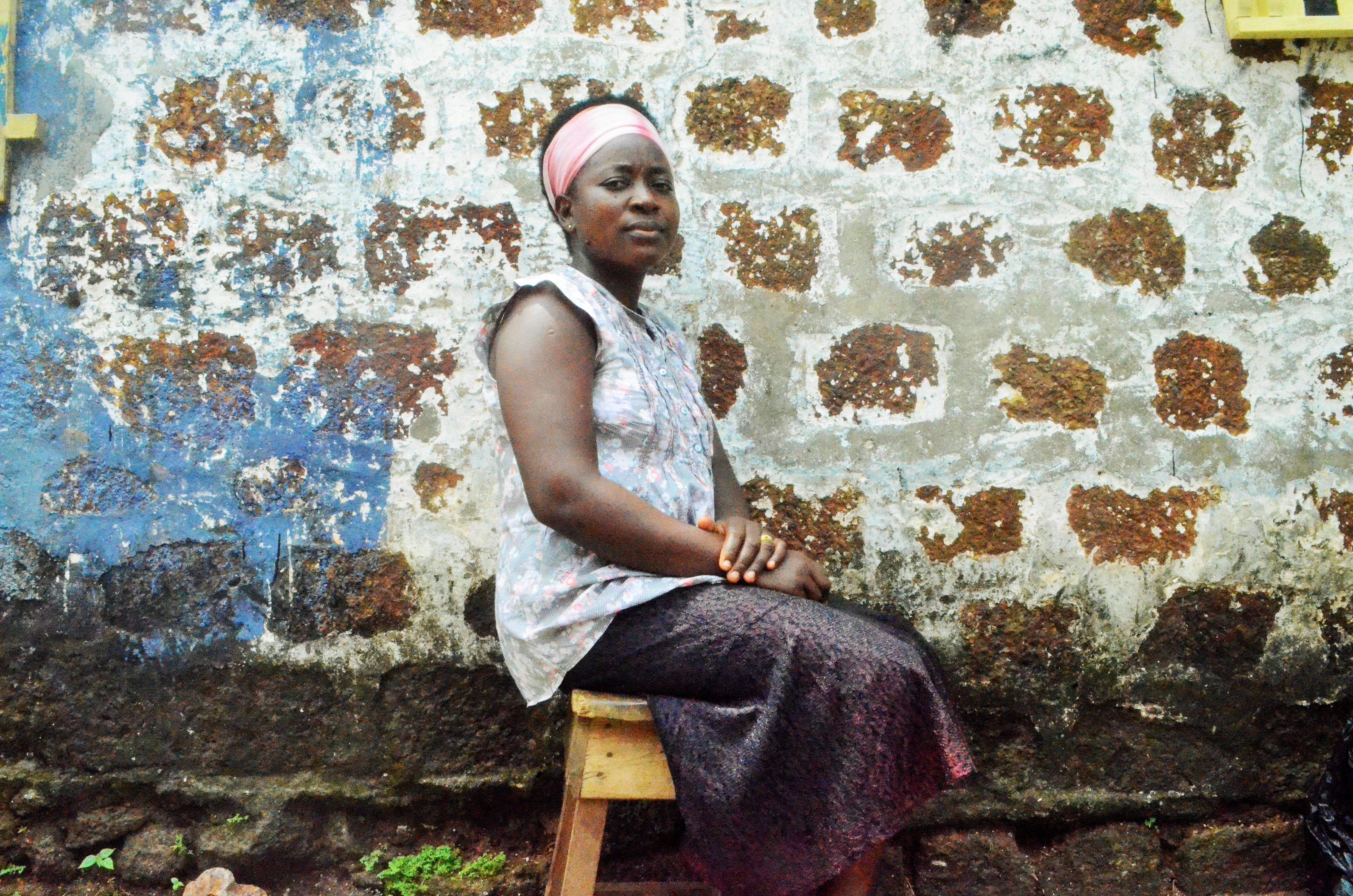
PhotoCredit: Jaime Yaya Barry | Nurse Magdalene
We take five, a breather. I look around the room at the women. It is brightly painted in EXCEL colors, an organization founded by Yeniva Sisay-Sogbeh an educationist and mentor to the women in the program. The colour is a bright reminder that despite everything, this is a place for survivors. Those who lived.
When we call everyone back in, we ask each woman to select a colored sticky note to place against her current feeling outlined on the white board – a visual mapping of where each woman is emotionally. Magdalene places her yellow sticky note next to depressed, but then she tells Femie, EXCEL’s intern, that she isn’t exactly depressed, she is discouraged.
I ask Magdalene to come up to the front of the room with me and explain why she felt discouraged.
“People still look at me like I am dirty, like I am sick. They still have that frightened – she is a survivor of Ebola – type of look on their faces when they talk to me. No one, not the government or minister, no one has come to me and said thank you, thank you for standing at the frontline of the battle, thank you for surviving, thank you for coming back to work. I just get looked at like I am a disease”
This is when Magdalene falls apart on my arms, her cries are belly deep. She finally bursts open and everything comes out, all the stuff that she wants to keep inside rushes out.
For the last four months my team and I have been working with twenty women who survived Ebola in Sierra Leone. All of our women are based in Freetown, most living on the out skirts. Some survivors are strung closely together having contracted the virus through a single visit to a neighbor’s daughter who had fallen ill. Others are quite young and newly orphaned. All of them however, are struggling to bloom in a climate not quite suited to their immediate needs.
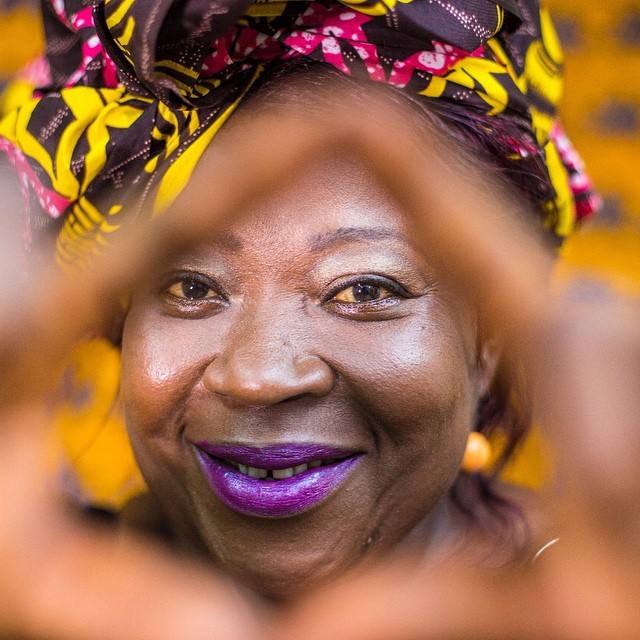
PhotoCredit: Michael Duff | Nurse Fatmata Johnny
It estimated that there are over 4,000 Ebola survivors in Sierra Leone today. This figure is not disaggregated by gender, district or clustered into demographics – nurses, orphans or any other important category necessary for targeted social interventions to occur. The reason is simple; lack of solid and consistent record keeping from the onset of an outbreak that threw the country off guard. Poor data collection resulted in scattered approaches to supporting Ebola survivors re-integrate back into society. Instead pyscho-social, economic, educational and health services for survivors exist in isolated pockets, further reinforcing the fragility of a social system that continues to fail them. Very little investment has been directed to holistic social, economic, health and education development of Ebola survivors. The repercussions of this gap are beginning to surface.
My heart often thuds when I make weekly calls to our survivors and hear about those who are ill, lost their home, or when a young girl in the program did not pass her exam. The worry heightened during September 16th heavy floods in Freetown which left over 3,000 people displaced. My frustration also stems from the fact that I know that it does not have to be this way. That if there were better planning, consolidated and timely release of resources, there would exist a more inclusive system of helping survivors get back on their feet.
For now, the alternative is to create space for dialogue which we hope will strengthen advocacy efforts for concerted investment to be made towards Ebola survivors – even more so for health care workers. Nurses like Magdalene are in the hundreds, these frontline soldiers are yet to be given proper acknowledgement for service to their country. And Magdalene’s beckons us not to forget.
*Fatou Wurie is an AWDF African Women Writers 2015 participant. She is a writer and activist whose articles appear in the Huffington Post and TheJournalist among others. Read her original article here
DECEMBER 2014 REPORT OF THE MULTISECTOR IMPACT ASSESSMENT OF GENDER DIMENSIONS OF THE EBOLA VIRUS DISEASE (EVD) IN SIERRA LEONE
DECEMBER 2014 REPORT OF THE MULTISECTOR IMPACT ASSESSMENT OF GENDER DIMENSIONS OF THE EBOLA VIRUS DISEASE (EVD) IN SIERRA LEONE
This report was a collaborative effort of the Ministry of Social Welfare, Gender and Children’s Affairs, UN Women Sierra Leone, OXFAM Sierra Leone and Statistics Sierra Leone who jointly partnered in order to generate national comprehensive data on the multi-sector impact of Ebola from a gender perspective in order to guide targeted and gender response to the containment of the Ebola Virus Disease in Sierra Leone.
AWDF 2014 Activity Report
AWDF 2014 Activity Report
The 2014 Activity Report shares in detail about our six (6) thematic areas, capacity building programs, advocacy and outreach initiatives, philanthropy objectives and much more.
Toni Solveig Michelsen
Toni Solveig Michelsen
It has been a great pleasure to work together with you. AWDF is a very professional and visionary organization. You achieve the objectives agreed on [and] reach target groups that are difficult to reach without your extensive network. Furthermore AWDF is always willing to share information, let others learn from your experiences etc. You have inspired both other NGOs and donors. All my best wishes for the future of AWDF.
Tweets and Images from AWDF’s 3rd Resource Mobilisation Bootcamp in Johannesburg
Tweets and Images from AWDF’s 3rd Resource Mobilisation Bootcamp in Johannesburg
Surviving Ebola: The Real Battle Begins once You’ve Beaten the Disease by Fatou Wurie
Surviving Ebola: The Real Battle Begins once You’ve Beaten the Disease by Fatou Wurie
This article was originally published on The Journalist. Read the original article here.
Ebola is an infectious and generally fatal disease. It’s marked by fever and severe internal bleeding, spread through contact with infected body fluids. The countries of Sierra Leone and Guinea on Africa’s West Coast have been especially hard hit with about 4 000 people dying since the start of the outbreak a couple of years ago. The writer participated in the recent Writing for Social Change Workshop in Kampala – an annual event of The African Women’s Development Fund (AWDF) in collaboration with FEMRITE, the Uganda Women Writers Association.
Five years ago I was sexually assaulted and I call myself a survivor. I live in a country where this word survivor is thrown around like confetti. Just another term for global consumption. A euphemism for scars, underneath which lurks the pain of the Ebola Virus Disease (EVD) outbreak that hit Sierra Leone.
There is a silver lining to the horrific experience. Not everyone died. But now we have to face up to a reality that survivors are often re-victimised. People lack a rational explanation. Lack a sense of agency to deal with the trauma. So their responses become irrational, and often cruel.
As a survivor of trauma I know this all too well. For those, especially the women, who have survived Ebola the real battle has just begun. Now they have to pick up the pieces of their lives.

Mamusu Mansaray, a 30-year-old, is animated. We sit across from one another. She bounces around a bit in her chair, attempting to make herself more comfortable. She recalls her experience, talking repeatedly about the fear.
“When I began to fall sick I got scared to call 117 (emergency service). We heard that those who were taken away by Ebola ambulances didn’t return. And when I finally found myself in an ambulance and taken to a treatment centre I was so, so scared that I would die in the ambulance like everyone else. I was sure I was going to die, laying there in the ambulance with other people who were sick too.”
Fear Paralyses
Fear often paralyses one during a crisis. This is what I recall after my own assault. Fear nested in every crevice of my body. Fear paralysing the physical pain yet amplifying the experience enough for it to be forever etched in my memory. I remember the feeling of becoming just another statistic. Then feeling calm in fleeting moments. But soon the tears would appear of their own accord. But for the most part, I remember feeling incredibly scared. The journey out of physical pain was a long and arduous one, with symptoms that till this day appear unexpectedly. The road towards emotional recovery? Well, it will take a lifetime. Perhaps.
Rabiatu Kalokoh is 23 years old. She contracted Ebola through a pastor’s anointing oil while treating a pregnant girl that was ill in her community. She remembers:
“One morning in the bathroom I started bleeding heavily down there. I knew it wasn’t my period because it wasn’t the time. I called for my grandmother who got angry and asked me what I had done to myself. I told her nothing, I hadn’t done anything but she was really angry at me.”

Women & Girls Most Vulnerable
In the role as primary care-givers culturally and socially, women and girls are most vulnerable during health epidemics. In Ebola outbreak in Sierra Leone women have also been the least supported as effective social mobilisers, as health workers, as community leaders and now as survivors.
During the Ebola outbreak heroic acts surpassed gender, tribe, race and nationality. It has been a case of humanity acting for humanity. Yet, women and girls remain the bearers of the burden. Bone-deep existing social issues like high illiteracy rates, frail health care systems and gendered economic disparities were thrown into sharp relief due to Ebola. Adequate social, economic and political, gender-targeted responses to these social fractures have been slow. It has made ‘surviving’ the disease only half of the battle for many women who have contracted Ebola.
Women in Sierra Leone were disproportionately affected by Ebola because of gendered roles within our society. We are the primary custodians of care for our families and communities. In the health care system women make up the majority, acting as nurses and maternal and child health aids (MCH) in community clinics and larger hospitals.

Flawed Health Care
Nurse Adiatu Pujeh’s story is a testament to effects of a health care system that delayed providing adequate Infection Prevention Control (IPC) training and equipment to health care personnel.
Adiatu walks with a limp and a spark in her eyes. Meeting her for the first time you know that she is one who beats the odds every time. She and four of her colleagues, all female nurses, contracted Ebola in November 2014. She is the only one who survived.
“Three days after I was discharged and came out alive, I went back to work. I didn’t want anyone else to suffer the way I had suffered. I went back to work. Look, I’ve survived a car accident and have a plate in my arm and I have survived Ebola. God clearly doesn’t want me yet! So, even though it has been very hard, I am still here and will continue to do what I can to save lives”.
As survivors of trauma we gravitate towards others. Extending understanding and empathy becomes part of who we have become. I choose to play my part in assisting women and young girls who have survived Ebola through art and advocacy with the hope that something good, something positive could grow. Reaping a positive harvest from an experience that dances with death.
Survivors & Shame
After my own assault I was surrounded by resources, colleagues and access to counseling that initiated the process of healing. I was completing my studies at university. In short I had many more privileges and access than many women in Sierra Leone will ever have. Even then, self-inflicted shame prevailed in social structures that either boxed me into a rape statistic or demanded I prove an unassailable narrative. But the experience to this day remains fragmented, culturally damaging and personally dehumanising.
So much has been asked of Ebola survivors. To share their stories, to utilise their experiences for social good, to speak when requested to speak, to become caricatures of the trauma or not speak about it at all. The women and young girls in our programme, The Survivor Dream Project, are Ebola survivors who have relayed feeling isolated and betrayed by people close to them. Their most intimate experiences are made public for intake without tangible, sustainable social support.
Adiatu the nurse still feels stigmatised:
“I filmed my story when I just came out of the treatment centre and after that, I could not go to the market for months. Every time I go to the market they call me the Ebola woman. Even at work, where I caught the virus it’s taken a while. I still get the looks”.
As a survivor of another type of traumatic event these realities resonate with a deep understanding that the Ebola Survivors of Sierra Leone face heightened social structural barriers; access to quality health care, quality education, safe space for dialogue and sustained economic support.

Survivor Dream Project
This is how The Survivor Dream Project came to be. It is our way of exposing the hidden reality of ‘surviving’ which is the ability to pick up the pieces of life when all is destroyed. It is about designing a localised programme to assist in building capacity for women and girls who have survived Ebola to become economically empowered. To address the lack of access to quality health care services and to cultivate a safe space for heart-to-heart skin-to-skin discussions. It is about supporting women and young girls garner strength to push through stigma and not be defined by Ebola, to not remain a statistic. Most importantly, to remind our policy makers and the world that we still fail our women, we still fail to cultivate social systems conducive to gender based right to dignity, social and economic growth and empowerment.
The Survivor Dream Project is about nourishing the dreams of our women in the programme. Five years from now, where will the 20 women in the project be? What type of positive change would have occurred? In what part of their bodies and psyche will this trauma reside? These questions for any survivor are difficult to conceptualise without a safe space and system dedicated to nurturing them, so that it becomes possible to envision a future where they did not only survive, but bloomed.
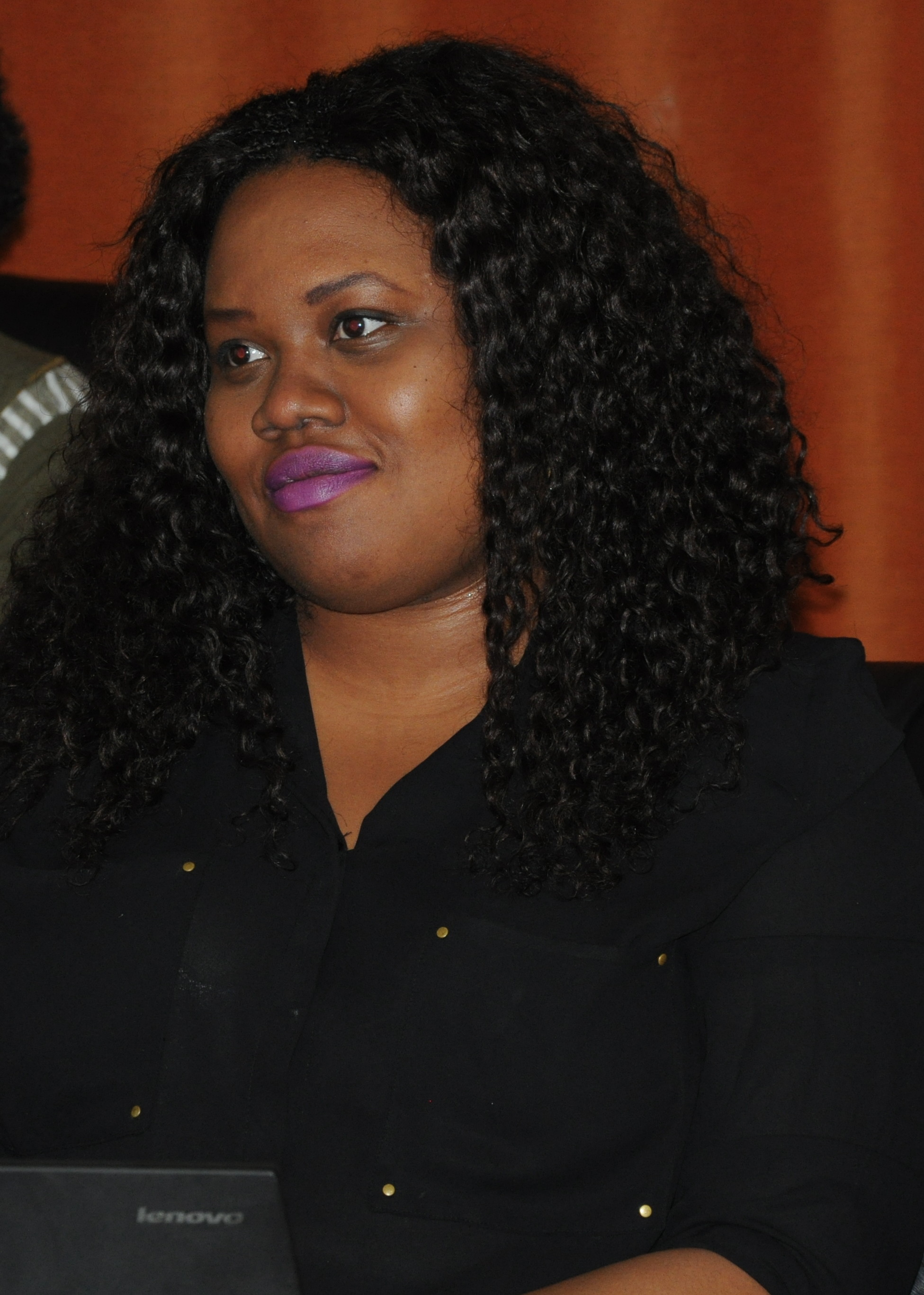 Fatou Wurie is a health communications and policy advocacy activist, writer and photographer. Her work has been featured on the Huffington Post, Okay Africa, Amnesty International Blog and the Standard Times- a leading local newspaper discussing women’s health, maternal and newborn health, sexuality and politics. Her passion lies in curating spaces and places through community designed projects, technology, and advocacy policy to drive improved social services for marginalized communities – especially women. She is the founder of The Survivor Dream Project – a community led project that creates sustainable change in the lives of vulnerable populations across Sierra Leone. Fatou participated in AWDF’s 2015 African Women Writers Workshop. You can follow her writing at her blog.
AWDF SPECIAL FOCUS ON EBOLA AND WOMEN: Liberia, Sierra Leone and Guinea – One Year Later
AWDF SPECIAL FOCUS ON EBOLA AND WOMEN: Liberia, Sierra Leone and Guinea – One Year Later
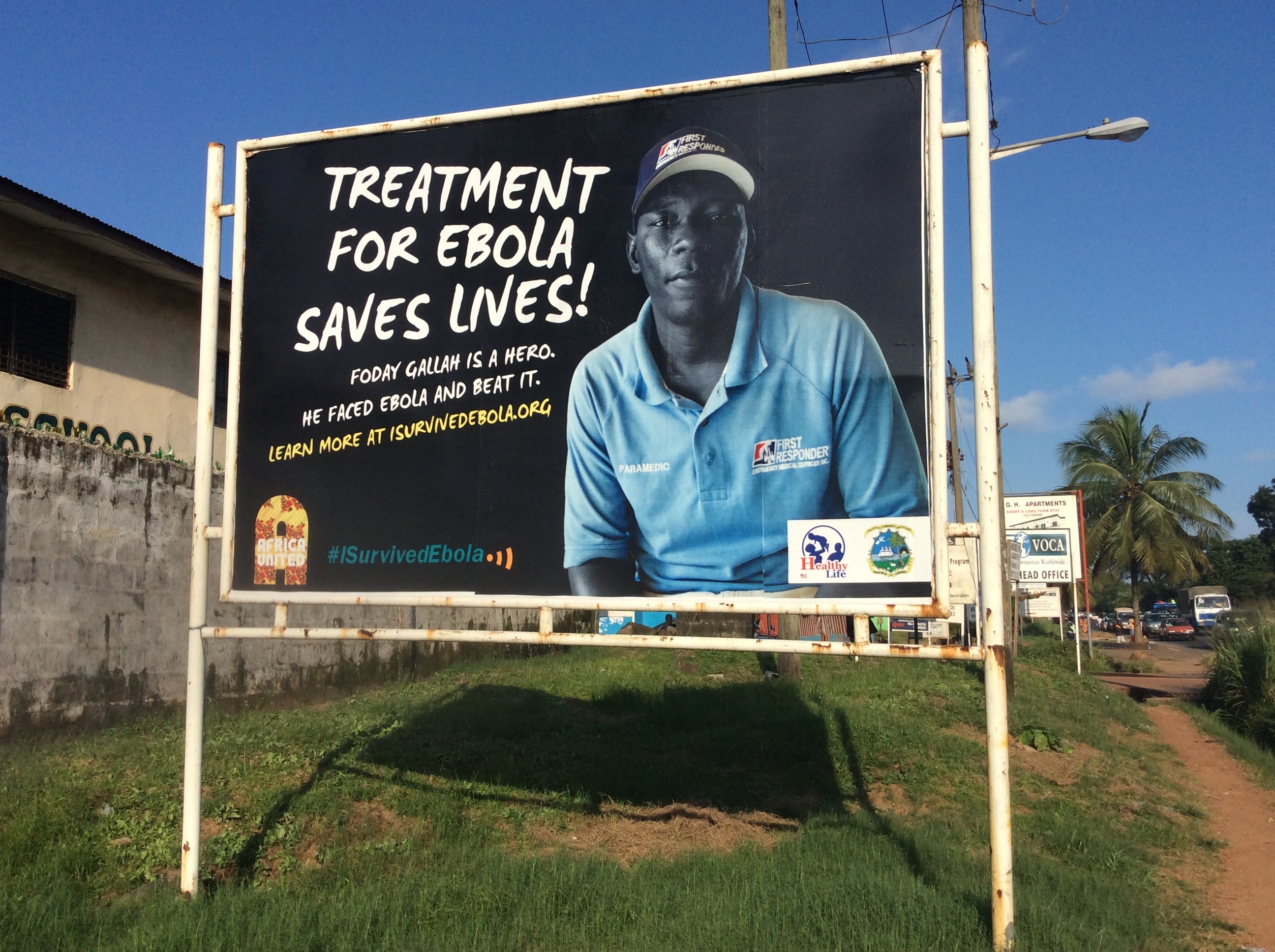 After more than a year of unimaginable suffering, West Africa looks cautiously ahead to the end of the most devastating outbreak of the Ebola virus the world has ever known. Yet the road for the three worst affected countries is still one of tough challenges.
Whilst Liberia is celebrating a second round of being declared Ebola-free, the announcement of new cases in Sierra Leone this week is seen as a real setback to national efforts to get rid of the disease. The new outbreaks, in the northern part of the country have led to a fresh round of enforced quarantines for thousands of people.
The first case of Ebola broke out in Guinea in December 2013, but the disease went undetected for four months until it crossed the border into neighbouring Sierra Leone, reaching its peak in August 2014. To date Ebola has claimed over 11,200 lives in Sierra Leone, Liberia and Guinea. Thousands of others died of other causes due to the shutdown of emergency and regular health care services as hospitals closed their doors in the wake of the epidemic.
At AWDF, our Ebola relief support for 52 women’s organizations in Sierra Leone, Liberia and Guinea, underscores our concern for women who play the role of frontline responders in emergency situations on our continent. Within weeks of the outbreak we disbursed $450,000 to these women’s groups in the three countries.
Given the brutal impact on their already battered economies and the acute shortage of healthcare professionals, getting the countries completely Ebola-free and restoring what remains of virtually non-existent healthcare infrastructure will require the efforts of regional and national governments, individuals and the international community.
Early evidence from this outbreak has shown that women were disproportionately affected. Women’s livelihoods, security and lives came under direct assault as the epidemic waged its war.
For the next two weeks, we would like to salute the courage of the healthcare professionals, doctors, workers and ordinary everyday citizens who survived the unimaginable and through whose efforts the halt in the epidemic’s advance was made possible.
Through stories, features, reports and photographs we will tell the story of the impact of Ebola on women over the past year. Women who have demonstrated courage, resilience and the ability to survive the outbreak of one of the deadliest viruses on earth.
Click here for featured stories.
AWDF’s 3rd Resource Mobilisation Strategy Development Boot Camp, 14-17 September in Johannesburg
AWDF’s 3rd Resource Mobilisation Strategy Development Boot Camp, 14-17 September in Johannesburg
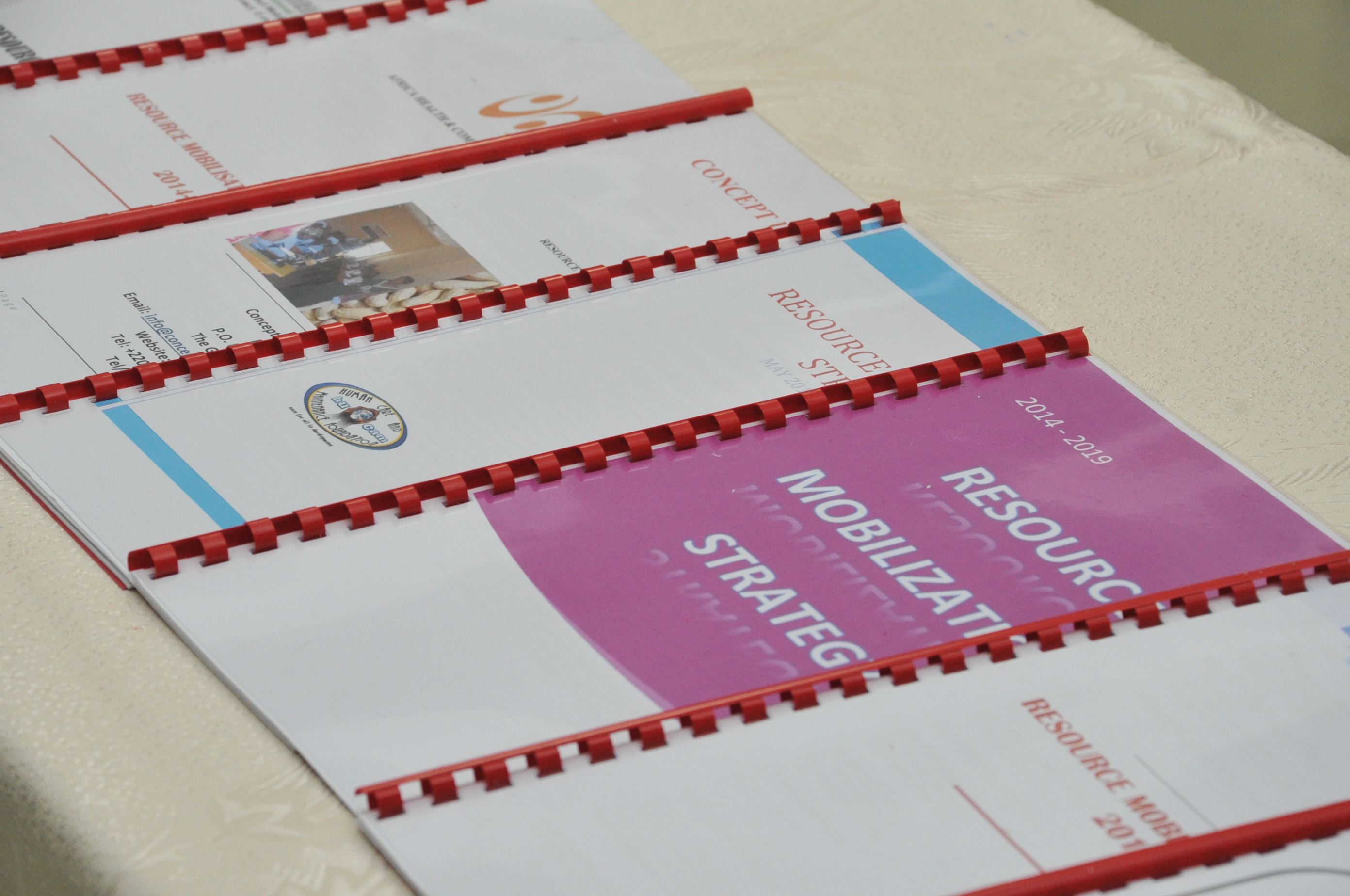
The African Women’s Development Fund (AWDF) will be organising another Resource Mobilisation Strategy Development (RMSD) Boot Camp from 14-17th September 2015, in Johannesburg, South Africa. The programme is one of AWDF’s flagship capacity building activities, which has become popular with fundraisers within grantee organisations as a critical step in developing their organisational financial sustainability. This year, 15 fundraisers from 15 organisations from South Africa, Botswana, Malawi, Zambia, Zimbabwe, Kenya, Ghana and Uganda will be participating in the 4-day boot camp in Johannesburg.
“I am particularly excited about this event because for the first time we have Malawi and Botswana attending this important event and hopefully they will also find the skills useful for strengthening their organisation’s financial sustainability efforts.” says Nafi Chinery, AWDF’s Capacity Building Programme Specialist. “AWDF is also grateful to the African Capacity Building Foundation for their continuous financial support to this project which is aimed at financial sustainability of women’s rights organisations in Africa”
Since its inception in 2013, 43 of AWDF’s grantee organisations from across the continent have participated in the RMSD bootcamp training aimed at helping them to develop effective fundraising strategies. The training has proven to be an invaluable resource to participants, a number of whom have experienced measurable improvement in their resource mobilisation:
“Amidst the unprecedented outbreak of the deadly Ebola Virus Disease, PIPA-SL Board and the Resource Mobiilsation Strategy (RMS) Committee have taken various steps towards marketing the RMS including organising four community engagement and dialogue forums targeting local authorities/stakeholders [.] [W]e have also engaged the local council authorities and have successfully discussed joint action plans geared towards marketing our RMS.” People’s Initiative for Poverty Alleviation-Sierra Leone (PIPA-SL), Sierra Leone and 2014 participant.
“Our annual operating budget before the RMS boot camp in 2014 was US$ 55,502. The RMSD training in early 2014 enhanced our capacity to increase our operating budget in three folds to US$ 171,387 [and] we are also in negotiations with donors to finance our 2015 operating budget of US$395,000.” Foundation for Integrated Development, Sierra Leone, and 2014 participant.
“We did not have efficient skills for writing good proposals and approaching partners. The RMSD boot camp gave us [the] insight that we don’t need to wait for calls for proposals [and] that we should look for funding and resources within our communities, which [can be] sources of support to our fundraising journey. We have secured new funding of US$53,295.5 from the World Bank through Akwa Ibom State Agency for the Control of AIDS (AKSACA) to provide an HIV prevention program in Akwa Ibom State” Heal the Land, Nigeria and 2014 participant.
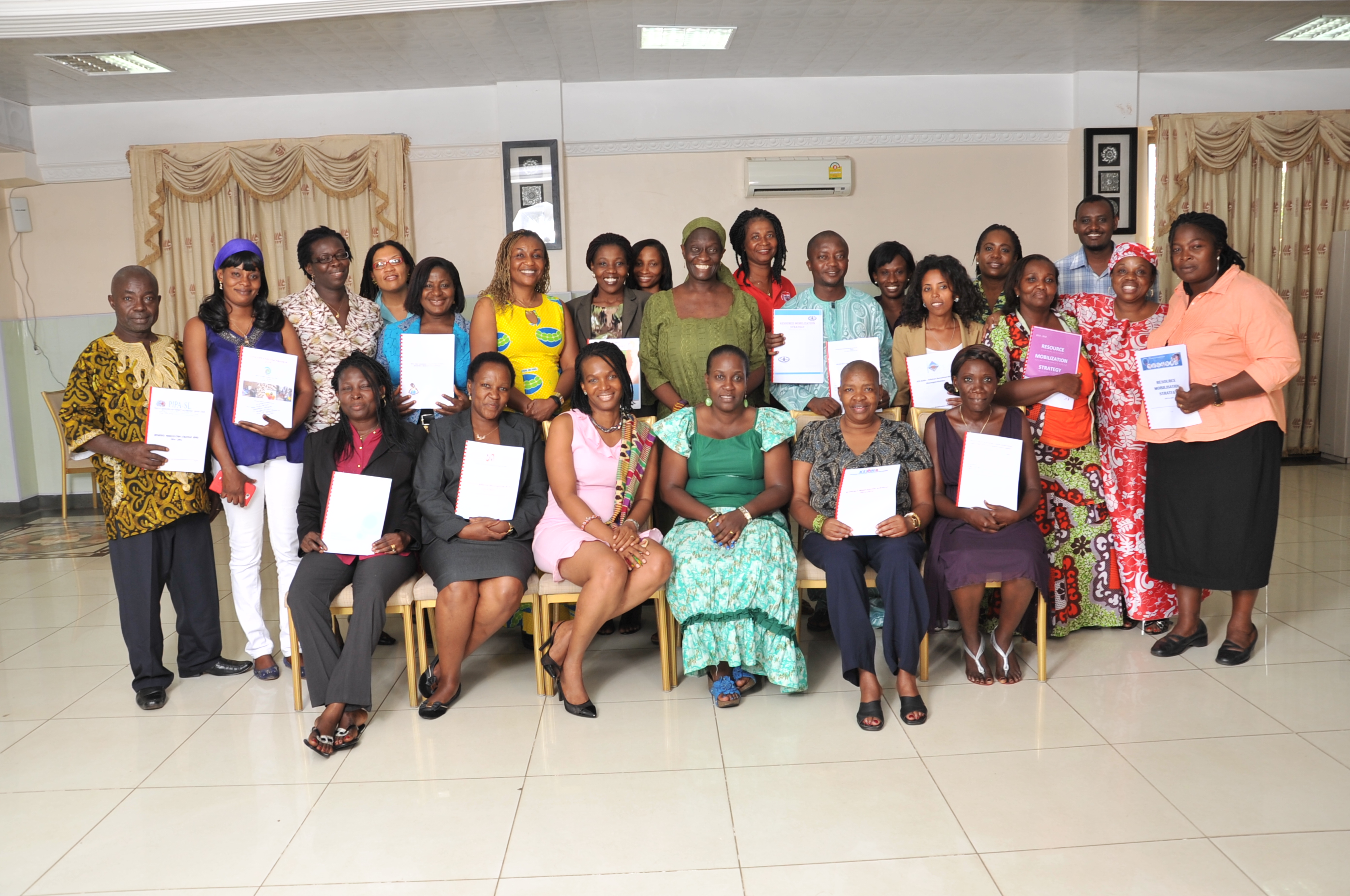
This year’s would be AWDF’s third installment of the programme.