
Author: African Women's Development Fund
Grantee Profile: Gender Links – Don’t Get Angry, Get Smart
Grantee Profile: Gender Links – Don’t Get Angry, Get Smart
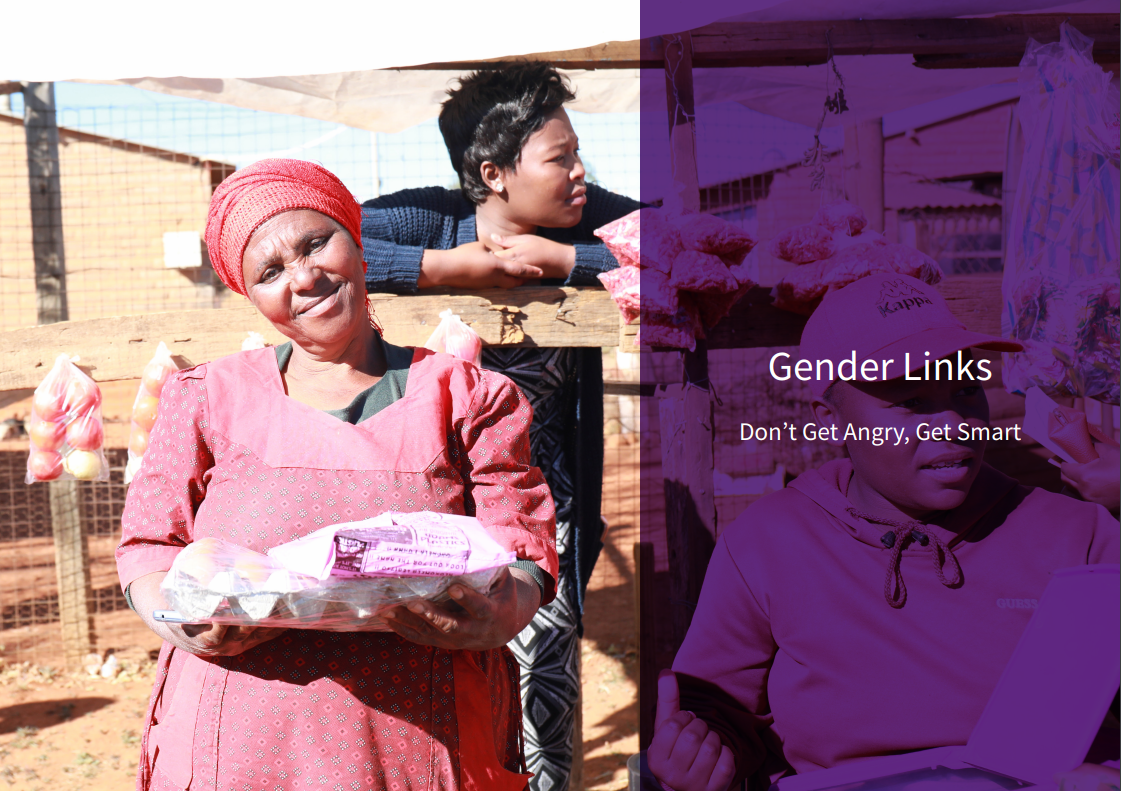
Gender Links – for equality and justice
From the outside, the unassuming red-brick house in Johannesburg’s southern suburbs does not look like much. From the street, it would be near impossible to guess that these are the offices of one of Southern Africa’s leading women’s rights organisations. Gender Links is a small organisation with a large footprint, with over 600 partners in ten countries, all working towards the promotion of women’s rights in the region. Gender Links CEO Colleen Lowe Morna is no stranger to advocacy work. She started her career as a journalist specialising in gender and development. After South Africa’s first democratic elections in 1994, she became an advisor on gender and institutional development. “We like to say we work from the grassroots all the way up to the elephant,” she laughs. This approach is necessary, says Morna. “The main challenge working in the gender space is the reality gap. There is a marked difference between constitutions, legislation, policy and the lived realities of women.”
Morna says it is widely accepted that it is difficult to see the results and impact of gender justice work on paper. Gender Links, however, might be an exception to this. From work with grassroot organisations to policy change at state level, the sheer scope and breadth that Gender Links operates on is hard to
comprehend.
“Gender Links acts as a big sister to smaller organisations, who are in turn empowered to mentor others,” she explains. “Our work is to build the capacity of our little sisters.” While the stories of individual stories of women who have benefitted through Gender Links programmes are significant, the organisation’s impact is also evident in its numbers. The Gender and Governance programme, spearheaded by Gender Links, has put gender on the local government agenda. There are now 432 councils in ten countries recognised as Centres of Excellence for Gender in Local Government. These local councils have committed to work towards 50/50 representation at local government level, while furthering gender responsive budgeting and service delivery. These councils cover a population of around 40 million people, approximately 34% of the population in the ten countries they are located in. “We can’t just start talking about representation of women in government at a national level in parliament,”
Morna explains. “But it’s also not enough to talk about representation among local government councillors. We need to look at women’s political participation as a whole. That includes the committees that deal with water and sanitation and housing and all other things.”
To read the rest of this incredible profile, please click here
Birthing Leaders: Stories of Change in African Women’s Organisations
Birthing Leaders: Stories of Change in African Women’s Organisations
In 2015 AWDF launched its Leadership and Governance programme, a capacity building initiative that sought to nurture growth in African women’s organisations by feeding the hearts of the organisations themselves- in dedicated one-on-one and collective coaching with senior and mid-level leaders, and with governance boards. The investments were aimed at growing feminist leadership and governance, and strengthening the leadership capacities of African women already in leadership positions in organisations but also a second tier- to help strengthen the leadership pipeline. Jessica Horn, AWDF’s Director of Programmes sat down with Nancy Akanbombire, Capacity Building Specialist and Ayesha Abukari, Capacity Building Officer to discuss the publication that was developed out of this initiative.
Birthing Leaders: Stories of Change in African Women’s Organisations .
This is what they had to say…
Jessica: Most donors invest in projects- in the activities of organisations. Why do you think it is important to invest in areas like leadership and governance- in women’s organisations?
Nancy: The thing is, most donors in my opinion are often more interested in project outcomes to feedback to their stakeholders rather than in the leadership and governance or capacities of the people that implement these activities on the ground, which is fair to some extent, considering that is how donors can continue to fund. On the other hand, what does this mean to the long term goal of the organisation?
But to answer why invest in areas like leadership and governance- in women’s organisations, my answer is simple, for transformation, for sustainability and for social justice and change. When you watch the news, listen to the radio or read the newspapers, there are a lot more women’s organisations than ever before and women around the world today seems to have more decision-making power and influence, over more aspects of social, political and economic life. Yet, the voices of women are lagging behind and there is still no real authority or autonomy when it comes to women leadership.
I feel this is patriarchy reflecting itself in diverse ways and in all the structures, systems and institutions of our society. Resources for women’s organisations for example are very limited which undermines the work of women and women’s organisations. As a result, the governance systems of most women’s organisations are not very formal because women jump in to find solutions to problems first without thinking of formal structures of their organisations.
So I think for donor funds to contribute to positive changes in any form, it is important to invest in a process of organisational and personal transformation, consciousness raising and internalisation of the strengths and abilities of women and women’s organisations. It is important is invest in a process and a space that encourages and allows women and women’s organisations to celebrate their strength and to stand up to the normative values of the male world.
Jessica: Birthing Leaders has a mix of stories- some funny, some empowering, some surprising (and… it’s beautifully designed)! Tell me about your experiences of developing it and some of the common themes that emerged across the individual and organizational stories.
Ayesha: Wow!! This was a really unique experience, it felt as if I was part of the whole coaching process and I started to overcome my own fear of writing.
When we were first asked to develop this amazing piece, I was quite unsure that I could capture the experiences, emotions and changes that the women and organisations we worked with underwent all through the project lifespan. While I still feel that their stories have been fully represented, I do hope that I managed to bring to life the organisations and leaders, such that readers are able to really connect with these women and organisations in ways that their experiences as narrated become real and not just stories from another fiction novel. I also hope that what we have been able to pull together will offer the needed hope to other African women leaders who have undertaken or are undertaking similar journeys.
I think at the organisational level, the main themes emerging were issues around governance systems, practices and structures and issues relating to power or leadership transition. With the individual leaders, I would say issues around self-confidence and power.
It is also worth mentioning that, we had an amazing and talented African Feminist Illustrator and Graphic Designer, Dorcas Magbadelo who designed and illustrated the work beautifully.
Jessica: And what story in Birthing Leaders touched you the most?
Nancy: Well, I think all the stories are very transformational and inspiring but if am to choose just one story, I would say the story of Zawade. It’s incredible how she overcame stigma and is leading with such confidence, grace and strength. Just re-emphasising that, the struggle for a just world for ALL women is possible!!
In such a patriarchal world such as the one we find ourselves living in, women are already discriminated against at all levels: at home, in school, at work, at the hospitals, transports, hotels…… I mean everywhere. In the case of Zawade, not only was she born a woman, but a differently abled woman, “a woman with disability”. This in itself attracts a whole new level of discrimination, abuse, stigma…. name it!! So, for her to defy all these obstacles and stand up today to fight for the rights of other women and girls in similar plight is amazing. This is the spirit of a true feminist, her transformation from participating in the leadership and governance programme is very remarkable. I am constantly reminded by her story that, women are and have always been capable. Her story is very empowering in a beautiful way… One more reason to invest in coaching!!!!
Ayesha: I would say that of Khanyisile – Finding power beyond the surface. The thing that struck me the most with that story is how we tend to look at situations on such a surface level, especially when it comes to issues of development and creating of opportunities. The usual narrative is that of women in poor, marginalised communities. Here was a young woman who would have been passed up on many opportunities just because of her geographical location and physical space of work. It turns out that there were so many aspects of her that needed discovery. For instance, she had never been presented with the opportunity to see or interact with strong, successful women leaders who looked like her. Her ambition was stunted.
Her surprise at being in a room full of black women leaders, and some not much older than herself, was truly touching. It awakened something within her, and as a result she is aiming for the skies.
The experience of writing this has really been amazing…
Jessica: Internal growth is beautiful but it can also be painful. What are some of the common growing pains that you saw in the course of this initiative?
Ayesha: Hmmm!! I think growth in general or let me say change in any form is often hard and very uncomfortable to navigate…. So you hear people say things like, we’ve always done it this way or that way or ohhh that’s how it’s always been done. Really? The moment we stop changing, we start dying and this is true for everything, organisations and individuals alike.
But as you rightly put it, it was beautiful to see growth especially with the individual leaders. At the same time, it meant that some of them discovered that they had outgrown their organisations and therefore resigned either after the programme or midway. This was difficult to navigate because while the aim of strengthening the leadership skills of these individuals was achieve, the affected organisations ultimately lost some valuable resources.
On the organisational front, structural strengthening and the changes that came with it was not always welcome, especially where founders of the organisation were still acting as Executive Directors. There were a few organisations that experienced initial discomfort with the prospect of redistribution of power or even considered a discussion around leadership transition. There was also this intergenerational gap in some instances, where certain topics were difficult discussing.
It was beautiful in the end though.
Jessica: AWDF is one of the few funders investing in coaching as a method for strengthening women’s rights organisations. Does it work? What’s the added value of individual and organisational coaching?
Nancy: I would start by saying that AWDF is one of the few funders that recognises the pervasive nature of patriarchy and how it runs through every system and structure of our society, how that fuels injustices and constantly marginalising the voices of women. AWDF is one of the few funders that again recognises the need to create a safe space, void of the influence of patriarchy of any forms, for women to evolve and embrace their strengths and for women’s rights organisations to grow.
So if you are a funder and recognise this as a problem too, then one of the best areas I would you invest in is coaching, and I must add that it should have a feminist lens- there is a difference. Investing in feminist coaching means investing in women’s organisations to better deliver on their mission for change, it means investing in areas to unlock hidden potential of individuals and organisations to perform. It gives room for individuals and organisations to evolve and it creates this safe space especially for women that have gone through certain bad experiences such as abuse and violence, to just be themselves, own their voices and let out the pain and fear that has been hidden within for so long.
These kind of investments are very limited – or not found at all in the mainstream – but contributes to amazing results.
The Birthing Leaders stories is clear example of that. Coaching works! We see how within a short period of time, transformation at both the individual and organisational levels were achieved and I would say coaching definitely works in strengthening women’s rights organisations. It’s is such a powerful tool for transformation and should be embraced. \
AWDF Grantee Recognition Survey 2019
AWDF Grantee Recognition Survey 2019
African Women’s Development Fund (AWDF) is a Pan-African grant making organisation that funds local, national and regional autonomous women’s rights organisations in Africa and the Middle East, that are working towards the promotion and realisation African Women’s Rights. Since the beginning of its operation in 2001, AWDF has awarded grants and provided technical support to over 1,340 women’s organisations in 43 out of the 54 countries in Africa and since 2017 in 2 countries in the Middle East. As part of the methods AWDF employs to assess the impact her grantees have made and are still making in the lives of women in their various project areas and on the continent at large, an annual Grantee Recognition Survey is conducted. This forms part of AWDF’s monitoring, evaluation and learning instruments. The survey seeks to identify achievements of past grantees, and highlight those whose partnership with AWDF contributed to said awards or recognitions. It also serves as a way of following up with grantees whose grants have ended.
The AWDF grantees are doing a tremendous job in line with AWDF’s vision of having “A world where all African women live in peace, with dignity and justice and where there is equality and respect for women’s rights”. This is through their tireless efforts of fighting for social justice in their communities,
contributing to the improved living conditions of beneficiaries and also increase recognition and inclusion of women’s rights issues in the development agenda at various levels.These genuine efforts have earned them recognition, awards and influence in their localities / communities, countries, the continent and beyond. The survey showcases the recognition / awards of AWDF’s grantees and also highlights the role AWDF played. These awards / recognitions come in different forms and AWDF seeks to systematically track and document such recognitions / awards annually. For the 2019 Grantee Recognition Survey, questionnaires were sent through Google forms to 61 organisations in 22 countries (48 organisations in 16 Anglophone countries and 13 organisations in 6 Francophone Countries) who were awarded with grants of US$5,000 and above in 2017. The sections below present the findings gathered from the responses received.
Read the full Recognition Survey Here
Call for Consultants: Leading from the South : Animated Introduction Video
Call for Consultants: Leading from the South : Animated Introduction Video
Introduction
Leading from the South (LFS) is a feminist philanthropic fund and alliance conceptualised and managed by four leading women’s funds: African Women’s Development Fund (AWDF), Fondo de Mujeres del Sur (FMS), International Indigenous Women’s Forum (FIMI) / AYNI Fund (AYNI), and Women’s Fund Asia (WFA). LFS supports women’s rights activism and lobbying efforts by women’s organisations, movements and networks at the regional, national, and grassroots levels in the Global South. It is financed by the Dutch Ministry of Foreign Affairs.
Under the umbrella of LFS, the four implementing funds:
• Provide funding in the form of innovative and flexible grants to women’s organisations
and change agents in the Global South.
• Invest in capacity building through technical and financial resourcing to strengthen
capacities of change agents.
• Promote advocacy by supporting women’s movements and networks in the Global
South.
• Contribute to build partnerships across strategic regional and global alliances, and
provide critical spaces for South-South learning, and advancing the human rights of
women and girls.
The core objective of the Leading from the South grants is to support organizations to scale up their strategies for political, social, and economic empowerment of women. LFS grants
largely support women’s rights work across these priority areas: climate change and environmental justice; leadership, voice-agency and women’s political participation; violence
against women, and women’s economic justice. Women’s funds, organisations, groups, and movements have been at the forefront of advocacy on the human, economic, and social rights of women and girls for decades. There are currently 37 women’s funds worldwide working under the umbrella of Prospera, the International Network of Women’s Funds, to support grassroots-led efforts towards sustainable and inclusive social change in over 170 countries. Twenty-six of the funds are based in the Global South, including the four LFS member funds.
Women’s funds in Africa, Asia and the Pacific, the Middle East, and Latin America and the Caribbean play a crucial role in ensuring availability, diversification, and sustainability of
funding for interventions committed to advancing the rights of women and girls. Women’s funds in the Global South also serve as important allies and advocates for local change agents
and grassroots organisations working under oppressive systems and environments to advance human rights and social justice. Together, they strive against marginalisation, violence, and discrimination against women and girls in attaining and enjoying their civil, economic, cultural, social, and political human rights.
Objectives of the Call
The main objective is to produce two animated videos to visibilize the importance of Leading from the South and women’s funds based in the Global South.
Although similar in their missions, each of the four women’s funds has its own organisational structures, processes and strategies for communicating both internally and externally, and
operate within unique regional contexts. Furthermore, each of the four funds is already established in the national, regional, and global women’s rights landscapes. Consequently,
LFS communications aims to capture the diverse voices and experiences at the local, national, and regional levels; as well as advocating for the shared vision of the full enjoyment of human rights by all women and girls, trans* and indigenous people in the Global South. This set of videos is promoted by the LFS Communication Working Group, integrated by staff of the four funds, as part of the activities planned for 2019 of the Joint Communication Strategy.
This strategy includes three goals:
- Goal 1: Communicate effectively about LFS with a diverse yet unified voice
- Goal 2: Establish LFS as a key advocacy partner
- Goal 3: Promote LFS-LED advocacy and learning for stakeholder action
The videos should promote the overarching message of LFS being a feminist fund dedicatedto resourcing, supporting and boosting human rights advocacy for women and girls in the
Global South. They should focus on why LFS exists, how stakeholders can engage, why fundingwomen’s rights in the Global South is important and what is the role of Women’s Funds from the Global South in strengthening women’s rights organizations and movements as drivers of social progress.
To view the full TOR please click here
A Practical Handbook for Financial Management
A Practical Handbook for Financial Management
At AWDF we believe that in order to achieve impacts towards our collective mission of advancing our women’s rights we also need to dedicate resources to help build the capacity of changemaker organisations. As a donor, AWDF aims to support best practice financial management both internally and also amongst our grantees. We acknowledge that financial management is an area that many smaller and community based organisations needs support with, particularly when balancing smaller and project specific budgets, which make it difficult to cost professional support around finances. We encourage general finance management literacy among our grantees as well as providing specific training for finance staff to strengthen internal systems and sustain good financial management practice.This guide was originally developed by AWDF staff, then updated by AWDF’s Finance Manager Gertrude Bibi Annoh Quarshie based on the emerging needs of grantees. This third update includes further information and research on financial risk management and procurement.
We hope that this document will continue to be usefulfor women’s rights organisations. We welcome feedback on how you are using it!
CLICK HERE FOR THE ENTIRE FINANCIAL MANAGEMENT HANDBOOK
Call for Consultants: Green Climate Fund (GCF) Accreditation Consultant
Call for Consultants: Green Climate Fund (GCF) Accreditation Consultant
Background
In order to grow its funding base to scale up support to women’s organisations involved in activities around climate change mitigation and adaptation, AWDF is currently aiming at gaining accreditation to the Green Climate Fund (GCF) with support from Both ENDS. The GCF is a new global fund created to support efforts made by developing countries to respond to climate change effects. Specifically, GCF provides grants to projects aimed at helping developing countries limit or reduce their greenhouse gas (GHG) emissions and adapt to climate change. It seeks to promote a paradigm shift to low-emission and climate-resilient development, taking into account the needs of nations that are particularly vulnerable to the impact of climate change.
Purpose of the consultancy
Considering the demands of the accreditation process, AWDF requires the services of a consultant, who is familiar with environmental, climate change, and gender issues and has an understanding of the funding landscape for women’s rights activities and of the workings of the GCF. The consultant’s main responsibility would be to study the requirements of the accreditation process, assess AWDF’s readiness to access the fund, advise on adequate steps, produce a concept note as well as any additional required policies.
Interested in this offer, Click here for full TOR and mode of application
It’s Not a Death Sentence: You Don’t Have to Die.
It’s Not a Death Sentence: You Don’t Have to Die.
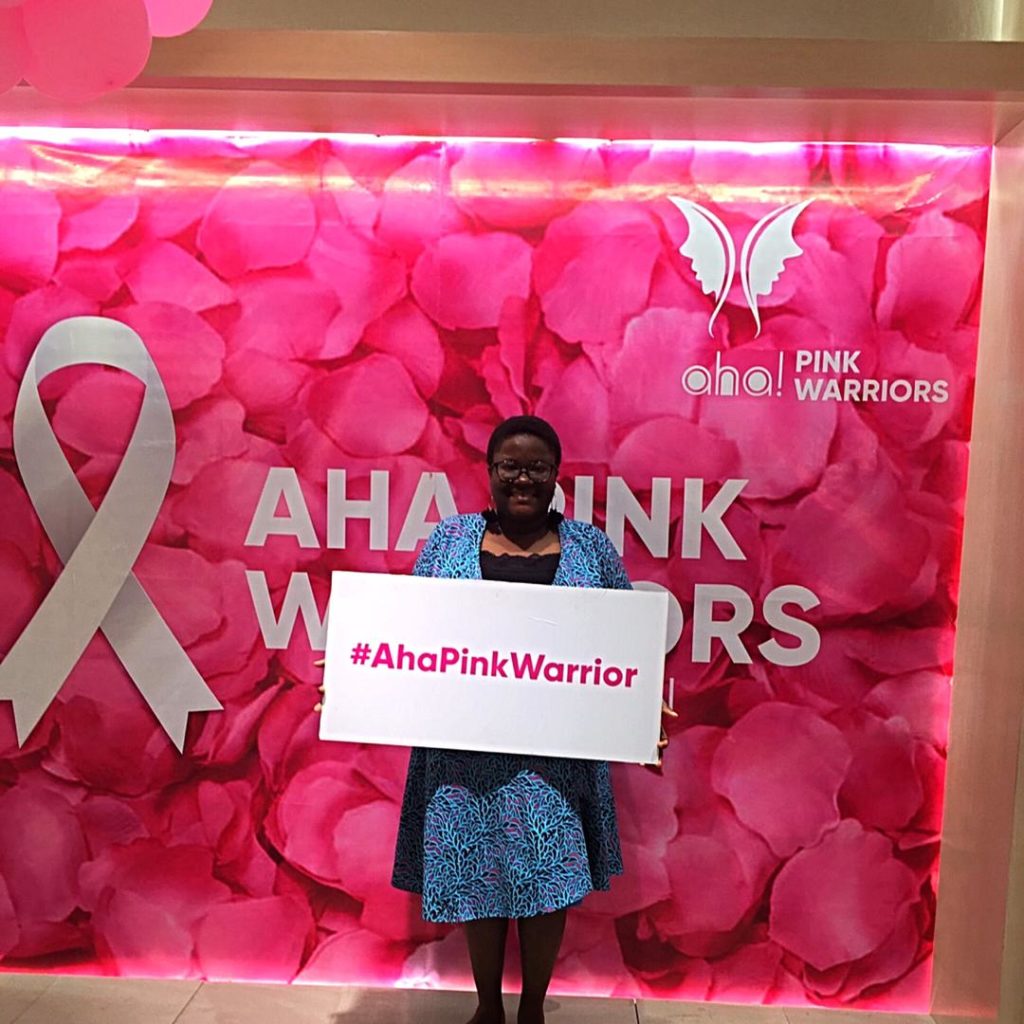
“Cancer took so much away from me but in return has given me so much. I have a better perspective on life, what matters and who counts. I live my life like its golden. I don’t take anything for granted” Twena Harvey-Ewusi
Twena is a Ghanaian fashion designer and a breast cancer survivor. She fought and survived breast cancer, the most common cancer that affects women in Ghana and the leading cause of cancer deaths among Ghanaian women.
The mention of any kind cancer sends shivers down the spine of many; for a lot of women, cervical and breast cancers are a death sentence. Does it have to be tough? Definitely not! Undeniably, breast cancer does claim lives. Such was the case of the late Mrs. Beatrice Mensah Osae, the beloved mother of AhmazingGrace Baaba Danso. “She was diagnosed in 2011 when she discovered a tumor in her left breast which grew bigger to the point it became inoperable. It burst and became an open sore on her chest and ate away at her breast even claiming her nipple. She had three chemo treatments which weakened her greatly till she switched to homeopathic treatment. This helped her regain her strength a bit but ultimately she succumbed to the disease and passed in September 2016” recalls AhmazingGrace. Madam Beatrice was one of the 1% of breast cancer patients who are likely not to survive breast cancer.
Okay! Let’s pause briefly and talk about what breast cancer really is. Dr Grace Gyimah-Boateng, a general medical practitioner at Sonotech Medical and Diagnostic Center describes breast cancer as growth of abnormal cells in the breast. Ideally, the body has a way of working to control how the cells in the body divides but cells become cancerous when they grow abnormally and at a rate that the body can no longer control.
Breast cancer comes in two main classifications: primary and secondary. Primary breast cancer cells originate or start from the breast, whereas secondary breast cancer occurs when cancerous cells in any other parts of your body spread to the breast. According to Dr Gyimah-Boateng, primary breast cancer makes up about 90% of diagnosed cancers in our part of the world. She further elaborated that the breast has 3 main parts, the lobule, duct and connective tissues. Breast cancer most commonly found is the Invasive Ductal Carcinoma (phew! this one is kind of heavy) which in simple terms means invasive cancer (abnormal growth) in the breast duct.
For Twena, finding out she had breast cancer “...was very devastating. My heart was broken, I was scared, didn’t know where to go and what to do. I was very scared because where I come from, the word cancer is a death sentence“. Was Twena’s fear unfounded? Of course not! Imagine processing a medical diagnosis as a death sentence. Nobody really wants to die. This fear of breast cancer lingers even in women who have never had a breast screening.
Karen Aziza Yassine is a Malian-Ivorian entrepreneur, a translator and a breast cancer survior. When I asked Karen what her diagnosis experience was, she said: “The day of my “official” announcement, the day I heard the doctor tell me that I had stage 3 out of 4 breast cancer, 4 meaning that you have a 99.9% of change of dying, the conversation went like this:
The doctor: I’m sorry to inform you that you have stage 3 breast cancer, and the younger you are the faster cancer spreads”
Me: ok! So what do I do now?
The doctor: (repeated) you have breast cancer ma’am!
Me: I heard you the first time around, I already cried yesterday… what do I do now?”
Karen was 27 years and had a 2 month old baby when she herself discovered a lump in her breast. Doctors told her it may just be a clogged milk duct as she was breastfeeding. It wasn’t until she went back a few months to get it checked again after having watched the cancer story of Angelina Jolie, that she was officially diagnosed. In a few months, the small lump had progressed to a stage 3 cancer. This news would scare anyone, I know I would have been scared, but her response! She had 99.9% surety that she was going to die but she said “…I already cried yesterday, what do I do now” She wanted to do something about her situation so she decided to make use of the 1% survival chance she had.
In her interview, Karen said her reaction surprised the doctor. She didn’t consider dying an option, saying: “…I was not going to waste another second being sad, I saw my grandmother dying of breast cancer and I was not going to let it win this time. I thought about my kids, my mother, my family and I knew that 70% of your recovery is in your attitude and my plan was to be as POSITIVE as possible and take the bull by the horns!” And she did take the bull by the horn. She survived it!
What caused Karen, Twena, Madam Beatrice or any other woman to develop breast cancer? Well, doctors don’t know that, yet! Scientists don’t know the exact cause of breast cancer. Dr Grace Gyimah-Boateng explained that there are risk factors; things that could make one prone to developing breast cancer. These are categorised as modifiable and non-modifiable factors. Non modifiables are factors women have no control over, they include genetic mutations, family history, radiation treatment to the chest, dense duct, prolonged exposure of endogenous estrogen (eg: early menstruation, late menopause and late age of beginning child birth) increasing age and being female, as 99% of cancer is found in women. One other minor non modifiable risk factor which Dr Grace mentioned is still being researched is height. Tall people have been found to be more susceptible to breast cancer. Modifiable risks which are factors women have control over are obesity, alcohol intake, and physical inactivity. These risk factors however do not always have a bearing on a woman’s diagnosis, as especially more now than before, women below age 45 are increasingly being diagnosed with breast cancer.
Breast cancer can be scary, we’re not here to tell you it isn’t. What it also is, besides being scary, is that it is curable. Twena did “6months of chemotherapy, surgery (lumpectomy) and 30 rounds of radiation. I was put on medication for 7yrs“. Karen on the other hand did “10 rounds of chemotherapy, and IV (Intravenous therapy)…a double mastectomy – took out both of my breasts and 3 months of radiotherapy” Not everyone diagnosed with breast cancer goes through these same treatments. Treatment is tailored to the type and level of cancer one has.
Depending on the stage and type, breast cancer treatment may include surgery to remove the cancer tissues, radiation to kill or shrink the cancer cells and medication which includes chemotherapy.
So you see, unlike dysmenorrhea- I know this a terrible comparison but I couldn’t help it, forgive me, breast cancer has a definite cure and you can get rid of it before it becomes life threatening. How do you do that? Early detection!!! My mind’s voice actually screamed that. Twena emphasised that “early detection is the reason I’m still here. Cancer if detected early can be cured. Girls/boys should be educated from the age of 12 on how to do the monthly self-exam. We should all mark it on our calendar to do it monthly” For AmazingGrace, her mum’s death has made her “hypersensitive and aware and desperate to ensure that women detect it early so they have better chances of survival…” She has since become a staunch breast cancer awareness advocate who dedicates time to encourage women to overcome their fears and get screened. This October, AmazingGrace says she’ll continue sharing her mother’s story to encourage women to get regular breast screening, although she wishes she had money to do more.
As we mark Breast Cancer Awareness Month this October, I’d like to tell you that You Don’t Have to Die. Breast cancer is curable, it’s okay to be afraid to get screened but don’t let fear cause you to lose your life. Breast cancer doesn’t have to be a death sentence. Read on breast cancer, go and get screened by a medical professional at least once a year, learn to examine your breast by yourself and do it regularly.
To examine your breasts:
- Lie on your back and put one arm behind your head. With your three middle fingers placed flat on your breast, move your hand gently in circular motions checking for lumps, knots or thickening. Do this over the entire breast area including the area from your collarbone right down to the ribs below your breast. Apply pressure moderately as your fingers move. Put the other hand behind your head and do same for the other breast.
- Stand up straight, raise your left arm and use the right hand to check your arm for lumps. Squeeze your nipple between your thumb and index fingers and look out for any fluid or discharge. Do same for the other breast.
- Stand in front of a mirror with your hands on your waist and observe your breast. Look out for any changes in size, shape, any swelling or dimpling of the skin.
These are best done within the first week after menstruating. Report any unusual observation to a medical practitioner. Remember this does not replace getting screened by a professional.
Let these words of Karen Aziza Yassine who survived a stage 3 breast cancer resound in your ears this month and every other day – “I’d like to remind people that 1 in 8 women will be diagnosed with breast cancer during their lifetime. Men can also develop it…So Inform yourself, touch your breast in the shower or when you’re putting cream on, don’t be scared, fear will not help you. No matter what happens, remember that you are stronger than you think you are, we all have it in us!”
And remember, it’s not a death sentence. Get screened.
By Sarah Benewaa Fosu, Knowledge Management Assistant, AWDF
01/10/2019
Life and Hope After Breast Cancer: African Women Providing Support
Life and Hope After Breast Cancer: African Women Providing Support
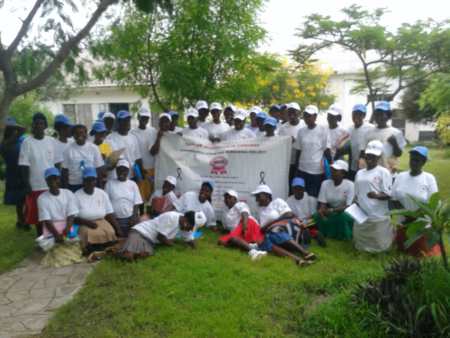 (Picture) Rural Female Volunteers in Mudzi District, Zimbabwe-Cancer Association of Zimbabwe
Breast cancer is a growing problem in low-resource settings. A report by the International Agency for Research on Cancer, GLOBACOB revealed that an estimated 94,378 new cases of breast cancer are diagnosed in sub-Saharan Africa annually, with incidence rates varying between African countries.
In a bid to empower women to take charge of their bodies and health, the African Women’s Development Fund (AWDF), provides resources to women’s organisations and groups under its ‘Body and Health Rights’ thematic area. These organisations and employ innovative strategies to help improve behaviour in symptomatic women in seeking health-care and referral. They also empower women with skills to undertake self-examination for early detection of lumps in the breast.
Since inception, AWDF has invested over $300,000 in grants and capacity support to about 10 breast cancer related organisations on the African continent. These are national and community based organisations who are well grounded in issues of breast cancer prevention and support programming. The organisations undertake activities such as breast cancer education, free breast screening campaigns in institutions and communities, education, counselling and support for women diagnosed with breast cancer as well as providing hospice services to patients with breast cancer related problems. The women’s rights organisations also empower the health sectors within the various countries by training health care workers to educate and provide gender-friendly health care services at the grassroot level. The initiatives of such women’s organisations and groups have had a great impact on health seeking behaviours of women, patients and breast cancer survivors.
“The education, interaction, free screening project and the usual hospital visitations have created an avenue for support and bonding with patients, and this has led to the reduction of anxiety and the feeling of isolation. The sharing of experiences by survivors who are volunteers helped the patients to relate to their journeys in the knowledge that there is life and hope after breast cancer”, says Mrs. Gladys Boateng, Reach for Recovery-Ghana.
“Continuous visits to survivors aside from offering peer support also helped families of patients better relate to what is happening to their loved ones and in turn served as a source of hope, comfort and relief to both the patients and their families,” Cancer Association of Zimbabwe.
The organisations also engage strategic health sector stakeholders as well as sector policies to advocate for friendly policies on diagnosis and the availability of appropriate treatment; sustainable pathological resources; palliative care for patients with late-stage breast cancer as well as reduced financial burden for average patient with breast cancer in sub-Saharan Africa. Such strategies are known to improve early diagnosis.
As we celebrate the breast cancer month, AWDF is lending its voice to the cause to reiterate the urgency of investing more in women’s body and health rights to ensure autonomy over their lives in general.
In solidarity with all women and survivors, together we can surmount!
By Rose Buabeng, Programme Officer, Grants.
Finalists: African Women Writers Workshop 2019
Finalists: African Women Writers Workshop 2019
We are pleased to announce the final list of selected applicants for the 2019 African Women Writers Workshop due to be held in Ghana.
The quality and sheer volume of applications received was truly amazing, and we thank everyone who put in an application to be part of this wonderful experience. We received over 1,300 applications and it was really tough deciding on the finalists and we couldn’t have done it without the assistance of our partners Femrite and facilitators Yewande Omotoso and Sylvia Vollenhoven.
We are truly sorry if you applied and did not make it this time. We hope you will try again at the next opportunity.
We take this opportunity to congratulate the selected finalists as listed below, as we prepare to welcome them to the workshop in Ghana.
- Paula Akugizibwe (Rwanda)
- Lydia Ume (Nigeria)
- Fatima Derby(Ghana)
- Dorcas Tiwaa Addai (Ghana)
- Awa Badara Joof (The Gambia)
- Anne Waruguru Kiai (Kenya)
- Lerato Molisana (Lesotho)
- Louise Mutabazi (Rwanda)
- Gcotyelwa Jimlongo (South Africa)
- Makomborero Muzenda (Zimbabwe)
- Musih Tedji (Cameroon)
- Shameelah Khan (South Africa)
- Sharon Tshipa (Botswana)
- Beryl Adhiambo (Kenya)
- Ingrid Nayame (Zambia)
- Jessica Mandanda (Malawi)
- Ndapewoshali Ndahafa(Namibia)
- Sophie Efange (Ethiopia)
- Bigoa Chuol (South Sudan)
- Aminata Sanneh (Gambia)
Exciting New Vacancies: 3 Positions Open!
Exciting New Vacancies: 3 Positions Open!
PROGRAMME OFFICER – DONOR LIAISON
Job Summary
The role of the Programme Officer – Donor Liaison is to work with other team members to coordinate and manage AWDF’s donor portfolio, ensuring that AWDF is meeting its implementation and reporting obligations to all stakeholders as identified. The post holder will work cross organisationally to ensure the development of strong quantitative and qualitative reporting on the work of AWDF. The role includes key responsibilities in the AWDF fundraising structure, including development of fundraising initiatives, writing of funding proposals, tracking and documentation of initiatives geared towards AWDF’s financial sustainability.
FOR FULL DETAILS ABOUT THIS POST, CLICK HERE
PROGRAMME OFFICER- GRANTS
Job Summary
The Programme Officer – Grants plays a critical role in the grants department taking primary responsibility for assessing new grants applications, recommending organisations to be funded, and preparing dockets in collaboration with the Grants Manager, and other colleagues in the Grants Department, and in line with AWDF’s strategic plan. With a focus on Francophone grantmaking, the post-holder will work to grow the Francophone grantmaking portfolio in line with the overall strategy, conduct desk and field based assessments in both French and English, and prepare dockets in English for review and approval. The position also provides grants management services and supports technical assistance to grantees. Contributing to due diligence processes, site visits and Monitoring, Evaluation and Learning activities related to grant making, the post holder also supports with outreach and networking as well as fundraising activities.
INTERESTED IN THIS POSITION? CLICK HERE
KNOWLEDGE MANAGEMENT SPECIALIST (KMS)
Job Summary
The Knowledge Management Specialist’s role is to lead and coordinate the work of the AWDF Knowledge Management function- producing analysis, generating new knowledge around women’s rights in Africa, and collaborating to communicate the impact of AWDF’s work and the work of its grantees, advocacy and movement building partners. The KMS coordinates also the documentation of organisational learning and knowledge generation within AWDF. The work of the KM function is conducted in English, with selected initiatives in French.
The Knowledge Management Specialist will work with colleagues to sustain a programme of knowledge generation and management initiatives (including documentation, archiving, building knowledge resources, co-developing and managing knowledge production by staff and external actors), and to grow the work of the Knowledge Management unit in line with the AWDF strategic framework and direction and with support from Senior Management. As a member of the AWDF staff team, the Knowledge Management Specialist supervises the Knowledge Management Assistant, engages in other cross-departmental activities of AWDF and represents AWDF in external events as relevant.
TO APPLY FOR THIS POSITION, CLICK HERE