
We are the storms they fear: Reflections from Women Deliver 2026
May 20, 2026
Media Center /
News
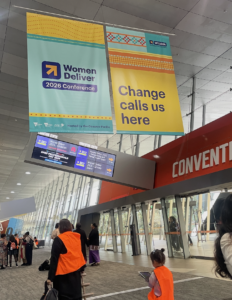
I stepped into the Women Deliver Conference in Naarm, Australia, carrying memories of Kigali. Three years earlier, at Women Deliver in Kigali, Rwanda, I had just begun my journey with the African Women’s Development Fund (AWDF) and was part of the team that contributed to the launch of our 10-year Strategic Framework, Lemlem. Three years later, we gathered again, carrying the same agenda, now sharpened by experience, to ensure that the voices of women, girls, and gender-diverse persons across the African continent continue to be heard. We came to stay connected to the needs of movements across the African continent and beyond, particularly for this conference, the Oceanic Pacific. We came as change called us to Naarm.
The Weight of Three Years
But the three years between Kigali and Naarm have been heavy. We have witnessed the rupture of warfare in Sudan, mounting instability in the Democratic Republic of Congo, and ongoing genocides across the continent, the Middle East, and the Caucasus Region. Across the continent, there has been a rollback in rights and targeted attacks on LGBTQI+ persons in Uganda, Senegal, Burkina Faso, Ghana, Cote d’Ivoire, Nigeria, and many other countries. We have watched as women and girls in the Gambia fight for their bodily autonomy in the Supreme Court, as Female Genital Mutilation (FGM) supporters move to repeal hard-worn protections. Three years ago, we celebrated two decades of the Maputo Protocol, and yet in those three years, that very Protocol has been systemically undermined, with opponents pushing for the enactment of the African Charter on Family, Sovereignty and Values. We have seen targeted funding cuts deliberately engineered to reduce investments in gender equality, SRHR, and HIV/AIDS programming, the very lifelines that have sustained movements for years. Only three years, and the rollback has been vast.
Yet We Arrived Defiant
When we arrived in Naarm, the space was alive. The conversations, the energy, and the people. It spoke to something deeper. A gathering intended for restoration, reconnection, and continuing conversations that disrupt while also sustaining movements. As I stepped into the Conference walls, I carried all that weight. I was tired from jet lag, but I stepped in with hope, because even as we battle the storms, we ourselves, collectively and in solidarity, are the storms that anti-rights forces fear.
Moving With the Moment: AWDF at the Women Deliver Conference 2026
Over the last three years, implementing Lemlem in a volatile landscape has required us to adapt and reframe our work in response to shifting contexts. Movement accompaniment remains critical as we resource partners navigating increased backlash. At the Women Deliver Conference, we carved out space to make that visible. We engaged with and brought African feminist partners into key conversations, creating room to reflect on where we have come from, where we stand, and where we are headed.
The conversations led by AWDF founding CEO Bisi Adeleye-Fayemi, outgoing CEO Francoise Moudouthe, and Programmes Director Nana Zulu, mirrored the direction of travel we are seeing as a feminist fund that has been in existence for over 25 years. Listening to the three in many ways was a mirror of the conditions that gave birth to AWDF: the defunding, the dismissal, and the deliberate shifting of goalposts for women’s rights and feminist movements across the continent, challenges that persist to this day.
Across the different spaces we navigated, those we shaped and those within the broader space, we responded to a singular question: How is AWDF responding in this moment? Our answer rests on three commitments.
Defending the hard-won gains of feminist movements, pushing back against the current backsliding, and sustaining the very architecture the movement needs to build from.
Disrupting the very ecosystems and narratives that work against women, girls, and LBTQI+ persons and refusing to operate in frameworks that were never designed to allow us to thrive.
Defining and articulating the feminist futures that we desire and refusing to wait for permission to experiment, build, and make them a reality.
What this Moment Demands
Strengthening feminist ecosystems is critical. The attacks we face are not isolated; they are interconnected, coordinated assaults on our rights, resources, and our legitimacy to organise. Responding to them requires us to be deliberate in our collaboration across movements and regions. But collaboration cannot only mean gathering the usual voices, the ones we already agree with, those most likely to affirm our convictions. Transformation requires friction. It demands that we open our spaces widely and engage with the unlikely, with those who do not see what we see. At times, our collective spaces grow too familiar, too comfortable. Disruption requires bringing those whose presence could shift the terrain entirely. This is how we make the case beyond the choir, how we expand and thrive. The question is not whether we can afford discomfort in our expansion, but whether we can afford not to.
Centre the Most Impacted
Even as we expand, we must not lose our centre. Across numerous spaces, including the one convened by AWDF, one priority was repeatedly emphasised: the voices of the most impacted must come first. That means being intentional about ensuring that those most affected by crises, climate change, and inaccessible systems are never an afterthought. Their voices must shape the transformation we seek. On funding, what emerged was equally clear. Communities must be resourced with trust, as experts of their own contexts and needs. That calls on us, as funders and movements, to build funding models that actually fit the communities we serve. It also calls for courage: moving beyond the normative frameworks of what is considered fundable. Transformation does not happen within the boundaries of what is familiar. If we truly want change, we must fund the unconventional and back approaches that do not yet have a track record or measurable outcomes, because the systems they challenge were never designed to let them succeed.
A Call for Change
As I reflect on the few days we gathered for the Women Deliver Conference, I carry this with me: funders must build flexibility into their models to account for the shifts that organisations and collectives on the frontlines face. Rigid frameworks cannot hold the weight of movements navigating conflict, shrinking civic space, political instability and chronic underfunding. They must also continue learning alongside women’s rights and feminist movements and build models that truly serve them. Feminist movements exist within spaces shaped by compounding crises. To resource feminist movements meaningfully means moving with them, adapting alongside them, and trusting them, because, in the end, they are the experts of their contexts and realities, even as those realities change. This is the work ahead. This is what solidarity demands. This is what change calls from us.
This reflection article was written by Chandapiwa Sisila. She is the Programme Coordinator – Countering Backlash at the African Women’s Development Fund (AWDF).