From creating safe spaces to challenging traditional norms on FGM in Uganda: A Focus on Kitabu Integrated Development Association
Feb 6, 2025
Media Center /
Blog
From creating safe spaces to challenging traditional norms on FGM in Uganda: A Focus on Kitabu Integrated Development Association
Female Genital Mutilation (FGM) is gradually declining in Uganda, credit to coordinated efforts across multiple sectors. The country has been particularly focusing on addressing Labia Minora Elongation (LME), a harmful practice targeting girls aged 8-14 that is deeply rooted in cultural misconceptions.
These practices persist due to harmful myths suggesting that labia elongation provides benefits such as reduced birth pain, protection from HIV, prevention of rape, and increased marriageability. State Minister of Gender and Culture, Peace Regis Mutuuzo, has been instrumental in challenging these beliefs, emphasizing that girls are sent to schools to be empowered, not prepared for early marriage.
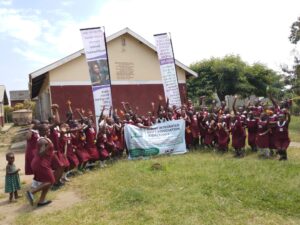
Recognising the complex nature of FGM, Kitabu Integrated Development Association (KIDA) has developed a multifaceted approach to combat these harmful practices. Their strategy centers on comprehensive education, empowerment, and advocacy. They conduct mobile health camps in schools and villages, explaining the health impacts of Labia Minora Elongation (LME) and other forms of female genital modification.
The organization creates safe spaces for young girls, training peer educators and survivor movements to share their stories. By reducing the shame associated with rejecting LME, they help girls understand their human rights and the physical, sexual, and psychosocial problems associated with these practices. Their work extends to sensitization workshops targeting religious and traditional leaders, challenging the cultural sensitivity surrounding LME.
Critically, the organisation involves men and boys in their campaigns, addressing the misconception that such practices enhance sexual pleasure. Through radio and television talk shows, they increase public awareness about FGM and its consequences. They also educate healthcare workers about the physical and psychosocial impacts, helping to reduce discrimination and marginalization of affected girls.
Key Learnings and Insights
The most profound lesson learnt by KIDA is thathat FGM affects entire communities, not just individual girls. Young women often practice these harmful traditions due to cultural norms, peer pressure, and expectations from parents and schools. The solution requires a collective approach involving girls, boys, men, women, survivors, stakeholders, communities, and organizations working together to dismantle harmful norms.
Support Needed to Accelerate Change
With only six years remaining to meet the 2030 target of eliminating FGM, urgent support is crucial. KIDA calls for increased investment in grassroots organisations working directly with communities that practice FGM. Collaboration between government, non-governmental organizations, and community members is essential.
On International Day of Zero Tolerance against FGM, KIDA shares “to every young girl, your body is yours alone. You have the right to make choices, to be beautiful and valuable just as you are, and to seek help and support when needed.”
The path to ending FGM is through education, empowerment, and collective action.
***
The contents of this article are from KIDA, an AWDF grantee partner in Uganda.
Grantee Highlight: Tuli Wamu Nawe- Fighting Stigma and Discrimination to end the spread of HIV/AIDS
Nov 23, 2015
Media Center /
grantees, HIV-AIDS
Grantee Highlight: Tuli Wamu Nawe- Fighting Stigma and Discrimination to end the spread of HIV/AIDS
Public Health Ambassadors Uganda (PHAU), a not-for-profit youth-led organisation, and a grantee of the African Women’s Development Fund (AWDF), is running an anti-HIV stigma and discrimination project focusing specifically on young women and girls living with HIV/AIDS in Uganda. Dubbed “Tuli Wamu Nawe,” meaning “We are together with You”, the project aims to use peer education and training to help share knowledge about the effects of stigma and discrimination on young women and girls’ HIV/AIDS prevention, care and treatment efforts in Uganda. Additionally, the experiences keeps women and girls from actively participating in the social, economic and political development of their local communities and the country at large.
Under the Tuli Wamu Nawe project, 25 women and girls with HIV/AIDS will be mentored and assisted with setting-up sustainable income generation activities (IGA). PHAU will work to forge partnerships with key community stakeholders and train peer educators and volunteers in HIV education activities to ensure that change is sustained long-term. The project will benefit 5 selected communities within Wakiso and Kampala districts.
Follow the project activities on the PHAU social media platforms: Facebook, Twitter, YouTube using the following hashtags #TuliWamuNawe #AcceptMe #EmbraceMe #WomenandGirlsagainstStigma. The project has also been featured on Women Deliver’s blog.
Some of PHAU’s other HIV/AIDS awareness education campaigns:
2015 International Women’s Day: Make it Happen campaign focusing on young women and girls
International Condom Day 2015 : ‘Condoms are Cool’ campaign
By Segawa Patrick, Programme Coordinator, Publich Health Ambassador Uganda and Women Deliver Young Leader
“…most people assume that someone with AIDS is immoral. They do not realize that there are other ways of transmission. They simply believe that if someone has AIDS, they must have acquired it through immoral behaviour. They associate you with criminals and hence discriminate against you.” (Male, PLHIV)
Uganda is lauded as a champion against HIV and AIDS for decades, having made tremendous strides in containing the epidemic and reversing its spread. However, the current statistics depict an increase in the incidence of HIV and young people are the group most affected. According to 2011 statistics by the Ministry of Health, 37 per cent of youths are HIV-positive and HIV prevalence is higher among female youths than their male counterparts.1
HIV-related stigma is still prevalent and has been recognized as a key factor impeding disclosure of HIV status, uptake of prevention services, and open discussion of the disease. These are prerequisite for successful mobilization of communities and individuals for HIV prevention. Young people living with HIV are continuously frustrated by the stigma and discrimination they face from their family, colleagues at school, potential employers, and the general public. Young people have limited access to HIV information and services and may engage in risk behaviours that increase their vulnerability as they are poorly informed about how to protect themselves.
With support from African Women’s Development Fund (AWDF), Public Health Ambassadors Uganda (PHAU), a not-for-profit youth-led organisation, is a running an anti-HIV stigma and discrimination project dubbed “Tuli Wamu Nawe,” which literally means “We are together with You”. PHAU will undertake educational activities and trainings that will help decrease HIV/AIDS stigma and discrimination, focusing specifically on discrimination directed at women and girls with HIV/AIDS. The program will also mentor 25 women and girls with HIV/AIDS and assist them with setting-up sustainable income generation activities (IGA). Finally, PHAU will forge partnerships with key community stakeholders to ensure that change is sustained long-term. The project will benefit 5 selected communities within Wakiso and Kampala district. It is expected that 25 women and girls with HIV/AIDS will directly benefit from IGA activities, 10,000 community members will benefit from HIV/AIDS education, and 70,000 community members will benefit indirectly from the project!
The peer educators will be our “Stigma Champions” and will be actively involved in educational activities aimed at increasing information flow related to different forms and trends of stigma and discrimination in schools and communities. Our Champions will help spread their passion for reducing stigma and discrimination as they see that it hinders those with HIV/AIDS, especially women and girls, from actively participating in social, economic and political development of local communities and Uganda at large. Our program also works to actively involve PLHIV, empowering them to fight stigma and showing their communities, and Uganda at large, that they are valuable, contributing members of their communities.
PHAU is excited to fight to reduce the prevalence of HIV/AIDS, while fighting for those who have been discriminated against.
Follow the project activities on our social media platforms: Facebook, Twitter, YouTube using the following hashtags #TuliWamuNawe #AcceptMe #EmbraceMe #WomenandGirlsagainstStigma.
Second AWDF African Women Writers Workshop in Kampala, Uganda (July 27- Aug 5)
Aug 6, 2015
Media Center /
Blog, Uncategorized
Second AWDF African Women Writers Workshop in Kampala, Uganda (July 27- Aug 5)
[tp lang=”en” not_in=”fr”]Saturday, August 1st
Second African Women Writers Workshop in Kampala, Uganda
The second African Women Writers Workshop got off to a great start. It’s been exciting to meet the amazing women who have come to learn and share about writing on Social Justice.
Monday 27th July: The week began at the Speke Hotel Uganda, located in lush gardens on the bank of Lake Victoria. The serenity and beauty of our surroundings are just the perfect environment to stimulate creative juices.
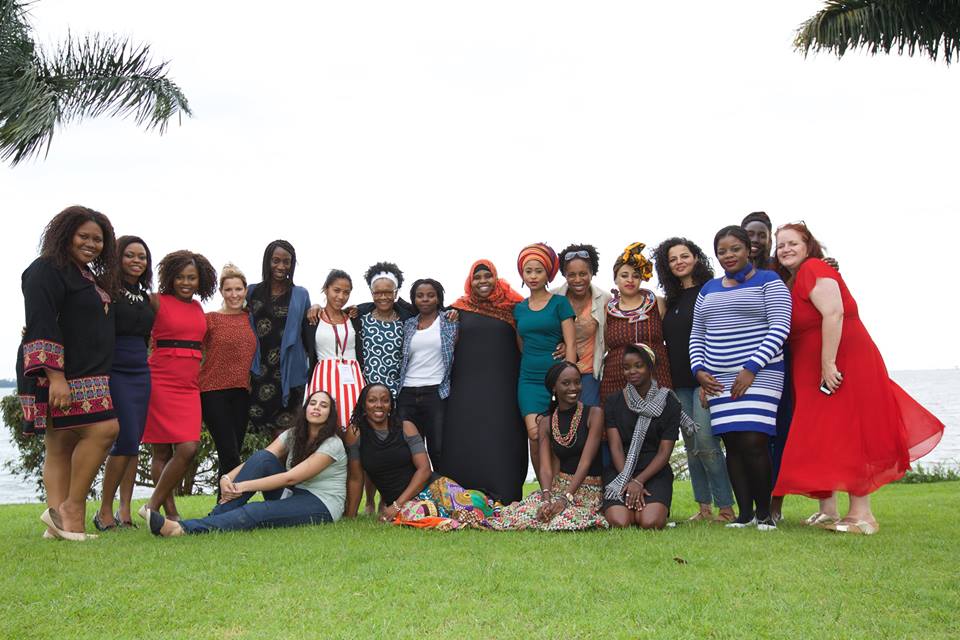
After the first two days the participants quickly became a tight knit sisterhood. Our 22 talented women come from Morocco to Madagascar. Their selection followed a competitive process from over 200 applications that focused on their creativity and conviction in writing and storytelling.
This year’s group is being taken through a demanding schedule by award-winning writer Yewande Omotoso and veteran writer/filmmaker extraordinaire Sylvia Vollenhoven, our lead facilitators. The full-day programme involves role play, interviews, timed writing exercises and plenty of hands-on coaching.
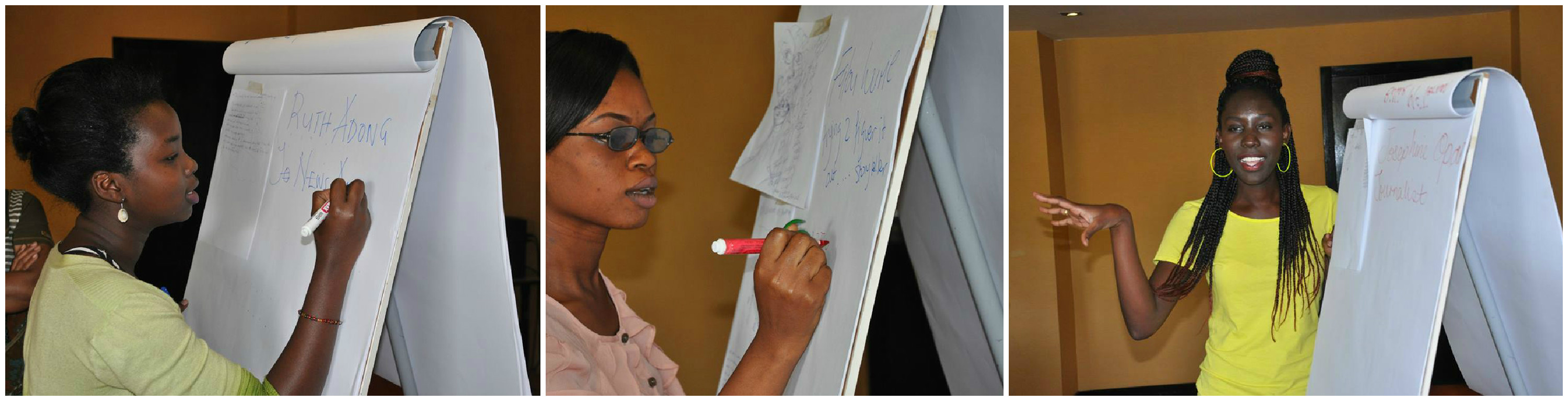
Participants introduce themselves.
Fast forward to Friday 31 July: The workshop participants joined in a public dialogue on African Women and Public Policy examining the status of African women in decision making spaces. The night was a success, drawing attendees from the public, Uganda’s literary world and activists.
We say a big thank you to our panelists, AWDF CEO Theo Sowa, Vollenhoven, Omotoso and workshop participant Zeyana Abdullah who joined Prof. Tabitha Mulyampiti of Makaere University.
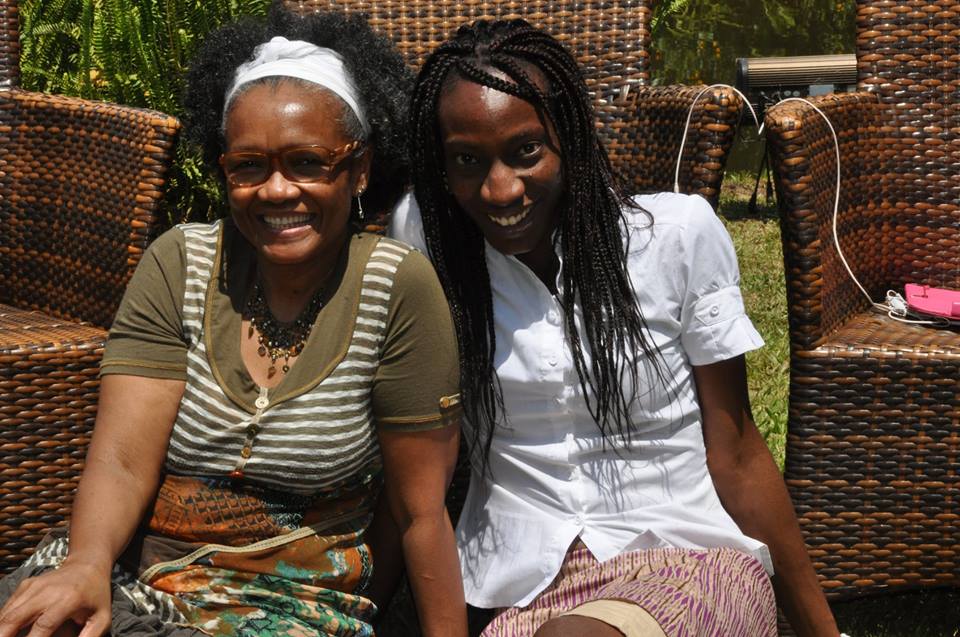
Sylvia Vollenhoven and Yewande Omotoso
We are also grateful to The Ugandan Women Writers Association FEMRITE, with whom we are co-hosting the workshop for a second time, for their support and warm welcome.
For the next 4 days we will be taken through the acclaimed MOTH Storytelling workshop conducted by Sarah Jenesse, Catherine Burns and Dawn Fraser.
Here’s some or feedback from #AWW15 on the first six days
Oluwaseun Ayodeji Osowobi, Nigeria:
The week has been very intense very challenging as regards cultivating creativity…putting us on the spot…the arguments and different perspectives have been very interesting. It’s a fact that we are not just participants, but we have become sisters. The facilitators have been great. I have learned about structure and in the Op-ed session I learned about counter-arguments.
That’s my week – intense. And the food at Speke is really good. Thank you AWDF
Ruth Adong (Uganda) :
The Op-Ed session has been the best thing that has happened to my writing. I “rant” a lot, but the session gave me a way to structure my ranting…gave me a way to rant with opinion. I loved the aspect of breaking into groups and bouncing ideas off each other. It really helped me to get arguments right.
The timed writing exercises have put me on the spot, but forced me outside my comfort zone.
Facilitators :
Today has been really good. When Sylvia and Yewande were reading their work I could see that they practice what they preach. They have been very friendly, yet they push us. They have been very generous with their knowledge. My writing has improved already.
Theo really put things into perspective with her talk. She was very inspirational. Made me see the purpose of my writing.
Merna Thomas (Egypt) :
Obviously we are doing a lot of work. I was worried that it would be a waste of time. For me it’s the psychology of writing that has been the biggest benefit. I feel the burden of the facilitators – 22 of us. But they are very amazing, very generous.
StellaMaris (Uganda)–
The week was relevant. I saw an evolution in my writing. I learned my weaknesses and strengths. The facilitators make us know we are getting hands-on information from experts. It’s been challenging and it’s been entertaining. I’ve enjoyed the moments together with new friends.[/tp]
[tp lang=”fr” not_in=”en”]Samedi 1er Août
Second African Women Writers Workshop in Kampala, Uganda
Le second ‘African Women Writers Workshop’ a pris un excellent départ. Il a été passionnant de rencontrer les femmes extraordinaires qui sont venues pour apprendre et partager sur l’écriture sur la justice sociale.
Lundi 27 Juillet: La semaine a débuté à l’Hôtel Speke en Ouganda, situé dans des jardins luxuriants sur la rive du lac Victoria. La sérénité et la beauté de notre environnement sont idéals pour stimuler la créativité.
Après les deux premiers jours, les participantes sont rapidement devenues une fraternité soudée. Nos 22 femmes de talent viennent du Maroc à Madagascar. Leur sélection a suivi un processus concurrentiel parmi plus de 200 candidatures qui se concentraient sur leur créativité et leur conviction dans l’écriture et le récit.
Le groupe de cette année a été pris par le calendrier exigeant de l’écrivaine primée Yewande Omotoso et la vétérante scénariste / cinéaste extraordinaire Sylvia Vollenhoven, nos principaux animateurs. Le programme d’une journée complète à impliqué des jeux de rôle, des interviews, des exercices d’écriture chronométrés et beaucoup de travail sur le coaching.
Participants introduce themselves.
Avance rapide au vendredi 31 Juillet: Les participantes de l’atelier se sont jointes dans un dialogue public sur les femmes africaines et la politique publique afin d’examiner le statut des femmes africaines dans les espaces de prise de décision. La nuit a été un succès, attirant des participants, du public du monde et militants littéraire de l’Ouganda.
Nous disons un grand merci à nos panélistes, la Directrice Générale d’AWDF Theo Sowa, Vollenhoven, Omotoso et les participantes à l’atelier Zeyana Abdullah qui ont rejoint le professeur de l’Université de Tabitha Mulyampiti Makaere.
Sylvia Vollenhoven and Yewande Omotoso
Nous sommes également reconnaissantes envers The Ugandan Women Writers Association, FEMRITE, avec qui nous avons co-accueilli l’atelier pour la deuxième fois, pour leur soutien et leur accueil chaleureux.
Pour les 4 prochains jours, nous serons pris par le célèbre MOTH Storytelling workshop menée par Sarah Jenesse, Catherine Burns et Dawn Fraser.
Voici un retour sur une partie des six premiers jours #AWW15
Oluwaseun Ayodeji Osowobi, (Nigeria):
La semaine a été très intense et très difficile en ce qui concerne la culture et la créativité … nous mettre sur la sellette … les arguments et les différents points de vue ont été très intéressants. C’est un fait que nous ne sommes pas seulement des participantes, mais nous sommes devenues sœurs. Les animatricess ont été formidables. J’ai appris sur la structure et à la session Op-ed-je appris sur les contre-arguments.
Voilà ma semaine – intense. Et la nourriture au Speke est vraiment bonne. Merci AWDF
Ruth Adong (Ouganda) :
La session Op-Ed a été la meilleure chose qui soit arrivée à mon écriture. J’écris beaucoup de “diatribes”, mais la session m’a donné un moyen de me structurer … m’a donné une façon de déclamer avec l’opinion. J’ai adoré l’idée de former de petits groupes et rebondir sur les idées des autres. Cela m’a vraiment aidé à obtenir les arguments justes.
Les exercices d’écriture chronométrés m’ont mise sur la sellette, mais m’ont forcé à sortir de ma zone de confort.
Animatrices:
Aujourd’hui a été vraiment bien. Lorsque Sylvia et Yewande lisaient leur travail, je pouvais voir qu’elles pratiquent ce qu’elles prêchent. Elles ont été très gentilles, mais elles nous poussé. Elles ont été très généreuses avec leurs connaissances. Mon écriture s’est déjà améliorée.
Theo a vraiment mis les choses en perspective avec son discours. Elle était très inspirante. Elle m’a fait voir le but de mon écriture.
Merna Thomas (Egypte):
Évidemment, nous faisons beaucoup de travail. Je craignais que ce soit une perte de temps. Pour moi, c’est la psychologie de l’écriture qui a été le plus grand avantage. Je sens le fardeau des animateurs – 22 d’entre nous. Mais elles sont très étonnantes, très généreuses.
StellaMaris (Ouganda)–
La semaine était pertinente. J’ai vu une évolution dans mon écriture. J’ai appris de mes forces et faiblesses. Les animateurs nous font savoir que nous obtenons l’information pratique sur des experts. Cela a été difficile et ça a été divertissant. J’ai apprécié les moments avec de nouvelles amies.[/tp]
World AIDS Day 2014: Using performance art to achieve an HIV–Free generation in Uganda
Dec 17, 2014
Media Center /
Blog
World AIDS Day 2014: Using performance art to achieve an HIV–Free generation in Uganda
[tp lang=”en” not_in=”fr”]According to UNAIDS, more than 35 million people are now living with HIV, with over 3.2 million under the age of 15. In 2013, an estimated 2.1 million people were newly infected with HIV, with over 240,000 under the age of 15. Every day more than 5,700 people contract HIV, nearly 240 every hour, and in 2013, 1.5 million people died from AIDS. Since the beginning of the pandemic, nearly 78 million people have contracted HIV and close to 39 million have died of AIDS-related causes. In 2013, around 12.9 million people living with HIV (37% of the total) had access to antiretroviral therapy.
More than two-thirds (70%) of all people living with HIV, 24.7 million, live in sub-Saharan Africa including 91% of the world’s HIV-positive children. In 2013, an estimated 1.5 million people in the region became newly infected. An estimated 1.1 million adults and children died of AIDS, accounting for 73% of the world’s AIDS deaths in 2013.
The World AIDS Day is about increasing awareness, fighting stigma, improving education, mobilizing resources and raising funds to better our response to HIV and AIDS. 2.5 million people continue to be infected with HIV each year, with 2,400 young people newly infected every day. Raising awareness and knowledge of HIV is crucial to get these figures to zero. The World AIDS Day 2014 theme was “Getting to Zero in Africa- Africa’s Responsibility, Everyone’s Responsibility” resonating with the global themes (2012-16) Getting to Zero- Zero new HIV infections, Zero Discrimination and Zero AIDS-Related deaths.
In commemoration of World AIDS Day 2014, Public Health Ambassadors Uganda (PHAU) emphasized a holistic approach to the fight against HIV/AIDS. This emphasis is based on the five prevention strategies; Abstinence, Being faithful, Condom use, Elimination of Mother To Child Transmission of HIV (EMTCT), Safe Male Circumcision as well as routine HIV counseling and testing among singles and couples. However, the prevention strategies can only have positive impact through establishment of partnerships and synergies across different sectors and support from development partners.
We at Public Health Ambassadors Uganda (PHAU) in partnership with the African Women’s Development Fund (AWDF) organized the 1st World AIDS Day Flash Mob in Uganda aimed at increasing awareness about the HIV prevention strategies; abstinence, being faithful, condom use, and elimination of mother to Child transmission of HIV (EMTCT), safe male circumcision as well as routine HIV counseling and testing among couples, using an edutainment, informative and performance arts approach.
Furthermore, with support from Uganda Cares, TASO Mulago, International Health Sciences University (IHSU), UAP Insurance, British Airways and A & S Electronics, young people received free voluntary counseling as well as testing (VCT) services and free condoms as their dual protection against HIV/AIDS, STIs and unplanned pregnancy.[/tp]
[tp lang=”fr” not_in=”en”]Selon l’ONUSIDA, plus de 35 millions de personnes vivent aujourd’hui avec le VIH, dont plus de 3,2 millions de moins de 15 ans. En 2013, on estime que 2,1 millions de personnes ont été nouvellement infectées par le VIH, avec plus de 240 000 individus de moins de 15 ans. Chaque jour plus de 5.700 personnes contractent le VIH, près de 240 chaque heure, et en 2013, 1,5 million de personnes sont mortes du sida. Depuis le début de la pandémie, près de 78 millions de personnes ont contracté le VIH et près de 39 millions sont décédées de causes liées au sida. En 2013, environ 12,9 millions de personnes vivant avec le VIH (37% du total) avaient accès à la thérapie antirétrovirale.
Plus des deux tiers (70%) de toutes les personnes vivant avec le VIH, 24,7 millions, vivent en Afrique sub-saharienne, dont 91% des enfants séropositifs du monde. En 2013, environ 1,5 millions de personnes dans la région ont été nouvellement infectées. On estime que 1,1 million d’adultes et d’enfants sont morts du sida, ce qui représente 73% des décès liés au SIDA dans le monde en 2013.
L’objectif de la Journée mondiale du sida est d’augmenter la sensibilisation, la lutte contre la stigmatisation, améliorer l’éducation, la mobilisation des ressources et la collecte de fonds pour améliorer notre réponse au VIH et au SIDA. 2,5 millions de personnes continuent d’être infectées par le VIH chaque année, avec 2.400 jeunes personnes nouvellement infectées chaque jour. La sensibilisation et la connaissance du VIH est cruciale pour obtenir ces chiffres équivalent à zéro. La Journée mondiale du sida 2014 dont le thème a été “Atteindre Zero: la responsabilité de Afrique- Afrique, la responsabilité de tous” en résonance avec les thèmes mondiaux (2012-16) Se rendre à zéro: Zéro nouvelle infection au VIH, zéro discrimination et zéro décès liés au sida.
En commémoration de la Journée mondiale contre le sida 2014, Public Health Ambassadors Uganda (PHAU) a souligné une approche globale de la lutte contre le VIH / sida. Cet accent est basé sur les cinq stratégies de prévention; Abstinence, fidélité, utilisation du préservatif, l’élimination de la transmission mère-enfant du VIH (EMTCT), circoncision masculine sécurisée ainsi que des conseils de routine sur le VIH et de dépistage chez les célibataires et les couples. Cependant, les stratégies de prévention ne peuvent avoir un impact positif à travers l’établissement de partenariats et de synergies entre les différents secteurs et le soutien des partenaires au développement.
Nous, à la Public Health Ambassadors Uganda (PHAU) en partenariat avec le Fonds Africain de Développement de la Femme (AWDF) avons organisé la 1ere Journée mondiale du sida de Flash Mob en Ouganda visant à accroître la sensibilisation sur les stratégies de prévention du VIH; abstinence, la fidélité, l’utilisation du préservatif, et l’élimination de la transmission mère-enfant du VIH (EMTCT), la circoncision masculine en toute sécurité ainsi que des conseils de routine et dépistage du VIH chez les couples, en utilisant une approche ludo-éducatif, informatif et arts de la scène.
En outre, avec le soutien de Uganda Cares, TASO Mulago, l’Université des sciences de la santé internationale (IHSU), UAP Insurance, British Airways et A & S Electronics, les jeunes ont reçu des conseils libre et volontaires ainsi que des services de dépistage (VCT) et des préservatifs gratuits étant une double protection contre le VIH / sida, les IST et les grossesses non planifiées.[/tp]
Flash Mob in actionHCT services by TASO MulagoHave you got a #REDRibbon yet?After the Flash MobHIV Prevention StrategiesHIV on the moveCondom distribution drive along Entebbe roadEngaging women in the fight against HIV is key
[tp lang=”en” not_in=”fr”]More so, empowering young people with HIV related information is also key in getting the figures to zero. Therefore, Public Health Ambassadors Uganda (PHAU) engaged five youth dance groups namely; Storm Riders Dance Crew, Kingdom Swagga Krew, Stormers, Chains Off Salsa group and Integrity Power to come up with an edutainment and informative flash mob with over 50 dancers with emphasis on the HIV prevention strategies as mentioned above which was staged at Colville Street, Kampala road at 5pm. The flash mob attracted over 500 young people working within and around the city center who provided the audience with thrilling and epic dance moves from the different dancers / participants. The dancers wore branded t-shirts with #Getting2Zero, #Everyone’sResponsibility message plus a drop down banner that was dropped with similar message.
We at Public Health Ambassadors Uganda (PHAU) believe that the #Getting2Zero Campaign will run throughout 2015 reaching out to the different regions of the country using an edutainment, informative and performance arts approach. This is because the spread or the fight is not a one day activity that should stop only on 1st December, therefore the struggle continues and let’s join the fight against the HIV epidemic in Uganda.[/tp]
[tp lang=”fr” not_in=”en”]Plus encore, l’autonomisation des jeunes de l’information liée au VIH est également un élément clé pour obtenir des chiffres à zéro. Par conséquent, la Public Health Ambassadors Uganda (PHAU) a engagé cinq groupes de danse de jeunes à savoir; Storm Riders Dance Crew, Uni Swagga Krew, Stormers, Chaînes Off groupe Salsa et de l’intégrité de puissance à venir avec une flash mob ludo-éducative et informative avec plus de 50 danseurs en mettant l’accent sur les stratégies de prévention du VIH comme mentionné ci-dessus qui a été mis en scène à Colville Street, Kampala à 17 heures. La flash mob a attiré plus de 500 jeunes qui travaillent à l’intérieur et autour du centre-ville qui ont ravi le public avec de palpitantes et épiques mouvements de danse des différents danseurs / participants. Les danseurs portaient des t-shirts de marque avec # Getting2Zero, le message # Everyone’sResponsibility de plus une bannière déroulée qui a portait un message similaire.
Nous, à la Public Health Ambassadors Uganda (PHAU) nous croyons que la campagne de #Getting2Zero se déroulera tout au long de 2015 pour atteindre les différentes régions du pays en utilisant une approche ludo-éducative, informative et arts de la scène. Cela parce que la propagation ou la luttene sont pas des activités que d’une journée qui ne se limitent qu’au 1er Décembre, donc la lutte continue et nous allons rejoindre la lutte contre l’épidémie de VIH en Ouganda.[/tp]
Grantee Highlight: ISORE Women Initiative for Sustainable Development Commemorate World AIDS Day
Dec 8, 2014
Media Center /
News
Grantee Highlight: ISORE Women Initiative for Sustainable Development Commemorate World AIDS Day
World AIDS day Dec 1, 2014
World AIDS day was even more of a success than hoped for the ISORE Women Initiative for Sustainable Development based in central Uganda, a small NGO and an AWDF grantee. The day-long event which kicked off Monday, eventually ran an extra two days, unplanned, but hugely successful.
“This has been our first time to recognise World AIDS day and it has attracted many people,” said Christine Aumo the group’s Executive Director.
The event brought together the ISORE women and several members of the local community and government. They included Dr. Atai Betty, a representative from the Health Ministry who was guest of honour, local council members from the Mawatto division and community elders.
ISORE’s activities included free testing, HIV-AIDS counseling, distribution of condoms and education and took place in Kiwanga in the Mukono district.
The younger kids were not left out of the action. Pupils of a primary school in Kiwanga read poems while the Kiwanga youth put on plays, all centred around HIV/AIDS.
“It is the hope that the success of the event will encourage more women and men to open up about their status and seek the care and support that they need,” said Christine.
Out of over nearly 200 men and women who were tested on Dec 1 and 3, five individuals tested positive for HIV. They included a couple and three singles between the ages of 18-34, who were referred to counsellors as well as outreach centres for treatment. In addition, all of them are currently under ISORE Women’s care and support.
Days two and three were equally as successful. “The turn up was good,” enthused Christine.
Another 19 out of 146 people tested on the last day came back with HIV positive results, out of which 12 were female, Christine said.
The group has planned a debriefing and “way forward” meeting for Monday Dec. 8.
Uganda: 30th July 2014, Public Dialogue and Literary Event
Jul 21, 2014
Media Center /
News
Uganda: 30th July 2014, Public Dialogue and Literary Event
On the 30th of July, the African Women’s Development Fund (AWDF) in partnership with the Ugandan Women’s Association (FEMRITE) will hold a public dialogue and literary event at Hotel Africana in Kampala, Uganda. The theme for the event is ‘African women speaking for ourselves: What difference does it make?’ This event is open to the general public and starts at 3.30pm.
Speakers at the event will include Dr Hilda Tadria, Executive Director of MEMPROW and Board member of AWDF; Theo Sowa, CEO of AWDF; Yewande Omotoso, author of Bom Boy; Mamle Kabu, author of The Kaya Girl; Hilda Twongyeirwe, Executive Director of FEMRITE; Hon. Mary Karoro Okurut, Founder of FEMRITE; Lina Zedriga, Director of Women, Peace and Security at Regional Associates for Community Initiatives and Nana Darkoa Sekyiamah, Communications Specialist at AWDF.
Also speaking and performing at the event are the participants of the 1st regional creative non fiction workshop organised by AWDF and FEMRITE. These are:
Abena Kyere – Ghana
Adegbeye Olutimehin – Nigeria
Alexis Teyie – Kenya
Amina Doherty – Nigeria
Beatrice Lamwaka – Uganda
Comfort Mussa – Cameroon
Deborah Frempong – Ghana
Eunice Kilonzo – Kenya
Fafa Yvonne Quashigah – Ghana
Florence Khaxas – Namibia
Hannah Wanja Maina – Kenya
Jennifer Thorpe – South Africa
Kagure Mugo – South Africa/Kenya
Kechi Nomu – Nigeria
Moiyattu Banya – Sierra Leone
Njoki Wamai – Kenya
Rita Nketiah – Ghana
Ritah Atwongyeire – Uganda
Tendai Garwe – Zimbabwe
Valérie Dginia Bah – Benin/Haiti
A selection of participants at the 1st AWDF & FEMRITE creative non fiction writers workshop held between the 21st-31st of July 2014 in Entebbe, Uganda
Bursary Announcement: International Workshop on Resource Mobilisation (IWRM)
Sep 13, 2012
Media Center /
News
Bursary Announcement: International Workshop on Resource Mobilisation (IWRM)
BURSARY ANNOUNCEMENT
International Workshop on Resource Mobilisation (IWRM)
IWRM Africa 2012
Don’t miss out – the IWRM Africa is your starting point for fundraising success!
The International Workshop on Resource Mobilisation (IWRM) Africa will take place in Kampala, Uganda from 27 – 30 November 2012. The IWRM Africa is the Resource Alliance’s second African IWRM and is organised in parnership with The African Women’s Development Fund (AWDF). This 4 day workshop will address the major challenges faced by African NGOs in the areas of financial security and sustainability. The aim of IWRM Africa is to enhance the ability of African non-governmental organisations to mobilise resources for their cause. The Resource Alliance has 11 years history of organising the IWRM. It is widely recognised as the leading training opportunity to building the fundraising capacity of non-profit organisations in the emerging economics. Host countries have included India, Thailand, Malaysia, South Africa and Kenya. For more information on the programme and the workshop please email iwrm@resource-alliance.org
AWDF Bursary
AWDF has put in place a small bursary to sponsor a minimum number of existing AWDF grantees to attend the IWRM. The bursary will cover only airfare and local transport for residential and non-residential delegates respectively. Applying Grantees should be ready to cost share and priority will be given to applicants who state this in their application. All successful applicants must be ready to submit a report from the workshop following a set of guidelines to be provided by AWDF. Please note that only one staff per organization will qualify for the bursary. Priority will be given to organizations that have never benefited from AWDF bursary to attend the IWRM.
How to apply for the AWDF Bursary
Organisations applying on behalf of staff members should submit the following documents:
Application letter including the following:
Name of organisation
Address (both physical and postal)
Telephone and Fax number
Contact person’s name and title
Applicant’s CV
A maximum of 2 pages write up explaining how you intend to utilising skills acquired from the IWRM within your organisation.
A signed recommendation letter from applicant’s organizations
A budget (Please note that the final decision will be taken by AWDF)
Important information
The selection process will be highly competitive and will adhere strictly to the entry requirements and fundraising needs of organisations. No application will be reviewed without a signed recommendation letter from applicant’s organisation’s head. Soft copies of your application should be emailed to awdf@africlub.net/awdf.
Please send both hard and soft copies of your application documents to the following address:
Note that the deadline for receiving all applications is Tuesday, October 2nd 2012. This bursary is open to existing AWDF grantees only
NOTE: THE IWRM IS CONDUCTED IN ENGLISH WITH NO TRANSLATION FACILITIIES.
Grantee Highlight: Better HAG Uganda – Working With Champions
Apr 13, 2012
Media Center /
Blog
Grantee Highlight: Better HAG Uganda – Working With Champions
Written in bold, large fonts at the top of their webpage is the declaration: “We Strive to be Champions of Better Health”, and that is exactly what Better Health Action Group Uganda is turning out to be. Better HAG is a non-profit initiative with focus on Reproductive and Sexual Health, and in September 2011, they were given an AWDF (African Women’s Development Fund) grant of USD $1000 in support of their big, hairy, audacious goal: “… seeking a world of better health with no cases of preventable maternal, newborn and child deaths, where people can access sexual and reproductive health (including HIV and AIDS) services as well as exercise their health rights, and where vulnerability to children in all angles is greatly reduced.”
They are not only bold about their goals and vision, they are physical about it too; having recently made Sports and Events – S & E’s as they call it – one of their means of reaching out to and empowering women, girls, and the people in the community. They saw in football and netball, an invaluable opportunity and ability to bring together people of all makes and ages for a period of fun, interaction, togetherness, and all sorts of possibilities. These sports not only mobilise a lot of people in the community for interaction and information, but also bring them together for education and capacity building. This occurs through their engagement in the planning and delivery of the sports events, and their actual participation in them.
It is through these mediums that Better HAG empowers the participants – girls, youth, and women – in capacity and skills, whiles the sports commentator of the event provides the educational points for reform or advocacy. This is done during the sport activities, where the commentator would educate the crowd and players on the details of a particular issue of concern, say HIV/AIDS prevention, gender equality, child protection, etc. The people are not only educated on these, but also on the best values of the sport that they are engaging in, such as team-work, cooperation, respect for team-mates and other players, and these lessons linked to life values such as leadership, discipline, and conflict resolution. By doing all these, Better HAG helps in grooming happier, healthier, more responsible and protected girls, women, and society … bringing themselves several steps closer to their fierce, audacious goals!
Started in October 2008, in Uganda, by human health rights and development activists, Better HAG is focused on “an advocacy for accelerated realization of women and girls’ health rights”. Not only have they worked hard to sustain this, but they have also given it a new and wider lease of life, by using sports as yet another platform for reaching and empowering the people on life-changing issues.
Here at AWDF, we are very proud of our grantee, Better HAG Uganda. Our belief in excellence and the capacities of females to reach great heights is highlighted in their achievements. We hold the deep belief that if women and women’s organizations are empowered with skills, information, sustainable livelihoods, opportunities to fulfill their potential, plus the capacity and space to make transformatory choices, then we will have vibrant, healthy, and inclusive communities. Without a doubt, a hard-working entity like Better HAG fits just right into what we here at AWDF, hold in value when thinking of grants, support, and progress on issues of Reproductive and Sexual Health for women in Africa.
AWDF says “Kudos” to Better HAG!
Dr Hilda Tadria, AWDF co-founder and board chair celebrated by ‘New Vision’, Uganda’s leading daily
Mar 15, 2012
Media Center /
News
Dr Hilda Tadria, AWDF co-founder and board chair celebrated by ‘New Vision’, Uganda’s leading daily
Dr Hilda Tadria - AWDF Co-Founder and Board Chair
The staff of the African Women’s Development Fund (AWDF) congratulates Dr Hilda Tadria on being recognised by ‘New Vision’, a leading Ugandan daily, as a woman who has made a positive mark on Ugandan society. At AWDF we are intimately aware of the hard work, passion and commitment which Dr Tadria brings to women rights work, especially in the areas of mentoring, leadership and inter generational dialogue. For this reason we are especially pleased to see Dr Tadria being recognised in her own home country.
We also extend our congratulations to Winnie Byanyima, Dr Sarah Ntiro and Dr Sarah Tamale who have all contributed immensely to the women’s movement in Uganda.