
Tag: nigeria
Influencing communities to end FGM in Ebonyi and Cross River Nigeria
Influencing communities to end FGM in Ebonyi and Cross River Nigeria
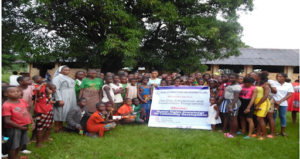
Despite progress, FGM remains prevalent in Nigeria, violating the rights of women and girls. A 2023 report by the Spotlight Initiative to End Violence Against Women and Girls states that FGM affects 8% of girls aged 0–14 in Nigeria, highlighting the need for continued action.
FGM persists in southeastern and south-south states like Imo, Ebonyi, Ogun, and Osun. In Cross River, it continues in secrecy. Northern regions, including Fulani, Hausa, Kanuri, and Tiv communities, report lower cases. However, Nigeria remains burdened by FGM due to deep-rooted traditions.
Ongoing Efforts to Combat FGM
The Community Welfare and Social Initiative (CWSI) has led efforts to eliminate FGM in Nigeria. Over the past three years, CWSI has implemented projects funded by the African Women’s Development Fund (AWDF), such as “Ending FGM/Cutting and Early Marriage,” which successfully influenced communities in Ebonyi and Cross River to abandon the practice. The Ekajuk Kingdom in Ogoja even enacted customary laws banning FGM.
While CWSI no longer runs an exclusive FGM project, it integrates anti-FGM campaigns into broader programs addressing gender-based violence, human trafficking, and human rights. The inclusion of FGM bans in the customary laws of Obanliku is a testament to this effort. CWSI is also training community advocates to sustain change.
Key Lessons Learned
Through years of engagement and advocacy CWSI has gained valuable insights into the fight against FGM. Their experiences working in and through communities has shown them that:
- Engaging communities fosters acceptance and abandonment of FGM.
- Customary laws help regulate behavior and sustain change.
- Empowering women and girls strengthens advocacy efforts.
- Successful interventions must be scaled and replicated.
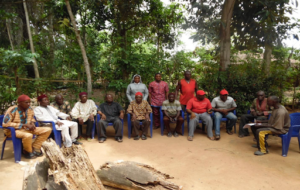
Accelerating Efforts to End FGM
To accelerate progress, CWSI emphasizes:
- Community education on FGM’s harmful effects
- Policy reforms with support from older generations
- Grassroots funding for women-led organizations
- Alternative rites of passage to replace FGM
The fight against FGM continues, but progress made by organizations like CWSI offers hope. By amplifying survivors’ voices, empowering communities, and advocating policy changes, we can work toward a future free from FGM. Let’s renew our commitment to ending this practice.
Sources:
- UNICEF: https://www.unicef.org
- Spotlight Initiative: https://www.spotlightinitiative.org
***
The contents of this article are from Community Welfare and Social Initiative (CWSI) , an AWDF grantee partner in Nigeria supported under the Leading from South initiative.
An Address by Ghana’s Minister of Gender, Children and Social Protection at AWDF’s candlelight vigil on the 1st anniversary of Chibok Girls’ Abduction
An Address by Ghana’s Minister of Gender, Children and Social Protection at AWDF’s candlelight vigil on the 1st anniversary of Chibok Girls’ Abduction
[tp lang=”en” not_in=”fr”]Tuesday, April 14th 2015 marked the first anniversary of the abduction of the over 200 girls from Chibok in Northern Nigeria. To commemorate the occasion, AWDF, in conjunction with the University of Ghana’s Centre for Gender Studies and Advocacy (CEGENSA), organised a peaceful candlelight vigil where Ghana’s Minister for Gender, Children and Social Protection, the Honourable Nana Oye Lithur, delivered a powerful and moving address, affirming Ghana’s solidarity with the Nigerian people and called for the safe return of the girls:
Members of the Diplomatic Community
Chief Executive Officer, the African Women’s Development Fund (AWDF), Theo Sowa
Representatives from AWDF and CEGENSA
Students
Ladies and Gentlemen
I thank you for inviting me to this solemn ceremony. Exactly a year ago, more than 230 girls, with hope for a better future were in school at Chibok in Northern Nigeria. They knew that they would finish secondary school and continue to pursue their dreams of an accomplished educated life that they could pass on to their children’s children. They knew that education was the sure way to working in any of their country’s corporate institutions or creating their own businesses to improve the economic conditions of their families. They had parents who were regularly expectant of the results from their investment in their children’s education.
But then all these dreams came to an abrupt end. The world woke up to the rude shock of the abduction of these girls by militant group Boko Haram. The shock of this marauding swoop by Boko Haram resulted in demonstrations and calls from peoples of all walks of life worldwide for the return of the girls. Nigerian campaigners used social media, particularly Twitter, to raise awareness about the kidnapping. The #bringbackourgirls online campaign caught on well with notable personalities like First Lady of the United States Michelle Obama and Democratic Presidential nominee hopeful Hillary Clinton as well as a number of prominent celebrities, joining it.
Ladies and Gentlemen, this heinous crime attracted the attention of many countries, which offered their assistance to Nigeria for the girls’ return or rescue:
- The United Kingdom agreed to send experts to Nigeria to assist in the search for the students.
- The United States also agreed to send experts to Nigeria to assist in the search for the students.
- France offered a specialist team.
- China announced its intention to make available any useful information acquired by its satellites and intelligence services.
- Canada joined the international effort to free the schoolgirls.
- Iran offered to help Nigeria resolve the issue of the abduction of the female students.
- Israeli Prime Minister, Benjamin Netanyahu, offered assistance to the Nigerian President in locating the missing pupils.
ECOWAS member countries have stood up to the fight for the return of these girls. On the 17th of January this year, I chaired an ECOWAS meeting of Gender Ministries West Africa. After the meeting, we issued a Declaration that described as “unacceptable and intolerable, the act of lawlessness and impunity demonstrated through the abduction of the Chibok girls…” We noted the “direct and indirect consequences of insurgency ” and reaffirmed “our strong support to the government and people of Nigeria.”
I made a similar call at the 59th Session of the UN Commission on the Status of Women. I asked for the “immediate and unconditional release of the more than 200 Chibok girls and other abducted persons in Northern Nigeria.”
The Chairman of ECOWAS, President John Mahama, speaking to West African representatives in Germany recently noted that “no country can say that the Boko Haram threat is too far away to be affected” and that “the whole continent is under threat.” President Mahama, as Chairman of ECOWAS, has led the call for the creation of a multinational force to deal with Boko Haram. Currently, Nigeria, Cameroun, Chad and Benin have contributed troops to fight Boko Haram.
Indeed, the hearts of many were gladdened recently, when it was reported that the headquarters of Boko Haram had been retaken.
Each of the last 365 days has passed with parents of our daughters going to bed, wondering what could be happening to their [children]. I am glad that the concern for the return of these girls has not waned.
The Chibok girls have still not been returned. We need to sustain the campaign; and that is why I commend the African Women’s Development Fund (AWDF) and the Centre for Gender Studies and Advocacy (CEGENSA) for putting this programme together. This public show of support for the families and parents of the missing girls is indeed timely
Ghana as a country shares the pain of the parents of the girls. We as a People and Government commit to do all in our power to help find the girls.
Our President who is ECOWAS Chairman is leading this crusade for the return of the girls and we know they shall be found.
May God bless us all and help #bringbackourgirls![/tp]
[tp lang=”fr” not_in=”en”]Mardi 14 Avril 2015 a marqué le premier anniversaire de l’enlèvement de plus de 200 jeunes filles à Chibok dans le nord du Nigeria. Pour commémorer l’occasion, AWDF, en collaboration avec le Centre de l’Université du Ghana pour les études du genre et de plaidoyer (CEGENSA), a organisé une veillée aux chandelles pacifique où le ministre ghanéen pour le genre, l’enfance et la protection sociale, l’honorable Nana Oye Lithur, a livré un puissant et émouvant discours, affirmant la solidarité du Ghana avec le peuple nigérian et a appelé à un retour sûr des filles:
Les membres de la communauté diplomatique
La Chef de la direction, Fonds Africain de développement de la femme (AWDF), Theo Sowa
Des représentants d’AWDF et CEGENSA
Étudiants
Mesdames et Messieurs
Je vous remercie de votre invitation à cette cérémonie solennelle. Il y a exactement un an, plus de 230 filles, avec l’espoir d’un avenir meilleur étaient à l’école de Chibok au nord du Nigeria. Elles savaient qu’elles allaient terminer l’école secondaire et continuer à poursuivre leurs rêves, une vie instruite et accomplie qu’elles pourraient transmettre aux enfants de leurs enfants. Elles savaient que l’éducation était le moyen sûr de travailler dans l’une des institutions de leur pays ou de créer leurs propres entreprises pour améliorer les conditions économiques de leurs familles. Elles avaient des parents qui étaient régulièrement dans l’attente des résultats de leur investissement dans l’éducation de leurs enfants.
Mais tous ces rêves ont connu une fin abrupte. Le monde se réveilla rudement du choc de l’enlèvement de ces jeunes filles par le groupe militant Boko Haram. Le choc de cette attaque surprise par Boko Haram a abouti à des manifestations et appels de personnes, de toute origine et dans le monde entier, pour le retour des filles. Les militants nigérians ont utilisé les médias sociaux, notamment Twitter, pour sensibiliser à l’enlèvement. Le #bringbackourgirls, campagne en ligne a attiré des personnalités notables comme la Première Dame des Etats-Unis Michelle Obama et la candidate démocrate Hillary Clinton ainsi qu’un certain nombre de célébrités de premier plan.
Mesdames et Messieurs, ce crime odieux a attiré l’attention de nombreux pays, qui ont offert leur aide au Nigeria pour le retour ou le sauvetage des filles:
- Le Royaume-Uni a décidé d’envoyer des experts au Nigeria pour aider à rechercher les étudiantes.
- Les États-Unis ont également convenu d’envoyer des experts au Nigeria pour aider à la recherche des adolescentes.
- La France a proposé une équipe de spécialistes.
- La Chine a annoncé son intention de mettre à disposition toutes les informations utiles acquises par ses satellites et services de renseignement.
- Le Canada se joint à l’effort international pour libérer les écolières.
- L’Iran a offert d’aider le Nigeria à résoudre le problème de l’enlèvement des étudiantes.
- Le Premier ministre israélien, Benjamin Netanyahu, a offert son aide au président nigérian afin de localiser les élèves manquantes.
Les pays membres de la CEDEAO se sont levés dans la lutte pour le retour de ces jeunes filles. Le 17 Janvier de cette année, je présidais une réunion de la CEDEAO sur l’égalité des ministères en Afrique de l’Ouest. Après la réunion, nous avons émis une déclaration qui décrit comme “inacceptable et intolérable, l’acte d’anarchie et d’impunité démontré par l’enlèvement des filles de Chibok …” Nous avons noté les “conséquences directes et indirectes de l’insurrection” et avons réaffirmé “notre solide soutien au gouvernement et au peuple du Nigeria. “
Je fis un appel similaire à la 59e session de la Commission des Nations Unies sur la condition de la femme. Je demandai à la “libération immédiate et inconditionnelle des plus de 200 filles de Chibok et d’autres personnes enlevées dans le nord du Nigeria.”
Le Président de la CEDEAO, le Président John Mahama, parlant aux représentants d’Afrique de l’Ouest en Allemagne a récemment noté qu’ «aucun pays ne peut dire que la menace Boko Haram est trop loin pour être affecté» et que «l’ensemble du continent est menacé.” Le président Mahama , en tant que président de la CEDEAO, a conduit l’appel à la création d’une force multinationale pour faire face à Boko Haram. Actuellement, le Nigeria, le Cameroun, le Tchad et le Bénin ont fourni des troupes pour combattre Boko Haram.
En effet, le cœur de beaucoup s’est réjoui récemment, quand il a été signalé que le siège de Boko Haram avait été repris.
Au cours de chacun des 365 derniers jours les parents de nos filles allaient se coucher en se demandant ce qui pouvait arriver à leurs [enfants]. Je suis heureuse que la préoccupation pour le retour de ces filles n’ait pas diminué.
Les filles de Chibok n’ont toujours pas été retrouvées. Nous devons soutenir la campagne; et voilà pourquoi je félicite le Fonds Africain de développement de la femme (AWDF) et le Centre pour les études du genre et de plaidoyer (CEGENSA) de développer ce programme ensemble. Cette manifestation publique de soutien aux familles et aux parents des jeunes filles disparues se fait en effet en temps opportun
Le Ghana comme pays partage la douleur des parents des jeunes filles. Nous, en tant que peuple et au Gouvernement, engageons à faire tout ce qui est en notre pouvoir pour aider à trouver les filles.
Notre président, qui est le président de la CEDEAO, est à la tête de cette croisade pour le retour des filles et nous savons qu’elles doivent être trouvées.
Que Dieu nous bénisse tous et nous aide #bringbackourgirls![/tp]
‘Bring Back Our Girls’ Candlelight Vigil In Commemoration Of The Chibok Abductions, April 14, 2015
‘Bring Back Our Girls’ Candlelight Vigil In Commemoration Of The Chibok Abductions, April 14, 2015
 [tp lang=”en” not_in=”fr”]The African Women’s Development Fund (AWDF) and the Centre for Gender Studies and Advocacy (CEGENSA) Legon respectfully invite sympathizers to a peaceful Candlelight Vigil on 14th April, 2015, at the University of Ghana Legon.
It will be a time of reflection, prayers, readings, a roll call of the abducted girls and a public show of support for the families and parents of the missing girls.
AWDF and CEGENSA stand in solidarity with the families of the missing girls and call on the Nigerian and West African governments to leave no stone unturned until the girls are returned to their families or accounted for.
Please join us on this earnest occasion. Although some candles will be provided, you are welcome to bring your own. Dresscode is red.
Click here for more details on the event
Both AWDF and CEGENSA strive to promote women’s human rights and gender equality to create a better world for all.[/tp]
[tp lang=”fr” not_in=”en”]Le Fonds africain de développement de la femme (AWDF) et le Centre pour les études sur le genre et le plaidoyer (CEGENSA) de Legon invitent respectueusement leurs sympathisants à une veillée aux chandelles pacifique le 14 Avril 2015 à l’Université du Ghana à Legon.
Ce sera un temps de réflexion, de prière, de lectures et un appel nominal des filles enlevées ainsi qu’un spectacle de soutien public aux familles et parents des jeunes filles disparues.
AWDF et CEGENSA se tiennent solidaires des familles des jeunes filles disparues et appellent les gouvernements du Nigeria et de l’Afrique occidentale à ne laisser aucune pierre non retournée jusqu’à ce que ces filles soient retournées à leurs familles ou comptabilisées.
Veuillez vous joindre à nous en cette importante occasion. Bien que des bougies seront fournies, vous êtes libres d’apporter les vôtres. Le dresscode est rouge.
Cliquez ici pour plus de détails sur l’événement
AWDF et CEGENSA visent à promouvoir les droits humains des femmes et l’égalité des sexes pour créer un monde meilleur pour tous.[/tp]
Disability In Africa – Bridging the Gap between Legislation and Action.
Disability In Africa – Bridging the Gap between Legislation and Action.
[tp lang=”en” not_in=”fr”]Across much of Africa people with disabilities struggle on a daily basis with accessing public facilities and seeking their means of livelihood. At the heart of their problems is access and exclusion. They are routinely denied access to public facilities, to employment and the right to full lives and inclusive love. What legislation there has been on the ground to ensure better lives for people with disabilities is still inadequate – although there have been some developments. In places where formal legislation does not currently exist, countries are usually already signatories to the UN Convention for the Rights of Persons with Disabilities (CRDP).
Even South Africa with one of the most developed disability bills on the continent, has its difficulties with implementation. Of the estimated five million South Africans living with disability, 95 percent remain unemployed. Sixty percent of South Africa’s disabled children are unaccounted for by the education department. Access to public buildings and transportation remains low.
Nigeria on the other hand, has only recently signed its disability bill into law. This bill owes its existence to years of advocacy by groups within the country like the Family Centered Initiative For Challenged Persons (FACICP), which has visibly demonstrated an incredible commitment by individuals and groups pushing for disability rights in Nigeria.
New legislation outlines rules requiring access for the disabled in all public buildings and imposes fines for failure to comply – (one million Naira or dlrs 6,000 ) or two years imprisonment, or both. But in a country with a history of poor policy implementation, there is scepticism about enforcing these new laws.
Bridging The Gap.
So far, the job of bridging the gap between awareness, legislation and implementation, has rested largely on grassroots and advocacy organizations which choose to engage.
Uganda’s Kajjansi Disabled Development Group (KDDG) and the AWDF grantee partner Journalists Against AIDS (JAAIDS) in Nigeria are two organizations which have made a tremendous impact on lives of the disabled.
Since 1996, the KDDG has worked to improve the quality of life of people living with disabilities through its self-help approach. It provides a much needed facility for women in Uganda who are disabled to an income making brick and pottery.
In Nigeria, the JAAIDS has worked for years to ensure that communication channels exist between policy makers and the general public. One of its notable achievements is mobilising media activism and community participation to reduce the stigmas associated with HIV/AIDS.
Women and girls who live with disabilities are vulnerable to sexual assault. In Nigeria societies scarcely make room for people who suffer from conditions other than the easy to identify ones because the ways that disability is understood excludes anything that is not obvious or immediately identifiable.
What Needs To Improve?
Beyond the work that these organisations do, more people need to get involved. We need to keep this conversation alive within our communities and not just for these sixteen days of activism. We appreciate the work of groups like the African Women’s Development Fund (AWDF) which directly help these organisations by giving them access to the funds that they need.
Recently, on my way to Lagos, Nigeria’s most metropolitan city, a lady came up to my bus in a town where we had stopped to eat and buy fuel. She had with her an envelope that she passed around with the words Ebonyi State University Association of Deaf Students written boldly on it. Underneath that was a request for the donation for learning aids.
Like most Nigerians, I had grown cynical of transactions like this because of the many stories of people faking disabilities and making their living as beggars, but I gave her some loose change I had with me and then I tried to have a conversation with her. Clearly, my sign language sucked. She laughed at me, thanked me and went on to the next person.
The Ebonyi State University Association of Deaf Students is most likely non-existent and she was probably just another person with a disability trying to survive in Nigeria. But it highlighted for me the lack of options and absence of structures in place to cater for our disabled. This gap continues to impact Nigeria’s human resources and to represent socio-economic loss.
 Kechi Nomu is a Nigerian writer and a member of the African Women’s Development Fund’s (AWDF) Community of African Women Writers. Click here to learn more. Contact Kechi on Twitter: @KemNomu.[/tp]
[tp lang=”en” not_in=”fr”]La majeure partie des personnes handicapées en Afrique luttentt sur une base quotidienne avec l’accès aux installations publiques et la recherche de leurs moyens de subsistance. Au cœur de leurs problèmes l’accès et l’exclusion. Ils se voient régulièrement refuser l’accès aux équipements publics, à l’emploi et le droit à une vie pleine et d’amour inclusif. Ce que la législation, a fait sur le terrain afin d’assurer une vie meilleure pour les personnes handicapées est encore insuffisante – bien qu’il y ait eu certains développements. Dans les endroits où il n’y a pas actuellement de législation formelle, les pays sont généralement déjà signataires de la Convention des Nations Unies pour les droits des personnes handicapées (CRDP).
Même l’Afrique du Sud avec l’un des projets de loi les plus développés d’invalidité sur le continent, a ses difficultés avec la mise en œuvre. Sur les quelque cinq millions de Sud-Africains vivant avec handicap, 95% restent au chômage. Soixante pour cent des enfants handicapés de l’Afrique du Sud sont portés disparu par le département de l’éducation. L’accès aux bâtiments et aux transports publics reste faible.
Le Nigeria d’autre part, a récemment signé son projet de loi d’invalidité dans la loi. Ce projet de loi doit son existence à des années de plaidoyer par des groupes dans le pays comme Family Centered Initiative For Challenged Persons (FACICP), qui a visiblement fait preuve d’un engagement incroyable par des individus et des groupes qui poussent les droits des handicapés au Nigeria.
La nouvelle législation énonce les règles nécessitant un accès pour les personnes handicapées dans tous les bâtiments publics et impose des amendes pour non-respect – (un million de nairas ou dlrs 6000) ou deux ans d’emprisonnement, ou les deux. Mais dans un pays avec une histoire de mauvaise application des politiques, on est sceptique quant à l’application de ces nouvelles lois.
Combler le fossé.
Jusqu’à présent, la tâche de combler l’écart entre la sensibilisation, la législation et la mise en œuvre, a reposé en grande partie sur la base et les organisations de défense des droits qui choisissent de s’engager.
Uganda’s Kajjansi Disabled Development Group (KDDG) et le partenaire bénéficiaire d’AWDF Journalists Against AIDS (JAAIDS) au Nigeria sont deux organisations qui ont eu un impact considérable sur la vie des personnes handicapées.
Depuis 1996, le KDDG a travaillé à améliorer la qualité de vie des personnes vivant avec un handicap par le biais de son approche d’auto-assistance. Il propose également un centre bien nécessaire pour les femmes en Ouganda qui sont handicapées à une brique de décisions sur le revenu et de la poterie.
Au Nigeria, le JAAIDS a travaillé pendant des années pour veiller à ce que les canaux de communication existent entre les décideurs politiques et le grand public. Une de ses réalisations notables se mobilise média-activisme et la participation de la communauté à réduire les stigmates associés au VIH / SIDA.
Les femmes et les filles qui vivent avec un handicap sont vulnérables aux agressions sexuelles. Au Nigeria, les sociétés font guère de place pour les gens qui souffrent de conditions autres que celle facile d’identifier parce que les moyens que le handicap est entendu exclut tout ce qui est pas évidente ou immédiatement identifiable.
Que doit-on améliorer?
Au-delà du travail de ces organisations, plus de gens ont besoin de s’impliquer. Nous devons garder cette conversation en vie au sein de nos communautés et pas seulement pour ces seize jours d’activisme. Nous apprécions le travail de groupes comme le Fonds de développement des femmes africaines (AWDF) qui aident directement ces organisations en leur donnant accès aux fonds dont ils ont besoin.
Récemment, sur mon chemin à Lagos, la ville la plus métropolitaine du Nigeria, une dame est venue à mon bus dans une ville où nous nous étions arrêtés pour manger et acheter du carburant. Elle avait avec elle une enveloppe qu’elle passait autour avec les mots Association Université de l’Etat d’Ebonyi élèves sourds écrites hardiment sur elle. Sous ce qui était une demande de don pour les aides à l’apprentissage.
Comme la plupart des Nigérians, j’avais grandi cynique des transactions de ce genre en raison des nombreuses histoires de fausses personnes handicapées et gagnent leur vie comme des mendiants, mais je lui ai donné quelques billets que j’avais avec moi et puis j’ai essayé d’avoir une conversation avec elle. De toute évidence, ma langue des signes l’a inspiré. Elle se moquait de moi, m’a remercié et a continué à la personne suivante.
L’Association de l’Université de l’Etat d’Ebonyi des élèves sourds est probablement inexistante et elle était probablement juste une autre personne avec un handicap essayant de survivre au Nigeria. Mais cela a mis en évidence pour moi le manque d’options et l’absence de structures en place pour répondre à nos personnes handicapées. Cet écart continue d’affecter les ressources humaines du Nigeria et de représenter la perte socio-économique.
Kechi Nomu est un écrivain nigériane et un membre de la Communauté des Femmes Africaines écrivains du Fonds Africain de développement de la femme (AWDF). Cliquez ici pour en savoir plus. Contactez Kechi sur Twitter:KemNomu. [/tp]
A New Kind of Dance: Book Launch Supported by AWDF
A New Kind of Dance: Book Launch Supported by AWDF

We are excited to announce the launch event of the book, A New Kind of Dance, by our grantee partner, Habiba Dangana Foundation (HADIS), in Nigeria. The book is written by Amina Salihu, a development consultant with a well of knowledge and experience in building women’s political participation. The African Women’s Development Fund contributed $15,000 to the completion of this project.
Sarah Mukasa, AWDF’s Director of Programmes shares, “This publication charts the experiences of women in politics in Northern Nigeria. It makes a very useful contribution to our understanding of what works and what doesn’t and how women should be supported in electoral processes.”
A New Kind of Dance is the first of its kind written from the perspective of someone observing a campaign trail and organising women to be politically active. The uniqueness of this book is that no one had ever documented the multi-dimensional experiences of a woman on the campaign trail before. Salihu details stories as a spouse, a mobilizer and a campaign leader in Northern Nigeria. The book has also been translated into Hausa as Sabuwar Gada.
With the release of this book, Salihu hopes to accomplish the following objectives:
- Increase women’s qualitative participation in the 2015 elections
- Strengthen the knowledge base of young girls and women across selected public schools
- Mature the confidence of women whose work and voices are captured in the book
- Create a richer awareness by making the book available for strategic distribution to partners and stakeholders.
The launch of A New Kind of Dance takes place at the Women’s Development Centre Central Area in Abuja on Wednesday, November 26th, 2014 at 10am prompt. The event is open to the public.
Thank you to the HADIS Foundation and author Amina Salihu for creating free e-book versions of A New Kind of Dance to share with women worldwide! ( English and Hausa versions). Hard copies of the book can also be purchased on Amazon.
Nigeria: Women in Successful Careers Mentoring Programme
Nigeria: Women in Successful Careers Mentoring Programme
Women in Successful Careers (WISCAR) in Lagos, Nigeria has run a successful mentorship programme since 2009, targeted at young women looking to achieve senior leadership position in the workplace or in business life.
To apply visit WISCAR’s website and complete the online application form. For further inquiries, please call +234 806 645 2894.Registration closes August 31st.

Video: Bisi Adeleye-Fayemi shares her thoughts on the minimum age of marriage in Nigeria
Video: Bisi Adeleye-Fayemi shares her thoughts on the minimum age of marriage in Nigeria
Bisi Adeleye-Fayemi is a Co-Founder and Board Member of the African Women’s Development Fund (AWDF). She is also a member of the African Women Leaders Network for Reproductive Health and Family Planning. Bisi is also the wife of the Governor of Ekiti State, Nigeria.
In this video, Bisi shares her thoughts on the current controversy in Nigeria about the minimum age of marriage, and strongly advocates for the protection of the rights of girls and women.
Nigeria: WEP sensitises women in Zamfara State on the need to participate in political processes
Nigeria: WEP sensitises women in Zamfara State on the need to participate in political processes
One of the issues raised time and time again by AWDF’s grantee partners during a recent monitoring visit to Nigeria was the need to prepare for the 2015 general elections. In the context of insecurity and domestic terrorism, women’s rights organisations working in the areas of governance, political participation and leadership stressed the importance of encouraging women to enter the formal party political spaces, and to participate fully in political leadership positions. AWDF’s partners are adamant that women’s political participation is necessary not just on the basis of equity, but also a requirement for a change in ‘the old boys system of politicking’.
Women Environmental Programme (WEP) is one of AWDF’s grantee partners working to increase women’s participation in politics. An update in WEP’s recent newsletter provided this update below:
To be part of decision making on critical issues that affect them, women must come out to participate in political processes such as registering and voting in elections and vying for political positions. Participation of women in politics is the way through which the voices of women can be enhanced and their inputs captured for development purposes.
Due to religious, cultural and other factors, the women in Zamfara State, North Western Nigeria do not participate fully in electoral processes. In 2011 general elections out of a total of 2088 candidates that contested within the North West region only 49 were women representing 2.3% and out of this number, only 3 women contested from Zamfara State.
Unimpressed with the low level of participation of women in political processes in Zamfara State, Women Environmental Programme (WEP) initiated an action on Capacity Building for Women in Electoral Process and Political Participation in the Build Up to 2015 Elections in Zamfara State, North West Nigeria.
This action supported by African Women Development Fund (AWDF) has the overall objective of increasing the level of women participation in politics and democratic governance in Zamfara State through awareness creation.
WEP has started raising awareness in the three (3) senatorial districts of the State on the need for women to participate in political processes. WEP targets men, women and the traditional leaders to talk them into allowing women come out to participate in electoral processes. WEP has also launched media campaigns on radio in the state to call for women participation in politics in Hausa language for easy communication. With this WEP anticipates an improvement in the turnout of women come 2015 general elections in Zamfara State.

Photography credit: WEP

Photography credit: WEP

Photography credit: WEP
What our Nigerian Grantee Partners said about working with AWDF
What our Nigerian Grantee Partners said about working with AWDF
In June 2013, a 3 member team from AWDF – Rose Buabeng, Anglophone Programme Officer; Nana Darkoa Sekyiamah, Communications Specialist, Solange Kuadjo, Programme Assistant – visited 19 grantee partners, and 3 potential grantee partners in 7 Nigerian States (Lagos, Abuja, Ibadan, Ilorin, Nasawara, Ile Ife, Kwara). Chika Oduah, a multi-media journalist who took many of the lovely images you will see below, accompanied the AWDF team on this monitoring visit.
One of the advantages of being on monitoring visits is that you get to see directly the impact of the work being done by grantee partners. An unexpected and always pleasant surprise is the positive feedback you get directly when you are doing a good job.
Below are some of the comments our grantee partners said about the work of the AWDF:
“I am happy to see women trying to touch the lives of other women. I am so glad and encourage you to continue. I know what touching lives mean and the effort and resources that goes into it.”
Ms Ndudi Bowei, Executive Director, The International Center for Environmental Health & Development

Photography by Chika Oduah
“AWDF is supporting a lot of women on the African continent, I am happy for AWDF and praying that they will get more money to continue funding women’s organizations.”
Ms Lucy Attah, Executive Director, Women and Children of Hope Foundation

Photography by Chika Oduah
“I thank God for the people who supported AWDF. It is a wonderful women’s organisation. No matter the quality of one’s application and the standard of the organisation, they still have patience for everybody. Please keep it up. I know this project will take FARDEM to a higher level”
Ms. Rose Nwaogwugwu, Executive Director, The Family Resources Development Motivators

Photography by Nana Darkoa
“With AWDF even if you don’t ask, they know you are there so we don’t need to let them down; we thank them for all the support through the years. They are really a women-focused organization and are always there for women”
Ms Funmi Doherty, Executive Director, Society for Women and AIDS Africa Nigeria

Photography by Chika Oduah
“The partnership between GADA and AWDF has boosted the organization’s morale. We have always resorted to AWDF in times of need and they don’t disappoint. The partnership has also helped GADA leverage more funding and other opportunities. I wish GADA and AWDF partnership never ends”
Ms Ada Agina-Ude, Executive Director, Gender and Development Association – GADA).

Photography by Solange Kuadjo
“AWDF has always supported Ajegunle’s women in politics and leadership project. The women here who are now active in politics owe AWDF and those who support them a great gratitude. They are now very vocal and demanding their rights from political party leaders and others in various leadership positions. The International Workshop on Resource Mobilisation has also been very useful to me. Thanks AWDF”
Ms Funmi Adeniyi, Senior Programme Manager, Ajegunle Community Project

By Rose Buabeng with Nana Darkoa Sekyiamah
AWDF’s 2013 Site Visit to Grantee Partners in Nigeria
AWDF’s 2013 Site Visit to Grantee Partners in Nigeria
Site visits are one of the numerous ways in which the African Women’s Development Fund (AWDF) keeps in touch with its diverse constituencies. These visits enable AWDF to interact directly with grantee partners, learn about issues of concern to women’s rights organisations, identify the developmental needs of grantee partners, assess the impact of grants provided, and offer technical assistance to the women’s rights organisations funded.
A bird’s eye view of the 2013 Nigeria site visit
In June 2013, a 3-member team from AWDF visited 19 grantee partners (and 3 potential grantee partners) who had received financial support between 2011 and 2013. The organisations visited worked in the following thematic areas:
| Number of organisations | Thematic area of work |
| 7 | HIV and AIDS |
| 6 | Women’s Leadership, Governance and Political processes |
| 2 | Economic Empowerment and Livelihoods |
| 4 | Health and Reproductive Rights |
Overall, AWDF’s grantee partners in Nigeria are creating significant change with relatively small amounts of money. Some of the change created has led to the creation of new policies at the level of state government. Family Resources Development Motivation (FARDEM) for example, successful lobbied for a gender equality law resulting in Imo State Community Administration Law No.1 of 2012.
The main challenges grantees spoke of were linked to a lack of resources, challenges with fundraising in an economic downturn, and the inability of non-governmental organisations to retain well trained staff. Many spoke of the need for consistent institutional support, something that many funders outside of AWDF are often reluctant to consider. Grantees also spoke of the difference AWDF’s resource mobilisation capacity building support had made to those organisations that had benefitted. Organisational outcomes included completed fundraising strategies, diversification of funding sources and more innovative and robust fundraising programmes.
Highlights of the visit included:
Towards Gender Parity in Politics and Governance
The women politicians being supported by Ajengunle Community Project (ACP), an AWDF grantee partner in Lagos sing:
No longer men in front
And women at the back
Together we shall walk
Side by side
Side by side
‘2015’ came up several times during AWDF’s monitoring visit. That is the year when Nigeria next goes to the ballot box, and there is already considerable anxiety around the forthcoming elections. There are concerns around potential political and physical insecurity in the context of increased conflict in parts of the country, as well as numerous challenges affecting women’s political participation in the next general elections. The Ajengunle Community Project (ACP) has already started working with women politicians in the Lagos and Delta States with the goal of increasing the number of women politicians in public office. Towards this goal, ACP has trained 20 advocates in their target states who are in turn reaching out to women involved in politics at various levels in the states. A key success has been changing the mind-set of women who previously supported partisan parties by mobilising other community women as voters, cooks and dancers for the benefit of male politicians.
Grace Bayo, participated in ACP’s training programme and stated:
I used to be quiet until I joined ACP. Politicians had reduced women to singing and dancing. I had become disappointed in politics until I came to ACP. I have learnt to demand my rights. Women are not elected into office or given [government] contracts. Now we negotiate with the men.
Women trained by ACP now want to play active roles within their parties, and have learnt the art of negotiating with the key figures within their chosen political parties to gain more substantive political office. Women like Alhaja Babs-Olurun Kemi Ndurat, a local government Chairperson of the ruling PDP, and a beneficiary of ACP’s training programme, has taken on the responsibility of mentoring younger women politicians.

Living Positively
Several of the projects visited (for example ‘Women and Children of Hope Foundation’, ‘Positive Action for Access Treatment’ and ‘Heal the land Initiative’) have been working for many years with some of the most vulnerable and marginalised people living with HIV/AIDS. They spoke to the AWDF team about some of their key learning points over the years, including the importance of ensuring that women living positively are “economically empowered”. This translates to having sustainable and adequate incomes, and being able to afford nutritious foods and supplements, which are essential for those on anti-retroviral medication. Grantee partners also reported that stigma is still very much an issue of concern for women living positively. Click here to listen to a member of a support group run by Women and Children of Hope Foundation in Lagos share her experience of dealing with stigma.
A third key concern related to ensuring the sustainability of their organisations and services. An important part of AWDF’s support to grantee partners includes organisational strengthening in multiple ways. Organisations like Heal the Land, who had benefited from initiatives such as AWDF’s resource mobilisation training (run in conjunction with Resource Alliance UK), reported that training had provided greater knowledge in fundraising, with some organisations reporting a more diversified approach to fundraising including elements such as reaching out to the corporate sector, implementing work place giving schemes and even starting small enterprises.
Watch a video of Jacinta Ine, Finance Manager of Heal the Land Initiative of Nigeria share her experiences of attending a resource mobilisation workshop organised by AWDF.
Reducing Maternal Mortality
The International Centre for Environmental Health and Development (ICEHD) has been working with the Ogun State Government towards reducing maternal mortality rates. Towards that goal, ICEDH has focused its efforts on training traditional birth attendants (TBAs) whose services are in high demand from women in the community because TBAs are more affordable than some other maternal health services. The traditional birth attendants AWDF spoke to said they often accepted whatever sums of money women were able to pay, and even provided services when clients had no money. However, they highlighted how a lack of money still affected women’s health choices as some women are reluctant to attend clinics because they have to pay for consultations; treatments, and medication – which sometimes include paying for services that are supposed to be offered for free.
ICEDH has worked with local hospitals to train TBAs on a broad range of topics including menstrual cycles, diagnosis and management of pregnancy, and dangerous signs and symptoms in pregnancy. TBAs are then provided with a certificate of training and a birth attendant kit filled with sanitary equipment. More importantly, the hospitals involved have built and continue to maintain relationships with the TBAs.
Grace Olubunmi Popoola, a traditional birth attendant shared,“I used to run away from the police, but now that I am certified, I am free to work. I also practice family planning. Before I would use Dettol, now I use Jik, cotton wool and forceps. I also use a surgical blade instead of an ordinary blade.”
