
Tag: GHANA
KASA: Empowering communities to speak against Sexual Violence
KASA: Empowering communities to speak against Sexual Violence
In a small fishing community nestled in rural Accra, four-year-old Adoley was once the embodiment of innocence, her voice echoing through the compound house as she sang rhymes and called on other children to play. Her mother, Naa Kwarley, sold smoked fish from the front of their home, making a modest living to support her only daughter. Life was not easy, but it was full of warmth and hope. That hope was violently shattered one sunny afternoon.
Adoley, full of her usual cheer, knocked on the door of a neighbour, Nii Otublohu, hoping to gather his children for their usual playtime. Otublohu, a 42-year-old fisherman, had just returned from sea. In the silence of the house, he lured Adoley into his room with the promise of cartoons, locked the door behind her, and committed an unspeakable act of defilement. When Adoley stumbled toward her mother, blood trailing down her leg, Naa Kwarley’s world collapsed. Overwhelmed by fear and rage, Naa Kwarley reported the incident to the local police. The case was quickly transferred to the Domestic Violence and Victim Support Unit (DOVVSU), a specialized wing of the Ghana Police Service. Recognizing the urgency and trauma involved, DOVVSU referred Adoley and her mother to The Women’s Initiative for Self-Empowerment (WISE), a frontline grantee of the KASA initiative. While the perpetrator fled to sea in an attempt to escape justice, the police worked diligently and apprehended him upon his return.
Today, he is serving a 25-year prison sentence. But the real story of transformation was only beginning. WISE swiftly facilitated access to medical care and began therapeutic interventions through a clinical psychologist. Beyond immediate care, they laid the foundation for long-term healing, emotionally, socially, and economically. For Naa Kwarley, whose livelihood was disrupted, WISE extended financial support to stabilize her business and for little Adoley, the process of reclaiming childhood began with counselling, play therapy, and community protection measures.This is what the KASA Initiative is designed to do: respond, restore, and rebuild lives fractured by sexual violence. “You know the pain never leaves,” says Ms. Adwoa Bame, the Executive Director at WISE.
Under the KASA initiative, meaning “speak” in Twi, survivors are not merely recipients of aid; they are catalysts of change. In safe, inclusive spaces, girls and women are taught to recognize abuse, assert their rights, and support others, some even return as peer advocates, speaking boldly in communities once mired in silence and shame. She recounts that in places like Dome Kwabenya, Oshie, Bortianor, and notably Tifa, WISE has helped turn the tide on deeply entrenched norms. “When we first entered Tifa, the community often shielded perpetrators and blamed victims,” says Adwoa. “Today, those same leaders are referring cases to the police instead of resolving them privately.”
For Miss Bame this transformation didn’t happen by chance, WISE recognized the need to include traditional and religious leaders, not as obstacles, but as allies. She says community entry meetings evolved into co-created solutions as time went by. Crisis Response Teams, trained by WISE, now serve as first responders before cases reach police or NGOs. These teams are embedded within the very fabric of the community, making interventions more sustainable and trusted. According to Miss Bame , the success of the KASA initiative lies not only in its reach but in its approach. Rather than imposing external frameworks, WISE adapts its methodology to suit each community’s social and cultural context. “We work with the chief and with what exists—local languages, beliefs, and power structures and involve them to disrupt harmful practices from within,” Ms Bame says.
In addition to immediate support, WISE addresses root causes like economic hardship, gender inequality, and lack of education. By supporting survivors’ families and reintegrating girls into school, the cycle of vulnerability is actively broken. The Executive Director says WISE does not act alone; through partnerships with schools, health facilities, the Ghana Police Service, and local NGOs, a multi-sectoral response is being built. “Each partner brings unique expertise, ensuring that survivors like Adoley are protected, healed, and empowered from multiple angles,” she said. With support from the African Women’s Development Fund (AWDF) under the KASA! Ending Sexual Violence in West Africa program, WISE has become a model for how grassroots activism, backed by sustainable funding and strong networks, can shift not just individual lives but entire social structures.
Under the KASA initiative, WISE is investing in capacity-building within communities, training local teams, involving survivors in leadership roles, documenting best practices and ensuring that communities take ownership of the project with its responsibility. “As funding cycles shift, these structures will remain, girls will still speak up, leaders will still act and communities will still protect,” Miss Bame says. Despite global commitments like the Sustainable Development Goal 5.2, which calls for an end to all forms of violence against women and girls, a report by the Ghana Statistical Service reveals that 30 per cent of Ghanaian women have experienced sexual violence.
Sexual violence is not a moment but a culture which can be changed.
***
This is a commissioned feature story by Linda Naa Deide Aryeetey, a Journalist based in Ghana.
Combatting Sexual Violence in Ghana: A snapshot of the work of WiLDAF Ghana
Combatting Sexual Violence in Ghana: A snapshot of the work of WiLDAF Ghana
In one of the rural communities in the Ga-West district of Amasaman in Accra, Ghana, a teenage girl Naa* was empowered to use her voice, and reported to her teachers that her father had been sexually abusing her, after her mother had passed away. He had lied to her that it was normal for fathers to have sexual relations with their daughters when their mother was not around. She had lived with this belief till her exposure to new information after joining a WiLDAF school club against sexual violence.
In another rural community was the pervasive belief, due to low-income households and general poverty, that if a girl does not have sex before twenty, she will have some type of cognitive challenge. In low income and rural communities, the imposed 32.5% total tax on sanitary pads as luxury items has a snowball effect on the prevalence of sexual violence. Young girls fall prey to sexual predators with the promises of financial support to buy pads.
Sexual violence, evidently prevalent in Ghanaian society is a key issue for feminist and women’s rights organisations. To address it, requires speaking up about the causes, and building systemic and sustained socio-cultural change, as well as challenging patriarchal norms and replacing them with stronger voices around positive norms. The African Women’s Development Fund Kasa! Initiative aims to do just this. Geared towards addressing and reducing sexual violence and its roots in West Africa, ‘Kasa’ means to ‘speak out’, this initiative encourages the strengthening of the voices of women and girls against sexual violence by partnering with local organisations and supporting their work under sexual violence. One of such organisations is Women in Law & Development in Africa (WiLDAF) Ghana.
WiLDAF is a pioneering organisation in women’s rights on the continent in general, and in Ghana, in particular. A legacy from the formation of the United Nations, WILDAF became one of the first women’s rights organisations formed on the continent to champion human rights and protections for African women and girls, sexual violence a major theme tackled under this purview. WiLDAF’s Girl Empowerment Programme supported by the KASA initiative is dedicated to empowering young girls to fight against sexual violence. This work involves challenging limiting and false cultural beliefs, addressing issues of lack of access to resources and financial support, and encouraging girls to focus on their education for their economic empowerment.
Going back to the history of the issue, 2007 was a landmark victory for women’s rights when the government passed the Domestic Violence Act which women’s rights activists had been advocating for. This act defined Domestic Violence to include physical, sexual, emotional, psychological, and economic abuse within domestic settings. One challenge with the implementation of this Act was in awareness and reporting, especially in rural areas where many individuals were unaware that certain behaviours constitute domestic violence, leading to underreporting.
In work that continues today under the Kasa! Initiative, WILDAF took this on – going to rural communities to sensitise them on the issues, establish agents of community change, and provide pro bono lawyers to take up cases.
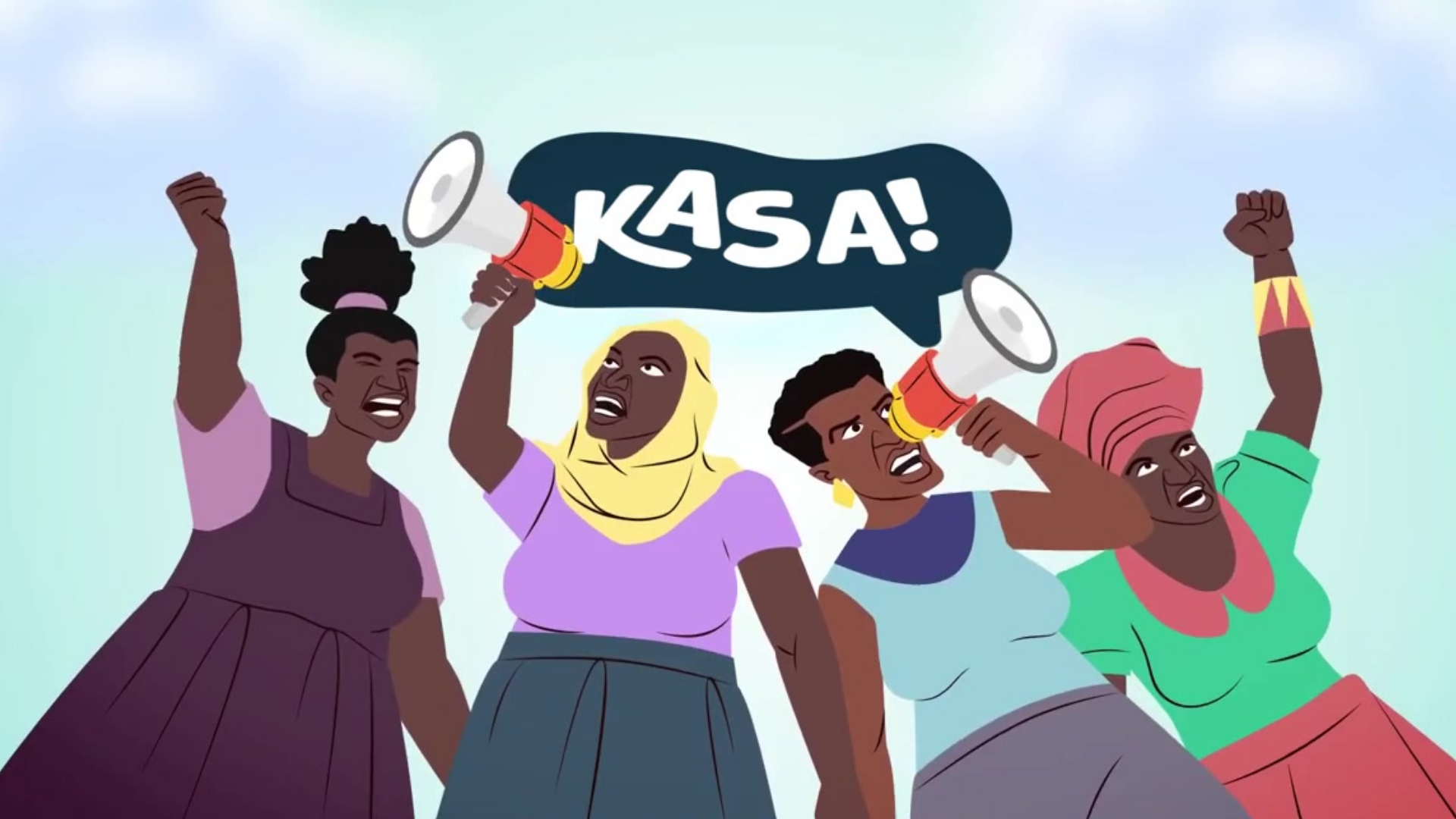
Sexual Violence & the Kasa! Initiative
Lois Addo, the Programme Manager for WiLDAF Ghana, highlights the high occurrence of sexual violence within youth communities in rural communities. She identifies lack of parental care, financial hardship, the advent of social media and easier access to harmful information, harmful cultural norms and beliefs and peer pressure as some of the underlying causes of sexual violence.
To address this, WiLDAF Ghana established school clubs in rural Junior High schools, Girls and Boys for Change, where selected champions of change amongst the students are selected, to push positive norms, grow confidence and self esteem, educated on knowing their rights and where to report violence. Girls in these clubs have become more assertive, can speak up on experiences they have gone through and challenge anyone who wants to sexually abuse them. In the case of Naa* shared earlier, her father was arrested and the girl removed from her harmful situation at home and put under the care and protection of Social Welfare. To ensure the longevity and ownership of these clubs in the schools, manuals and handbooks are developed such that beyond WiLDAF’s initial involvement, the clubs can run on their own. The formation of these clubs marked a reduction in cases of teenage pregnancy and an increased turnout of girls continuing on from Junior High School to Senior High. More girls were empowered to have aspirations, strive for good grades and to further their studies, in a landscape where the norm was to drop out and settle with a man who will take care of them.
Beyond this, WiLDAF also trains selected champions of change in rural areas to tackle sexual violence in these communities. Twelve people in each community, who are usually turned to, resolve communal issues, were selected to undergo training to understand the laws. The community agents do sensitivity trainings with parents about the need to show care and attention to their children to prevent sexual violence, make referrals to state agencies and become watchdogs in the community.
Resilience & Forging Ahead
The work of advancing women’s rights is never-ending. Lois Addo shares that some pushback in doing this work, particularly in sexual violence, is challenging harmful societal beliefs. In the establishment of the school clubs, some parents did not allow their children to join because of the misconception that they were being overexposed.
However, the existence and resilience of pioneering women’s rights organizations like WiLDAF ensures that the work continues and women’s emancipation is achieved, in spite of these challenges.
***
Naa* name has been changed for privacy and safety reasons.
This is a commissioned feature story by Nana Akosua Hanson, a Media Practitioner based in Ghana.
“My Body Matters”: Ending Sexual Violence against Sex Workers in Accra
“My Body Matters”: Ending Sexual Violence against Sex Workers in Accra
Tucked away in a slum area in Mamprobi, in the heart of the capital of Ghana, Accra, about 15 minutes away from the Human Rights court is Women of Dignity Alliance (WODA). WODA plays a very important role in the lives of sex workers in that community and other slum areas in the capital. Sex work remains a profession that navigates a dangerous landscape, with sex workers constantly at high risk because they receive little to no societal or legal protections in many countries in Africa. Sex work is criminalised in most places on the continent. However, one would often find that in countries where it is illegal, it is still quite commonplace.
In Ghana, sex work is illegal but widespread. This has created a ‘black marketisation’ of sex work. Due to this, sex workers are vulnerable to abuse and have little to no recourse to justice or protection when their rights and freedoms are taken away. There is also an underlying prevalence of human trafficking and child prostitution, given fertile ground to thrive because of economic hardship. The stigma attached to sex work creates a general disregard for the lives and bodies of sex workers. In Ghana, they are robbed, abused and killed; and justice is difficult to get in a system that criminalises the work.
In such a climate, relief and advocacy for change are therefore spearheaded by sex workers themselves, community voices and activists. The African Women’s Development Fund (AWDF) is supporting WODA’s resilient work for the protection of sex workers’ rights and freedoms. WODA is built on the ethos of creating a safe space and network for women in slum communities and sex workers in these communities, providing social support, access to sexual health and human rights information, HIV testing and counselling, empowerment, skills building and vocational training to provide an alternative livelihood for the sex workers, should they need this.
Mamle* was arrested by police for sex work, robbed, and then set free. She discovered WODA during an outreach and became a member. She is now a project officer in the organisation, leads police sensitisation projects as part of WODA’S outreach initiatives, serving as a listening ear and resource to sex workers who visit the centre to report abuse. Today, due to these efforts, some police stations in the vicinity have appointed some of their police men and women as designated officials that sex workers can go to to report police abuse. In a separate case, a 15 year old girl found solace in the vocational training that WODA provides. Her attendance and assimilation into the empowerment, the space provides, led to the discovery that her mother had been sexually exploiting her, by selling her daughter for sex. The case was amplified and police have taken it up. As at the time of writing this article, she is graduating from her vocational training, in the hope that it will give her a livelihood.
“My Body Matters” & the AWDF Kasa! Initiative
‘‘My Body Matters’ is a flagship project funded by Kasa! Initiative to address and reduce sexual violence in West Africa. The project is aimed at challenging the misconception amongst sex workers that they have no worth. Through counselling, community outreach projects, Theatre, radio drama and more, ‘My Body Matters’ aims to empower sex workers to understand that they have dignity, to learn to speak up for themselves in a dangerous landscape with this understanding and are entitled to all rights of protection.
The organisation was founded and is directed by Susan Dartey. Dartey grew up in Jamestown, an old township on the coast of Ghana, formerly known as British Accra. In her childhood, she saw a lot of abuse in her household, but there were no avenues to express what were jarring experiences for a young girl. As a child growing up in Jamestown, she says, you are admonished by adults not to speak, only endure. Her mother had gone through the trauma of being trafficked into Accra.
In Junior High School, joining the theatre club opened up an avenue of expression for her that would be healing and light a fire in what will later become her community work. Through storytelling, a learner-centred approach, music, games interaction, enactment and audience participation, Theatre was an exceptional medium for exploring difficult issues such as sexual abuse in the community. Theatre provided that empathetic space like no other to tell one’s story and to affect an audience, such that a push for communal change becomes off the audience’s own volition.
Theatre for Development is one of WODA’s flagship community outreach programmes within slum communities in big slum communities in Accra such as Jamestown, Old Fadama, Railways, Chorkor, Labadi and Circle, to disseminate messages, and to conscientise communities, the police, power players, community leaders, and more about the social protections for sex workers, destigmatise sex work and end cycles of abuse and violence against women. Radio drama is also used to reach communities beyond the organisation’s reach, partnering with local radio stations in those communities to air radio drama sharing the stories of the women and encouraging discussions about the issues. Every performance is a sex worker’s story.
The center is open everyday for sex workers to walk in for social support, information and rehabilitation.
Societal Stigma
Dartey reflects that most of the sex workers in the community have the perception that anything from sex work is not valuable. This translates into the perception that their bodies have no worth and they do not matter.
Society hammers in this misconception in various ways. Marash, recounts stories of sex workers who have been killed by clients who did not want to pay for services rendered; of sex workers who have simply vanished; of sex workers preyed on for ritualistic purposes because of the prejudice that sex workers’ bodies have no worth; and as in her own case, are abused by police whose mandate is to protect.
Sex workers who are lesbians also find a safe space in WODA. In 2024, Ghana’s parliament passed the Human Sexual Rights and Family Values Bill, a draconian anti-lgbt bill criminalising the identity of being LGBT+ and associated sanctions in the community as a means of state crackdown on this community. The bill did not become law, however, the societal hatred and stigmatisation it ramped up remains a fixture with far reaching consequences in Ghanaian society because of the inevitable intersectionality of oppression. For example, with the parliamentary passage of the anti-LGBT bill, WODA being a space for only women, experienced a lot of threats due to a growing misconception in that community, that the space was a lesbian organisation. The organisation had to change locations.
Dartey, however, has a positive outlook on what the future holds after ten years of advocacy and movement for change.
After ten years of advocacy, Susan notes that there is a marked reduction in sex workers reporting cases of abuse. More sex workers in the community have joined the organisation, taking up staff positions furthering the work of the organisation as community facilitators, project officers, and as trainers sensitising on issues of child trafficking, abuse of sex workers, rehabilitation and more. As at the time of writing this article, another group in vocational training will be graduating. Many sex workers have found their voice – in becoming aware of their inherent rights and dignity, in learning how to protect themselves, and in speaking up for themselves.
As Susan says quite aptly, “When a woman finds her voice, she feels safe, she can protect herself, and her dignity is respected.”
The Women of Dignity Alliance calls for the decriminalisation of sex work, and for social protections of sex workers to be put in place. Sex work is work. Sex workers’ dignity must be protected.
***
Mamle* name has been changed for privacy and safety reasons.
This is a commissioned feature story by Nana Akosua Hanson, a Media Practitioner based in Ghana.
Healing Through Hope: How WYFSD is Safeguarding Lives of Survivors in Western North Region
Healing Through Hope: How WYFSD is Safeguarding Lives of Survivors in Western North Region
“I was scared and could not sleep properly. I would jump at the slightest sound of footsteps. I did not have a reason to live,” recalls Hagar Boakye, her voice trembling as she remembers the darkness that once consumed her life.
Thirty years ago, Hagar was sexually exploited by a stranger when she desperately needed money for her father’s medical care. The trauma shattered her sense of safety, left her emotionally paralysed, and plunged her into a darkness she never imagined she could escape. Today, in 2025, this 46-year-old woman sits with confidence and strength, her eyes steady and full of resilience. In a region where traditional customs are often prioritised over the welfare of vulnerable populations, particularly women and children, Hagar found her voice and began resisting sexual violence from her husband after years of silence.
This story highlights the meaningful work of Women and Youth Forum for Sustainable Development (WYFSD) in safeguarding the lives of survivors, empowering them to become advocates, and providing counseling to help them overcome their fears and face society with confidence.
WYFSD was established in April 2004 in response to a survey conducted in the Aowin Suaman district in the Western North Region of Ghana, which measured women’s human rights and health, bodily autonomy, and sustainable livelihoods.
The organisation has successfully created sustained awareness on Gender Based Violence prevention, established a platform of women champions against Violence Against Women and Girls (VAWG), created clear reporting channels for VAWG cases, and strengthened the efforts of religious and traditional authorities in supporting VAWG prevention.
Through the KASA project by the African Women Development Fund (AWDF), a funding partner of WYFSD, educational and advocacy programmes have been implemented in several communities in the region to protect survivors, especially women, from the trauma, stigma, and fears they encounter after sexual abuse.
KASA, meaning “Speak Out,” has over the years assisted many NGOs in Africa, including Ghana, Nigeria, and Senegal, in initiating various projects and interventions to help eradicate sexual violence. The project was launched by AWDF together with the Ford Foundation and Open Society West Africa.
Hagar was empowered and trained on resisting sexual violence through the KASA project implemented by WYFSD in partnership with the Department of Social Welfare in the district. She is among other women who have struggled and are overcoming the emotional trauma and stress of sexual violence.
WYFSD empowers women and girls to demand their human rights, bodily autonomy, integrity, and improved livelihoods. Recognising that recovery is multi-dimensional, they connected with Hagar through their empowerment programmes and guided her through the process of finding her voice to resist the violence and helped her reclaim the control she had lost.
According to the World Health Organisation, one in three women globally experience sexual and physical violence in their lifetime. In Ghana, underreporting and stigma remain persistent barriers to justice and healing.
WYFSD, led by Madam Rose Ackah, the Executive Director, is working to change this narrative not only through support services, but also through community education programmes, outreach initiatives, and partnerships with relevant stakeholders to create survivor-friendly reporting mechanisms.
In the first phase of the project, funds from AWDF were channelled toward empowering and educating survivors and other women within the region to resist sexual violence. “Survivors do not need pity from anyone; they need justice and support to thrive,” says Madam Rose Ackah. Hagar’s story is one of thousands, but each time one woman finds healing, we all take a step forward in the fight against sexual violence. Today, Hagar volunteers with other survivors as a peer counsellor, empowering other survivors by giving them voice, strength, and support to deal with their emotions. “I advise them to be strong and persevere, as they are bigger and stronger than their issues and what they have been through,” she says. Hagar is no longer defined by her pain and struggles. She is a woman reborn, not in spite of her trauma, but through the strength she found in facing it.
The partnership between WYFSD and AWDF has over the years been impactful and transformative for survivors like Hagar and her colleagues. “We had no one to talk to until they reached out to encourage and motivate us after the assault,” she said. The transformational work of WYFSD continues, but requires additional support to advance their mission and protect more survivors in the Western North Region and beyond.
***
This is a commissioned feature story by Victoria Agyemang, a Journalist based in Ghana.
Grantee Highlight: Sixty-Nine Women Graduate from NEWIG’s Youth-in-Entrepreneurship Initiative
Grantee Highlight: Sixty-Nine Women Graduate from NEWIG’s Youth-in-Entrepreneurship Initiative
This story was originally posted on Graphic Online (Ghana)
Sixty-nine young women have graduated from a three-month intensive training in vocational skills under the Youth-in-Entrepreneurship initiative.
The initiative, which forms part of the Network of Women in Growth-Ghana’s (NEWIG) project, seeks to empower young women to be gainfully employed to make them self-reliant.
They were trained in bead making, basic catering, soap making, batik, tie-dye, floral arrangement, textile designing and basic financial management.
At an event held at Tefle in the Volta Region on October 2, 2015 on the theme, “Promoting sustainable economic development through skills training for women”, the young ladies were presented with tools that would help them set up their own businesses.
The Executive Director of NEWIG, Mrs Mawusi Nudekor Awity, announced that approximately $21,000 was used in the training programme.
“Things haven’t been easy. But we believe in squeezing water out of stones to empower these young ladies. Of course, we received support from Empower, British High Commission, Crossroads International, and African Women’s Development Fund,” she said.
Mrs Awity said the NEWIG initiative used local raw materials such as coconut, cocoa pods, shea butter, paper, empty sachet water packets to create products.
According to her, there is the need to encourage the setting up of cottage industries in parts of the country, to propagate the idea of domestication through patronage of local produce.
A Senior Field Officer of NEWIG, Ms Naomi Biney, said NEWIG had a monitoring mechanism to help the graduates grow their businesses.
For his part, the Head of Rural Enterprise Programmes at Sogakope, Mr Eric Batse, said: “Small Scale Enterprises (SMEs) account for 90 per cent of the total operations in the industrial sector and offer 58 per cent of employment in the country.”
He said encouraging the growth of SMEs was a viable means of tackling the growing unemployment problem in the country.
Meanwhile, the District Coordinating Director for South Tongu, Mrs Jemima Apedo, has underscored the need for attitudinal change on the part of some Ghanaians who have insatiable taste for foreign produce, which she described as a bane of local economic growth.
Op-Ed : Ghana’s frustrated youth are vulnerable to the radical call of ISIS
Op-Ed : Ghana’s frustrated youth are vulnerable to the radical call of ISIS
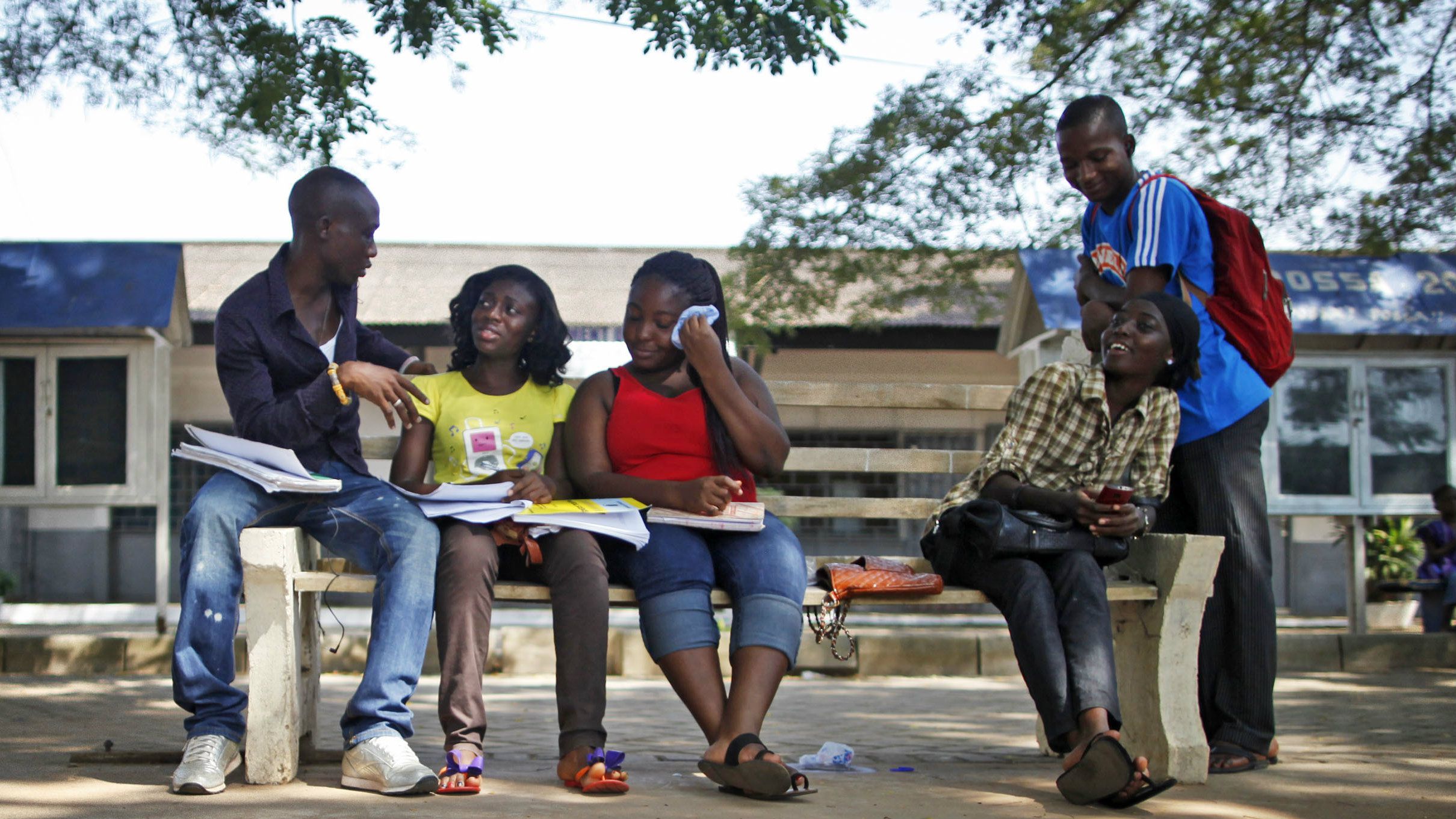
Students at University of Ghana (AP Photo/Gabriela Barnuevo)
Read published article here: on Qz.com
BY Amba Mpoke-Bigg
Over the past couple of decades Ghana has won a hardearned reputation as a stable and settled democracy.
Yet, as news broke last week that a young university graduate from Ghana had left home to join Islamic State of Iraq (ISIS), it was hard not to dread the prospect of a mass exodus, or worse, deadly jihadist violence on our shores.
Those concerns were heightened when an investigative report by popular local radio station Starr FM reported that ISIS agents in Ghana are enticing unemployed youths with promises of cash and a gateway to heaven.
“They are promised initial spending fee and luxurious life before they travel to Syria and Iraq. Again their immediate families are assured quality life after they have left, so many of the young guys are considering it, especially in the Zongos (a slang term for neighborhoods populated by majority northern Ghanaian Muslims),” it quoted an interviewee as saying.
Twenty-five year old Nazir Alema Nortey, a graduate of one of Ghana’s leading universities sent a WhatsApp message to his family telling them he left the country earlier this month to join the Islamic extremist group, leaving behind a devastated family. The University Of Science and Technology graduate, is described by his father as a gentle, well-mannered man. Nortey was an active student on campus and showed no signs of being radicalized. He had a girlfriend. He was an ordinary man. Sketchy details of a second recruit, identified only as Rafiq also emerged this week at an official media briefing but there are already unconfirmed reports of a third—a young woman whose name has been given as Shakira Mohammed.
“Anyone is a potential recruit,” National Security Co-ordinator, Mr Yaw Donkor, told reporters at the briefing.
Donkor said would-be members were being headhunted from mainly tertiary institutions in Ghana where students were drafted into WhatsApp and Facebook social media forums in which radical discourse and indoctrination took place.
Among the many questions a shocked nation is asking itself is what might happen if radicalized youth return home. A look at what’s happening across Africa and around the world shows a sharp rise in the number of youth joining ISIS.
Ghana prides itself on its stable democracy and social harmony, but it was surely only a matter of time before the specter of Islamist militancy touched our shores given how close we are to troubled regional neighbours like Nigeria to the east, Mali to the northwest and Niger and Chad to the northeast. These are all now hotspots for militant Islam and terrorist activity.
Boko Haram, which has launched massive attacks in Nigeria since 2009, is the most troubling. The group which initially had links to al-Qaeda, pledged allegiance to ISIS in March. With little in place in terms of anti-terrorism measures in Ghana, what is there to stop us following the lead of our volatile neighbours?
Back in June there were angry demonstrations in Accra when city authorities ordered security forces to raze part of one of the largest slums, largely inhabited by Muslims, leaving thousands homeless.
One placard brought home the frustration: “Before 2016 , you will see Boko Haram in Ghana,” the sign read.
While some are blaming the internet and the accessibility of radical social media sites, there is an increasing possibility Islamic disaffection with Christian fundamentalism might be on the rise.
Christians make up 70% of the population of Ghana and Muslims 18%, according to official census figures from 2000. This has been disputed by Ghanaian Muslim leaders and other official sources who set the number at between 18% to 30%. Relations between the two religions have been peaceful in Ghana. But it’s often noted development and education have spread much faster in the predominantly Christian south than in the mainly Muslim north.
Ghana’s main political parties are not organised primarily on religious or ethnic lines, as happens elsewhere on the continent, and the country has had several Muslim vice presidents. Yet in the wake of these revelations the potential for Islamophobia against its Muslim minority is real.
We need to ask ourselves what the attraction is for an ordinary, middle-class Ghanaian young man, or woman, in joining the most dangerous jihadist group in the world. Words like radicalization seem almost incongruous with moderate Muslim youth. Yet it is true that education and liberalism aren’t foolproof armour against radicalization.
Neither can the economic factor be overlooked, given that Ghana, once Africa’s star economy, has turned to the International Monetary Fund to help it resolve its financial crisis.
President John Mahama says growth needs to be at least 8% to provide jobs for its young people, but growth has shrivelled in the past two years and it is expected to stand at 3.9% in 2015—below average for subSaharan Africa.
Unemployment data in Ghana is not collected, but Desmond Biney, director of the Unemployed Graduates Association Of Ghana sets the figure for unemployed graduates over the last five years at around 287,000. Current membership of the group which was set up as an advisory and placement service has doubled in the last two years.
And in further evidence of the impact of current economic conditions, Ghanaians have joined the hundreds of thousands of migrants risking their lives on the Mediterranean to seek work in Europe.
It is important not to overstate the problem. So far this is a tiny handful of people in a nation of 26 million. But for the majority of Ghanaians their decision to join ISIS should set alarm bells ringing. The question that needs answering is: how far will they go?
AWDF’s 4th CEO FORUM IN TWEETS AND PICTURES
AWDF’s 4th CEO FORUM IN TWEETS AND PICTURES
An Address by Ghana’s Minister of Gender, Children and Social Protection at AWDF’s candlelight vigil on the 1st anniversary of Chibok Girls’ Abduction
An Address by Ghana’s Minister of Gender, Children and Social Protection at AWDF’s candlelight vigil on the 1st anniversary of Chibok Girls’ Abduction
[tp lang=”en” not_in=”fr”]Tuesday, April 14th 2015 marked the first anniversary of the abduction of the over 200 girls from Chibok in Northern Nigeria. To commemorate the occasion, AWDF, in conjunction with the University of Ghana’s Centre for Gender Studies and Advocacy (CEGENSA), organised a peaceful candlelight vigil where Ghana’s Minister for Gender, Children and Social Protection, the Honourable Nana Oye Lithur, delivered a powerful and moving address, affirming Ghana’s solidarity with the Nigerian people and called for the safe return of the girls:
Members of the Diplomatic Community
Chief Executive Officer, the African Women’s Development Fund (AWDF), Theo Sowa
Representatives from AWDF and CEGENSA
Students
Ladies and Gentlemen
I thank you for inviting me to this solemn ceremony. Exactly a year ago, more than 230 girls, with hope for a better future were in school at Chibok in Northern Nigeria. They knew that they would finish secondary school and continue to pursue their dreams of an accomplished educated life that they could pass on to their children’s children. They knew that education was the sure way to working in any of their country’s corporate institutions or creating their own businesses to improve the economic conditions of their families. They had parents who were regularly expectant of the results from their investment in their children’s education.
But then all these dreams came to an abrupt end. The world woke up to the rude shock of the abduction of these girls by militant group Boko Haram. The shock of this marauding swoop by Boko Haram resulted in demonstrations and calls from peoples of all walks of life worldwide for the return of the girls. Nigerian campaigners used social media, particularly Twitter, to raise awareness about the kidnapping. The #bringbackourgirls online campaign caught on well with notable personalities like First Lady of the United States Michelle Obama and Democratic Presidential nominee hopeful Hillary Clinton as well as a number of prominent celebrities, joining it.
Ladies and Gentlemen, this heinous crime attracted the attention of many countries, which offered their assistance to Nigeria for the girls’ return or rescue:
- The United Kingdom agreed to send experts to Nigeria to assist in the search for the students.
- The United States also agreed to send experts to Nigeria to assist in the search for the students.
- France offered a specialist team.
- China announced its intention to make available any useful information acquired by its satellites and intelligence services.
- Canada joined the international effort to free the schoolgirls.
- Iran offered to help Nigeria resolve the issue of the abduction of the female students.
- Israeli Prime Minister, Benjamin Netanyahu, offered assistance to the Nigerian President in locating the missing pupils.
ECOWAS member countries have stood up to the fight for the return of these girls. On the 17th of January this year, I chaired an ECOWAS meeting of Gender Ministries West Africa. After the meeting, we issued a Declaration that described as “unacceptable and intolerable, the act of lawlessness and impunity demonstrated through the abduction of the Chibok girls…” We noted the “direct and indirect consequences of insurgency ” and reaffirmed “our strong support to the government and people of Nigeria.”
I made a similar call at the 59th Session of the UN Commission on the Status of Women. I asked for the “immediate and unconditional release of the more than 200 Chibok girls and other abducted persons in Northern Nigeria.”
The Chairman of ECOWAS, President John Mahama, speaking to West African representatives in Germany recently noted that “no country can say that the Boko Haram threat is too far away to be affected” and that “the whole continent is under threat.” President Mahama, as Chairman of ECOWAS, has led the call for the creation of a multinational force to deal with Boko Haram. Currently, Nigeria, Cameroun, Chad and Benin have contributed troops to fight Boko Haram.
Indeed, the hearts of many were gladdened recently, when it was reported that the headquarters of Boko Haram had been retaken.
Each of the last 365 days has passed with parents of our daughters going to bed, wondering what could be happening to their [children]. I am glad that the concern for the return of these girls has not waned.
The Chibok girls have still not been returned. We need to sustain the campaign; and that is why I commend the African Women’s Development Fund (AWDF) and the Centre for Gender Studies and Advocacy (CEGENSA) for putting this programme together. This public show of support for the families and parents of the missing girls is indeed timely
Ghana as a country shares the pain of the parents of the girls. We as a People and Government commit to do all in our power to help find the girls.
Our President who is ECOWAS Chairman is leading this crusade for the return of the girls and we know they shall be found.
May God bless us all and help #bringbackourgirls![/tp]
[tp lang=”fr” not_in=”en”]Mardi 14 Avril 2015 a marqué le premier anniversaire de l’enlèvement de plus de 200 jeunes filles à Chibok dans le nord du Nigeria. Pour commémorer l’occasion, AWDF, en collaboration avec le Centre de l’Université du Ghana pour les études du genre et de plaidoyer (CEGENSA), a organisé une veillée aux chandelles pacifique où le ministre ghanéen pour le genre, l’enfance et la protection sociale, l’honorable Nana Oye Lithur, a livré un puissant et émouvant discours, affirmant la solidarité du Ghana avec le peuple nigérian et a appelé à un retour sûr des filles:
Les membres de la communauté diplomatique
La Chef de la direction, Fonds Africain de développement de la femme (AWDF), Theo Sowa
Des représentants d’AWDF et CEGENSA
Étudiants
Mesdames et Messieurs
Je vous remercie de votre invitation à cette cérémonie solennelle. Il y a exactement un an, plus de 230 filles, avec l’espoir d’un avenir meilleur étaient à l’école de Chibok au nord du Nigeria. Elles savaient qu’elles allaient terminer l’école secondaire et continuer à poursuivre leurs rêves, une vie instruite et accomplie qu’elles pourraient transmettre aux enfants de leurs enfants. Elles savaient que l’éducation était le moyen sûr de travailler dans l’une des institutions de leur pays ou de créer leurs propres entreprises pour améliorer les conditions économiques de leurs familles. Elles avaient des parents qui étaient régulièrement dans l’attente des résultats de leur investissement dans l’éducation de leurs enfants.
Mais tous ces rêves ont connu une fin abrupte. Le monde se réveilla rudement du choc de l’enlèvement de ces jeunes filles par le groupe militant Boko Haram. Le choc de cette attaque surprise par Boko Haram a abouti à des manifestations et appels de personnes, de toute origine et dans le monde entier, pour le retour des filles. Les militants nigérians ont utilisé les médias sociaux, notamment Twitter, pour sensibiliser à l’enlèvement. Le #bringbackourgirls, campagne en ligne a attiré des personnalités notables comme la Première Dame des Etats-Unis Michelle Obama et la candidate démocrate Hillary Clinton ainsi qu’un certain nombre de célébrités de premier plan.
Mesdames et Messieurs, ce crime odieux a attiré l’attention de nombreux pays, qui ont offert leur aide au Nigeria pour le retour ou le sauvetage des filles:
- Le Royaume-Uni a décidé d’envoyer des experts au Nigeria pour aider à rechercher les étudiantes.
- Les États-Unis ont également convenu d’envoyer des experts au Nigeria pour aider à la recherche des adolescentes.
- La France a proposé une équipe de spécialistes.
- La Chine a annoncé son intention de mettre à disposition toutes les informations utiles acquises par ses satellites et services de renseignement.
- Le Canada se joint à l’effort international pour libérer les écolières.
- L’Iran a offert d’aider le Nigeria à résoudre le problème de l’enlèvement des étudiantes.
- Le Premier ministre israélien, Benjamin Netanyahu, a offert son aide au président nigérian afin de localiser les élèves manquantes.
Les pays membres de la CEDEAO se sont levés dans la lutte pour le retour de ces jeunes filles. Le 17 Janvier de cette année, je présidais une réunion de la CEDEAO sur l’égalité des ministères en Afrique de l’Ouest. Après la réunion, nous avons émis une déclaration qui décrit comme “inacceptable et intolérable, l’acte d’anarchie et d’impunité démontré par l’enlèvement des filles de Chibok …” Nous avons noté les “conséquences directes et indirectes de l’insurrection” et avons réaffirmé “notre solide soutien au gouvernement et au peuple du Nigeria. “
Je fis un appel similaire à la 59e session de la Commission des Nations Unies sur la condition de la femme. Je demandai à la “libération immédiate et inconditionnelle des plus de 200 filles de Chibok et d’autres personnes enlevées dans le nord du Nigeria.”
Le Président de la CEDEAO, le Président John Mahama, parlant aux représentants d’Afrique de l’Ouest en Allemagne a récemment noté qu’ «aucun pays ne peut dire que la menace Boko Haram est trop loin pour être affecté» et que «l’ensemble du continent est menacé.” Le président Mahama , en tant que président de la CEDEAO, a conduit l’appel à la création d’une force multinationale pour faire face à Boko Haram. Actuellement, le Nigeria, le Cameroun, le Tchad et le Bénin ont fourni des troupes pour combattre Boko Haram.
En effet, le cœur de beaucoup s’est réjoui récemment, quand il a été signalé que le siège de Boko Haram avait été repris.
Au cours de chacun des 365 derniers jours les parents de nos filles allaient se coucher en se demandant ce qui pouvait arriver à leurs [enfants]. Je suis heureuse que la préoccupation pour le retour de ces filles n’ait pas diminué.
Les filles de Chibok n’ont toujours pas été retrouvées. Nous devons soutenir la campagne; et voilà pourquoi je félicite le Fonds Africain de développement de la femme (AWDF) et le Centre pour les études du genre et de plaidoyer (CEGENSA) de développer ce programme ensemble. Cette manifestation publique de soutien aux familles et aux parents des jeunes filles disparues se fait en effet en temps opportun
Le Ghana comme pays partage la douleur des parents des jeunes filles. Nous, en tant que peuple et au Gouvernement, engageons à faire tout ce qui est en notre pouvoir pour aider à trouver les filles.
Notre président, qui est le président de la CEDEAO, est à la tête de cette croisade pour le retour des filles et nous savons qu’elles doivent être trouvées.
Que Dieu nous bénisse tous et nous aide #bringbackourgirls![/tp]
‘Bring Back Our Girls’ Candlelight Vigil In Commemoration Of The Chibok Abductions, April 14, 2015
‘Bring Back Our Girls’ Candlelight Vigil In Commemoration Of The Chibok Abductions, April 14, 2015
 [tp lang=”en” not_in=”fr”]The African Women’s Development Fund (AWDF) and the Centre for Gender Studies and Advocacy (CEGENSA) Legon respectfully invite sympathizers to a peaceful Candlelight Vigil on 14th April, 2015, at the University of Ghana Legon.
It will be a time of reflection, prayers, readings, a roll call of the abducted girls and a public show of support for the families and parents of the missing girls.
AWDF and CEGENSA stand in solidarity with the families of the missing girls and call on the Nigerian and West African governments to leave no stone unturned until the girls are returned to their families or accounted for.
Please join us on this earnest occasion. Although some candles will be provided, you are welcome to bring your own. Dresscode is red.
Click here for more details on the event
Both AWDF and CEGENSA strive to promote women’s human rights and gender equality to create a better world for all.[/tp]
[tp lang=”fr” not_in=”en”]Le Fonds africain de développement de la femme (AWDF) et le Centre pour les études sur le genre et le plaidoyer (CEGENSA) de Legon invitent respectueusement leurs sympathisants à une veillée aux chandelles pacifique le 14 Avril 2015 à l’Université du Ghana à Legon.
Ce sera un temps de réflexion, de prière, de lectures et un appel nominal des filles enlevées ainsi qu’un spectacle de soutien public aux familles et parents des jeunes filles disparues.
AWDF et CEGENSA se tiennent solidaires des familles des jeunes filles disparues et appellent les gouvernements du Nigeria et de l’Afrique occidentale à ne laisser aucune pierre non retournée jusqu’à ce que ces filles soient retournées à leurs familles ou comptabilisées.
Veuillez vous joindre à nous en cette importante occasion. Bien que des bougies seront fournies, vous êtes libres d’apporter les vôtres. Le dresscode est rouge.
Cliquez ici pour plus de détails sur l’événement
AWDF et CEGENSA visent à promouvoir les droits humains des femmes et l’égalité des sexes pour créer un monde meilleur pour tous.[/tp]
Strengthening Communities’ Knowledge and Action towards Preventing Violence against Women
Strengthening Communities’ Knowledge and Action towards Preventing Violence against Women

The Aowin District is a newly created jurisdiction in the Western region of Ghana with a population of approximately 30,000 residents. The district has a large migrant farmer community as it falls in the High Forest Zone. Many of the migrant community members come to the district capital of Enchi from the neighbouring country of Togo.
Although the district exhibits a wide diversity of culture and a rapidly expanding population, the community has a high incidence of violence against women, including physical and verbal assaults. Marital disputes amongst migrant farmers, who live on their farms for most of the year, are also quite common. Most incidents result from differing perceptions about how home and business activities should be conducted. For example, disputes can develop over how profits are divided from produce sales, the lack of profit made from produce sales, the best handling procedures for meat and other produce or how maintenance practices are conducted in the home. Conflicts also can erupt if a wife refuses to yield to the sexual demands of her husband.

During the period of May to September 2014, hundreds of cases of violence against women were reported to the District Ghana Police Service and the Commission on Human Rights and Administrative Justice (CHRAJ) at Enchi.
Some of these reports include the following assaults:
- A husband hit the back of his wife’s head with a masher (locally called tapoli) resulting in her death
- A baby was left outside for a pig to feed on while a husband and wife were fighting
- A woman was drowned to death in a barrel of water as a result of being suspected of cheating on the husband
- A husband cut his wife’s fingers because food was not ready at the time he desired it
- A wife was assaulted because she refused to have sex with her husband because they already had many children and she was forbidden from using birth control measures.
- A man shot his wife as a result of suspected cheating
- A man hit his wife in the head resulting in her death because the wife complained of a lack of maintenance in the home
- A husband kills his wife and baby because she left pork meat unrefrigerated and it became rotten.
This stark reality forms the background for a new project by AWDF grantee partner, the Women Youth Forum for Sustainable Development (WYFSD), to share critical information about gender based violence with migrant farmer communities. WYFSD is implementing an initiative to provide inhabitants, particularly migrant farmers and traditional leaders, in the communities of Asuoklo, Angunzu, Kankaboin, Jensue, Anvohkro and Tanokro with knowledge on the effects of violence against women. Together, the six (6) communities can evolve potentially effective systems to better address gender based violence. As a part of this project, WYFSD has also established anti-gender based violence committees to exchange lessons and strategies in the selected communities.

Lessons learnt
Unfortunately, the communities are situated far away from police stations and many men take advantage of this fact. A number of the women subjected to domestic violence are reluctant to report because of fear of provoking a confrontation or ending their marriages.
The most surprising revelation learnt during the implementation of this project was that a majority of domestic conflicts begin with a disagreement over the proper maintenance of the home. A high level of poverty and the lack of alternative sources of income are also key indicators in addressing the issue of violence against women in the Aowin District.
A lack of balanced and healthy communication among couples is also a major issue. Many women are pushed to the physical brink every day, labouring on farms, caring for families and households all while not receiving any independent income for their efforts.

Short Term Outcomes
The formation of anti-violence committees has improved the security of women by monitoring incidences and supporting the linkage to appropriate law enforcement agencies. Authorities such as the police, assembly officers, chiefs and queen mothers, have been sensitised and are supporting the process.
The project was also able to fully sensitise 1,000 men and women on the harmful socio-economic impacts of violence against women for perpetrators, including the possibility of being arrested, imprisoned or even assaulted.
Through this project, male participants also learn how women are capable partners in life, work and community development. Men and women participants are taught how to practically avoid violence, disagreements and intimidation in the home. In fact, the chief of Tanokro, one of the project communities, was so supportive of eradicating gender based violence, he immediately joined the project implementation team.
Multiple area church leaders have also agreed to integrate messages about gender based violence within religious and evangelical activities. Several local FM stations have decided to share information on the elimination of gender based violence with their listeners. With the support of AWDF, the anti-violence committees will continue to meet with chiefs, elders, queen mothers, assembly officers and community members to discuss and enact mobilisation methods to effectively prevent gender based violence.
Article by: Rose Buabeng, AWDF Programme Officer for Anglophone Africa