
Five lessons we are learning about ending sexual violence in West Africa
May 11, 2026
Media Center /
News
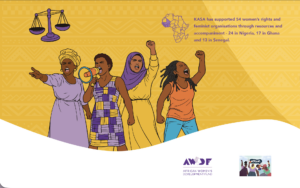
The just published KASA! Evaluation Report (2021–2024) captures key lessons, achievements, challenges, and transformative impact of one of West Africa’s most ambitious feminist initiatives working to end sexual violence across Ghana, Nigeria, and Senegal.
Since 2021, The African Women’s Development Fund (AWDF) in partnership with the Ford Foundation and Open Society West Africa (OSIWA), the KASA! Initiative worked alongside women’s rights and feminist organisations.
Here are five key lessons emerging from the KASA evaluation.
Transformation is relational, not event- based.
Sustained change emerged from repeated engagement, trust-building, and long-term presence, not one-off campaigns. Communities shifted norms when organisations returned consistently, listened deeply, and followed up over time, especially in contexts shaped by silence and stigma.
Accompaniment is the core of protection, not referral.
Survivors were protected not by referrals alone, but by advocates walking alongside them through reporting, healthcare, family negotiations, and recovery. Accompaniment requires time, emotional labour, and resources; without it, survivors often disengage from justice pathways.
Youth leadership accelerates cultural change.
Young feminists, peer educators, and school- based clubs were among the most effective norm-shifting actors. When trusted with meaningful roles, not just awareness-raising, youth became catalysts for wider community change and stigma reduction.
Legitimacy multiplies impact.
Norm change deepened and endured when trusted leaders, chiefs, queen mothers, imams, pastors, and market leaders, publicly supported survivor protection. These alliances, built through patience and co-creation, reframed sexual violence as a collective concern and sustained momentum beyond project timelines.
Staff wellbeing is central to programme success.
Frontline workers face high emotional strain, secondary trauma, and burnout. Staff care, supervision, and wellness support are not internal HR issues, they are essential to survivor safety, sound decision-making, and the sustainability of feminist protection systems.
The lessons emerging from the KASA! evaluation are both encouraging and urgent. They also reminds us that much more work still remains to be done in the fight against sexual violence.
Join the Conversation
We invite feminist movements and organisations funders, researchers, policy makers community leaders and media to engage with the findings and recommendations this work.
To access the full report: Download and read the full report HERE
Access the infographic in English.
Learn more about the KASA! initiative HERE