
Category: News
EXPRESSION OF INTEREST – Leadership and Governance project
EXPRESSION OF INTEREST – Leadership and Governance project

The African Women’s Development Fund (AWDF) is seeking for an expression of interest from an experienced consultant to undertake end of project evaluation. We are looking for a consultant with demonstrable expertise on monitoring, evaluation and learning (ME&L) with special focus on women’s rights work in Africa. The consultant is expected to carry out an end of project evaluation in one of the projects implemented through support from Comic Relief. The time frame expected for the execution of this study is 20 days during the second quarter of the year
2019.
Interested applicants are encouraged to send their expression of interest with:
Copy of CV
One recent example of similar task accomplished
Financial proposal – consultancy fees (daily rates and number of days required)
This should be sent to the following address:
jobs@africlub.net/awdf and meassistant@africlub.net/awdf
Please find the full Terms of Reference (TOR) here: COMPLETE TOR – Leadership and Governance program.The deadline for submission of applications is Friday March 15, 2019. Only shortlisted consultants will be contacted. Applications from women consultants based in Africa are especially welcome.
SHEROES – Join us as we Transform Lives Through Music
SHEROES – Join us as we Transform Lives Through Music
[tp lang=”en” not_in=”fr”]
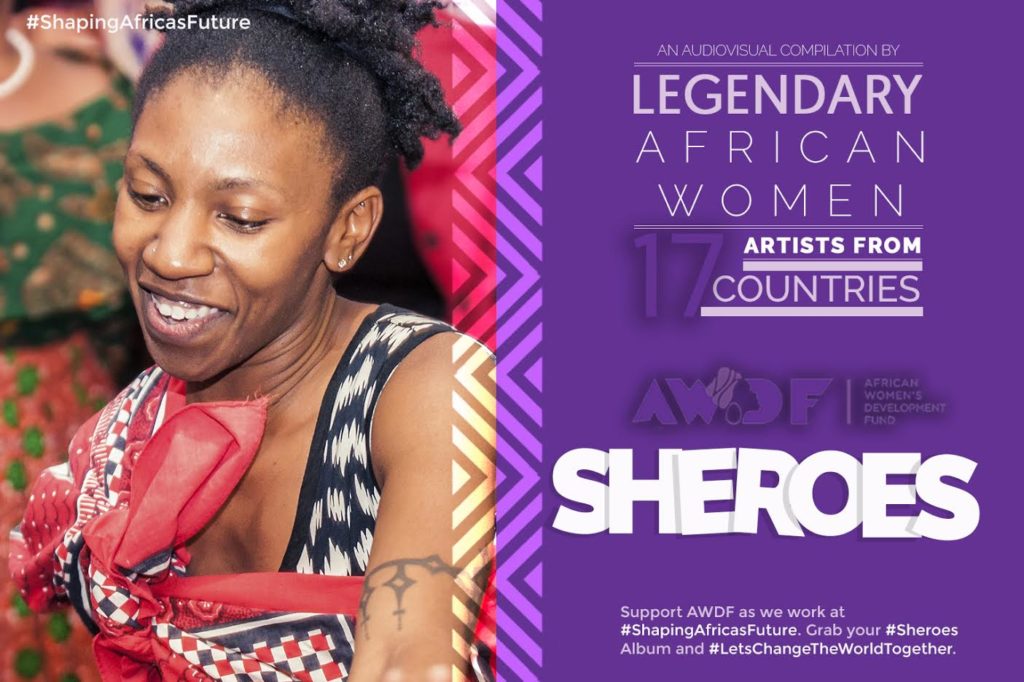
We are excited to share the star-studded #Sheroes Album, compiled with love and music from incredible artistes from across Africa. Sheroes represents the strength and diversity of African women, and features artistes who generously contributed to this album in support of our work.
Get your copy of Sheroes and join the campaign now! You will get your very own copy of this inspiring compilation of music as well as contribute to transforming the lives of African women.
Music has amazing transformational power and through revolutions and empires it has provided people with a world-view that often connects them and challenges them.
In recognition of this, AWDF is harnessing the power of music, through the SHEROES Album, to celebrate African women for their resilience and their capacity to transform their lives and their communities. Sheroes also serves to create awareness about the work of AWDF and mobilise additional financial resources to support the rights of African women.
Get to know the women who are a part of this wonderful work by tracking the tag #SongsforHer, #Sheroes, on twitter– where we’ll be posting profiles of the incredible women featured on Sheroes.
To read more about Sheroes, please click HERE
To get your copy of the Sheroes album please click HERE
[/tp]
[tp lang=”fr” not_in=”en”]
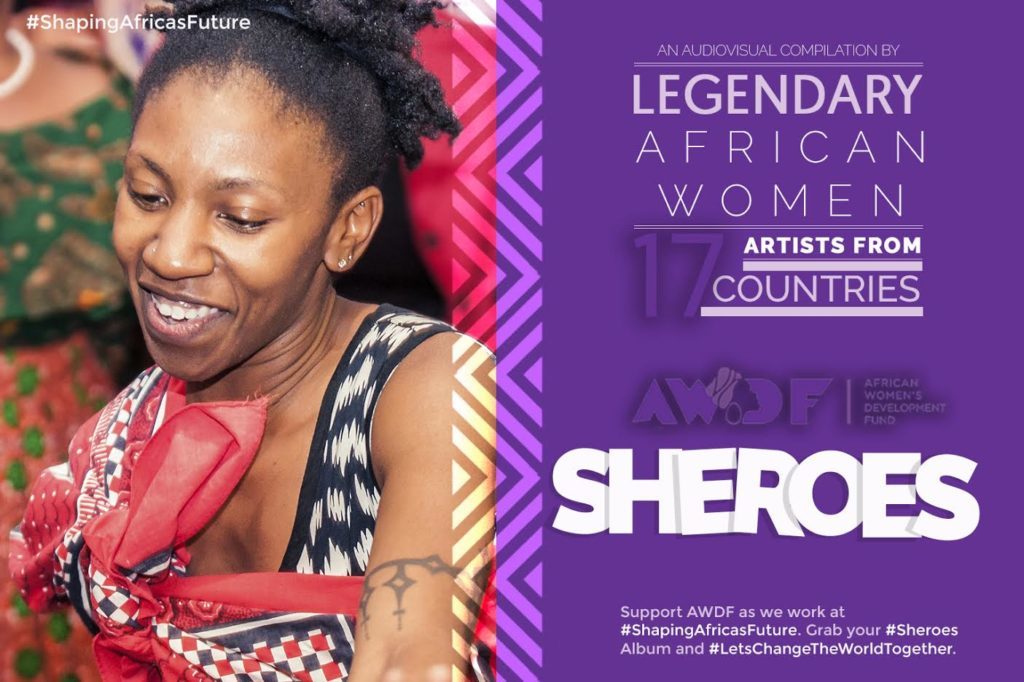
Nous sommes ravis de partager l’album surnommé #SHEROES. Il contient diverses musiques produites avec amour par des artistes extraordinaires venus de toute l’Afrique. L’album SHEROES représente la force et la diversité des femmes africaines. Les artistes présentées ont généreusement fait don de leurs chansons pour soutenir notre travail. Il représente la force et la diversité des femmes africaines et met en vedette des artistes qui ont généreusement contribué à cet album pour soutenir notre travail.
Commandez votre copie dès maintenant et faites partie de notre campagne!!! Vous obtiendrez votre propre copie de cette compilation de musique et contribuerez à transformer la vie des femmes africaines.
La musique a ce pouvoir de changer et de transformer pleines de choses de façon incroyable. De part le passé et à travers les révolutions et les empires, elle a aidé les gens à avoir une vision du monde qui souvent les relie et les met au défi.
Pour cette raison, AWDF, à travers l’album SHEROES nous rappelle non seulement de la puissance de la musique, mais rend aussi hommage aux femmes africaines pour leurs résistances et leurs capacités à transformer leurs vies et leurs communautés. SHEROES sert également à sensibiliser le public sur le travail de l’AWDF et à mobiliser des ressources financières pour défendre les droits des femmes africaines.
Nous publierons les profils des femmes artistes incroyables de notre album SHEROES. Pour les connaitre donc, suivez le hastag #SongsforHer et #Sheroes sur twitter.
Cliquez ICI pour en savoir plus sur SHEROES,
Cliquez ICI maintenant pour obtenir une copie de l’album SHEROES dès maintenant
[/tp]
AWDF Leadership and Governance Programme; unlocking great potential in Women’s rights organisations
AWDF Leadership and Governance Programme; unlocking great potential in Women’s rights organisations
[tp lang=”en” not_in=”fr”]
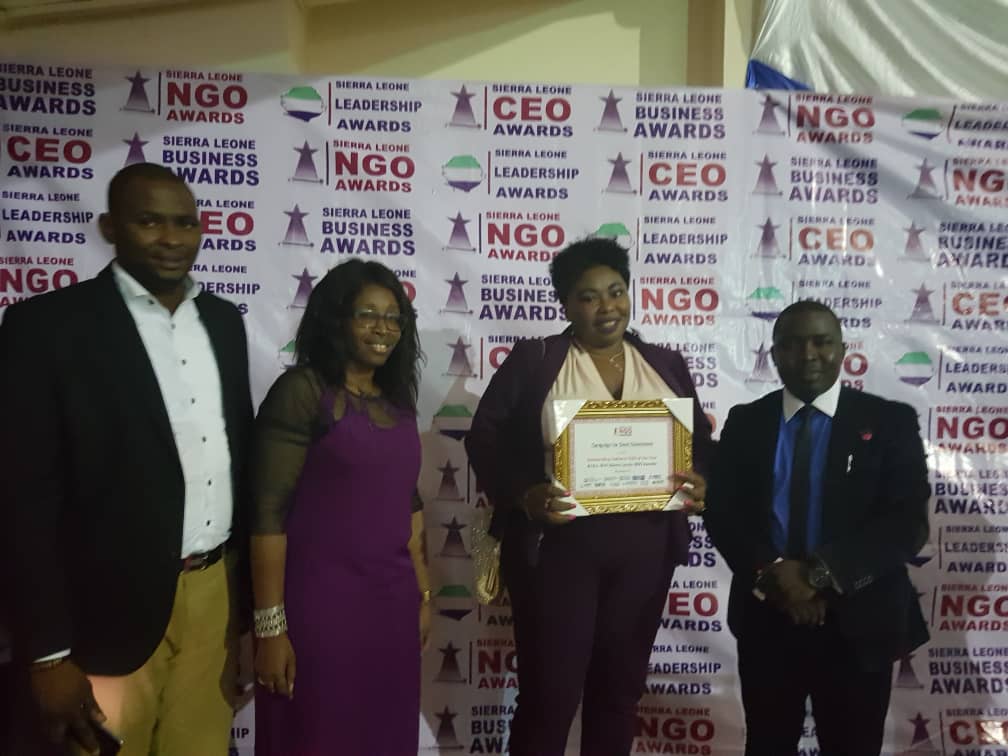
AWDF grantee partner, Campaign for Good Governance (CGG) blazed the trail when they won the “Outstanding CSO of the Year” award at the 2018 Sierra Leone NGO awards held in Freetown on December 13, 2018.
CGG is one of our grantees to benefit from the AWDF two-year coaching programme on leadership and governance targeted at CEOs, Executive Directors and second level management. AWDF believes that strong leaders and organisations provide the backbone for social change and development and therefore places a high premium on investing in both individual leaders and governance frameworks of African women’s rights organisations. Out of the Leadership and Governance Programme, CGG has been able to contribute immensely to the promotion of human rights, women’s political empowerment and good governance in Sierra Leone.
From mobilising women as active voters, training female candidates and first time voters, to recruiting a new executive director, CGG has taken the lead to reposition the Women’s Form and the All Political Party Women’s Association (APPWA) as effective social movements to champion women’s issues in the country.
Receiving the award, Executive Director Marcella Samba-Sesay acknowledged the work of the CGG team and thanked the organisers for recognising the work and contributions of the organisation in Sierra Leone. “This (award) is a stepping stone and motivation to do more and CGG will always work with the values for which it was established,” she added.
The Sierra Leone Business, CEO, Leadership and NGO Awards recognise leaders pioneering the reforms, rapid modernisation, consolidation, integration and expansion of Sierra Leonean enterprises, public institutions and promoting socio-economic growth across the country and beyond. This is the third annual ceremony presented at a gala dinner in the capital which is organised by a consortium of national and international organisations.
16 Days of Hope
16 Days of Hope
By Nana Akosua Hanson
Imagine this: You are walking through a busy street and everybody keeps grabbing at your body parts. You speak up, but you are shut down. You have no right to open your mouth, they say. They grab you some more. Your body is in pain, so you are in pain. It is such an awkward mind space; feeling the pain of a body that hurts because you carry that body, you own it. It belongs to you, and yet all these people who do not share in the pain of this body claim ownership of it. And they would kill you to make that point. Welcome to Patriarchy.
In Ghana, during the second half of the 90s, the first of the serial killings was traced to Kumasi. Akua Serwaa was found dead near the Kumasi Sports Stadium. The killings spread to Accra. Thirty-three more women were found dead in various states of mutilation and undress. The Accra Strangler became famous. In 2000, four men were standing trial for killing their partners. Seven women at least had been killed in the span of two weeks by their partners over alleged infidelities. These occurrences were not new. The style was familiar. The late 90s and early 2000s was Ghana’s Jack-the-Ripper moment. It played out to a chorus of fury and fear, the ruling government’s insensitivity in politicising Ghanaian women’s murders, and the lack of interest and urgency by the Ghana Police.
In Uganda, it was twenty women in four months. In South Africa, it is three women a day. Same script.
These women were sex workers, loving partners, traders, human beings with hopes and dreams, who had children, and people who loved them, but before everything else, they were Women.
I often think about the nature of patriarchy. Oppressive systems are made up of human beings. Human beings project beyond themselves, unify those projected ideas and from hence, come the establishment of a system. Patriarchy is a unified projection of our hate. In my life, this hate moves from irritating to downright scary. It is frightening to contemplate how grossly hateful a system can be that a by-product of its hate is an outburst of women-killings by a single-minded, hateful man or several groups of hateful men. It is downright scary when you are hit with the horror of the reality of a system that from birth hammers in a language of gender inequality, empowers this inequality by creating “divine” justification and systematises it such that its continuous existence is assured. This is downright scary.
But I have learnt to keep reminding myself to appreciate the many examples of hope that constantly surround us. These are reminders that there is a strong force of goodness in all of this hate and the unification of that projected strong force of love would also soon birth a loving world where people are not targeted because of their gender, sexuality class, ethnicity, race or any category used to create violent rifts because of differences.
Today marks the International Day for the Elimination of Violence against Women. As we commemorate this very first day in our 16 Days of Activism Against Gender Based Violence, let us be reminded about the hope of this day, of this time. My many cards of hope today are the thousands of women who marched through the streets of Accra on April 6th 2002, spoke truth to power and demanded the serial killings stopped and they did.
My special card of hope is that our activism against patriarchy and its consequent violence has come to live and thrive beyond just 16 days, and because of this, every new day brings us closer to a world free from patriarchy and free from Gender Based Violence. Just Imagine.
How A Pilot Healing Retreat for African Feminist Activists Can Advance Movement Building
How A Pilot Healing Retreat for African Feminist Activists Can Advance Movement Building

Article By Nana Akosua Hanson
Earlier this year, a video went viral on Ghanaian Twitter of six teen boys raping a young girl. Despite her resistance, these boys held her down and took turns. What haunted me most was their laughter.
Being a feminist activist means confronting this kind of raw ugliness on a daily basis. And it takes a toll. It is physically, mentally, and spiritually exhausting. Without healing, the accumulated trauma can push people out of our movement.
But there are also the magic times, when the unity of our voices and the force of our movement can be uplifting. Like that glorious moment on the 30th of June 2018, when thousands of Ugandans marched together to demand justice for the murders of more than 40 women, a trend in the country since 2015. Amidst drumming, dancing, and waving slogans, their united voices were heard all over the world: No more rape, No more killings, Women’s Lives Matter.
History shows us that feminist activism creates social, political, and economic change that benefits people of all genders. For this reason, it is crucial that activists have the healing we need to keep going.
Right now, African feminist activists are working toward a world where all people can live free from violence, including sexual violence. Where all people have what they need to take care of themselves and their families with dignity. Where all people can be their full selves and determine their own destinies. Who wouldn’t want that?
Empowering African women and promoting the realisation of their rights are critical milestones on the path to this better, more just world. And that’s what the African Women’s Development Fund does, by supporting courageous and dedicated women’s organisations across the continent.
In Liberia, African Women’s Development Fund grantee Zorzor District Women Care (Zodwoca) promotes women’s land and property rights in a region where women’s labour but not ownership of land is encouraged. In Benin, the Association des Femmes dans l’Education (FAWE Benin) is popularising the law on sexual harassment in response to the high incidence of sexual harassment of young girls in schools. And in South Africa, the Social, Health and Empowerment Feminist Collective of Transgender Women of Africa (SHE) is serving as a bridge for the better integration of trans women in the wider women’s movement, and equipping them with advocacy skills. And these are just a few of the thousands of African women’s organizations AWDF has supported since its inception, that are working in many ways to make the continent of Africa a better place for its women, and minorities.
But whether the work requires combing through rape reports, providing emotional support to a widow whose in-laws have just thrown her out of her house, or standing with a female political candidate who is being viciously trolled on social media, trauma builds up.
In Akan ontology, a person is more than their physical body—they are made up of at least three more aspects, the others quasi-physical or completely non-physical. This idea informs the general African approach to health: fully healing requires healing of the body, the mind, and the soul. To treat body aches, for example, a traditional priestess will provide both a physical cure for the body’s ailments, as well as a ritual for mental and spiritual healing.
We want to bring such healing to African feminist activists.
That’s why the African Women’s Development Fund — with the NoVo Foundation’s Radical Hope Fund and in partnership with AIR — is launching the Flourish Project, a three-year initiative that will strengthen feminist organising across Africa through these key interventions:
- Grounding through a pilot model of a retreat for African feminist activists facing burnout and stress, and in need of a reflective and healing space—designed and implemented in collaboration with AIR, a network of African practitioners developing transformative feminist approaches to trauma, emotional wellbeing, and mental health;
- Seeding inspiration for the growth of African feminist movements through intergenerational dialogues and documenting a generation of liberation-era feminist trailblazers; and
- Connecting feminist activists to convene and grow their organising at national and community levels linked to the African Feminist Forum.
The Flourish Project aims to refresh and tend to the vibrant movement of African feminists who have and will continue to shape the future of Africa. It is an investment in the deep movement work that needs support alongside frontline advocacy: the work of documenting and sharing our activist legacies, of finding durable ways to sustain activists working in hostile terrain, and of keeping movement strategy and base-building spaces alive.
Social movements drive social change. And sustainable movements depend on resilient activists. Those activists need space and time to heal—we will not see our feminist dream brought to reality without it.
The African Women’s Development Fund wants funders, activists, and others in the movement to recognize that healing is just as radical and necessary as marching, protesting, or organising.
As the Black American feminist writer Audre Lorde said, “Caring for myself is not self-indulgence, it is self-preservation and that is an act of political warfare.”
For the original article click HERE
Workplace Giving – an opportunity to take action
Workplace Giving – an opportunity to take action
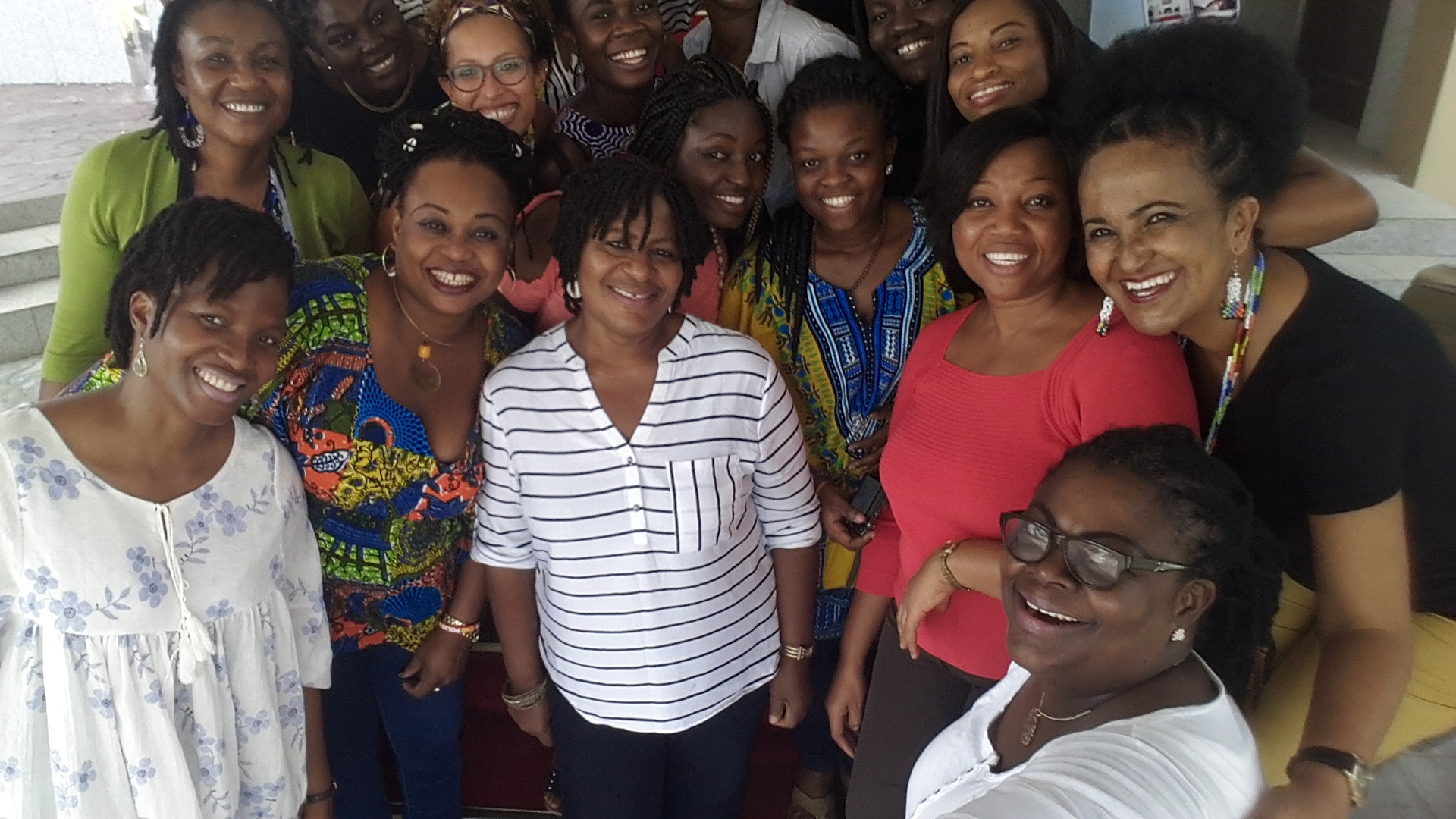
by Gertrude Bibi Annoh Quarshie
“Giving”- in its purest form includes using our hearts, our minds, our talents and other resources in ways that enrich the lives of all people whether poor or rich. It is simply being conscious about the problems around us and taking purposeful action to solve those problems. “Giving” is a dignified selfless act of passion and compassion!
As a staff the African Women’s Development Fund (AWDF), I am very passionate about what we are doing to transform the lives of African women. More often than not, people are interested in how they can also support activities or initiatives that promote or uphold women’s rights. The workplace-giving programme is one of the channels that any group of people can use to raise funds internally. In fundraising, individual efforts are important but the synergy from a group is usually worth the investment and that is why I love the principle of workplace giving.
Workplace giving is an initiative in which employees raise money internally by donating a certain amount from their monthly salaries, deductible at source. The contributors then decide on which project(s) to support with the fund.
The AWDF workplace giving programme was inspired by a donation received from the Hewlett Foundation’s staff workplace giving programme 12 years ago. Since then, the fund has grown in size and in reach, supporting various initiatives that have put smiles on many faces. The Fund is managed solely by staff, with a three-member executive committee. Interested staff members complete a form instructing that a certain amount of money be deducted from their salary each month. All the contributions go into a fund administered by the committee.
Some of the initiatives the fund has supported include the provision of a water tank at the maternal and child centre at the Korle-bu Teaching Hospital Ghana, provision of various sewing equipment to the Nsawam Female prisons and a donation to Operation SMILE. We recently supported the establishment of an innovation lab for students of the Africa Science Academy as well as the provision of equipment for PAYPD Kayayie centre for porter girls.
Having been associated with the workplace-giving programme over the past decade, I have become a stronger advocate of the phrase “don’t just complain about the state of affairs, take action”. GIVING is one way of taking action.
We are all capable of giving. If we can create a movement of individuals committed to donating a percentage of their resources to champion women’s social, economic and health rights, we will be helping to solve many problems. For more information on starting your own giving circles contact awdf@africlub.net/awdf.
Launch: The Bread and Butter Series
Launch: The Bread and Butter Series
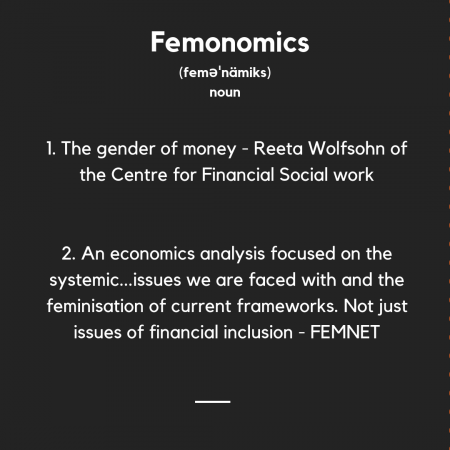
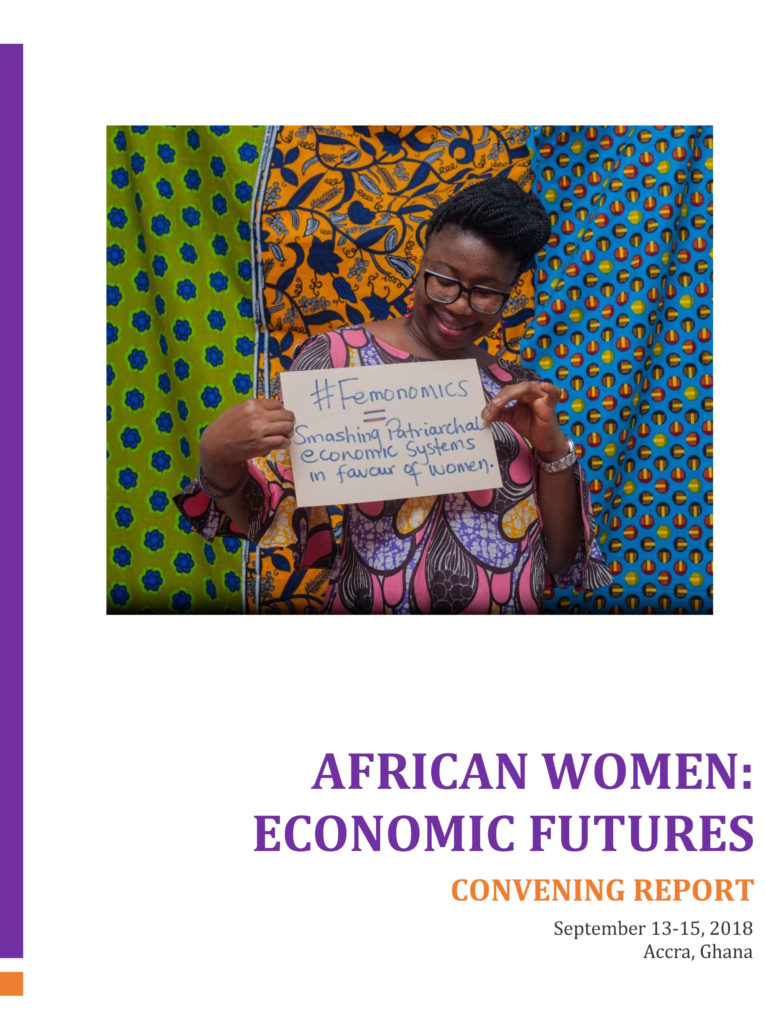
 From September 13th – 15th, 2018, AWDF convened 27 activists, academics, development workers and knowledge producers to strategise and prioritise African women’s economic futures. This convening culminated from AWDF’s fourth strategic plan Shaping the Future, and the accompanying Futures Trends Analysis Report which highlighted the socio-economic implications of anticipated trends in Africa for women and girls. Over three (3) consecutive days, we had extensive conversations, workshop and group activities that helped us build sound advocacy strategies for African women’s economic futures. As an institution committed to resourcing African women’s movements, AWDF believes that this convening was the first step in a journey to better support future-oriented strategies to engender African women’s economic justice and security.
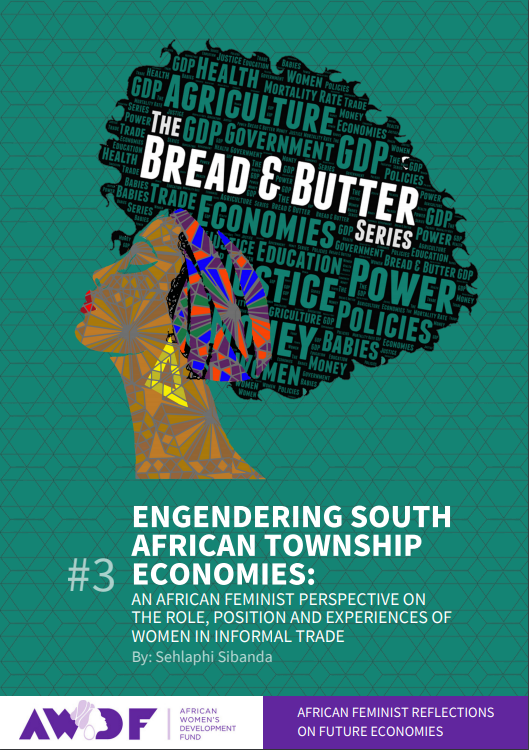
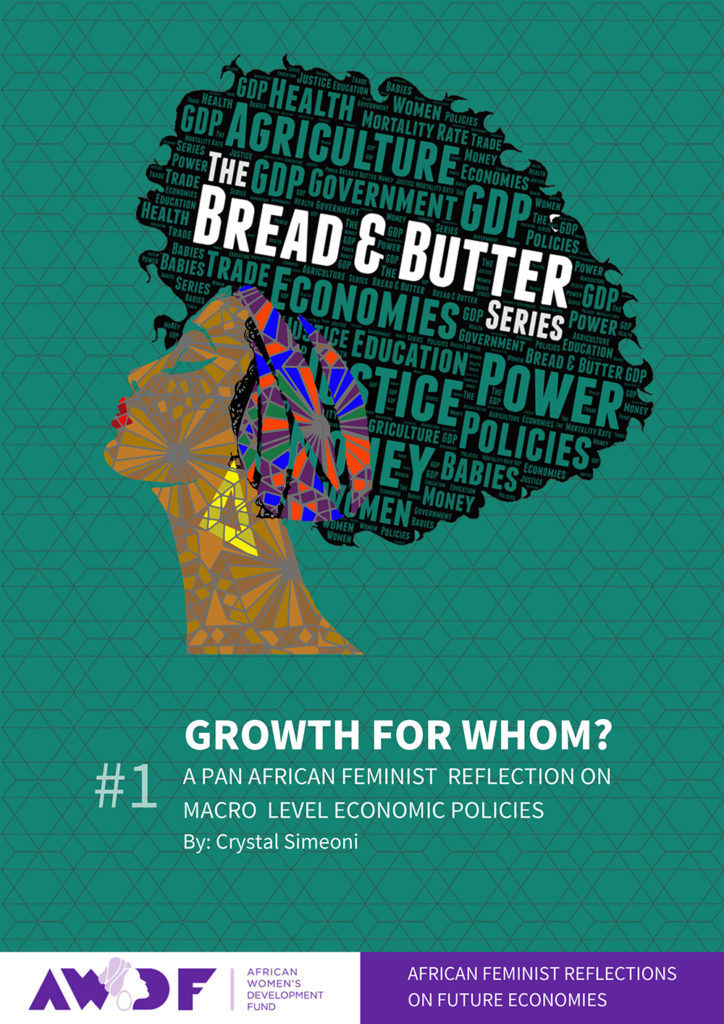
Bread and Butter is the post-convening knowledge series which aims to document the dynamic, critical and radical perspectives of African women thinking about their economic futures. The expression “bread and butter” refers both to the ways in which individuals come to sustain themselves usually through paid work and individuals’ practical, every day needs and concerns.
We understand this series as our reflection of both the subsistence and practical, every day needs and concerns of African women oriented to the future. We believe that African women’s economic issues are both internalised and challenged in every day acts of resistance and solution-building. We also aim to demystify economics as a white, male and Western concept out of reach for African women.
Indeed, we believe that all African women understand the consequences and solutions for oppressive neoliberal capitalist economic models and we seek to encourage their voices as economic actors, thinkers and shape shifters. We aim to get to the real “bread and butter” issues that women and girls face on this continent, and envision a future Africa that ensures women’s and girls’ sustainable livelihoods, meaningful labour, and full socio-economic autonomy. The series will feature a range of opinion pieces, research essays, poems, stories and narratives of and by African women, with a future-focused feminist economic lens.
We hope that this series will engender new conversations about how we support African women to pursue economic justice and security. We also hope to contribute to a larger conversation about how philanthropic institutions regionally and globally can better support African women’s economic interests, as described by African women, themselves.
Are you passionate about African women’s economic futures? Would you like to contribute to our Bread and Butter series? Are you interested in being a media partner for our series? For details or to pitch a concept, please email our Knowledge Management Specialist, rita@africlub.net/awdf.
Please click on the titles below, to read the knowledge products that were developed as a result of this convening.
ARTICLE TWO: ADVANCING RESOURCES FOR RURAL WOMEN FARMERS

The Leadership and Governance Programme: Feminist Leadership in Practice
The Leadership and Governance Programme: Feminist Leadership in Practice
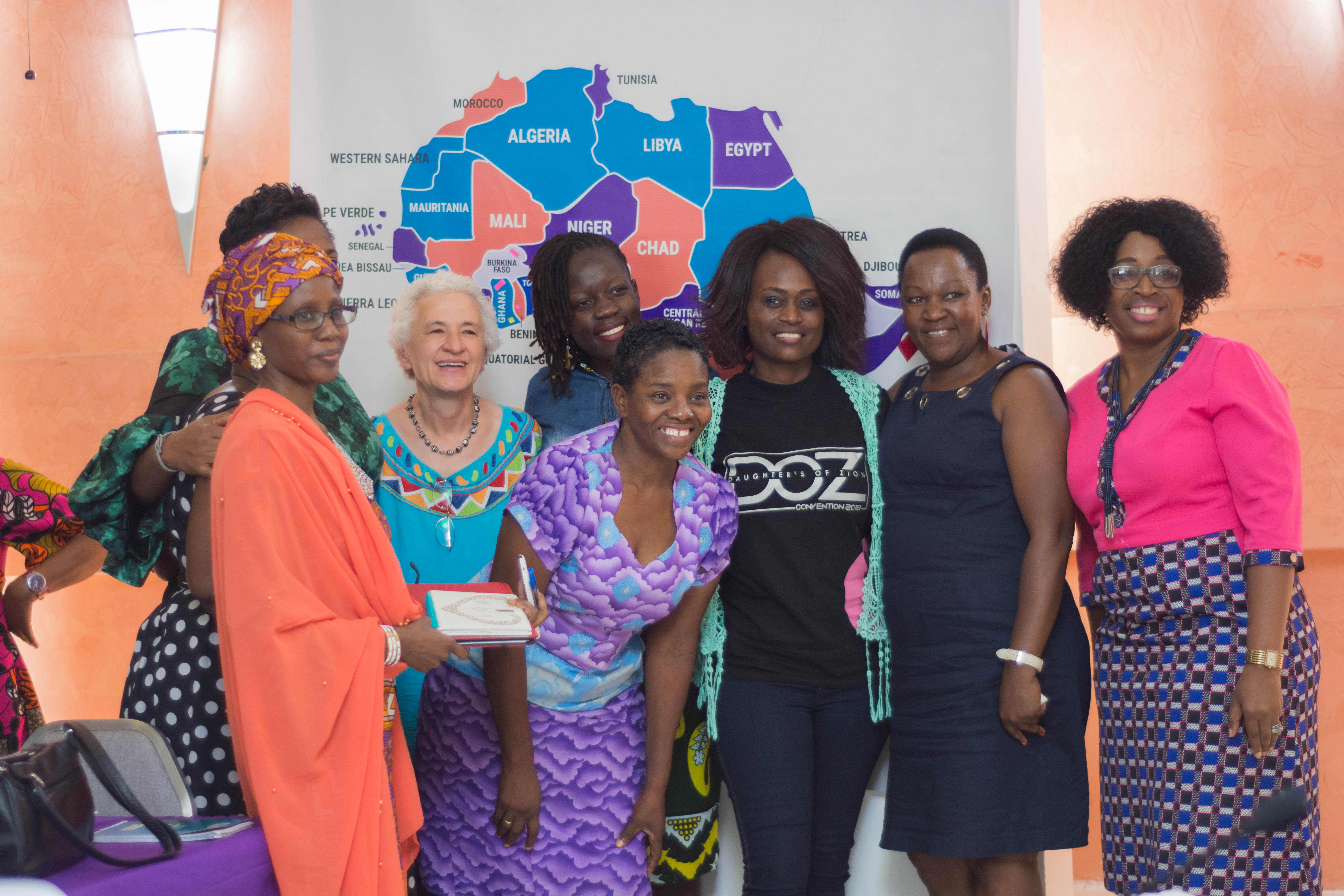
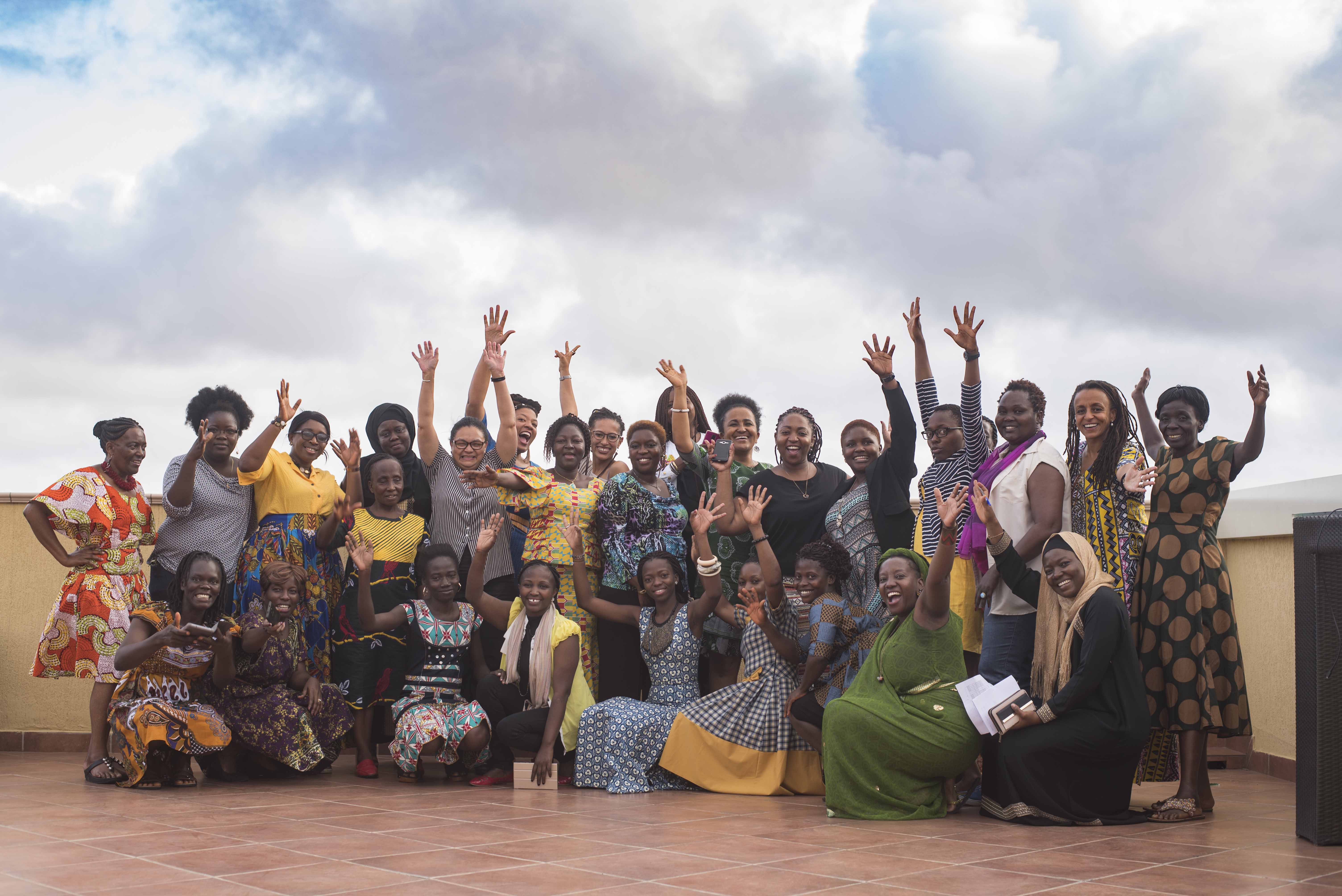
A chapter closes as the well acclaimed CEO Forum of the AWDF Leadership and Governance Capacity building Programme draws to an end in its final convening held in Accra from 4th till 6th October 2018.
The Leadership and Governance Programme of AWDF has been an integral part of our grantmaking process for the past 4 years, having impacted dozens of women-led organisations across Africa. The CEO forum, the flagship of the Leadership and Governance programme, has also provided the opportunity for many women leaders to see themselves and their shared power as the propellant for sustainability for their organisations.
The CEO forum has continued to bring African women leaders together to help foster solidarity, sisterhood and true community. Through the Leadership and Governance Programme , we at AWDF have seen many women leaders truly blossom both personally and in their organisations and we are proud of the work that we have accomplished together.
For our grantees, the Leadership and Governance Programme provides a rare opportunity to engage with and develop feminist leadership. Our wonderful coaches, Hope Chigudu, Paula Fray and Yene Assegid have led each forum and coaching session with warmth and wisdom and provided an environment that allowed participants to grow and to bring others along with them on the journey. Although the programme is ending this year– its necessity is clear when you speak to any of the women who have participated in it, and we hope to be able to restart it in the near future.
Hear some of our wonderful women leaders speak on the programme and their experiences on the journey:
CEO FORUM: An exciting first chapter comes to a close!
CEO FORUM: An exciting first chapter comes to a close!
The African Women’s Development Fund believes that feminism is a strong backbone for any women’s organisation just as networking is key to movement building. Our coaching programme has always reflected this belief in the tenacity and ingenuity of African women and our grantees to take tiny seeds and grow them into mighty trees.
The Manda Coaching programme has been a hub for the development of many young leaders across the continent. The aim of the coaching programme has been to nurture and support the continued evolution of African feminist leaders and to support them in their growth.
The coaching programme starts with what has come to be known as the ‘Directors/CEO Forum’ which brings selected grantees together and facilitates exchange among them, develops capacity using different strategies and provides professional and technical skills.
Then follows face-to-face sessions, in addition to social media sessions, where coaching continues for a specified period. The coaching process includes practical assignments that are conducted in between sessions, with coachees putting into practice new ways of seeing and doing things, and also reflecting on experiences in each coaching session. So far, 60 leaders/activists have been coached.
This CEO forum marks the last forum in its four-year cycle, and signals the beginning of a period of reflection and evaluation, both for our coaches and our participants. We’re excited to sit, reflect and learn together as elected coachees, coaches and AWDF staff gather in Accra Ghana, on the 4-6th October 2018.
Track the tags #CEOForum #ShapingAfricasFuture and get involved in the conversation, and also meet some of our wonderful participants.
Request for Expression of Interest: Monitoring Evaluation and Learning Associate
Request for Expression of Interest: Monitoring Evaluation and Learning Associate

Background
The African Women’s Development Fund (AWDF) is a pioneering grant-making foundation headquartered in Accra, Ghana. AWDF was founded by and for African women. It aims to support the work of the African women’s movement for peace, equality, sustainable development and social justice. Since its founding in 2001, AWDF has continued to support a growing portfolio of grants to leading women’s rights organisations and feminist movements across Africa, while also supporting knowledge generation, capacity building, and donor advocacy around African women’s activist histories, movement resourcing needs, and more recently, feminist futures.
ME&L is a key function of AWDF’s work. It entails constant review and updating of data to reflect and accommodate changes the organisation might undergo as well as to practicing and incorporating globally accepted ME&L standards. The volume of data generated by departments on programme areas for various purposes is huge making the collation and analysis of such data time consuming. AWDF is therefore looking to engage the services of an individual with the requisite qualification and experience to assist the ME&L unit in supporting data collection, analysis and reporting.
Qualifications and Experience
The successful applicant must have a blend of relevant background and professional experience in the following areas:
- A minimum of first degree in Statistics and Economic or any related field, and have adequate knowledge in data collection and processing
- Must be conversant and able to use statistical software like SPSS.
- Must have analytical and good communication skills
- Very organised and have strong multi-tasking and time-management skills.
- Great research skills and attention to details
- Knowledge of and commitment to African women’s rights issues
- Proficiency in MS Office applications especially, MS Word, MS Excel and PowerPoint
- Must be tech-savvy
- Working knowledge in French is an advantage
Responsibilities
- Support reporting on International Aid Transparency Initiative (IATI)
- Collate and aggregate data for publishing on IATI
- Categorise data and code key org/project details to be published in consultation with ME&L Specialist and ME&L Assistant
- To ensure that data to be published meets the IATI standards
- Collect, aggregate and analyse data periodically
- Assist in reviewing statistical instruments and data collection tools
- Assist in production of reports
- Provide support in other ME&L work in general
TIME FRAME
The external associate will be engaged with a service contract for a period of one-year renewable if necessary and based on availability of funding. The External Associate is expected to work not less than 40 hours a week (8 hours per day). Physical presence of the External Associate at AWDF office during the contract period is required.
Interested persons should please submit their application letter and Curriculum Vitae (CV) latest by close of work on September 30th, 2018 by email to jobs@africlub.net/awdfand copy bamea@africlub.net/awdfwith the subject “Application for ME&L Associate” while responding.
The position is based in Accra and AWDF is not responsible for relocation and related costs for potential candidates. Female applicants are preferred’
Please note that only shortlisted applicants will be contacted