
Category: News
AWDF at the Women and Girls Africa Summit 2020
AWDF at the Women and Girls Africa Summit 2020
AWDF is honoured to be sponsoring the Women and Girls Summit (WAGS), which takes place virtually from November 16-18, 2020, and aims to prepare women and girls as leaders in key industries to ensure that Africa realises its full potential on issues ranging from entrepreneurship to the impact of climate change, to reproductive health, to developing socially responsible enterprises.
The AWDF session, Non-communicable diseases and African women’s health futures: A feminist research-based call to invest in sustainable solutions will examine the scale and key gendered concerns around NCDs with a focus on cardiovascular diseases, diabetes, cancers, chronic respiratory diseases, and mental health; the key actors and extent of rights-based work on NCDs on the continent.
Our Director of Programmes, Pontso Mafethe is one of the speakers at the summit under AWDF’s co-hosted session to launch findings of research on Women and Noncommunicable diseases in Africa. The session will be moderated by Global Health Council Executive Director and President, Loyce Pace and joined by key speakers; Dr. Ana Mocumbi (Lancet NCDI Poverty Commission), Dr. Beatrice Wiafe (Ghana NCD Alliance and CEO Breast Care International) and Dr. Johanna Riha (Epidemiologist, Researcher).
The session speakers were carefully selected to draw on their rich experience and expertise in utilising these research and current context to inform debate and investments for the sustainable futures of women’s health in Africa.
This transformational event will create a group of change agents in their own communities, passionate about driving and implementing actions that will help countries in Africa across the development continuum.
Click here to register for the Women and Girls Africa Summit 2020
And here to attend AWDF’s session on Women and NCDs in Africa.
Note: You have to register for the summit first to be able to join the side event.
Bread & Butter Series #7: Being, Being with, Becoming & Doing with
Bread & Butter Series #7: Being, Being with, Becoming & Doing with
There has been growing concern across Africa by activists and policymakersalike around the question of land rushes (especially after the 2007-2008 land rush) often framed as “land grabs” (see Oya 2013b, Dieng 2017), and their implications for local communities. This “global land rush”n,emerged in the turbulent context of socioeconomic and political transformations. While the drivers, scale and actors in this renewed interest in land (and labour) are still contested, a body of knowledge interested in its differentiated impact and outcomes, as well as political reactions to these deals, is still growing (Hall et al 2015). It is important for us to consider however that land deals “do not occur in a socio-economic or political vacuum” (Oya 2013b: 1550). They are interventions connecting capital with labour with previous and ongoing dynamics of place-making resulting in uneven, unfinished processes of social change. Not only do land deals re-shape the places in which they
occur, they are also an expression of capitalist expansion across the globe. Feminist, postcolonial and decolonial scholars have contributed to acknowledging that mainstream models with their limited interpretation of ‘the economic’ are grounded in gendered cultural values and norms, though the recognition of this has been late and partial (Barker et al 2003, Pollard et al 2011, Zein-Elabdin 2016).
This article compares two case studies¹: an export horticulture estate and a scheme funded by an international financial institution in communities based in the delta of the river, in Northern Senegal. These communities are experiencing the boom of commercial horticultural farming and rural labour markets after the 2007-2008 land rush whose effects sediment with and build on previous dynamics of social differentiation. In this article, I challenge the tendency to over-focus on either narratives emphasizing dualisms such as ‘insiders vs outsiders’ or prioritising economic (and gendered) outcomes of ‘land grabs’.
“Read the full article here
Bread & Butter Series #6: If Another World is Possible…
Bread & Butter Series #6: If Another World is Possible…
Women’s ways lead us to the solutions the planet and the people need
Peasant and working-class women in Africa bear the brunt of climate-destroying ‘development’ projects which grab, pollute and destroy their natural resources, undermine cultural and historical ties to territories, exploit their labour (paid and unpaid), and violate their bodies and health. And women form the core of struggles to defend the land, lives, livelihoods and future of their families and communities. Their struggle is one that defends a way of life and an existence that cannot be replaced. This is their development alternative. Yet, women have limited voice and authority in decision- making about development at all levels of society. We note the ways in which African peasant and working-class women care for, replenish and reproduce nature and humans.
This article by Margaret Mapondera, Trusha Reddy and Samantha Hargreaves examines the ecological and climate crisis as a critical dimension of the manifold threats facing the planet and most of its peoples today.
Read the article here
Exciting New Vacancies: 4 Positions Available
Exciting New Vacancies: 4 Positions Available
[tp lang=”en” not_in=”fr”]
We are hiring to fill vacancies for the under-listed positions with persons who are innovative, passionate about women’s rights in Africa, excited about African feminism and embrace African women’s diversity.
- Programme Officer – Special Initiatives (Download Terms of Reference here)
- Communications & Fundraising Assistant (Download Terms of Reference here)
- Knowledge Management Assistant (Download Terms of Reference here)
- Capacity Building Officer – Maternity Cover (Download Terms of Reference here)
If this is you, please download the attached TOR’s and send in your application.
How to Apply: Qualified and interested persons should send a cover letter indicating their relevant skills and experience and CV of not more than 3 pages by email to:
The Human Resources Manager at jobs@awdf.org with application for the position being applied for indicated as the subject line.
Closing Date: 6 November 2020
Only short-listed candidates will be contacted for additional information and interviews.
In line with AWDF’s Mission, qualified African women are encouraged to apply.
[/tp]
[tp lang=”fr” not_in=”en”]
Nous invitons des personnes innovantes, passionnées par les droits des femmes en Afrique, le féminisme africain et croyant en la diversité des femmes africaines à poser leurs candidatures pour les postes ci-après :
- Administratrice de Programmes – Initiatives spéciales (Téléchargez les termes de référence ici )
- Assistante en Communications et Mobilisation des ressources (Téléchargez les termes de référence ici)
- Assistante Gestion des Connaissances (Téléchargez les termes de référence ici)
- Officier – renforcement des capacités – Contrat à courte durée (Téléchargez les termes de référence ici)
Intéressez? Veuillez télécharger les termes de référence et envoyez–nous votre demande.
Comment postulez : Les personnes qualifiées et intéressées doivent envoyer une lettre de motivation indiquant leurs compétences et expériences ainsi qu’un CV de 3 pages maximum par e-mail au responsable des ressources humaines à l’adresse jobs@awdf.org en indiquant comme objet la candidature pour le poste à pourvoir.
Date de clôture : 6 novembre 2020
Seuls(es) les candidats(es) présélectionnés(es) seront contactés(es) pour des informations complémentaires et des entretiens.
Conformément à la mission de l’AWDF, les femmes africaines qualifiées sont encouragées à postuler
NB : Les Termes de Reference ne sont disponibles qu’en Anglais.
[/tp]
Bread and Butter #5: Legal Literacy as Integral to Rural Women’s Land Rights
Bread and Butter #5: Legal Literacy as Integral to Rural Women’s Land Rights

The concept of land is one that has been described as the cornerstone of economic development. According to Odeny (2013), land is one asset that farmers, pastoralists and other communities base their livelihoods. Land is also a significant component of business assets, which play significant role in business investment strategies. Thus, securing land rights can have a profound impact on economic development of any group of people.
This study situates land located in rural areas as both a means of agricultural production, livestock rearing and a place for gathering natural products that play an important role in local economies such as woodcutting, wild harvesting, grazing, fishing and hunting inter alia. In most cases, particularly among indigenous people, land is a source of identity and cultural heritage.
Read the second article in the second series here:
Legal Literacy as Integral to Rural Women’s Land Rights
AWDF welcomes incoming CEO, Françoise Moudouthe
AWDF welcomes incoming CEO, Françoise Moudouthe
[tp lang=”en” not_in=”fr”]
[left50pc]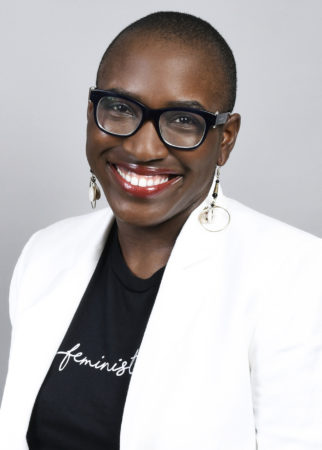
[/left50pc]
The Board of Directors at the African Women’s Development Fund is pleased to announce Françoise Moudouthe as the newly appointed, incoming CEO of AWDF.
In 2018 the current CEO of AWDF, Theo Sowa encouraged the Board to initiate a thoughtful executive leadership transition at the organisation. The transition plan that followed led to an international search by an independent Executive Search company, culminating recently in the appointment of Françoise Moudouthe.
A pan-African feminist with roots in Cameroon, Françoise Moudouthe is passionate about advocating for women’s rights and fostering sisterhood within African feminist movements. She is the founder of Eyala, a bilingual platform that amplifies the voices and lived experiences of African feminists. Having played an instrumental role in incubating Girls Not Brides, the global civil society partnership to end child marriage, and in spearheading its growth in Africa, Françoise has most recently worked as an international consultant, focusing on strategy, advocacy and movement-building for gender justice in Africa. She is a Board member of the Malala Fund and Womankind Worldwide.
“I am honoured to join AWDF, an organisation with an extraordinary legacy of redefining feminist movement-building and philanthropy in Africa and globally. I look forward to working with the AWDF team, grantee partners, and the wider African feminist movement, to nurture and support dynamic feminist activism in Africa in the years to come,” says Françoise.
Ndeye Sow, AWDF Board Chair added that “while it is always sad to say goodbye to the type of visionary leadership shown by Theo as she grew and consolidated the work of our organisation, the Board of AWDF are delighted with the choice of Françoise to take over the leadership of AWDF. We know that her vision and passion will take AWDF even further on the amazing leadership journey started by Bisi Adeleye Fayemi, carried on through Theo Sowa and now in the hands of Françoise Moudouthe. We look forward to her leadership journey at AWDF.”
Françoise will join AWDF in the second week of November 2020. After a transitional period where she and Theo will work together as incoming and outgoing CEO, Theo will step out of AWDF in mid-December.
[/tp]
[tp lang=”fr” not_in=”en”]
Les membres du Conseil d’Administration de l’AWDF » ont le plaisir d’annoncer la nomination de Françoise Moudouthe au poste de Directrice Générale de l’AWDF.
En 2018, l’actuel Directrice Générale de l’AWDF, Theo Sowa, a sollicité les membres du Conseil d’Administration à initier une transition de leadership au sein de l’organisation. Le plan de transition élaboré après cette demande a conduit au lancement d’une recherche sur le plan international, d’une nouvelle Directrice Générale. Ainsi, les membres du conseil ont contracté une société indépendante de recrutement des cadres qui s’est chargée du processus de recrutement et donc aboutissant récemment à la nomination de Françoise Moudouthe.
Françoise Moudouthe est une féministe africaine d’origine camerounaise qui se passionne pour la défense des droits des femmes et la promotion de la sororité au sein des mouvements féministes africains. Elle est la fondatrice d’Eyala, une plateforme bilingue dont l’ambition est de libérer la parole féministe en Afrique. Françoise a joué un rôle déterminant dans la création de Girls Not Brides, le partenariat mondial de la société civile visant à mettre fin au mariage des enfants, dont elle a dirigé l’action en Afrique pendant près de six ans. Plus récemment, Françoise a travaillé comme consultante internationale sur divers projets de plaidoyer pour les droits des femmes et de renforcement des mouvements féministes en Afrique. Elle siège aux Conseils d’Administration du Malala Fund et de Womankind Worldwide.
« Je suis honorée de rejoindre l’AWDF. Depuis sa création il y a vingt ans, l’AWDF a joué un rôle déterminant dans le renforcement du mouvement féministe et de la philanthropie en Afrique et dans le reste du monde. Je suis ravie de pouvoir travailler avec l’équipe de l’AWDF, ses partenaires bénéficiaires, et l’ensemble du mouvement féministe africain, afin de soutenir et de redynamiser l’activisme féministe sur notre continent. »
Ndeye Sow, Présidente du Conseil d’Administration de l’AWDF a ajouté que «s’il est toujours triste de dire au revoir au type de leadership visionnaire montré par Theo alors qu’elle développait et consolidait le travail de notre organisation, les membres du Conseil d’Administration de l’AWDF sont ravis du choix de Françoise pour prendre la gestion de la direction de l’AWDF. Nous savons que sa vision et sa passion emmèneront l’AWDF encore plus loin dans cet incroyable parcours de leadership commencé par Bisi Adeleye Fayemi, poursuivi par Theo Sowa et maintenant entre les mains de Françoise Moudouthe. Nous attendons avec impatience son parcours de leadership à l’AWDF. »
Françoise va rejoindre l’AWDF dans la deuxième semaine de novembre 2020. Theo quittera l’AWDF en mi-décembre après une période de transition au cours de laquelle elle et Françoise travailleront ensemble en tant que PDG entrant et sortant.
[/tp]
Vibrant Canvas: AWDF Annual Report 2019
Vibrant Canvas: AWDF Annual Report 2019
[tp lang=”en” not_in=”fr”]
Vibrant Canvas is the world told by African women, created and founded in their experiences.
 In 2019, AWDF granted more money to women’s organisations than in any previous years, and we supported the largest number of grantees in our herstory, strengthening their organisations’ systems, skills and cultures. We convened, produced and shared knowledge, hosted artists and claimed power in a chorus of feminist voices. We stretched across Africa – North, South, East and West, and further into the Middle East. We grew, in scale and scope. We saw and created change in process and outcome.
For AWDF, 2019 meant expansion with connection, it meant a deepening of the work for equality and justice and an engagement in the interconnected realities of womanhood. AWDF and its partners gathered the pieces, collected colour, stretched the canvas and painted for the telling of a story. We revealed a world, and created new designs in glimpses into the world of the future.
Vibrant canvas is a look into the world made by African feminists over the course of 365 days in 2019.
Please click here to read the Summarised version of the Report
For the Full version of the Report, please click here
[/tp]
[tp lang=”fr” not_in=”en”]
La Toile Dynamique : Réalité des femmes africaines créée et fondée sur leurs expériences.
 En 2019, l’AWDF a accordé plus de subventions aux organisations de femmes qu’au cours des années précédentes. Nous avons soutenu le plus grand nombre d’organisations bénéficiaires de subventions de notre histoire, et avons aussi renforcé leurs systèmes, leurs compétences et leurs cultures.
Nous avons organisé des rencontres, produit et partagé des connaissances. Nous avons accueilli des artistes et ensemble, (dans un seul accord tout en unissant nos voix en tant que féministes) avons réclamé le pouvoir. Nous sommes répandues partout en Afrique – Nord, Sud, Est, Ouest, et au Moyen-Orient. Nous avons grandi avec une ampleur considérable. Nous avons vu et créé des changements dans le processus d’obtention des résultats.
Pour l’AWDF, 2019 a signifié une croissance avec connexion, un approfondissement du travail pour l’égalité et la justice et un engagement dans les réalités interconnectées de la féminité. L’AWDF et ses partenaires ont rassemblé des informations, choisi la couleur, tendu la toile et l’ont peinte pour raconter une histoire. Nous avons révélé un monde, et créé de nouveaux dessins pour pouvoir découvrir le monde du futur.
La Toile dynamique, réalisée par les féministes africaines, est un regard sur le monde couvrant 365 jours en 2019.
Pour lire la version simplifiée du rapport annuel 2019, cliquez ici
Pour la version complète du rapport annuel 2019, cliquez ici
[/tp]
Call for Consultancy: Translation of Research Products
Call for Consultancy: Translation of Research Products
[tp lang=”en” not_in=”fr”]
AWDF is seeking to engage a consultant to translate and proofread the following research products from our 2019 research titled, “Women and Noncommunicable Diseases in Africa: Mapping the scale, actors and extent of rights-based work to address the impact of NCDs on African women” covering the following specific products;
1. Research report:
2. Executive Summary:
3. NCDs research key messages:
The translation will be from the documents’ source language (English) into French to reach our Francophone audiences. Under the supervision of the Knowledge Management Specialist, the consultant will translate and proofread covers, text, tables, boxes, captions, charts, graphs, financial information and statistical data in the documents.
HOW TO APPLY
Please send a CV, cover email, translation sample and indication of your rate for English- French translation to consultants@africlub.net/awdf with the email subject header: Application for consultancy-Translator, NCDs Research products. Emails should be addressed to “The Human Resources Manager.”
Submissions must be received no later than September 10, 2020
Please click here to download the TERMS OF REFERENCE
[/tp]
[tp lang=”fr” not_in=”en”]
L’AWDF cherche à engager un consultant pour traduire et relire les produits de recherche suivants de notre étude de 2019 intitulée “Les femmes et les maladies non transmissibles en Afrique: Cartographier l’ampleur, les acteurs et l’étendue du travail basé sur les droits pour aborder l’impact des MNT sur les femmes africaines”, qui comprend les produits spécifiques suivants;
1. Rapport de recherche:
2. Sommaire exécutif:
3. Messages clés de la recherche sur les MNT:
La traduction se fera de la langue source des documents (anglais) vers le français pour atteindre nos publics francophones. Sous la direction de la Spécialiste en gestion des connaissances, le consultant traduira et corrigera les couvertures, le texte, les tableaux, les encadrés, les légendes, les graphiques, les informations financières et les données statistiques des documents.
COMMENT POSTULER
Veuillez envoyer un CV, un courriel de présentation, un échantillon de traduction et une indication de votre tarif pour la traduction anglais-français à consultants@africlub.net/awdf avec l’objet du courriel: Candidature pour le poste de traducteur-conseil, produits de recherche NCDs. Les courriels doivent être adressés au ” responsable des ressources humaines “.
Les candidatures doivent être reçues au plus tard le 10 septembre 2020
Veuillez cliquer ici pour télécharger les TERMES DE RÉFÉRENCE (en anglais)
[/tp]
Workplace Giving: Put your Money where your Heart is.
Workplace Giving: Put your Money where your Heart is.
 By Lydia Maclean, Communications & Fundraising Specialist
As an organisation with a mission to mobilise financial, human and material resources to support African women’s organisations, the African Women’s Development Fund (AWDF) has provided over 50 million dollars in grants since its inception in 2001.
AWDF is both a grantmaking and fundraising organisation, and therefore straddles two sides of philanthropy. This provides a deeper appreciation of the various forms of philanthropy that exist, especially in Africa where philanthropy is deeply embedded in our culture and traditions, but generally goes under-acknowledged.
CEO Theo Sowa, in an interview with Alliance magazine, made this observation:
“There are lots of different agendas around philanthropy on the continent. Philanthropy has been strong in Africa for a very long time, but it’s not been properly documented or valued. On the one hand, you have the Ibrahims and the Motsepes, high net worth individuals who set up foundations and give large amounts of money. On the other, we have giving by millions of ordinary Africans that comes from solidarity, not necessarily from surplus, so people with very little will still give. Gerry Salole of the European Foundation Centre has this great line that ‘there is no successful African who has not benefited at some point from another African’s philanthropy’. Philanthropy is ingrained in Africa”.
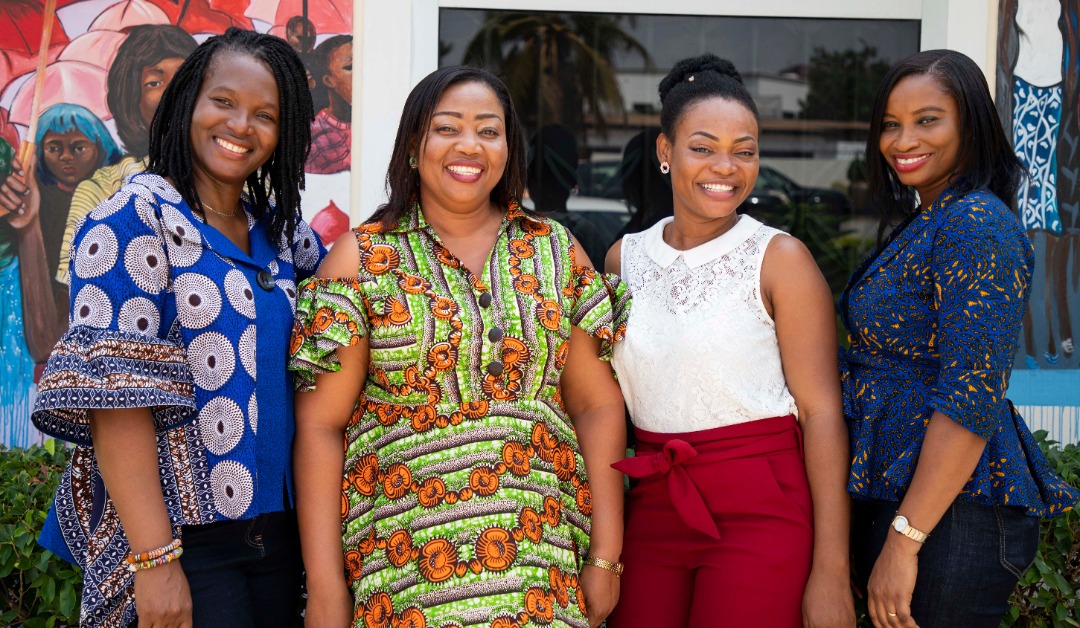
AWDF staff firmly share this belief, and in 2006, initiated a workplace giving scheme which has raised substantial amounts and supported various causes across the continent. In an earlier article on workplace giving, Director of Operations Gertrude Annoh Quarshie refers to it as an “opportunity to take action”. In addition to showing solidarity and inspiring others to give, workplace giving contributes to team building as it creates collective impact.
Over the years, the AWDF Workplace giving fund has supported various organisations and women’s groups in projects including the re-opening of the Ark Shelter of the Ark foundation in Ghana, and donation of materials for a training workshop at the Nsawam female prisons, also in Ghana.
The most recent beneficiary of the AWDF Workplace giving programme is the Rape Crisis Cape Town Trust, based in South Africa. The Director of Rape Crisis, Kathleen Dey, affirms that “Thanks to this donation we will be able to provide communication support for our work with women during this time of COVID-19 lockdown in South Africa. The fact that this donation comes from your staff’s monthly payroll contribution and that they chose this project to support moves us all very deeply.”
For more information about the AWDF Workplace giving programme, please send an email to awdf@awdf.org
Transitions at AWDF: A goodbye to Jessica and a welcome to Pontso
Transitions at AWDF: A goodbye to Jessica and a welcome to Pontso
 [tp lang=”en” not_in=”fr”]
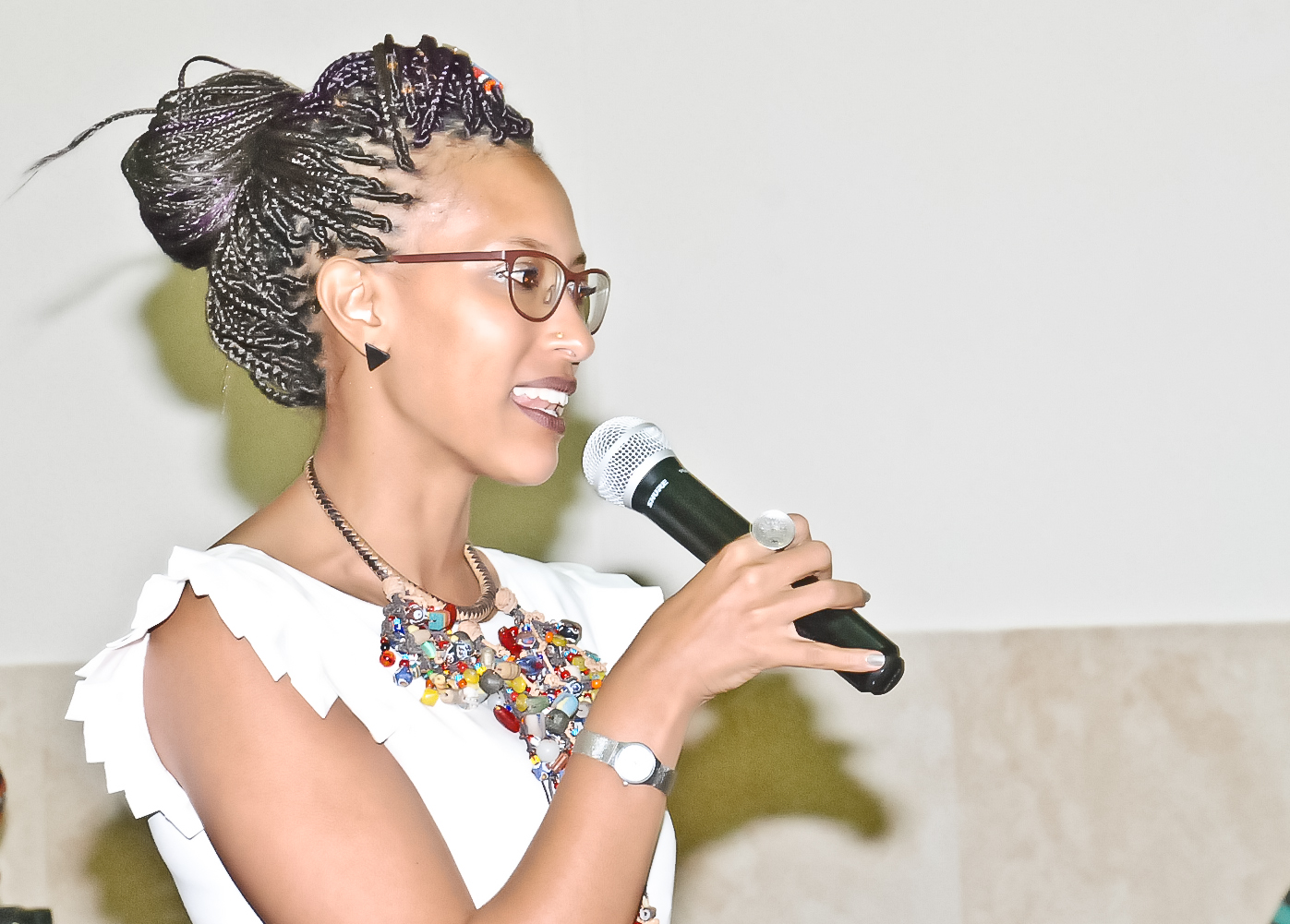
A fond farewell to Jessica Horn, Director of Programmes
After nearly five years as Director of Programmes, Jessica Horn will be leaving the African Women’s Development Fund. Her last day is Friday 14 August 2020. Jessica has brought unparalleled passion, creativity and diligence as well as her extensive knowledge of feminist theory and practice to bear in her work and that of AWDF. We are sorry to see her go, but happy that she is moving on to a new and exciting phase in her career. We honour and celebrate her contribution to AWDF’s vision and action during the past five years.
Over the next few weeks we will be publishing a series of Jessica’s reflections on her experiences leading on programme strategy, and contributing to organisational culture and feminist transformation while at AWDF. Read the first one here
And a warm welcome to Pontso Mafethe
Meanwhile, AWDF has appointed an Interim Director of Programmes, Pontso Mafethe, who joins AWDF in September 2020. Pontso comes to AWDF with more than 15 years experience in grantmaking and programme direction, having previously led the Women and Girls and Africa portfolios at the grantmaking organisation, Comic Relief and other civil society organisations in the UK and different parts of Africa.
Please join us in welcoming Pontso to the AWDF team, as we wish Jessica a fond farewell.
[/tp]
[tp lang=”fr” not_in=”en”]
Un adieu chaleureux à Jessica Horn, directrice des programmes
Après près de cinq ans en tant que directrice des programmes, Jessica Horn quittera l’AWDF. Son dernier jour est le vendredi 14 août 2020. Jessica a apporté une passion, une créativité et une diligence inégalées ainsi que sa connaissance approfondie de la théorie et de la pratique féministes à son travail et à celui de l’AWDF. Nous sommes désolés de la voir partir, mais heureux qu’elle passe à une nouvelle phase passionnante de sa carrière. Nous honorons et célébrons sa contribution à la vision et à l’action de l’AWDF au cours des cinq dernières années.
Au cours des prochaines semaines, nous publierons une série de réflexions de Jessica sur ses expériences en tant que responsable de la stratégie des programmes et sa contribution à la culture organisationnelle et à la transformation féministe pendant son séjour à l’AWDF. Lisez la première ici (En anglais)
Et un accueil chaleureux à Pontso Mafethe
Entre-temps, l’AWDF a nommé un directeur intérimaire des programmes, Pontso Mafethe, qui rejoindra l’AWDF en septembre 2020. Pontso arrive à l’AWDF avec plus de 15 ans d’expérience dans l’octroi de subventions et la direction de programmes, ayant précédemment dirigé les portefeuilles ” Women and Girls and Africa ” de l’organisme d’octroi de subventions, Comic Relief et d’autres organisations de la société civile au Royaume-Uni et dans différentes régions d’Afrique.
Veuillez nous rejoindre pour accueillir Pontso dans l’équipe de l’AWDF, pendant que nous souhaitons à Jessica un chaleureux adieu.
[/tp]