
Category: News
Generating Knowledge and Evidence on the Prevention of Violence Against Women
Generating Knowledge and Evidence on the Prevention of Violence Against Women
AN INTRODUCTORY GUIDE FOR AFRICAN WOMEN’S ORGANISATIONS

Are you an African women’s rights organisation, activist, practitioner, researcher, storyteller, artist, writer or an individual/organisation who deeply cares about the prevention of Violence Against Women (VAW)?
AWDF is excited to introduce this Introductory Guide for African Women’s Organisations which offers critical insights for you and your work.
The guide is a follow on from the VAW Prevention Primer produced by AWDF and Raising Voices in 2019. It extends to interrogate conventional methods, concepts and tools and offers practical steps into the production, ethics and dissemination of VAW prevention knowledge and evidence.
The primary objectives for this knowledge and evidence Guide are to:
- Describe key terminology, methods, tools, and approaches for evidence generation and knowledge production in the field of VAW prevention
- Broaden the conceptualisation to encourage more African feminist knowledge and evidence production and sharing in VAW prevention
- Provide steps, how-to and ways activists, feminists and African women’s organisations can consciously integrate and advance knowledge and evidence-based VAW prevention.
We acknowledge that for many African women organisations, prevention of violence against women remains underpinned by legacies of systemic erasure, silencing and limited participation in shaping the what and how of knowledge and evidence.
This guide serves to honour the multitude of knowledge that African women continue to create, the process of creating and producing them, and those who make them. It ensures the continued building of interventions that are well-informed, confident, and in solidarity with one another, despite our different contexts on the continent and beyond.
We invite you to read the guide here
CONSULTANCY – AFRICAN WOMEN WRITERS WORKSHOP 2021
CONSULTANCY – AFRICAN WOMEN WRITERS WORKSHOP 2021
[tp lang=”en” not_in=”fr”]
Purpose of Assignment
We are seeking a consultant who will coordinate the key segments of the process that will include project management and application selection process. The Consultant will also liaise with other consultants who will be engaged to oversee the development of the curriculum and content delivery.
Interested? Click here for TOR (available only in French)
In line with AWDF’s Mission, qualified African women are encouraged to apply
Closing Date: July 15th 2021. Only shortlisted applicants will be contacted.
[/tp]
[tp lang=”fr” not_in=”en”]
But de la mission
L’AWDF est à la recherche d’un (e) consultant (e) qui assurera la coordination des segments clés de l’atelier de formation tels que sa gestion et le processus de sélection des candidats. Le (la) consultant(e) sera chargé(e) de gérer toute communication venant d’autres consultants(es) qui seront engagés(es) pour superviser l’élaboration du programme et de son contenu.
Pour postuler, cliquez ici pour les Termes de Référence
Le dossier de candidature doit être envoyé au plus tard le 15 juillet 2021.
Conformément à la mission de l’AWDF, les femmes africaines qualifiées sont encouragées à postuler.
[/tp]
Consultancy: Monitoring Visits 2021
Consultancy: Monitoring Visits 2021
AWDF is looking for consultants based in the following countries to conduct monitoring visits.
- Burkina Faso
- Cameroon
- DRC
- Ghana
- Kenya
- Lebanon
- Liberia
- Mali
- Nigeria
- Palestine
- Senegal
- Somalia & Somaliland
- South Africa
- Tanzania
- Uganda
- Zimbabwe
Closing Date for submission of Proposals: June 25, 2021.
For Terms of Reference, please click here
Call for Proposals : 2021 World AIDS Day & 16 days of Activism against GBV
Call for Proposals : 2021 World AIDS Day & 16 days of Activism against GBV
[tp lang=”en” not_in=”fr”]
For World AIDS Day 2021, AWDF is awarding grants to African women’s rights organisations and groups to support activities that support mental health and emotional wellbeing for women living with HIV and AIDS.
For 16 Days of Activism against Gender Based Violence, AWDF will support women’s rights organisations and groups employing innovative approaches, methodologies, tools and resources that show positive results through awareness creation and advocacy to promote women’s mental health and wellness. Women groups and organisations will be supported during the activism period to intensify education and awareness on preventing violence against women and girls (VAWG) as well as promoting women’s access to comprehensive mental health and wellness services.
AWDF encourages creativity- so send in your exciting ideas for events, public campaigns and other activities towards preventing violence and promoting women’s mental health and wellness!
This call for proposal is opened to African Women led organisations with budgets of under USD100,000.
Please note that this Grant cycle is powered by AWARD FORCE. Kindly send your application through the AWDF Online Portal in the link below:
AWDF GRANTS PORTAL
2021 WAD & 16 Days Frequently Asked Questions
Closing Date: 1st July 2021
[/tp]
[tp lang=”fr” not_in=”en”]
Pour la Journée Mondiale de lutte contre le SIDA 2021, AWDF va octroyer des subventions à des organisations et groupes de défense des droits des femmes africaines pour financer des activités qui soutiennent la santé mentale et le bien-être émotionnel des femmes vivant avec le VIH/SIDA.
Pour les 16 Jours d’Activisme contre les Violences basées sur le Genre, l’AWDF soutiendra les organisations et groupes de défense des droits des femmes qui ont des approches, des méthodologies, des outils et des ressources innovants et créatifs pouvant contribuer à l`atteinte des résultats positifs à travers des actions de sensibilisation et de plaidoyer pour promouvoir la santé mentale et le bien-être des femmes. Les groupes et organisations de femmes seront soutenues; pendant les jours d’activisme; pour renforcer les actions d’éducation et de sensibilisation sur la prévention de la violence faite aux femmes et aux filles ainsi que pour promouvoir l’accès des femmes à des services complets de santé mentale et de bien-être.
AWDF encourage l’innovation. Alors envoyez-nous vos idées innovantes sur des événements, des campagnes de sensibilisation de masse et d’autres activités pertinentes visant à prévenir la violence et à promouvoir la santé mentale et le bien-être des femmes.
Ce présent appel à propositions est seulement ouvert aux organisations dirigées par des femmes africaines ayant un budget organisationnel ne dépassant pas 100,000 USD
Veuillez noter que ce cycle de subventions est alimenté par AWARD FORCE. Veuillez soumettre les demandes de subventions en ligne en cliquant sur le lien ci-dessous:
PORTAIL DE SUBVENTIONS
Foire aux Questions: 16 Jours d’Activisme & Journée Mondiale de Lutte contre le SIDA 2021
Date Limite: 1er juillet 2021
[/tp]
Understanding & Addressing Homophobia in Ghana & Africa
Understanding & Addressing Homophobia in Ghana & Africa
[tp lang=”en” not_in=”fr”]
Overview
As a feminist grant-making organisation, the African Women’s Development Fund (AWDF) is well aware that patriarchal violence is a prevalent problem across our continent. State and community-sanctioned violence, which maintains patriarchal power, remains an urgent issue for millions of Africans made vulnerable by various social forces of exclusion. This includes Africans who belong to sexual and gender minorities.
At AWDF, we know that it is possible to build societies that are free from violence against people, regardless of their gender identity, gender expression and sexual orientation. Throughout Ghana and Africa’s history, we have had such societies. And across Ghana and Africa today, there are many communities, locales, families and individuals that continue to reject such violence. This document is designed to be an educational resource for people working to address, reduce and eliminate violence against LGBTQ+ Africans. Conceived as part of the #LoveAndFreedomAfrica campaign, this guide offers information that will help make our societies safer for people whose gender expression, gender identity and/or sexual orientation go beyond cisgender and heterosexual norms.
CLICK HERE TO DOWNLOAD THE FULL GUIDE
[/tp]
[tp lang=”fr” not_in=”en”]
Veuillez cliquer ici pour télécharger le Guide.
[/tp]
Consultancy – Bilingual Due Diligence Officer
Consultancy – Bilingual Due Diligence Officer
IS THIS YOU?
We are looking for a dynamic Bilingual Programme Officer with Accounting background for a short-term consultancy.
As a grant making foundation, due diligence processes are very critical for AWDF risk management processes. These processes start from the pre-award stage where financial; information from the grant applicants are reviewed and continue after the award stage till the grant is closed.
Our overall grant portfolio has increased over the years and a Consultant is required to support the financial management aspects of the Francophone portfolio in the grant process from the pre-award stage till the grant is closed.
Please click here for full details of the Consultancy.
Closing date is 4th June 2021
Catalyze: A Global Partnership with Increased Impact In Africa
Catalyze: A Global Partnership with Increased Impact In Africa
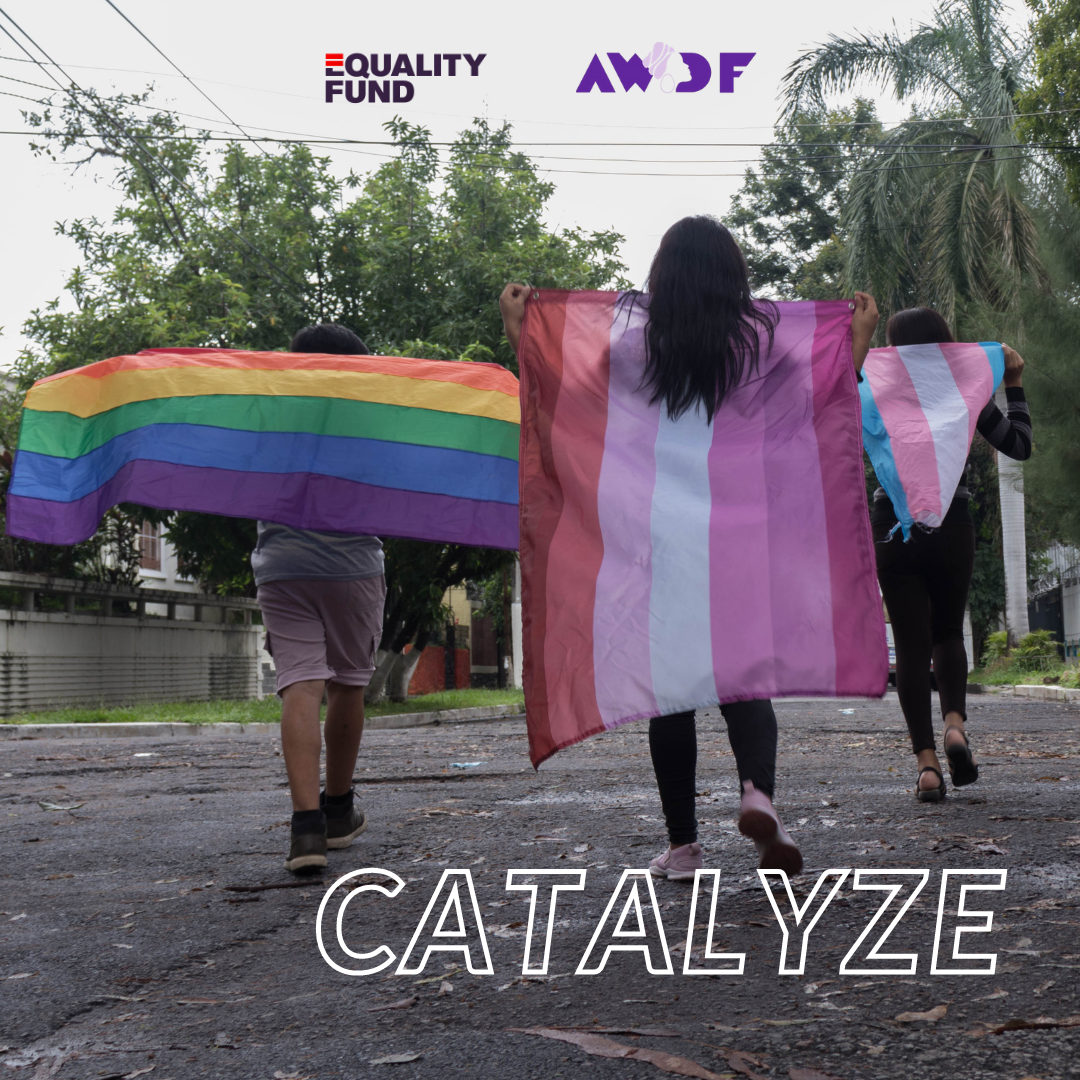
Equality Fund and African Women’s Development Fund announce Grantees for Catalyze Initiative
The Equality Fund and the African Women’s Development Fund invite you to join us in celebrating a powerful new community of grantee partners—72 fierce and fearless feminist organizations forging lasting change around the world.
Working in Africa, Asia, the Pacific, Latin America, Eastern Europe, and the Middle East, these organizations are calling out gender inequality wherever they see it and reimagining a world where women, girls, and non-binary people are fully seen and valued everywhere.
Please click here for more information and resources on this exciting community of change agents!
Expression Of Interest – LFS Baseline Study
Expression Of Interest – LFS Baseline Study
Calling African Feminist MEL Experts
We are looking for an experienced consultant with expertise in Monitoring, Evaluation and Learning (ME&L) and with a special focus on women’s rights work in Africa to undertake a Baseline study for the Leading from the South (LFS) Phase two project.
Interested applicants are encouraged to send their expression of interest with:
• Copy of CV
• One recent example of a similar task accomplished
• Financial proposal – consultancy fees (daily rates for the number of days required)
This should be sent to the following address:
jobs@awdf.org and copy to meassistant@awdf.org
Please find the Terms of Reference (TOR) here
The deadline for submission of applications is Friday, May 14, 2021. Only shortlisted consultants will be contacted.
Call for Consultants: Translation Services
Call for Consultants: Translation Services
The Assignment
AWDF seeks the services of experienced Feminist Translators /Interpreters who understand feminist language to engage in a long-term relationship of translating various documents from English into French and Arabic. In addition, services in interpretation in the aforementioned languages will also be required as and when needed during AWDF’s programmes. Occasionally, services for Sign Language interpretation will also be required in specific countries. It is in the light of these, that we invite qualified and interested Consultants to submit their proposals highlighting their experience and competencies in these fields.
To Apply for this, Click here for TOR
Deadline: 10th May, 2021.
Capacity Building Consultancies
Capacity Building Consultancies
Capacity Building Consultancy openings for African Feminists
For the last decade AWDF has complimented its grant making support with capacity building activities to ensure that women’s rights organisations who receive grants from AWDF have the right skills sets, support and capacity to sustain their women’s rights work and organisations in Africa. AWDF applies different methodologies including feminist coaching and skills training in its capacity building activities and these have produced effective results in many cases.
We are currently providing the Capacity Building trainings online, and we are looking for high calibre professionals to support in the design and delivery of the following:
-
Communications: Click here for Terms of Reference
-
Effective Advocacy: Click here for Terms of Reference
-
Financial Management: Click here for Terms of Reference
-
Resource Mobilisation: Click here for Terms of Reference