


Category: News
International Women’s Week: A celebration of Voices and Truths.
Mar 17, 2016
Media Center /
Blog, event, News, press
International Women’s Week: A celebration of Voices and Truths.
At AWDF we recognize the importance of celebrating women in our daily lives and during the month of March we especially invite the public to join us in this joyous task. This year, we marked the day with three special events, each of which had a strong recurring theme: Voices and Truth.
AWDF believes conversations like these are vital to changing stereotypical notions about African women and their role in society.
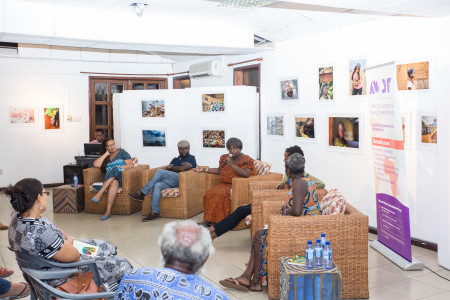
Renowned Ghanaian photographer Nana Kofi Acquah’s photo exhibit “Don’t Call Me Beautiful,” was a work that focused on displaying the complexity and variety of the African woman, and in that vein it definitely succeeded. AWDF held a panel discussion at the close of the exhibition, on 8th March – International Women’s Day – to explore these themes and to question the relevancy of the word resilience in connection to the African woman. The event took place at Alliance Francaise Accra.
The room was filled with members and staff of Alliance Francaise Accra and an engaged public. At times contentious, never dull, the panel, which was moderated by Kinna Likimanni, discussed notions of beauty, colour and skin bleaching, with active participation from the audience.
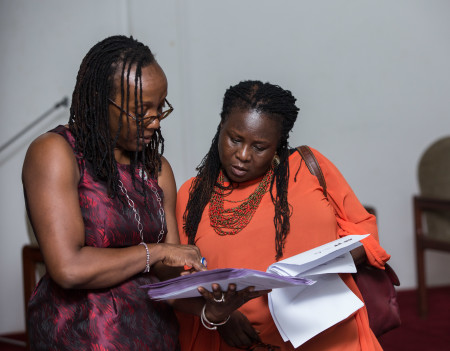
Our second panel discussion organized jointly with the Centre For Gender Studies and Advocacy ( CEGENSA) on Friday March 11 was another opportunity to tackle thorny issues.
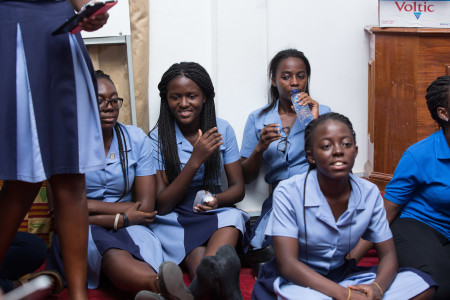
The theme “About Last Night,” focused heavily on student relationships, date rape, and sexual abuse on Legon Campus and the ways in which victims are treated both by the institution and their peers. The room was full of students from the University and some students from SOS-Hermann Gmeiner International College. A few young undergraduate women were brave enough to share harrowing stories of their own abuse that they’d suffered on Legon Campus and the lack of response that followed it.
“He walks around here like this untouchable, charming guy and no one knows that this is what he really is,” said a young woman about the male student friend who assaulted her.
And she was not the only one– many students and people in the room expressed the unfairness of society’s expectations for young girls and the need for women to be the ones who guard themselves from sexual assault. It was clear that there was much to discuss, and the event ended on a note of bittersweet hope for all involved.
One high note was the presence of the SOS students (all female), whose vocal and confident contributions underlined their heightened self-awareness and knowledge of women’s rights and feminism.
“They were the real stars of tonight. They absolutely made my day – and the entire programme,” said Prof. Audrey Gadzekpo, who acted as moderator for the discussion.
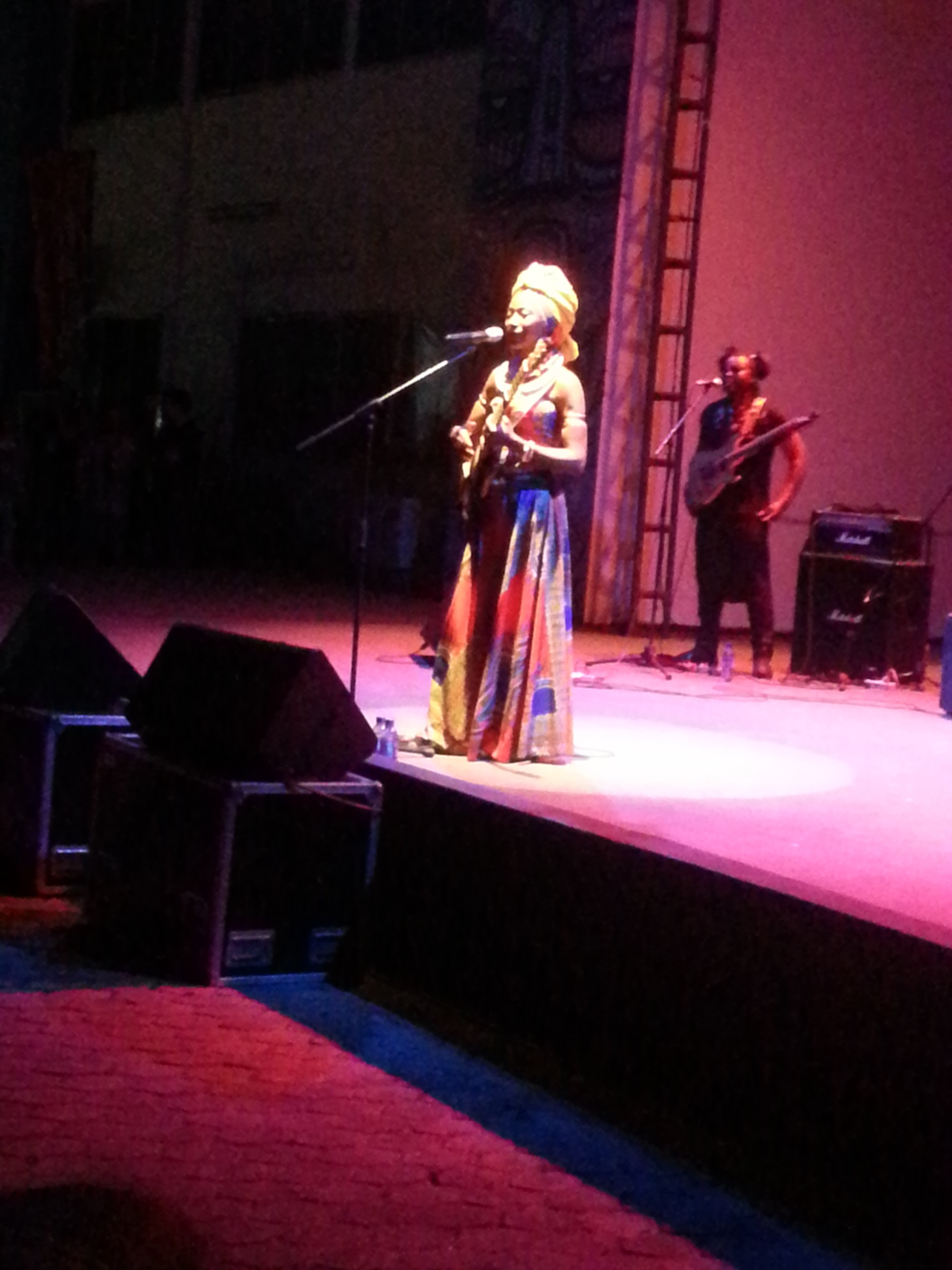
We wrapped up the week with a celebration of music at Accra’s cultural mecca Alliance Francaise, where the Francophonie festival began with a concert by Malian singer Fatoumata Diarawa.
At AWDF we recognize the importance of the arts as a tool to promote social justice and a medium to nurture and raise the profile of African women and their achievements. Teaming up with Alliance Francaise and other partners for Diawarra’s concert was a way in which we could salute one of the continent’s brightest talents.
After a soulful curtain opener by AWDF’s communications staffer “Suga” and high-energy Ghanaian musician Sherifa Gunu, Fatoumata hit the stage for an unforgettable night of music and dance. Two of Fatoumata’s songs, “Oumou” which celebrates African Female Artistes and “Boloko,” a song with a strong anti FGM message, reinforced the power of music as a tool for social change.
From the various ways in which we portray women in art to the lives women lead in silence, these events examined the truth of African women, finding it painful, complicated and inspiring.
African women and their achievements and struggles must be celebrated and discussed. And the spirit of International Women’s Day, that week and month must be carried through the entire year if we are to reach the goal of gender parity. For us at AWDF we will continue to strive to see that women are understood as deserving of recognition, celebration and a voice.
Health and Reproductive Rights Portfolio: A look back at the last 14 years of thematic grantmaking and recommendations for moving forward
Mar 16, 2016
Media Center /
new, News, Publications
Health and Reproductive Rights Portfolio: A look back at the last 14 years of thematic grantmaking and recommendations for moving forward
In an effort to ensure that the HRR thematic area remains relevant to women’s needs and reflect current and emerging issues that affect health and reproductive rights of women in Africa, AWDF commissioned an independent consultant (Ms. Everjoice J. Win) to conduct an evaluation of the thematic HRR area.
This report is an abridged version of the findings from that assessment. To obtain a full copy of the evaluation, please contact Ms. Zeytuna Abdella Feyissa-Azasoo, the M&E Specialist at AWDF. The overall objectives of the HRR evaluation were:
To document and assess the work of AWDF in this thematic area, examining the relevance of selected priorities;
To understand major challenges that have contributed to low patronage of the thematic area and suggest improvements;
To identify current and emerging HRR issues of importance to African women.
Grants Making for Women’s Rights: Lessons Learnt.
Media Center /
new, News, Publications, resources
Grants Making for Women’s Rights: Lessons Learnt.
This report is an Abridged Evaluation of AWDF’s work. It focuses on the Projects completed under Comic Relief grant.
The purpose of the evaluation was to evaluate the project performance, identify good practices and draw out lessons that can be applied in future interventions. As the Comic Relief grant supported AWDF’s Strategic Plan, the evaluation looked at AWDF’s main areas of work and assessed the role of the Comic Relief grant within which the AWDF initiatives were conducted. The evaluation coincided with AWDF’s Strategic Plan midway point. Findings from the evaluation were also used to inform AWDF’s subsequent decision-making processes.
International Women’s Month The Interviews PART 3: CONSENT
Mar 14, 2016
Media Center /
News
International Women’s Month The Interviews PART 3: CONSENT
Maame Akua Marfo’s interviews with students of the University of Ghana, Legon, continue here.
The idea of consent is affected by the way we talk about it and the way we see it in our daily lives. Consent on campus is often seen as unnecessary when a girl is involved in a relationship with a man– then it almost seems like he is entitled to her.
Question : Does being in a relationship change the definition of consent or the way in which you think men understand it?
“Most guys say you should be able to… enjoy your girlfriend whenever you want.” K
“And I mean the language that we use to talk about rape isn’t helpful. People think Rape involves a stranger. Especially in this country. Rape isn’t just that. It’s your my girlfriend and you’re asleep–passed out drunk and I had sex with you whilst you’re asleep— that’s rape. You are my teacher and you mess my grade up and I come and see you and you force me to have sex with you to get the grade I deserve? That’s rape. On so many levels there are so many things people take for granted here– that are actually rape. If someone doesn’t enthusiastically consent to have sex with you– it’s rape. On campus here people think it’s not rape if it’s with your girlfriend? And it makes me wonder how many people have you raped? ” N
“At what point– even in a relationship can you say I’ve been molested/ harassed by your boyfriend? At what point can you say I’ve been raped by my husband? I mean even the law isn’t on your side. Marital rape is still a myth in a lot of our legal framework.” X
“A lot of the time a girl will be with a guy– and she’ll set clear boundaries. State what she’s comfortable doing and everything but a guy in the moment will hear what she says and think of it as a challenge in some ways–despite the fact he knows what she is or isn’t comfortable with. Or he’ll think that after a certain point– she’ll just need to give in. She’ll be crazy into it, and just want him to continue.” K
This idea that sex within relationships is always consensual is a norm. It is antiquated thought carried over by years of negative cultural values and societal reinforcement. What do we teach men about what women are worth? Do we teach them that they are people or prey? And even where the lines are drawn do we allow men to blur them without any real repercussion?
“When a boy is a teenager he can do anything and get away with it. Even violent rape itself, they say it’s just boys being boys– and then they look at young girls after their raped and ask is she respectable? was she being disrespectful? was she challenging him?” X
“One time we were out drinking on a senior trip– and these guys were feeding this friends of mine drinks. And I was like.. what is going on here–and they were like– she’s an “investment.” So for you to look at a girl that’s your friend, that you’ve known for four years and call her an investment? It’s worrying.
For another friend of mine that trip was deadly. She was my roommate and then later in the night we couldn’t find her– A friend came in and said they’d seen her heading to the beach with another mutual male friend of ours so we went to look for her. On our way we see the male friend coming from the beach. i asked him where she was and he shrugged and said he’d left her on the beach. I got there and she was passed out in the sand. Later the boy tells me he had sex with her on that beach. And when we saw her it was clear that had happened. But she has no recollection of it–she was passed out drunk in the sand another friend had to carry her to our room.” V
Do we teach girls then, that normal is protecting yourself against rape. That normal is thinking of the ways in which you deal with men being men?
“In our part of the world, there’s a way in which girls are brought up to feel bad about the things that happen to them. Even before it happens they’ve been thought to blame themselves. So they don’t speak up and when they do– society punishes them for it. You become the girl who got raped.” Y
“There’s this girl she was invited to study– with one of her friends. So they’re studying in his room and suddenly– he’s masturbating on her thigh. And she was like– did I miss something? Did I misread the signs? And immediately she starts examining if she had anything to do with this guy and the way he is treating her. She starts asking– how is this my fault?” N
“It’s so frustrating because you start choosing the type of victim you want to be. You’re in an inner room, there are boys outside this boy is trying to have sex with you. Trying to rape you. Do I scream? Do I bang on the door? If I scream and get let out– okay I wasn’t raped. I was harassed. I was assaulted– But I’m going to be further victimized and which can I take? The victimization of society or the man trying to force himself on me? The public shame or the private pain?” X
International Women’s Day 2016: AWDF In Conversation
Mar 2, 2016
Media Center /
event, News, press
International Women’s Day 2016: AWDF In Conversation
To mark International Women’s Day this year, AWDF will host two special public events examining the status, role and contribution of African women. Join us as we explore “Don’t Call Me Beautiful,” a photo exhibition by Nana Kofi Acquah and tackle sex and relationships at the University Of Ghana campus.
Panel Discussion: Don’t Call Me Beautiful
Date: Tuesday 8th March, 2016 Time: 6pm Venue: Exhibition Hall, Alliance Francaise Rate: FreeRenowned Ghanaian Photographer Nana Kofi Acquah’s photo exhibition “Don’t Call Me Beautiful,” celebrates the resilience of African women. In partnership with Alliance Francaise, this informal and interactive discussion will use the photo exhibit as a springboard for conversation about stereotypical depictions of women in current social media trends, women’s rights, gender, arts and culture and feminism. There will also be readings by participants of the 2016 Writivism workshop which is to be held in Accra. Moderator: Kinna Likimani, Mbaasem Foundation
Catch Nana Kofi Acquah’s thoughts on his exhibition here:
Panel Conversation About Date Rape, Sex and Relationships On Campus

Date: Friday 11 March 2016 Time: Film Screening: 4-5h30 pm, Panel Discussion: 6 PM. Venue: Institute Of African Studies Auditorium, UG, Legon Rate: FREE
In partnership with the Center for Gender Studies and Advocacy (CEGENSA) and the African Studies Department of the University Of Ghana Legon, AWDF will host an interactive panel discussion on Campus date rape, sex and relationships. The event will be preceded by the screening of a film: The Hunting Ground, a ground-breaking documentary on rape on campuses in the US. Again, there will be also be readings by participants of the 2016 Writivism workshop which is to be held in Accra. Moderator: Prof. Audrey Gadzekpo, University of Ghana, Legon
We invite you to be a part of these special events. Don’t miss.
Passionate Legacies: AWDF @15
Mar 1, 2016
Media Center /
event, News
Passionate Legacies: AWDF @15
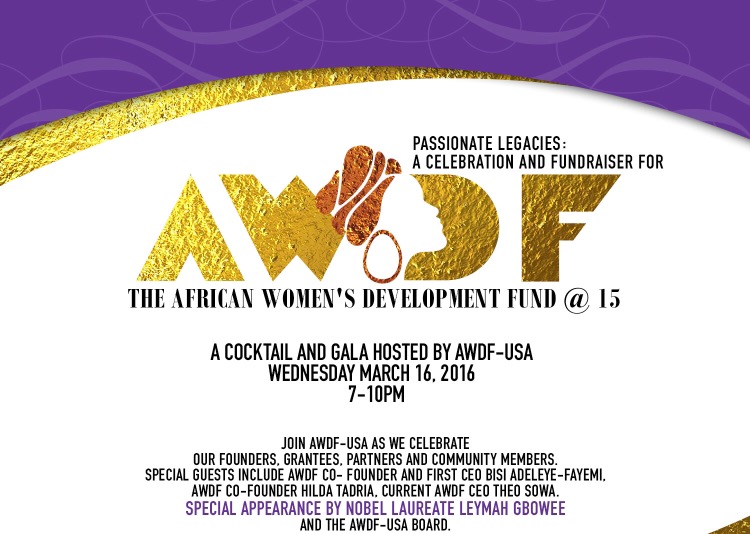
Passionate Legacies: A Celebration and Fundraiser For The African Women’s Development Fund At 15
“When you invest in women and girls, the return on your investment is not about the life of the one woman or the one girl who has been affected, but it’s about healthier families, healthier communities, healthier countries and revitalized communities all round.”– Bisi Adeleye-Fayemi
New York, NY—March 1, 2016— The African Women’s Development Fund-USA (AWDF-USA) today announced a cocktail gala event for the 15-year anniversary celebration of the African Women’s Development Fund. The event is scheduled to be held on Wednesday, March 16, from 7 p.m. until 10 p.m. at the Millennium Plaza Hotel located at 1 United Nations Plaza in Manhattan.
Entitled “Passionate Legacies: A Celebration and Fundraiser for the African Women’s Development Fund @ 15” the event will host founders, grantees, partners, community members as well as the passionate legacies, work and history of AWDF. It is a great time to recognize the achievements and history of AWDF during the 60th session of the UN Commission on the Status of Women (CSW) at the UN headquarters in New York.
The invite-only affair will include a cocktail hour and two live performances from recording artist and prominent leader in the Pan African movement, Maame Afon Yelbert-Obeng. The event will also commemorate African women through the dual launch of “Voice, Power and Soul II,” a book that illustrates the success stories of African women feminists, and “Sheroes,” an AWDF Compilation CD that includes
- music from artists such as Angelique Kidjoe, Nneka, Somi, Maame Afon- Yelbert Obeng, Yvonne Chaka Chaka and many other African women
- select videos and short films
- original poetry authored by African women
Hosts of the event include AWDF Co- Founder and First CEO Bisi Adeleye-Fayemi, AWDF CEO Theo Sowa, Nobel Peace Laureate Leymah Gbowee, and The AWDF-USA Board.
AWDF USA provides a vehicle for effective American philanthropy to Africa that builds the capacity of the continent’s women for social change and sustainable development. This event is an important platform to elevate the visibility of our work with the US Diaspora, empowering and engaging African women currently living in the United States.
For further inquiries please email info@womenchangeafrica.com. Additional information is also available online via social media via facebook.com/awdfusa or twitter.com @AWDFUSA
A Fire to Transform This World: A Perspective on Sexual Health and Rights
Feb 29, 2016
Media Center /
Blog, event, News
A Fire to Transform This World: A Perspective on Sexual Health and Rights
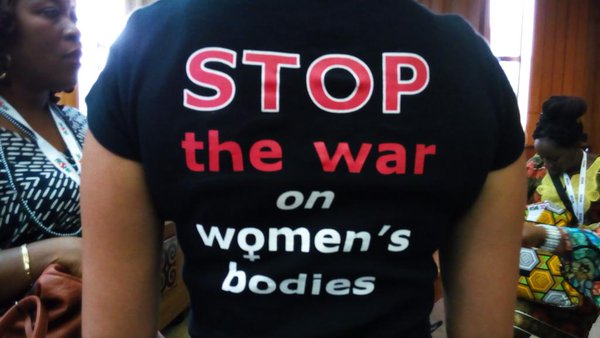
By Belinda Amankwah
“I remember when I was growing up, my mom told me I like to play too much and that I shouldn’t play with my brothers. She said I was to help her in the kitchen. So she would wake me up early in the morning whilst my brothers were still in bed to sweep the compound and do some other house chores. So I asked my mother why my brothers won’t join me to do the house chores and she said it is because I am a woman and that’s my job. This was when I realized that I was different and society had different expectations from what they had for men.” – ACSHR Participant
The 7th Africa Conference on Sexual Health and Rights (ACSHR) was held at the Accra International Conference Center this month. AWDF and Curious Minds hosted a Young Women’s Pre-Conference on 9th February, 2016 to provide a safe space for feminist engagement and knowledge sharing on the topic of Sexual and Reproductive Health and Rights (SRHR).
According to the organizers, ACSHR’s vision is “part of a long-term process of building and fostering regional dialogue on sexual health and rights that leads to concrete actions and enhance stakeholders’ ability to influence policy and programming in favour of a sexually- healthy continent.”
The conference saw the gathering of many young women from different countries around the continent, mostly between the ages of 15- 30. The venue was almost filled to capacity by the time the conference started. The young women looked happy to be together, enthusiastic about the day and the atmosphere was very blissful. Many were striking an acquaintance with other young women and getting to understand the environment.
As a young women’s rights activist, it was a great experience attending this meeting. I met many intelligent and passionate young feminists, women’s rights activists and a few veterans in the African Feminist movement. The sessions were well delivered as the facilitators did not only present information but also made the experience very interactive. This gave young women the opportunity to share their thoughts and experiences freely – more so than they would have had the chance to in other spaces.
The first session focused on the foundations of African Feminism. The facilitator, Jessica Horn, Director of Programmes at AWDF and a feminist activist, spoke on the principles, theories and practice of feminism. She started by throwing this question to the audience: “When did you first know you were a woman and that you were different?” This exercise was done in small groups, giving us the opportunity to listen to some interesting stories and lessons. For me, what I heard most was that being a woman comes with a lot of expectations that sometimes do not allow women to develop themselves to their full desired potential, especially outside the home. However, being a woman surely has positive results, too.
Here is another story shared in my group:
“When it was time for me to go to college, my father paid my fees and provided me with everything I needed but when it was my brother’s turn to go to college, things got financially difficult and my brother had to work to pay his fees. My dad still continued to pay my fees. He said, a man is supposed to provide for himself and a woman is to be taken care of.”
I have a memory from my childhood. My brother and I are very close in age and we would fight over any and everything. Every time we fought, my mom would tell me I am too tough. She said women should be emotionally and physically soft and should not fight. So I kept on asking myself, “Why should I intentionally allow my brother to beat me when I am capable of fighting back?” I understood at an early age that this showed the world that I was a woman.
A highlight during the workshop for me was when Juliana Lunguzi, a woman MP from Malawi, was invited to share some motivating words. She told us about her struggles as a member of Parliament but also reminded us of the need to support girls throughout their education. She said, “UNICEF, Action Aid and other organisations are building schools but no one is paying the fees of these young girls to attend school, and for me, that is the most important thing. In our fight for the rights of women and equal opportunities, we should remember that it is through education that young women can occupy and share the spaces we are fighting to create for them.”
I enjoyed the session by Cecilia Senoo (Executive Director for Hope for Future Generations) on how Feminism intersects with SRHR. I particularly loved the interactive aspect as it led to some passionate discussion on issues such as virginity, violence against women, and harmful cultural practices, among other issues. From that conversation, here are some profound statements I would like to echo:
- Why is a woman’s virginity so important to men when many men sexually abuse girls and women? Does a woman check if a man is a virgin before she marries him? “IT’S MY BODY, I OWN IT, IT’S MINE” – our bodies do not belong to men for them to decide what to do with it.
- African peoples have some harmful cultural and community practices that directly affect women and can destroy us, physically and emotionally. What is a culture when it destroys its own people? A true culture protects its people and does not expose them, especially marginalised populations, to harm.
- How do we break the cycle of violence against women? We need to put systems in place and ensure that they work. We will fight for our rights as women because no one will fight for us if we don’t. We should remember that power is not given; it must be expressed from within.
A fiery passion to transform this world and demand respect for women’s rights was borne in me this day, attending the conference and meeting so many young and courageous Feminists. It is important for us to sustain the dialogue on women’s rights and build support networks between young women so that we don’t feel isolated. It is good to have sisters around who will encourage and keep you.
Belinda Amankwah works at AWDF as a Knowledge Management intern.
AWDF Co-Founder Launches New Blog Above Whispers
Feb 26, 2016
Media Center /
Blog, News, news blog group
AWDF Co-Founder Launches New Blog Above Whispers
AWDF Co-founder Bisi Adeleye-Fayemi has launched a new blog targeted at mature audiences.
Above Whispers is a space “primarily, (but not exclusively) for middle-aged women, and will provide an opportunity for people to engage in discussions about a range of issues such as politics, social justice, development, financial security, women’s rights, health, entrepreneurship, popular culture, faith, parenting and relationships.”
It hopes to offer a unique platform to engage with other people in an atmosphere of mutual respect.
Click here to read Bisi’s response to Nigerian writer Olatunji Ololade’s article on African Feminists “Beasts Of No Gender, The Nation.”
Bisi Adeleye- Fayemi, a feminist activist, philanthropist, social entrepreneur and writer, is one of AWDF’s co-founders.

Women Lead The Charge In Post-Ebola Guinea
Feb 25, 2016
Media Center /
Blog, grantees, News, press
Women Lead The Charge In Post-Ebola Guinea
CONAKRY, Guinea – A women’s cooperative saw its work almost reduced to ashes after years of work as the Ebola outbreak ravaged the West African country of Guinea, but the women would have the last say.Djakagbe Kaba has spent decades working towards women empowerment. Despite the setbacks during the Ebola outbreak, she is determined to reposition women at the forefront of agricultural development and lead the way to better earning power.
The women cannot be independent if they do not have the means
It is Friday in Conakry and the streets are busy. Vendors are selling their wares as passers-by haggle over prices, afternoon prayers at the mosque have already begun.
Amidst the hustle and bustle, Djakagbe Kaba, head of the women’s organisation AGACFEM (Association Guineenne pour L’Allegement des Charges Feminines), opens the boutique where the organisation sells locally-made products produced by the women they work with.
The shop is modest but Kaba is confident. She has spent the last 30 years working with women’s groups before she co-founded the AGACFEM in 1995. With a focus on training and women’s economic and political empowerment, AGACFEM has supported thousands of women living in the country’s rural areas.
One of the organisation’s early projects was a women’s leadership programme after receiving funds from the Accra-based African Women’s Development Fund (AWDF). Kaba and her team organised trainings for women to participate in local governance. By the end of the project seven women were elected as members of the municipal council.
But AGACFEM did not stop there. The programme extended to illiterate women, who were taught how to read and write and the importance of voting.
In recent times AGACFEM has pooled together a co-operative of 45 women’s groups in the rural areas Kissidougou, Guéckédou and Kankan. The Coopérative des Femmes Rurales pour l’Agriculture, la Souveraineté Alimentaire et le Développement (COFRASAD) spent the last four years training women in 10 villages in organic agricultural production and value-added processing and are currently in the process of completing the finishing touches to two processing centres. But when the Ebola virus hit in 2014 everything changed.
Kaba and her colleagues were forced to re-strategise. AGACFEM received another grant from the AWDF, this time for the fight against Ebola. The organisation decided to team up with three other Guinean NGOs – Coalition des Organisations pour le Rayonnement de L’Economie Sociale Solidaire en Guinee (CORESS), Cooperative Badembere and Association des Jeunes Agriculteurs pour le Developpement Communautaire (AJADEG) – some of whom are members of COFRASAD working in the same region that also received grants from AWDF during the Ebola crisis to put their funds together to tackle the crisis head on.
Kaba decided to leave the capital, Conakry, and base herself in Kissidougou for three months to ensure all the programmes ran efficiently. While she headed the project planning and budget organising, roles were allocated to her partners to ensure that they maximised their efforts and networks as they reached to villages across the region.

“When it came to making orders for hand-washing kits, we placed one order together to keep costs down.” Kaba points out that it was important to her that each organisation used its strengths. “For example,” she says. “Badembere is an organisation that manufactures soap, so we thought let’s put the money we have each been allocated to buy soap into Badembere to strengthen their capacities.”Kaba bought and bargained every item needed for the hand-washing kits, even down to the stickers on the bucket, to make sure the group got the best for their buck. After overseeing the manufacturing process, the kits would then go out to the villages with the women volunteers who were spreading the message about Ebola.
Though Kaba and her colleagues were successful in their efforts in distributing hand-washing kits across communities, raising hygiene awareness and communicating with people, the work they had been doing in agricultural production took a hit. Nothing was produced for a whole year, setting the whole project back.
“We had to stop production,” says Fanta Konneh Condé, the secretary general of COFRASAD and one of Kaba’s colleagues, as she overlooks one of the gardens in just outside Kissidougou. “We missed the harvest season.”
Fast-forward to December 2015 and work has restarted. Condé and her colleague, Mariame Touré of Badembere take a stroll through the garden, stopping to talk to the women, as they remark at how far they all have come. With babies on their backs and farming tools in their hands, some of the women are – for the time being – cultivating carrots, lettuce and chives. Once again working to provide for their families. Under the initiative, they also produce rice, cereals and potatoes.
Back in Conakry at the boutique, Kaba is sure of the direction she wants the co-operative to go.
“We want to increase production,” she declares, as she gestures towards the pots of shea butter and black soap on the shelves. “We would like to export these products.”
COFRASAD is expanding rapidly having grown from a co-operative of four groups after its first year, to 45 groups today, four years later.
“The women cannot be independent if they do not have the means,” Kaba says. “It is better to support a group of women, rather than just one.”
Read the original article on Theafricareport.com : Women lead the charge in post-Ebola Guinea | West Africa
Diane Abbott Meets With Ghanaian Women’s Rights Activists At AWDF House
Feb 23, 2016
Media Center /
event, News, press
Diane Abbott Meets With Ghanaian Women’s Rights Activists At AWDF House
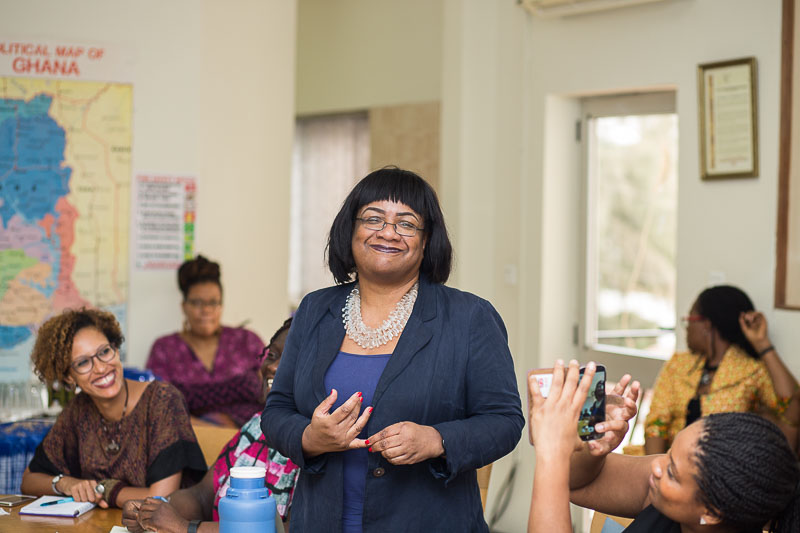 In what she described as her “most important meeting in Ghana,” U.K MP for Hackney North and Stoke Newington Diane Abbott, spent a morning with leading women activists in Ghana in animated discussion hosted by AWDF.
Abbot met AWDF’s grantees and staff to discuss development issues and the representation of women in the country. The conversation provoked insightful exchange of knowledge and helped forge new links between the parliamentarian and the grantees. The meeting took place on Tuesday February 16.
Abbott, a Labour politician who currently serves as Shadow Secretary of State for International Development, listened as the participants shared their experiences. On her part she talked about the struggles she faced on the road to leadership as a minority representative and stressed on the importance of women in the process of development.
” Development programs which are focused on and reaching women are more effective,” she said. ” I see my task to build on traditional strength, energy and focus of African women,” Abbott said.
The discussion raised salient points about the trials and tribulations of Ghanaian as they forge new paths for themselves. Facing stigma from spouses, family and the media when women pursue high government office, was highlighted as one of the key reasons are dissuaded from taking public office. Oftentimes the lack of a support system keeps them from occupying the spaces due them– and when compounded by the sheer difficulty of reaching these positions it becomes clear why there seems to be slow growth in the area of political representation. There is also a large burden on women to be able to balance several
responsibilities at one time.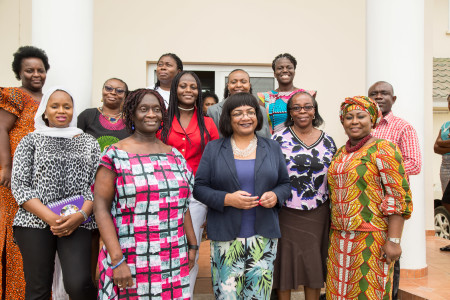
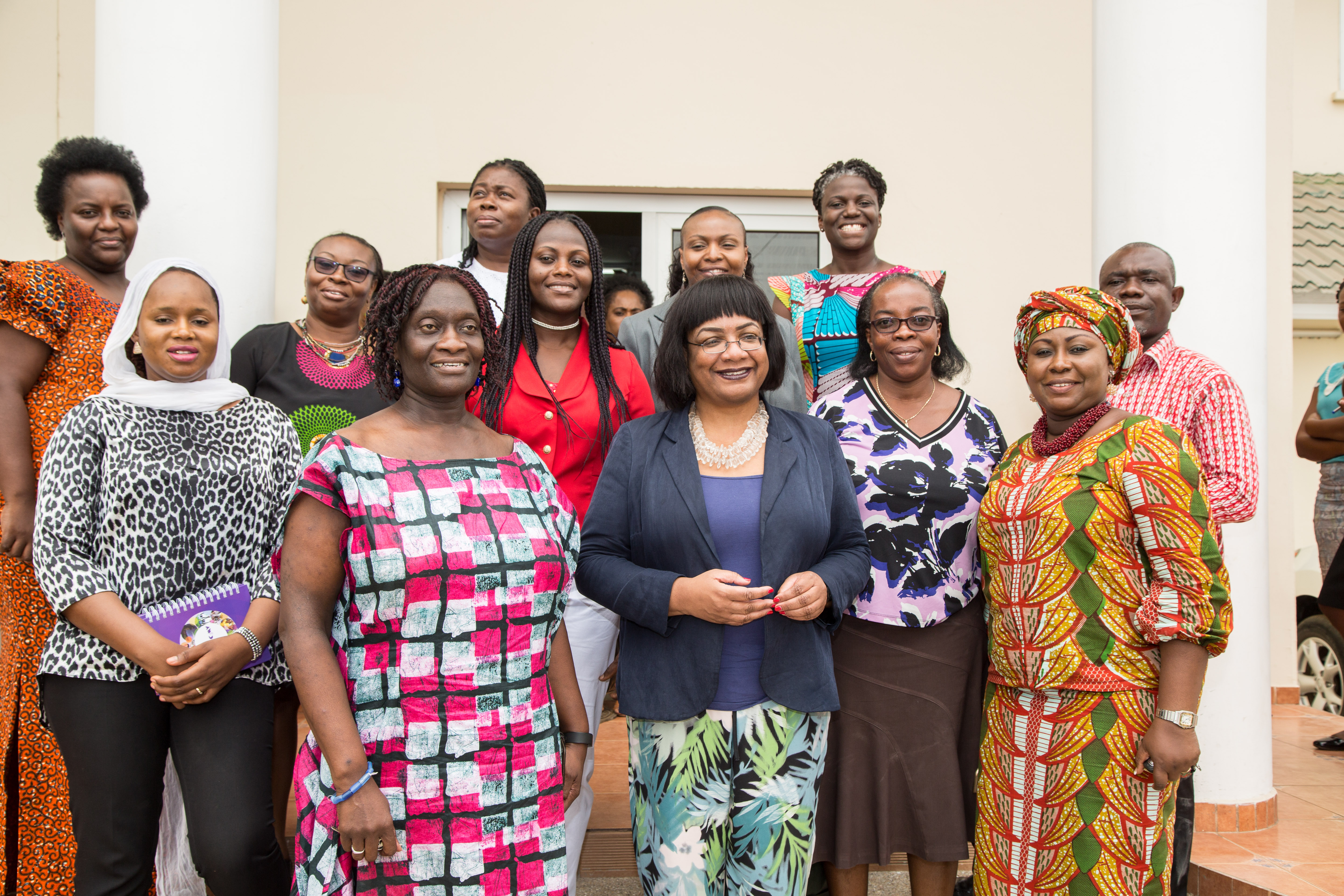
Despite the daunting picture painted it was noted that there has been progress both within Ghana and the continent as regards women’s rights and representation. There is so much the African woman has to offer and it is clear that she has not stood in silence but rather has often defied the odds to make real change within her community and country. Despite the difficulties that await her, she will continue to take her place at the table in new, exciting and powerful ways.
“Change can happen quicker than you thick. We have to have the courage to seize opportunities,” Abbott said.