
Category: News
We are the storms they fear: Reflections from Women Deliver 2026
We are the storms they fear: Reflections from Women Deliver 2026
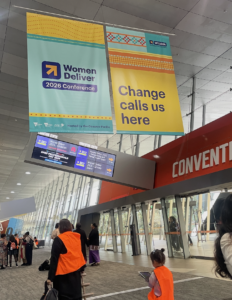
I stepped into the Women Deliver Conference in Naarm, Australia, carrying memories of Kigali. Three years earlier, at Women Deliver in Kigali, Rwanda, I had just begun my journey with the African Women’s Development Fund (AWDF) and was part of the team that contributed to the launch of our 10-year Strategic Framework, Lemlem. Three years later, we gathered again, carrying the same agenda, now sharpened by experience, to ensure that the voices of women, girls, and gender-diverse persons across the African continent continue to be heard. We came to stay connected to the needs of movements across the African continent and beyond, particularly for this conference, the Oceanic Pacific. We came as change called us to Naarm.
The Weight of Three Years
But the three years between Kigali and Naarm have been heavy. We have witnessed the rupture of warfare in Sudan, mounting instability in the Democratic Republic of Congo, and ongoing genocides across the continent, the Middle East, and the Caucasus Region. Across the continent, there has been a rollback in rights and targeted attacks on LGBTQI+ persons in Uganda, Senegal, Burkina Faso, Ghana, Cote d’Ivoire, Nigeria, and many other countries. We have watched as women and girls in the Gambia fight for their bodily autonomy in the Supreme Court, as Female Genital Mutilation (FGM) supporters move to repeal hard-worn protections. Three years ago, we celebrated two decades of the Maputo Protocol, and yet in those three years, that very Protocol has been systemically undermined, with opponents pushing for the enactment of the African Charter on Family, Sovereignty and Values. We have seen targeted funding cuts deliberately engineered to reduce investments in gender equality, SRHR, and HIV/AIDS programming, the very lifelines that have sustained movements for years. Only three years, and the rollback has been vast.
Yet We Arrived Defiant
When we arrived in Naarm, the space was alive. The conversations, the energy, and the people. It spoke to something deeper. A gathering intended for restoration, reconnection, and continuing conversations that disrupt while also sustaining movements. As I stepped into the Conference walls, I carried all that weight. I was tired from jet lag, but I stepped in with hope, because even as we battle the storms, we ourselves, collectively and in solidarity, are the storms that anti-rights forces fear.
Moving With the Moment: AWDF at the Women Deliver Conference 2026
Over the last three years, implementing Lemlem in a volatile landscape has required us to adapt and reframe our work in response to shifting contexts. Movement accompaniment remains critical as we resource partners navigating increased backlash. At the Women Deliver Conference, we carved out space to make that visible. We engaged with and brought African feminist partners into key conversations, creating room to reflect on where we have come from, where we stand, and where we are headed.
The conversations led by AWDF founding CEO Bisi Adeleye-Fayemi, outgoing CEO Francoise Moudouthe, and Programmes Director Nana Zulu, mirrored the direction of travel we are seeing as a feminist fund that has been in existence for over 25 years. Listening to the three in many ways was a mirror of the conditions that gave birth to AWDF: the defunding, the dismissal, and the deliberate shifting of goalposts for women’s rights and feminist movements across the continent, challenges that persist to this day.
Across the different spaces we navigated, those we shaped and those within the broader space, we responded to a singular question: How is AWDF responding in this moment? Our answer rests on three commitments.
Defending the hard-won gains of feminist movements, pushing back against the current backsliding, and sustaining the very architecture the movement needs to build from.
Disrupting the very ecosystems and narratives that work against women, girls, and LBTQI+ persons and refusing to operate in frameworks that were never designed to allow us to thrive.
Defining and articulating the feminist futures that we desire and refusing to wait for permission to experiment, build, and make them a reality.
What this Moment Demands
Strengthening feminist ecosystems is critical. The attacks we face are not isolated; they are interconnected, coordinated assaults on our rights, resources, and our legitimacy to organise. Responding to them requires us to be deliberate in our collaboration across movements and regions. But collaboration cannot only mean gathering the usual voices, the ones we already agree with, those most likely to affirm our convictions. Transformation requires friction. It demands that we open our spaces widely and engage with the unlikely, with those who do not see what we see. At times, our collective spaces grow too familiar, too comfortable. Disruption requires bringing those whose presence could shift the terrain entirely. This is how we make the case beyond the choir, how we expand and thrive. The question is not whether we can afford discomfort in our expansion, but whether we can afford not to.
Centre the Most Impacted
Even as we expand, we must not lose our centre. Across numerous spaces, including the one convened by AWDF, one priority was repeatedly emphasised: the voices of the most impacted must come first. That means being intentional about ensuring that those most affected by crises, climate change, and inaccessible systems are never an afterthought. Their voices must shape the transformation we seek. On funding, what emerged was equally clear. Communities must be resourced with trust, as experts of their own contexts and needs. That calls on us, as funders and movements, to build funding models that actually fit the communities we serve. It also calls for courage: moving beyond the normative frameworks of what is considered fundable. Transformation does not happen within the boundaries of what is familiar. If we truly want change, we must fund the unconventional and back approaches that do not yet have a track record or measurable outcomes, because the systems they challenge were never designed to let them succeed.
A Call for Change
As I reflect on the few days we gathered for the Women Deliver Conference, I carry this with me: funders must build flexibility into their models to account for the shifts that organisations and collectives on the frontlines face. Rigid frameworks cannot hold the weight of movements navigating conflict, shrinking civic space, political instability and chronic underfunding. They must also continue learning alongside women’s rights and feminist movements and build models that truly serve them. Feminist movements exist within spaces shaped by compounding crises. To resource feminist movements meaningfully means moving with them, adapting alongside them, and trusting them, because, in the end, they are the experts of their contexts and realities, even as those realities change. This is the work ahead. This is what solidarity demands. This is what change calls from us.
This reflection article was written by Chandapiwa Sisila. She is the Programme Coordinator – Countering Backlash at the African Women’s Development Fund (AWDF).
Come join our team: We are excited to announce the Programme Assistant – Resourcing (Bilingual). Apply by 28 May 2026.
Come join our team: We are excited to announce the Programme Assistant – Resourcing (Bilingual). Apply by 28 May 2026.
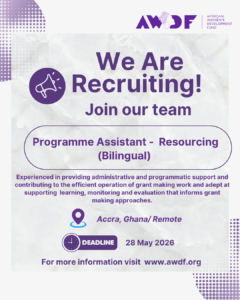
AWDF is thrilled to announce an exciting opportunity that has arisen in its team.
Are you experienced in providing administrative and programmatic support and contribute to an efficient operation of grantmaking work?
Are you experienced in working to support processes that ensure learning, monitoring and evaluation that informs grant making approaches?
Are you ready to work to support departmental conceptualisation of projects and reports
Then join our team as the next Programme Assistant – Resourcing (Bilingual) on a short term basis from July 2026 to June 2027.
Job summary
The Programme Assistant, Resourcing is responsible for providing administrative and programmatic support, contributing to the efficient operation of AWDF’s resourcing work. The role will work in close collaboration with all the Programmes units, and collaborate more closely with the Programme Manager, Senior Programme Officers and the Programme Officer in the Resourcing Unit to support grant making processes, partner engagement and compliance. The Programme Assistant will also support processes that ensure learning, monitoring and evaluation, informs our grant making approaches and learning facilitates adaptation. The role functions will include budgeting/financial support, data gathering, programme administration and implementation of the resourcing/grant making guidelines and processes. The Programme Assistant will also support the departmental conceptualisation of projects and reporting to relevant stakeholders.
How to Apply:
Qualified and interested persons should send:
- A cover letter of not more than 2 pages via this link: https://awdf.simplicant.com/jobs/60910-programme-assistant-bilingual-short-term/detail to the Human Resources Manager explaining their interest and excitement in applying for the position to work for AWDF, highlighting their experience and competencies demonstrating the alignment to the role.
- A CV of not more than 3 pages outlining their educational qualifications and employment records with key achievements in relevant positions held.
Deadline :
Applications for the vacancy should reach AWDF no later than Thursday, 28th May 2026. Due to our limited capacity, only short-listed candidates will be contacted for additional information and interviews.
In line with AWDF’s Mission, qualified African women and gender-diverse persons are encouraged to apply.
Five lessons we are learning about ending sexual violence in West Africa
Five lessons we are learning about ending sexual violence in West Africa
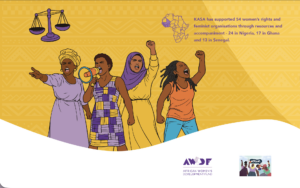
The just published KASA! Evaluation Report (2021–2024) captures key lessons, achievements, challenges, and transformative impact of one of West Africa’s most ambitious feminist initiatives working to end sexual violence across Ghana, Nigeria, and Senegal.
Since 2021, The African Women’s Development Fund (AWDF) in partnership with the Ford Foundation and Open Society West Africa (OSIWA), the KASA! Initiative worked alongside women’s rights and feminist organisations.
Here are five key lessons emerging from the KASA evaluation.
Transformation is relational, not event- based.
Sustained change emerged from repeated engagement, trust-building, and long-term presence, not one-off campaigns. Communities shifted norms when organisations returned consistently, listened deeply, and followed up over time, especially in contexts shaped by silence and stigma.
Accompaniment is the core of protection, not referral.
Survivors were protected not by referrals alone, but by advocates walking alongside them through reporting, healthcare, family negotiations, and recovery. Accompaniment requires time, emotional labour, and resources; without it, survivors often disengage from justice pathways.
Youth leadership accelerates cultural change.
Young feminists, peer educators, and school- based clubs were among the most effective norm-shifting actors. When trusted with meaningful roles, not just awareness-raising, youth became catalysts for wider community change and stigma reduction.
Legitimacy multiplies impact.
Norm change deepened and endured when trusted leaders, chiefs, queen mothers, imams, pastors, and market leaders, publicly supported survivor protection. These alliances, built through patience and co-creation, reframed sexual violence as a collective concern and sustained momentum beyond project timelines.
Staff wellbeing is central to programme success.
Frontline workers face high emotional strain, secondary trauma, and burnout. Staff care, supervision, and wellness support are not internal HR issues, they are essential to survivor safety, sound decision-making, and the sustainability of feminist protection systems.
The lessons emerging from the KASA! evaluation are both encouraging and urgent. They also reminds us that much more work still remains to be done in the fight against sexual violence.
Join the Conversation
We invite feminist movements and organisations funders, researchers, policy makers community leaders and media to engage with the findings and recommendations this work.
To access the full report: Download and read the full report HERE
Access the infographic in English.
Learn more about the KASA! initiative HERE
Invitation to apply: Monitoring and Learning Support Visits Consultancy. Closing 13 May
Invitation to apply: Monitoring and Learning Support Visits Consultancy. Closing 13 May
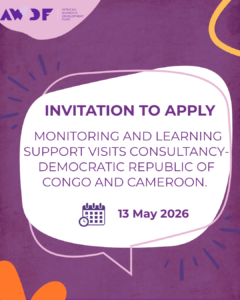
The African Women’s Development Fund (AWDF) invites applications from qualified feminist consultants based in the Democratic Republic of Congo and Cameroon to undertake Monitoring and Learning Support Visits with funded partners.
Scope of Work
Consultants will conduct site visits, assess organisational systems (MEL, finance, governance), document impact stories, and produce country and organisational reports in line with AWDF’s feminist values and accountability framework.
Consultant Profile: Applicants must identify as feminists, be fluent in English and French, and demonstrate experience in evaluating donor-supported programmes, organisational capacity assessments, and feminist leadership coaching in Central Africa. Strong interpersonal skills, project management expertise, and the ability to deliver under tight deadlines are essential.
Timeframe
The consultancy will be conducted in May 2026 over 10–15 working days.
Application Requirements
- Technical proposal (max. 3 pages) outlining understanding of the TOR and proposed approach
- CV
- Indication of country of residence and daily rate (USD)
- Overview/sample of similar work undertaken
- Cover email (subject line: Application to Undertake Site Visit Consultancy – [Country]) explaining motivation and interest
Deadline
Applications must be submitted by 11:59 PM GMT, 13th May 2026, to consultants@awdf.org.
Read more HERE
AWDF strongly encourages applications from diverse feminist voices committed to advancing gender justice and inclusive leadership.
Strengthening Women’s Rights Organisations Drives Economic Gains
Strengthening Women’s Rights Organisations Drives Economic Gains
Republication from Project Syndicate
, , and
Following foreign-aid cuts in donor countries, many developing countries have implemented austerity measures, to the detriment of women’s jobs, services, and protections. But donors and policymakers can deliver shared gains by investing in women’s rights organizations and embracing gender-based budgeting.
ACCRA/BUENOS AIRES/COLOMBO – Across the Global South, painful austerity measures such as benefit caps, pay freezes, and subsidy cuts have followed donor governments’ recent cuts to foreign aid. The policy pivot has had an especially dramatic impact on women – costing them jobs, services, and protections – and is causing widespread economic hardship in many developing countries.
Against this backdrop of shortsightedness, “Give to gain,” the theme of this year’s International Women’s Day, reminds us that investing in women yields outsize returns. As former World Bank President Robert B. Zoellick once put it, “Gender equality is the right thing to do. And it is also smart economics.”
Budgets are never neutral: Policy choices, from supporting extractive industries to weakening health systems, can erode women’s livelihoods, augment the burden of unpaid care work, and increase poverty rates. Today, 708 million women are outside the labor force because of care responsibilities, reflecting policymakers’ failure to recognize or value such work.
Moreover, the International Monetary Fund has found that gender-responsive budgeting improves resource allocation and transparency by shifting financing away from harmful policies and toward priority areas such as income support for survivors, childcare, and workplace safety. If national budgets do not account for women’s rights, fiscal frameworks will continue to create vulnerabilities.
Women’s rights begin with physical security. In 2016, United Nations Women estimates that gender-based violence cost roughly $1.5 trillion per year, or around 2% of global GDP at the time. Intimate partner violence alone can drain 1.2-3.7% of GDP – more than many countries spend on education. And workplace harassment and violence against women causes $6 trillion in global losses each year.
Read full article …
Join our participatory Grant Advisory Panel (GAP). Apply by 18 May.
Join our participatory Grant Advisory Panel (GAP). Apply by 18 May.
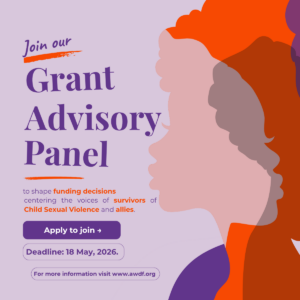
The African Women’s Development Fund is inviting applications for a participatory Grant Advisory Panel (GAP) that will play a key role in shaping funding decisions for initiatives addressing Child Sexual Abuse (CSA) across Africa. This panel brings together survivors of CSA (including those who choose not to disclose) and allies to ensure that grantmaking is informed by lived experience, community knowledge and contextual realities across the continent.
By participating, panel members will directly influence how resources are allocated to prevention, response, and survivor support efforts.
Who Should Apply
We welcome applications from individuals across Africa who are:
- Survivors of child sexual abuse (CSA), whether publicly disclosed or undisclosed
- Allies, including advocates, practitioners, community leaders, or individuals working in child protection, gender justice or related fields
- Passionate about advancing survivor-centered and trauma-informed approaches
- Able to commit time to reviewing applications and participating in discussions
How to Apply
If you are interested in being part of this panel, please send your CV and a letter of interest to consultants@awdf.org by Close Of Business on May 18, 2026.
Important:
You are not required to disclose any personal experience of CSA at any stage of the application or participation process.
Read more in the Terms of Reference attached.
What works to end sexual violence: Lessons and insights from the KASA initiative
What works to end sexual violence: Lessons and insights from the KASA initiative
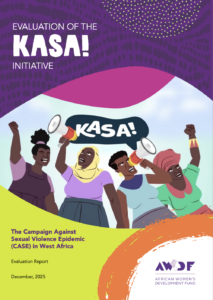
The fight against sexual violence demands more than short-term interventions and reactive responses. It requires sustained feminist organising, community-led solutions, survivor-centered support systems, and long-term investment in structural change.
The just published KASA! Evaluation Report (2021–2024) captures the lessons, achievements, challenges, and transformative impact of one of the region’s most ambitious feminist initiatives working to end sexual violence across Ghana, Nigeria, and Senegal.
Led by The African Women’s Development Fund (AWDF) in partnership with the Ford Foundation and Open Society West Africa (OSIWA), the KASA! Initiative was established in 2021 to strengthen prevention, accountability, advocacy, and support systems addressing sexual violence in West Africa.
Why the KASA! Initiative Matters
Sexual violence remains pervasive across West Africa, fueled by deeply rooted gender inequalities, harmful social norms, weak accountability systems, and inadequate survivor support structures. The KASA! Initiative recognised that ending violence requires addressing not only individual incidents, but also the systems and cultures that normalise violence against women and girls.
Since 2021, AWDF through the KASA! initiative has supported resourcing and accompaniment for 54 women’s rights and feminist organizations (24 in Nigeria, 17 in Ghana, and 13 in Senegal) working to:
- Prevent sexual violence through community education and advocacy
- Strengthen survivor-centered support and justice mechanisms
- Challenge harmful cultural and institutional norms
- Influence policy reform and accountability
- Build feminist movement solidarity across West Africa
The initiative has worked closely with activists, survivors, community leaders, media practitioners, health professionals, legal actors, and policymakers to create more coordinated and responsive approaches. The KASA interventions have led to legal and policy reforms, stronger movements, stronger collaboration among key actors, including duty bearers, traditional and religious leaders; increased awareness and agency among women, girls, gender-diverse persons, and communities most affected by sexual violence; improved emergency response; and the transformation of social and cultural narratives that fuel sexual violence. Our interventions have also contributed to the prioritization of Sexual and Gender-based Violence (SGBV) and gender justice within the funding ecosystem through advocacy and influencing
Some key findings
Some of the key findings from this evaluation across countries where AWDF worked with partners included
-Kasa!’s feminist accompaniment model, grassroots leadership, cultural fluency—remains essential. The feminist accompaniment model enabled high levels of reflexivity, with partners continuously adapting strategies in response to context and feedback.
-Sexual violence remains pervasive, underreported, socially minimised.
-Across countries there are shared barriers: stigma, victim-blaming, informal resolution, weak accountability systems.
-There are rising disclosures—but systems unprepared.
-Economic precarity, youth unemployment, religious authority, digital harassment shape risk.
-Feminist organisations are the de facto first responders. Women’s rights and feminist organisations are central drivers of progress; sustained investment in their organisational health is essential.
Voices of our partners
Movements who we engaged shared their reflections throughout the evaluation highlighting both the impact of the initiative as well as the realities of sustaining this work. Their reflections are evidence that ending sexual violence work is deeply human, collective and rooted in courage care and needs to be sustained. Here is what they had to say.
We face the same issues, why should we struggle alone? Senegalese Participant
We realised our strongest tool is voice, Facilitator in Ghana
Speaking out is not enough if she has to stand alone.- Programme Lead in Nigeria
This is the first fund where we did not have to dilute who we are. Ghanaian Partner during a workshop
What we are sustaining is the community of women who refuse silence- AWDF Staff Member
Join the Conversation
We invite feminist movements and organisations funders, researchers, policy makers community leaders and media to engage with the findings and recommendations of this work.
To access the full report: Download and read the full report HERE
Learn more about the initiative HERE
Access the KASA evaluation infographic in English.
AWDF Announcement: CEO Transition and Interim Leadership Appointment
AWDF Announcement: CEO Transition and Interim Leadership Appointment
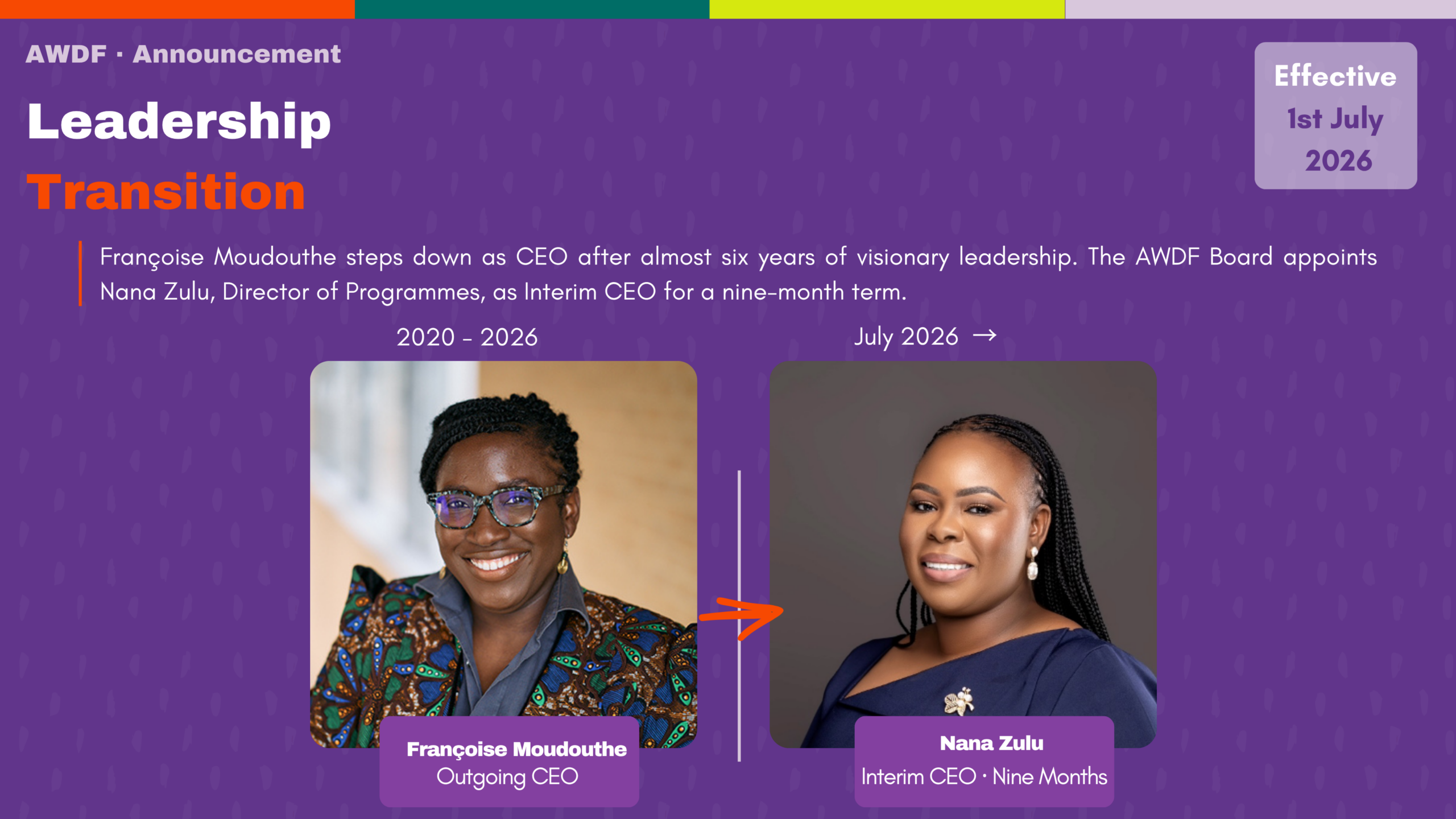
After nearly six years at the helm of the African Women’s Development Fund (AWDF), Chief Executive Officer Françoise Moudouthe has decided to step down from her role, with her final day being 30 June 2026, to pursue a new professional opportunity.
Reflecting on her decision, Françoise shared:
“Serving as CEO of AWDF has been one of the greatest privileges of my life. I am deeply grateful to have been entrusted with building on AWDF’s extraordinary vision, impact, and legacy, and proud of what we have advanced together with focus and integrity. At a time that calls for clarity of purpose, I have chosen to focus my contribution to gender justice on girls’ rights, an area that remains critically overlooked and underfunded.”
To ensure a smooth transition, the AWDF Board of Directors has appointed Nana Zulu, currently Director of Programmes, as Interim CEO for a nine-month term (effective 1 July 2026), during which a new CEO will be recruited. Nana has been instrumental in shaping AWDF’s context-responsive programmatic strategy and brings a clear vision, strong leadership, and deep commitment to the organisation’s mission and values.
Nana shared:
“I am honoured to step into the role of Interim CEO at this pivotal moment. We remain focused on meeting the demands of this moment: resourcing feminist movements, defending the rights of women, girls and gender-diverse people, challenging oppressive power structures, and shaping the feminist futures that African feminists envision. I look forward to working closely with the Board, our team, and most importantly, our partners to carry this work forward with clarity, accountability and courage.”
AWDF enters this transition from a position of strength. The organisation has a clear strategic direction, a capable and committed team, strong relationships with African feminist movements, and the continued trust of its funding partners.
Board Chair Jean-Ann Ndow added:
“The Board thanks Françoise for her visionary leadership and her fearless advocacy in favour of African women’s rights and feminist movements. Her commitment to listening to those at the forefront of injustice made AWDF stronger, and the way she centred care in her work was deeply felt by the team and Board. We wish her well as she moves to the next chapter in her journey. Looking forward, AWDF remain steadfast in its mandate, and the Board has full confidence in Nana’s ability to lead AWDF through this transition and deepen our impact.
With the guidance of the Board and the support of the team, Françoise and Nana will work closely together over the coming months to ensure a structured and thoughtful handover. Further updates will be shared with our partners and allies as the transition progresses.
Connect with AWDF @ Women Deliver
Connect with AWDF @ Women Deliver
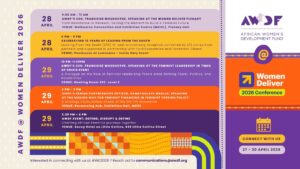
As women’s rights and feminist activists gather in Naarm (Melbourne), for the Women Deliver Conference, we do so in a moment shaped by urgency and possibility. Across the world, feminist movements are experiencing intensifying backlash and a roll back of hard won feminist gains, yet even in this context they continue to organise, resist and reimagine feminist futures often with limited funding.
As we gather, we arrive in this space with clarity of purpose and solidarity. We show up fierce, united, and unequivocal for the African feminist movement on the global stage. Our voices are critical, our presence is necessary, and we remain steadfast in ensuring that African feminists are both heard and sustainedWe are excited to share AWDF’s plans for the Women Deliver conference taking place 27–30 April: a space to strategise, resist, and build a future rooted in solidarity, justice, and joy.On the sidelines of Women Deliver, we are creating a space to listen, reflect, and speak honestly about where we are and where we are headed. We will share AWDF’s direction of travel, a bold three-pronged commitment to Defend, Disrupt, and Define resourcing resistance, disrupting harmful systems and narratives, and investing in the feminist futures we are building together and anchored in our strategic framework Lemlem.
Additionally, join us across the following spaces, where we will be speaking, engaging, listening, and connecting, all in service of building stronger African feminist futures.
If you would like to connect with us at Women Deliver, we would love to meet you. Reach out to us at communications@awdf.org. And if you are hosting a space and would like us to participate, share the details, and we will be glad to join.
Reflections from the KASA! close out forum
Reflections from the KASA! close out forum
In 2021 The African Women’s Development Fund (AWDF) in partnership with the Ford Foundation and Open Society West Africa (OSIWA) came together around a shared conviction; that addressing sexual violence in West Africa required more than emergency response mechanisms. It demanded a coordinated, feminist, long-term effort to uproot the conditions that make such violence possible. From this conviction emerged the Kasa! Initiative, a five-year collaborative programme designed to support women’s rights and feminist organisations working on the frontlines of this effort to end sexual violence across Nigeria, Ghana, and Senegal.
At its core, the Kasa! initiative was grounded on the understanding that sexual violence is both a cause and a consequence of gender inequality. The initiative therefore adopted a multiple layered approach simultaneously working across legal and policy systems, community awareness, emergency infrastructure, and the cultural narratives that normalise and enable abuse. Rather than operating through a single implementing partner, Kasa! chose to invest directly in the ecosystem: funding, accompanying, and strengthening 54 women’s rights and feminist organisations working closest to the communities most affected.
As the Kasa! Initiative drew to a close, AWDF convened a close-out forum which was a reflective space to gather partners to share what was learnt, honour the work of the organisations and communities who shaped the Kasa! initiative over the past five years.
The forum presented findings from the Kasa! Evaluation, while also creating space for partner reflections on the strategies and approaches they used, challenges they encountered, lessons learnt and political contexts that informed the initiative’s implementation and impact.
Here are some reflections captured from the Forum discussions and the collective vision, feminist solidarity and shared commitment by women’s rights and feminist organisations in the space.
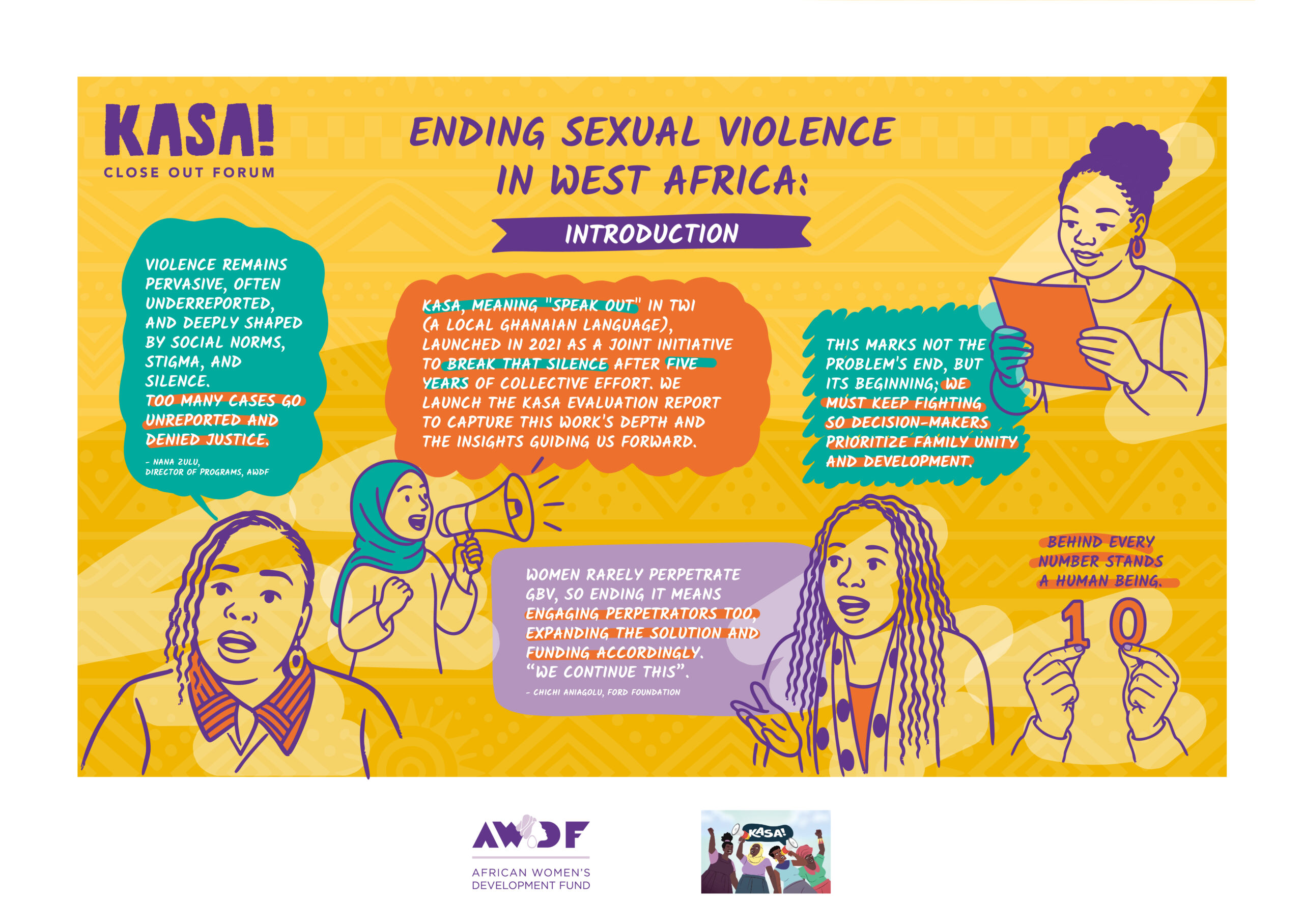
Introduction
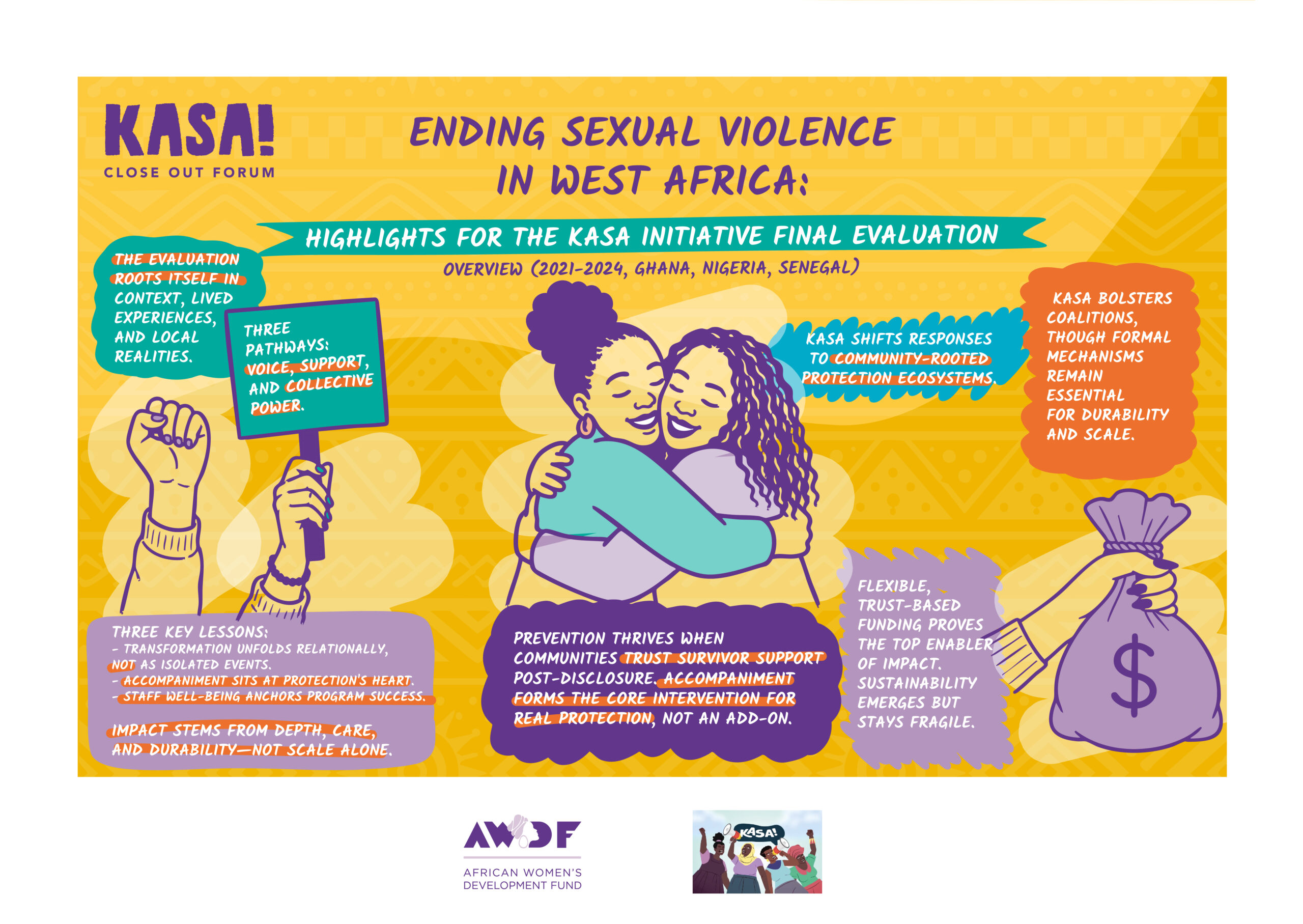
Highlights from the Final Evaluation
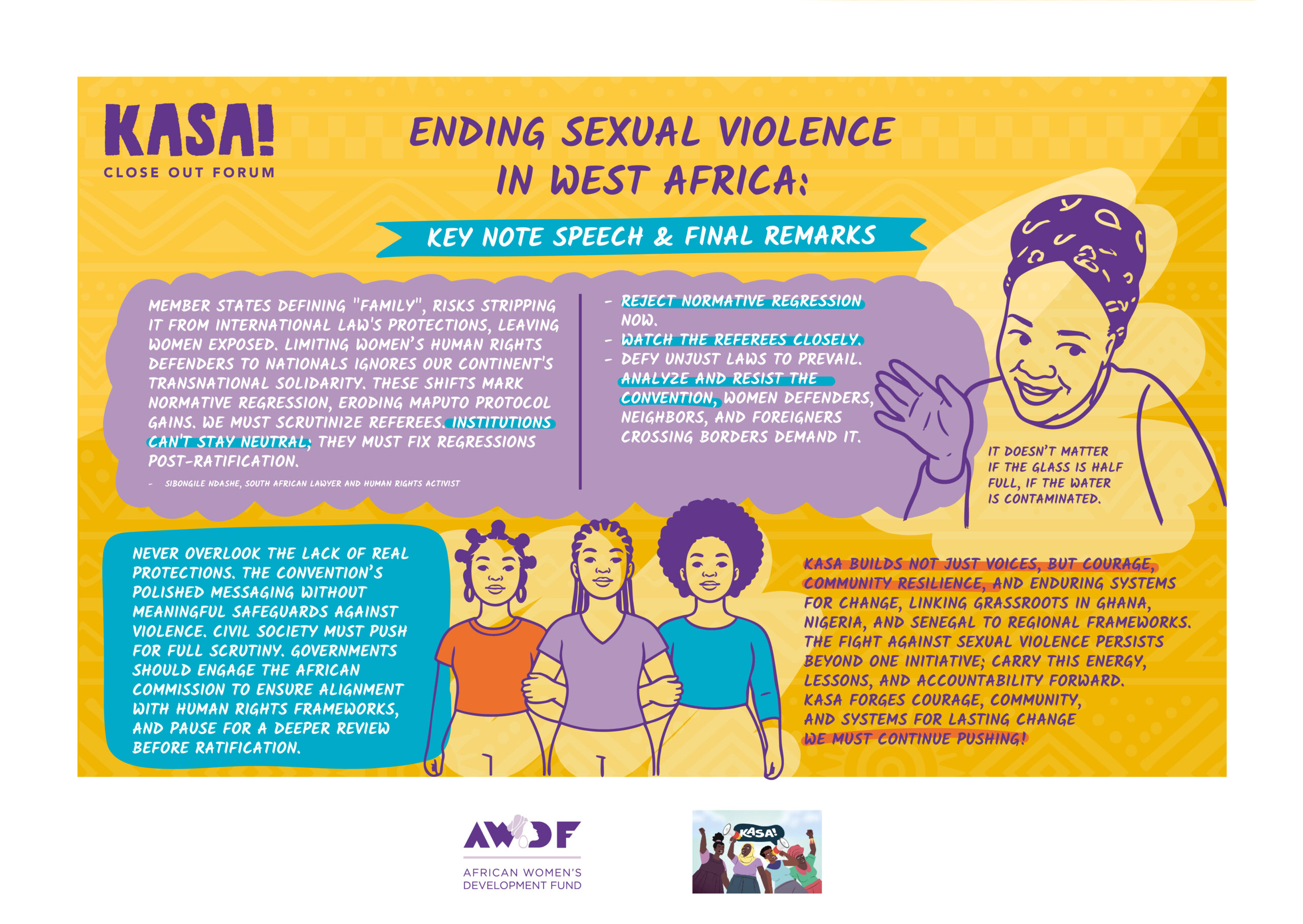
Key Note Speech & Final Remarks
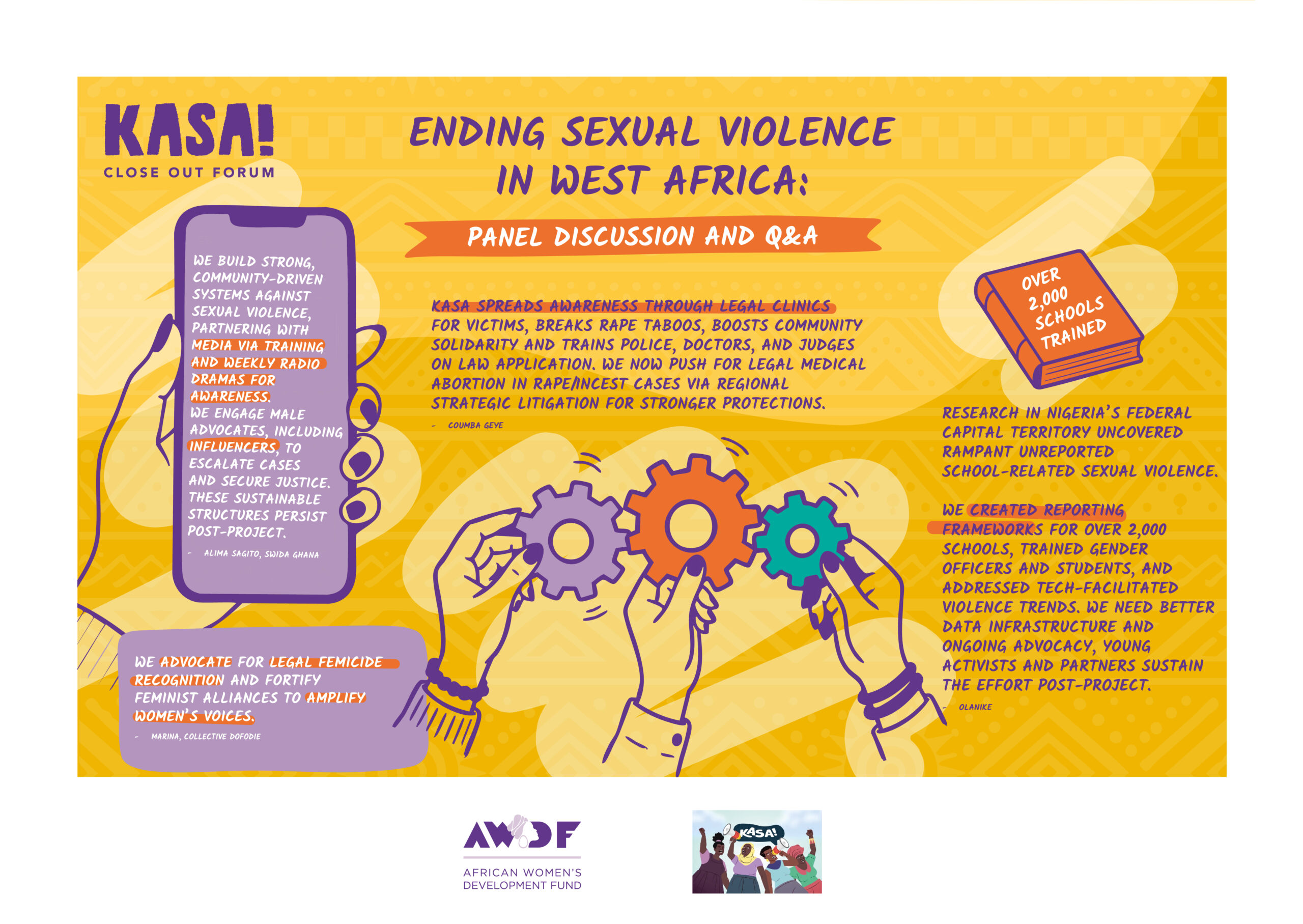
Panel Discussion & Q&A
Previous
Next