

Category: grantees
Grantee Highlight: SAYWHAT Shares New Documentary on the SRHR Defenders Program in Zimbabwe
Jul 7, 2016
Media Center /
featured, grantees, News
Grantee Highlight: SAYWHAT Shares New Documentary on the SRHR Defenders Program in Zimbabwe
As dialogues surrounding sexual and reproductive health take a more visible place on university campuses, young people around the world, particularly young women, have worked towards inciting meaningful discussions and solutions to the challenges they face. In the African context, this conversation manifests in the organisation of innovative programs such as the “Reproductive Health Rights Defenders Program in Zimbabwe”. The Students and Youth Working on Reproductive Health Action Team (SAYWHAT), a Zimbabwean organisation supported by the African Women’s Development Fund, has worked tirelessly to create this program.
During May of this year, SAYWHAT debuted a short documentary film highlighting the achievements of Defenders program, how young women students are actively trained to participate in SRHR advocacy and address key challenges. Through a series of interviews, the viewer is introduced to the faces behind the great success of this youth driven organisation.
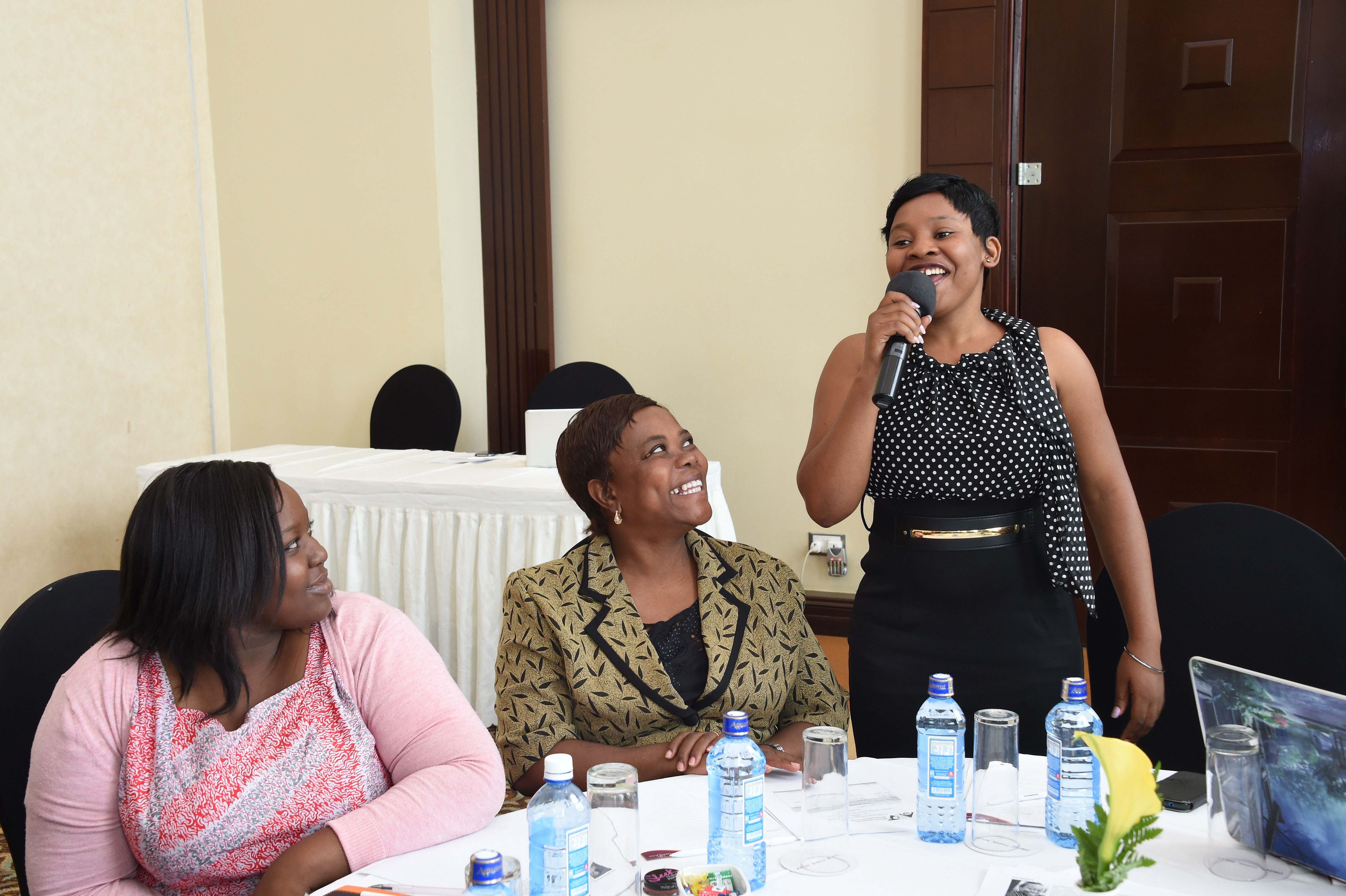
Tadiwanahse Bunikai, one of the members of SAYWHAT shares about the organisation: “It has groomed strong, confident, powerful women who are able to go beyond the issues of reproductive rights to discuss issues of national policy, politics, social and economic development, and entrepreneurship”.
As young women in Zimbabwe are faced with a number of sexual and reproductive health issues (which include but are not limited to child marriage, poverty, gender based violence and government accountability), SAYWHAT emphasises the capacity building needs of young women in order to better promote advocacy for institutional change within a number of tertiary institutions in Zimbabwe.
On this, SAYWHAT’s Programs Manager, Vimbai Mlambo states, “I have gained more confidence in myself and in my ability to relate with governance issues within my institution. I feel even more empowered to lead an organisation as a young woman. Mentorship has changed my perception about leadership. For me, leadership has become about discipline and self-leadership”.
SAYWHAT’s emphasis on leadership skills and knowledge building has not only increased the confidence of members, but has also produced agents of change. Some of the success stories achieved by the SRHR Defenders Program include projects such as the “Condomise Campaign”, a globally recognised initiative that promotes safe sex options to young women and men. The program has become quite popilar with women students, so much so that the Ministry of Health and Child Care in collaboration with the National AIDS council in Zimbabwe have accepted the proposal by SAYWHAT members to conduct the campaign at a national level.
Individual projects by SAYWHAT members have also developed more accessible and hygienic sanitary disposal methods for girls and women as well as marketing campaigns to increase the appeal for and effective use of the female condom. In this way, the Reproductive Health Rights Defenders Program ensures the social welfare of young women.
In addition to their work with young women, the Reproductive Health Rights Defenders Program challenges policies that miss the mark on SRHR and pushes for institutional changes that ensure respect, support and protection of young women. The Defenders Team has created persistent awareness about a number of sexual harassment cases on several Zimbabwean university campuses and are working towards the implementation of more expansive policies for women students. Partly due to this effort, one of the defenders has been invited to work as a women’s rights advisee to the presiding judge at the High Court of Zimbabwe.
Ultimately, SAYWHAT’s Reproductive Health Rights Defenders Team has a compelling focus on skills interventions and policy implementation on SRHR issues. SAYWHAT continues to empower young women into diverse, influential roles that, in turn, help to to create just futures for other girls and women around the country.
We are proud of the incredible work that our grantee partner, SAYWHAT, is able to accomplish each day in Zimbabwe.
Watch the full documentary on the Reproductive Health Rights Defenders Program below:
By: Mama Biamah
Grantee Highlight: Public Health Uganda tackles HIV/AIDS, on all fronts.
Media Center /
grantees, News
Grantee Highlight: Public Health Uganda tackles HIV/AIDS, on all fronts.
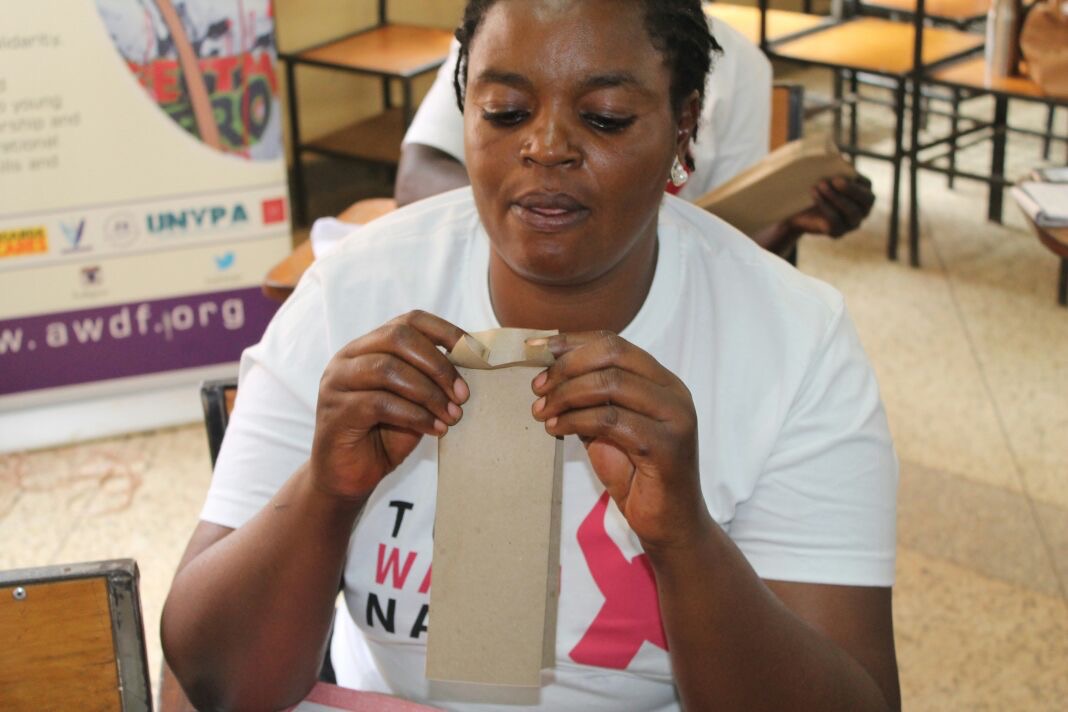
Today, a diagnosis of HIV/AIDS no longer means a death sentence. For many women, however, the situation can quickly turn into one. While many constraints to accessing affordable medication exist, there are other complex factors at hand. Even with the right medication, the stigma, discrimination and injustice surrounding the illness can easily erase promise and opportunity from the futures of many, flipping lives that were once vibrant into mere shadows of what they once were. Public Health Network Uganda (PHAU) is an organisation that helps to correct this imbalance.
Since 2011, PHAU has focused on tackling stigma and discrimination surrounding HIV/AIDS and providing vital education to numerous communities in Uganda. In 2013, the prevalence of HIV for young men was 2.4 % and for young women, it was 4.2%. (UNAIDS, The Gap Report 2014) The spread of the illness affected women nearly twice as much as men within the same age range (15-24). This data only reinforced the international trend of girls and young women being particularly vulnerable to contracting HIV, and therefore, accelerating multi-layered risks within their livelihoods. Young women who do contract HIV are met with quite hostile and isolating social relations, complicated by the lack of education on how to prevent or manage the illness.
The most effective way of tackling this lack of information is by creating innovative programs and implementing sound policies that bridge the gap in young women’s education. This drive for comprehensive education is one of the many ways PHAU is helping lead the fight to end HIV/AIDS transmission, discrimination and stigma in Uganda. Their activities focus on providing a safe space for girls and young women to understand their condition and how to increase wellness in their lives and relationships with family, friends and within their communities. PHAU explores ways to create positive futures for the young women through hope, dignity and empowerment by also developing community initiatives targeting stigma and misinformation about HIV/AIDS.
AWDF is currently supporting PHAU with USD 15,000 to implement a compelling and unconventional outreach program to help tackle stigma within Uganda. The project was implemented in June 2015 and will be completed in November 2016.“Stamp Out Stigma” is a musical outreach campaign that reached several thousand people using flash mobs and street theatre in Kisenyi, a resource-strapped province in Kinshasa. The program’s popularity led to a sharp increase in attendance that provided an opportunity for 2,400 persons to receive HIV testing and/or counseling. Additionally, PHAU has trained and sensitised peer educators and community leaders on HIV stigma and discrimination as well as reproductive health and life skills development. The project’s reach continues to grow with PHAU reaching a total of 23,000 people.
One of PHAU’s current anti-stigma campaigns – “Tuli Wamu Nawe” – provides entrepreneurial training for HIV+ girls and young women to enable them to set up and manage small businesses. A participant, Nakisozi Mastulah – Kyabando Kisalonsalo, shares: “I have learned how to evaluated my business internally and externally using the SWOT Analysis”. The workshop also trained young women in financial systems and recordkeeping as an honest and responsible means to sustain their business practices. Such interventions also help the participants to sustain themselves and to focus on keeping a forward-thinking mindset. The training also helps the participants foster a sense of community that is integral to supporting their physical and mental wellbeing.
PHAU’s programs are widespread, impactful and inventive.The organisation’s response to the needs of positive girls and women is immense because PHAU recognises the complexity of the situation and how best to ensure accessibility, efficiency and effectiveness to those who need it the most. By using music, dance and theatre, PHAU entreats community members to confront those ostracised because of their illness as well as practices of stigma and discrimination against positive people. Through this work, it is clear that the Ugandan organisation is making holistic impact in the lives of girls and women and stimulating communities into open, active and inclusive ways of communication and participation with people living with HIV/AIDS.
For more check out their World Aids Day Flashmob below:
By: Maame Akua Kyerewaa Marfo
Women Lead The Charge In Post-Ebola Guinea
Feb 25, 2016
Media Center /
Blog, grantees, News, press
Women Lead The Charge In Post-Ebola Guinea
CONAKRY, Guinea – A women’s cooperative saw its work almost reduced to ashes after years of work as the Ebola outbreak ravaged the West African country of Guinea, but the women would have the last say.Djakagbe Kaba has spent decades working towards women empowerment. Despite the setbacks during the Ebola outbreak, she is determined to reposition women at the forefront of agricultural development and lead the way to better earning power.
The women cannot be independent if they do not have the means
It is Friday in Conakry and the streets are busy. Vendors are selling their wares as passers-by haggle over prices, afternoon prayers at the mosque have already begun.
Amidst the hustle and bustle, Djakagbe Kaba, head of the women’s organisation AGACFEM (Association Guineenne pour L’Allegement des Charges Feminines), opens the boutique where the organisation sells locally-made products produced by the women they work with.
The shop is modest but Kaba is confident. She has spent the last 30 years working with women’s groups before she co-founded the AGACFEM in 1995. With a focus on training and women’s economic and political empowerment, AGACFEM has supported thousands of women living in the country’s rural areas.
One of the organisation’s early projects was a women’s leadership programme after receiving funds from the Accra-based African Women’s Development Fund (AWDF). Kaba and her team organised trainings for women to participate in local governance. By the end of the project seven women were elected as members of the municipal council.
But AGACFEM did not stop there. The programme extended to illiterate women, who were taught how to read and write and the importance of voting.
In recent times AGACFEM has pooled together a co-operative of 45 women’s groups in the rural areas Kissidougou, Guéckédou and Kankan. The Coopérative des Femmes Rurales pour l’Agriculture, la Souveraineté Alimentaire et le Développement (COFRASAD) spent the last four years training women in 10 villages in organic agricultural production and value-added processing and are currently in the process of completing the finishing touches to two processing centres. But when the Ebola virus hit in 2014 everything changed.
Kaba and her colleagues were forced to re-strategise. AGACFEM received another grant from the AWDF, this time for the fight against Ebola. The organisation decided to team up with three other Guinean NGOs – Coalition des Organisations pour le Rayonnement de L’Economie Sociale Solidaire en Guinee (CORESS), Cooperative Badembere and Association des Jeunes Agriculteurs pour le Developpement Communautaire (AJADEG) – some of whom are members of COFRASAD working in the same region that also received grants from AWDF during the Ebola crisis to put their funds together to tackle the crisis head on.
Kaba decided to leave the capital, Conakry, and base herself in Kissidougou for three months to ensure all the programmes ran efficiently. While she headed the project planning and budget organising, roles were allocated to her partners to ensure that they maximised their efforts and networks as they reached to villages across the region.

“When it came to making orders for hand-washing kits, we placed one order together to keep costs down.” Kaba points out that it was important to her that each organisation used its strengths. “For example,” she says. “Badembere is an organisation that manufactures soap, so we thought let’s put the money we have each been allocated to buy soap into Badembere to strengthen their capacities.”Kaba bought and bargained every item needed for the hand-washing kits, even down to the stickers on the bucket, to make sure the group got the best for their buck. After overseeing the manufacturing process, the kits would then go out to the villages with the women volunteers who were spreading the message about Ebola.
Though Kaba and her colleagues were successful in their efforts in distributing hand-washing kits across communities, raising hygiene awareness and communicating with people, the work they had been doing in agricultural production took a hit. Nothing was produced for a whole year, setting the whole project back.
“We had to stop production,” says Fanta Konneh Condé, the secretary general of COFRASAD and one of Kaba’s colleagues, as she overlooks one of the gardens in just outside Kissidougou. “We missed the harvest season.”
Fast-forward to December 2015 and work has restarted. Condé and her colleague, Mariame Touré of Badembere take a stroll through the garden, stopping to talk to the women, as they remark at how far they all have come. With babies on their backs and farming tools in their hands, some of the women are – for the time being – cultivating carrots, lettuce and chives. Once again working to provide for their families. Under the initiative, they also produce rice, cereals and potatoes.
Back in Conakry at the boutique, Kaba is sure of the direction she wants the co-operative to go.
“We want to increase production,” she declares, as she gestures towards the pots of shea butter and black soap on the shelves. “We would like to export these products.”
COFRASAD is expanding rapidly having grown from a co-operative of four groups after its first year, to 45 groups today, four years later.
“The women cannot be independent if they do not have the means,” Kaba says. “It is better to support a group of women, rather than just one.”
Read the original article on Theafricareport.com : Women lead the charge in post-Ebola Guinea | West Africa
Grantee highlight: Sex for Fish
Nov 25, 2015
Media Center /
grantees, HIV-AIDS
Grantee highlight: Sex for Fish
[tp lang=”en” not_in=”fr”]They call it “jaboya” in their native Dhuluo language. It refers to the practice in which female fishmongers along the lake communities in Kenya offer sex as a bribe to fishermen and middlemen in exchange for the best catch.
One would expect that after sex, these women would receive the fish for free. But shockingly, the women still have to pay cash for the fish. Sometimes, for leverage, women are forced to make available their younger female relatives, many of whom are below the age 18. This provides them with the competitive edge that they require in order to cushion themselves from the difficulties caused by scarcity of commodities.
Approximately 27000 women in Nyanza trade fish either directly or indirectly. The practice is so prevalent, that it makes it very difficult for a woman to be involved in the fish trade without using her body as a bargaining chip. Female fish traders are forced to give sex as when it is wanted by the fishermen to guarantee their survival at the beach.
It is therefore not surprising that the Nyanza province, which is located on the shores of Lake Victoria has one of the highest HIV/AIDs prevalence rate of 14.9 percent in the region, which is twice the national average prevalence rate of 7.4%. Many of the women are aware of the risks associated with the practice of ‘jaboya’, however, the shackles of poverty in their opinion is stronger than the fear of contracting HIV /AIDS.
Furthermore, the lack of access to comprehensive sex education has fueled the spread of the jaboya practice. Many of the fishermen and female fish traders view themselves as victims and therefore do not see the essence of taking precautions because they are convinced with no room for doubt that they will “contract HIV anyway” due to the high prevalence rate in the region.
In the Karachuonyo district of Nyanza, the Africa Health and Community Programme (AHCP), a grantee of the African Women’s Development Fund (AWDF), is attempting to transform the lives of 320 women directly and indirectly involved in the jaboya practice. From 2008-2014 the organisation implemented two economic empowerment and livelihoods projects in the area and the results have so far been remarkable.
The women are actively involved in 14 investment groups (locally known as chamas) through which they have been able to begin several income-generating activities and businesses that have enabled them to provide not only for their own families, but also for other vulnerable members in the community.
To them, the lake is no longer a source of anguish where their dreams and pride go to die, but a lifeline that enhances their respective businesses.
Join us in supporting work like this by making a contribution to AWDF today! [/tp]
[tp lang=”fr” not_in=”en”]Ils appellent cela “jaboya” dans leur langue maternelle le Dhuluo. Cela fait référence à la pratique des poissonnières dans les communautés lacustres au Kenya qui offrent des actes sexuels comme pot de vin aux pêcheurs et intermédiaires en échange de la meilleure prise.
On pourrait penser qu’après avoir offert leurs charmes ces femmes recevront le poisson gratuitement, mais étonnamment, elles ont encore à payer comptant. Parfois, par effet de levier, les femmes sont obligées de mettre à disposition leurs proches plus jeunes et dont beaucoup sont mineures. Cela leur donne l’avantage concurrentiel dont elles ont besoin afin de se prémunir des difficultés causées par la pénurie de produits de base.
Environ 27 000 femmes sont directement ou indirectement impliquées dans le commerce du poisson à Nyanza. La pratique est si répandue, qu’il est très difficile pour une femme d’ être dans le commerce du poisson sans utiliser son corps comme monnaie d’échange. Les marchandes sont forcées d’avoir des rapports sexuels lorsque les pêcheurs le souhaitent afin de pouvoir assurer leur survie à la plage.
Il est donc pas surprenant que la province de Nyanza, qui est située sur les rives du lac Victoria, ait l’un des taux les plus élevés de VIH / sida avec une prévalence de 14,9 pour cent dans la région, ce qui est le double du taux moyen de prévalence nationale de 7,4%. Beaucoup de femmes sont conscientes des risques associés à la pratique du «jaboya », cependant, les entraves de la pauvreté sont pour elles plus fortes que la peur de contracter la maladie.
Dans le quartier de Karachuonyo à Nyanza, le Programme Santé de l’Afrique et de la Communauté (AHCP), un bénéficiaire du Fonds de développement des femmes africaines (AWDF), tente de transformer la vie des 320 femmes directement et indirectement impliqués dans la pratique du jaboya. De 2008 à 2014 l’organisation a mis en œuvre deux projets d’autonomisation économique ainsi que des moyens de subsistance dans la région et les résultats ont jusqu’ici été remarquables.
Les femmes sont activement impliquées dans 14 groupes d’investissement (connus localement comme Chamas) à travers lesquels elles ont pu commencer plusieurs activités et des entreprises génératrices de revenus qui leur ont permis de soutenir non seulement leurs propres familles, mais aussi les autres membres vulnérables la communauté.
Pour elles, le lac n’est plus une source d’angoisse où leurs rêves et fierté vont mourir, mais une bouée de sauvetage qui améliore leurs entreprises respectives.
Grantee Highlight: Vegetable Farming Gives New Hope to Women Living with HIV in Sironko
Nov 23, 2015
Media Center /
economic empowerment and livelihoods, grantees, HIV-AIDS
Grantee Highlight: Vegetable Farming Gives New Hope to Women Living with HIV in Sironko
In Uganda, HIV and AIDS infection rates continue to increase in both rural and urban areas despite aggressive public awareness campaigns by both public and private institutions. This development has had a unique effect on the lives of women. With married women, for instance, the loss of a spouse often leaves them to fend for themselves and their children who are sometimes also infected with the virus. The Community Holistic Development Organization, (CHODO) a local community-based organization that focuses mainly on economic empowerment for women living with HIV and AIDS, has been working to address this issue.
Equipped with a grant from the African Women’s Development Fund, CHODO set out to train 308 selected HIV infected women in the Sironko district of Uganda in vegetable farming. Through vegetable farming the women inherit a sustainable source of income and provide life-long skills that would be useful in other areas of economic activity.
To start with, the women identified pieces of suitable farmland before being trained in fertilizer spraying, seed selection and other farming methods. Soon, cabbage gardens sprung up in various areas of the Sironko district of Uganda.
To create a ‘sustainability’ cycle, the vegetables grown were then sold to generate income that was invested as start up capital for their own businesses. Some of the capital was invested into livestock rearing. The women were given technical assistance and training on how to manage their livestock rearing projects. This gave them a sense of ownership and self-confidence in their abilities and creative capacities.
CHODO has been successful in improving the livelihoods of the women living with HIV, who do not earn an income . In most cases such women experience discrimination and are likely to die faster due to lack of financial support and marginalisation from their communities. Through the project, the women have been able to develop a consistent source of income allowing them to become economically cally independent.
‘As an HIV positive person, I feel proud that I am doing something that will enable me live a better life. ‘Harriet Namono, one of the beneficiaries of the vegetable garden project elatedly reported.
“All I can say is I am very grateful and very happy.” Modesta Nakusi, another beneficiary shared. “Whenever I look at my cabbage, I smile to myself. I have lived with HIV for 15 years but I am still strong. Thank you CHODO for supporting me.’
The success of the project is also challenging the community’s’ negative perceptions about women living with HIV, recognising them as still significant and productive agents in the country’s economic development.
CHODO intends to undertake another project to help the rural women diversify and sustain their household incomes by engaging in both farm activity and off-farm business during different seasons.
Join us in supporting work like this by making a contribution to AWDF today!
Grantee Highlight: Wealth for Smallholder Women Peanut Farmers in Muwena
Media Center /
economic empowerment and livelihoods, grantees
Grantee Highlight: Wealth for Smallholder Women Peanut Farmers in Muwena
Women smallholder farmers comprise an average of 43 percent of the agricultural labour force of developing countries. In Africa in particular, many communities depend on women to grow most of the food they eat, yet they continue struggle with lack of access to capital, land, agricultural inputs, tools and technology needed to move up to large scale farming.
In Muwena, a town of Livingstone Province in the South of Zambia, Women smallholder farmers have been cultivating peanut on a small scale using traditional outmoded means for consumption and sale. However these methods prevent the women from earning any meaningful income to meet their social needs and ensure household food security.
In 2014 Children with Future in Zambia (CWFiZ) a local NGO working to promote the economic and social welfare of vulnerable groups, particularly women and orphans, received a grant from the African Women’s Development (AWDF) for a capacity building project for women farmers in Muwena.
CWFiZ, worked with 225 women smallholder peanut farmers, training them in improved farming methods and the processing and marketing of peanut to increase the efficiency of their farm business.The project aimed to facilitate a transformation of peanut farming in the Muwena community to achieve a greater degree of food security among selected women smallholder farmers while increasing competitiveness in the domestic markets.
The program sought to build the skills of smallholder women farmers, training them in improved production and post-harvest handling practices that include improved plant seed varieties and access to quality agricultural inputs, tools and support services.
The project also provided women smallholder farmers with a peanut butter processing plant and a housing facility. The women have come out with test peanut butter products which were exhibited at fair in Lusaka in June 2015. The product has attracted a lot of attention from consumers, a positive sign for the women cultivators and processors.
The label of the peanut butter has the inscription ‘Nsabo Yetu’, meaning ‘our wealth,’ reflective of the benefit derived from the women’s hard work. The product has been certified awaiting large scale production and marketing.
Join us in supporting work like this by making a contribution to AWDF today!
Grantee Highlight: Tuli Wamu Nawe- Fighting Stigma and Discrimination to end the spread of HIV/AIDS
Media Center /
grantees, HIV-AIDS
Grantee Highlight: Tuli Wamu Nawe- Fighting Stigma and Discrimination to end the spread of HIV/AIDS
Public Health Ambassadors Uganda (PHAU), a not-for-profit youth-led organisation, and a grantee of the African Women’s Development Fund (AWDF), is running an anti-HIV stigma and discrimination project focusing specifically on young women and girls living with HIV/AIDS in Uganda. Dubbed “Tuli Wamu Nawe,” meaning “We are together with You”, the project aims to use peer education and training to help share knowledge about the effects of stigma and discrimination on young women and girls’ HIV/AIDS prevention, care and treatment efforts in Uganda. Additionally, the experiences keeps women and girls from actively participating in the social, economic and political development of their local communities and the country at large.
Under the Tuli Wamu Nawe project, 25 women and girls with HIV/AIDS will be mentored and assisted with setting-up sustainable income generation activities (IGA). PHAU will work to forge partnerships with key community stakeholders and train peer educators and volunteers in HIV education activities to ensure that change is sustained long-term. The project will benefit 5 selected communities within Wakiso and Kampala districts.
Follow the project activities on the PHAU social media platforms: Facebook, Twitter, YouTube using the following hashtags #TuliWamuNawe #AcceptMe #EmbraceMe #WomenandGirlsagainstStigma. The project has also been featured on Women Deliver’s blog.
Some of PHAU’s other HIV/AIDS awareness education campaigns:
2015 International Women’s Day: Make it Happen campaign focusing on young women and girls
International Condom Day 2015 : ‘Condoms are Cool’ campaign
Join us in supporting work like this by making a contribution to AWDF today!
Grantee Highlight: Post-Ebola Women’s Groups Need Funding
Nov 5, 2015
Media Center /
economic empowerment and livelihoods, grantees, health and reproductive rights
Grantee Highlight: Post-Ebola Women’s Groups Need Funding
By Amba Mpoke-Bigg, Communications and Fundraising Specialist at the African Women’s Development Fund
MONROVIA, Liberia – I was woken from deep sleep by my middle child one night a few months ago. She was burning hot to the touch, whispered that she wasn’t well, then she threw up – as did her younger sister who developed identical symptoms the next day. For the next 48 hours as the viral flu ran its course, I nursed them and held them close. That’s normal, I’m their mother.
But for millions of mothers in Liberia, Sierra Leone and Guinea, the three countries worst affected by last year’s outbreak of Ebola disease, it was different. Children with Ebola can’t be touched or nursed at home and as the virus raged, so did superstition, fear and a sense of helplessness, in the wake of limited healthcare infrastructure and poor understanding of the disease’s action.
Women suffered disproportionately in combating Ebola, mainly because of their traditional roles as nurses and healthcare workers, yet the part they played as agents of change and frontline partners in curbing the epidemic has been largely overlooked by international media.
In each of the three countries, women were among the first responders, leading the vital on-the-ground education campaigns which led to changes in harmful burial practices, traditions of touching the dead and to better hygiene and sanitation. Women were there as counselors educators, distributing food and sanitation products, or contact tracers who monitored Ebola cases in the communities.
As governments of the three nations begin the first cautious steps to recovery, for thousands of women survivors of Ebola this means taking on new roles as primary breadwinners and family heads after losing husbands, fathers and their livelihoods.
Some women’s organisations have started micro-credit loans to help survivors. Others have initiated seed capital schemes to enable women farmers to purchase seeds and tools to pick up their farming activities once more. Many survivors will also need long term pyscho-social support as well as immediate help with children’s school, feeding and tuition needs.

‘It is imperative that women’s organisations be supported with funds and other forms of aid to enable women survivors and their families, make the transition,’ says Theo Sowa of the African Women’s Development Fund, which mobilised over half a million dollars to women’s organisations in Liberia, Sierra Leone and Guinea to help the countries combat the disease.
Returning from a week-long visit to Liberia and Sierra Leone last month, I find myself immensely grateful for the fact that I live in Ghana, a country only a few hundred miles away, but which more by luck than its state of readiness, was spared the epidemic which has led to the loss of over 12,000 lives.
The survivor accounts I have listened to from Paynesville, Monrovia, Freetown or Port Loko, have left an indelible imprint. I salute the fortitude of women whose vivid stories paint the real picture of what it was like to live in quarantine, see loved ones ill and suffering and their own rejection when they returned from stays in Ebola Treatment Units.

“Women died because you can’t see your baby dying (of Ebola) and not pick him up,” said Miata Sirleaf who heads the New Liberian Women Skills Training Programme, an NGO which provided crucial support and training to marginalised and low-income women in Liberia’s Montserrado County during and after the epidemic.
And even as Liberia was declared Ebola free and Sierra Leone hit 25 days without a case, two new cases in Guinea just after it had begun its own countdown underscores the fragility of the efforts required to end this current outbreak.
The readmission of Scottish nurse Pauline Cafferkey to hospital due to complications from Ebola has only deepened the sense of unknowns around the disease and its long term impact on survivors.
For now, women’s civil society organizations like Sirleaf’s whose presence in rural communities helped to save countless lives are the best positioned to drive the post-Ebola recovery effort.
Let’s make sure to support them.
This story was crossposted to The Journalist
Photos in story by Francis Kokoroko
Join us in supporting work like this by making a contribution to AWDF today!
Community Agriculture and Environmental Protection Association Cameroon
Apr 28, 2015
Media Center /
grantees
Community Agriculture and Environmental Protection Association Cameroon
$1,000 to conduct HIV testing and counseling for Fulani women in Sabga, to broadcast HIV informative talks on 3 radio stations and to commemorate the 2012 World AIDS Day.
Network of Women in Growth (NEWIG)
Apr 23, 2015
Media Center /
economic empowerment and livelihoods, grantees
Network of Women in Growth (NEWIG)
[tp lang=”en” not_in=”fr”]$20,000 to enable the Network of Progressive Young Entrepreneurs, NPYE (which is NEWIG’s initiative) benefit from regular trainings and business information and business opportunities and also to access sustainable markets for their products.[/tp]
[tp lang=”fr” not_in=”en”]20.000 dollars pour permettre au Réseau des jeunes entrepreneurs progressistes, NPYE (une initiative de NEWIG) de bénéficier de formations régulières, d’informations commerciales, des occasions d’affaires mais aussi d’accéder à des marchés durables pour leurs produits.[/tp]