
Category: Blog
Holistic approaches in ending FGM in The Gambia: GAMCOTRAP’s Resilience
Holistic approaches in ending FGM in The Gambia: GAMCOTRAP’s Resilience
In 2025, FGM remains a persistent practice in The Gambia, despite being banned since 2015. The parliamentary debate over the anti-FGM law in 2024 highlighted the ongoing challenges. When a private member’s bill sought to repeal the existing law, 30 out of 65 members of parliament voted to maintain the anti-FGM law in the country.
The Gambia Committee on Traditional Practices Affecting the Health of Women and Children has been at the forefront of combating FGM through a multifaceted approach. Their three-decade-long efforts focus on culturally sensitive strategies that challenge harmful practices while respecting community dynamics. Key initiatives include community-based surveillance, where regional coordinators monitor and prevent FGM cases. In a recent success, five out of eight girls were saved from undergoing FGM in the Central River Region.
Dr. Isatou Touray, Executive Director of GAMCOTRAP powerfully states, “The fight against FGM is not just the responsibility of women, it requires the collective effort of all stakeholders, including men, policymakers, traditional leaders, and the global community.” The organisation employs comprehensive strategies such as engaging traditional and religious leaders, empowering youth and men as allies, and providing alternative employment for ex-circumcisers. Their work extends beyond immediate intervention to systemic change through policy advocacy and rights education
Key Learnings and Insights
A key lesson for GAMCOTRAP in their efforts to end the persistence of FGM in Gambia is that sustainable change requires holistic community involvement. When women and girls understand their rights and the risks associated with FGM, they become powerful agents of change. The approach combines legal frameworks, social mobilization, and economic empowerment to create lasting impact.
Notably, the fight against FGM is no longer seen as solely a women’s issue. Men, youth, and community leaders are increasingly recognised as crucial allies in challenging harmful traditions while respecting cultural values.
Support Needed to Accelerate Change
To accelerate FGM elimination, a coordinated approach is essential. This includes:
- Systematic engagement of community structures
- Survivor-led programs challenging gender norms
- Increased funding for grassroots organizations
- Sustainable financial support for prevention programs
***
The contents of this article are from GAMCOTRAP, an AWDF grantee partner in The Gambia, supported under the Komboa Initiative
#WorldAIDSDay 2024 Leading from the south
#WorldAIDSDay 2024 Leading from the south
On this #WorldAIDSDay , we shine a spotlight on the women leading the fight against HIV. In partnership with the Leading from the South (LFS) consortium, we stand in solidarity with African women-led organizations like the Coalition of Women Living with HIV and AIDS (COWLHA), the African Girls Empowerment Network (AGEN), and the AIDS and Rights Alliance for Southern Africa (ARASA), who are at the forefront of tackling the HIV epidemic in Africa. These women—activists, community leaders, and advocates—are driving change and offering transformative solutions to the HIV crisis. They are not only fighting the virus but also challenging the stigma and discrimination that often accompanies it. Their leadership is proof that grassroots, women-led initiatives are essential in the global response to HIV/AIDS.
Leading from the South (LFS) is a feminist, South-South global consortium designed and managed by four prominent women’s funds: the African Women’s Development Fund (AWDF), Fondo de Mujeres del Sur, FIMI – International Indigenous Women’s Forum, and Women’s Fund Asia. Together, these organizations amplify the voices of women from the Global South, ensuring that they are central to global conversations and actions around HIV/AIDS. Their collective efforts are helping to shape policies, raise awareness, and build local capacity to address the HIV epidemic in ways that are sensitive to the realities and needs of women in the Global South.
The leadership and expertise of these women are vital in the fight against HIV, and it is crucial that we continue to support and elevate their work. By amplifying local voices and empowering women to take charge of their health, we can work towards a world free from HIV, discrimination, and inequality.
Let’s unite in this effort, strengthen our solidarity, and continue to take action together.
Bintou Mariam Traoré, communications Officer
Leaning into Revolutionary Hope: Reimagining a world beyond violence and injustice.
Leaning into Revolutionary Hope: Reimagining a world beyond violence and injustice.
By Jodi Williams
Revolutionary hope has a longstanding history in African Feminist movements. A political practice that presents us with alternative possibilities to not become dismayed or desensitised by pervasive injustice, mass suffering and continued cycles of violence. African Feminists have long understood revolutionary hope to be an incredibly radical and transformative political principle that is strongly rooted in our deep love for justice, equity and collective liberation.
Revolutionary hope helps us visualise a future where African women, girls and Queer communities are free, safe, self-reliant and lay full claim on our land, bodies, knowledge, and autonomy. Revolutionary hope is a life-sustaining force and spiritual practice that anchors our movements as we challenge systemic oppression and create new possibilities for justice, dignity and freedom.
It is within this context that 16 Days of Activism Against Gender-Based Violence can simply not just be a calendar event. Rather, it is a call to action for fierce resistance against systems of patriarchy, imperialism and exploitation that continue to perpetuate violence against women, girls and Queer communities in Africa.
For African Feminists, 16 days forms part of a much larger ongoing struggle for collective liberation. This year’s theme “No Excuse – Unite to End Violence Against Women” serves as a clarion call to pause, reflect, gain clarity on politics and renew our commitment in the fight for justice. A much needed reminder to lean into revolutionary hope to reimagine and build a world free from violence and injustice.
As mentioned by Rosebell Kagumire in The Makings of Revolutionary Hope, How does one hope when genocide, ethnic cleansing, divide and decimate is the order of the day? How does one hope when the system constantly tests one’s humanity? These questions ring true, especially in Africa, where we see several crises unfolding around us coupled with the widespread normalisation of suffering of African peoples under dehumanising systems of brutality.
Gender-based violence (GBV) is deeply woven into our social fabric and reinforced by systems of power and control that we have inherited from our violent colonial past. The violence we see – whether physical, sexual, psychological, economic and cultural – is a direct consequence of a world order that devalues the lives, safety and inherent humanity of women, girls and queer communities, particularly black and brown marginalised communities.
African feminists understand gender-based violence (GBV) to be an intersecting issue that stretches across cultural, political, and economic structures. A system that normalises sexual violence as a tool of terror and dehumanisation (like in the case of rape being used as a weapon of war in the Democratic Republic of the Congo). A system that denies women, children, and gender-diverse populations their bodily autonomy by normalising destructive practices including child marriage, forced marriages, and genital mutilation. A system of interconnected oppressive structures that African feminists seek to dismantle.
To trace the footprints of revolutionary hope in African Feminist Movements is to encounter many powerful examples of feminists who have remained steadfast in their pursuit of freedom. One such example from my own history is that of the homecoming of Sarah Baartman. Sarah Baartman was a Khoikhoi woman who was enslaved and taken from South Africa in the early 1800s to be exhibited in “human zoos” in Europe. Sarah was objectified and gawked at in inhumane and dehumanising ways. When she died, her remains were displayed in a Paris museum until 1985.
In 2002, after years of advocacy by African Feminists, Sarah Baartman’s remains were returned to South Africa and laid to rest in accordance with traditional customs. Sarah Baartman’s posthumous homecoming to a post-Apartheid society stands as a symbol of the struggle against racism, colonialism and gender-based violence across the continent. A reminder that there is hope that you will achieve a certain degree of progress – even if it is after death.
To trace the footprints of revolutionary hope is to encounter many present-day examples of feminists who are at the forefront of challenging deeply ingrained patriarchal violence. The feminists that dare to dream. The feminists that remind us that tasting liberation is possible. The feminists that anchor us in the belief that future generations will reap the fruits of the work we do now.
Revolutionary hope helps to fuel the flames of justice in our movements. It’s natural to feel overwhelmed by the persistent injustice and violence that surrounds us – that’s exactly what the system intends. But what if, in the face of it all, we lean into community, deepen our solidarity across struggles and lines of privilege, build mutual aid and build collective power? Because a world free from violence and injustice is possible. It is revolutionary hope that reminds us of that.
Freedom is possible. Dismantling systems of oppression and violence is possible. Revolutionary hope is not passive or docile; it is vigorous, it is powerful, it is embodied and moreover, it is strongly rooted in collective resistance and solidarity.
Written by: Jodi Williams, Knowledge and Voice Specialist|Nurturing and Community Cluster at the African Women’s Development Fund
Standing Together: A Call for Action to End Violence Against Women in Africa
Standing Together: A Call for Action to End Violence Against Women in Africa
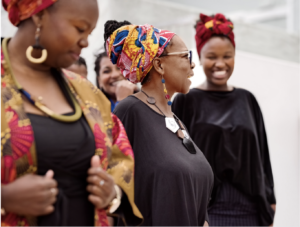
On November 25, the African Women’s Development Fund (AWDF) joins the world in observing the International Day for the Elimination of Violence Against Women commemorated under the theme UNiTE! Invest to Prevent Violence Against Women & Girls! This day which marks the beginning of the Sixteen Days of Activism against Gender Based Violence, highlights the ongoing global crisis of gender-based violence (GBV), which continues to rise despite progress in advocacy and legal protections. AWDF believes that ending GBV requires more than legal reforms and protective measures—it demands a fundamental shift in societal attitudes toward women’s rights. From West Africa to the Horn of Africa, women-led movements are at the forefront of this struggle, but they need more than support—they need sustained, concrete action.
AWDF’s Commitment to Ending Sexual Violence in West Africa
Sexual violence remains a pervasive issue in West Africa. According to a UN Women report (2018), over 60% of women in the region have experienced physical or sexual violence, with many survivors facing barriers to justice due to weak legal frameworks, inadequate support services, and prevailing social norms that condone such violence.
AWDF’s commitment to ending sexual violence focuses on strengthening local responses, bolstering legal protections, and creating safer spaces for survivors. In partnership with the Ford Foundation, OSIWA, and other local organizations, AWDF has launched an initiative to address and prevent sexual violence across West Africa. This initiative strengthens the capacity of women’s rights organizations to provide direct services to survivors, advocate for stronger laws, and shift harmful cultural norms that perpetuate sexual violence.
Through the KASA Initiative, AWDF has supported organizations to train over 300 law enforcement officers and reached 10,000 community members with educational programs on preventing sexual violence. By supporting local actors and leveraging international funding, AWDF is addressing the root causes of sexual violence and ensuring stronger protections for women and girls.
Discover inspiring stories from the AWDF’s KASA program, supporting feminist initiatives across Africa, and a concerning article on the 196 reported cases of rape in Senegal in the first half of 2024, highlighting the urgent need to strengthen efforts against sexual violence.
Learn more about KASA grantee stories
Read an article on sexual violence in Senegal
Strengthening Community Resilience and Feminist Solidarity
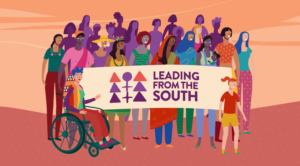
Feminist movements across Africa have shown remarkable resilience in the face of growing attacks from anti-rights groups. Through initiatives, we continue to build stronger, more resilient communities that can withstand patriarchal violence.
One of AWDF’s key pillars is solidarity. As global threats to women’s rights increase, the strength of our collective response becomes more critical. Through alliances like the LFS Fund, we are fostering a culture of mutual support. These networks allow women’s rights organizations, activists, and survivors of violence to come together to heal, strategize, and take collective action.
In Uganda, for example, through the LFS Fund, AWDF has partnered with local women’s organizations to provide legal aid and psychosocial support to survivors of sexual violence. This partnership has enabled over 4,000 survivors to access justice and healing services, and it has helped local communities become more active in combating violence through community dialogues and public education campaigns.
Explore the powerful stories of LFS grantees supporting feminist activism in the Global South, and learn about five more years of funding to sustain and expand these critical movements.
The Growing Threat of Anti-Rights Movements

Across Africa, anti-rights movements are gaining momentum, threatening the rights of women and girls. From Uganda’s Anti-Homosexuality Act to recent rollbacks of sexual and reproductive health rights in Somalia, these regressive movements are a direct challenge to women’s rights. According to the UN Women’s Global Database on ViolenceAgainst Women, one in three women globally experiences physical or sexual violence in their lifetime, with African women facing some of the highest rates of sexual violence.
In Somalia, the repeal of the Sexual Offences Bill exemplifies the dangers posed by these movements. The bill, which sought to criminalize sexual violence, was a significant step forward in women’s rights. Its repeal has not only left women vulnerable to further violence but also highlights the vulnerability of legal protections in the face of regressive political agendas.
The Komboa Consortium, is Inspired by African feminist values of sisterhood, solidarity and mutual aid, the African Women’s Development Fund (AWDF), Initiative Sankofa d’Afrique de l’Ouest (ISDAO), Purposeful, Doria Feminist Fund, and Strategic Initiative for Women in the Horn of Africa (SIHA), have joined forces and resources to create Komboa (“Liberate” in Swahili) a feminist consortium that supports communities threatened by the rise of anti-rights and anti-gender movements.
Inspired by African feminist values of sisterhood, solidarity and mutual aid, the African Women’s Development Fund (AWDF), Initiative Sankofa d’Afrique de l’Ouest (ISDAO), Purposeful, Doria Feminist Fund, and Strategic Initiative for Women in the Horn of Africa (SIHA), have joined forces and resources to create Komboa (“Liberate” in Swahili) a feminist consortium that supports communities threatened by the rise of anti-rights and anti-gender movements.
The Role of International Advocacy and Accountability
AWDF recognizes that international advocacy is crucial in shaping global norms around gender-based violence. By collaborating with regional and international actors, AWDF plays a critical role in resourcing and nurturing organizations that hold governments accountable for their commitments under international human rights frameworks, including the Convention on the Elimination of All Forms of Discrimination Against Women (CEDAW) and the Maputo Protocol. By providing financial support and capacity-building, AWDF empowers grassroots organizations to advocate for the full implementation of these human rights instruments, ensuring that governments are held responsible for advancing gender equality and women’s rights across the continent.
Through policy dialogues and advocacy campaigns, AWDF continues to pressure governments to ensure stronger legal frameworks that prevent and respond to gender-based violence. For example, after a two-year advocacy campaign led by AWDF and local partners, the Kenyan government passed the Sexual Offenses Act, which provides stronger protections for women and girls, including harsher penalties for sexual violence and clearer guidelines for survivor support.
A Call to Action
On this International Day for the Elimination of Violence Against Women, AWDF calls on governments, civil society, and individuals across Africa and beyond to unite in the fight against violence. We urge continued investments in women’s rights organizations, especially those led by women in marginalized communities, and call on each individual to actively participate in ending gender-based violence. Whether through advocacy, education, or direct support for survivors, every action counts.
Let us come together to build a future where women and girls are safe, respected, and able to live free from fear of violence—today, tomorrow, and for generations to come.
Bintou Mariam Traoré, communications Officer
AWDF at SVRI Forum 2024: Connecting, Sharing, and Learning to End Violence Against Women and Gender Diverse People
AWDF at SVRI Forum 2024: Connecting, Sharing, and Learning to End Violence Against Women and Gender Diverse People
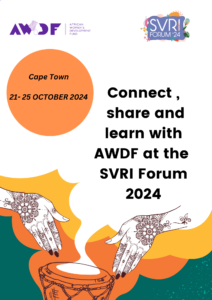
AWDF will be joining researchers, feminists, activists, practitioners and policy makers in the upcoming Sexual Violence Research Initiative (SVRI) Forum 2024, taking place from 21-25 October in Cape Town, South Africa. As part of our participation, we have supported 17 partners from across Africa to attend this crucial event, amplifying African feminist voices in the global conversation on ending sexual violence.
In 2022, AWDF made an impactful appearance at the Sexual Violence Research Initiative which was held in Mexico in September. Among the activities facilitated by AWDF were a partner-led knowledge circle, donor engagement on decolonized and ethical funding, and dialogue for power and control in research and Southern–feminist led forum to showcase the LFS Model.
This year’s SVRI Forum presents an excellent opportunity for AWDF to showcase our crucial work on sexual violence, particularly our KASA! Initiative. We will be advocating for increased funding and deepening partnerships within the feminist funds and sexual violence funding ecosystem. Additionally, we aim to expand our knowledge and experience regarding evidence-based sexual violence interventions.
Key AWDF and Partner-led Activities at SVRI Forum 2024:
AWDF and COFEM Poster Presentation
The SVRI poster presentation session is designed to showcase innovative research and programmes, facilitate in-depth discussions, and promote greater interaction between presenters and participants.
- Date: Wednesday, 23 October 2024
- Time: 1:00 – 2:00 PM
- Venue: Cape Town International Convention Center 2
African Feminist Knowledge Circle
Led by the Knowledge and Voice team, the African Feminist Knowledge Circles are an evolving space where African feminists convene to share identities, stories, tools, politics and approaches from their many journeys of challenging the patriarchy. This activity is only open to identified partners and participants.
Rest & Resistance Workshop
The Solidarity and Care team has over the years learnt the importance of creating an environment and space that is a cocoon for activists to retreat into. For this workshop, the cocoon will be a softly lit room, a curated playlist of black healing music to set the tone for a peaceful and restorative experience. Spaces for this activity are limited. You are urged to attend early for a spot.
- Date: Thursday, 24th October 2024
- Time: 12pm – 1:50pm
- Venue: Cape Town International Convention Center 2
Flourish Retreat
The Retreat will involve three interconnected processes led by the facilitators and the chef. Activists will engage in rituals rooted in indigenous African practices that focus on anchoring, honouring, and connecting to the self, each other, and nature for spiritual, emotional, and physical healing. This activity is only open to identified partners and individuals.
We invite all attendees to connect with us during these sessions and throughout the forum. It is an invaluable opportunity to share experiences, learn from one another, and strengthen our collective efforts in combating violence agains women and gender diverse people and promoting gender equality.
Here is the full programme of the SVRI forum where you will find details of these and other very insightful activities at the forum.
Connect with AWDF online X, Instagram, Facebook and LinkedIn. Follow our live updates from the forum using #AWDFatSVRI.
AWDF’s #VoicePowerSoul: African Feminist Narratives Festival – A Celebration of Creativity and Knowledge
AWDF’s #VoicePowerSoul: African Feminist Narratives Festival – A Celebration of Creativity and Knowledge
Recently, AWDF held a Voice, Power and Soul festival in Accra, Ghana, which showcased the power and diversity of African feminist voices. This event brought together artists, thinkers, and changemakers to challenge the erasure of African feminist narratives.
At its core, the festival celebrated indigenous ways of knowing, being, and creating as integral parts of liberatory praxis. It boldly challenged the erasure of African feminist narratives, placing storytelling, indigenous knowledge, memory, and lived experiences at the forefront of feminist discourse.
This transformative journey served as a powerful reminder of the strength and resilience of African feminist voices. It highlighted their crucial role in shaping our collective future and driving positive change across the continent. This event speaks to our strategic priorities geared to shape and amplify positive narratives of African women and African feminism.
Read the magazine here and watch the video highlight of the festival below.
Reflections from the 5th African Philanthropy Conference: A journey of learning & growth
Reflections from the 5th African Philanthropy Conference: A journey of learning & growth
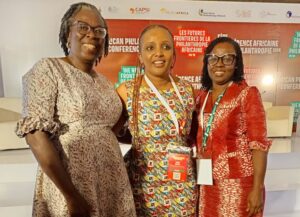
Written By Afua Gyapomaa,
Accra, 28 August 2024: I had the privilege of attending the 5th African Philanthropy Conference (APC), held from July 29 to August 2, 2024, at the Elephant Hills Resort in Victoria Falls, Zimbabwe. The conference, themed ‘The Next Frontiers of African Philanthropy’, was a transformative experience that offered profound insights into the evolving landscape of African philanthropy.
The theme captured APC’s essence, focusing on innovative strategies and emerging trends reshaping traditional philanthropic models. This year’s APC was not just a gathering of professionals; it was a movement—a convergence of like-minded individuals and organisations committed to redefining the boundaries of philanthropy in Africa.
The week-long conference featured diverse discussions on topics ranging from the role of digital technologies to the importance of climate science and innovative financing models. An impactful discussion centred around how philanthropy can address colonial injustices and promote cultural preservation through restitution and reparations. These conversations emphasised the need to understand historical contexts to create meaningful and lasting impact. This is particularly relevant as African philanthropy increasingly grapples with colonialism’s legacy and its continuing effects on the continent. The conference highlighted the critical integration of technologies like AI and robotics in philanthropy, stressing the need for responsible use to benefit the greater good. It also underscored the vital role of young leaders in shaping inclusive strategies and enhancing the sector, particularly in fostering practices that empower marginalised communities.
Personal reflections: a time of growth
Participating in the APC was an enriching experience, professionally and personally. The exchange of ideas and the collective wisdom of the participants broadened my perspective on the power of philanthropy to drive social change. The conference reaffirmed my belief that African philanthropy is at a pivotal point, where tradition meets innovation and where collective efforts can truly make a difference. The sessions on feminist philanthropy and governance were particularly impactful. These discussions highlighted the importance of centring the perspectives of historically marginalised groups and ensuring transparency and accountability in all philanthropic endeavours. The feminist lens, in particular, challenged participants to think critically about how philanthropy can be more inclusive and equitable. It aligns closely with the values emphasised in my work, where the focus is on creating fair and just systems for all.
Afua Gyapomaa is the Partnerships and Philantrophy Officer at AWDF. This article was originally published in the Alliance Magazine, official media partner for the 5th African Philantrophy Conference 2024.
Join our team and let’s make a difference!
Join our team and let’s make a difference!
Are you ready to work in close collaboration with colleagues in the “Nurturing” cluster, to unlock the agency of African women’s rights and feminist activists, leaders, organisations, collectives and movements so they flourish and are impactful?
Do you have experience in conceptualising and leading technical capacity strengthening for movement partners using a transformative and de-colonial approaches? Are you passionate about co-creating tools and processes that afford feminist and women’s rights activists, organisations and collectives in Africa the ownership, confidence, self-determination and space to make transformative choices and impact their communities across the continent?
AWDF is hiring to fill a vacancy for the position of Programme Specialist – Agency and Resilience. To fill this position, we are looking for a highly motivated Programme Management Specialist who is passionate about reimagining the future of feminist capacity strengthening. We are keen to work with an individual who is passionate about women’s rights and feminist movements in Africa, is excited about African feminisms, embraces African women’s diversity and is innovative..
Please follow this link to apply for the position of Programme Specialist – Agency and Resilience
Empowering Francophone Partners: Intensive Communication and Advocacy Training Week
Empowering Francophone Partners: Intensive Communication and Advocacy Training Week
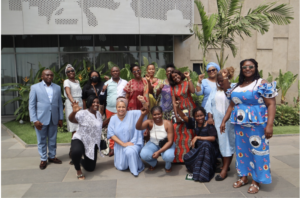
On the 5th to 9th February 2024, 14 participants representing 13 organizations from 11 countries from Francophone Africa participated in an Advocacy and Communications Learning Platform. AWDF organised an intensive and enriching week in Accra, bringing together its Francophone partners for a workshop focused on communication, and advocacy. This innovative event provided a strategic platform to strengthen collaboration among organizations working for the development of women in Francophone Africa. The training session was led by Maïmouna Jallow, a multidisciplinary African feminist artist and communication consultant.
A Timely Training
At the heart of the gathering, intense communication sessions were conducted to enhance participants’ skills in delivering impactful messages and managing issues related to the promotion of women’s rights. Modules on feminist communications, media relations, and the writing of press releases provided a fertile ground for discussions and learning.
Advocacy, the central pivot of the discussions, shed light on the specific challenges faced by women in Francophone countries, while exploring innovative strategies to influence policies in favor of gender equality. The training emphasized the crucial importance for women’s rights advocacy organizations to be visible, creative, and consistent in their communication to impact change.
For LaDouce Irakoze, from the Young Women’s Knowledge and Leadership Institute in Burundi:
“The workshop was very beneficial, and I want to thank the facilitator for her excellent communication skills. Our organization, engaged in advocacy in Burundi for clear policies on women’s rights, especially for domestic workers, gained essential skills. Communication training for feminist associations is crucial to be creative, effective, consistent, well-coordinated, and to communicate impactfully to our audience. The section on press releases was particularly enriching for me, and I am confident that it will significantly enhance our work.”
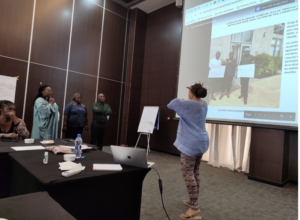
Tools Against Online Violence: Reflections on Feminism 2.0
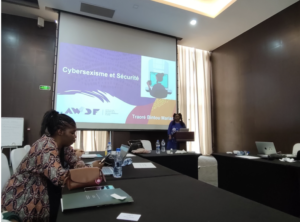
An essential part of the workshop was dedicated to the challenges of the digital world, where women journalists and communicators face a growing threat: cyber harassment. Participants discussed the concepts of feminism 2.0 in Francophone Africa, image appropriation, cybersexism, and online security. Experienced speakers shared strategies to address these challenges, emphasizing the importance of cybersecurity for feminist activists.
“As a communicator, journalist, and feminist, I actively manage several feminist pages and communicate daily on social media. I consider this to be an important step, but as a feminist activist, the need to communicate, inform, and especially advocate for our causes is crucial. I particularly appreciated the module on communication strategy and cybersecurity for feminist activists. I am convinced that all feminists should acquire these skills. AWDF should continue to further support training in communication and advocacy, both for organizations and their communication officers.” Aminata Pilimini Diallo, Guinean feminist web journalist
Francophone Connection and Future Perspectives
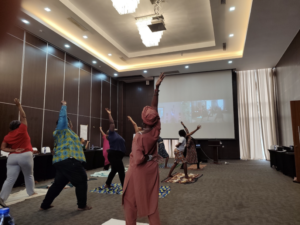
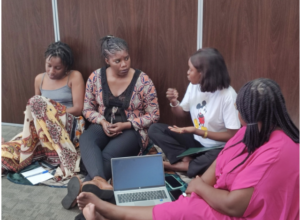
The training took a well-being break with a rejuvenating yoga session. Beyond the physical movements, this experience created a special connection among the participants, strengthening the bonds within the group. Shared smiles, compassionate glances, and emerging camaraderie contributed to forging a strong Francophone connection within the community.
At the end of the training, participants expressed the need to develop additional skills and emphasized the importance of post-workshop follow-up. This request underscores the ongoing commitment of organizations and AWDF to support the professional development of participants and enhance the impact of collective actions for gender equality.”
Bintou Mariam Traoré, Communications officer
Webinar invitation: Popularising Solidarity & Care Strategy- Communing in Communities of Care, 25 Apr, 1pm (GMT)
Webinar invitation: Popularising Solidarity & Care Strategy- Communing in Communities of Care, 25 Apr, 1pm (GMT)
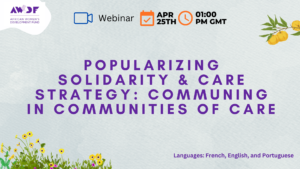
We are thrilled to extend an invitation to an upcoming webinar hosted by the AWDF team! As we transition into a new phase of our journey, from movement building to solidarity and care we are eager to connect with you all to explore, reflect, and envision together the future of feminist movements.
**Event Details:**
📅 Date: 25 April 2024
⏰ Time: 1 PM GMT / (3PM SAST)
🌍 Language: French Portuguese and English
In this webinar, we aim to create a dynamic space for reflective conversations led by esteemed panellists including :
Nana Darkoa Sekyiamah, Ghanaian feminist, author of”The Sex Lives of African Women”
Nathalie Fanja Haaby, Senegalese holistic feminist therapist and Kundalini Yoga teacher
Buky Olabukunola Williams , Sexual and Reproductive Health and Rights Lead at Akina Mama wa Afrika
Aaliyah O. Ibrahim , Nigerian multidisciplinary artist, and international development practitioner
Ruth Nyambura, Kenyan feminist and renowned political educator
This conversation will be moderated by Crystal Simeoni.
The speakers’ diverse experiences, stories, knowledge, and narratives will enrich our discussions about feminist aspirations, collectives, and women’s rights organisations.
The Webinar seeks to:
Popularise the Solidarity and Care strategy within women’s rights and feminist movements;
Cultivate connections and solidarity among movement, women’s rights, and feminists;
Facilitate collaboration and innovation in producing and sharing indigenous knowledge and technologies;
Inspire and promote practices of rest, recuperation, and celebration within women and feminist movements, nurturing their well-being;
The webinar will be conducted in a conversational style, allowing ample opportunities for participants to engage, ask questions, share experiences, and connect with fellow activists.So, come and join us as we delve into what has been accomplished, explore the present landscape, and collectively envision the future of feminist solidarity and care.
Registration
To secure your spot and receive further details about the webinar, please register on the following link https://bit.ly/3xCT59H
Let’s come together to ignite conversations, inspire action, and nurture the bonds of solidarity that fuel our movements!