
Breaking the Silence: Restoring Hope for Survivors of Sexual Violence in Northern Ghana
Jul 1, 2025
Media Center /
Blog
In the quiet corners of northern Ghana, where cultural silence often shrouds the suffering of sexual violence survivors, 23-year-old Rahina AbdulRahaman found the courage to speak out. Her story represents the transformative impact of organisations like Savannah Integrated Women’s Development Agency (SWIDA-GH), dedicated to healing the wounds that society often prefers to ignore.
Rahina AbdulRahaman was 8 years old when she was sexually abused by a family friend. The perpetrator used gifts and threats to maintain secrecy. “I was always left under his care because my parents trusted him,” AbdulRahaman recalls. “I was in pain all the time, but I could not tell anyone.”
She did not disclose the abuse to her parents or friends. Years later, at 23, she enrolled in the Female Leadership and Mentorship Academy cohort 4 program by SWIDA-GH, where she met Hajia Alima Sagito.
SWIDA-GH is a dynamic women-led organisation dedicated to advancing gender equality, economic empowerment, justice for women, and social justice in society. The organisation is established to bridge the gap between the government and underserved communities. SWIDA-GH works within rural, peri-urban, and urban communities, focusing on empowering women, youth, and persons with disabilities. One of its key areas of work is combating sexual and gender-based violence (SGBV) through advocacy, education, and support services.
“We do a lot of sexual and gender-based violence work to ensure that young people, women, and persons with disabilities live to their fullest,” says Hajia Alima Sagito Saeed, Executive Director of SWIDA-GH.
Through conversations, AbdulRahaman was informed about the KASA! initiative by the African Women Development Fund (AWDF), a funding partner of SWIDA-GH.
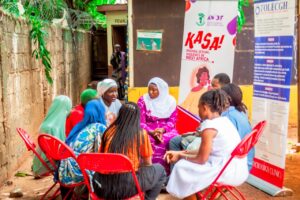
KASA, which means “speak out,” has supported organisations in Ghana, Senegal and Nigeria, implementing various interventions to combat sexual violence. It was launched by AWDF with the Ford Foundation and Open Society West Africa.
To combat sexual and gender-based violence, SWIDA-GH conducts workshops and campaigns in rural communities to raise awareness about sexual violence, consent, and women’s rights. The organization engages traditional leaders, religious figures, and men as allies in preventing SGBV. They use radio programs to educate communities on gender-based violence (GBV) laws and reporting mechanisms.
For legal support and advocacy, SWIDA-GH collaborates and partners with Ghana Police’s Domestic Violence and Victim Support Unit (DOVVSU) to improve survivor protection. The organization organizes youth and school-based programs to educate schoolgirls on sexual rights and how to report abuse. They also train teachers to identify and respond to signs of sexual violence among students.
The project lead of SWIDA-GH, Madam Juliet Wepaare Ako, who is excited about SWIDA’s progress in combating sexual and gender-based violence, added that the organisation has five safe spaces where survivors can comfortably come to share their stories.
“We have five safe spaces that have been provided, and this is a huge thing for us because we are gradually changing people’s perception on speaking up and getting support. Having vantage points in the communities where people can comfortably walk in and get support is significant for us. Aside from that, Total Life Enhancement Centre Ghana (TOLECGH) is also on the ground. When we get people who need support, we refer them to TOLECGH.”
During a group session, AbdulRahaman shared her truth for the first time and was later referred to SWIDA’s counseling partners, TOLECGH, who helped her understand what she was going through and that it was never her fault.
In 2021, with strategic funding from AWDF, SWIDA-GH, led by Hajia Alima Sagito Saeed, formed a groundbreaking collaboration with TOLECGH, a Tamale-based mental health organisation specialising in psychosocial and trauma-informed services.
Peter Mintir Amadu, Clinical Health Psychologist and Executive Director of TOLECGH, explains the synergy: “SWIDA provides safe space and community trust. We bring evidence-based therapeutic interventions. Together, we’re creating a model for holistic survivor care.”
Empowered, Rahina began sharing her story to break the culture of silence. Though healing is a process and not easy, she found strength in her voice. Thanks to the innovative partnership between SWIDA Ghana and Total Life Enhancement Centre (TOLECGH), survivors like AbdulRahaman are finding pathways to psychological healing.
The partnership between SWIDA-GH and AWDF has been transformative for survivors like AbdulRahaman. “Before the funding, we were just mainstreaming activities, but when we got the funding, we became intentional and picked it up as a whole project, reaching out to more people,” Hajia Alima Sagito explains.
The story of SWIDA-GH is still being written, and it needs more hands on deck to help support and empower more survivors. Funds from AWDF go into ensuring that survivors receive immediate medical attention and long-term counseling, provide free legal representation to help survivors navigate court processes, offer skills training and grants to break the cycle of poverty, and conduct GBV workshops in schools and villages, challenging harmful norms and encouraging reporting.
***
This is a commissioned feature story by Agnes A. Attoh (Ewurama), a Journalist based in Ghana.