
Author: African Women's Development Fund
West Africa
West Africa
[tp lang=”en” not_in=”fr”]Ellen Johnson Sirleaf Market Women’s Fund (SMWF) – Liberia
 The AWDF supports Liberian women through the Sirleaf Market Women’s Fund (SMWF), an organisation dedicated to rebuilding and further developing Liberia. Created in 2006, the fund acknowledges the support that market women provided in electing Africa’s first female president, Ellen Johnson Sirleaf. Now, the fund seeks to improve existing markets and construct new markets, including crèches, storage, sanitary facilities, credit facilities and training programmes.
Join us in supporting work like this by making a contribution to AWDF today! [/tp]
[tp lang=”fr” not_in=”en”]Ellen Johnson Sirleaf Market Women’s Fund (SMWF) – Liberia
AWDF soutient les femmes libériennes à travers le Sirleaf market women’s fund (SMWF), un organisme voué à la reconstruction et au développement du Libéria. Créé en 2006, le fonds reconnaît le soutien que les femmes commerçantes ont fourni en élisant la première femme présidente d’Afrique, Ellen Johnson Sirleaf. Maintenant, le fonds vise à améliorer les marchés existants et à en construire de nouveaux, mais aussi des crèches, espaces de stockage, installations sanitaires, des facilités de crédit et des programmes de formation.
Rejoignez-nous pour soutenir ces actions en faisant une contribution à AWDF dès aujourd’hui![/tp]
Call for Applications for AWDF’s 2015 African Women Writers Workshop (Now Closed)
Call for Applications for AWDF’s 2015 African Women Writers Workshop (Now Closed)
[tp lang=”en” not_in=”fr”]PRESS RELEASE
The African Women’s Development Fund (AWDF) in collaboration with FEMRITE – Uganda Women Writers Association, invites African women writers 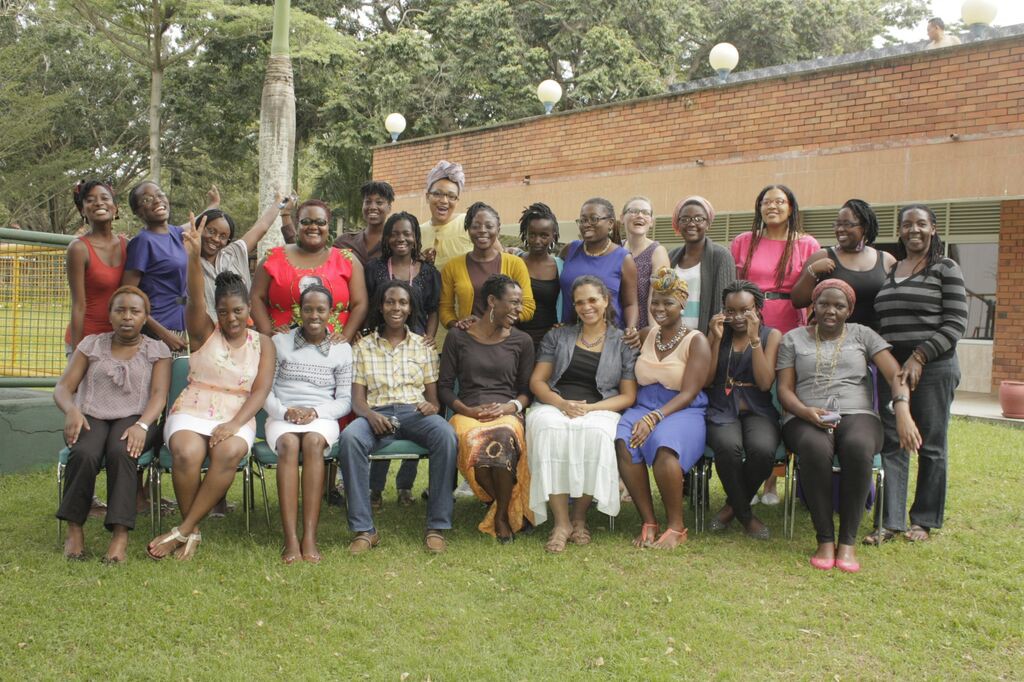 and journalists to apply for the Writing for Social Change Workshop 2015. This 10-day writing workshop, will be taking place in Uganda from July 27 to August 5, 2015.
The workshop will be facilitated by veteran BBC journalist and media expert Elizabeth Ohene from Ghana and award-winning writer Yewande Omotoso, from Nigeria/South Africa/Barbados.
This workshop is targeted at women writers, journalists and activists who wish to step-up their involvement in highlighting issues around women’s rights and social justice. Participants will be expected to read widely from assigned selected texts, and to complete daily writing exercises. After the workshop, the participants are expected to use the knowledge acquired to write widely about social justice issues in and beyond their communities.
Priority will be given to interested women journalists who wish to actively engage in women’s activism – we are expecting at least 50% of the writers selected for this workshop to be full-time journalists. We will also include women from AWDF’s existing grantee organisations, and within our partner networks.
Full accommodation, meals and a partial travel grant will be provided to all successful applicants. All applicants will be expected to be present for the ten-day duration of the workshop. A Memorandum of Understanding will be signed by successful applicants to enable smooth running of the workshop.
Application Guidelines
Deadline for submission is May 31 2015. Only those accepted to the workshop will be notified by June 5, 2015.
To apply send an e-mail to; communications@africlub.net/awdf.
E-mail subject should read ‘Application for Social Justice Workshop 2015’
The body of the e-mail should contain the following:
a) Your Name
b). Your Email Address
c). A short bio (maximum 200 words)
d). A sample article about women’s rights or social justice -between 500 and 1000 words. The sample maybe unpublished or published on any media. This can be sent as an attachment or as part of the email body especially if it has images. AWDF will not be responsible in case of any plagiarism.
Bios of Lead Facilitators
Elizabeth Ohene, from Ghana, is a veteran journalist, writer and broadcaster, and a former government minister.
Her career began at Ghana’s leading newspaper group the Daily Graphic, (owned by Graphic Corporation), where for over a decade she served as a reporter, staff writer, columnist and Editor.
In London in 1983, she founded the Talking Drums, a weekly news magazine on West African affairs and served as the Publisher/Editor for the three years of the magazine’s existence. Elizabeth joined the BBC World Service in London, UK, in 1986, first as a Producer of Radio Programmes, then served in various positions in the World Service and British Domestic Radio, and as a columnist on the Focus on African Magazine. She also served as Deputy Editor for the award winning Focus on Africa Programme. She reported regularly for the BBC from various parts of Africa and was the resident correspondent in South Africa from 1992 to 1994 during the transition from apartheid to the first democratic elections.
Miss Ohene conducted several training programmes for journalists for the BBC in South Africa, Nigeria, Liberia, Senegal, Sierra Leone, Kenya, Ethiopia and Somalia. She also ran a network of more than 150 stringers located in all parts of Africa for the BBC Africa Service, supervising their editorial work.
Where courses are run for African women in the Media according to their needs, Miss Ohene’s professional activities include being a member of the International Women Media Foundation which actively promotes women’s competency and leadership in the media. The foundation has established an Africa Women’s Media Centre in Dakar, Senegal, She served as a board member of the International Commission of Investigative Journalists and a member of the panel of judges for the CNN Africa Journalist of the Year Competition.
She served in government as a Minister of State from 2001 to 2009.
She currently writes a weekly column in the Daily Graphic, Ghana’s largest circulating daily and a monthly Letter from Africa for the BBC.
Yewande Omotoso, born in Barbados, grew up in Nigeria and currently lives in Johannesburg.
Yewande trained as an architect at the University of Cape Town, to which she returned after working as an architect for several years, to complete a Masters in Creative Writing. The product of her degree is her debut novel ‘Bomboy’ published in 2011 by Cape Town publisher Modjaji Books.
mes Literary Awards, the MNet Film Award and the 2013 Etisalat Prize for Literature. It won the South African Literary Award First Time Author Prize.‘Bomboy’ was shortlisted for the 2012 Sunday Ti
Her other works include short stories ‘Two Old People’ in the anthology ‘Speaking for the Generation: Contemporary Stories from Africa’, ‘How About The Children’ published in The Kalahari Review, ‘Things Are Hard’ in the 2012 Caine Prize Anthology and ‘Fish’ published in The Moth Literary Journal.
Omotoso, for whom writing is a means to make sense of the world, is
interested in the complexity of human experiences as well as the incongruities of life.
Loneliness is a recurring theme. Omotoso views her writing as a tool for compassion and evoking self-examination. For her talent and the intent to tell stories, she credits her parents and a childhood steeped in reading and the sharing of ideas.[/tp]
[tp lang=”fr” not_in=”en”] COMMUNIQUÉ DE PRESSE
Le Fonds de développement des femmes africaines (AWDF) en collaboration avec FEMRITE – Ouganda, Association des femmes écrivains, invitent les écrivaines africaines et journalistes à candidater pour l’Atelier d’écriture pour le changement social 2015. Cet atelier d’écriture de 10 jours, aura lieu en Ouganda du 27 Juillet au 5 Août 2015.
L’atelier sera animé par la journaliste vétérente de la BBC et spécialiste des médias Elizabeth Ohene du Ghana ainsi que l’écrivaine primée Yewande Omotoso, du Nigeria / Afrique du Sud / Barbade.
Cet atelier est destiné aux femmes écrivains, journalistes et militantes qui souhaitent organiser leur implication en soulignant les questions autour des droits des femmes et la justice sociale. Les participantes seront appelées à lire abondamment des textes choisis, et effectuer des exercices d’écriture quotidiens. Après l’atelier, les participantes sont invités à utiliser les connaissances acquises pour écrire largement sur les questions de justice sociale dans et au-delà de leurs communautés.
Cet atelier fait partie des efforts d’AWDF pour amplifier la voix des femmes africaines et vise à créer un réseau qui permettra aux participantes de placer leurs articles et histoires dans une gamme de médias locaux, régionaux et internationaux.
La priorité sera donnée aux femmes journalistes intéressées qui souhaitent participer activement au militantisme des femmes – nous nous attendons à ce qu’au moins 50% des écrivaines sélectionnées pour cet atelier soient journalistes à plein temps. Nous allons aussi inclure les femmes à partir des organismes bénéficiaires existants d’AWDF, et au sein de nos réseaux de partenaires.
Hébergement en pension complète, les repas et une subvention de Voyage partielle seront fournis à toutes les candidates retenues. Tous les candidates seront tenues d’être présentes pendant toute la durée, les dix jours, de l’atelier. Un protocole d’accord sera signé par les candidates retenues afin de permettre le bon déroulement de l’atelier.
Directives de candidatures
La date limite de soumission est le 31 mai 2015. Seules celles acceptées à l’atelier en seront avisées de 5 Juin 2015.
Pour postuler envoyez un e-mail à: communications@africlub.net/awdf.
En sujet de l’e-mail veuillez indiquer: «Application pour la justice sociale Atelier 2015»
Le corps de l’e-mail doit contenir les éléments suivants:
a) Votre nom
b). Votre adresse E-mail
c). Une courte biographie (200 mots maximum)
ré). Un article de l’échantillon sur les droits des femmes ou la justice sociale -entre 500 et 1000 mots. L’échantillon peut être publié ou non sur tous les médias. Cenui-ci peut être envoyé en tant que pièce jointe ou comme partie du corps de courrier électronique en particulier si il a des images. AWDF ne sera pas responsable en cas de plagiat.
Bios des facilitateurs principaux
Elizabeth Ohene, du Ghana, est une journaliste chevronnée, écrivaine, animatrice radio, et une ancienne ministre du gouvernement.
Sa carrière a commencé au principal journal ghanéen le Daily Graphic, (détenu par la Société Graphic), où, pendant plus d’une décennie, elle a opéré en tant que journaliste, auteur de personnel, chroniqueuse et rédactrice en chef.
A Londres, en 1983, elle a fondé le Talking Drums, un magazine hebdomadaire de nouvelles sur les affaires de l’Afrique de l’Ouest et a été l’Editrice / Rédactrice au long des trois années d’existence de la revue. Elizabeth a rejoint la BBC World Service à Londres, Royaume-Uni, en 1986, d’abord comme producteur de programmes radio, puis a occupé divers postes dans le World Service et Radio national britannique, elle a également été chroniqueur pour le magazine africain FOCUS ON. Elle a également été rédacteur en chef adjoint pour le primé Focus On Programme Africain. Elle a régulièrement rendu compte pour la BBC de diverses parties de l’Afrique et a été correspondant résident en Afrique du Sud de 1992 à 1994 au cours de la transition de l’apartheid aux premières élections démocratiques.
Mlle Ohene a mené plusieurs programmes de formation pour les journalistes de la BBC en Afrique du Sud, au Nigeria, Liberia, Sénégal, Sierra Leone, Kenya, Ethiopie et en Somalie. Elle a également dirigé un réseau de plus de 150 longerons situés dans toutes les régions de l’Afrique pour le service BBC Afrique, dont elle supervisait le travail éditorial.
Des cours sont organisés pour les femmes africaines dans les médias selon leurs activités professionnelles et leurs besoins. Miss Ohene est notamment un membre de la Fondation internationale des femmes dans les médias qui favorise activement la compétence et le leadership des femmes dans les médias. La fondation a mis en place un Centre de médias des femmes d’Afrique à Dakar, au Sénégal, elle a été membre du conseil d’administration de la Commission internationale des journalistes d’investigation et membre du jury pour leCNN Africa Journalist of the Year.
Elle a également fait partie du gouvernement comme ministre d’État de 2001 à 2009.
Elle écrit actuellement une chronique hebdomadaire dans le Daily Graphic, le plus grand quotidien en circulation au Ghana et une “Letter from Africa” mensuelle pour la BBC.
Yewande Omotoso, née à la Barbade, a grandi au Nigeria et vit actuellement à Johannesburg.
Yewande a suivit une formation d’architecte à l’Université du Cape, à laquelle elle est retournée après avoir travaillé comme architecte pendant plusieurs années, pour terminer une maîtrise en création littéraire. Le produit de son diplôme est son premier roman “Bombo” publié en 2011 par l’éditeur Modjaji Livres à Au Cap.
Literary Awards, the MNet Film Award and the 2013 Etisalat Prize for Literature. Il a remporté le South African Literary Award First Time Author Prize. “Bomboy” a été sélectionné par le Sunday Ti 2012.
Ses autres œuvres comprennent des histoires courtes «Deux personnes âgées» dans l’anthologie «parler pour la génération: Histoires contemporaines de l’Afrique», «How About The Children» publié dans la Revue du Kalahari, «choses sont difficiles» dans le Caine Prize Anthology 2012 et ‘Fish’ publié dans The Moth Journal littéraire.
La poésie de Yewande est publiée dans le Journal littéraire Baobab. ‘The Rain “a été sélectionné pour l’édition 2012 du Prix de Poésie Sol Plaatjie de l’Union européenne . Elle était en 2013 membre de Norman Mailer et en 2014 membre d’Etisalat à l’Université d’East Anglia. Elle est une boursière de Miles Morland en 2015.
Omotoso, pour qui l’écriture est un moyen de donner un sens au monde, est intéressé par la complexité de l’expérience humaine ainsi que les incongruités de la vie.
La solitude est un thème récurrent. Omotoso considère son écriture comme un outil pour la compassion et évoque l’auto-examen. Pour son talent et l’intention de raconter des histoires, elle l’attribue à ses parents et une enfance imprégnée de la lecture et le partage des idées.[/tp]
International Women’s Day 2015
International Women’s Day 2015
What size grants does the AWDF give?
What size grants does the AWDF give?
Organisations can apply for grants ranging from USD $2000 to $100,000. And for our Leading from the South Programme up to a maximum amount of USD $500,000. (However, most grants will be for less than the maximum amount.)
How often does the AWDF make grants?
How often does the AWDF make grants?
The AWDF will make grants in two cycles each year. Please look out for our call for proposals around February/March and June/July each year.
Who can apply for a grant?
Who can apply for a grant?
We support African women’s organisations that are local, national, sub-regional, from any part of Africa. In addition, specifically for our Leading from the South Programme, we also support women’s rights organisation registered and operating in the following 5 Middle East countries: Iraq, Jordan, Lebanon, Palestine and Yemen.
What types of grants do you support?
What types of grants do you support?
The AWDF gives grants for projects related to any of our three thematic areas. We expect applicants to show relevant, reasonable costs in their project proposals. We give grants to national and regional organisations for organisational growth and development. We also give grants for capital costs such as purchase of computers, printers, and photocopiers.
How do you decide which projects to fund?
How do you decide which projects to fund?
See our application guidelines.
Where does AWDF get its money?
Where does AWDF get its money?
In the past, the AWDF has worked with a variety of donors committed to supporting the establishment of a philanthropic institution in Africa for women. See our partners.
Does AWDF lend money?
Does AWDF lend money?
No. The AWDF is a grant-making organisation. It is not involved in micro-financing.