
Voices of our Movements: Amplifying African Feminist Voices, Stories and Knowledge
Sep 30, 2026
Media Center /
Blog
“…no, no, but that is the thing. Nobody told us it was allowed to be this loud.”
“Okay, say that again. Say that again, because I want it on the recording.”
“Fine. Nobody told us our stories were allowed to be this loud, this funny, this angry and this tender, all in the same breath.”
That is the sound of a good conversation catching fire, and it is the sound we have been chasing. The moment when someone forgets the microphone is there and simply tells the truth. Most of the best feminist knowledge in Africa has been shared this way, in the middle of the conversation, long before anyone hit record.
Feminist movements have always kept their own archive. It lives at the river and the borehole, in the chama and the susu and the tontine where women pool money and plans in the same sitting. At the market stall where a trader schools a younger woman in what to charge and what to refuse. It lives in the back rows of funerals and weddings where the real conversation happens. In the salon while hair is being braided. In the long voice notes passed between comrades, in the hushed talk at the back of a convening, and in the stories of women who survived, resisted and led long before anyone thought to write it down. African feminists have always kept that archive alive and shared it, with whatever tools were within reach.
At the African Women’s Development Fund, we have been asking ourselves a familiar question, how do we keep amplifying the voices, knowledge and narratives of African women’s rights organisations and feminist movements in ways that feel creative, participatory and true to how movements actually work? Part of our answer is through the Voices of our Movements.
The Voices of our Movements is an AWDF initiative that brings together African feminist podcasters as creative collaborators amplifying feminist realities, strategies, and lived experiences across the continent in English, French, Portuguese, and Arabic.
It begins with something we see again and again. Feminist movements are driving real, transformative change, yet their strategies, struggles and lived experiences remain thinly represented in mainstream and online media. Podcasting, as we are finding out through this initiative, lets you sit inside a conversation, hear the pause before a hard truth, catch the laughter that carries solidarity, and listen to a story in the language it was meant to be told in.
We invited African feminist podcasters to work with us, and nine of them are now creating bodies of work that document and amplify the voices and stories from African feminists.
There is the ATHENA Network, bringing the politics of pleasure, strategic litigation and funding feminist futures into conversation, with young women and gender-diverse feminists at the centre. I AM NALA, named from the Kiswahili word for lioness, treats technology-facilitated violence as the structural injustice issue it is, and tells those stories with care for the survivors at their heart. Konversations with Kui offer what she calls a safe space for hard truths and radical vulnerability, built on the belief that our wounds can be healing to others. In Mozambique, Mukadzi’s Mulhe(RE)evolution is tracing the roots of African feminism, so that a new generation knows it has ancestors. Por Ela’s Sapatomica Podcast celebrates the leadership and everyday lives of lesbian, bisexual and queer women. From eastern Democratic Republic of Congo, Solidarité des Filles Handicapées’ (SOFIHA) Nos Voix, Nos Luttes lifts up girls and young women with disabilities who are living through conflict and displacement. The Feminist Bar Podcast pulls up a stool for activists, healers and philanthropists to talk about movement work alongside the heart, mind, spirit and body. Woma Média brings queer and feminist voices together in French, with a playfulness that disarms and a seriousness that stays with you. And in Southern Ghana, Developing Women for Skills and Opportunities’ (DWoSO) Hɛn Nkɔmɔ, which means “our conversation”, hands the microphone to rural women and girls in fishing and market communities.
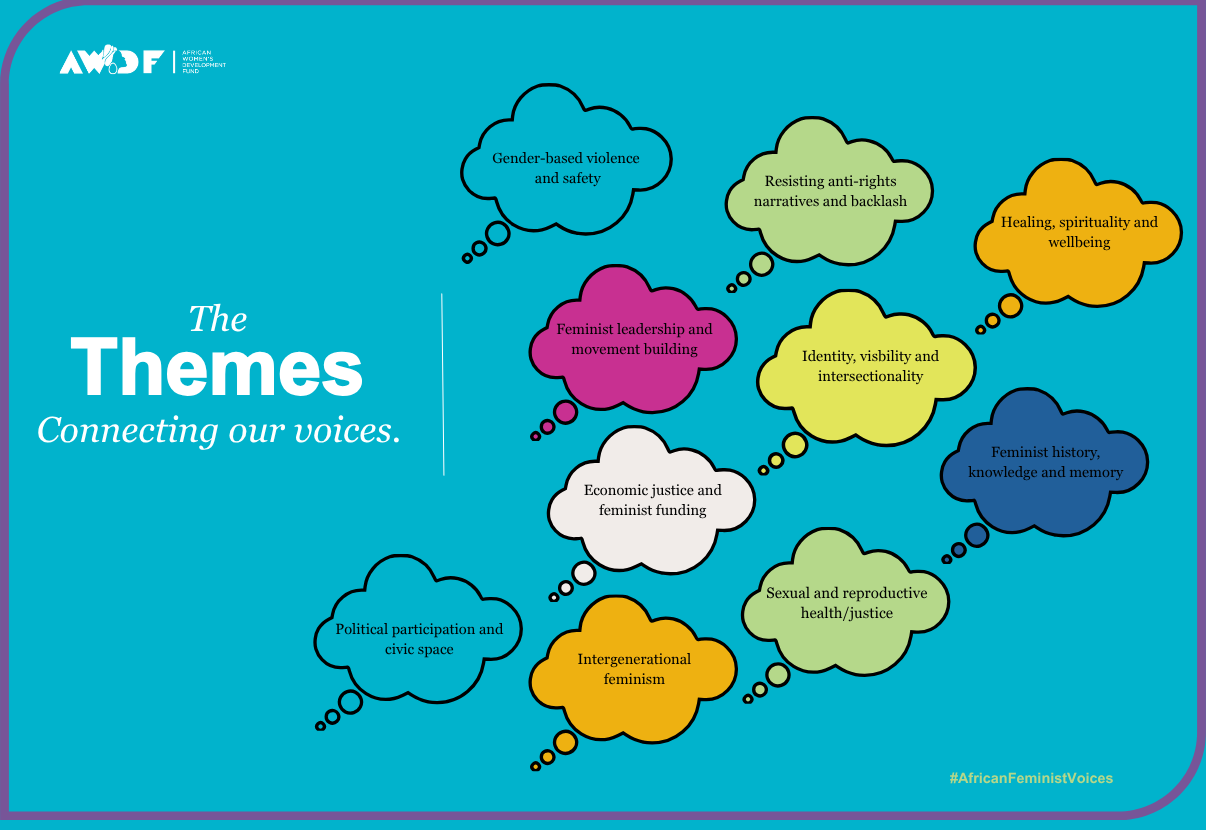
Across these podcasts, we hear the threads that tie and pull our movements together. Violence, online and off. The pushback against anti-rights narratives and disinformation. Questions of who leads, who funds and who gets seen. The tenderness of healing, and the work of remembering.
Our hope, through this initiative is that more people, in more places, hear African feminist realities described in the voices of the people living them. We hope funders and partners listen closely enough to invest in grassroots work, and that podcasters, movements and supporters find each other and build something together. Most of all, we hope a young woman somewhere presses play and hears a version of her own life reflected back, and realises she is not alone.
This is your invitation to put your headphones on and press play. And if anyone tells you that African feminist voices are too loud, turn it up.