
You choose – Davila Tano – Trans feminist activist, Côte d’Ivoire
Sep 28, 2026
Media Center /
Blog
When the crisis erupted at QET inclusion, the organisation where she was Executive Director, Davila Tano felt as though everything was crumbling: her work, her activism, her leadership, and even her place within the community she had been supporting for several years.
“I felt betrayed,” she says.
Emotionally exhausted, she even briefly considered disappearing, leaving activism behind, and walking away from it all. But during the coaching sessions of the AWDF’s feminist leadership and governance programme, one sentence kept coming back:
“You choose.”
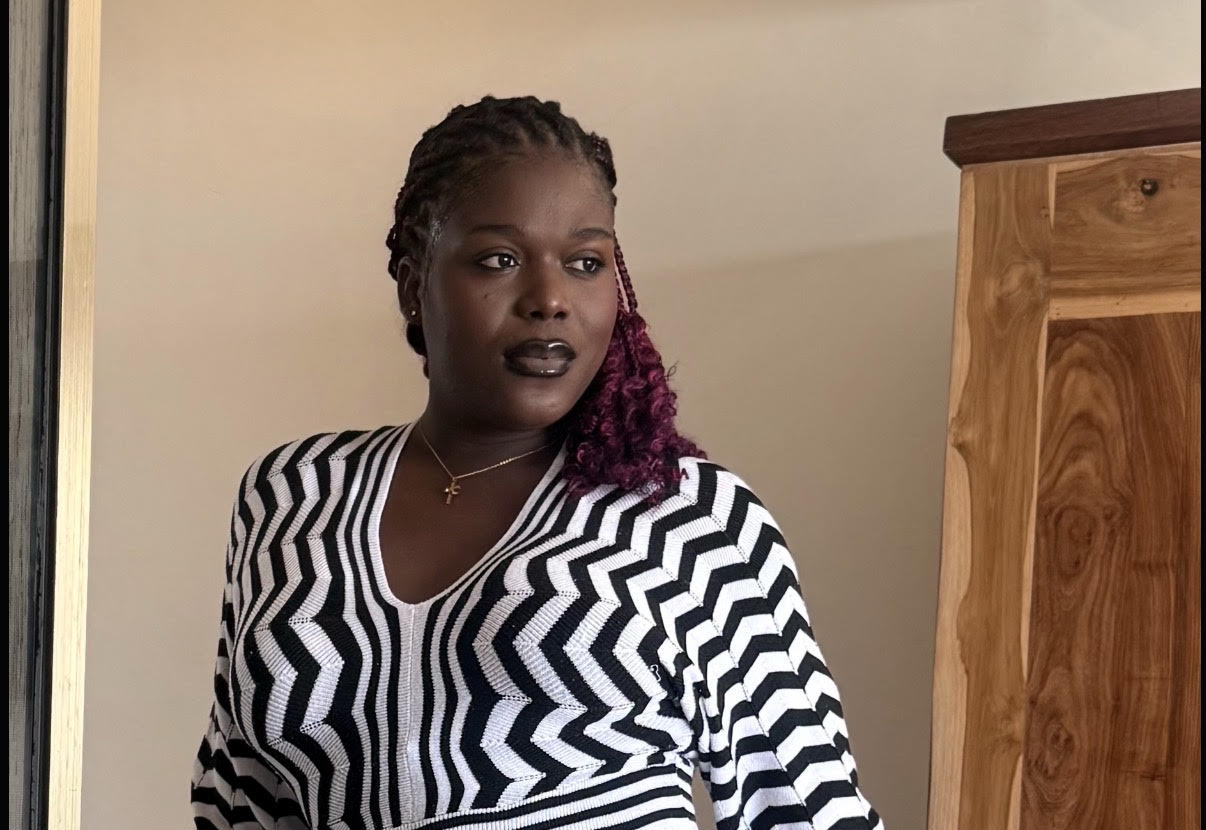
Gradually, this sentence became an anchor. A way of reclaiming herself after years of carrying the weight of everything for others.
Davila joined QET Inclusion, which works to improve the living conditions of transgender people in Côte d’Ivoire, whilst she was still a student on a BTS in Information Technology. Very quickly, she became deeply involved in activist work, eventually rising to become executive director and project coordinator.
In a context where resources remain limited and transgender people face widespread discrimination, the organisation is committed to recruiting from within the communities it supports. People from these communities are recruited, often without prior training, sometimes based on friendships or personal connections. But this closeness also creates significant difficulties in day-to-day management. The boundaries between activism, friendship and professional responsibilities become blurred. When a document is late in being sent or a sanction needs to be applied, the authority of the person in a leadership position is sometimes called into question.
She describes her leadership as that of a ‘sister, brother, or family member’. A very human leadership, deeply committed to sharing and solidarity, but not very structured. Being highly sensitive, she finds it difficult to put pressure on others or to make certain difficult decisions.
“I wanted so much to get on with everyone,” she says today.
This approach eventually wore her down, however. She could no longer distinguish her personal life from her activist work. The organisation’s problems followed her home. She gave an enormous amount of energy to others without really looking after herself.
When she came across the AWDF’s feminist leadership and governance programme in 2025, she immediately decided to apply, especially as the programme included individual coaching sessions.
“I’m shy,” she explains. “And when I realised there would be one-to-one sessions, I thought that could really help me.”
The trip to Madagascar had a profound impact on her journey. There, she discovered a space she describes as warm and deeply human.
“A warmth that only feminists are so good at,” she says with a smile.
But upon returning from Madagascar, just as the participants were due to start applying what they’d learnt on the programme within their organisations, a crisis erupted at QET Inclusion. Davila found herself at the centre of internal tensions that brutally called her work and leadership into question.
“Even the idea of continuing with activism was called into question,” she says.
The situation took a heavy psychological toll on her. She describes an extremely difficult period, marked by doubt, mental exhaustion and a strong sense of abandonment. The support of her family became essential. So did the coaching sessions. Gradually, Davila realised that she was also constantly seeking external validation. The coaching helped her to step back, refocus on herself and reorganise her daily life.
Her coach then suggested some very practical exercises: drawing up a daily schedule, identifying a few essential tasks to complete each day, learning to slow down and reconnect with herself.
“I realised I was in a healing process,” she says.
This period profoundly transformed her approach to leadership. Davila began to understand that being constantly available and making constant sacrifices did not guarantee respect or recognition.
“It wasn’t by being hyper-available that I was going to be respected as a director,” she says today.
She gradually learned to set boundaries, to stop trying to anticipate everything, and to move forward step by step. After the crisis, she set up a new organisation: Lueur d’espoir, or LUDE for short. This time, she wants to build something more structured and professional.
“We want to make everything professional,” she explains. “The ambition is that one day LUDE will even become a funding body.”
This drive towards professionalisation does not, however, mean abandoning the values of solidarity that have guided her commitment from the outset. On the contrary, Davila remains deeply committed to the issue of community and family support, particularly for transgender people rejected by their loved ones.
In Côte d’Ivoire, she explains, the realities faced by transgender people remain extremely precarious. Anti-gender crises, stigmatisation campaigns on social media and the public exposure of transgender identities create situations of great insecurity.
“I was exposed on social media,” she says. “And I feared for the safety of my loved ones.”
Access to administrative documents or healthcare also remains very difficult for many transgender people. Some even live under assumed identities or in extremely precarious legal situations.
“We are not yet safe,” she says.
In this context, activism takes a considerable emotional and political toll. But Davila now refuses to let this commitment consume her entirely.
“I had a realisation that I had to choose myself,” she explains.
This decision also involves reconnecting with herself, her spirituality and looking after her mental health. She speaks of the need to keep “a clear head” to continue fighting without breaking down.
Today, Davila continues to publicly defend the rights of transgender people, including on social media where she speaks openly about trans identity despite verbal abuse and attacks.
“Personally, I don’t hide,” she asserts.
When asked which women shaped her, she immediately cites her mother, whom she mentions several times during the interview. A mother of whom she says she is proud to be “a source of pride” today. She also mentions her coach, Khadidiatou, whose calmness and ability to listen have left a deep impression on her.
Through her journey, Davila offers a vision of feminist leadership deeply rooted in survival, clarity and self-care. Not a leadership built on total sacrifice, but a leadership capable of continuing to fight without losing itself entirely in the struggle itself.