
Spotlight: Finding Her Voice – Credo Aplagbe – Community Organiser, OneWorld Benin
Jul 30, 2026
Media Center /
Blog
For a long time, Credo believed that others would always do better than she could. When an idea came to her, she often preferred staying silent, observe, and learn from the sidelines. Speaking up made her panic. Taking initiatives made her panic even more.
“I saw what I could do,” she says, “but I wondered if I could do it well.”
Then, gradually, something changed. Through the AWDF’s feminist leadership and governance program, as well as the encouragement of her director and the coaching, which was a big part of the program, Credo began to see herself differently.
“With this program,” she says simply, “I woke up.”
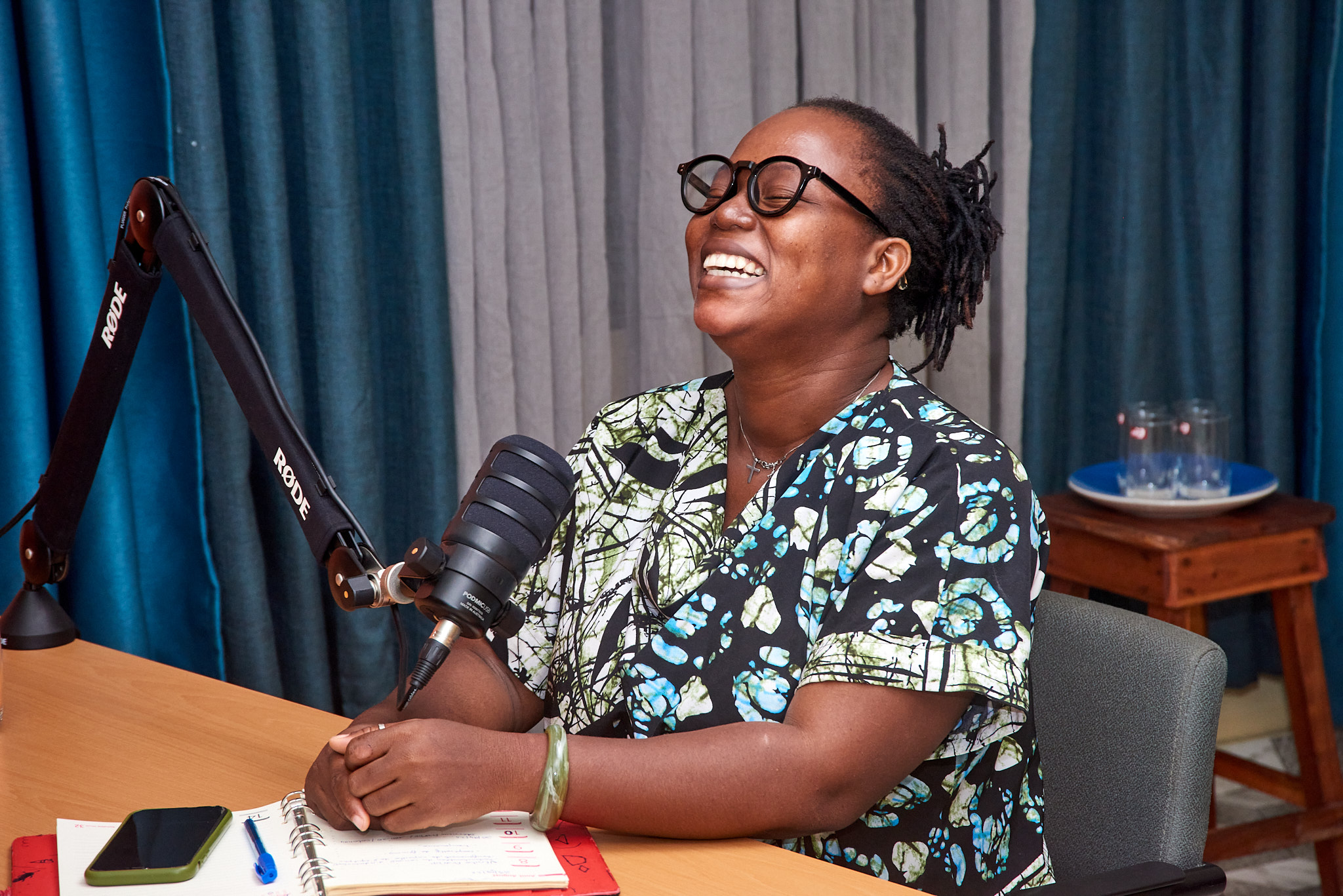
Since 2021, Credo has been working at OneWorld Benin as a community mobilizer. The organization focuses particularly on sexual and reproductive health and the fight against gender-based violence. At OneWorld, she explains, everyone is involved in various aspects of the work.
“We work alongside our colleagues in whatever needs doing,” she says. “We never get bored.”
Reaching out to communities, listening to the needs of young girls, women, children, and people living with disabilities is part of the organization’s daily routine. Awareness-raising sessions often take place in local languages, particularly in Fon, in markets, schools, or neighborhoods.
Before the AWDF’s feminist leadership and governance program, Credo struggled to find her place. Reserved and uncomfortable in group settings, she rarely put herself forward. Her director, Harriet Mensah-Ahokpossi, regularly encouraged her to come out of her shell.
“You have great ideas; don’t keep them to yourself,” she would tell her.
Yet doubt remained. Credo felt that others were always more competent than her. So, she preferred letting them take the lead, convinced that she will learn more by observing.
This difficulty in envisioning herself as a leader does not mean a lack of desire. On the contrary. Behind her reserve lies a strong desire to grow, to learn, to be useful. But something was still missing: the confidence needed to move from observation to action.
The AWDF’s feminist leadership and governance program acted as a catalyst. Through coaching sessions, group discussions, and meetings with other participants, Credo gradually began to change the way she saw herself. One tool in particular stands out in her journey: a “journal of small victories”, suggested by her coach. In it, she notes down what works, the goals she’s achieved, and the small daily steps taken. When she revisited this journal at the end of the coaching process, she saw how far she’s come.
“I told myself: ‘Credo, you’ve really come a long way.”
The trip to Madagascar also marked a turning point. The fact that her director trusted her enough to give her this opportunity served as a form of validation. The coaches, too, emphasized her potential. They repeatedly told her that she had something to contribute, that she could do more than she thought possible. Little by little, Credo stopped seeing herself solely as an executor.
“Now, I can lead a project from start to finish,” she explains.
This evolution also transforms the way she works on a daily basis. Today, she takes more initiative and wants to keep learning so that, one day, she can lead on her own. Her leadership remains deeply collaborative and emotional. Decisions are often made by consensus, based on the goals set by the team. But certain difficulties persist.
Conflict management remains difficult for her.
“I’ve always been told to approach the person, but I just can’t do it,” she admits.
When tensions arise, she tends to ruminate rather than confront problems head-on. Delegating tasks also remains a challenge, even though the team is gradually trying to distribute the workload more evenly using more structured tools such as checklists or work plans.
This personal journey is part of a broader context where feminism is still sometimes viewed negatively. In Benin, Credo explains, the term “feminist” continues to provoke resistance and stereotypes. Feminists are often associated with women who “don’t like men” or who want to take their place. Yet, for her, feminism means something else: promoting positive masculinity, encouraging men to transform their relationship with women, and creating greater equality in social relations.
In the awareness-raising activities led by OneWorld, this issue comes up regularly. Women often ask that their husbands be included in the discussions as well. For Credo, this request is important: change cannot rest solely on women. This is also why the organization’s community work is so important, despite limited resources.
“We’re just an NGO,” she says. “We don’t do this work to make millions.”
And yet, despite financial constraints, she remains convinced of the impact of the work being done. Every awareness-raising activity, every conversation in markets or schools represents an opportunity for change, however modest.
Unlike other leaders who speak of the personal cost of feminism, Credo asserts that her commitment “costs her nothing.” Criticism or labels don’t particularly affect her. On the contrary, she sees her commitment as a way to give voice to other women, even outside the professional sphere.
“I won’t stay silent,” she asserts.
She even conducts small-scale awareness-raising efforts among her circle of friends and family.
What stands out about her journey is not the image of an already accomplished leader, but that of a woman in the process of building herself. A woman who is gradually learning to take her place, to recognize her abilities, and to trust her own voice. The program hasn’t solved everything: difficult communication, conflict management, and work organization remain real challenges. But something fundamental has changed: Credo no longer sees herself solely through her limitations.
When asked which women have influenced her, she first mentions Harriet Mensah-Ahokpossi, her director, then her coaches, Maty and Nabou. Before that, she says, she didn’t really have any role models. This answer perhaps says something essential about her journey: some leadership paths begin not with certainties, but with being recognized by others even before one can recognize oneself.
Today, Credo continues to learn. But she now moves forward with a new conviction: her ideas have value, and so do her words.