
What works to end sexual violence: Lessons and insights from the KASA initiative
May 4, 2026
Media Center /
News
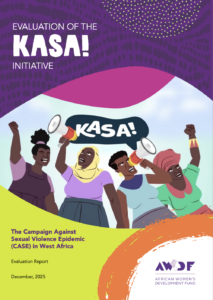
The fight against sexual violence demands more than short-term interventions and reactive responses. It requires sustained feminist organising, community-led solutions, survivor-centered support systems, and long-term investment in structural change.
The just published KASA! Evaluation Report (2021–2024) captures the lessons, achievements, challenges, and transformative impact of one of the region’s most ambitious feminist initiatives working to end sexual violence across Ghana, Nigeria, and Senegal.
Led by The African Women’s Development Fund (AWDF) in partnership with the Ford Foundation and Open Society West Africa (OSIWA), the KASA! Initiative was established in 2021 to strengthen prevention, accountability, advocacy, and support systems addressing sexual violence in West Africa.
Why the KASA! Initiative Matters
Sexual violence remains pervasive across West Africa, fueled by deeply rooted gender inequalities, harmful social norms, weak accountability systems, and inadequate survivor support structures. The KASA! Initiative recognised that ending violence requires addressing not only individual incidents, but also the systems and cultures that normalise violence against women and girls.
Since 2021, AWDF through the KASA! initiative has supported resourcing and accompaniment for 54 women’s rights and feminist organizations (24 in Nigeria, 17 in Ghana, and 13 in Senegal) working to:
- Prevent sexual violence through community education and advocacy
- Strengthen survivor-centered support and justice mechanisms
- Challenge harmful cultural and institutional norms
- Influence policy reform and accountability
- Build feminist movement solidarity across West Africa
The initiative has worked closely with activists, survivors, community leaders, media practitioners, health professionals, legal actors, and policymakers to create more coordinated and responsive approaches. The KASA interventions have led to legal and policy reforms, stronger movements, stronger collaboration among key actors, including duty bearers, traditional and religious leaders; increased awareness and agency among women, girls, gender-diverse persons, and communities most affected by sexual violence; improved emergency response; and the transformation of social and cultural narratives that fuel sexual violence. Our interventions have also contributed to the prioritization of Sexual and Gender-based Violence (SGBV) and gender justice within the funding ecosystem through advocacy and influencing
Some key findings
Some of the key findings from this evaluation across countries where AWDF worked with partners included
-Kasa!’s feminist accompaniment model, grassroots leadership, cultural fluency—remains essential. The feminist accompaniment model enabled high levels of reflexivity, with partners continuously adapting strategies in response to context and feedback.
-Sexual violence remains pervasive, underreported, socially minimised.
-Across countries there are shared barriers: stigma, victim-blaming, informal resolution, weak accountability systems.
-There are rising disclosures—but systems unprepared.
-Economic precarity, youth unemployment, religious authority, digital harassment shape risk.
-Feminist organisations are the de facto first responders. Women’s rights and feminist organisations are central drivers of progress; sustained investment in their organisational health is essential.
Voices of our partners
Movements who we engaged shared their reflections throughout the evaluation highlighting both the impact of the initiative as well as the realities of sustaining this work. Their reflections are evidence that ending sexual violence work is deeply human, collective and rooted in courage care and needs to be sustained. Here is what they had to say.
We face the same issues, why should we struggle alone? Senegalese Participant
We realised our strongest tool is voice, Facilitator in Ghana
Speaking out is not enough if she has to stand alone.- Programme Lead in Nigeria
This is the first fund where we did not have to dilute who we are. Ghanaian Partner during a workshop
What we are sustaining is the community of women who refuse silence- AWDF Staff Member
Join the Conversation
We invite feminist movements and organisations funders, researchers, policy makers community leaders and media to engage with the findings and recommendations of this work.
To access the full report: Download and read the full report HERE
Learn more about the initiative HERE
Access the KASA evaluation infographic in English.