
Combatting Sexual Violence in Ghana: A snapshot of the work of WiLDAF Ghana
Oct 30, 2025
Media Center /
Blog
In one of the rural communities in the Ga-West district of Amasaman in Accra, Ghana, a teenage girl Naa* was empowered to use her voice, and reported to her teachers that her father had been sexually abusing her, after her mother had passed away. He had lied to her that it was normal for fathers to have sexual relations with their daughters when their mother was not around. She had lived with this belief till her exposure to new information after joining a WiLDAF school club against sexual violence.
In another rural community was the pervasive belief, due to low-income households and general poverty, that if a girl does not have sex before twenty, she will have some type of cognitive challenge. In low income and rural communities, the imposed 32.5% total tax on sanitary pads as luxury items has a snowball effect on the prevalence of sexual violence. Young girls fall prey to sexual predators with the promises of financial support to buy pads.
Sexual violence, evidently prevalent in Ghanaian society is a key issue for feminist and women’s rights organisations. To address it, requires speaking up about the causes, and building systemic and sustained socio-cultural change, as well as challenging patriarchal norms and replacing them with stronger voices around positive norms. The African Women’s Development Fund Kasa! Initiative aims to do just this. Geared towards addressing and reducing sexual violence and its roots in West Africa, ‘Kasa’ means to ‘speak out’, this initiative encourages the strengthening of the voices of women and girls against sexual violence by partnering with local organisations and supporting their work under sexual violence. One of such organisations is Women in Law & Development in Africa (WiLDAF) Ghana.
WiLDAF is a pioneering organisation in women’s rights on the continent in general, and in Ghana, in particular. A legacy from the formation of the United Nations, WILDAF became one of the first women’s rights organisations formed on the continent to champion human rights and protections for African women and girls, sexual violence a major theme tackled under this purview. WiLDAF’s Girl Empowerment Programme supported by the KASA initiative is dedicated to empowering young girls to fight against sexual violence. This work involves challenging limiting and false cultural beliefs, addressing issues of lack of access to resources and financial support, and encouraging girls to focus on their education for their economic empowerment.
Going back to the history of the issue, 2007 was a landmark victory for women’s rights when the government passed the Domestic Violence Act which women’s rights activists had been advocating for. This act defined Domestic Violence to include physical, sexual, emotional, psychological, and economic abuse within domestic settings. One challenge with the implementation of this Act was in awareness and reporting, especially in rural areas where many individuals were unaware that certain behaviours constitute domestic violence, leading to underreporting.
In work that continues today under the Kasa! Initiative, WILDAF took this on – going to rural communities to sensitise them on the issues, establish agents of community change, and provide pro bono lawyers to take up cases.
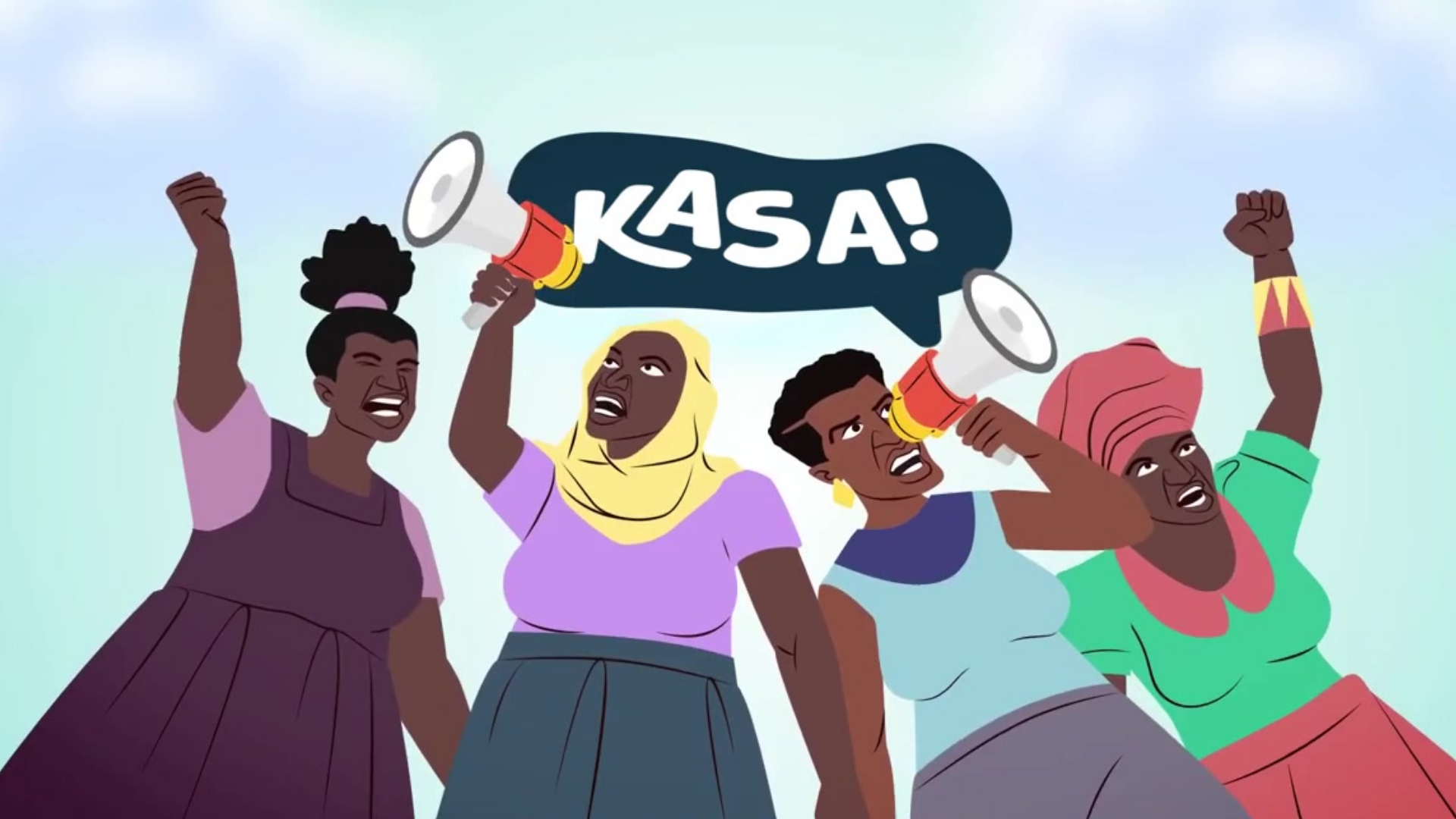
Sexual Violence & the Kasa! Initiative
Lois Addo, the Programme Manager for WiLDAF Ghana, highlights the high occurrence of sexual violence within youth communities in rural communities. She identifies lack of parental care, financial hardship, the advent of social media and easier access to harmful information, harmful cultural norms and beliefs and peer pressure as some of the underlying causes of sexual violence.
To address this, WiLDAF Ghana established school clubs in rural Junior High schools, Girls and Boys for Change, where selected champions of change amongst the students are selected, to push positive norms, grow confidence and self esteem, educated on knowing their rights and where to report violence. Girls in these clubs have become more assertive, can speak up on experiences they have gone through and challenge anyone who wants to sexually abuse them. In the case of Naa* shared earlier, her father was arrested and the girl removed from her harmful situation at home and put under the care and protection of Social Welfare. To ensure the longevity and ownership of these clubs in the schools, manuals and handbooks are developed such that beyond WiLDAF’s initial involvement, the clubs can run on their own. The formation of these clubs marked a reduction in cases of teenage pregnancy and an increased turnout of girls continuing on from Junior High School to Senior High. More girls were empowered to have aspirations, strive for good grades and to further their studies, in a landscape where the norm was to drop out and settle with a man who will take care of them.
Beyond this, WiLDAF also trains selected champions of change in rural areas to tackle sexual violence in these communities. Twelve people in each community, who are usually turned to, resolve communal issues, were selected to undergo training to understand the laws. The community agents do sensitivity trainings with parents about the need to show care and attention to their children to prevent sexual violence, make referrals to state agencies and become watchdogs in the community.
Resilience & Forging Ahead
The work of advancing women’s rights is never-ending. Lois Addo shares that some pushback in doing this work, particularly in sexual violence, is challenging harmful societal beliefs. In the establishment of the school clubs, some parents did not allow their children to join because of the misconception that they were being overexposed.
However, the existence and resilience of pioneering women’s rights organizations like WiLDAF ensures that the work continues and women’s emancipation is achieved, in spite of these challenges.
***
Naa* name has been changed for privacy and safety reasons.
This is a commissioned feature story by Nana Akosua Hanson, a Media Practitioner based in Ghana.